
Formation of the Allas Intelligence Network
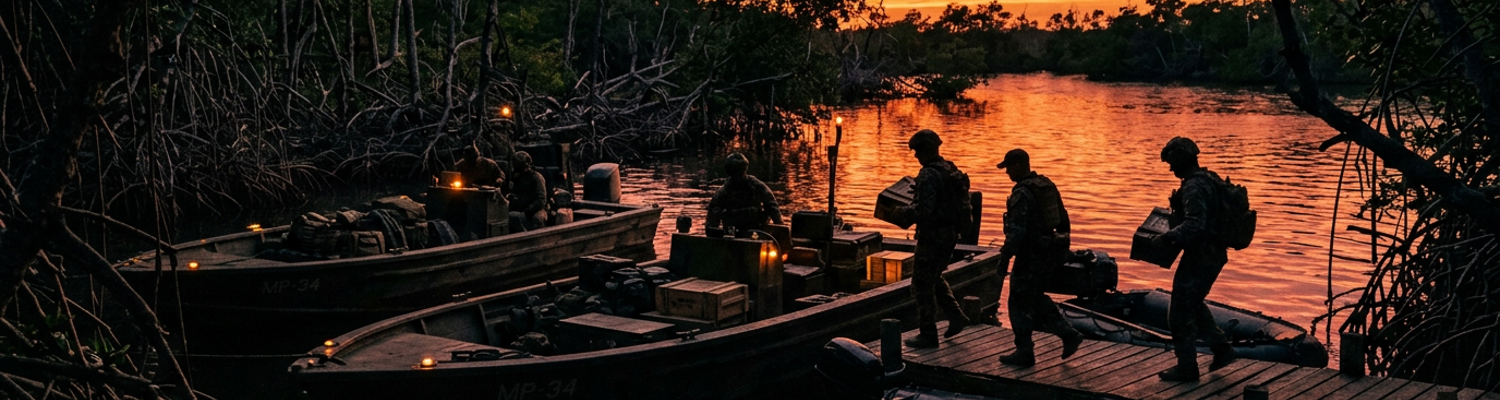
Locomotives hauled heavy Japanese artillery, flatcars of crated aircraft engines, and armed garrison detachments along the narrow gauge tracks of the Manila Railroad. Japanese quartermasters operated these freight trains between major supply depots and northern coastal garrisons, relying on armed railcars to deter ambushes and keep vital munitions flowing toward the gulf ports. Track switches clattered under the weight of passing boxcars as Japanese sentries guarded station platforms, checking waybills and searching local commuters at bayonet point. Cipriano Allas recognized that tracking these mechanized movements provided the key to uncovering enemy strength, prompting him to establish an underground intelligence and scout network across Pangasinan and Central Luzon. Allas organized his clandestine scout units into isolated cells, deliberately separating their identities so that the arrest of one team would not compromise the observers monitoring the neighboring rail depots and highway junctions. Scouts mapped the sidings, water towers, and repair yards where Japanese rail convoys paused, creating a steady log of train lengths, vehicle types, and troop counts destined for forward bases.
Station switchmen noted the exact serial codes painted on Japanese cargo crates, engine greasers counted the number of motorized flatbed trucks tethered to train decks, and yard clerks tracked fuel drums hauled toward local airfields. Civilian runners collected these written chits, hiding the rolled rice paper messages inside hollow bamboo walking sticks, woven fish baskets, or beneath the false bottoms of vegetable carts to bypass checkpoints. Couriers carried these paper reports through rural backpaths and flooded rice paddies, relaying the intelligence across river crossings and jungle trails toward northern Pangasinan. Exhausted foot messengers delivered the crumpled reports directly to hidden guerrilla bivouacs, placing the handwritten data sheets into the hands of the communications team for transmission.
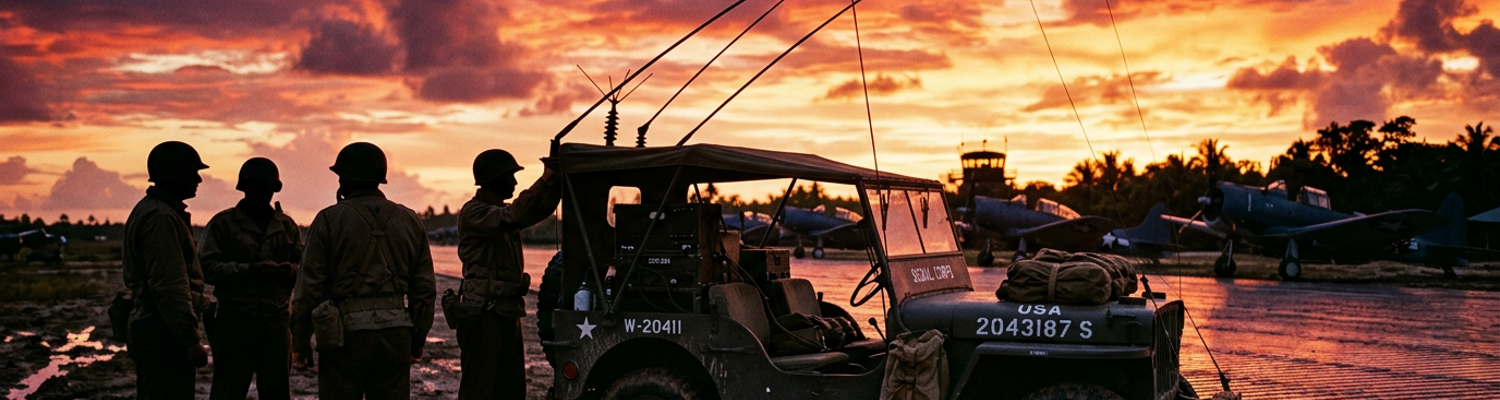
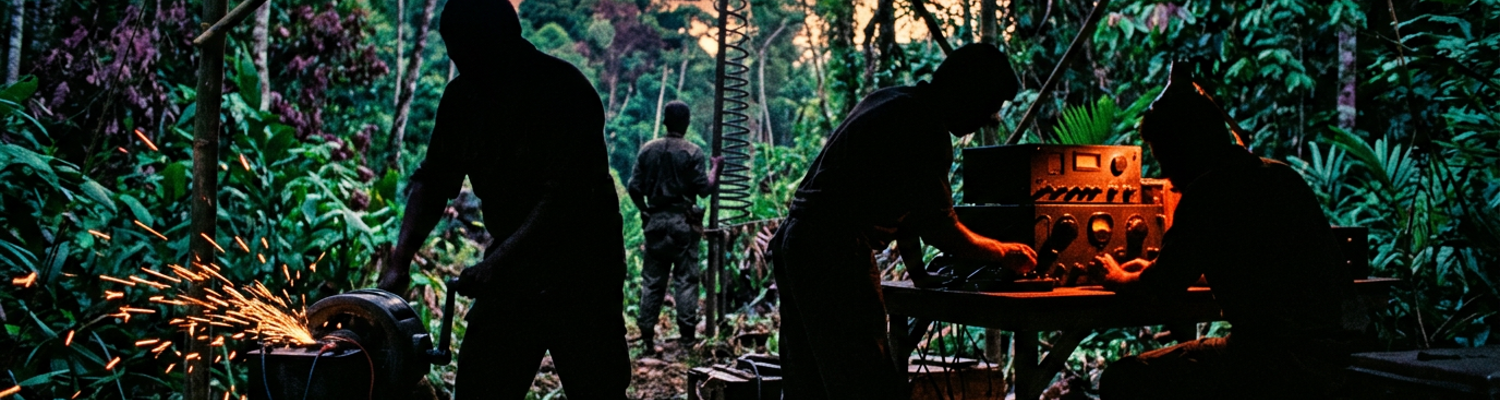
Signalmen received these damp messages inside sodden jungle bivouacs hidden beneath dense canopy, working through severe physical exhaustion to encode the raw intelligence into cipher groups. Torrential tropical humidity continually condensed inside the steel chassis of their fragile vacuum tube transmitters, causing short circuits that burned out scarce wire coils and cracked ceramic insulators. Chronic battery shortages forced the signal team to ration every second of operating time, compelling operators to hook truck batteries to crude hand cranked dynamos that barely generated enough direct current to warm the glass tubes. Solder melted poorly over damp copper joints as the operator worked by flashlight, using scrap wire and salvaged radio parts to troubleshoot intermittent signal hums before scheduled contact windows with Allied listening stations. Hand keys tapped out the enciphered railway manifests letter by letter, sending pulses into a wire antenna strung between rain soaked hardwood branches while water dripped steadily onto the operator workbench.
Trucks carrying Japanese direction finding gear roamed nearby provincial roads during these radio bursts, sweeping directional loop antennas across the horizon to pinpoint the transmitter broadcast coordinates. Listening technicians in enemy radio interception vans monitored every atmospheric spike, plotting signal vectors on regional maps to dispatch motorized infantry patrols into the foothills. Lookouts stationed along mountain ridges spotted the headlights of Japanese search vehicles grinding over muddy dirt roads, sending mirror flashes and whistle signals down into the bivouac. Radio operators abruptly yanked power leads from the corroded battery terminals, tore down the long wire antenna, and packed the hot transmitter tubes into canvas rucksacks to flee into the forest before Japanese cordon troops could close the perimeter.
Signal Craft and Vacuum Tube Field Expedients
Signalmen cradled the hot glass tubes against their chests while scrambling up steep jungle ravines to prevent the fragile components from shattering against the rocks. Once they established a hidden fallback camp behind curtain vines and limestone boulders, the communicators inspected their damaged packs for salvageable gear. Guerrilla radio operators assembled clandestine transceivers using salvaged civilian chassis and hand rewound damp copper transformer coils gathered from wrecked commercial receivers and abandoned farm shops. Moisture saturated the bare metal parts within hours, forcing technicians to strip insulating shellac from burnt wiring and wind individual strands around bamboo spools by hand to prevent electrical leakage. Technicians scraped green corrosion off socket pins with pocket knives, tested internal tube filaments with homemade test lamps, and resoldered cracked joints over small charcoal braziers sheltered from rain. Each makeshift transmitter remained dangerously unstable, requiring constant retuning as fluctuating temperatures and humidity warped the copper windings and threw the crystal frequencies out of alignment.
Tubes demanded steady direct current to hold their broadcast frequencies, but the unit possessed no dependable electrical grid in the mountains. Technical teams operated hand cranked generators and lead acid batteries in humid bamboo bivouacs to supply precarious plate voltage to delicate vacuum tubes. Two men turned the heavy iron crank handles of the dynamos in continuous alternating shifts, their bare shoulders glistening with sweat as they strained to keep the voltmeter needle from dipping below operating levels. Corroded lead acid batteries taken from abandoned farm trucks hissed beside the low wooden table, leaking acid into the mud floor and giving off acrid fumes that burned the eyes of the operators. Operators watched the pale orange glow inside the glass envelopes flicker whenever the crank speed faltered, knowing that any sudden drop in plate voltage would mute their Morse code transmissions mid sentence.
Brass telegraph keys clicked under the fingers of the operator as he fought to finish the enciphered transmission before the power failed entirely. Static roared through the earpieces as lightning storms along the Lingayen Gulf interfered with the weak high frequency signal, drowning out responses from Allied receiving stations in Australia and aboard offshore submarines. Cipriano Allas oversaw each transmission personally, standing near the shelter entrance to monitor the stopwatch and ensure broadcasts never exceeded five minutes. Wet bamboo poles supported the long aerial wire overhead, but the damp tropical wood bled signal energy straight into the ground whenever heavy rain soaked the outer bark. Operators wrapped rubber strips cut from discarded truck inner tubes around the bamboo joints to insulate the antenna wire, fighting to push just enough wattage into the sky to complete the message before Japanese monitoring posts could triangulate their position.
Japanese search trucks rattled along the provincial roads as interception teams narrowed their directional bearings to the surrounding ridges. Lookouts blew carved bamboo whistles down the draws to alert the radio crew before infantry patrols could deploy from their transport beds into the brush. Operators instantly cut the dynamo drive belts, grounded the antenna leads with iron spikes, and unbolted the wooden chassis from the operating bench. Technicians packed the fragile vacuum tubes back into padded cotton bags, buried the heavy lead acid batteries inside waterproofed mud pits, and cleared every discarded copper clipping from the jungle floor. Signalmen hoisted the canvas rucksacks onto their shoulders and melted into the dense bamboo thickets, leaving only an empty shelter for the advancing Japanese search company to discover.
Kempeitai Radio Direction Finding and Evasion
Imperial Japanese Army counterintelligence and Kempeitai teams deployed direction finding vans along Luzon highways to intercept unauthorized transmissions after their infantry patrols reached the vacant jungle shelters. Technicians inside these modified motor vehicles manned sensitive radio receivers wired to directional loop antennas mounted on vehicle roofs. Drivers parked the dark green vans at highway crossroads near Dagupan, Tarlac, and Urdaneta to sweep provincial valleys with rotating antenna arrays. Intercept specialists monitored headphones for high frequency pulses, recording the exact compass angles of the strongest incoming signals onto transparent overlay maps. Japanese officers compared azimuth bearings from multiple vehicles across Luzon to fix the geographic coordinates of the transmitter within a narrowing sector of forest. These plotted cross bearings alerted regional garrison commanders to dispatch truckloads of troops toward the estimated coordinate box before the secret transmitter could change location.
Guerrilla communicators limited their broadcasts to three minutes or less during every prearranged contact window with Allied stations to evade this goniometric triangulation. Operators memorized whole cipher tables to tap the telegraph key rapidly without pausing to check codebooks, keeping the radio active only long enough to clear priority traffic. Watch officers stood beside the low wooden workbenches with mechanical stopwatches in hand, signaling the operator to halt transmission the instant the second hand crossed the danger mark. Telegraphers abandoned unfinished sentences or unconfirmed weather reports immediately rather than giving enemy monitoring vans the extra airtime required to refine a directional fix. Technicians pulled the plug leads from the radio chassis and dropped the aerial wire from the trees the moment the key stopped moving.
Signalmen coiled the damp antenna copper around their forearms and loaded the heavy vacuum tube transmitters into canvas rucksacks to begin their withdrawal. Teams carried the radio components, spare vacuum tubes, and automotive batteries through narrow mountain creek beds where running water washed away their boot prints. Porters distributed the dead weight among four men, using bamboo carrying poles to balance the acid leaking lead batteries across rocky gullies and steep slopes. Pathfinders guided the radio crews past Japanese perimeter cordons by navigating through thick thorn brush and steep limestone ravines that motorized vehicles could not access. Scouts checked provincial road crossings hours in advance, watching for parked Kempeitai vans and enemy checkpoints before signaling the radio bearers across open asphalt. Every safe crossing brought the unit into a previously scouted fallback territory where fresh concealment awaited them.
Crews cleared dead leaves and dirt from hidden secondary dugouts located deep within bamboo groves along the northern foothills. Operators placed the damp wooden transmitter box on dry split log benches and inspected the glass vacuum tubes for hairline fractures caused by the rough trek. Technicians strung a new copper aerial between distant tree limbs using insulated fish line, angling the wire toward Australia while keeping the entire array invisible from low flying Japanese reconnaissance planes. Hand cranked generators were bolted to sturdy tree roots to eliminate vibration, while operators dried moisture from the keying contacts with scrap rags. Couriers arrived at these new mountain positions with fresh written chits detailing Japanese coastal defenses and troop movements along Lingayen Gulf. Cipriano Allas verified the cipher sheets and set the scheduled time for the next brief transmission into Allied network frequencies.
Coastal Artillery Reconnaissance Along Lingayen Gulf
Scouts surveyed Japanese pillbox placements, coastal artillery positions, and beach defense obstacles overlooking the Lingayen Gulf to fill those cipher sheets with precise firing coordinates. These reconnaissance men operated in small teams along the curved shoreline from San Fabian to Lingayen town, moving through coconut plantations and tidal swamps during early morning fog. Observers tracked Japanese garrison troops hauling reinforced concrete culverts, heavy timber baulks, and iron railroad rails onto the dunes to build interlocking machine gun bunkers and subterranean shelter pits. Other observers counted coastal defense guns mounted on concrete slabs, noting how Japanese artillery crews masked their heavy gun barrels under dried palm fronds and netting draped over low earth berms. Along the high tide line, scouts paced off distances between rows of sharpened bamboo stakes, three sided log obstacles, and barbed wire rolls designed to stop Allied amphibious landing craft in the surf. Observers marked each defensive asset directly onto greaseproof paper, hiding the rough pencil sketches inside hollow fish floats and bamboo walking sticks before leaving the beach.
Draftsmen gathered around wooden tables in hidden farmhouses, using steel straightedges, compasses, and drafting pens to assemble detailed target dossiers from these rough pencil sketches. These documents recorded Japanese unit names, estimated personnel strengths, machine gun allocations, and daily patrol schedules across northern Pangasinan. The defense overlays consisted of transparent tracing paper drawn to the exact scale of regional road maps, showing pillbox apertures, artillery firing arcs, and minefield boundaries directly over the coastal terrain. Draftsmen cross referenced reports from multiple scouts to eliminate conflicting information, confirming the location of every coastal battery and underground ammunition locker before adding it to the master sheets. Workers then folded the finished tracing sheets and disposition tables into compact, waterproof squares wrapped in oiled canvas.
Couriers smuggled comprehensive garrison disposition logs and defense overlays across provincial checkpoints to support Allied headquarters. These intelligence couriers carried the wrapped packets along crowded dirt roads, concealing the paper inside hollow bamboo cart axles, beneath loads of dried fish, or sewn between the double layers of straw carrying sacks. Japanese guards stationed at bridges over the Agno and Dagupan rivers stopped every traveler, checking residency passes and prodding cargo with iron probes and fixed bayonets. Couriers stood in long inspection lines, answering routine questions in steady voices while sentries searched their carts and patted down their clothing. Whenever Japanese search parties blocked a main highway with armored cars, couriers turned off into the paddies, carrying their bundles through flooded irrigation canals and dense mangrove stands to bypass the sentry posts. Runners walked through the night to reach maritime transfer stations and isolated inland radio hideouts, delivering the intelligence packets directly to designated unit handlers.
Handlers unsealed the canvas packets and handed the most critical target coordinates to guerrilla telegraphers waiting at their transmitter tables. Radio operators encoded the coastal artillery grid positions into five letter cipher groups, preparing the priority transmissions for Allied receiving stations in Australia and approaching naval task forces. The telegrapher adjusted the transmitter dial to the scheduled frequency, waiting for the exact second to depress the brass key and broadcast the beach defense coordinates into the sky. Other team members packed the master overlays and paper disposition logs into watertight zinc canisters to await extraction by Allied submarines surfacing off the western coast. Unit guards secured the perimeter trail with rifles ready, watching the dark tree line for Japanese pursuit squads as the first radio pulses flashed outward over the gulf.
Sixth Army Landings and Tactical Integration
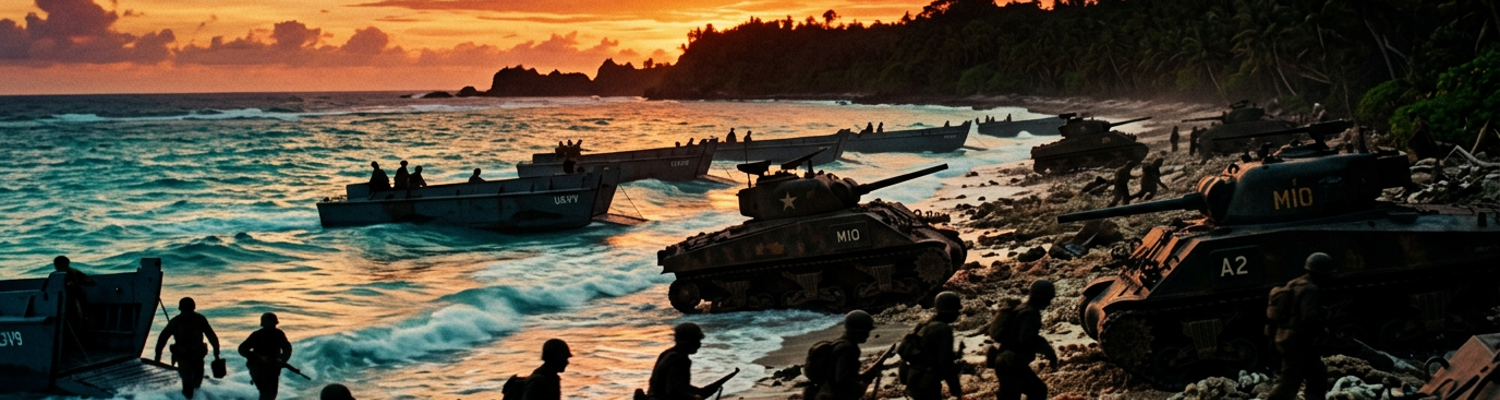
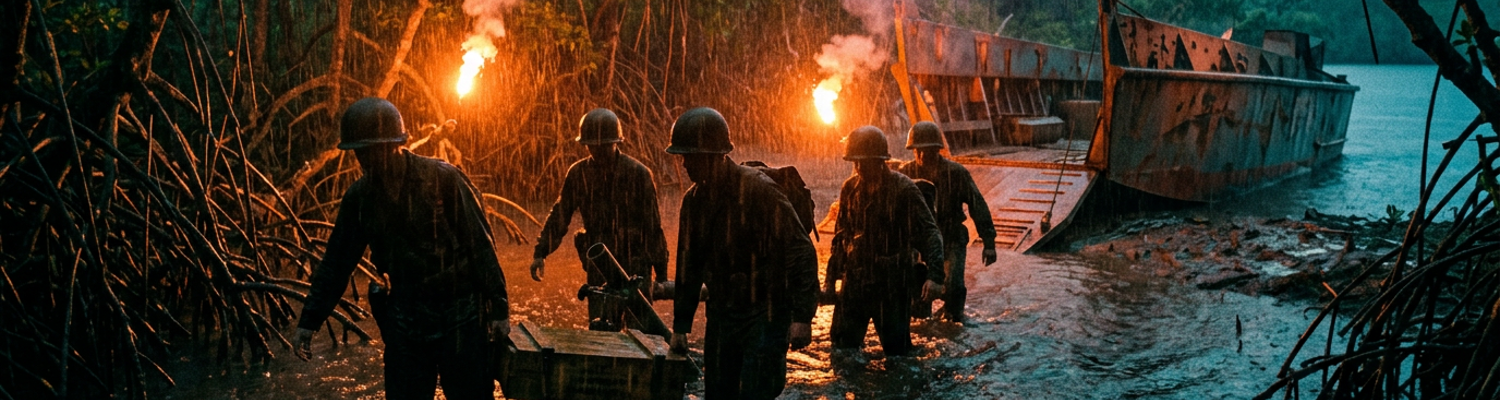
Radio receivers aboard Allied command ships intercepted these encoded coordinates, feeding the target data directly into naval fire control plots across the invasion fleet. General Walter Krueger initiated amphibious assaults at Lingayen Gulf with his Sixth Army in January 1945, leveraging guerrilla reconnaissance logs to direct pre landing bombardments against concealed shore batteries and beach obstacles. Battleships and heavy cruisers fired salvos into the coastal dunes, detonating ammunition caches and crushing concrete pillboxes that Allas observers had plotted along San Fabian and Lingayen beaches. Amphibious tractors and landing craft churned through the morning surf, carrying thousands of American infantrymen toward the smoking tree line without facing the deadly crossfire that Japanese planners had prepared. Assault battalions quickly established beachheads on the sand and pushed inland toward provincial highways, where retreating Japanese units had laid heavy minefields and built defensive roadblocks to stall the Allied breakout.
Pathfinders from the Allas scout detachments linked directly with frontline US Army combat elements to navigate mined roadways and locate concealed Japanese strongpoints. Guerrilla guides walked alongside lead infantry point men and climbed onto the front fenders of M4 Sherman tanks, pointing out buried aircraft bombs, improvised pressure mines, and tripwires hidden in the roadside dust. Combat engineers followed these visual markers with mine detectors and grappling hooks, lifting lethal charges from the road shoulders before heavy American transport trucks and artillery tractors advanced into the danger zones. Scouts guided company commanders through secondary dirt trails and flooded rice paddies to bypass blown concrete bridges, keeping the American advance moving across the flat Pangasinan countryside without losing momentum. Whenever Japanese snipers and machine gun crews fired from camouflaged positions, local scouts recognized the terrain and identified the exact timber reinforced drainage ditches or farmhouse basements sheltering the enemy gunners.
Tank gunners laid their main guns onto the precise structures pinpointed by the scouts, firing high explosive shells through the hidden firing slits to neutralize the stubborn resistance. American infantry squads then rushed through the splintered brush with submachine guns and white phosphorus grenades, clearing out the secondary trenches and securing adjacent road junctions. Signal teams from the Allas network established liaison posts inside captured municipal buildings, running telephone wire to American battalion command posts to relay fresh reports gathered by civilian runners. Couriers arrived on foot and on bicycles from towns deeper in Central Luzon, delivering hand drawn maps that marked where Japanese retreat columns were setting up defensive lines behind the Agno River. American intelligence officers plotted these incoming coordinate points onto divisional maps, instantly dispatching mechanized cavalry patrols and calling in air strikes on enemy supply parks before Japanese rearguard units could dig in.
Armored cars pushed southward along Route 3 behind the vanguard units, accompanied by Allas scouts who knew every river crossing and railway culvert between Dagupan and Tarlac. Guerrilla riflemen helped American sentries question local villagers and rail workers, verifying which bridges had been wired with demolition blocks and which rail sidings held abandoned Japanese freight cars. Technicians recovered abandoned Japanese field telephones, wire reels, and battery stocks, integrating the captured gear into frontline tactical communications nets to ease the chronic supply shortages that had hobbled the underground for years. Sixth Army field commanders adjusted their operational boundaries based on these hourly intelligence updates, shifting their armored columns across the plains toward Clark Field and Manila with clear knowledge of the terrain ahead. Patrol leaders from both forces established permanent observation posts overlooking the central highway, training their field glasses on the retreating enemy columns and preparing the next forward assault.
Recovered Personnel Division Audits and Authentication
Infantrymen and Allas scouts pressed those forward assaults down Route 3 until organized Japanese resistance broke across Central Luzon, leaving behind crates of worn dispatch logs, radio chits, and coastal defense sketches that suddenly took on a new administrative purpose. Clerks at Allied headquarters bundled these mud stained signal books and route maps into official files as soon as combat operations wound down, transforming wartime intelligence paperwork into legal evidence of guerrilla service. Thousands of civilian applicants and opportunists crowded provincial military offices when news spread that recognized resistance fighters were eligible for back pay, hospitalization benefits, and military pensions. The US Army Recovered Personnel Division closely examined unit rosters and field reports to distinguish authentic scouts from fraudulent postwar claimants who had never carried a pack or tapped a transmitter key. Examiners compared wartime courier receipts and station diaries against freshly submitted personnel lists, hunting for forged commander endorsements and sudden roster expansions that appeared only after liberation. Investigators flagged suspicious rosters containing individuals who claimed simultaneous membership in rival guerrilla factions or who could produce no wartime radio records to support their combat narratives.
Lieutenant Kenneth Neubauer conducted thorough postwar field investigations across Pangasinan to verify individual operational records for veteran recognition, resolving these flagged discrepancies through direct on site inspections. Neubauer drove military jeeps through rural municipalities from Lingayen to Urdaneta, convening town hall interviews with local mayors, railway workers, and civilian couriers who had sheltered underground cells during the Japanese occupation. Witnesses described safe house locations, hidden battery charging pits, and the names of specific runners who had slipped through river checkpoints with coastal defense sketches. Neubauer subjected claimants to technical questioning, asking applicants to identify the exact frequencies used for Allied broadcasts, the locations of jungle radio camps, or the construction details of salvaged vacuum tube transmitters. Fraudulent applicants repeatedly stumbled over basic technical details, while genuine signalmen recalled the names of their liaison officers and the physical exhaustion of lugging lead acid batteries through bamboo ravines. Neubauer cross referenced individual statements with surviving signal logs, striking fraudulent officers from the rolls when they failed to name their wartime sector handlers or radio frequencies.
Auditors scrutinized contentious command claims inside field tents and provincial municipal halls, evaluating documents where outside leaders had attempted to absorb the Allas Intelligence Unit into their own unrecognized organizations to inflate their political standing. Investigative reports noted that certain self appointed commanders had engaged in collusion, inserting their own names and followers onto multiple guerrilla rolls without ever leading scouts in the field or transmitting target data to Allied ships. Neubauer rejected these fraudulent command assertions, affirming that Cipriano Allas had maintained independent operational command of his scouts and radio teams throughout the occupation. Every verified entry required corroborating testimony from neighboring cell leaders and matching entries in Sixth Army operational diaries. Audit teams stamped approved files with official verification seals, passing the authenticated rolls to finance clerks who prepared back pay disbursements and medical vouchers for the legitimate veterans.
Clerks matched those authenticated rolls against original wartime casualty lists and field supply receipts, authorizing payments for scouts who had risked execution along the railway tracks and beaches. Surviving radio operators who had damaged their lungs and eyesight over charcoal braziers in sodden camps presented their identity cards to receive specialized medical treatment. Widows of couriers executed by the Kempeitai at Agno River bridge checkpoints brought forward original arrest slips and death affidavits to secure their survivor pensions. Scouts who had walked ahead of Sherman tanks through mined Pangasinan roads signed their discharge papers and collected their muster out allowances. Administrative teams stamped the final pay vouchers and entered the verified names into permanent army ledgers. Officers packed the authenticated unit rosters, affidavits, and finalized field reports into metal storage trunks for permanent shipment to the Adjutant General central records depot in Manila.