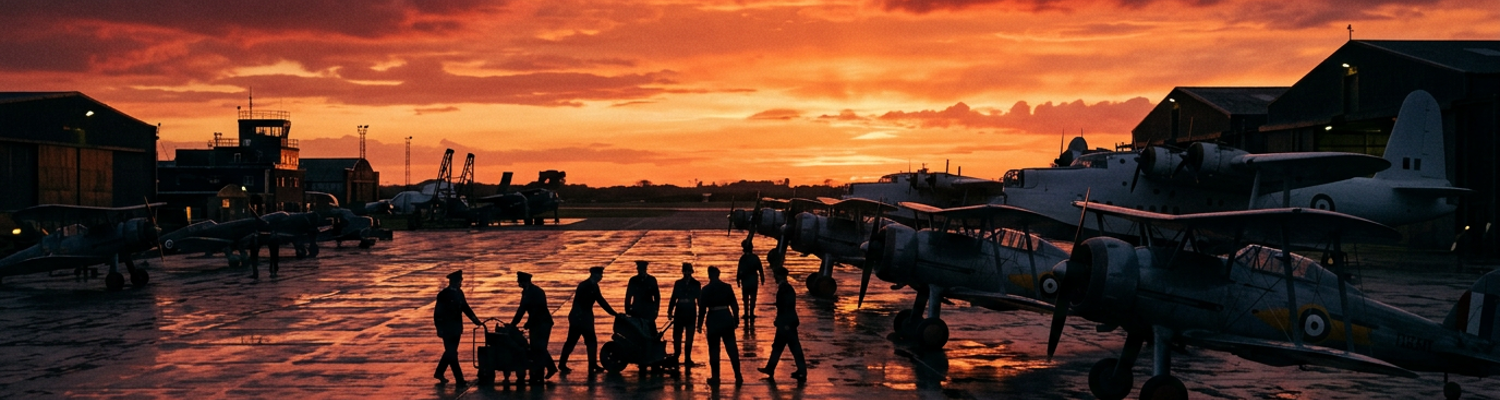

Post-Maneuver Assessments Across Oahu and Manila Bay
Battleships and mock carrier strike forces carved through the deep ocean swells off Oahu while simulated amphibious landing fleets probed the muddy, shallow channels outside Manila Bay. Sharp volcanic mountain ridges across Oahu funneled gusting winds into narrow valleys, while the tropical shallows and island fortress guns of Corregidor bracketed the entrance to Manila Bay in thick haze. Shore batteries and air station ground crews stood down only after days of relentless drills forced biplane scouts and twin-engine bombers to their operational limits over open water. Field commanders drafted immediate post-exercise logs in the quiet hours following joint exercises across Oahu and Manila Bay. Staff officers spread navigational charts, mechanical tallies, and carbon paper across folding tables inside blackout hangars to capture every failure before aircrews retired to their bunks. Exhausted mechanics continued to wipe saltwater and motor oil from the fuselage cowlings just outside the office doors.
Grease dripped from the lower cowlings onto the concrete floor as initial reports recorded the operational disconnect between Army Air Corps coastal surveillance and Navy maritime reconnaissance. Army observation crews had flown standard coastal sweeps along the surf line, but their radio gear operated on frequencies that could not reach Navy flying boats operating farther out to sea. Navy patrol planes spotted mock enemy warships approaching from the horizon but transmitted their sighting coordinates exclusively to shore-based naval headquarters rather than directly to local Army airfields. Signal officers discovered that relaying those contact reports through separate service telegraph lines created delays of several hours. Interceptor pursuit planes sat motionless on grass runways with cold engines while simulated hostile bombers completed their runs over the naval bases and coastal batteries.
Paper navigational charts recovered from those grounded interceptors revealed the physical roots of the defensive failure. Surviving flight logs documented critical coverage gaps caused by rigid, artificial offshore patrol boundaries. Interwar doctrine ordered Army pilots to patrol only within immediate range of coastal artillery, while Navy seaplanes maintained long-range reconnaissance far out to sea. Navigators marked coordinates where Army patrol planes reached their mandatory offshore turnaround lines and swung back toward the beaches, leaving wide corridors of unpatrolled water between the Army and Navy sectors. Mock enemy flotillas navigated directly through these unmonitored gaps without triggering an alarm. Flight crews logged each missed sector alongside exact fuel consumption records to prove that the split jurisdiction created blind spots large enough to hide an entire fleet.
Commanders gathered these flight logs from the crews and stapled them into manila folders alongside maintenance records and radio transcripts. Dispatch riders carried the sealed folders to harbor piers at Cavite and administrative headquarters at Fort Shafter for immediate review by senior garrison commanders. Staff clerks typed clean copies of the after-action assessments, documenting every communication failure and unpatrolled offshore sector onto standardized report forms. Logistics officers crated the completed documentation for shipment aboard naval transports headed to the Joint Board in Washington. Ground crews pushed the worn patrol aircraft back into maintenance bays to begin rebuilding engines and repairing radio sets for the next fleet problem.
Jurisdictional Fractures in Joint Board 303 Serials
Mechanics overhauling the dismantled radial engines and testing loose radio wiring worked alongside flight lieutenants who carried grease-stained clipboards into the flight shack to cross-reference their fuel logs against official command directives. Staff officers unrolled heavy mimeographed binders across the repair benches next to disassembled carburetors, stripped magnetos, and coils of discarded safety wire. Joint Board 303 Serials 169A through 298 divided Army land-based air patrol from Navy maritime surveillance along arbitrary coastal distance lines drawn parallel to the outer reefs. Army crews had to cut their throttles and bank away as soon as their cockpit instruments showed they had reached those arbitrary lines, even when their binoculars caught plumes of dark coal smoke rising from unidentified ships steaming just beyond the cutoff coordinates. Naval patrol squadrons claimed exclusive operational authority over the ocean swells beyond that offshore boundary, treating every square mile of open sea as sovereign fleet territory that Army aircraft could not legally enter. Flight leaders penciled harsh question marks across their navigation forms where the mandatory distance cutoffs had forced them to sever contact with the simulated invasion fleet.
Pilots pointed to these graphite marks while explaining to district inspectors why twin-engine observation planes had abandoned tracking mock enemy transports steaming toward the island beaches. Army Air Corps flight crews were barred from conducting systematic long-range reconnaissance beyond visual coastline limits without prior naval sanction. Observation pilots who spotted suspicious masts ten miles past the foaming surf breaks had to send urgent Morse code dispatches back to harbor command posts, requesting written naval clearance before pursuing the contact further out to sea. Naval headquarters staff routinely delayed or set aside those clearance slips while their own duty officers debated whether the incoming contacts fell strictly within fleet operational responsibilities. Patrol bombers burned through precious drums of aviation fuel while orbiting in tight, useless holding circles over coastal palm groves, waiting for telegraph permissions that never arrived from the naval yard. Navigators eventually folded their map cases in disgust, signaled their wingmen to turn back toward inland grass strips, and watched the empty offshore horizon vanish behind heavy cloud banks.
Admirals and naval commanders strictly guarded offshore patrol prerogatives, preventing unified operational command over insular air approaches as those Army planes touched down on inland runways. Senior fleet officers refused to place their long-range patrol flying boats under shared army direction, insisting that all offshore reconnaissance belonged solely to naval air stations. Army division commanders countered by demanding full operational control of all airspace within flying radius of their heavy coastal gun batteries and infantry cantonments. This rigid interservice division forced island defense networks to operate two separate command posts that maintained separate watch rosters, drew independent search sectors, and plotted aircraft sightings on duplicate grease-pencil charts. Neither service permitted the other to assign search grids, redirect airborne scouts to assist sister-service formations, or divert patrol planes toward newly reported enemy surface coordinates. Clerks in both command centers stamped the after-action dossiers as unresolved jurisdictional disputes, packaging the duplicate flight logs, maintenance tallies, and conflicting track charts into canvas mail bags for immediate transport to the Joint Board in Washington.
Tropical Humidity and Radial Engine Seizures
Canvas mail bags departed for the transport docks, leaving mechanics to stare at unprocessed maintenance logs that revealed pervasive radial engine seizures driven by maritime salt spray and tropical humidity in the Philippines and Hawaii. Flight crews had barely shut down their magnetos before cooling cylinder heads began locking up on the tarmac, freezing internal pistons inside their steel walls. Warm ocean air heavy with salt brine had sucked straight through the front cowling vents during low-altitude patrols over the Pacific swells, coating the exposed valve stems and pushrods in an invisible, corrosive film. Ground crews unbolted the inspection plates to find exhaust valves jammed solid in their bronze guides by baked-on marine salt deposits. Mechanics hammered carefully against the frozen rocker arms with brass drift pins, trying to free the valves before the metal cooled completely and cracked under thermal stress. Stiff grease and oxidized mineral oil poured out of the crankcase drains in thick, gritty ribbons, forcing inspectors to scratch red diagonal lines across whole squadron readiness charts.
Runners carried those red-marked readiness charts straight to the supply sheds, where field ground crews faced chronic deficits of replacement cylinders, ignition harnesses, and corrosion-resistant gaskets within insular quartermaster depots. Crates shipped from mainland factories had sat for months in damp harbor warehouses, where moisture rotted the treated canvas wrapping and rusted raw steel spare parts before they ever reached an airfield. Mechanics searched through splintered wooden bins for intact copper-asbestos seals, only to find the packing paper turned to soggy pulp and the metal edges pitted with green oxidation. Ignition wires hung from storage pegs with their braided cloth insulation swollen and fraying from constant tropical dampness, shorting out electrical currents whenever technicians tried to fire up a rebuilt magneto. Sergeants scavenged salvaged radial parts from wrecked airframes pushed out into the airfield grass, swapping scarred cylinder barrels from one disabled biplane to another just to assemble a single running powerplant. Work crews spent their nights filing down pitted valve faces by hand under hanging drop lights, knowing that supply steamers from San Francisco were still weeks away across the open sea.
Airplanes pushed out of the repair hangars to resume searches over that distant water met immediate mechanical ruin, as rapid atmospheric corrosion severely degraded flyable aircraft inventory within hours of operational patrol sorties. Fine ocean mist seeped through fuselage panel seams and gathered in pools along aluminum wing spars and steel control cables. Salt crusted into white powder across hot exhaust rings while planes sat idling at coastal dispersal points, eating through delicate carburetor linkages before ground crews could finish pumping fresh aviation gas into the wing tanks. Inspectors discovered structural duralumin skin flaking off in powdery white scales along the lower fuselages where spray from harbor takeoffs had blasted against untreated rivets. Mechanics dragged freshwater wash-down hoses across the muddy aprons, spraying boiling soapy water over the cowlings in a desperate attempt to scrub off the corrosive film before the evening rains hit. Corroded rudder hinges seized in place while the hose water was still draining into the grass, stranding newly landed observation aircraft right on the taxiways.
Tractors hauled those immobilized observation planes off the taxiways and lined them up under mildewed canvas tents at the edge of the flight line. Flight lieutenants walked down the row of parked aircraft with grease-penciled clipboards, striking plane after plane from the active flight roster until entire reconnaissance squadrons shrank to two or three operational machines. Maintenance officers unbolted the seized radial engines and laid the damaged assemblies directly onto wooden sawhorses, tagging each warped cylinder with handwritten labels detailing the exact flight hours before failure. Pilots scheduled for dawn patrols stepped into the engineering shack, signed their initials beside the grounded aircraft numbers, and received orders to stand down their flight sections. Armorers covered the silent engine bays with oil-soaked tarpaulins, securing the lashings against the rising night humidity that ate away at the exposed aluminum skins.
Incompatible Signal Frequencies and Communications Gridlock
Radiomen hauled damp transmitter sets out of those darkened fuselages and carried them directly into the squadron communications shack for immediate debriefing. Interrogation officers spread yellow carbon pads across damp wooden crates, recording how Army Air Corps and Navy flight crews could not talk to one another while airborne over the water. Immediate debriefs highlighted incompatible radio sets and mismatched operating frequencies between Army Air Corps and Navy aircraft throughout every phase of the exercise. Army observation planes carried low-frequency transmitters matched only to land batteries and inland airfields, while Navy patrol boats operated on intermediate naval bands dialed to shipboard receivers. Pilots had tried to tune their dials in mid-flight to warn neighboring patrols of spotted surface contacts, but their dials could not bridge the physical gap between their frequency ranges. Technicians entered these hard equipment limits into their report logs, noting that neither service could pick up the other without replacing entire crystal sets and antenna wires.
Antenna wires hummed uselessly while flight navigators scratched out contact messages by hand onto paper slips that sat trapped inside isolated cockpits. Tactical contact reports failed to bridge disparate inter-service signal networks without routing through cumbersome landward relay posts. Army pilots who spotted naval task forces had to transmit Morse code signals all the way back to Army headquarters switchboards at Fort Shafter or Corregidor. Telephone operators then had to write down the coordinates, pass the message by hand to a naval liaison officer across the room, and wait for that officer to phone the Navy communications bunker at Pearl Harbor or Cavite. Naval dispatchers then had to encrypt the sighting a second time and tap it out over fleet transmitters to their own patrol flying boats orbiting just miles from the original Army spotters. This multi-layered land relay lost forty-five minutes on every single target sighting, allowing simulated enemy destroyers to slip past outer defensive sectors before any naval interceptors received the grid coordinates.
Clerks copied those delayed grid coordinates onto paper charts, watching the target data collapse into complete disorder against divergent nautical and terrestrial tracking maps. Unsynchronized patrol grids generated contradictory track reports and duplicate search sectors over vital harbor channels. Army flight leaders tracked surface targets using standard military square grids pegged to landmark gun batteries along the shoreline, while Navy navigators recorded the same vessels using maritime latitude and longitude sectors oriented to open-sea navigation lines. Twin-engine Army bombers and Navy floatplanes converged over the same narrow harbor channels at dawn, each searching the exact same patch of water because their conflicting patrol schedules failed to share search lanes. Both squadrons burned fuel tracking the same freighter, while leaving the deep entrance channels completely unobserved three miles to the west. Duty officers scribbled frantic correction notes into their clipboards as pilots from both services crowded into the harbor operations room, arguing over conflicting course plots for the same mock landing vessels.
Yeomen pinned the contradictory grease-pencil charts onto display easels and marked each harbor channel overlap in red crayon. Flight lieutenants from both services stood over the drafting tables, comparing signal logs that proved their radio silence was enforced by technical incompatibility rather than crew error. Communications chiefs gathered the scrambled signal forms, relay delay records, and duplicate search sector logs into bound packets for district commanders. Signalmen packed the unusable radio components into wooden crates for physical inspection, marking the exterior wood with stenciled warnings about the frequency deadlock. Clerks carried these completed binders of raw technical failures into the transport office, filing them alongside the engine maintenance dossiers destined for the Joint Board in Washington.
Scathing After-Action Filings in Serials 494 Through 762
Couriers stacked those fresh binders onto administrative tables where operational commanders filed blunt, urgent assessments preserved across Joint Board 303 Serials 494 through 762. Exhausted colonels and naval captains sat under bare electric lightbulbs, dictating raw reports before the physical memory of the mock war games faded into polished staff summaries. These officers refused to soften their wording, writing directly about broken radio links, grounded reconnaissance planes, and unpatrolled ocean corridors that let mock attacking squadrons slip in undetected. Carbon sheets tore under heavy pencil strokes as field directors documented every hour their squadrons spent blinded by artificial offshore limits. Staff aides gathered the typed pages into numbered legal files, affixing red tags to mark each critical operational failure before the documents left district headquarters.
Dossiers assembled by the harbor defense staff laid bare the tactical hazards threatening the outer bases. After-action memoranda detailed how split jurisdictional boundaries left Pearl Harbor and Cavite vulnerable to carrier-borne surprise air attack. Flight tracks drawn on drafting vellum proved that naval patrol boats remained tethered to fleet operating schedules while Army observation biplanes were forbidden from tracking targets past the coastal surf line. Fast mock enemy carriers had exploited this exact seam between Army land borders and Navy deep-water sectors, launching simulated torpedo bombers from positions just twenty miles past the Army reconnaissance cutoff. Flight instructors pointed out that an actual adversary could steam undisturbed through the wide gaps between independent sector watches, position strike wings at dawn, and blast drydocks and anchored warships before harbor sirens could sound. Senior aviators recorded that neither Pearl Harbor nor Cavite possessed a single unified tactical plotting board to direct scrambled fighters toward inbound raiders.
Staff officers formally recorded that procedural boundary disputes actively masked critical shortfalls in air defense readiness, shielding severe systemic deficits from immediate scrutiny. Endless debates over nautical patrol lines permitted commanders to ignore shortages of functional antiaircraft guns, missing spare parts for grounded interceptors, and the complete lack of night-flying equipment. Units that looked formidable on official organizational charts possessed only handfuls of airworthy machines capable of climbing to combat altitude. Field inspectors wrote that base commanders spent their post-exercise conferences arguing about command prerogatives and radio authority rather than fixing corroded engines or building unified reporting networks. These bureaucratic battles allowed leadership in Washington to treat the standoff as an administrative turf war rather than an immediate operational disaster. Tactical observers warned that this obsession with jurisdictional sovereignty buried the physical decay of the island air arms under stacks of clean legal briefs.
Clerks bundled these candid serials into heavy canvas pouches, fastening brass grommets and stamping each parcel with urgent priority markings. Duty runners carried the sealed pouches out to the harbor piers where patrol boats and mail planes idled on the water with their engines rumbling. Navigators stowed the documentation into forward cargo holds alongside mechanical tallies from the repair sheds, preparing for the long flight across the ocean to naval and military bureaus in Washington. Ground personnel on Oahu and Luzon walked back to their silent hangars, leaving disassembled biplanes and uncalibrated radio sets sitting under the damp tropical night. Flight leaders closed the squadron logbooks on a defensive system still cracked along arbitrary maritime boundaries, leaving every warning of surprise attack locked inside the cargo holds of outbound transport ships.
Unresolved Doctrine and Vulnerable Insular Outposts
Couriers delivered those critical flight records to committee rooms inside the State, War, and Navy Building in Washington. Senior staff officers examined the grease-stained binders and read the blunt warnings from Pacific field directors, but committee politics stalled decisive action. The Joint Board maintained bureaucratic compromises over command integration, leaving structural patrol divisions unresolved. Board members refused to subordinate naval aviation to army coastal artillery commanders, just as they refused to place army land-based bombers under fleet command. Instead of forging a single theater command with full authority over insular airspace, the board drafted ambiguous policy updates that urged mutual cooperation without enforcing shared control. These compromise serials confirmed that naval flying boats would continue offshore reconnaissance under fleet orders, while army observation craft remained tied to short-range perimeter surveillance. Staff clerks bundled the signed compromise rulings into official packets and stamped them for airmail dispatch back to Pacific outposts. Distribution officers in Honolulu and Manila unpacked the returned directives, reading administrative confirmations that preserved split command posts while depot shelves remained stripped of essential supplies.
Quartermasters opened incoming cargo manifests across the docks of Oahu and Manila to find that replacement parts were nowhere in sight. Quartermaster allocation formulas remained tied to peacetime quotas, leaving overseas radial engine logistics unaddressed. Peacetime logistics calculations determined engine replacement rates based on calm, domestic training flights conducted over the continental United States. These rigid domestic formulas failed to account for salt air corrosion, volcanic grit, and continuous tropical humidity that corroded cylinder walls and froze internal valves in half the expected operating life. Base storehouses in Hawaii and the Philippines held barely enough replacement gaskets and ignition harnesses to support a single active reconnaissance squadron. Mechanics searched scrap heaps behind the hangars, salvaging scorched pushrods and bent rocker arms to assemble workable engines for scheduled morning patrols. Ground crews had to strip two or three grounded observation planes down to their airframes just to keep one scout machine functional on the tarmac. Supply officers cabled emergency requisitions to mainland arsenals, only to receive notifications that no additional radial engines or cylinder assemblies could be released under authorized peacetime quotas.
Commanders absorbed these logistical denials while struggling to manage their dwindling aircraft across stubbornly divided jurisdictions. Persistent inter-service boundary enforcement left Hawaiian and Philippine coastal air defense architectures deeply fractured on the eve of World War II. Army Air Corps pursuit squadrons at Wheeler Field and Clark Field answered exclusively to department generals who prioritized perimeter fortress defense, while naval patrol wings at Pearl Harbor and Cavite answered only to fleet admirals focused on open-sea maneuvers. Neither service established a joint tactical communications center or linked their early warning spotting posts into a single shared network. Army reconnaissance crews continued to bank away at offshore boundary cutoffs, leaving wide ocean sectors completely unmonitored between intermittent naval patrol flights. Radar stations, coastal lookouts, and flight shacks on Oahu and Luzon operated on separate signal channels that prevented fast reporting of inbound bogeys. Operations officers pinned separate search maps to their command walls, plotted conflicting target tracks with grease pencils in isolated bunkers, and scheduled uncoordinated patrol sorties over the deep water approaches to Oahu and Manila Bay.