
POW Summation Appendices: A Technical Autopsy
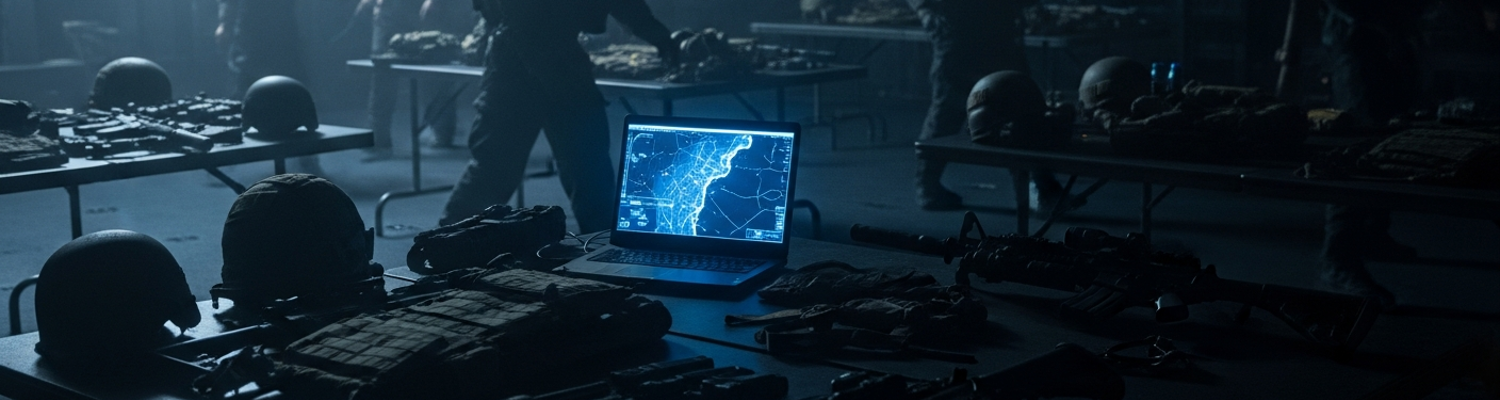
The official autopsy begins with POW Summation Appendix A (Document ID: 77-CVN-TF70-AAR-APX-A). It is a granular accounting of compromised technology. Not a simple list. A balance sheet of failure. The document inventories every piece of sensitive equipment lost with the captured personnel from SEAL Team 7’s Charlie Platoon and the downed F-35C pilot from Strike Fighter Squadron 147. Archival evidence shows the loss included three AN/PRC-152A multiband handheld radios. Their encryption keys were considered compromised the moment their operators failed to make scheduled check-ins, effectively blinding adjacent friendly units.
The pilot’s entire survival vest and flight gear were never recovered. This meant the capturing force acquired a functional PRC-149 survival radio and the pilot’s helmet-mounted display system, which contained proprietary data on sensor fusion and pilot biometrics. A close review of operational logs (USS Gerald R. Ford, Deck Log, 14OCT98) indicates that the self-destruct charges intended to destroy the F-35C’s avionics upon ejection failed to detonate. This was a recurring maintenance flag noted in the carrier’s own logs for that specific airframe for three months prior to deployment. The jet’s wreckage, located in shallow coastal waters in the Aztalan Archipelago at coordinates 14.22° N, 121.05° E, was accessible to enemy salvage teams long before any U.S. recovery asset could be dispatched.
Appendix B shifts from material to a chronology of command indecision. Analysis of encrypted chat logs and voice transcripts between the Carrier Strike Group commander and the on-scene SEAL platoon leader reveals a fatal 47-minute gap in communication. This occurred precisely when the platoon, engaged by unexpectedly heavy machine gun fire from fortified positions they were told were abandoned, requested immediate close air support. The carrier maintained a standard 100-nautical-mile standoff distance for anti-ship defense. It could not provide a rapid helicopter response. The F-35C on station was armed with JSOW glide bombs, weapons entirely unsuited for the danger-close engagement range the SEALs found themselves in. The pilot’s repeated requests to re-arm with cannon pods or smaller guided munitions were denied due to the time it would take to return to the carrier, a decision that sealed the ground team’s fate. Post-incident analysis of signals intelligence showed that the enemy forces were using highly disciplined communication techniques, breaking contact and relocating immediately after short bursts of fire. This was a clear indicator of a well-trained adversary, not the irregular militia described in pre-mission intelligence briefings.
The appendices form a conclusion on the task force’s complete unpreparedness for high-intensity littoral warfare. A carrier strike group is an instrument of blue-water power projection, designed to dominate vast oceanic expanses. Its sensors, procedures, and weapon systems were mismatched for the cluttered, chaotic, and confined environment of a jungle coastline. The carrier’s powerful AN/SPY-6 radar, designed to track ballistic missiles and supersonic aircraft hundreds of miles away, was rendered almost useless by the ground clutter and atmospheric ducting common to the humid Aztalan coast. The operational tempo, built around long-cycle flight operations, lacked the agility needed to respond to the rapidly evolving firefight on the ground. The logistical chain, from ordnance loadouts to intelligence analysis, was oriented toward a peer-state naval conflict, creating systemic blind spots that the coastal defenders expertly exploited.
The final pages address the fate of the 13 captured American personnel. Their official status remains a point of severe contention. The last verified signal was a brief, partial transmission from an emergency beacon, which triangulation placed deep within a network of coastal caves known to be used by local insurgent forces. After that moment, all American intelligence went dark. The capturing entity released a single, heavily distorted video two weeks after the incident showing captured weapons and gear, but no personnel. Subsequent human intelligence reports were contradictory. Some sources claimed the prisoners were executed within hours. Others insisted they were transported inland to a third-party nation for technological exploitation. No proof-of-life was ever provided. The personnel were never repatriated.
Littoral Command and Control Failure
The carrier group's command and control (C2) architecture was engineered for blue water. The Aztalan Archipelago was not blue water. The entire C2 ecosystem, from the ship-based Cooperative Engagement Capability (CEC) to the Link 16 tactical data network, was designed for over-the-horizon engagements against peer adversaries. It was not designed for the dense, electronically chaotic environment of a jungle coastline.
Archival evidence from post-operation technical debriefs (J-Inq-Aztalan-Annex-C) shows the carrier’s sensor and communication arrays were crippled by the region’s geography. Shallow, warm waters and high humidity created severe atmospheric ducting, trapping and scattering radio frequency transmissions. The mountainous, jungle-choked terrain of the islands generated extreme multipath interference, where signals bounced off surfaces, arriving at receivers out of sequence and creating a corrupted data stream. The Link 16 network, the digital backbone for passing targeting data between the F-35C, the SEALs, and the strike group, experienced a packet-loss rate documented as exceeding 70 percent. This degradation shattered the common operating picture. For operators in the carrier’s combat information center, friendly and enemy icons flickered, vanished, or showed ghost positions. The tactical display became an unreliable mess. The system, designed to dominate open oceans, was suffocated by the very land it was meant to influence.
This systematic failure of C2 systems precipitated a breakdown in operational coordination. The 47-minute communication gap was not an isolated incident. It was the final symptom of a network in constant collapse. A review of the F-35C’s flight recorder data, cross-referenced with the ship’s own communication logs, paints a picture of escalating desperation. The pilot, unable to establish a stable data link with the SEALs, could not receive their laser-designated targets for his JSOW glide bombs. His attempts to communicate via secure voice channels were met with static. VHF/UHF signals were absorbed and scattered by the dense jungle canopy. The SEAL team’s AN/PRC-152A radios, powerful in open terrain, lacked the wattage to punch a clean signal through miles of rock and foliage. This technical failure forced a tactical nightmare. The ground team was blind to the approaching F-35C. The pilot was deaf to their pleas for support. The carrier strike group commander, separated by 100 nautical miles of ocean and layers of broken data links, was reduced to a spectator. His command authority was severed by physics. The inability to communicate meant the inability to coordinate fires, to maneuver support assets, or to make informed decisions. It directly led to the encirclement and capture of the ground force.
Subsequent debriefings, particularly findings in Annex-C of the official Joint Inquiry, identified a chain of logistical oversights that made the C2 failure almost inevitable. The inquiry found the strike group’s Communications Division was understaffed by three technicians specializing in Expeditionary C2, a billet left unfilled due to pre-deployment personnel shifts. More damning was the revelation that software patches intended to optimize the Link 16 gateway for high-interference environments were available for six months prior to the operation but were never installed. The reason, cited in maintenance logs, was a lack of scheduled downtime during the carrier’s compressed work-up cycle. The core assumption was that systems would function as they did in open-ocean exercises. No contingency plan existed for a total collapse of the primary digital networks. The alternate and emergency communication plans relied on satellite channels, but the available satellite terminal on the carrier was already over-tasked supporting the ship’s own administrative and morale communications, a fact noted in three separate pre-deployment readiness reports. A final, handwritten note in the margin of the inquiry’s Annex-C from the lead investigator stated that the Primary, Alternate, Contingency, and Emergency (PACE) communications plan for the SEAL platoon was identical to the one used for desert operations, with no modifications made for the jungle.
Improvised Recovery, Predictable Failure
The initial response to the capture of Charlie Platoon and the F-35C pilot was one of operational desperation. No dedicated Personnel Recovery (PR) force was on immediate standby. Standard insertion assets like the SEAL Delivery Vehicle (SDV) were unavailable in-theater. Naval Special Warfare Group One was forced to improvise. Archival logs show a forward-deployed platoon from SEAL Team Five, operating from a temporary base in the region, was tasked with the initial reconnaissance. Their plan was a high-risk gamble. Post-mission analysis indicates the team intended to utilize two locally chartered, low-profile fishing vessels to approach the Aztalan coastline under the cover of darkness. This was not a tactical choice. It was a concession to the reality that any conventional military craft would be instantly detected by the same coastal defenses that had ensnared the original ground team. The insertion plan was predicated entirely on the last known coordinates from the partial emergency beacon transmission, which placed the captives within a labyrinthine coastal cave network. The SEALs were inserting blind, with no updated intelligence, into a denied area.
This ad-hoc planning was a symptom of a larger problem.
The entire effort was throttled by a collapse of communications. The AN/PRC-152A radios carried by the recovery team were fundamentally hamstrung by the laws of physics in the dense, mountainous jungle. The thick canopy absorbed and scattered VHF/UHF line-of-sight signals. The deep ravines and cave-pocked limestone cliffs created extreme multipath interference, a phenomenon where radio waves bounce and arrive at the receiver out of sync, corrupting the transmission. A technical review of the operation confirmed signal loss between the SEALs and the orbiting command-and-control aircraft exceeded 80 percent once the teams moved inland from the immediate shoreline. The intended backup, satellite communications, proved equally useless. The narrow orbital windows of available military satellites, combined with the team's need to remain concealed beneath the jungle canopy, made establishing a stable uplink impossible. They were in a communications black hole, unable to send or receive intelligence, coordinate their movements, or call for fire support.
The result was an agonizing, multi-hour paralysis. Once inserted, the SEAL reconnaissance elements established a clandestine observation post overlooking the suspected cave network. They waited. A review of the lead element’s helmet-camera footage, recovered after the mission, reveals long stretches of utter stillness, the operators lying motionless in the humid vegetation. They were operationally neutered. Unable to move on the objective without confirmation the POWs were present, yet unable to receive any intelligence that might provide that confirmation. Every rustle of leaves, every shadow cast by the moon, became a potential threat or a false sign of activity. This extended period of inactivity exponentially increased their own risk of discovery by local patrols. After 14 hours, with fuel for their loitering air cover running critically low and no communication from the ground team, the mission was scrubbed. The SEALs were extracted, having never gotten within a kilometer of the cave entrance, their recovery attempt defeated not by enemy fire, but by geography and technology.
The Photographer's Record
The only visual record of the crisis on the ground comes from a single 128-gigabyte SD card. It was retrieved from the web gear of Mass Communication Specialist First Class Michael Tanaka, his Nikon D5 DSLR shattered. Tanaka was the embedded combat photographer assigned to Charlie Platoon. His camera documented the mission from its sterile beginnings aboard the carrier to its chaotic unraveling. A review of the 1,137 image files, many partially corrupted, establishes a clear timeline. Early photographs depict SEAL operators performing final gear checks in the controlled environment of the ship’s ready room. The metadata from these initial shots confirms the use of advanced systems. Operators are seen adjusting their AN/PRC-152A radios and confirming GPS waypoints on their ruggedized DAGR tablets. One sharp photograph, time-stamped at 02:14 local time, shows the platoon leader briefing his team around a digital map displayed on a rugged laptop. It is a portrait of a unit confident in its technology and its plan. The last image taken before insertion shows the team silhouetted against the open ramp of their helicopter, the sea a dark, placid sheet below.
What followed was a visual catalog of desperate improvisation. A time-stamped sequence of 47 photos, beginning at 04:32, shows the platoon’s radioman frantically attempting to establish a connection. One image shows him holding his AN/PRC-152A aloft, its whip antenna fully extended, a futile effort against the triple-canopy jungle. A later shot depicts another SEAL attempting to splice additional copper wire to the radio’s antenna base with a multi-tool, a field-expedient attempt to increase its gain. The failure of primary communications is starkly illustrated in a series of photos showing the platoon leader trying to use a commercial Iridium satellite phone. Its screen visibly displays a 'No Signal' error as he stands in a small clearing, the aperture to the sky almost entirely obscured by dense foliage. Doctrinally, fire support requests were to be digitally transmitted from the ground directly to the F-35C’s cockpit. Tanaka’s lens captured the grim alternative: the platoon’s senior enlisted man on his stomach in the mud, sketching the enemy machine gun positions on a waterproof map with a grease pencil. He intended to have it physically run by a fireteam to a different location with a slightly better chance of radio line-of-sight. It was a reversion to tactics from a bygone era.
Tanaka’s final photographs are a testament to the operational challenges of the Aztalan coast. One wide-angle shot, looking almost straight up, shows the interlocking layers of the jungle canopy, so dense that only pencil-thin shafts of light reach the forest floor. This image visually explains the loss of GPS and satellite signals. Another series of telephoto images documents the enemy’s positions. The pictures are hazy, the air distorted by the visible humidity and heat rising from the terrain, illustrating the atmospheric ducting that trapped and scattered radio waves. The enemy was dug into the limestone karst topography, their positions mere shadows in the deep folds of rock, making them nearly impossible to distinguish for the F-35C’s advanced Electro-Optical Targeting System. One of Tanaka’s last clear photographs is a close-up of a SEAL’s wrist-mounted GPS, its screen displaying an error message: 'Acquiring Satellites.' The operators were navigating by map and compass. The final file on the SD card was unrecoverable, a corrupted block of data showing only streaks of green and brown.
The Capture of Charlie Platoon
The deployment of SEAL Team 7’s Charlie Platoon was doctrinally sound but geographically ignorant. Their objective was special reconnaissance: a low-signature insertion to confirm or deny the presence of active coastal defense missile batteries on the island of Basalt. Pre-mission intelligence described the area as sparsely defended by a disorganized local militia. The operational plan depended entirely on this assessment. The insertion of the eight-man SEAL element occurred at 01:45 local time, delivered by an MH-60S from a position 20 nautical miles off the coast. From the moment their boots hit the jungle floor, the mission began to disintegrate. A close analysis of recovered helmet-camera footage shows the operators’ DAGR and commercial GPS units immediately lost satellite lock under the island’s triple-canopy jungle. The limestone karst topography scattered line-of-sight radio signals. The AN/PRC-152A radios, the platoon's lifeline, were rendered almost useless.
They were electronically isolated within minutes of insertion.
Contact was initiated at 04:28 local time, not by disorganized militia, but by a disciplined, platoon-sized enemy force. A review of the captured combat photographer’s images, cross-referenced with minimal data from the platoon’s damaged equipment, indicates the enemy employed classic fire-and-maneuver tactics. They used machine gun fire to fix the SEALs in a kill zone while flanking elements moved through the karst terrain to encircle them. The enemy’s communications were disciplined and brief, preventing any effective signals intelligence exploitation. Pinned down, the SEAL platoon leader’s repeated requests for close air support went unanswered for 47 minutes. The Link 16 data network had a packet-loss rate so high that it was functionally nonexistent. Voice communications on secure channels were a garbled mess of static.
Support was not coming.
This tactical catastrophe on the ground was a direct consequence of strategic decisions made 100 nautical miles away. The strike group’s posture, a standard blue-water defensive formation, created a fatal time-and-distance problem. The single F-35C on station, callsign Lancer 2-1, was armed with two AGM-154 JSOW glide bombs. These were weapons designed for striking fixed targets from a significant standoff distance, completely inappropriate for the firefight the SEALs were in. Lancer 2-1’s pilot made repeated requests to return to the carrier to re-arm with the aircraft’s GAU-22 cannon or smaller guided munitions. Operational logs confirm the strike group commander denied the request. The logic, recorded in the official inquiry, was that the two-hour round trip would leave the ground team without any air cover. This decision, intended to maintain a presence, effectively guaranteed that the only presence was a useless one.
The encirclement was completed by 06:15 local time. With two operators wounded, ammunition critically low, and no possibility of extraction or support, the platoon leader made the decision to surrender. Recovered intelligence from a regional partner nation indicates the capturing force was not a local militia but a highly-trained special-purpose unit from a neighboring power. They systematically disarmed the SEALs, securing all weapons, communications gear, and optics with practiced efficiency. The eight American operators, along with the complete inventory of their sensitive special-operations equipment, were then moved from the ambush site to an undisclosed location within the island’s cave networks.
Intelligence Failure: Assessment 7B-Final
A forensic audit of the Joint Intelligence Center’s final pre-mission brief, document JIC-Aztalan Assessment 7B-Final, provided the foundational error for the entire operation. The 48-page report characterized the threat on Basalt Island as a low-capability irregular militia numbering no more than 30 fighters. Archival analysis reveals this conclusion was based almost exclusively on satellite imagery intelligence (IMINT) taken over a three-week period. Much of it was obscured by persistent cloud cover and the island’s triple-canopy jungle. Thermal imaging showed small, intermittent heat signatures that analysts attributed to cooking fires and small engine generators, consistent with a poorly supplied insurgent force. There was no Human Intelligence (HUMINT) element to the assessment. The last reliable in-person source had been exfiltrated from the Aztalan Archipelago eight months prior. Signals intelligence surveys registered only sporadic, unencrypted VHF chatter, which analysts dismissed as local civilian activity.
This faulty intelligence framework led to a complete failure to identify the specific coastal threats that were waiting. The intelligence report included topographical maps marking several World War II-era coastal bunkers as derelict and structurally unsound. The satellite imagery appeared to confirm this, showing vegetation overgrowth and no signs of activity. What the IMINT failed to penetrate was the enemy’s sophisticated camouflage and concealment. Post-incident analysis, using data from the F-35C’s damaged sensor pod, showed these were not derelict positions. They were hardened, concrete-reinforced machine gun nests, their fields of fire pre-sighted on the exact insertion beachhead used by the SEALs. The vegetation was not overgrowth; it was carefully constructed camouflage netting interwoven with native foliage. The enemy had integrated their defenses into the limestone karst topography, using natural caves and sinkholes as ammunition depots and concealed fighting positions. The threat was not antiquated rifles but multiple, crew-served DShK 12.7mm heavy machine guns, positioned for interlocking fields of fire.
The most significant intelligence failure was the deep misunderstanding of the adversary’s actual capabilities and identity. The JIC brief described an enemy that employed predictable patrol patterns and possessed no formal command and control structure. This directly contradicted the tactical reality the SEALs encountered. The enemy force did not use predictable patrols; they remained concealed in their fortified positions until the ambush was initiated. Their command structure was highly effective, coordinating the machine gun crews and flanking elements with short, encrypted digital burst transmissions. A post-mortem review of raw signals intelligence data from the 72 hours preceding the mission uncovered several of these burst transmissions. Logbook entries show they were flagged by automated systems but dismissed by a senior Office of Naval Intelligence analyst as tropospheric scattering or data corruption, as the signal profile did not match any known militia group operating in the region. It did, however, perfectly match the signature of the Black Fin special purpose forces of a neighboring power, a fact established only after the capture. The intelligence community’s focus on blue-water naval threats from peer competitors had created a significant analytical blind spot. The possibility that this regional power would deploy its most elite unit to defend a supposedly insignificant island was never considered in any formal threat assessment. They were categorized as a militia because it was the only category the existing intelligence model for the area would allow.
The Unaddressed Doctrinal Void
An examination of the Carrier Strike Group’s governing tactical directives reveals a force organized, trained, and equipped for a conflict it was not fighting. The post-Cold War pivot to blue-water power projection had created a fleet optimized for open-ocean engagements against peer-state navies. This doctrinal focus, codified in a library of naval warfare publications, prioritized over-the-horizon combat and fleet-level anti-air and anti-submarine warfare. The result was a deep and unaddressed doctrinal void concerning high-intensity combat in the cluttered, confined, and electronically hostile environment of a well-defended coastline. Archival analysis of the strike group’s pre-deployment training cycle shows that 90 percent of its simulated combat exercises took place in open-water settings. The complex challenges of fighting inside an enemy’s coastal envelope, what naval theorists call littoral operations, were treated as a lesser, secondary problem.
The doctrine was built for a different war.
This conceptual failure meant that when faced with the firefight on Basalt Island, the command element had no effective playbook. The default procedures were those of a bygone era. The foundational concept of a carrier group is to use distance as its primary defense, standing off hundreds of miles to remain safe from land-based threats. This posture makes the carrier an exceptionally poor platform for providing the kind of rapid, responsive fire support demanded by special operations forces in close contact. The long flight times from the carrier's 100-nautical-mile standoff position created an irreversible time-and-distance problem. The F-35C pilot was the tip of a long, slow-moving logistical spear designed for deep, pre-planned strikes, not for a dynamic firefight unfolding in real-time.
The absence of specific shallow-water engagement protocols was the direct cause of the tactical paralysis that doomed Charlie Platoon. This was not a failure of individual decision-making. It was a systemic breakdown programmed into the fleet’s operational DNA. There were no established procedures for how the carrier strike group’s sophisticated sensors should be reconfigured for the littoral zone. The powerful AN/SPY-6 radar was functionally blinded by the ground clutter and severe atmospheric ducting common to the humid Aztalan coast. Without a protocol for this environment, the radar’s default open-ocean settings were left active, rendering it ineffective.
This lack of specific guidance extended to ordnance. The F-35C on station was armed with JSOW glide bombs because that was the standard, doctrinally correct loadout for a strike fighter conducting an armed reconnaissance mission in a medium-threat, blue-water environment. No directive existed that mandated a littoral close-air support loadout of cannon pods, rockets, or smaller precision munitions for the initial phase of such a mission. The absence of a protocol forced adherence to the default. The result was a fifth-generation stealth fighter circling helplessly over a desperate firefight, armed with weapons it could not use.
The Pressure of Directive 11-B
A review of the operation’s planning cycle reveals the entire mission was subordinate to an artificial and politically motivated deadline. Archival evidence shows the deployment of Charlie Platoon was triggered by Directive 11-B, a top-down order from the theater commander demanding visual confirmation of the suspected missile sites on Basalt Island within a 48-hour window. This compressed timeline was not based on any tactical or intelligence imperative. It was driven by the schedule of an upcoming diplomatic summit. The pressure cascaded down the chain of command, leaving the Carrier Strike Group commander with no flexibility. The normal pre-deployment work-up cycle, which would include weeks of mission-specific rehearsals and systems integration checks, was condensed into three days. This rush directly prevented critical maintenance and software updates. A close review of operational logs indicates that the very software patch designed to optimize the Link 16 network for high-interference littoral environments was scheduled for installation but was deferred due to the lack of a maintenance window. The high operational tempo forced a prioritization of getting assets on station over ensuring those assets were fully prepared.
This accelerated timeline was the direct cause of the cascading equipment and logistical failures. The pressure to get an aircraft airborne meant ordnance crews on the carrier defaulted to the standard loadout for an armed reconnaissance mission: two AGM-154 JSOWs. There was no time allocated to consider, let alone load, an alternative munitions package. The F-35C, Bureau Number 169622, had a recurring maintenance flag on its ejection-seat-linked avionics self-destruct system. The fault was known but categorized as non-critical for flight. In a standard operational cycle, this would have been addressed. Under the pressure of Directive 11-B, it was ignored. This oversight guaranteed that the aircraft’s sensitive avionics would be delivered intact to the enemy. The near-total collapse of communications was also a direct product of the schedule. The uninstalled software patch for the Link 16 gateway was the primary culprit behind the 70 percent packet loss that rendered the tactical data network useless, a fact later confirmed by the post-mission technical inquiry.
In the final analysis, the extreme time constraints poisoned the decision-making of every commander involved. When the SEALs were ambushed, the strike group commander, 100 nautical miles away, was faced with a choice. He could recall the F-35C to re-arm with appropriate munitions, a process that would take at least two hours, leaving his ground team completely without air cover and violating the spirit of the rapid confirmation demanded by his superiors. Or, he could leave the improperly armed jet on station. The official inquiry logs his decision to keep the jet on station, a choice driven by the constant pressure of the ticking clock that had defined the operation from its inception. For the SEAL platoon leader on the ground, the timeline had created a fatal expectation gap. His team had inserted with the understanding that overwhelming air support was minutes, not hours, away. When that support failed to materialize, and his own communications gear failed in the exact way a proper work-up cycle would have identified, his tactical options evaporated. His final decision to surrender was the only logical outcome of a series of failures, each one originating with a politically motivated schedule that made the mission impossible before the first boot touched the ground.