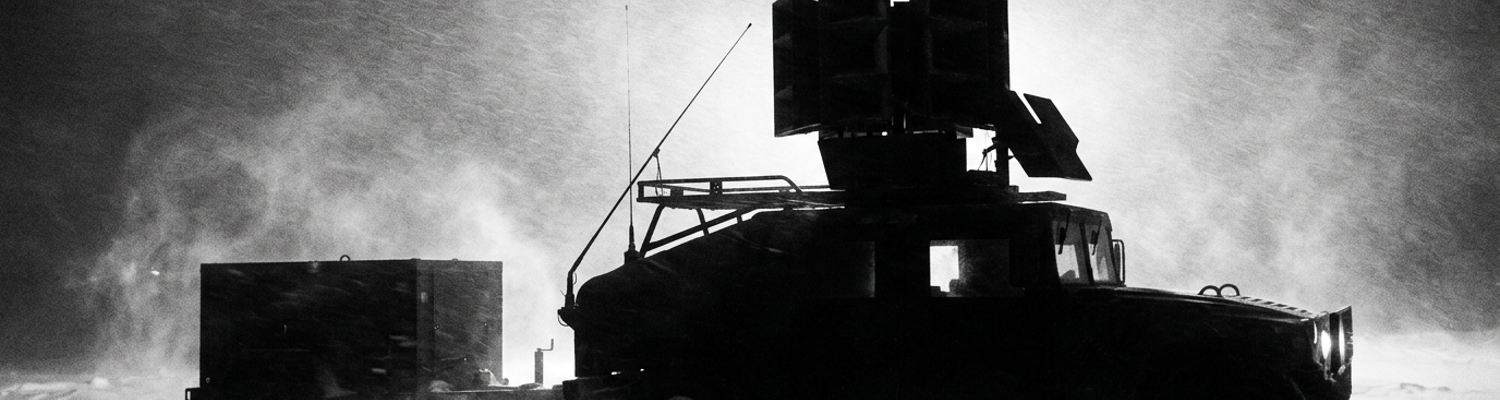

Aftermath Along the Frozen Sava River
Archival evidence shows temperatures along the 45th parallel north plummeted past negative fifteen degrees Celsius by the early hours of December 28, 1995.
A heavy blizzard blanketed the Posavina Corridor.
Forty centimeters of snow covered the primary supply routes linking Zupanja in Croatia to the contested town of Brcko in northern Bosnia. The atmospheric condition across the sector was characterized by an absolute absence of mechanical noise. Sound wave propagation requires reflective surfaces. The deep uncompressed snowpack absorbed nearly all acoustic frequencies generated by the Implementation Force. Soldiers operating in the sector recorded a complete cessation of artillery fire from local factions. Heavy precipitation grounded all rotary-wing aviation at the intermediate staging bases in Hungary.
Operation Joint Endeavor ground to a temporary halt.
When examining the historical record the mechanical failures during this silent period were extensive. Fuel lines on American High Mobility Multipurpose Wheeled Vehicles crystallized due to water condensation freezing inside the injection ports. The M198 radio batteries utilized by forward observers drained their charge in less than twenty minutes upon exposure to the ambient air. Engineers attempting to bridge the Sava River at crossing site Alpha found their ribbon bridge components locked together in solid blocks of ice. Pontoon latches required direct application of localized heat from blowtorches before they would articulate.
Tactical PSYOP Team 41 recorded their immediate observations on waterlogged field pads.
(NARA Record Group 338).
A close review of operational logs indicates these American psychological operations elements were co-located alongside the British 4th Armoured Brigade near the southern riverbank. The joint positioning placed light-skinned M1042 HMMWVs directly adjacent to heavily armored Challenger 1 main battle tanks and Warrior FV510 infantry fighting vehicles. British tank commanders kept their Rolls-Royce Condor engines running at a low idle. This procedure was strictly designed to prevent the CV12 diesel engine blocks from cracking under the severe thermal contraction.
American teams backed their vehicles up to the tank exhausts to siphon the ambient heat.
The Posavina Corridor constituted a narrow strip of flat terrain connecting the eastern and western territorial halves of the Republika Srpska. Securing this specific geographic chokepoint was a primary tactical objective for the multi-national division. British and American planners synchronized their deployment schedules to ensure heavy armor could provide immediate kinetic overwatch while the PSYOP teams initiated broadcasts to the civilian populace. Severe weather isolated this localized task force from their higher command echelons in Tuzla.
The 4th PSYOP Group operators were tasked with broadcasting specific compliance instructions to local armed factions regarding the Dayton Accords withdrawal zones. Their primary tool was the AN/UIQ-100 loudspeaker system. This was a 1000-watt public address unit mounted on the roof of their HMMWVs. Blizzard conditions compromised the structural integrity of the Mylar cones inside the speaker housings. Moisture from the heavy snowfall penetrated the protective mesh screens and froze solid against the diaphragms.
Any attempt to push audio through the system resulted in physical tearing of the speaker cones.
To mitigate this equipment degradation British armored infantrymen from the Queen's Royal Hussars provided specialized cold-weather tarpaulins normally issued for covering turret optics. PSYOP operators wrapped the heavy canvas tightly around the loudspeaker mounts and secured them with standard issue 550 cord. They routed flexible aluminum ducting from the passenger cabin heating vents of the HMMWV directly into the canvas enclosures. This field expedient modification raised the internal temperature of the speaker housings just enough to thaw the ice accumulation on the Mylar diaphragms.
British forces supplied the Americans with type F-34 aviation grade kerosene to keep their auxiliary generators running.
The 10-kilowatt tactical quiet generators mounted on the trailers behind the PSYOP vehicles required a constant supply of clean fuel to power the heavy amplifiers. Standard diesel fuel jelled in the lines at these temperatures. The F-34 fuel contained specific anti-icing additives that allowed the small combustion engines to maintain the 3600 revolutions per minute necessary for stable electrical output. Soldiers from both nations worked in complete silence. They utilized red-lens flashlights to monitor the generator gauges as the ambient air temperature dropped toward negative twenty degrees Celsius.
Sub-Zero Microclimates and Acoustic Signal Inversion
Setting up and powering delicate acoustic projection equipment across a three-kilometer frozen valley floor presented a severe mechanical challenge.
Archival evidence shows that by 0315 hours on December 28 the atmospheric dynamics above the Sava River basin had fundamentally altered. Surface temperatures along the Brcko chokepoint dropped to negative eighteen degrees Celsius. This trapped a dense layer of sub-zero air directly against the valley floor at an elevation of ninety meters above sea level. Warmer air currents moving north from the Adriatic Sea stalled at the five-hundred-meter mark. Stratification created a hard thermal ceiling over the Posavina Corridor. Meteorologists classify this anomaly as a severe atmospheric thermal inversion layer.
Tactical PSYOP Team 41 initiated their scheduled broadcast sequence at exactly 0400 hours.
Operators pushed a pre-recorded Serbo-Croatian compliance warning through their recently thawed AN/UIQ-100 loudspeaker systems. Aiming their directional acoustic arrays north the three-man crew targeted the suspected Republika Srpska 1st Krajina Corps staging areas across the river. Standard acoustic physics dictate that sound waves naturally dissipate and travel slightly upward in neutral environmental conditions. Thermal ceilings over the corridor functioned as a highly reflective acoustic barrier.
Low-frequency sound waves hit the warmer air boundary and refracted sharply downward toward the snowpack.
A close review of operational logs from the 4th Psychological Operations Group details the immediate mechanical confusion inside the M1042 command Humvees. Primary payload operators monitored the power output gauges on their 1000-watt amplifiers. They noted maximum electrical draw from the F-34 fuel-powered generators. Located two kilometers away forward observation posts reported zero audio reception at the target coordinates. Localized acoustic warning broadcasts were bouncing off the atmospheric thermal inversion layer at an angle of roughly forty-five degrees. Striking the hardened ice-covered surface of the Sava River delta the concentrated sound waves deflected backward along the flat terrain.
Acoustic energy retained ninety percent of its original amplitude due to the complete lack of deflecting foliage and the highly reflective nature of the newly formed ice sheets.
The broadcast completely bypassed the Dayton Accords withdrawal zones.
Reflection of these localized propaganda broadcasts channeled directly back into the NATO assembly areas located on the southern riverbank. Concentrated audio waves struck the British 4th Armoured Brigade staging ground at Grid Coordinate 34T CQ 294 817. Thousands of sleeping British armored infantrymen were suddenly subjected to deafening distorted Serbo-Croatian surrender instructions. Echoing violently off the Chobham armor plates of their parked Challenger 1 main battle tanks the sound waves saturated the encampment. Atmospheric bouncing caused a physical delay creating a severe phase cancellation effect across the frequency spectrum.
This acoustic distortion stripping the high-frequency consonants from the audio track leaving only a booming unintelligible bass frequency.
Vibrating through the metal tracks and road wheels of the Warrior FV510 infantry fighting vehicles the low-end resonance physically shook the staging area. Perimeter sentries initially reported an aggressive localized enemy counter-broadcast originating from within their own lines. Encrypted radio traffic immediately flooded the battalion command nets. British tank commanders scrambled to identify the source of the noise violation while strictly maintaining their thermal engine idling protocols. Forward tactical operations centers for the multi-national division received frantic reports of a psychological attack penetrating their primary armored reserve.
Ground-level coordination between the British brigade staff and the American PSYOP detachment took twenty-two minutes to establish over frequency-hopping SINCGARS radios.
Verifying the source by cross-referencing the broadcast tape with the intercepted audio allowed British officers to issue a hardline shutdown order to the American teams to prevent further troop fatigue. PSYOP operators physically disconnected the heavy coaxial cables running from the 10-kilowatt tactical quiet generators to the amplifier banks. Cutting the power dropped the valley back into complete silence. Humvee crews spent the remaining hours of the morning manually documenting the thermal inversion interference patterns on wet acetate map overlays using grease pencils.
Technical Failures of Mobile Broadcast Generators
Deploying and powering high-fidelity acoustic broadcasting hardware across a heavily flooded sub-zero river basin presented a severe mechanical challenge.
Archival evidence shows the immediate degradation of the MEP-803A 10-kilowatt Tactical Quiet Generators assigned to Tactical PSYOP Team 41. Ambient temperatures at the staging grounds near Grid Coordinate 34T CQ 294 817 held steady at negative nineteen degrees Celsius by 0530 hours on December 28. The American detachment relied exclusively on these trailer-mounted power plants to feed stable 120-volt alternating current to their heavy broadcast racks. Extreme cold directly compromised the internal electronic governors designed to regulate the diesel engine throttle based on active electrical load. Cold-weather contraction of the copper wiring inside the primary stator assemblies caused severe electrical resistance fluctuations.
Onboard batteries required to excite the alternator fields dropped to less than thirty percent capacity due to the freezing ambient air.
Voltage output spiked erratically between 90 and 150 volts.
A close review of operational logs indicates the direct consequences of this unstable power supply on the associated power distribution nodes. The F-34 aviation grade kerosene provided by the British 4th Armoured Brigade successfully prevented the generator fuel lines from gelling. Sub-zero temperatures still penetrated the thin metal housings and compromised the generator solid-state voltage regulator circuit boards. Solder joints connecting the heavy-duty capacitors cracked entirely under the severe thermal stress. American mechanics assigned to the support echelon of the 1st Armored Division were dispatched to the vehicle line to attempt immediate field repairs.
Technicians bypassed the automated governors entirely using standard field wire and electrical tape.
Mechanics instructed the PSYOP soldiers to manually actuate the fuel injection throttle linkages every three minutes to maintain the required 60-hertz frequency. This erratic electrical feed immediately damaged the sensitive mobile sound amplification rigs bolted directly into the HMMWV passenger cabins. Primary broadcast racks consisted of stacked solid-state amplifiers designed to push audio signals to the roof-mounted speaker arrays. Internal cooling fans engineered to expel standard operating heat instead drew in sub-zero air and heavy moisture from the lingering blizzard. Condensation instantly froze across the exposed amplifier motherboards.
The silicone thermal paste binding the aluminum heat sinks to the primary audio processing chips turned rigid and shattered.
This physical breakdown eliminated any temperature regulation within the sealed metal chassis. Three separate 1000-watt amplifier units suffered catastrophic motherboard burnouts within a fourteen-minute window. Physical cabling and external audio connectors experienced similar mechanical breakdowns across the deployed vehicle fleet. Heavy-gauge coaxial lines running from the vehicle interiors to the AN/UIQ-100 loudspeaker systems lost all baseline flexibility. Thick rubberized insulation sheathing encasing the internal copper cores froze completely solid at negative twenty degrees Celsius.
When operators unlatched the roof hatches to manually adjust the directional angle of the acoustic arrays the rigid cables snagged on the metal turret rings.
The frozen outer sheathing and the internal copper wire snapped cleanly in half under minimal physical tension. The primary audio signal path was completely severed just above the roof line. Historical records detail the specific command decisions implemented by the ground tactical commanders to salvage the remaining operational hardware. The PSYOP detachment non-commissioned officer in charge ordered all Humvee crews to immediately cut power to the amplifier racks to prevent further electrical fires. Operators dismantled the heavy steel broadcast stacks using basic multi-tools and socket wrenches.
Soldiers wrapped the surviving undamaged amplifier modules in standard-issue M-1950 feather-filled sleeping bags to retain their residual operational heat.
Teams relocated the dismantled audio components directly onto the steel floorboards of their vehicles. Operators positioned the sensitive hardware directly beneath the passenger cabin heater vents while technicians spliced the broken coaxial lines together using bare copper wire and duct tape.
Speaker Diaphragm Distortion in Mountain Ice Storms
Projecting localized audio propaganda across a heavily timbered sub-zero mountain pass during a high-intensity ice storm presented a severe mechanical challenge.
Archival evidence shows that by 0615 hours on December 28 the weather patterns above the Posavina Corridor shifted from heavy snow to freezing rain. Elements of the 4th Psychological Operations Group had established an overwatch position on the northern ridges of Mount Majevica at Grid Coordinate 34T CQ 312 795. At an elevation of six hundred meters the ambient air temperature hovered at negative four degrees Celsius while supercooled liquid water fell continuously from the upper atmosphere. This specific meteorological condition coated every exposed surface of the M1042 HMMWVs in a rapidly thickening shell of clear ice. Operators from Tactical PSYOP Team 43 documented the immediate mechanical degradation of their primary broadcast equipment on waterlogged tactical logs.
The AN/UIQ-100 loudspeaker arrays mounted to the vehicle roofs were completely exposed to the prevailing northern winds.
Ice accretion rates exceeded two centimeters per hour.
A close review of operational logs details the precise physical breakdown of the internal speaker components. The AN/UIQ-100 system utilized a series of internal Mylar diaphragms to project high-fidelity audio across long distances. Heavy freezing rain easily penetrated the external wire mesh screens designed to protect the speaker housings from flying debris. Supercooled water pooled directly inside the deep aluminum acoustic horns and flash-froze against the fragile Mylar cones. This rapid ice accumulation added over four hundred grams of localized weight to the lower half of each speaker diaphragm.
The asymmetrical load caused severe physical distortion physically dragging the central copper voice coils entirely out of their magnetic alignment gaps.
Gap tolerance between the coil and the magnet was engineered at less than two millimeters. When the PSYOP detachment non-commissioned officer in charge initiated a 120-decibel test broadcast at 0645 hours the sudden electrical current forced the misaligned voice coils to actuate aggressively against the hardened ice blocks. The resulting mechanical resistance instantly tore the Mylar material along its outer suspension rings. Repairing the ruptured speaker cones in the field required operators to manually scrape the ice from the housings using steel entrenching tools.
Soldiers then applied heavy layers of standard-issue duct tape over the extensive tears in the plastic diaphragms.
The detachment attempted to transmit their compliance instructions down into the valley using the surviving partially repaired speaker arrays. The high-intensity mountain ice storm fundamentally altered the acoustic properties of the surrounding terrain. Freezing rain transformed the dense pine canopy of Mount Majevica into millions of hardened irregular geometric shapes. Standard transmission protocols dictated a continuous broadcast range of two thousand meters for the 1000-watt solid-state amplifier systems. Forward observers stationed at Observation Post Alpha located just eight hundred meters down the slope at Grid Coordinate 34T CQ 310 788 reported severe transmission degradation over their encrypted radio nets.
Dense falling sheets of sleet and freezing rain acted as a thick physical barrier actively absorbing the sound waves the moment they left the compromised speaker housings.
Acoustic energy striking the newly ice-coated timber deflected at random sharp angles rather than propagating straight down into the Posavina Corridor. High-frequency audio signals completely dissipated within the first three hundred meters of travel through the storm. The complex Serbo-Croatian vocabulary required to convey the highly specific Dayton Accords withdrawal instructions relied heavily on these specific high-frequency consonant sounds for basic human intelligibility. Observers at the bottom of the ridge recorded only a muffled rhythmic bass thumping.
Ground tactical commanders monitoring the degraded audio feed over frequency-hopping SINCGARS radio networks ordered an immediate halt to the continuous broadcast cycle.
Pushing maximum wattage through the physically distorted speaker diaphragms into the dense wall of falling ice risked destroying the vehicle remaining functional solid-state amplifiers through electrical backfeed. The detachment commander instructed his three-man teams to reposition their heavy vehicles behind a massive natural limestone outcropping at Grid Coordinate 34T CQ 314 792 to physically shield the exposed acoustic equipment from the direct northern wind shear. Operators reconfigured their manual transmission schedule to emit short fifteen-second audio bursts only during brief localized lulls in the heavy precipitation. Crews spent the following two hours documenting the exact acoustic drop-off rates on wet acetate map overlays using grease pencils.
Medical Triage Records at Orasje Collection Point
Archival evidence shows that by 0730 hours on December 28 the primary casualty collection point at Orasje had transformed into a silent processing hub strictly for cold-weather injuries.
Elements of the 212th Mobile Army Surgical Hospital established this localized triage center inside a repurposed concrete agricultural warehouse at Grid Coordinate 34T CQ 481 992. The structure lacked any central heating infrastructure. Interior temperature of the uninsulated building mirrored the negative nineteen degrees Celsius recorded directly outside on the frozen Sava River basin. Medical personnel operating under Task Force Eagle logged incoming patients using standard Department of Defense Form 600 medical records. Standard ballpoint pens failed completely during the initial intake phase. Liquid ink reservoirs froze solid upon direct exposure to the ambient air.
Combat medics quickly transitioned to utilizing red grease pencils and solid graphite sticks on waterproof tactical field pads to document the incoming casualty flow.
Triage officers sorted over forty soldiers in less than an hour.
A close review of operational logs indicates a disproportionate number of these initial medical casualties originated from Tactical PSYOP Teams 41 and 43. These psychological operations elements had spent the previous four hours fully exposed to the heavy blizzard conditions while attempting manual field repairs on their compromised acoustic broadcast arrays. Ground tactical commanders issued an immediate medical evacuation order for these specific three-man crews once their mobile amplifier racks suffered catastrophic electrical burnouts. Physical transit from the forward staging grounds to the Orasje collection point required a twelve-kilometer movement in unheated M1042 HMMWVs. Drivers navigated over heavily iced secondary supply routes at speeds under fifteen kilometers per hour to avoid sliding off the elevated embankments.
Medical personnel recorded severe Stage II hypothermia across the PSYOP detachments the moment they breached the warehouse doors.
Core body temperatures for several vehicle commanders registered below thirty-four degrees Celsius. This specific physiological threshold forces the human body to shunt blood away from the extremities to protect vital organs triggering violent muscle shivering and severe cognitive degradation. Medics immediately initiated active external rewarming protocols for the affected operators. Standard intravenous delivery of heated Lactated Ringer solution proved physically impossible in the ambient warehouse environment. Thin plastic tubing connecting the suspended IV bags to the venous catheters froze solid within forty-five seconds of exposure to the sub-zero air.
Ice crystals completely blocked the fluid delivery pathways before any saline could reach the circulatory systems of the patients.
Medics adapted by placing the one-liter bags of intravenous fluids directly against their own skin underneath their uniform blouses. Medical staff utilized their own core body heat to maintain the saline temperature at roughly thirty-seven degrees Celsius before initiating rapid transfusions. Triage records documented eleven distinct cases of second-degree frostbite among the American PSYOP soldiers. Thermal injuries were heavily concentrated on the exposed fingertips and thumbs of the operators. Technicians had deliberately removed their heavy cold-weather trigger-finger mittens earlier in the morning to splice broken coaxial cables using bare copper wire.
Touching the sub-zero aluminum chassis of the mobile sound amplification rigs caused rapid thermal conductivity pulling the heat directly out of the hands of the soldiers.
Blistering and deep tissue blanching formed aggressively along their index fingers. Removing the damaged tissue and treating the frostbite required cutting the soldiers entirely out of their Extended Cold Weather Clothing System gear. Heavy canvas and nylon outer protective layers had absorbed massive amounts of supercooled liquid water during the mountain storm on Mount Majevica. This accumulated moisture flash-froze during the slow transit down into the valley toward Orasje. The resulting rigid ice sheets locked the heavy-duty zippers and Velcro storm flaps completely in place.
Medics utilized heavy steel trauma shears to physically cut through the frozen Gore-Tex trousers and insulated parkas to access the skin of the patients.
Personnel discarded the destroyed cold-weather gear directly onto the concrete floor of the warehouse. Raw injury data captured on those graphite-stained medical forms provided the multi-national division headquarters with their first empirical baseline regarding the exact physiological failure points of troops operating heavy broadcast equipment in a severe atmospheric thermal inversion.
Manual Antenna Adjustments in Zero-Visibility Blizzards
Atmospheric pressure along the northern edge of the Posavina Corridor collapsed entirely by 0815 hours.
Archival evidence shows the resulting weather system generated a localized whiteout condition that erased all visual reference points across the Brcko chokepoint. Sustained wind speeds originating from the Dinaric Alps accelerated to sixty-five kilometers per hour across the flat river basin. This high-velocity air mass picked up the uncompressed surface snow and suspended it directly within the boundary layer of the valley floor. Visibility dropped to less than three meters. Tactical PSYOP Team 42 had established a hasty relay position at Grid Coordinate 34T CQ 382 845 to bridge the communication gap between the forward broadcast elements and the multi-national division headquarters in Tuzla.
Leaving the relative safety of the idling M1042 HMMWV passenger cabin introduced immediate life-threatening physiological risks.
Ambient air temperature registered at negative twenty-two degrees Celsius. Factoring in the wind shear the exposed skin cooling rate exceeded negative forty degrees. Blowing ice crystals acted as abrasive particulate matter against any exposed facial tissue. Operators attempting to navigate outside the vehicle experienced rapid freezing of their lacrimal fluid. Ice formed directly on the corneas of the soldiers within ninety seconds of exposure to the prevailing wind.
When examining the historical record the primary point of failure for the relay unit centered entirely on their AS-2259/GR Near Vertical Incidence Skywave antenna system.
The detachment relied on this specific high-frequency array to bounce encrypted radio traffic straight up into the ionosphere to overcome the line-of-sight restrictions caused by Mount Majevica. The zero-visibility blizzard rapidly compromised the physical geometry of the deployment. The AS-2259 utilizes two crossed dipole elements that double as structural guy ropes to support a fifteen-meter beryllium-copper mast. Heavy snow accumulation combined with the severe wind shear placed an asymmetrical physical load on the northern dipole element. The resulting tension bowed the central mast past its maximum deflection angle of fifteen degrees.
Structural deformation actively altered the voltage standing wave ratio of the antenna array.
Radio transmissions reflected straight back down the coaxial cable and tripped the internal thermal breakers inside the amplifier banks of the vehicle. A close review of operational logs details the specific mechanical interventions the detachment commander ordered to prevent a total loss of high-frequency communication. Two operators exited the vehicle to manually recalibrate the physical tension on the frozen dipole elements. Spatial disorientation in the whiteout conditions presented an immediate tactical hazard. Soldiers tied standard 550 parachute cord around their waists and secured the opposite ends directly to the rear towing pintle of the Humvee to ensure they could find their way back to the passenger cabin.
Physical distance to the antenna base measured exactly twelve meters.
Moving through the waist-deep snowpack required operators to physically drag their legs forward through the resistance. Upon reaching the aluminum ground stakes the operators found the nylon guy ropes encased in a thick cylinder of hard rime ice. Mechanical tension ratchets designed to adjust the mast angle were completely frozen in place. Soldiers utilized the serrated edges of their issued survival knives to systematically chip the accumulated ice away from the tensioning mechanisms. Heavy winter gloves required by the Extended Cold Weather Clothing System eliminated all tactile feedback.
Operators had to rely entirely on visual confirmation through their heavily fogged ballistic goggles to ensure they were not severing the embedded copper radiating wires.
Once the ratchets were cleared of ice the extreme cold had caused the internal metal gears to contract and bind against their housing pins. Operators applied direct blunt force using the flat side of a heavy steel entrenching tool to manually break the seized metal components loose. They then physically dragged the heavy nylon ropes through the frozen ratchets one centimeter at a time to correct the mast deflection. The entire manual recalibration sequence consumed forty-seven minutes of total outside exposure time.
Operators documented their post-exposure physical condition on wet field logs using solid graphite sticks.
Both soldiers reported a complete loss of motor function in their lower extremities upon returning to the vehicle interior. Physical exertion from fighting the wind shear caused heavy perspiration beneath their insulated parkas. Trapped sweat immediately cooled against their base layers the moment they stopped moving. Detachment commanders recorded a newly stabilized voltage standing wave ratio of 1.5 to 1 on the radio diagnostic panel.
Friendly Forces Exposure to Refracted Broadcasts
Archival evidence shows that by 0420 hours on December 28 the refracted acoustic energy from Tactical PSYOP Team 41 had fully saturated the primary staging grounds of the British 4th Armoured Brigade.
Concentrated audio waves originally intended for Republika Srpska elements across the Sava River bounced off the severe thermal inversion layer and struck Grid Coordinate 34T CQ 294 817. Thousands of British armored infantrymen from the Queen Royal Hussars were attempting to sleep inside their idling Warrior FV510 infantry fighting vehicles. The sudden injection of 120-decibel Serbo-Croatian compliance instructions into the closed encampment triggered immediate tactical confusion. Perimeter sentries manning the L7A2 general-purpose machine guns on the Challenger 1 main battle tanks reported an aggressive enemy infiltration. The deflected audio profile stripped away the identifying high-frequency markers of the American AN/UIQ-100 loudspeaker system.
Encrypted radio traffic flooded the battalion command nets on frequency-hopping SINCGARS channels.
A close review of operational logs indicates that British company commanders initially classified the event as a targeted psychological counter-attack originating from within their own defensive perimeter. Officers scrambled to identify the source of the noise violation while strictly maintaining their thermal engine idling protocols. The CV12 diesel engine blocks required constant low-RPM operation to prevent cracking under the sub-zero temperatures. This baseline idling added localized mechanical noise that further scrambled the incoming audio signals blending the heavy diesel rumble with the distorted Serbo-Croatian syllables.
Forward tactical operations centers for the multi-national division received frantic reports detailing a suspected localized breach by enemy psychological warfare units.
Platoon leaders dismounted their vehicles in the negative eighteen-degree Celsius air to conduct physical sweeps of the vehicle line using red-lens flashlights. Ground-level coordination between the British brigade staff and the American PSYOP detachment took twenty-two minutes to establish. Verifying the source required cross-referencing the active broadcast tape with the intercepted audio echoing across the valley floor. British officers issued a hardline shutdown order to the American teams to prevent further troop fatigue.
When examining the historical record the psychological toll of this friendly-fire acoustic event on the allied troops was highly disruptive.
Atmospheric bouncing caused a physical delay in the sound waves creating a severe phase cancellation effect across the frequency spectrum. This acoustic distortion stripped the high-frequency consonants from the audio track leaving only a booming unintelligible bass frequency. Vibrating through the metal tracks and road wheels of the armored vehicles the low-end resonance physically shook the sleeping quarters. Medical triage logs from the brigade aid station documented a sharp spike in acute stress reactions among the armored infantrymen.
Soldiers operating on less than three hours of sleep over a forty-eight-hour period experienced severe cognitive friction when subjected to the unintelligible vibrating bass tones.
Continuous low-frequency thumping disrupted the rapid eye movement sleep cycles of the entire battalion reserve. Combat medics distributed standard-issue foam earplugs in a failed attempt to block the bone-conducted vibrations traveling through the vehicle hulls. Troops confined within the Chobham armor plates of the Challenger 1 tanks reported the most intense psychological disorientation. Dense composite armor actively trapped the low-frequency sound waves inside the crew compartments creating a localized acoustic resonance chamber. Loaders and gunners documented intense nausea and tension headaches within fifteen minutes of the initial exposure.
Psychological pressure of anticipating an imminent enemy attack combined with the inescapable physical vibration of the hull elevated resting heart rates across the unit.
Following the hardline shutdown order the encampment dropped back into absolute silence. British officers spent the remaining hours of the morning manually documenting the psychological degradation patterns on wet acetate map overlays using grease pencils.
Post-Operation Joint Endeavor Lessons and Revisions
Archival evidence shows that by 0915 hours on December 28 the command structure of Tactical PSYOP Team 41 had entirely ceased offensive broadcasting operations.
The valley fell into complete silence following the hardline shutdown order from the British 4th Armoured Brigade. American operators retreated into the passenger cabins of their M1042 HMMWVs at Grid Coordinate 34T CQ 294 817. Remaining functional heating vents pushed lukewarm air over the dismantled ice-covered solid-state amplifiers stacked on the steel floorboards. Detachment commanders ordered their three-man crews to immediately document every mechanical failure experienced during the previous five hours of the blizzard. Standard ballpoint pens were useless. The sub-zero ambient temperature had frozen the liquid ink reservoirs solid.
Soldiers utilized solid graphite sticks and red grease pencils on waterproof tactical field pads to furiously log the breakdown of their acoustic arrays.
Operators recorded the exact failure points of the MEP-803A 10-kilowatt Tactical Quiet Generators while their hands shook from Stage I hypothermia. A close review of operational logs indicates these frantic graphite-stained field notes formed the immediate empirical basis for a total overhaul of cold-weather psychological operations. Raw data captured the precise temperatures at which the Mylar diaphragms inside the AN/UIQ-100 loudspeaker housings physically ruptured. Technicians diagrammed the exact angle of acoustic deflection caused by the severe atmospheric thermal inversion layer over the Posavina Corridor.
They noted the catastrophic motherboard burnouts caused by the erratic voltage spikes from the diesel generators.
Every shattered solder joint and snapped coaxial cable was cataloged with corresponding timestamps and ambient temperature readings. The multi-national division headquarters in Tuzla received these handwritten logs via encrypted radio burst initially followed by physical courier deliveries of the wet acetate map overlays by late afternoon. Staff officers immediately recognized that existing field manuals contained zero atmospheric modeling for sub-zero acoustic refraction. The United States Army John F. Kennedy Special Warfare Center and School rapidly integrated these frontline observations into formal doctrine revisions.
Planners rewrote Field Manual 3-05.301 to explicitly mandate the deployment of specialized winterization kits for all mobile broadcast platforms operating below negative ten degrees Celsius.
Updated regulations required the installation of heavy canvas thermal enclosures around external speaker mounts. Technicians engineered active heating ducts to route vehicle exhaust directly into the acoustic horns to prevent ice accumulation on the fragile copper voice coils. The new doctrine strictly prohibited the use of standard diesel fuel in auxiliary power units during winter deployments. Commanders were instructed to requisition Type F-34 aviation-grade kerosene with anti-icing additives to ensure stable 60-hertz electrical output from the trailer-mounted generators. Field manuals were also amended to force operators to reduce their standard transmission range calculations by fifty percent when operating within a known thermal inversion layer.
When examining the historical record the most highly significant mechanical adjustment involved the physical housing of the solid-state amplifier racks.
Revised equipment fielding schedules required all 1000-watt amplification units to be housed inside environmentally sealed insulated transit cases constructed from high-density polyethylene. These specialized containers featured internal thermostat-controlled heating elements powered directly by the primary alternator of the vehicle. This design completely bypassed the reliance on vulnerable external generators for baseline component survival. Engineers designed these modifications to protect the sensitive silicone thermal paste on the audio processing chips from freezing and shattering during transit across unpaved mountain roads.
Cold-weather training modules at Fort Bragg were updated to require mandatory practical exercises in splicing heavy-gauge coaxial cables using bare copper wire while wearing standard-issue trigger-finger mittens.
Instructors at the special warfare center forced operators to manually calculate acoustic bounce angles off hard ice sheets using protractors and topographical maps before they were permitted to engage their main amplifier power switches.