
### The Cuban Tinderbox
The relationship between the United States and Cuba disintegrated with startling speed after the 1959 revolution. A review of diplomatic cables shows a rapid decay. In July 1960, the Cuban government nationalized all U.S.-owned businesses. Assets were absorbed without compensation. This action encompassed 36 sugar mills, the Cuban Telephone Company, and the oil refineries of Texaco, Esso, and Sinclair. The Eisenhower administration responded in October with a partial trade embargo, halting all exports to Cuba except for food and medicine. This was a direct reply to the seizure of an estimated $1 billion in American property. By January 1961, diplomatic ties were formally severed. The Kennedy administration expanded the sanctions in February 1962 into a near-total embargo on all trade.
This economic conflict was the backdrop for direct military and covert action.
The Bay of Pigs invasion on April 17, 1961, was the most overt expression of this hostility. Archival CIA operational plans, filed under the codename Operation Zapata, reveal a strategy dependent on a popular uprising that failed to materialize. The agency trained approximately 1,500 Cuban exiles, organized as Brigade 2506, in Guatemala. The plan began on April 15 with a preliminary airstrike by eight B-26 bombers. The planes were painted to resemble Cuban air force aircraft but failed to destroy most of Castro’s air power. President Kennedy, seeking to maintain plausible deniability, cancelled a second, necessary wave of airstrikes. That decision proved fatal. As the main force landed at Playa Girón, they met heavy fire. A significant and unforeseen obstacle was the presence of sharp coral reefs, which CIA photographic analysis had misinterpreted as seaweed. These reefs crippled landing craft, sinking some vessels and forcing invaders to wade ashore while abandoning heavy equipment. Without air support and pinned on the beaches, the brigade was overwhelmed by 20,000 Cuban troops. The invasion collapsed in less than three days. 114 brigade members were killed and nearly 1,200 taken prisoner.
Failure was a tactical disaster and a strategic embarrassment.
Regional tensions escalated. The Kennedy administration, unwilling to accept the result, initiated Operation Mongoose on November 30, 1961. This was a wide-ranging CIA program of sabotage and psychological warfare intended to destabilize the Cuban government. Run from a major CIA station at the University of Miami, Mongoose operations included contaminating sugar exports and mining harbors. These actions confirmed to both Cuban and Soviet leadership that another U.S. invasion was a persistent threat. American aggression was a factor in the Soviet decision to place nuclear missiles in Cuba. The strategic calculus was also influenced by the 1961 deployment of American PGM-19 Jupiter intermediate-range ballistic missiles in Italy and Turkey. On October 14, 1962, a U-2 surveillance flight produced clear photographic evidence of SS-4 and SS-5 missile sites under construction on Cuban soil, bringing the world to the edge of nuclear war.
A Proposal for Manufactured War
Declassified memoranda from early 1962 show a dramatic escalation in contingency planning against Cuba. The effort produced a formal proposal from the highest levels of the Department of Defense. On March 13, 1962, the Joint Chiefs of Staff, under the signature of Chairman General Lyman L. Lemnitzer, submitted a Top Secret document to Secretary of Defense Robert McNamara. Its title was Justification for U.S. Military Intervention in Cuba. This proposal, codenamed Operation Northwoods, was the military’s direct response to a request from Operation Mongoose for pretexts that would garner support for an invasion. The document articulated a clear strategy: to engineer a series of false-flag events, both simulated and real, to be blamed on the Cuban government. The objective was to create a sequence of provocations that would appear as a campaign of escalating aggression requiring a decisive U.S. military response. The JCS, frustrated by political constraints, argued for taking direct control of operations, a move that would consolidate the power to create and then act upon a manufactured cause for war.
One of the most elaborate schemes centered on creating the appearance of a Cuban shootdown of a U.S. civilian airliner. The plan called for chartering a real aircraft, filling it with college students, and filing a public flight plan from a U.S. city to South America. At a designated point, the aircraft would descend to minimum altitude and rendezvous with a duplicate drone aircraft at a secure auxiliary field at Eglin Air Force Base. After the passengers were secretly deplaned, the unmanned drone, painted with the same markings and tail number, would take its place and proceed along the flight path toward Cuba. An attack by what would be reported as Cuban MiG fighters would be staged. A pilot on a nearby U.S. aircraft would broadcast a distress call stating they were under fire. The drone would then be destroyed by a remote signal, scattering debris over a predetermined area. A parallel plan suggested developing an incident similar to the sinking of the Maine by blowing up a U.S. ship in Guantanamo Bay and blaming it on Cuban sabotage. Other proposals included orchestrating a terror campaign by detonating plastic bombs in Miami, other Florida cities, and Washington D.C., followed by the release of fabricated documents implicating Cuban agents.
A component of the Northwoods strategy was dedicated to the plight of Cuban refugees. The plan proposed fostering attempts on the lives of Cuban refugees in the United States, including wounding some in publicized incidents to generate outrage. The document went further, outlining a plan to directly attack refugee vessels. The memo explicitly detailed a scenario to sink a boatload of Cubans en route to Florida, noting that this could be a real or simulated event. This proposal left open the possibility of either staging a mock attack on an empty vessel or carrying out a genuine attack on a boat filled with asylum seekers. The objective was to create a powerful humanitarian crisis that would portray the Castro regime as brutally indifferent to the lives of its own people. These actions were designed to be part of a coordinated psychological warfare campaign, amplified by U.S.-run clandestine radio stations broadcasting rumors and disinformation inside Cuba.
### The Electronic Ghost
A review of the operational annexes for Operation Northwoods reveals a layered plan for electronic deception. The foundation of this electronic warfare component was a proposal to establish and operate a clandestine radio station. Its mission was psychological warfare, broadcasting a steady stream of inflammatory rumors and manufactured news reports into Cuba and to refugee communities in Florida. Planners intended for this outlet to build the narrative groundwork for war, creating an atmosphere of chaos. The broadcasts would amplify other staged events, such as fabricated riots near the Guantanamo Bay main gate. This radio component was the essential connective tissue designed to weave disparate false-flag operations into a coherent campaign of escalating Cuban hostility.
One proposal centered on generating false radio transmissions to simulate the downing of a civilian airliner. The technical execution was detailed. Planners outlined a sequence beginning with the charter of a real commercial aircraft, filed on a public flight plan. At a pre-determined point, the aircraft would rendezvous with an identical drone from a secure field at Eglin Air Force Base. After passengers were secretly deplaned, the drone, with the exact same registry numbers and livery, would assume the flight path. As the unmanned aircraft approached Cuban airspace, a scripted, pre-recorded distress message would be broadcast on international emergency frequencies like 121.5 MHz. The plan specified this transmission would report an attack by Cuban MiG fighters, ending with a dramatic distress call that would be abruptly cut off. The drone itself was to be destroyed via a command sent by radio signal. This method was chosen so that international radio monitoring stations, not the United States, would be the first to report the incident, lending the fabricated attack an immediate veneer of third-party credibility.
Another Northwoods annex detailed a parallel deception targeting U.S. military aircraft. This plan called for a flight of four or five F-101 Voodoo fighter jets to depart from Homestead Air Force Base in Florida. The pilot of the last aircraft in the formation would be pre-briefed. While in the vicinity of Cuba, this pilot would broadcast a frantic, unprovoked attack call, stating he had been jumped by MiGs and was going down. After this single transmission, he would make no other calls. The deception then required an act of precision flying. The pilot would immediately descend to a very low altitude to evade radar and fly directly to a secure auxiliary landing strip at Eglin. Upon landing, the aircraft would be moved into a hangar, given a new tail number, and concealed. The pilot, who had performed the flight under an alias, would then resume his normal identity. The electronic footprint of the event, a U.S. fighter pilot’s voice reporting an attack followed by sudden silence, would become the primary piece of evidence.
### The Risk of Self-Deception
The Northwoods electronic warfare annexes represented a gamble with the integrity of America’s own global intelligence network. Its architects seemed to miscalculate the risk of the deception spiraling out of control. The plan failed to account for the pervasive nature of the United States' own Signals Intelligence (SIGINT) apparatus. In 1962, the airwaves over the Florida Straits were among the most heavily monitored in the world. Units from the Army Security Agency (ASA), the Naval Security Group, and the Air Force Security Service (AFSS) were tasked with intercepting all electronic emissions from Cuba. Thousands of low-level analysts and operators, stationed at locations like Homestead AFB or Key West, would not have been read into a deeply compartmentalized false-flag operation. An unbriefed AFSS operator aboard an RC-135 reconnaissance aircraft or a sailor at a listening post would have dutifully intercepted the fake distress call from the Northwoods drone. Following protocol, they would have reported a legitimate attack, triggering a real crisis within NORAD and the Strategic Air Command. The deception would have sent the American defense establishment into high alert based on intelligence manufactured by the Pentagon itself.
This risk of self-deception was magnified when considering America’s closest intelligence partners. The foundational 1946 UKUSA Agreement bound the United States, the United Kingdom, Canada, Australia, and New Zealand into a seamless intelligence-sharing pact. British GCHQ, a co-equal partner to the American NSA, operated its own extensive network of listening posts, with key facilities in the Atlantic and Caribbean. These stations would have almost certainly intercepted the same fabricated transmissions as their American counterparts. A Royal Navy vessel on patrol could have had radar or visual contact with the Northwoods drone or the F-101 fighter, noting that its flight path did not correspond with a crash. This would have created an immediate discrepancy between electronic evidence and physical reality. A formal query from London to Washington would have followed, forcing the United States into the position of either admitting to the deception or lying to its most critical ally. An exposure would have shattered the trust at the heart of the UKUSA pact.
Beyond the technical risks lay a more corrosive danger: the erosion of trust within the American intelligence community. The Northwoods proposal was a product of the Department of Defense’s Joint Chiefs of Staff. They were openly frustrated with the CIA’s handling of anti-Castro operations. Executing Northwoods would have required the DoD to actively deceive its counterparts in the CIA and the State Department. In the scenario involving the F-101 fighter, a pilot would fake being shot down, and his aircraft would be hidden at Eglin AFB. His home squadron at Homestead AFB, his commanders, and his family would all be led to believe he was killed in action. An extensive and costly search and rescue operation would be launched, involving dozens of aircraft and ships, all looking for a ghost. The discovery of such a deception by the CIA, which ran its own competing anti-Castro programs, would have been catastrophic for inter-agency relations. Every piece of military intelligence and every field report would thereafter be viewed with suspicion.
### The Eye in the Sky
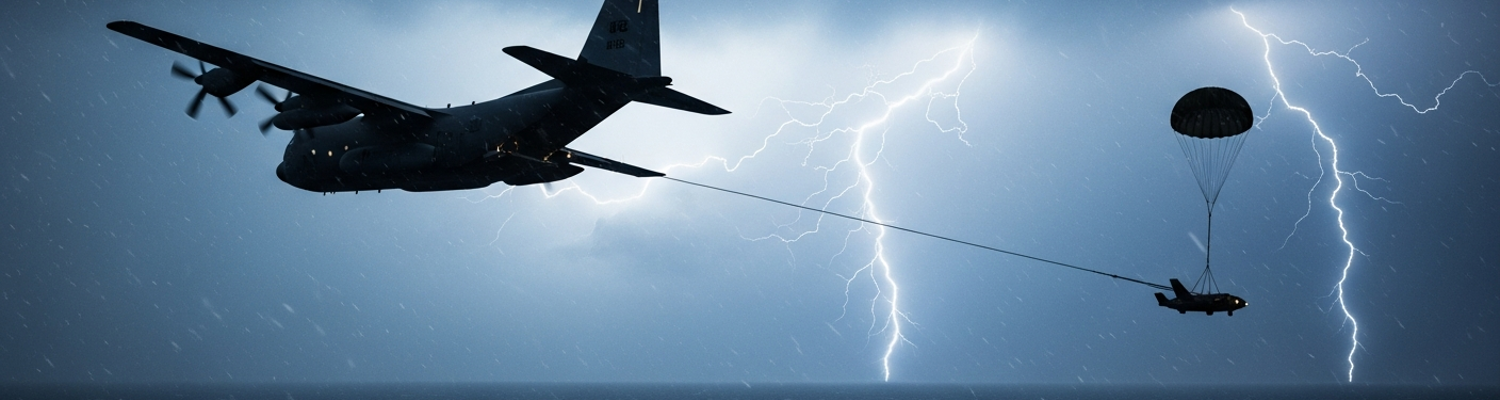
Strategic intelligence programs in 1962 were in a state of high-stakes transition. The era of the high-altitude spy plane had ended abruptly on May 1, 1960, when a Soviet SA-2 surface-to-air missile destroyed Francis Gary Powers’ U-2 aircraft near Sverdlovsk. That event forced a rapid acceleration of the clandestine satellite program that had been running in parallel, a joint CIA and Air Force effort publicly known by its cover name, DISCOVERER. The classified program, codenamed CORONA, was designed to photograph denied territory from the sanctuary of space. Its operational status by 1962 was one of success after a disastrous beginning. A long string of launch failures and lost film capsules had plagued its first two years. By early 1962, the system was hitting its stride. The operational variant was the KH-4 CORONA, a satellite that carried two Itek panoramic cameras. After exposing thousands of feet of 70mm film over target areas, the satellite would eject a reentry vehicle, a blunt-nosed capsule nicknamed the film bucket, which would deploy a parachute over the Pacific Ocean. Specially equipped C-130 aircraft from the 6594th Test Group, flying out of Hawaii, would then attempt a mid-air recovery, snagging the parachute with a system of hooks and winches. This was the only way to get the intelligence back to earth.
This was not real-time intelligence.
The capabilities of this nascent space-based imagery intelligence, or IMINT, were both revolutionary and limited. The KH-4 system operational in 1962 could, under ideal conditions, achieve a ground resolution of approximately 7.5 meters. A trained analyst at the newly formed National Photographic Interpretation Center (NPIC) in Washington, D.C., could use this imagery to identify major military installations like airfields and naval ports. They could count bombers on an airfield or ships at a pier. They could not identify the specific model of an aircraft or determine the contents of crates on a dock. The entire process was defined by long delays. From the moment the satellite ejected its film capsule, it could take days for the film to be recovered, flown to the United States, developed, and delivered to the NPIC for analysis. Cloud cover was a persistent obstacle.
The primary function of overhead surveillance was to substitute for the absence of human intelligence. It was the only reliable method for peering behind the Iron Curtain to gauge the true state of Soviet military power. The intelligence provided by early U-2 flights and the first successful CORONA missions had been instrumental in confirming that the Soviet ICBM force was far smaller than previously feared. This intelligence could act as a stabilizing force, providing a check against worst-case-scenario military planning. The existence of this growing capability, however, formed a complex problem for the Northwoods proposal. Any large-scale fabrication, such as staging a mock battle at the Guantanamo Bay Naval Base, would have to account for the possibility that its own nation’s reconnaissance assets might capture conflicting information. This would create an evidentiary contradiction that would be difficult to explain within the highly compartmentalized intelligence community.
### The Unblinking Witness
The Pentagon’s operational planning for Operation Northwoods exposed a vulnerability that the Joint Chiefs of Staff seemed to underestimate: the emerging technology of space-based reconnaissance. A KH-4 passing overhead would have captured imagery showing no craters, no destroyed aircraft, and no troop movements consistent with a real engagement at Guantanamo Bay. The photographic record, once developed and analyzed at NPIC, would directly contradict the fabricated narrative of Cuban aggression. It would create an immutable piece of evidence against the operation’s own architects.
The truth, however grainy, was now a physical object to be captured.
The core challenge for the Northwoods planners was maintaining narrative consistency against a new form of truth. The delay between image capture and analysis at NPIC could be days or weeks. A fabricated event, such as the sinking of a U.S. ship in Guantanamo Bay, could be executed and used as a pretext to launch an invasion of Cuba. The war could be underway before the satellite’s film capsule was even recovered. However, the subsequent analysis of that film would inevitably reveal the deception to the intelligence community. Photo-interpreters at NPIC, who worked in a secretive world of their own, would see a ship that was not attacked but deliberately destroyed. Their findings would stand in stark contrast to the official justification for the war, creating a schism within the U.S. government. The CIA, which had a contentious relationship with the DoD, would be in possession of photographic proof that the military had lied to the President and the American public to initiate a conflict.
An examination of orbital mechanics and intelligence practices of the era suggests that planners could have attempted to manipulate the perception of this new space-based intelligence. The orbits of CORONA satellites were predictable. With careful timing, a staged event could be scheduled for nighttime hours or during periods of heavy cloud cover, effectively blinding the eye in the sky. Another potential tactic would have been to exploit the known limitations of the imagery itself. A ground resolution of 7.5 meters could identify large structures but struggled to provide definitive identification of smaller objects. An analyst might see ambiguous vehicle tracks but be unable to state with certainty what had occurred. Northwoods planners could have gambled on this ambiguity, hoping to dismiss any contradictory satellite data as inconclusive or subject to misinterpretation. It would have been a calculated risk, betting that a fabricated ground truth, amplified by propaganda, could overwhelm the quiet, delayed, and imperfect truth captured on a strip of film from space.
### Rejection in the White House
White House meeting logs from March 1962 document the moment the Northwoods proposal was terminated. In a meeting attended by President John F. Kennedy and his senior civilian leadership, Chairman Lyman Lemnitzer presented the core concepts of the plan. The President’s response was immediate. He stated unequivocally that the United States would not use overt military force to take Cuba and rejected the premise of manufacturing a cause for war. The rejection marked a definitive break in trust between the civilian executive and the military command. Kennedy was reportedly appalled by the proposal to conduct attacks on American soil and against civilians. Within months of this meeting, General Lemnitzer was denied a second term as Chairman and reassigned to the post of Supreme Allied Commander of NATO. The move was widely seen as a direct consequence of his advocacy for the Northwoods plan.
The proposals were not for actions that might risk civilian casualties as a secondary effect, but for operations where the killing of innocents was the primary mechanism for success. Schematics detailed sinking a boat of Cuban refugees, staging a terror campaign in American cities, and orchestrating fake funerals for fabricated victims. This strategy treated human beings as props and public opinion as a target for psychological manipulation.
This willingness to deceive created a profound threat to the integrity of future intelligence operations, specifically the United States’ space reconnaissance programs. A KH-4 CORONA satellite passing over Guantanamo Bay after a faked Northwoods battle would have captured imagery showing no craters and no tactical deployments consistent with fabricated reports. This would create an irreconcilable conflict within the U.S. intelligence community. The National Photographic Interpretation Center would possess a photographic record that directly contradicted the official military narrative. Their analysis would reveal the deception, creating a permanent, undeniable piece of evidence that the Department of Defense had lied to initiate a war. The very existence of a plan like Northwoods threatened to poison the well for all future intelligence. If the military demonstrated a willingness to fabricate events on the ground, any reconnaissance imagery would lose its value as a baseline for reality. The plan’s architects, in their desire to create a pretext for war, were willing to risk the credibility of the very tools designed to prevent one.