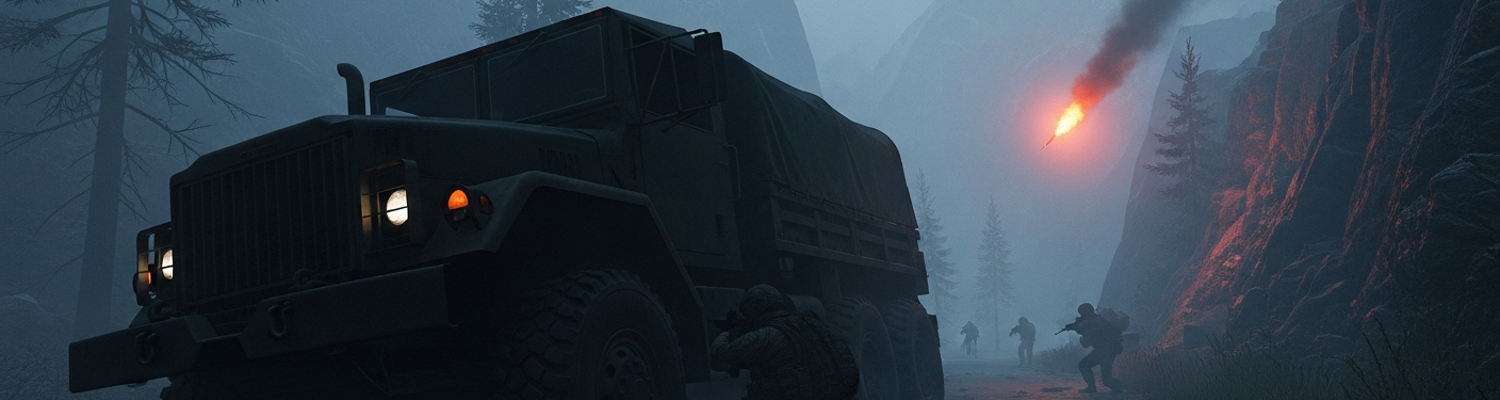

Drina Valley Topography and Logistical Hazards
A distorted transmission cut through the static. It reported a jackknifed truck, a complete road blockage, and the sudden sound of small arms fire echoing through a gorge. The convoy was trapped. This was the Drina River Valley in 1995, a place where standard military logistics broke down. For the United Nations Protection Force (UNPROFOR), the valley was a persistent operational problem. Its corridors were known ambush alleys, logistical black holes that consumed supplies, vehicles, and lives.
Topographical data and after-action reports from the period reveal a terrain almost purpose-built for disaster. The Drina carves through deep, narrow canyons of the Dinaric Alps. Roads were often little more than gravel tracks cut into the limestone cliffs. These routes, clinging to the mountainsides, were characterized by a relentless series of hairpin turns and steep gradients. There were few, if any, guardrails. An error of inches could result in a multi-ton vehicle plunging into the ravine below. The region’s microclimate added another layer of danger. A thick blanket of fog would often rise from the river, shrouding the switchbacks and reducing visibility to near zero. This combination of narrow roads and poor visibility created natural chokepoints. A single disabled vehicle could paralyze an entire convoy, making it a static target for forces concealed on the high ground.
Into this environment, UNPROFOR sent the M939-series 5-ton truck. It was the workhorse of the mission, a 6x6 cargo hauler designed to move a 10,000-pound load. The M923 cargo variant, a common sight in UN convoys, was a rugged and ostensibly capable vehicle powered by a Cummins NHC 250 diesel engine. Yet, it possessed design characteristics that made it unsuited for the Drina Valley. Archival maintenance records point to two major flaws: a high center of gravity and a problematic braking system. The truck’s height, especially when fully loaded, made it unstable on the sharply canted turns of the valley roads. More perilous was the air-over-hydraulic brake system on earlier models, a known point of failure later subject to safety retrofits under MWO 9-2320-272-35. Under the strain of navigating repeated, steep descents with a heavy load, the brakes were prone to overheating and fading. A driver descending into the valley was fighting not only the terrain but the mechanical limitations of his own vehicle.
A fully loaded M923, weighing well over 20,000 pounds, would begin its descent into a fog-filled gorge. The driver, wrestling with the wheel through another hairpin turn, would be constantly on the brakes. As the brake fluid heated, stopping power would diminish. On a wet, gravel-strewn surface, a slight over-application of the remaining brakes could lock the wheels, sending the massive truck into a skid. The trailer would overtake the cab. In seconds, the vehicle would jackknife, its length completely blocking the narrow road. Behind it, the rest of the convoy would grind to a halt, trapped between the cliff face and the sheer drop, exposed.
Catastrophic Vehicle Failure and Convoy Paralysis
Operational logs from the IFOR transition period pinpoint the moment of collapse to a single vehicle: callsign Victor-Niner-Four, an M939-series 5-ton truck positioned seventh in a twelve-vehicle column. The truck, an M923A1 variant, was struggling up an 8-degree gradient on a section of the M-19 highway north of Foča. Maintenance records (Form DA-2404) show the vehicle had been flagged for transmission fluid leaks two days prior, a common complaint with the Allison MT654CR automatic transmissions under the strain of constant low-gear mountain driving. At 22:47 local time, as the driver attempted to downshift to maintain momentum, a failure occurred within the gearbox. The torque converter, already superheated, experienced a sudden loss of hydraulic pressure. This caused the clutch packs for the lower gears to disengage violently. The resulting percussive bang of shearing metal echoed from the truck’s undercarriage. The driveshaft seized. Twenty-five thousand pounds of steel, fuel, and cargo lurched to a halt, locking the rear wheels completely.
The convoy’s artery was blocked.
Inside Victor-Niner-Four’s cargo bay, secured under canvas, sat the entire combat resupply for the Danish contingent at UN Observation Post Alpha, an isolated position overlooking the Goražde safe area. The cargo manifest tells a story of need. It listed four hundred rounds of 120mm high-explosive mortar ammunition (NSN 1315-00-028-4841), eighty crates of 7.62x51mm NATO rounds, and medical supplies, including blood plasma. This shipment was an emergency replenishment following a series of probing attacks that had nearly exhausted the outpost’s defensive capabilities. The mortar rounds were particularly important. They provided the Danes with their only means of indirect fire to break up enemy formations. The loss of this single truck effectively neutered the outpost’s ability to defend itself for more than a few hours of sustained contact. The failure of a single gearbox on one truck had just handed a tactical advantage to any hostile force observing them from the darkened ridgelines.
The immediate effect was a chain-reaction of brake lights down the length of the column. The eleven other trucks, each maintaining a regulation 50-meter interval, halted in sequence. Engines idled for a moment before, one by one, they were cut. A sudden silence fell over the narrow gorge, broken only by the pinging of cooling engine blocks and the rush of the Drina River in the darkness below. Per standard operating procedure in a high-threat area, drivers and escorts killed their headlights, plunging the convoy into near-total blackness. They were now a static, two-hundred-meter-long target. Any attempt to turn the massive trucks around was impossible on the narrow track. Reversing the entire column back down the winding, broken road in the dark courted an even greater disaster. They were trapped, blind, and exposed. The radio operator in the lead vehicle began sending coded messages back to a headquarters fifty miles and a mountain range away.
Ambush Dynamics and Immediate Threat Response
The quiet lasted less than a minute. It was shattered by the crack of a Zastava M76 sniper rifle, its 7.92x57mm Mauser round striking the cab of the lead escort vehicle. A split second later, a green tracer round from a PKM machine gun arced out of the blackness from the high ground. This was the signal. A coordinated volley of fire erupted from at least three pre-sited positions on the opposing valley wall. It was a textbook linear ambush against a stationary target. The initial fusillade was a mix of 7.62mm machine-gun fire and 82mm mortar rounds. Analysis of the vehicle damage indicated the attackers immediately targeted the front and rear of the column, a classic tactic designed to cripple any chance of escape and box the convoy into a kill zone. The mortar rounds, with their high-angle trajectory, plunged down behind the thin cover offered by the trucks, air-bursting over the exposed road and spraying shrapnel.
Return fire was nearly impossible.
The tactical challenges for the convoy’s security element were overwhelming. Plunged into darkness and shrouded in river fog, the UNPROFOR soldiers could not acquire viable targets. Muzzle flashes from the attackers were fleeting, their positions obscured by terrain and mist. The restrictive UN rules of engagement for the period complicated any response. They demanded a confirmed hostile act and a positive identification of the target before force could be used, an impossible standard in the swirling chaos. Dismounting from their vehicles, the soldiers were caught between the vertical rock face on one side and the sheer drop into the gorge on the other. This geography funneled them into a narrow trap with no room for flanking maneuvers. Any attempt to organize a counter-attack was nullified by the terrain. The Danish escorts, equipped with C7 rifles and C6 machine guns, were firing blind. Their own muzzle flashes provided the hidden attackers with perfect reference points for return fire.
An examination of the attack pattern reveals the attackers’ complete dominance of the terrain. The Bosnian Serb Army (VRS) units in this region were masters of using the landscape as a weapon. Their firing positions were not random; they were selected to provide interlocking fields of fire that covered the entire length of the paralyzed convoy. From their elevated vantage points, they engaged in plunging fire, a technique that sends rounds down at a steep angle, largely negating the cover provided by a vehicle’s chassis or engine block. The sound of the gunfire, amplified and echoed by the canyon walls, created immense psychological pressure, giving the impression of a much larger attacking force. Rocket-propelled grenades (RPGs) were fired not just at the personnel, but specifically at the tires and engine compartments of the trucks, a deliberate effort to ensure the vehicles could not be moved. Every soldier seeking cover understood that an unseen enemy on the high ground could be drawing a bead on their position at any moment.
Battlefield Reporting vs. Command Center Sitreps
The first public alerts of the convoy’s distress did not come through official military channels. They came from a BBC World Service correspondent embedded with a separate UN patrol on a ridgeline several kilometers away. Using a bulky Magnavox MX-2400 Inmarsat-A satellite phone, he began broadcasting fragmented, live accounts of the events unfolding in the valley. His connection was unstable, the audio frequently distorted by data dropouts, but the information was immediate. The broadcast, picked up by news desks from London to Washington, painted a picture of chaos. Listeners heard the correspondent’s strained voice describing the eruption of green and red tracers crisscrossing the dark valley floor, the crump of mortar shells, and secondary explosions. He could not identify units or provide tactical specifics; he was an observer relaying sensory data in real time, his report punctuated by the crackle of small arms fire and the shouts of soldiers in the background. This was the ground truth, unverified and unfiltered, broadcast globally before the first official situation report had even been drafted.
Inside the primary UNPROFOR command center in Zagreb, Croatia, the operational picture was forming at a glacial pace. This multi-national headquarters, located hundreds of kilometers from the Drina Valley, was a sterile environment of maps and computer terminals. Information did not arrive here as a chaotic audio feed; it arrived through a rigid, multi-layered communications protocol. The convoy’s initial distress call, a coded burst transmission, was first sent to the Nordic Battalion headquarters in Tuzla. There, the message was logged, cross-referenced, and formatted into a standardized situation report (SITREP). This document, stripped of the radio operator’s panic, was then relayed up the chain to the Sector Northeast headquarters before finally being transmitted via a secure data link to the main command center in Zagreb. Each step added minutes of delay. Communications logs indicate that by the time the first official SITREP appeared on a screen in Zagreb, the BBC correspondent had already been broadcasting live for over eight minutes, describing multiple vehicles on fire. The terse, text-only message simply read: UNMO-77 CONVOY HALTED. CONTACT. SMALL ARMS FIRE.
This information disconnect was not merely a time lag; it was a fundamental difference in the quality of the information itself. The SITREPs arriving in Zagreb were clinical and concise. They were data points to be placed on a digital map: grid coordinates, unit designators, and categorized threat levels. A report might mention “one vehicle disabled,” failing to convey that the M939 truck was a flaming wreck blocking the only escape route. It might report “light casualties,” a term that provides no insight into the triage being performed under fire or the fact that the convoy’s only medic was among the first hit. The officers in Zagreb saw a symbol on a screen that indicated contact. The global audience listening to the BBC heard a battle. This sanitization was a feature of the military reporting system, designed to prevent overreaction. In a fast-moving ambush, this procedural caution created a tactical blindness. The commanders were making decisions about rules of engagement and potential air support based on information that was not only ten to fifteen minutes old but had been systematically stripped of the context and urgency that would justify a decisive response.
Command Isolation in the Zagreb Bubble
The UNPROFOR communications protocols of 1995 were designed for deliberation, not speed. The primary command center in Zagreb was a node in a hierarchical and fragmented information network, physically and operationally detached from the battlespace. The initial burst transmission from the ambushed Drina convoy did not go directly to the senior commanders. Per doctrine, it was routed to the Nordic Battalion’s tactical operations center in Tuzla. There, a duty officer, following procedure, had to log the transmission, translate the Danish radio chatter into standardized English, and manually input the data into a formal SITREP. This digital text file was then uploaded via a slow satellite link to the Sector Northeast headquarters. Only after being vetted and re-formatted by sector staff was the information forwarded to the main command hub in Zagreb.
Each step introduced delay.
Archival logs show the time lag between the first shot fired and the corresponding icon blinking on the main strategic map in Zagreb was between twelve and eighteen minutes. In that time, the tactical situation on the ground had changed completely. The commanders in Zagreb were viewing a ghost of the past. Their primary tool, a World Geodetic System-based digital mapping suite, presented the conflict as a set of sterile icons on a topographic background. A blue square marked “UNMO-77” was shown as “Engaged,” a clinical description for a column of burning trucks and wounded men. The decisions made in this environment were, by necessity, detached. A request for Close Air Support (CAS) was not a simple radio call. It was a formal digital request populated with target coordinates, collateral damage assessments, and a justification based on the approved Rules of Engagement. This request would then be debated by a multinational staff of liaison officers, each with their own national caveats and political considerations. The commander saw a request on a screen; the soldiers in the valley saw the enemy setting up a new mortar position on the ridge above them, unopposed.
The information arriving at the command center was not only delayed, it was filtered. The raw terror of being under a mortar barrage, the knowledge that the convoy’s only medic was down, the smell of diesel fuel mixing with blood, these ground truths did not survive the journey up the reporting chain. They were abstracted into phrases like “light casualties” or “vehicle mobility kill.” The officers in Zagreb were not seeing the battle; they were reading its index. A decision in Zagreb to “continue to monitor the situation” and “avoid escalation,” based on a fifteen-minute-old report of “minor contact,” was received in the valley by a platoon sergeant trying to organize a defense with half his men pinned down. A key decision was made regarding the use of counter-battery fire from a French artillery unit positioned 20 kilometers away. The request from the convoy was for immediate suppression. In Zagreb, the target coordinates were plotted on the digital map, which showed them to be within 500 meters of a pre-designated no-fire zone established weeks earlier. The map did not show that the settlement had been abandoned for months, a fact known to every soldier in the valley. Based on the data available in the command bubble, the fire mission was denied. This denial, a logical decision within the operational vacuum of the headquarters, directly resulted in the unimpeded continuation of the mortar attack on the exposed UN soldiers.
The Physics of Survival
A forensic analysis of shrapnel patterns indicates the projectile was a standard 82mm M-74 high-explosive mortar round of Yugoslavian manufacture, fired from an M-69A launcher. For a Danish combat photographer attached to the convoy’s security element, the distinction was academic. He was crouched behind the rear axle of an M923 truck, reloading his camera, when the round impacted. The detonation occurred less than ten meters away on the hard-packed gravel. There was no preceding whistle, only a sudden tearing of the air followed by a concussion that momentarily liquified the ground. A wave of overpressure slammed into his body. The space he had occupied a second before was saturated with a spray of superheated, jagged cast-iron fragments. The round’s design favored fragmentation over blast effect. Post-blast analysis showed the casing had shattered into hundreds of small, irregular pieces. One fragment tore through the canvas tilt of the truck bed above him, while another embedded itself in the truck’s solid rubber tire inches from his head. He was untouched. A Swedish soldier taking cover twenty feet away fell silently, struck by a single piece of metal that had found the gap between his helmet and body armor.
Survival was measured in inches and seconds.
The chaos of the initial mortar impacts drove soldiers to seek any viable cover. One Danish section, pinned down between a burning truck and the cliff face, began preparations for a tactical withdrawal to a less exposed position fifty meters down the road. It was a shallow bend that seemed to offer better defilade. Just as the section leader gave the signal to move, a parachute flare ignited high above the valley. A French Foreign Legion patrol, operating on a nearby ridge, had fired an 81mm illumination round to pinpoint the VRS mortar positions. For forty-five seconds, the gorge was bathed in a cold magnesium glare. In that light, the Danish soldiers saw what the darkness had concealed. The entire surface of the road at the bend ahead of them was dotted with the unmistakable pressure plates of TMA-3 anti-tank mines. A post-incident survey by EOD teams would confirm the presence of over a dozen of the devices, their plastic casings and minimal metal content making them nearly impossible to detect with standard equipment. They had been laid specifically to trap any vehicles attempting to reverse out of the kill zone or any personnel trying to flee on foot. The intended escape route was a death trap.
The canyon walls caused sound to echo in disorienting ways, making it impossible to determine the true location of enemy fire. Bullets and shrapnel ricocheted from the limestone cliffs at bizarre angles, injuring soldiers who believed they were in solid cover. The burning M939 trucks became their own random threat, with tires exploding and fuel tanks rupturing at unpredictable intervals. A soldier’s survival was less dependent on his training and more on a random confluence of events: the exact trajectory of a piece of metal, the momentary flicker of a flare, or the simple decision of where to place his foot in the dark.
Aftermath and Doctrinal Recalibration
The engagement was broken hours later by the arrival of French armored elements from the Rapid Reaction Force. Recovery of the convoy took two days. Of the twelve trucks, two were completely destroyed by fire, including Victor-Niner-Four. Five others were rendered non-operational due to damage from shrapnel and RPGs. The incident was documented in a formal After Action Report, AAR-DRINA-95-04, circulated at Sector Northeast headquarters.
Its findings were clinical. The report did not speak of terror or confusion. It identified specific failures in equipment, procedure, and communication architecture. One key recommendation pointed to the information lag between the tactical units and the operational command in Zagreb. It proposed a pilot program to equip lead vehicles in high-threat convoys with Inmarsat-C data terminals, allowing for the direct transmission of formatted SITREPs to a shared server accessible by both sector and UNPF command simultaneously. This would flatten the reporting chain.
A second finding focused on the M939 series trucks. The report recommended an immediate theater-wide inspection of all Allison MT654CR transmissions and a re-evaluation of their suitability for sustained mountain operations. It also noted the denial of the counter-battery fire mission, cross-referencing the request time with the outdated map data used in Zagreb. The final addendum was a dry, single-line recommendation. It suggested a procedural change requiring that all no-fire zone designations be visually confirmed by ground or air assets every 72 hours. The document did not offer a philosophical takeaway. It was a bureaucratic solution to a lethal problem.