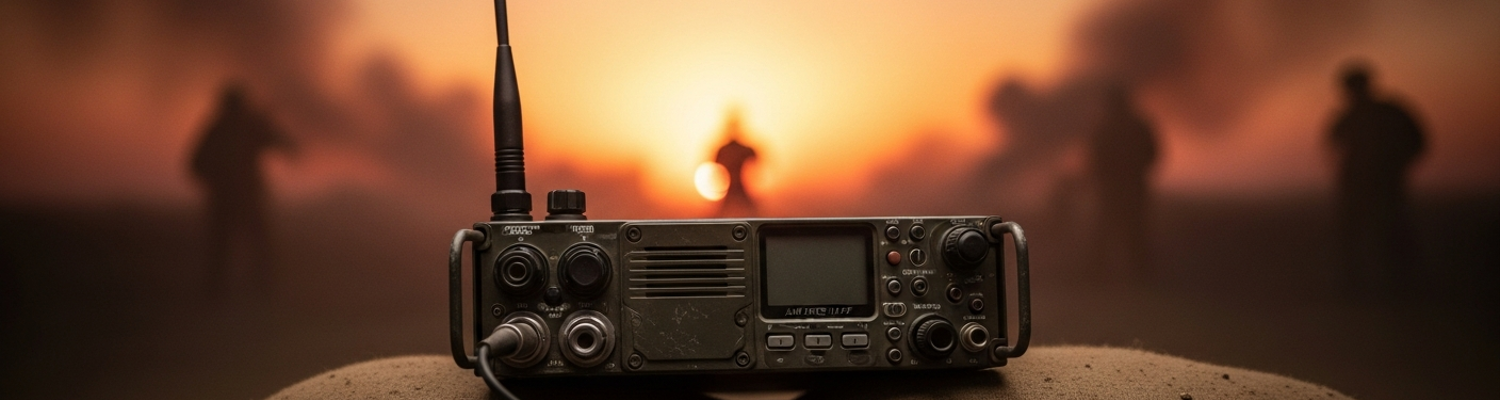

The plastic handset of the Single Channel Ground and Airborne Radio System felt inert in the squad leader’s hand. He clicked the press-to-talk switch. Again. Nothing. Somewhere in the dense warren of Fallujah’s side streets, a support-by-fire position had gone deaf. Their connection to the platoon commander was severed not by enemy action, but by a systemic failure deep within the supply chain that had put the radio in his hands. The grinding wasn't in the gears of a Humvee, but in the vast, bureaucratic machinery of defense procurement.
This was a single point of failure. A symptom of a systemic disease.
A close review of the historical record points to a massive disconnect between spending and fielding. The Fiscal Year 2004 Defense Contract Action Data System (DCADS) findings laid the problem bare in stark financial terms. Department of Defense prime contract awards for that year alone totaled $230.7 billion, a notable increase from the year prior. Of this sum, billions were awarded for research and development on future systems, while units in contact were reporting shortfalls of basic equipment. The data reveals a system incentivized by rapid obligation of funds, not the rapid delivery of usable equipment. The Pentagon’s budget for fiscal year 2004 exceeded $460 billion when including supplemental war funding, yet the process for getting essential gear to the front was fraught with delays.
Nowhere was this dysfunction more apparent or more dangerous than in the acquisition of secure tactical communication and cryptological equipment. The promise of the digital battlefield, a core tenet of the military’s transformation effort, hinged on next-generation hardware. The centerpiece of this effort was the Joint Tactical Radio System (JTRS), a program initiated in 1997 to create a family of software-defined radios. By the early 2000s, JTRS was already becoming a case study in acquisition failure. The program was beset by constant delays, cost overruns, and technological hurdles. A Government Accountability Office report from 2003 highlighted that the program had proceeded into development with immature technologies, a violation of best practices. While billions were being spent on JTRS development, a program that would ultimately consume over $6 billion without fielding a single radio in its first 15 years, the Army was forced to spend an additional $11 billion on existing radio systems just to keep units communicating.
This opaque and sluggish budgeting process had direct tactical consequences. Units in Iraq and Afghanistan were forced to rely on aging SINCGARS variants and make urgent requests for modern, multi-band manpack radios like the AN/PRC-117F. Even when these radios were fielded, it was often through accelerated Operational Needs Statements. This was a reactive measure to fill capability gaps that the standard procurement system had failed to address. The lack of sufficient secure, encrypted radios meant fire support requests were sometimes delayed. Command and control became tenuous. Units could not fully leverage the data and networking capabilities that were supposed to give them an edge. The cryptographic modernization needed to keep pace with battlefield threats was constantly lagging, with the Army still working to replace outdated equipment and standardize crypto systems well into the next decade. The gap between the promise of network-centric warfare and the equipment in a soldier’s rucksack was measured in static and dropped signals.
The promise of a networked, digital battlefield was contingent on a family of next-generation radios that simply did not exist. At the heart of this failure was the Joint Tactical Radio System. A close review of program records and Government Accountability Office reports shows that JTRS was pushed into development with immature technologies and burdened by constantly changing requirements. The most important component for ground forces, the Ground Mobile Radio (GMR), was canceled in October 2011 after years of delays. The hardware had ballooned in size and weight, becoming entirely impractical for vehicle integration. After 15 years and an expenditure of over $6 billion, the JTRS program had not fielded a single production radio to infantry units. This forced the Department of Defense to spend an additional $11 billion on existing radio systems just to keep units in contact.
This failure cascaded directly to the manpack level.
The procurement breakdown had a direct and measurable impact on Army units operating in the disaggregated combat environments of Iraq and Afghanistan. A 2003 report from Iraq, based on soldier interviews, noted that standard-issue squad radios were so unreliable that troops had no confidence in them and were purchasing their own commercial radios. In the mountains of Afghanistan, units like Task Force Rock in the Chowkay Valley found themselves pinned down in 2010, burdened by a collection of incompatible radios for short-range, long-range, and satellite communications. This patchwork of systems, aging SINCGARS, interim AN/PRC-117Fs, and handheld AN/PRC-152s, was often the result of urgent, reactive procurement. Fielding of the AN/PRC-117G, for example, was done largely through accelerated Operational Needs Statements (ONS) to fill capability gaps the standard system had created. For a platoon leader in the Korengal or a squad leader in Helmand, this meant command and control was a constant struggle. The inability to reliably communicate with adjacent squads, company headquarters, or supporting aircraft added a significant psychological weight, turning every patrol into a gamble on whether a call for fire support or a MEDEVAC would get through.
Beyond just making a connection, the delays severely hampered the Army’s crucial cryptographic modernization. The National Security Agency had established deadlines for older cryptographic algorithms, meaning continued use would pose a security risk. The Cryptographic Modernization Initiative was established to manage this transition, but it was entirely dependent on the fielding of new hardware capable of running modern Suite B encryption. The JTRS family of radios and the associated Warfighter Information Network-Tactical (WIN-T) were the intended platforms for this new crypto architecture. WIN-T itself was plagued by its own development problems. The mobile capability of WIN-T Increment 2, essential for mobile operations, was found to have major deficiencies in reliability and performance during a 2009 test, delaying its fielding. For soldiers on the ground, this meant they were often forced to operate with outdated encryption or use less secure channels, all while facing an enemy growing more sophisticated in signals intelligence. This constant, underlying uncertainty, that a radio might not work, that the network might drop, or that a transmission might be compromised, became a large, if unquantifiable, contributor to the sustained mental strain of combat operations.
Operational logs from Iraq and Afghanistan reveal a persistent gap between the collection of high-level intelligence and its dissemination to the tactical edge. The systemic failure to field reliable, encrypted communication systems created a digital divide measured in city blocks and mountain valleys. While strategic assets vacuumed up signals and imagery, that actionable information frequently failed to travel the last mile to the squad leader maneuvering through a Fallujah market or the platoon sergeant establishing an overwatch in the Korengal. The root cause was a procurement pipeline that spent billions on future-war concepts while simultaneously underfunding and slow-rolling the systems troops actually carried. The result was a dangerous paradox: the U.S. military possessed unprecedented intelligence-gathering capabilities, but its ability to push a simple, encrypted warning about a suspected IED or a sniper’s location to the soldier about to walk past it was chronically compromised.
In the disaggregated battlespace of Afghanistan, this communication lag was a constant threat. A patrol moving through the Chowkay Valley in 2010 found itself pinned down, burdened by a clumsy assortment of radios for different functions. The line-of-sight limitations of the aging SINCGARS radios in the deep valleys and rugged ridgelines of provinces like Kunar and Helmand were a known vulnerability. A squad in contact, separated from its platoon by a few hundred meters of rock, could find its primary voice link reduced to static. The single AN/PRC-117F multiband radio, often the platoon’s sole link to air support or MEDEVAC, became a point of critical failure. After-action reports detail the frantic process of attempting to establish a satellite connection while under fire, the handset passed from the radiotelephone operator to the platoon leader as they struggled to send a clear, encrypted request for fire support. This failure was not merely technical; it was profoundly psychological. The uncertainty of whether a call for help would get through added a layer of stress to every patrol, grinding away at a soldier's confidence in the very structure designed to support them.
The problem was just as acute in the dense urban centers of Iraq, where unreliable data links crippled situational awareness. The Force XXI Battle Command Brigade and Below (FBCB2), or Blue Force Tracker, was fielded to prevent fratricide and provide a common operational picture. Yet, the system was plagued by issues. Limited satellite bandwidth often meant the digital pipe was too small, forcing message sizes to be severely restricted. On the screens in a Tactical Operations Center or a Bradley Fighting Vehicle, the blue icons representing friendly units would often lag, showing positions that were minutes old. A fatal delay in a fluid urban firefight. This unreliability bred distrust. Commanders often fell back on voice traffic to confirm locations, clogging already strained radio nets and negating the system’s purpose. The inability to trust the data link meant that intelligence about enemy positions, passed from an over-watching drone to the battalion, might never reliably make it onto the screen of the M1 Abrams tank about to round the corner into an ambush. This constant fight with the equipment, a battle for bandwidth and connectivity happening concurrently with the firefight, became a tax on the mental endurance of every leader.
The breakdown of reliable, encrypted communications directly injected a lethal uncertainty into combat operations, elevating the risk of fratricide. A close review of operational logs reveals that this was not a hypothetical danger but a recurring event. The investigation into the April 17, 2002, incident at Tarnak Farms, Afghanistan, provides a stark illustration. On that night, Canadian soldiers from the 3rd Battalion, Princess Patricia’s Canadian Light Infantry, were conducting a live-fire training exercise. Two American F-16 pilots, returning from a mission, misinterpreted the ground fire as a hostile attack. Critically, the pilots were not briefed that the Canadian exercise was taking place. Cockpit recordings captured a fatal sequence of communication failures. The pilot reported seeing what he perceived as surface-to-air fire, received a command to hold fire from the AWACS controller, but then declared he was acting in self-defense and engaged. He released a 500-pound laser-guided bomb that struck the Canadian position, killing four soldiers and wounding eight. The investigation concluded the pilot flagrantly disregarded a direct order and that his belief of being under threat was unsupported, but the event exposed a deadly gap in shared situational awareness between air and ground elements, a direct result of a fractured communication chain.
On the ground, the unreliability of digital tracking systems like the Blue Force Tracker created a different but equally perilous form of digital fog. While the system was designed to prevent fratricide by displaying friendly unit locations, its performance in Iraq and Afghanistan was often compromised by data load and limited satellite bandwidth. This resulted in latency, where the blue icons on a commander’s screen could lag behind the unit’s actual position by several minutes. An eternity in a close-quarters firefight. This forced commanders to distrust the very system meant to keep them safe, reverting to voice commands over already-clogged radio nets to confirm locations and deconflict maneuvers. In the dense urban sprawl of a city like Fallujah or Sadr City, this meant two friendly units could be clearing opposite sides of the same building, completely blind to each other’s presence on the digital map and unable to get through on the radio, creating the perfect preconditions for a tragic blue-on-blue engagement.
The most catastrophic friendly fire incidents of the war were consistently linked to failures in the close air support (CAS) process. A breakdown in communication could lead to munitions dropped on the wrong coordinates. On June 9, 2014, this risk became a reality in one of the deadliest friendly fire incidents of the Afghanistan war. A team of U.S. Special Forces soldiers, maneuvering on a ridgeline to engage Taliban fighters in Zabul Province, called for air support. A B-1 bomber arrived on station, but a cascade of communication and equipment failures followed. The investigation found that the ground force did not properly communicate its position to the aircrew and that the bomber’s targeting pod was incapable of detecting the infrared strobe lights on the soldiers’ helmets, a standard piece of equipment used to mark friendly positions for aircraft. Muzzle flashes from the American troops were mistaken for enemy fire. Believing all friendly forces were 300 meters away from the target area, the aircrew released two 500-pound bombs directly onto the Special Forces team’s position. The strike killed five American soldiers and one Afghan soldier. The official investigation concluded the tragedy was avoidable, citing a collective failure by all key members to execute fundamental procedures and communicate effectively, resulting in a complete loss of situational awareness and improper target identification.
Operational logs and soldier interviews from the early-to-mid 2000s reveal a consistent, gnawing stressor that operated independently of enemy action: the unreliability of tactical radios. For a squad leader in the Pech or Korengal valleys of Afghanistan, the SINCGARS manpack radio was both a lifeline and an anchor. The mountainous terrain severely degraded the performance of these VHF-FM radios, which depend on line-of-sight transmission. A patrol separated from its platoon by a single ridgeline could find its primary communications link reduced to indecipherable static. This technical limitation translated into a profound psychological weight. Every movement into a new valley or around a rocky spur was a gamble on whether a call for fire support or a MEDEVAC request for a wounded soldier would get through. This was not a hypothetical fear. It was a constant, corrosive presence in a leader’s mind, forcing them to dedicate a large portion of their mental load not to the enemy, but to fighting their own equipment. The anxiety was compounded by the physical reality of the gear, heavy, cumbersome, and power-hungry, requiring a constant supply of batteries that added more weight to an already crushing load.
This was a tax paid in mental endurance.
The failure of a radio injected a deep and personal sense of isolation into the chaos of a firefight. The mental burden fell heaviest on small unit leaders, who were caught between the tactical necessity of maneuvering their troops and the absolute requirement to maintain contact with their higher headquarters. A 2003 report based on soldier feedback from Iraq bluntly stated that troops had no confidence in their standard-issue squad radios, citing unsatisfactory range. This distrust became a major mental burden. Instead of focusing on the developing firefight, a platoon leader would be consumed by the secondary battle of just trying to talk. They were forced to run through a frantic mental checklist. Was the encryption fill correct? Was the antenna seated properly? Did the battery just die? This internal monologue, running parallel to commands to shift fire or move to cover, created a state of sustained mental overload. The fear was not just about mission failure, but about letting down their soldiers, the inability to get help when one of their own was hit because the one piece of equipment designed for that exact purpose had failed.
This led many soldiers to seek their own solutions. A common, if officially condemned, practice was the private purchase of commercial off-the-shelf radios. Units in Iraq were noted to be using their own funds to buy consumer-grade handheld radios that they perceived as having better range and power. While this sometimes solved the immediate problem of intra-squad communication, it introduced a host of new anxieties. These unencrypted commercial systems were a major security risk, offering a clear window into unit movements and intentions for any adversary capable of basic signals monitoring. Leaders were then trapped in an impossible choice: use the unreliable but secure official system, or switch to a clear, unsecure channel just to maintain command and control. This ad-hoc approach created a patchwork of competing systems within the same platoon, with some soldiers on SINCGARS, some on commercial radios, and the platoon’s single, precious satellite radio serving as the only reliable link to the outside world, creating a point of failure. The stress came not just from the enemy, but from the constant, draining effort to simply hold the unit together with a web of faulty and insecure connections.
Archival evidence shows how the promise of a networked battlefield dissolved into a source of profound mistrust. The Force XXI Battle Command Brigade and Below (FBCB2), known as Blue Force Tracker, was designed to prevent fratricide by placing a friendly icon on a digital map. In the dense urban confines of Iraq, however, this system often became an instrument of doubt. The L-band satellite network it depended on was quickly overloaded, creating significant latency. For a Bradley commander scanning his screen during a firefight in Sadr City, this meant the blue icons representing adjacent platoons could be minutes behind their actual locations on the ground. An icon might show a unit three blocks away when, in reality, it was clearing the opposite side of the same building. This digital fog forced leaders to revert to voice communications over already-congested radio nets, constantly asking for location confirmation and negating the entire purpose of the system.
It was an existential problem.
The psychological weight of this unreliability was enormous. A soldier could no longer trust the very technology meant to provide certainty. Every blue icon on the screen became suspect, a potential ghost. This bred a specific, corrosive fear: that a friendly vehicle, appearing on no one’s screen, could round a corner and be engaged. This fear inverted the soldier’s focus, forcing mental energy away from the enemy and toward second-guessing their own digital safety net. The mental process was exhausting, a continuous loop of checking the screen, distrusting the data, attempting to confirm by voice, and then acting on incomplete information. It eroded a soldier’s confidence not in their fellow soldiers, but in the systems that connected them, creating a deep-seated anxiety that the greatest threat might not be a red icon, but a blue one that failed to appear.
This fear was amplified exponentially when dealing with air support. The process of a Joint Terminal Attack Controller (JTAC) guiding a B-1 bomber onto a target is a complex sequence of communication and technical confirmation. Any failure in that chain could be catastrophic. The fear of misidentification was a constant factor in Close Air Support (CAS) operations. A ground unit’s primary means of marking its own position for an aircraft, an infrared strobe, could be missed by a targeting pod. A set of coordinates passed over a staticky radio link could be misheard by a single digit. This created a dual-edged terror for the ground soldier. They feared the enemy they were calling fires on, but they also carried a deep-seated dread of the overwhelming firepower they were trying to control. The soldier on the ground knew that a communication breakdown, a dead battery in their AN/PRC-152 handheld or a garbled transmission, could turn their greatest asset into the instrument of their own destruction. This constant, low-level dread of being on the receiving end of a friendly 500-pound bomb was a persistent contributor to the psychological erosion experienced by troops in sustained contact.
Frontline medical records and reports from Combat Stress Control (CSC) teams in Iraq and Afghanistan identify a consistent pattern of behavioral degradation that preceded a formal psychological breakdown. The official terminology was Combat Stress Reaction, or COSR, a condition distinct from PTSD, characterized by short-term but severe behavioral changes. Medics and Behavioral Health Officers observed a common suite of symptoms in soldiers who were approaching a breaking point: a marked slowing of reaction times, a pronounced difficulty in making decisions, and a general disconnection from their immediate surroundings. Soldiers would exhibit a loss of initiative, becoming preoccupied with minor, routine tasks while ignoring urgent tactical priorities. This was not laziness. It was a symptom of profound mental exhaustion. The findings from forward operating bases described soldiers presenting with physical complaints like headaches and nausea, but also with less tangible signs like deep fatigue, moodiness, irritability, and an inability to concentrate or sleep.
These were the observable symptoms of a system overload.
The physiological toll of this mental exhaustion was significant. A soldier’s brain, forced to operate under sustained high-stress conditions, consumes a disproportionate amount of the body’s energy. The constant demand to process tactical information, regulate fear, and maintain situational awareness becomes a heavy metabolic load. When the added burden of unreliable equipment was introduced, this load became unsustainable. The mental effort required to fight a faulty radio, to diagnose a dropped signal, switch to an alternate channel, or attempt to re-establish a satellite link, all while under fire, dramatically increased a soldier’s mental load. This was not just frustrating; it was physically draining, accelerating the onset of mental fatigue. Medical evaluations noted that this state of prolonged mental effort led to measurable physical effects, including increased sympathetic nervous system activity, the fight or flight response, which, when sustained, prevents both mental and physical recovery. Soldiers were trapped in a state of hypervigilance, their bodies unable to downshift, leading to the exhaustion and emotional dysregulation observed by frontline medics.
This constant, equipment-induced friction was a direct pathway to the breaking point. The link was the concept of mental saturation, where a soldier’s working memory becomes so overloaded with managing their own dysfunctional systems that there is no capacity left for tactical decision-making. A platoon leader whose Blue Force Tracker is lagging, forcing him to manually confirm every unit’s position via voice radio, is dedicating the majority of his mental bandwidth to a task that should be automated. A radioman trying to get a MEDEVAC call out through a wall of static is not just fighting the enemy; he is fighting a secondary, internal battle against his own gear. This secondary battle became the critical stressor. Archival evidence from soldier interviews reveals that the deepest anxiety often stemmed not from enemy contact, but from the fear of being unable to communicate when it mattered most, the fear of equipment-enforced isolation. This created a specific form of moral injury, a deep psychological distress born from the potential inability to save a fellow soldier because a radio failed. The breaking point was reached when a soldier’s confidence in their support structure, the very network of technology and personnel meant to protect them, completely eroded, leaving them feeling isolated and abandoned on the battlefield.