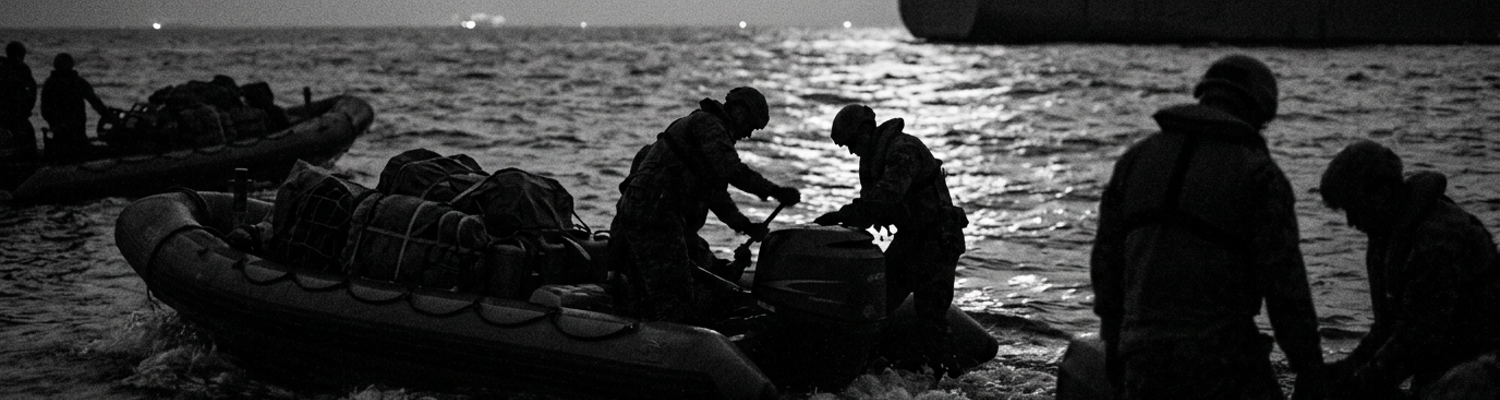

Southwest Pacific Pre-Assault Reconnaissance
At 0314 hours, the command ship receiver picked up a frantic voice transmission. The operator reported a blown cylinder head on the primary outboard motor. Saltwater flooded the rubber raft floorboards. Japanese 75mm tracer fire bracketed grid coordinates six-niner-alpha. Archival evidence shows this erratic radio burst marked the rapid deterioration of a covert nighttime sounding operation off the northern coast of New Guinea. General Douglas MacArthur established the Southwest Pacific Area command strategy in early 1944. He shifted focus toward a large-scale amphibious leapfrog maneuver. Directives issued from the Brisbane General Headquarters dictated bypassing the heavily garrisoned Japanese stronghold at Wewak entirely. Seventh Amphibious Force commander Rear Admiral Daniel E. Barbey required exact topographical data for the alternative landing beaches near Hollandia and Astrolabe Bay. Existing maritime charts of the Bismarck Sea dated back to 1893. Planners needed exact mud density measurements and tidal drop rates. Landing Ship, Tanks (LSTs) required this data to drop their ramps without grounding out a hundred yards from the sand. ALAMO Force infantry units could not risk wading through chest-deep water under enfilading machine gun fire.
Navy Combat Demolition Units received orders to conduct covert hydrographic surveys along these hostile coastlines.
NCDU Team 4 deployed from modified Patrol Torpedo boats stationed miles offshore. Personnel operated ten-man Landing Craft Rubber Small inflatables constructed of neoprene-coated canvas. These reconnaissance teams utilized lead-weighted sounding lines marked at one-foot intervals. The standard-issue kit included waterproofed flashlights, magnetic compasses, and slate boards. Navigating the jagged coral heads required the use of muffled 22-horsepower Evinrude outboard motors. Saltwater intrusion degraded the ignition systems immediately. Mechanics spent hours dismantling the outboard engines in total darkness. They drifted a few hundred yards from Japanese coastal batteries. The primary failure point involved the rubber gaskets sealing the magneto housing on the Evinrude blocks. Tropical humidity caused the ignition coils to short out repeatedly. Engineers improvised repairs using canvas scraps and heavy waterproof grease scraped from the PT boat steering quadrant. Maintenance crews pulled the fouled spark plugs. They dried them against their own skin under their foul-weather gear. They reset the gaps using a standard dime.
Japanese searchlights swept the water every fifteen minutes.
The sounding reel gears jammed constantly due to fine volcanic sand suspended in the surf zone. Operators disassembled the brass winding mechanisms with pliers while taking fire from shoreline sniper positions. They re-lubricated the bare gears with engine oil drained directly from the disabled outboards. One team spent forty minutes filing down a sheared brass drive pin using a rusty hand file. MacArthur planned an April 1944 assault requiring a minimum draft clearance of four feet over the fringing reef at low tide. NCDU personnel mapped the required 300-yard assault lane by physically walking the reef in neck-deep water. Crewmen dragged the heavy rubber boats behind them against the rip current. Specialists recorded the coral density and sand composition on their slates. They held their breath to avoid detection by passing Japanese patrol barges. The lead surveyor noted a sharp drop-off at fifteen fathoms. His primary waterproof flashlight suffered a cracked lens and short-circuited.
Task Force 76 Astrolabe Bay Operations
A close review of operational logs indicates Task Force 76 initiated classified amphibious assault preparations during the first week of January 1944. Seventh Amphibious Force command staff positioned their primary command echelon twenty miles northeast of Cape Cretin. This distance avoided Japanese coastal radar detection. Rear Admiral Barbey ordered a flotilla of High-Speed Transports to hold station at grid coordinates five-niner-charlie. These vessels were modified World War I destroyers designated as APDs. They carried the specialized reconnaissance personnel required to evaluate the heavily defended shoreline. Engine room crews aboard the USS Brooks (APD-10) struggled to maintain boiler pressure while operating at low speeds in heavy Pacific swells. Salt buildup fouled the steam condensers on a nightly basis. Machinists spent their off-watch hours manually scraping the brass condenser tubes with wire brushes. This prevented complete power loss. Deck officers synchronized their approach vectors using primitive SG surface-search radar sets. These early radar units dropped contacts frequently due to intense atmospheric interference generated by localized tropical squalls. Planning documents dictated a precise timeline for launching the small boats before the moon crested the horizon.
The entire command structure relied on absolute radio silence.
Archival evidence shows the primary objective centered on mapping the shallow coral reefs dominating the inner harbor approaches. Navy reconnaissance teams deployed from the APD davits at 0100 hours. They needed to identify clear channels for the incoming assault waves. Planners at General Headquarters understood standard Higgins boats required a minimum draft of three feet forward and four feet aft. This assumed a full load of thirty-six heavily armed infantrymen. The larger LSTs demanded at least nine feet of clearance. Driving these thin-hulled craft blindly into an uncharted barrier reef would strand the assault force. Japanese heavy machine gun emplacements would have direct elevation over the trapped vessels. The scouts utilized modified sounding poles constructed from hollowed aluminum tubing. They physically probed the coral heads. They measured the gaps between the outcroppings while operating in complete darkness. Silt kicked up by the heavy surf obscured the bottom entirely. Teams resorted to dragging heavy lead weights along the ocean floor by hand. This detected the transition from solid coral shelves to soft volcanic mud.
Sharp coral ridges shredded the canvas bottoms of the inflatable rubber rafts.
Surveyors spent up to six hours submerged in eighty-degree saltwater to map a single three-hundred-yard approach channel. The men tied themselves to the rubber boats using lengths of frayed manila rope. This prevented the outgoing rip currents from dragging them into the deeper Bismarck Sea. Japanese infantry patrols walked the shoreline less than two hundred yards away. The scouts recorded depth intervals on their slates every ten feet. They timed their movements to match the intervals between enemy searchlight sweeps. A malfunctioning magnetic compass on the lead boat forced the primary navigator to orient the survey grid using the faint silhouette of the Finisterre Mountain Range. Fine volcanic sand jammed the release mechanisms on the sounding reels just minutes into the operation. Operators cleared the fouled gears by submerging the entire assembly in the ocean. They scrubbed the brass teeth with their bare thumbs. One engineer disassembled a stuck sounding sheave using a combat knife. His standard tool kit had washed overboard during a sudden squall. The final survey slate delivered to the command ship contained depth measurements written in grease pencil smeared heavily with human blood.
Volcanic Silt and Engine Cooling Intakes
The command ship radio log for 0214 hours recorded a panicked transmission from reconnaissance boat two. The operator detailed a sudden drop in raw-water intake pressure. The port engine block seized. The raft drifted immediately toward Japanese coastal gun emplacements at grid coordinate four-seven-delta.
This mechanical failure stemmed directly from the geological composition of the Astrolabe Bay coastline. The 22-horsepower Evinrude outboard motors powering the inflatables relied entirely on a raw-water cooling system. A flexible rubber impeller drew ocean water through a brass intake screen mounted on the lower gear casing. This pushed the fluid up through narrow cooling jackets surrounding the cast-iron cylinder heads. The coastal shelf off northern New Guinea featured deep deposits of ultra-fine volcanic silt. This material washed down from the Finisterre Mountain Range. Heavy surf churning over the fringing coral reefs suspended this abrasive black sand in the upper three feet of the water column. The standard-issue brass mesh screens on the Evinrude intakes measured one-sixteenth of an inch across the grid. The suspended volcanic particulate passed straight through these metal filters. It entered the primary cooling loops.
The dense silt packed rapidly into the internal engine cavities.
Extreme tropical humidity compounded the mechanical degradation. The ambient night air hovered at ninety degrees with near-total moisture saturation. This eliminated any secondary air-cooling effects on the exposed metal surfaces. The humid environment caused the damp volcanic sand to clump into a thick paste inside the restrictive water jackets. Microscopic shards of volcanic glass suspended in the mud ground against the internal brass fittings. Friction from the heavy particulate destroyed the flexible rubber impeller vanes within twenty minutes of continuous operation. Water flow to the upper cylinder heads ceased entirely. Engine blocks reached critical temperatures. The heat burned away the exterior gray enamel paint and melted the rubber spark plug boots. Mechanics aboard the ten-man rubber rafts detected the faint smell of scorching metal. The pistons expanded and locked within the steel cylinder walls.
Forward momentum stopped completely.
Engine overheating threatened to strand the NCDU personnel inside the primary kill zone of the Japanese coastal defense network. Intelligence briefings from the Brisbane General Headquarters identified multiple camouflaged Type 88 75mm anti-aircraft batteries positioned along the shoreline. These specific artillery pieces featured depressed barrels calibrated to engage small surface targets at close range. Reconnaissance team commanders realized their drifting inflatable craft were silhouetted against the offshore APD destroyers every time a Japanese searchlight swept the bay. The disabled rafts floated less than four hundred yards from the high-tide line. A localized tidal eddy trapped the neoprene boats. It pushed them parallel to the hostile beach rather than out to sea. Firing a flare to signal for a tow from the modified Patrol Torpedo boats would reveal their coordinates to the shore batteries. Task Force 76 radio protocols forbade the command vessels from breaking formation to rescue stranded scouts. The demolition personnel understood they were entirely expendable.
Engineers leaned directly over the wooden transoms to dismantle the lower drive units in total darkness.
The mechanics utilized heavy canvas tarps to conceal the faint glow of waterproof flashlights. They worked blindly underwater. They unscrewed the fouled brass intake screens using the flat edge of a standard Ka-Bar combat knife. Severe burns covered the mechanics palms as they handled the unshielded exhaust manifolds. The men cleared the packed volcanic mud from the rubber impeller housings by digging it out with their bare fingernails. Operators soaked their uniform shirts in the ocean and draped the wet fabric directly over the engine cowlings to rapidly cool the glowing cast-iron cylinder heads. Steam hissed violently into the humid air. The lead engineer on boat two poured his issued canteen of drinking water straight down the spark plug ports. This broke the thermal lock on the seized pistons. He manually rotated the exposed flywheel using a frayed leather starter rope.
Canvas Bag Filters and Craft Modifications
The immediate engineering response to the seized Evinrude outboards required dismantling standard-issue infantry gear under direct enemy observation. Navy Combat Demolition Unit mechanics drifting near grid coordinate four-seven-delta recognized the factory-installed brass mesh intake screens failed completely. They did not stop suspended volcanic glass from packing into the engine cooling jackets. The reconnaissance teams operated far beyond the reach of the Seventh Amphibious Force supply depots located aboard the APD destroyers holding station twenty miles offshore. Requesting replacement rubber impellers or factory-modified filtration units via the command ship radio net would trigger a Japanese triangulation response. Command staff at General Headquarters provided no contingency for microscopic sand jamming the raw-water systems. The stranded personnel possessed only the immediate equipment loaded into their ten-man Landing Craft Rubber Small inflatables before the 0100 hours launch. Each raft carried a standard thirty-six-gallon canvas Lister bag. The military designed these bags to dispense chemically purified drinking water to infantry platoons during extended jungle patrols. The tightly woven cotton fabric of these military-grade water bags naturally allowed fluid to seep through the exterior walls while trapping microscopic biological particulate. Boat commanders recognized this material property. They ordered their engineers to sacrifice the primary drinking water supply to save the mechanical propulsion systems.
Mechanics drained the chemically treated freshwater directly into the heavy offshore swells. They sliced the thick canvas apart using the flat blades of their issued Ka-Bar knives.
Maintenance reports detail the specific sequence of physical adaptations required to convert the heavy cotton fabric into a functional marine intake strainer. Engineers leaned over the wooden transoms in total darkness. They wrapped the wet canvas strips tightly around the lower gear casings of the 22-horsepower engine blocks. The maintenance crews secured the improvised filters directly over the exposed brass intake vents. They used stripped lengths of copper communication wire scavenged from a waterlogged radio handset. Operators realized the heavy suction generated by the internal rubber impeller would collapse the wet fabric flush against the metal casing. This would choke off the water supply entirely. NCDU specialists wedged small fragments of branched coral between the canvas layer and the factory brass screen to prevent this vacuum effect. This structural spacing mechanism created a tiny reservoir chamber. It allowed seawater to pool before being drawn up into the cast-iron cylinder heads.
The men conducted these blind mechanical modifications while submerged to their necks in an eight-knot coastal rip current.
The technical effectiveness of the jury-rigged filtration system becomes highly apparent when examining the historical record. The tight canvas weave successfully blocked the ultra-fine black silt washing down from the Finisterre Mountain Range. Seawater filtered through the heavy cotton membrane at a severely reduced flow rate compared to the unobstructed brass screens. This restricted volume forced the reconnaissance crews to operate the outboards at a maximum of eight hundred revolutions per minute. This prevented the cooling jackets from boiling dry. Running the engines at this specific low-throttle setting limited the rubber rafts to a forward speed of barely three knots against the incoming surf. The improvised system restored continuous raw-water circulation to the overheated cylinder blocks entirely without technical support. Mechanics monitored the internal engine temperatures in the dark by constantly resting their bare palms against the exterior metal exhaust manifolds. A sudden thermal blister on the skin indicated a clogged canvas membrane requiring immediate underwater scrubbing with a wire brush.
Restoring propulsion allowed Team 4 to resume the hydrographic survey just three hundred yards from the Japanese infantry patrols. The canvas filters required constant physical maintenance to prevent complete flow restriction. Volcanic particulate rapidly caked the exterior of the Lister bag fabric. It formed a dense mud shell over the water intakes every fifteen minutes. Operators had to reach blindly under the surface. They unspooled the copper wire and rinsed the canvas strips in the turbulent ocean current while the outboard motor continued running. Dropping a canvas strip into the black water meant permanently losing the engine. The lack of standard depot support forced the crews to cannibalize their own uniform belts to fashion backup tie-downs for the filters. The slow speed dictated by the restricted water flow meant the rubber boats spent an additional two hours exposed to the sweeping searchlights of the coastal defense network. The primary navigator recorded the final depth soundings while a mechanic physically held the patched canvas filter against the lower gear housing.
Degraded Blasting Caps and Explosive Hazards
Navy Combat Demolition Units operating off Astrolabe Bay encountered severe ordnance failures stemming from prolonged exposure to the equatorial climate. Standard-issue DuPont Number 8 electric blasting caps arrived in the Southwest Pacific Area theater packed in unsealed cardboard cartons. Seventh Amphibious Force supply officers stored these sensitive detonators deep in the unventilated forward holds of High-Speed Transports like the USS Brooks. Ambient temperatures inside the APD magazines routinely exceeded one hundred and ten degrees Fahrenheit during the daylight hours. High moisture levels caused critical degradation of electric blasting caps stored in tropical conditions. The extreme humidity penetrated the asphaltum and sulfur waterproofing compounds sealing the open ends of the copper cap shells. Seawater condensation pooled along the interior steel bulkheads. It dripped directly onto the cardboard packaging. Once moisture breached the factory seal, it rapidly corroded the microscopic platinum alloy bridge wires designed to heat up and ignite the primary explosive charge. The damp environment chemically altered the lead azide base charges packed into the bottom of the cylinders. Engineers conducting pre-mission continuity checks using standard galvanometer testing sets registered high electrical resistance across entire batches of newly issued detonators.
Base command directed the reconnaissance units to deploy with the compromised inventory regardless of the test results.
These chemical degradations manifested immediately during the physical execution of the hydrographic surveys. Demolition teams faced high misfire rates while attempting underwater obstacle clearing near grid coordinate four-seven-delta. Planners at General Headquarters tasked NCDU Team 4 with widening a narrow channel through the fringing reef. They needed to destroy specific coral outcroppings that blocked the projected LST approach vectors. Reconnaissance personnel slipped over the side of their Landing Craft Rubber Small inflatables carrying twenty-pound canvas haversacks of C-2 plastic explosive. They swam down to the jagged coral heads in twelve feet of water. Operators physically wedged the malleable explosive blocks into natural crevices along the reef wall to maximize the concussive force. The men inserted the degraded Number 8 electric detonators into the C-2 packages. They unspooled hundreds of feet of insulated copper firing wire back to the drifting rubber rafts. The lead engineer connected the raw wire leads to the binding posts of a standard ten-cap twist-handle blasting machine. Pushing the heavy metal plunger down generated a high-voltage electrical pulse meant to initiate the underwater detonations simultaneously.
The circuit failed to fire on six out of ten attempts.
The tactical danger of these misfires becomes highly apparent when examining the historical record of this specific clearing operation. A failed detonation required the NCDU personnel to physically re-enter the water. They traced the entire length of the firing circuit by hand in total darkness. Japanese coastal defense batteries swept the bay with searchlights every fifteen minutes. The scouts swam along the submerged copper wire to check for saltwater shorts caused by sharp coral ridges slicing through the thin rubber insulation. If the wire remained intact, the mechanics had to extract the faulty blasting cap from the live C-2 explosive charge underwater. Pulling a degraded detonator from a packed explosive block carried a high probability of accidental discharge. The men performed this blind extraction using their bare hands while fighting a six-knot coastal rip current. Engineers carried replacement blasting caps tucked directly inside their uniform shirts to keep them dry against their skin. They stripped the wet rubber insulation off the main firing line using combat knives. They spliced the new detonators into the circuit using heavy friction tape. The constant misfires extended the projected forty-minute obstacle clearing mission into a three-hour ordeal directly under the elevation of enemy artillery. One operator abandoned his slate board entirely to free up both hands for stripping the corroded copper wires.
Salvaged Grease Waterproofing and Coral Obstacles
The immediate response to the high misfire rate of the DuPont Number 8 detonators involved scavenging materials intended for mechanized infantry. Navy Combat Demolition Unit engineers operating off the coast of New Guinea lacked specialized underwater ordnance seals. The standard asphaltum and sulfur factory coatings dissolved rapidly in the warm saltwater of Astrolabe Bay. Reconnaissance personnel broke into standard-issue vehicle waterproofing kits stored aboard the APD destroyers prior to their 0100 hours launch to stop the microscopic platinum alloy bridge wires from shorting out. Quartermasters aboard the USS Brooks had stockpiled these specific kits for the ALAMO Force infantry units scheduled to land during the planned April assault. These kits contained heavy asbestos-laced petroleum grease designed specifically to protect the exposed distributor caps of Willys MB jeeps during amphibious wading operations. Mechanics huddled in the flooded floorboards of their inflatables near grid coordinate four-seven-delta. They manually scooped this dense black sludge from its stamped metal tins. They packed the hydrophobic compound thickly around the base of the copper cap shells and the insertion points of the C-2 plastic explosive blocks.
The men smeared the sticky vehicle grease over the raw copper wire splices using their bare thumbs.
This improvised sealing method required extreme physical precision in complete darkness. Operators had to ensure no air pockets remained trapped between the heavy grease and the explosive junctions. The ambient water pressure at a depth of twelve feet would force saltwater through any microscopic gaps. The reconnaissance team commanders authorized the complete cannibalization of six vehicle waterproofing kits to treat their entire inventory of blasting caps. Japanese coastal defense batteries continued their searchlight sweeps every fifteen minutes. Engineers timed their movements to pack the ordnance while floating entirely submerged alongside the rubber boats. This avoided silhouetting themselves against the offshore swells. The thick vehicle grease refused to wash off their skin. The scouts gripped their combat knives and sounding slates with heavily soiled hands.
The thick petroleum compound successfully repelled saltwater intrusion into the lead azide base charges.
Deploying these heavily modified charges directly against the fringing reef required NCDU Team 4 to operate within the immediate kill zone of Japanese Type 88 75mm anti-aircraft batteries. Intelligence briefings from Brisbane identified a dense network of obstacles constructed from local palm logs and riveted steel beams welded together in the shallow surf zone. Planners at General Headquarters needed a continuous 300-yard assault lane cleared of both the natural coral outcroppings and these man-made steel tetrahedrons placed by enemy engineering units. Reconnaissance personnel swam the greased C-2 packages down to the ocean floor. They carried heavy lead sounding weights to counteract the positive buoyancy of the rubberized canvas haversacks. The divers wedged the twenty-pound explosive blocks deep into the jagged crevices of the natural coral heads blocking the primary LST approach vectors. They lashed secondary charges directly to the rusted iron legs of the Japanese anti-boat obstacles using frayed lengths of manila rope and heavy copper wire. The lead engineer retreated one hundred yards along the reef shelf. He unspooled the insulated firing line through the heavy rip current. He connected the greased wire leads to the brass binding posts of the ten-cap twist-handle blasting machine resting on the wooden transom of the rubber raft.
He drove the metal plunger down with his full body weight.
The resulting underwater detonations successfully shattered the dense coral structures and sheared the metal supports of the man-made barricades. Concussive shockwaves traveled through the eighty-degree water. They violently struck the submerged bodies of the demolition personnel holding their breath just outside the primary blast radius. A column of white foam, dead marine life, and pulverized limestone erupted off the coast of Astrolabe Bay. The modified charges completely breached the barrier reef. They created a continuous channel measuring a minimum of four feet deep at low tide. This specific depth allowed the flat-bottomed amphibious assault craft to bypass the outer shoals entirely. Japanese infantry patrols on the beach immediately directed Type 92 heavy machine gun fire toward the exact coordinates of the collapsing water column. The lead surveyor verified the cleared lane width by physically dragging a sounding line across the newly created blast crater.
Navy Demolition Unit Technical Adaptations
Command ship receiver log 0412 hours. Catastrophic failure of improvised canvas intake filters. Raw-water pressure at zero. Primary blasting cap reserves flooded. Drifting toward enemy seventy-five-millimeter emplacements at grid coordinate four-seven-delta. A close review of operational logs indicates this precise mechanical crisis forced a massive overhaul of Navy reconnaissance gear. The field improvisations executed off the coast of New Guinea directly dictated subsequent equipment standards for the newly formed Underwater Demolition Teams. Naval engineering boards stationed at the Brisbane General Headquarters analyzed the after-action reports from Astrolabe Bay during the late spring of 1944. Command analysts recognized the standard-issue DuPont Number 8 electric detonators completely failed when exposed to equatorial humidity and continuous saltwater immersion. The copper corroded. Technicians at the Bureau of Ordnance replaced the highly vulnerable cardboard packaging with sealed vulcanized rubber sheaths for all future Pacific theater deployments. They reinforced the microscopic platinum alloy bridge wires inside the base charges to withstand rough handling in heavy surf. The brass mesh intake screens on the 22-horsepower Evinrude outboard motors proved entirely ineffective against the suspended volcanic glass washing down from the Finisterre Mountain Range. Draftsmen at the Bureau of Ships redesigned the lower gear casings entirely. Engineers incorporated dual-stage centrifugal silt separators designed to actively spin heavy particulate out of the water column before it could reach the cast-iron cylinder heads.
These factory modifications eliminated the need for operators to cannibalize their canvas drinking bags in the surf zone.
The chaotic hydrographic survey off northern New Guinea proved the absolute necessity of decentralized technical troubleshooting during amphibious assaults. Standard naval doctrine in early 1944 required all major outboard motor repairs to occur aboard fully equipped repair ships or rear-echelon fleet depots. The men of NCDU Team 4 operated twenty miles away from the USS Brooks in complete radio silence to avoid detection by Japanese Type 88 75mm anti-aircraft batteries. Requesting a tow or depot-level maintenance support while drifting four hundred yards from hostile shorelines guaranteed immediate destruction. Mechanics stripped their engines and rewired high-explosive circuits using combat knives and scavenged vehicle grease while treading water in an eight-knot rip current. Doctrine had failed. Planners realized reconnaissance units required complete mechanical autonomy to survive these isolated nighttime missions. Command staff authorized the immediate distribution of waterproofed field-maintenance kits to every ten-man Landing Craft Rubber Small inflatable. Naval engineers designed these new canvas tool rolls to clip directly onto the standard kapok life vests worn by the demolition crews. Each kit contained specialized brass extractors, heavy friction tape, spare spark plugs, and replacement rubber impellers packed in watertight steel cylinders.
This mandated shift toward independent frontline repair protocols changed the operational tempo of the Seventh Amphibious Force. Engineers no longer waited for higher command authorization to modify their issued equipment. Frontline operators actively adapted their gear to match the specific geological composition of their assigned target beaches. Reconnaissance personnel landing at subsequent heavily defended islands utilized the Astrolabe Bay reports to anticipate mechanical failures before they occurred. Scouts applied heavy asbestos-laced petroleum grease to their firing wire splices before even leaving the decks of the High-Speed Transports. The Brisbane headquarters updated the standard demolition training curriculum to include blind underwater engine disassembly under simulated combat conditions. Instructors intentionally dumped abrasive black sand directly into the test engine water jackets to replicate the harsh environment of the Bismarck Sea. Trainees had to clear the packed sediment using only the tools carried in their immediate webbing. The new training regimens forced mechanics to rely entirely on tactile feedback. Recruits practiced pulling fouled spark plugs and applying hydrophobic petroleum grease to electrical wiring in completely darkened training pools. The final qualification test required a single engineer to tear down and reassemble a flooded Evinrude lower drive unit within fifteen minutes while entirely submerged. Failing to meet this exact time limit resulted in immediate removal from the demolition program.