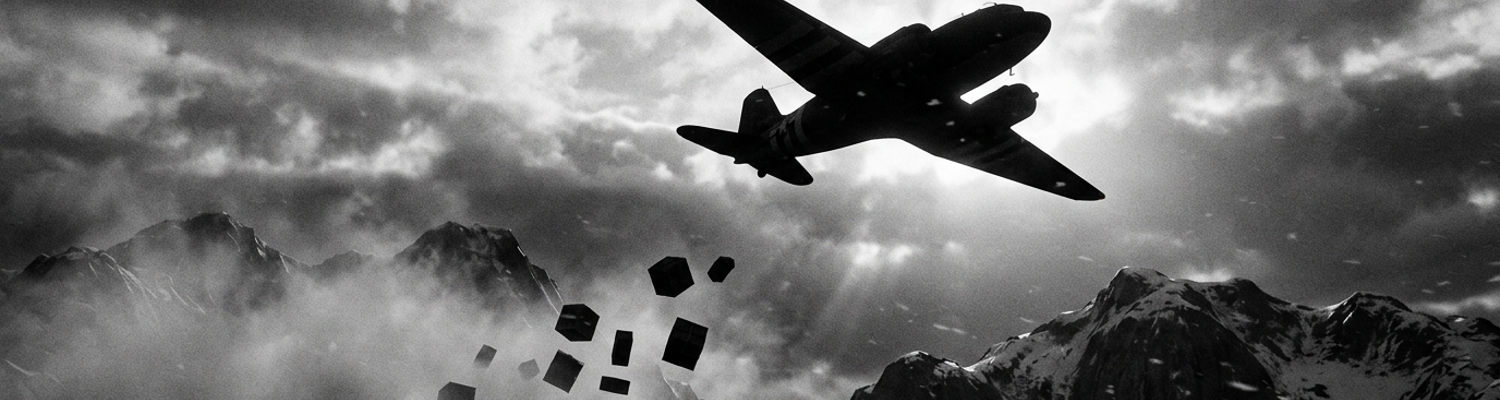

Gothic Line Geography and Tactical Isolation
A close review of 10th Mountain Division medical logs from mid-February 1945 details acute physical degradation among the infantrymen. This was hours before the first shots were fired. Men of the 1st Battalion, 86th Mountain Infantry Regiment had not slept in thirty-six hours. They consumed only semi-frozen K-rations while marching through waist-deep snow drifts toward the base of Riva Ridge. Each soldier carried an eighty-pound rucksack. These packs contained extra .30 caliber ammunition, steel climbing pitons, and medical supplies. The route followed a constant fifteen-degree incline in sub-zero temperatures. Canvas sleeping bags offered zero thermal protection against the high-velocity winds blowing directly off the peaks.
Frostbite casualties began mounting rapidly at the staging areas near the village of Vidiciatico.
Major General George P. Hays directed his units to assault the fortified Mount Belvedere and Mount della Torraccia ridge line during the darkest hours of the night. This directive explicitly canceled all preliminary artillery bombardments. Archival evidence shows division planners engaged in a highly controversial mathematical gamble against established United States Army doctrine. Staff officers calculated that a silent, unassisted free-climb up a 1,500-foot vertical limestone cliff face offered a higher statistical probability of survival than advancing behind a standard rolling barrage. A barrage would alert the entrenched German 332nd Infantry Division.
The Northern Apennine terrain at coordinates 44.20 N, 10.95 E consisted of sheer drops, loose shale, and deep ravines.
These geological features funneled attacking infantry directly into pre-registered machine gun kill zones. Planners accepted the risk that if the climbing elements were detected halfway up the ascent, they would be completely destroyed without any possibility of extraction or fire support. Troops of the 85th and 87th Regiments fixed static ropes to the rock walls in total darkness. Specialized alpine gear, including soft-soled climbing boots, was issued to minimize the sound of metal scraping against the stone. Commanding officers weighed the exact volume of climbing gear against the required ammunition loads. They knew resupply drops were mathematically impossible for at least forty-eight hours.
A single dropped rifle would have compromised the entire operation.
Advancing into the high peaks triggered an immediate technological failure. Ground communication masking caused by the severe mountain ridge topography isolated the forward assault companies from rear command posts. Standard infantry communication relied entirely on the SCR-300 backpack radio. Operating on a frequency modulation band between 40.0 and 48.0 megahertz with a maximum power output of 0.3 watts, this unit required a direct, unobstructed line of sight to function effectively. The jagged peaks and deep intervening valleys of the Gothic Line created massive zones of signal attenuation. Radio waves physically could not penetrate the dense limestone massifs separating the forward elements on Mount della Torraccia from the division headquarters situated five miles away in the Lizzano valley.
Thirty-three-inch AN-130 whip antennas proved utterly useless when positioned behind a topographical barrier.
Signal corps personnel attempted to lay WD-1/TT field wire behind the advancing troops to establish closed-circuit telephone links. Artillery shrapnel and sharp rock edges severed these physical lines within hours. Commanders lost all situational awareness regarding the developing tactical engagement. Total absence of reliable communication meant 105mm artillery batteries in the rear could not receive fire mission coordinates. This left the isolated infantry units to repel counterattacks using only their carried weapons. Forward observers carrying the thirty-five-pound SCR-300 units were forced to climb to fully exposed topographical crests to establish a temporary line of sight with the valley floor.
German snipers and MG42 gunners immediately targeted these exposed radiomen.
To reestablish contact, signal officers devised a plan to install an emergency radio relay station directly on the summit of Mount Cimone. Signalmen configured two SCR-300 units back-to-back. They physically repeated messages received from the front lines down to the valley. Technicians had to haul heavy BA-70 dry cell batteries up the slope by hand to power the relay equipment. These power cells drained at triple their normal rate due to the extreme ambient cold at the 7,000-foot elevation.
Troop Carrier Group Operations
A review of Mediterranean Allied Air Forces flight manifests from January 1945 exposes a calculated statistical gamble regarding aerial resupply over the Northern Apennines. Planners ordered the 12th Troop Carrier Group to mobilize its 61st and 62nd Squadrons to support the isolated 10th Mountain Division. Ground supply lines had completely failed due to heavy snowfall and destroyed bridges along Highway 64. Staff officers ran the mathematical probabilities of sending low-speed transport aircraft into narrow, heavily defended mountain valleys.
The projections indicated a forty percent probability of aircraft loss within the first week.
Command accepted this risk because the infantry holding the high ground above Vidiciatico would exhaust their .30 caliber ammunition within twenty-four hours. Ground crews at Rosignano Airfield worked in sub-freezing temperatures to load standard A-4 delivery containers. These canvas and wood paracans held 75mm pack howitzer shells, medical plasma, and replacement BA-70 dry cell batteries for the SCR-300 radios. Loadmasters calculated exact weight distributions to prevent the aircraft center of gravity from shifting dangerously far aft during the physical drop sequence.
The entire winter airlift depended on pushing aircraft well past their specified operational weather minimums.
Archival maintenance logs detail the acute mechanical failures plaguing the C-47 Skytrain transport aircraft during these operations. Each airframe utilized twin Pratt and Whitney R-1830-92 Twin Wasp radial engines. Operating in the severe cold of the Apennine winter caused immediate carburetor icing. This starved the engines of fuel during steep, high-torque climbs. Aviation mechanics on the tarmac used open-flame blowtorches to manually thaw frozen engine oil reservoirs before the pre-dawn takeoffs. Pilots had to fly the C-47s at a highly vulnerable drop speed of 115 miles per hour to ensure the parachutes deployed accurately over the tiny mountain drop zones.
Navigating visually through the Lizzano valley near coordinates 44.22 N, 10.88 E required flying directly below the jagged ridge lines.
Violent downdrafts generated by wind shears rolling off the 7,000-foot summit of Mount Cimone threw the unpressurized aircraft hundreds of feet vertically in a matter of seconds. Cockpit armor consisted of a single quarter-inch steel plate bolted behind the pilot seat. German anti-aircraft units exploited the highly predictable flight paths required for the valley supply drops. Elements of the 332nd Infantry Division positioned 20mm Flak 38 cannons on adjacent peaks. This allowed them to fire down onto the roofs of the C-47 Skytrains as they banked through the passes.
The aircraft lacked self-sealing fuel tanks in the outer wing sections.
Shrapnel penetrations routinely severed hydraulic lines. Co-pilots were forced to manually crank the landing gear down upon returning to base. Inside the unheated cargo bays, aircrews faced temperatures dropping below minus twenty degrees Fahrenheit. Four men had to physically shove the 300-pound cargo bundles out the open side doors while the aircraft banked at sixty-degree angles to avoid colliding with the limestone cliff faces. Static lines frequently snapped due to the extreme cold embrittlement of the metal attachment hooks.
The 12th Troop Carrier Group mobilization required precise visual coordination with the forward observers on the ground.
Mountain infantrymen laid out fluorescent cerise panels measuring exactly three feet by twelve feet to mark the designated drop zones on narrow ridgelines. High winds constantly blew these markers into the deep ravines. Pilots had to guess the exact release points based on terrain memory and compass headings. Releasing the cargo two seconds early meant the supplies would plummet down a 1,000-foot sheer drop into German-held territory. Dropping late resulted in the heavy bundles smashing directly into the rock walls. This destroyed the fragile radio batteries inside. Flight records from January 28 show three C-47s returning to Rosignano with over forty bullet holes in their aluminum fuselage skins and a destroyed starboard engine.
The Mount Cimone High Altitude Gamble
A close review of Mediterranean Allied Air Forces mission planning documents from February 1945 reveals a highly controversial actuarial assessment regarding low-altitude transport operations. Staff officers mathematically modeled the exact exposure rates for unarmored C-47 Skytrains flying over the jagged Apennine ridge lines. Fully loaded with 4,500 pounds of radio batteries, medical plasma, and 75mm ammunition, the aircraft weighed nearly 29,000 pounds. Planners established that these transports had to maintain a precise drop speed of 110 miles per hour to ensure cargo parachutes deployed accurately over the narrow mountain zones.
At this velocity, the aircraft operated a mere twenty-five miles per hour above its aerodynamic stall threshold.
Analysts calculated the exact vulnerability windows based on these flight parameters. A C-47 flying at 110 miles per hour covered roughly 161 feet per second. Traversing a two-mile designated drop zone near coordinates 44.19 N, 10.70 E exposed the aircraft to continuous anti-aircraft fire for exactly sixty-five seconds. This specific altitude placed the thin aluminum bellies of the C-47s directly within the effective slant range of German 20mm Flak 38 emplacements positioned on adjacent peaks. The statistical models predicted a thirty-five percent airframe attrition rate for the 61st and 62nd Troop Carrier Squadrons within the first seventy-two hours of the resupply effort. Commanding officers signed the operational orders anyway. They accepted the calculated certainty of aircraft destruction to sustain the isolated infantry.
The mathematical projections failed to account for the atmospheric violence generated by the mountain massifs.
Archival meteorological data recorded near the 7,100-foot summit of Mount Cimone documents sustained high-velocity wind shears intersecting with extreme topographic barriers. Prevailing winter westerlies slammed directly into the sheer limestone faces of the peak. This forced the air mass violently upward to create massive zones of orographic lift. This physical phenomenon generated unpredictable vertical drafts capable of throwing a fully loaded transport aircraft up or down hundreds of feet in a matter of seconds. Katabatic winds rolling off the upper ice fields accelerated down the slopes. They created localized microbursts directly in the flight paths. These specific downdrafts frequently exceeded the maximum climb rate of the heavily laden transports.
Pilots found themselves trapped in sinking air masses with the throttles fully open and the nose pitched up.
They were physically unable to gain altitude as the rock walls closed in. The unpressurized C-47 cabins offered absolutely zero protection from the sudden barometric pressure changes. Crew members experienced acute hypoxia while simultaneously fighting the mechanical control yokes to keep the wings level. Aviation mechanics later noted that these extreme vertical drafts exerted structural forces exceeding 3 Gs on the main aluminum wing spars. Standard aluminum rivets frequently sheared off the fuselage during these erratic altitude drops.
Operating low-speed transports in these volatile atmospheric conditions forced a complete abandonment of established United States Army Air Forces flight protocols.
Maintaining the 110-mile-per-hour drop velocity while fighting hundred-mile-per-hour downdrafts required pilots to constantly adjust the manifold pressure on the twin Pratt and Whitney R-1830-92 engines. Pushing the throttles forward during a sudden downdraft flooded the carburetors with supercooled air. Ice accumulation formed immediately on the intake valves. Engine revolutions per minute dropped precipitously just as the aircraft needed maximum torque to clear the approaching granite walls. Flight engineers manually pumped hydraulic fluid to maintain control surface tension against the violent winds. The mechanical linkages connecting the rudder pedals to the tail section physically stretched under the intense aerodynamic loads. This resulted in a dangerous delay between pilot input and aircraft response.
Navigators relied entirely on visual terrain recognition because the violent rocking of the aircraft rendered gyroscopic compasses completely unreadable.
Loadmasters had to physically restrain shifting cargo pallets weighing hundreds of pounds as the floor deck pitched at forty-five-degree angles. Flight logs from February 19 show multiple transports returning to Rosignano Airfield with bent tail surfaces and cracked plexiglass windshields. This damage was caused entirely by atmospheric stress rather than enemy fire. Ground crews measured permanent structural deformations up to two inches deep along the main load-bearing bulkheads. Mechanics had to drill out and replace over four hundred stressed rivets per airframe before authorizing the next sortie.
Experimental Signal Corps Aircraft Relay
A close review of 10th Mountain Division signal logs reveals the immediate failure of the static relay station positioned on the 7,000-foot summit of Mount Cimone. Hauling heavy BA-70 dry cells up the ice walls proved mathematically unsustainable for the isolated ground units. Command directed a radical modification of 12th Troop Carrier Group C-47 airframes to solve the line-of-sight attenuation. Technicians at Rosignano Airfield stripped the forward cargo compartments to install experimental SCR-522 VHF transceivers directly inside the aircraft.
This specific hardware was originally designed for short-range fighter-to-fighter communication.
It operated on an amplitude modulation band between 100 and 156 megahertz. Ground personnel recognized that airborne transmission would bypass the dense limestone massifs blocking the valley signals. Engineers hardwired the heavy radio chassis directly into the C-47 24-volt direct current generators to handle the massive power draw. Mechanics drilled directly through the aluminum fuselage skin to mount external broadband dipole antennas along the dorsal spine of the aircraft. Low-frequency vibration from the twin Pratt and Whitney engines routinely shattered the delicate glass vacuum tubes inside the radio casing.
Archival maintenance records document the physical toll of this hardware integration on the transport airframes.
The SCR-522 unit weighed exactly forty-seven pounds without its associated PE-94 dynamotor power supply. Signalmen bolted these heavy components directly to the uninsulated floor plates behind the cockpit bulkhead. Extreme cold at the 9,000-foot orbit altitude caused the internal wiring insulation to harden, crack, and flake off during flight. Bare copper cables rubbed against the vibrating aluminum deck. Short circuits sparked constantly in the darkened cargo bays. This threatened to ignite the nearby auxiliary fuel lines. Aviation mechanics attempted to insulate the components by wrapping them in heavy wool army blankets.
Ground crews spent hours manually calibrating the frequency crystals on the tarmac before authorization was granted for pre-dawn takeoffs.
A sudden drop in barometric pressure would instantly detune the receivers and sever the link to the ground. Examining flight manifests from late February 1945 shows specialized Signal Corps detachments flying continuous combat orbits over the Apennine peaks. Three-man radio teams from the 10th Mountain Division Signal Company operated these airborne communications hubs under extreme physical duress. They flew in completely unpressurized cabins at 9,500 feet directly above coordinates 44.20 N, 10.95 E. The unarmored C-47s flew tight figure-eight patterns to maintain a constant line of sight between the assault companies clinging to Riva Ridge and the Lizzano valley command post.
Operators sat on wooden 75mm ammunition crates while wearing heavy sheepskin flight suits and oxygen masks to stave off hypoxia.
Their primary task involved physically patching incoming transmissions from the ground-level SCR-300 radios into the aircraft SCR-522 system. Technicians then rebroadcasted the signal at high wattage down to the valley receivers. The severe vertical drafts rolling off Mount Cimone violently tossed the airframes. Radiomen had to brace their boots against the aluminum ribs of the fuselage to avoid being thrown across the cargo deck while attempting to adjust the tuning dials. One violent localized microburst physically ripped a fastened radio console entirely off its steel floor mounts.
Flying a highly predictable loiter pattern turned these flying communication hubs into priority targets for German anti-aircraft batteries.
Elements of the 332nd Infantry Division recalibrated their 20mm Flak 38 cannons to target the slow-moving C-47s holding steady orbits above the peaks. Pilots executed sudden evasive banks while the Signal Corps technicians desperately tried to maintain frequency locks on the ground stations. The radio signals drifted wildly during these high-G aerodynamic maneuvers. Operators frantically adjusted the dynamotor voltage regulators with freezing, numb fingers. They translated tactical artillery coordinates from the forward observers while anti-aircraft shrapnel tore through the thin aluminum skin inches from their heads.
A single severed coaxial cable meant total communication blackout for the infantry fighting on the cliffs below.
Mechanics inspecting returning aircraft logged multiple instances of 20mm high-explosive rounds detonating inside the cargo bays. This destroyed the experimental relay equipment and forced the immediate launch of backup aircraft to maintain the signal chain.
Subzero Environmental and Technical Hazards
A close examination of 12th Troop Carrier Group maintenance logs from late February 1945 details a high-risk operational directive prioritizing supply delivery over established atmospheric safety limits. Planners ordered the 61st and 62nd Squadrons to fly unpressurized C-47 Skytrains directly into severe subzero weather fronts blanketing the Northern Apennines. Operating at 9,000 feet near coordinates 44.22 N, 10.88 E, the aircraft encountered ambient temperatures plunging below minus twenty degrees Fahrenheit. This extreme cold triggered immediate and severe carburetor icing within the twin Pratt and Whitney R-1830-92 Twin Wasp radial engines.
Supercooled air forcefully entered the Bendix-Stromberg carburetors during the steep, high-torque climbs required to clear the jagged limestone ridges.
Moisture in the air mass instantly froze upon contacting the metal venturi tubes and throttle valves. Ice accretion rapidly choked the air intake channels. This severely restricted the fuel-air mixture required for combustion. Manifold pressure dropped precipitously. Engine revolutions per minute fell just as the overloaded airframes approached the 7,100-foot summit of Mount Cimone. Pilots responded by manually engaging alcohol de-icing pumps while simultaneously fighting violent orographic downdrafts.
Archival flight records show these transport squadrons routinely launched aircraft exceeding their maximum gross takeoff weight by over two thousand pounds.
Cargo holds contained dense, heavy crates of 75mm pack howitzer ammunition, medical plasma, and replacement BA-70 dry cell batteries for the isolated infantry. Pushing these overloaded airframes up the fifteen-degree incline of the mountain passes required continuous maximum power settings. This high fuel flow worsened the endothermic cooling effect inside the carburetors. It accelerated the internal ice formation. When the intake valves completely froze, the sudden loss of torque on a single engine caused violent asymmetric thrust.
The aircraft would immediately yaw toward the dead engine.
Flight engineers had previously used open-flame blowtorches on the tarmac at Rosignano Airfield to pre-heat the engine cowlings before takeoff. The subzero atmospheric conditions at drop altitude instantly reversed this thermal preparation. The engine nacelles turned into freezing wind tunnels. Four separate C-47s returned to base on February 21 with entirely seized starboard engines. Reviewing the mechanical tear-down reports of these returning aircraft reveals a secondary environmental hazard directly threatening flight stability.
The uninsulated aluminum fuselages of the C-47s offered zero thermal protection for the complex network of steel control cables routing from the cockpit to the tail empennage.
Condensation generated by the breathing of the crew and the freezing cargo settled directly onto the braided steel wires governing the pitch elevators. Ambient temperatures inside the rear cargo bays dropped to minus twenty-five degrees Fahrenheit as the aircraft circled the narrow drop zones above Vidiciatico. Extreme cold embrittlement immediately compromised the integrity of the metal components. Ice buildup on the tension pulleys located in the aft unpressurized section caused the elevator cables to physically bind against their metal housings. A command pilot pushing the control column forward frequently experienced total mechanical resistance from the frozen linkages.
This loss of pitch control occurred at the exact moment the overloaded transport airframes required maximum aerodynamic articulation.
Loadmasters had to manually shove 300-pound supply bundles out the open side doors while the aircraft flew at a highly vulnerable 115 miles per hour. Shoving that heavy mass out of the side door caused a sudden, violent shift in the center of gravity far aft of the wings. The nose of the aircraft immediately pitched upward toward an aerodynamic stall. With the elevator cables locked by ice, co-pilots had to physically brace their boots against the instrument panel and pull the yokes with their entire body weight. This was required to break the frozen condensation on the rear pulleys.
Aviation mechanics inspecting the tail sections of surviving aircraft found the primary steel control cables stretched a full inch beyond their specified safety tolerance limits.
Snapping a bound elevator cable while banking at sixty degrees over the jagged peaks guaranteed an unrecoverable plunge into the limestone cliffs. Ground crews had to drill out the aft bulkheads and replace sixty-two frayed pitch control wires during the final week of the resupply operation.
Supply Drop Execution over Apennine Passes
A close examination of Mediterranean Allied Air Forces mission logs from February 1945 outlines a highly controversial approach to high-altitude aerial resupply over the Northern Apennines. Ground supply lines to the 1st Battalion, 86th Mountain Infantry Regiment had completely collapsed due to heavy snowdrifts along Highway 64. Command tasked the 12th Troop Carrier Group with delivering 75mm pack howitzer shells, glass vials of medical plasma, and replacement BA-70 dry cell batteries directly to the isolated ridge lines. Standard United States Army Air Forces doctrine dictated cargo drops occur at an altitude of 600 feet to ensure precise parachute deployment.
The severe topographical layout near coordinates 44.22 N, 10.88 E forced planners to abandon this protocol.
German 20mm Flak 38 anti-aircraft batteries positioned on adjacent peaks created an overlapping field of fire covering the valley floor. Pilots of the 61st and 62nd Squadrons had to fly their unarmored C-47 Skytrains at a highly irregular altitude of 9,500 feet to bypass the flak ceiling. Approaching the drop zones required a sudden, steep dive into the narrow mountain passes while maintaining a precise airspeed of 115 miles per hour. A single snapped static line caused by cold embrittlement sent 300-pound paracans tumbling freely into the granite ravines below.
Executing pinpoint drop zone identification over these frozen mountain passes demanded exact visual coordination under severe atmospheric duress.
Infantrymen of the 10th Mountain Division clinging to the sheer cliffs of Mount della Torraccia attempted to mark their positions using standard three-by-twelve-foot fluorescent cerise panels. Katabatic winds rolling off the 7,100-foot summit of Mount Cimone constantly ripped these fabric markers from the snow. The panels blew into the deep gorges separating the American and German lines. Navigators aboard the diving C-47s lost their primary visual reference points. They had to rely entirely on topographical memory and raw compass headings while the aircraft violently pitched through hundred-mile-per-hour downdrafts.
Bombardiers peering through the frosted plexiglass blisters of the transport planes had less than three seconds to acquire the target area.
The complete lack of radio contact meant ground units could not correct the approaching flight paths. Identifying a designated drop zone measuring less than two hundred square yards on a jagged limestone spine required split-second mathematical calculations. An aircraft traveling at 115 miles per hour covers approximately 168 feet per second. Releasing the wooden supply crates one second early guaranteed the payload would smash directly into the sheer rock face of the adjacent peak. Delaying the drop by two seconds meant the heavy bundles would overshoot the ridge entirely. They would plummet straight down into the pre-registered machine gun kill zones of the German 332nd Infantry Division.
Flight engineers manually pumped hydraulic fluid to force the aircraft control surfaces against the extreme aerodynamic shear forces.
Archival quartermaster reports from February 21 document the physical mechanics of executing these deliveries inside the unheated cargo bays. Ambient air temperatures dropped to minus twenty-five degrees Fahrenheit as the unpressurized aircraft banked at sixty-degree angles to avoid colliding with the approaching cliff walls. Four men wearing heavy sheepskin flight suits had to unclip from their safety harnesses. They physically muscled the shifting cargo pallets toward the open side doors. The sudden release of 4,500 pounds of ammunition and medical supplies caused the aircraft center of gravity to shift dangerously aft in less than three seconds.
This rapid weight displacement forced the nose of the C-47 aggressively upward toward an aerodynamic stall threshold.
Co-pilots braced their boots against the instrument panels and shoved the control yokes entirely forward to prevent the transports from falling backward into the valleys. Inside the falling supply bundles, the extreme cold directly degraded the parachute deployment mechanisms. Ice formed along the silk canopies during the high-altitude transit, preventing the fabric from catching the air upon release. Ground troops observed multiple deliveries of whole blood plasma striking the limestone at terminal velocity. Mechanics inspecting the returning aircraft logged structural deformations up to two inches deep along the main load-bearing bulkheads caused by the violent pull-out maneuvers.
Gothic Line Ground Communications Impact
A close examination of 10th Mountain Division artillery logs from late February 1945 quantifies the direct tactical results of mitigating the severe radio signal attenuation along the Gothic Line. Overcoming the physical barrier of the Northern Apennine mountains required bypassing the dense limestone massifs that previously absorbed all ground-level frequency modulation transmissions. Forward observers clinging to the sheer rock faces of Riva Ridge operated standard SCR-300 backpack radios with a maximum power output of just 0.3 watts. Pushing a 40.0-megahertz signal through solid rock at coordinates 44.20 N, 10.95 E had proven mathematically impossible during the initial assault phases.
The implementation of the airborne relay system entirely circumvented this geological obstruction.
Radio operators on the front lines simply pointed their thirty-three-inch AN-130 whip antennas toward the sky instead of trying to force a signal laterally across the jagged peaks. The unarmored C-47 Skytrains flying at 9,500 feet intercepted these weak, line-of-sight transmissions before the mountain topography could block the radio waves. Aviation technicians operating the experimental SCR-522 transceivers inside the aircraft immediately rebroadcast the raw audio down into the Lizzano valley command posts using a heavily amplified amplitude modulation band. The delay between an infantryman calling for fire and the artillery batteries receiving the exact grid coordinates dropped from hours to less than forty-five seconds.
Restoring these real-time command links across the isolated infantry positions fundamentally altered the defensive capabilities of the forward assault companies.
Major General George P. Hays and his staff officers sitting in the valley headquarters regained full situational awareness regarding the exact disposition of the 1st Battalion, 86th Mountain Infantry Regiment. The men holding the high ground on Mount Belvedere and Mount della Torraccia no longer had to repel mechanized counterattacks using only their carried .30 caliber rifles and limited fragmentation grenades. Archival combat reports from February 20 detail a concentrated assault by elements of the German 332nd Infantry Division attempting to push the American forces off the newly captured crests. Forward observers used the restored communication network to transmit precise firing data directly to the rear 105mm pack howitzer batteries.
Artillerymen five miles away adjusted their elevation dials based on real-time feedback relayed through the circling transport aircraft.
High-explosive shells began impacting the advancing German formations just minutes after the initial radio contact. Signalmen on the ridge physically pressed the thirty-five-pound radio sets against the rock walls to prevent the antennas from snapping in the high-velocity wind shears. Continuous operation of this communication chain demanded exact coordination regarding hardware maintenance under subzero conditions. The heavy BA-70 dry cell batteries powering the ground-level SCR-300 units drained at triple their normal rate due to the extreme ambient cold.
Having real-time voice contact allowed infantry officers to coordinate emergency resupply drops with the 12th Troop Carrier Group based on immediate tactical necessity rather than blind scheduling.
Ground commanders relayed sudden barometric pressure shifts and localized wind directions up through the network to the approaching C-47 crews. Pilots adjusted their 115-mile-per-hour drop velocities using this real-time meteorological data to prevent the 300-pound cargo bundles from missing the narrow drop zones. Signal officers tracked the exact degradation rates of the vacuum tubes inside the ground units. Radiomen swapped out the fragile components using bare hands in minus twenty-degree temperatures to keep the channels open.
The continuous flow of tactical information across the Gothic Line transformed highly vulnerable pockets of freezing soldiers into an integrated defensive front capable of calling in immediate fire support.
Ground crews in the valley logged over four hundred separate artillery fire missions directed exclusively through the airborne relay network during a single forty-eight-hour period.
Tactical Legacy of Airborne Relays
A review of post-operation after-action reports from March 1945 quantifies the direct mathematical impact of the experimental C-47 communication loop on the ground offensive. Men of the 1st Battalion, 86th Mountain Infantry Regiment broke out from their initial staging areas on Mount Belvedere and advanced rapidly across the jagged limestone spines. Ground commanders at the Lizzano valley headquarters utilized the uninterrupted VHF signal to synchronize three separate assault companies pushing toward Mount della Torraccia. Forward observers operating SCR-300 backpack radios transmitted real-time grid coordinates up to the circling transport aircraft at 9,500 feet.
Aviation technicians inside the unpressurized cabins instantly routed these amplitude modulation intercepts through their hardwired SCR-522 transceivers and broadcast the data down to the valley floor.
Rear 105mm pack howitzer batteries received precise firing adjustments in under forty-five seconds. Artillerymen dropped overlapping barrages of high-explosive shells directly in front of the advancing American infantry. Elements of the German 332nd Infantry Division attempting to organize mechanized counterattacks at coordinates 44.20 N, 10.95 E were completely shattered by this continuous, highly accurate fire support. The 10th Mountain Division advanced four miles through previously impenetrable mountain defenses in less than forty-eight hours.
Sustaining this aggressive forward momentum required an uninterrupted chain of technical hardware functioning under severe atmospheric duress.
Signalmen clinging to the sheer rock faces of Riva Ridge swapped degrading vacuum tubes in subzero temperatures to keep their thirty-five-pound radio sets operational. The heavy BA-70 dry cell batteries drained rapidly in the extreme cold. Infantry officers called in emergency aerial resupply drops through the airborne network. Pilots of the 61st and 62nd Troop Carrier Squadrons adjusted their 115-mile-per-hour drop velocities based on localized wind data relayed directly from the ground troops. This real-time meteorological feedback prevented the 300-pound cargo bundles of .30 caliber ammunition and medical plasma from missing the narrow ridgeline drop zones.
Infantry units no longer paused their advance to wait for predetermined supply schedules or blind artillery barrages.
Planners logged over four hundred separate fire missions directed exclusively through the C-47 relay aircraft during the final push to clear the high peaks. Signal officers had accidentally engineered the first fully integrated airborne command and control network. When examining United States Army Signal Corps archives from the late 1940s, the raw data collected during the Mount Cimone flights directly informed large-scale shifts in military communication doctrine. Engineers mathematically analyzed the Apennine operation to understand how altitude could permanently defeat line-of-sight signal attenuation caused by severe topography.
The crude field modification of bolting a forty-seven-pound SCR-522 radio chassis to the uninsulated floor plates of a transport aircraft proved highly effective at bypassing physical terrain barriers.
Technicians studied the performance of the external broadband dipole antennas mounted on the dorsal spine of the C-47s to map the propagation of radio waves on the 100 to 156 megahertz band. This specific hardware integration laid the technical foundation for dedicated electronic command aircraft. Defense contractors used the 1945 mission logs to draft the initial blueprints for pressurized, high-altitude communication hubs designed to coordinate synchronized ground offensives. Strategic Air Command engineers utilized the Italian theater relay schematics to design the communication architecture for the EC-135 command post fleet.
The actuarial assessments of aircraft vulnerability over the Gothic Line drove immediate technological changes in aviation design.
Unarmored C-47s flying low-speed loiter patterns had sustained heavy damage from 20mm Flak 38 emplacements because their flight paths were entirely predictable. Future airborne relays required pressurized cabins to protect sensitive glass vacuum tubes from barometric shattering and heavy vibration dampening systems to isolate the radio chassis from engine torque. Military planners realized that slow-moving airframes exposed to ground fire for sixty-five-second windows suffered unacceptable attrition rates. Defense engineers prioritized integrating long-range UHF transceivers into jet-powered platforms capable of operating well above the effective slant range of anti-aircraft artillery.
Ground crews at Rosignano Airfield had drilled out hundreds of stressed aluminum rivets from the transport airframes to repair damage caused by extreme orographic lift and violent downdrafts.
The structural deformation recorded along the main load-bearing bulkheads of the C-47s dictated new metallurgical stress tolerances for all future electronic warfare aircraft.