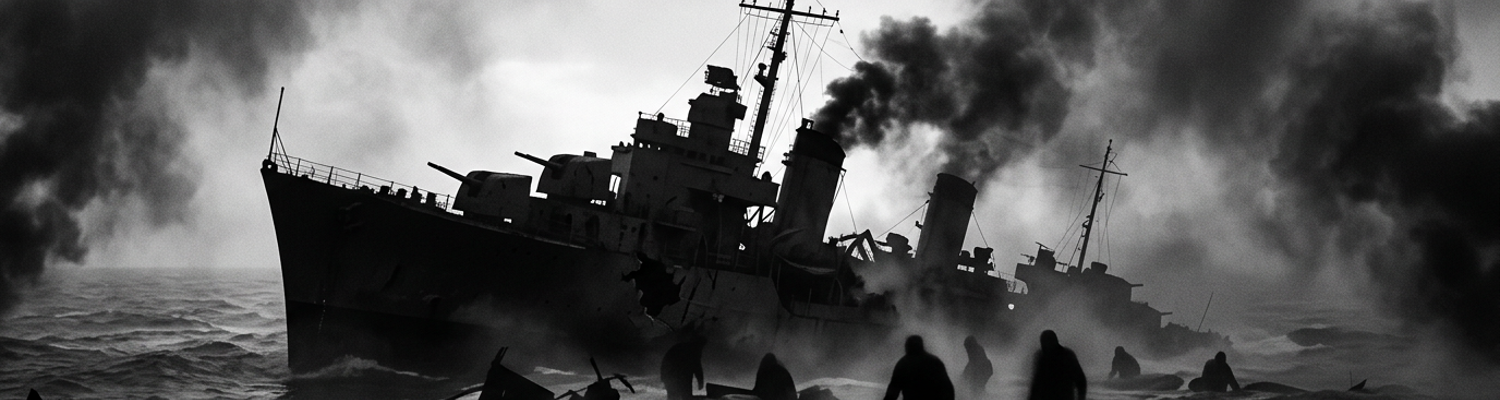

Radar Picket Stations and Anchorage Defense
The Philippine Sea sat perfectly flat at 0700 hours on May 11, 1945. An oppressive quiet filled the combat information center aboard the Fletcher-class destroyers. Low-frequency ventilation blowers pulled salt air into the compartment. Men stared at the glowing green sweep of the SK air-search radar scopes. They waited for the first white blips to materialize out of the electronic interference. Anticipation saturated Radar Picket Station 15. This coordinate sat roughly fifty miles north of the Hagushi beaches. Archival evidence shows the popular postwar narrative paints these deployments as calculated defenses set by a technologically superior fleet. A close review of operational logs indicates a desperate scramble. United States Navy commanders stripped their fleet screens in May 1945. They pushed isolated destroyers far out ahead of the main task forces to act as expendable early warning sensors. Planners at Fifth Fleet headquarters realized the incoming mass suicide attacks would slaughter the transport ships unloading troops at the beaches. Admiral Raymond Spruance ordered the establishment of fifteen distinct geographic points arranged in a semi-circle around the island. Vessels assigned to these coordinates operated completely alone or in pairs. They relied heavily on the SC-2 and SK surface and air search radar systems to spot targets up to one hundred miles away. The SK system utilized a massive exposed antenna rotating at the top of the mast. It broadcast on a frequency of 200 megahertz to penetrate the heavy Pacific cloud cover. Fighter director officers below decks attempted to vector combat air patrols of F4U Corsairs toward the incoming enemy formations.
This tactical setup turned unarmored destroyers into primary targets for hundreds of explosive-laden aircraft.
The physical mechanics of defending the northern anchorage approaches rapidly eroded both machinery and human bodies. Destroyers like the USS Hadley and USS Evans anchored the northernmost sectors. They specifically protected the primary logistics hubs near Ie Shima and the main Hagushi anchorages. The Hagushi roadstead contained hundreds of thousands of tons of volatile cargo. Aviation fuel and high explosives sat completely exposed in unarmored Liberty ships. Japanese flight paths from the airfields on Kyushu descended directly down the Nansei Shoto island chain. This directed the majority of the assault into these exact coordinates. The picket destroyers sat directly beneath this aerial highway. Shipboard logs from May 1945 detail an operational tempo that completely broke standard naval protocols. Crews manned their battle stations in Condition I. Every watertight door had to be sealed. Every weapon required manning for up to seventy-two consecutive hours.
Sleep became a mathematical impossibility.
When examining the historical record of these deployments, the mechanical degradation matched the human exhaustion. Radar systems required constant maintenance. Magnetrons burned out from continuous operation. This necessitated dangerous mid-battle replacements by technicians working near exposed high-voltage lines. Below the waterline, boiler tubes operating at maximum pressure began to warp and fracture. High-speed evasive maneuvers demanded this extreme pressure. Engineering officers submitted urgent requests for relief due to feedwater contamination and excessive turbine wear. Temperatures inside the unventilated engine rooms regularly exceeded one hundred and twenty degrees Fahrenheit. Command staff ashore routinely denied these requests. The ships had to maintain their coordinates. No replacement vessels were available to cover the northern approach vector. A destroyer assigned to Picket Station 1 stayed on station until it was severely damaged by a kinetic impact or completely out of anti-aircraft ammunition. Quartermasters recorded instances of gunners collapsing at their 40mm Bofors mounts. Medical corpsmen injected them with amphetamines just to keep their eyes open during the next wave of incoming contacts.
Deck logs from the USS Hugh W. Hadley on May 11 confirm the ship engaged over one hundred separate aircraft during a single morning watch.
The forward deployment strategy forced vessels to operate far beyond their designed endurance limits. Ammunition depletion rates forced captains to ration 5-inch proximity-fused shells. They fired only when the incoming aircraft closed within three thousand yards rather than executing maximum effective range barrages.
Manned Rocket Missiles and Countermeasure Deficiencies
Archival evidence shows the introduction of the Yokosuka MXY-7 Ohka Type 11 fundamentally broke the mathematical models of United States Navy fleet defense. These rocket-propelled anti-ship missiles dropped from the bomb bays of heavily modified Mitsubishi G4M bombers. The release point occurred roughly fifteen to twenty miles away from the target vessels. Once detached from the mother ship, the pilot ignited three Type 4 Mark 1 Model 20 solid-fuel rockets mounted in the tail. This propulsion system accelerated the twenty-foot wooden and duralumin airframe into a shallow dive. Speeds exceeded six hundred miles per hour. Standard destroyer anti-aircraft fire envelopes relied on the Mark 37 Fire Control System. Mechanical analog computers inside the ship required several seconds of steady tracking to generate accurate firing solutions for the 5-inch 38 caliber main battery. The Ford Instrument Company Mark 1A served as the primary computer. Operators turning the hand cranks below decks physically could not input the elevation and bearing changes fast enough to keep up with the closure rate of the weapon.
The mechanical gears stripped themselves as sailors tried to force the targeting drives past their maximum design limits.
A close review of operational logs indicates that the standard defensive screen evaporated within seconds of rocket ignition. Gunners manning the 40mm Bofors and 20mm Oerlikon mounts trained their sights on the incoming contacts. Their weapon systems were calibrated for conventional A6M Zero or D3A Val dive bombers traveling at two hundred and fifty miles per hour. Lead-computing gyro gunsights proved entirely useless against a target covering a mile every six seconds. Even when the 5-inch proximity-fused shells functioned correctly, the radar-triggered detonation sequence occurred too late. The fragmentation ring expanded in the empty airspace behind the tail section of the missile.
Early shipboard missile countermeasures failed to stop high-speed rocket-assisted visual guidance strikes.
Unlike early German radio-controlled glider bombs, the Ohka relied on a human pilot. This pilot sat strapped into a cramped cockpit directly behind a 1200-kilogram ammonal warhead. This biological guidance system negated the standard naval tactic of hard evasive maneuvering. When a destroyer captain ordered a hard-over rudder adjustment at thirty knots, the Japanese pilot simply adjusted his flight stick to match the turn radius of the ship. Radar picket crews attempted to blind the incoming pilots by deploying chemical smoke generators. They fired white phosphorus shells into the water to create dense visual barriers. The high terminal velocity of the rocket motor allowed the Ohka to punch directly through the smoke screens before the pilot lost spatial orientation. Physical strikes on the airframe by 20mm explosive rounds did occur. Armor plating surrounding the cockpit and the sheer kinetic mass of the three-ton weapon meant that localized structural damage rarely altered its flight path. A hit that would normally shear the wing off a conventional fighter plane just punched a hole in the plywood wings of the Ohka. The central fuselage continued straight toward the waterline.
The attack on Radar Picket Station 14 on April 12 demonstrated the total failure of these defensive protocols.
When examining the historical record of the USS Mannert L. Abele, the tactical deficiencies of the fleet become highly visible. Positioned at coordinates seventy miles northwest of Okinawa, the destroyer detected a large incoming raid on its SK radar. Combat air patrol fighters shot down several conventional attackers. A single G4M bomber slipped through the defensive perimeter and released its Ohka at an altitude of five thousand feet. The pilot ignited the solid-fuel rockets and established a visual lock on the destroyer. Every gun on the starboard side of the Mannert L. Abele opened fire. Tracers filled the airspace between the ship and the descending weapon. Multiple 40mm rounds struck the nose and fuselage of the missile. The Ohka did not detonate or deviate from its glide path. It impacted the starboard side of the destroyer precisely at the forward engine room. The 1200-kilogram warhead penetrated the unarmored hull plating before exploding deep inside the engineering spaces. The blast severed the keel. The destroyer broke completely in half. Both sections sank to the ocean floor in less than three minutes.
Air Attack Escalation on USS Hugh W Hadley
The Philippine Sea off the coast of Okinawa offered no surface chop at 0745 hours on May 11. The USS Hugh W. Hadley sat enveloped in absolute silence. Sailors stood motionless inside the combat information center of the Allen M. Sumner-class destroyer at Radar Picket Station 15. They listened only to the rhythmic hum of the SK air-search radar console. Their eyes remained fixed on the circular green cathode-ray tube. They waited for the first sign of hostile aircraft. A close review of operational logs indicates this quiet anticipation ended exactly at 0750. The radar screen filled with white phosphorescent blobs. Operator tally counts jumped from zero to one hundred and fifty-six distinct incoming contacts within a three-minute window. Japanese planners on Kyushu had launched a coordinated saturation assault designed specifically to overload the processing capacity of a single destroyer. Down in the CIC, the analog tracking systems failed immediately. Plotting officers armed with grease pencils physically could not update the plexiglass status boards fast enough to match the incoming coordinate data. Radio frequencies designated for fighter direction degraded into overlapping channels of static and pilot chatter. The Mark 12 fire control radar operators attempted to lock onto specific targets. The sheer volume of aircraft crowding the 200-megahertz band created heavy electronic interference.
This intentional data overload neutralized the primary combat information center functions before the Japanese planes even entered visual range.
Archival evidence shows the physical assault materialized shortly after 0900. Ten distinct formations of A6M Zeros, D3A Vals, and Ki-43 Hayabusas converged on the Hadley from all points of the compass. The destroyer captain ordered maximum boiler pressure. He threw the ship into radical thirty-knot turns to evade enemy aiming solutions. Evasion proved impossible. A ten-plane element broke off from the main formation and initiated a steep dive directly at the superstructure. Gunners at the 40mm Bofors mounts fired continuously until the barrels overheated and warped. The probability of survival dropped to zero against simultaneous multi-axis strikes. At 0920, the ship sustained three catastrophic impacts within a ten-second window. A bomb-carrying A6M Zero crashed directly into the aft quad 40mm gun mount. The payload detonated and killed the gun crew instantly. A second kamikaze sheared through the main mast rigging at the exact same moment. This tore away the primary communication antennas. A third impact registered just below the waterline seconds later. A Yokosuka MXY-7 Ohka missile slammed into the starboard hull near frame 72. A G4M mother ship had released this weapon miles away.
The 1200-kilogram ammonal warhead detonated squarely inside the forward engine room.
When examining the historical record of this specific engagement, the kinetic transfer of the Ohka explosion instantly compromised the main propulsion systems of the vessel. The blast wave ruptured the high-pressure steam lines connecting the forward Babcock and Wilcox boilers to the General Electric geared turbines. Superheated steam at six hundred pounds per square inch vented directly into the enclosed engineering spaces. Machinists mates and water tenders working in the compartment suffered immediate thermal fatalities. The structural framing supporting the starboard side of the hull buckled outward. This tore a hole fifteen feet wide in the unarmored half-inch steel plating. Ocean water rushed into the void at a rate of several thousand gallons per minute. The forward fireroom and the forward engine room filled with seawater completely in less than sixty seconds. This rapid water ingress extinguished the fires in the remaining operational boilers. The electrical output of the ship generators dropped immediately to zero. Emergency diesel generators failed to engage due to shock damage from the kamikaze impacts on the main deck. The ventilation blowers, the radar antennas, and the electric hydraulic steering motors all ceased functioning. The Hadley lost all forward momentum and began to list heavily to starboard. The vessel came to a complete stop at coordinates 27 degrees 10 minutes North, 126 degrees 58 minutes East. Repair parties operating hand-cranked submersible pumps reported the water level in the aft magazines rising at a rate of three inches per minute.
Compartment Flooding and Medical Triage Crisis
Archival evidence shows that at 0922 hours on May 11, the damage control officer aboard the USS Hugh W. Hadley initiated emergency containment protocols. He operated from his secondary station near the aft deckhouse. The Yokosuka MXY-7 Ohka missile detonation near frame 72 had obliterated the primary engineering spaces. Massive volumes of seawater surged through the ruptured starboard hull plating. Standard United States Navy damage control doctrine demanded the immediate setting of Condition Zebra to prevent total loss of buoyancy. Sailors manually dogged down every watertight hatch, scuttle, and ventilation duct along the main deck. They physically isolated the flooded forward sections from the intact aft compartments. This rigid adherence to structural containment procedures created an inescapable hazard for the primary medical detachment. The main battle dressing station of the ship occupied the forward wardroom on the second deck. This space sat directly adjacent to the blast zone. Three naval medical officers and six pharmacist mates were actively operating on shrapnel casualties from the earlier A6M Zero strikes when the heavy steel doors slammed shut. Damage control parties on the outside locked the primary bulkheads. They trapped the entire surgical team in a rapidly flooding section of the unarmored Allen M. Sumner-class destroyer.
Water levels inside the sealed compartment reached their knees within four minutes.
A close review of operational logs indicates the environmental conditions inside the sealed wardroom degraded into a lethal hazard almost immediately following the bulkhead closure. The catastrophic failure of the electrical grid disabled the forced-air ventilation blowers. This halted all fresh oxygen circulation to the lower decks. Ambient temperatures inside the steel enclosure climbed past one hundred and thirty degrees Fahrenheit. Residual heat from the adjacent Babcock and Wilcox boiler explosion radiated straight through the quarter-inch steel bulkheads. Medical personnel conducted triage operations in absolute darkness until emergency battery-operated red battle lanterns were manually activated by the chief surgeon. The air supply rapidly filled with toxic fumes. Ruptured bunker oil tanks leaked raw petroleum into the rising seawater. The chemical residue from the 1200-kilogram ammonal warhead permeated the stagnant air space. Surgeons stood in oily waist-deep water to amputate shattered limbs and apply tourniquets to sailors suffering from severe thermal burns. Pharmacist mates administered half-grain morphine syrettes to the screaming wounded. They attempted to initiate blood plasma transfusions using only the dim red glow of the lanterns to locate viable veins. The structural deformation of the hull caused the deck to tilt at a fifteen-degree angle. The medical staff had to brace themselves against the bulkheads just to stay upright.
Oxygen depletion caused several corpsmen to collapse directly into the contaminated water.
When examining the historical record, the duration of this specific medical crisis extended far beyond standard operational expectations for a radar picket destroyer. The surgical team aboard the Hadley operated inside Compartment C-201-L for over three hours while the vessel drifted without power in the Philippine Sea. Topside repair parties could not unseal the hatches without risking a rapid loss of buoyancy. Opening those doors would send the entire ship to the ocean floor. Medical officers resorted to utilizing torn bedding, curtain fabrics, and uniform shirts as makeshift bandages. Their sterilized medical kits became completely submerged in the flooded lower deck space. Triage protocols broke down under the extreme physical strain and the continuous influx of water. Corpsmen physically propped the most severely wounded sailors onto the elevated metal dining tables. They lashed them to the furniture with belts to keep their heads above the rising mixture of seawater, hydraulic fluid, and uncombusted aviation fuel. The toxic air saturation eventually forced the conscious personnel to breathe through wet rags in a desperate attempt to filter out the ammonal dust and carbon monoxide gas. At 1145 hours, the fleet tug USS Zuni finally arrived at the coordinates. The tug provided auxiliary pumping power. This allowed the topside damage control crew to safely crack the main wardroom hatch.
They extracted thirty-two surviving casualties from the flooded deck space.
Shipboard Damage Control Doctrine Flaws
Archival evidence shows the post-war Bureau of Ships damage reports disproved the widely accepted accounts of ship preservation at Okinawa. The United States Navy released War Damage Report No. 51 in 1946. This document specifically examined the hull deformations of Allen M. Sumner and Fletcher-class destroyers hit by kamikaze strikes. Public relations officers had spent months circulating stories of damage control parties performing mechanical repairs with wooden shores and mattress patches. The engineering data told a highly embarrassing story of systemic design flaws and doctrinal errors. The mandated containment protocol required crews to set Condition Zebra during general quarters. Sailors mechanically dogged down every watertight hatch and scuttle. Naval architects designed this doctrine to prevent progressive flooding. The closed internal layout prevented any atmospheric venting. When a 500-pound semi-armor-piercing bomb or a 1200-kilogram Ohka warhead detonated inside a sealed compartment, the explosive overpressure had no avenue for release. The blast wave reflected off the quarter-inch steel bulkheads. It doubled in velocity and shattered the longitudinal framing supporting the main deck. Post-action metallurgical analysis of vessels on the picket line proved that open weather deck hatches would have allowed the blast energy to vent upward. Instead, the rigid adherence to Condition Zebra caused the blast overpressure to blow out the internal bulkheads. This destroyed the watertight integrity of three adjacent compartments simultaneously rather than just the primary impact zone.
The standard operating procedure actively accelerated the destruction of the vessels.
A close review of operational logs indicates the mechanical response to these structural blowouts failed almost immediately. Standard damage control lockers contained portable gasoline-powered Handy Billy pumps and stationary 400-gallon-per-minute electric submersible pumps. The electrical units drew direct power from the forward and aft main distribution boards. Kinetic impacts from descending aircraft routinely severed the heavy armored cables running along the main deck. This instantly shorted out the switchboards and rendered the primary pumping network useless. Crews attempting to drag the internal gasoline pumps into the lower engineering spaces rapidly discovered another doctrinal oversight. The internal combustion engines produced heavy carbon monoxide exhaust. Without functional electric ventilation blowers, the pump exhaust asphyxiated the repair parties operating in the lower decks. Investigators found multiple instances where sailors drowned in the dark because their equipment poisoned the airspace before it could extract the incoming seawater.
Official deck logs originally submitted to Fifth Fleet headquarters omitted these fatal equipment failures entirely.
When examining the historical record, the raw unedited action reports from May 1945 reveal widespread command paralysis. Sanitized post-war narratives actively covered up these failures. The destruction of the primary command and control infrastructure induced immediate psychological shock among the bridge officers. A standard destroyer relied on the 21MC general announcing system and the 1JV sound-powered telephone circuit. These systems coordinated damage control efforts between the bridge, the combat information center, and the central engineering station. Kamikaze strikes targeting the superstructure routinely severed these communication lines within the first ten seconds of an engagement. Isolated in smoke-filled compartments without orders, junior officers made panicked contradictory decisions. Original draft reports from Radar Picket Station 1 show that when one destroyer took a massive starboard list from a waterline impact, the assistant engineering officer ordered immediate counter-flooding of the port side voids to level the deck. He did not know the main keel had already fractured. The sudden influx of hundreds of tons of seawater into the port tanks destroyed the remaining reserve buoyancy.
The ship rolled twenty degrees in the opposite direction and began sinking by the bow.
Archival evidence shows that commanding officers frequently abandoned their primary stations when the electronic tracking systems failed. Captains trained to fight from the combat information center using the Ford Instrument Company Mark 1A analog computers found themselves completely without targeting data. Shock damage shattered the cathode-ray tubes. Rather than delegating visual targeting to the gunnery officers on the open bridge, several ship commanders physically relocated to the weather decks during the height of the saturation attacks. This movement physically separated the captain from the damage control officer. Messengers sprinting across the shrapnel-covered decks became the only method of transmitting complex flooding data. The delay in relaying this information resulted in severe delays in isolating ruptured fuel lines. An unedited Bureau of Ships memorandum regarding a May 4 attack noted that an isolated bridge officer ordered the forward magazines flooded to prevent a secondary explosion. He was completely unaware that the fire in the adjacent handling room had already been extinguished by the initial seawater ingress. The unnecessary flooding added forty tons of dead weight to a structurally compromised hull. The draft logs detailing these specific orders were altered before their submission to the Navy Department. Yeomen retyped the final action reports to attribute the magazine flooding directly to enemy bomb damage.
Technical Intelligence and Aeromedical Evacuation Reforms
Archival evidence shows the United States Naval Technical Mission to Japan arrived at the Yokosuka Naval Arsenal in September 1945. They systematically evaluated Imperial Japanese Navy attack data. Intelligence officers seized thousands of handwritten sortie logs, maintenance schedules, and operational directives detailing the Kikusui mass suicide operations. Translators cross-referenced these captured documents with the official combat action reports submitted by American destroyer captains on the Okinawa picket line. The resulting data matrix completely dismantled the wartime public relations narrative of highly coordinated shipboard anti-aircraft defenses. American deck logs from Radar Picket Station 15 claimed gunnery crews actively tracked and destroyed dozens of elite Japanese aviators through superior marksmanship and advanced radar direction. Interrogation reports from captured Japanese flight directors attached to the Fifth Air Fleet on Kyushu revealed a completely different tactical situation. Naval Technical Intelligence cross-referenced Axis interrogation reports to dismantle heroic shipboard myths. The data proved the Japanese command had deliberately stripped their squadrons of veteran pilots. Planners replaced them with university students possessing less than forty hours of total flight time. These conscripts flew obsolete biplanes like the Yokosuka K5Y and wooden trainers loaded with surplus aerial bombs. The high kill counts reported by American gunners did not result from advanced radar targeting or exceptional crew skill. United States Navy analysts determined that over sixty percent of the incoming Japanese aircraft simply lost control during their final dive sequences. They suffered structural failure and crashed into the ocean miles away from their intended targets.
Bureau of Ships investigators quietly revised the official fleet defense statistics downward by hundreds of aircraft.
A close review of operational logs indicates this intelligence gathering effort extended directly into the Bureau of Medicine and Surgery. Medical officers analyzed the casualty reports from the sunken destroyers USS Mannert L. Abele and USS Hugh W. Hadley. They needed to understand why survival rates dropped near zero following a kinetic impact. The wartime doctrine required shipboard medical detachments to establish primary dressing stations deep inside the unarmored lower decks. Surgeons stabilized severe shrapnel lacerations and flash burns on metal dining tables while the vessel continued evasive combat maneuvers. The Okinawa data proved this system actively killed wounded sailors. When kamikaze impacts severed the main electrical cables, the forced-air ventilation systems failed immediately. Trapped inside sealed compartments, the injured personnel suffocated from carbon monoxide poisoning and vaporized hydraulic fluid before structural flooding even reached their level.
The rigid enforcement of Condition Zebra physically locked the medical teams inside rapidly flooding steel boxes.
Data gathered directly forced a complete overhaul of littoral aeromedical evacuation and triage protocols. Fleet commanders realized that keeping severe burn and blast casualties aboard an active radar picket destroyer guaranteed high mortality rates. Planners at the Navy Department rewrote the amphibious operations manuals to mandate immediate casualty extraction from the forward combat zones. High-speed transport vessels designated as APDs received orders to loiter just outside the picket radius specifically to receive wounded sailors. Medical teams abandoned the practice of administering whole blood transfusions in the dark flooded compartments of damaged destroyers. The revised protocols shifted the primary triage centers to specialized LST hospital ships anchored safely at the Kerama Retto logistics base. To bridge the geographic gap between the northern radar stations and these floating hospitals, the Navy deployed squadrons of PBM Mariner flying boats. Pilots landed these twin-engine amphibious aircraft directly in the open ocean swells next to burning destroyers. Corpsmen transferred sailors suffering from third-degree aviation fuel burns onto rigid wire Stokes litters. They hoisted them through the side hatches of the seaplanes. The aircraft utilized solid-fuel Jet-Assisted Take-Off rockets to break free from the heavy surface chop. They bypassed the congested beachhead entirely. They flew the casualties straight to the surgical wards of the USS Relief in under thirty minutes.
Medical logistics officers officially codified this aerial extraction requirement in Fleet Medical Memorandum 46-2 on October 14, 1945.