
Operation Alert 1956 Exercise Overview
July 20, 1956. Air raid sirens, many of them the massive Chrysler models, sounded across more than 200 designated target cities. For fifteen minutes, American citizens were legally required to take shelter. Non-compliance carried a penalty of a $500 fine and a year in prison. This was Operation Alert 1956, the largest and most intricate of the annual civil defense drills conducted between 1954 and 1961.
The exercise was a comprehensive test of the nation's ability to function after a massive, simulated nuclear attack. Every level of government activated. From Washington D.C., 10,000 government employees were evacuated, with President Dwight D. Eisenhower himself relocating to a secret emergency command post.
The final simulated casualty report from the Federal Civil Defense Administration (FCDA) estimated 5 million Americans killed, nearly 5 million injured, and another 10 million rendered homeless.
A close review of operational logs indicates the scale of the simulated attack. The scenario for July 20th began at 11:00 A.M. Eastern Daylight Time. The Continental Air Defense Command issued an Air Defense Warning Yellow, signaling an attack was probable. Minutes later, this was upgraded to Red Alert. The CONELRAD system, designed to control electromagnetic radiation to confuse enemy navigation, was implemented. The exercise posited an atomic onslaught against 75 key targets across the United States and its territories. FCDA documents show that major coastal population centers were primary targets. New York City was notionally struck by five hydrogen bombs. The data used to model the effects, including the spread of radioactive fallout, was drawn from weapons tests in the Pacific, such as the March 1954 hydrogen bomb test at Bikini Atoll which spread fallout over 7,000 square miles.
The CIA actively monitored the exercise, using it to test communication links between emergency relocation sites and to evaluate their own damage assessment procedures. The exercise placed a heavy emphasis on testing coastal defenses. With major ports like New York identified as targets, the scenario forced a confrontation with the vulnerabilities of coastal regions. Plans called for the U.S. Navy and Coast Guard to secure damaged harbors, conduct radiological decontamination, and lead search and rescue operations. Military units, such as medical helicopter detachments, had been training for years in the mass evacuation of casualties in atomic warfare exercises. The FCDA attempted to integrate civilian action with these military plans. The drill was designed to stress the coordination between civilian preparations and the military’s role in maintaining order.
Northeastern Seaboard Simulated Blockade
The naval component of Operation Alert 1956 was engineered to confront the paralysis of maritime logistics. The exercise scenario did not limit the assault to atomic detonations over port cities; it extended the threat to the sea-lanes themselves. A widespread and coordinated effort at port denial along the entire United States Northeastern seaboard was simulated. With cities like New York and Boston notionally targeted, the immediate aftermath would render these harbors unusable. The simulation posited that key channels, such as the Ambrose Channel leading into New York Harbor or the President Roads anchorage in Boston, were choked with the debris of sunken merchant vessels and destroyed port infrastructure.
An even greater challenge was the assumption of heavy radiological contamination. Planners modeled the dispersal of fallout based on data from the 1954 Castle Bravo hydrogen bomb test. This created a scenario where harbor waters, surviving piers, and the hulls of ships were all dangerously radioactive, precluding conventional salvage and rescue operations.
Naval and Coast Guard assets tasked with responding found themselves confronting a multi-faceted crisis. Per the newly promulgated 1956 National Search and Rescue Plan, the U.S. Coast Guard was the lead agency for all maritime SAR operations. This theoretical responsibility was tested against a backdrop of destroyed navigation aids and radioactive hotspots. Their cutters and harbor patrol boats were theoretically the first responders, but exercise umpires noted the difficulty in simply approaching the disaster zones safely. Beyond rescue, the Navy’s Atlantic Fleet was responsible for reopening the ports. This involved deploying specialized units like Underwater Demolition Teams for clearing wreckage and assigning minesweepers to sweep for simulated magnetic and acoustic mines laid by enemy submarines in the harbor approaches. The entire process was a technical nightmare, forcing command decisions on what level of radiation exposure was acceptable for clearance crews.
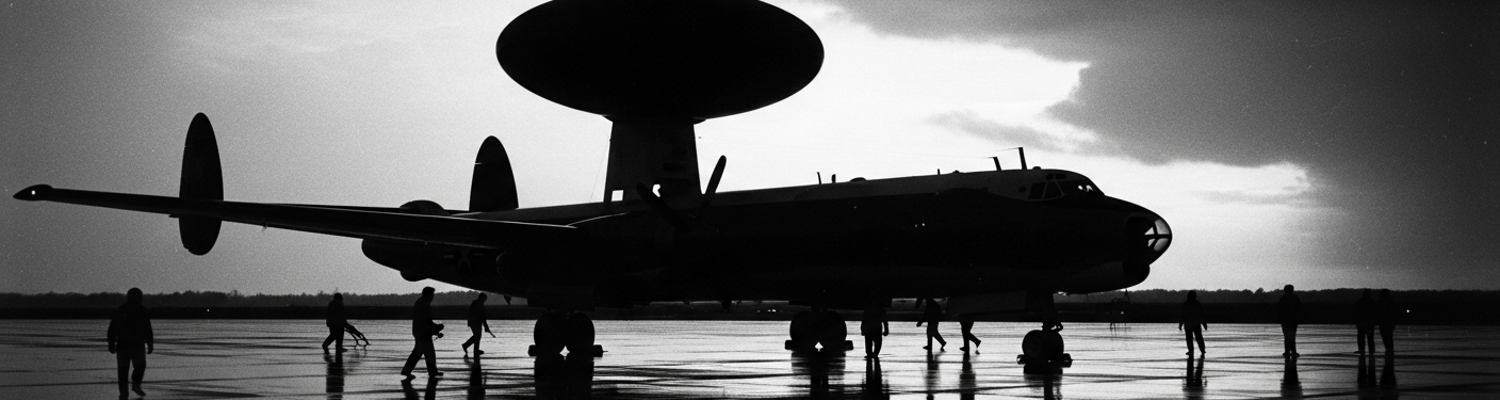
Maintaining the integrity of sea lanes was the primary exercise objective. Planners understood that the flow of transatlantic convoys carrying reinforcements to Europe, a cornerstone of NATO defense strategy, would be the enemy’s primary target. The simulated blockade was not a static line of ships but a dynamic, multi-layered threat. Enemy submarines, operating in wolfpacks, were notionally positioned along the great circle routes emanating from Norfolk and New York. A key element of the defense was the extension of the Distant Early Warning line to the sea. Archival evidence shows the Naval Aeronautical Organization plan for Fiscal Year 1956 specifically called for the commissioning of three Air Early Warning (Barrier) squadrons: VW-11, VW-13, and VW-15. These units, flying radar-domed Lockheed WV-2 Warning Star aircraft, were tasked with flying long-duration patrols far off the coast, forming a radar fence from Newfoundland down to the Azores. Their AN/APS-45 and AN/APS-20 radars were designed to detect incoming Soviet bombers, but were equally essential for spotting surfaced submarines. The exercise also stress-tested the deployment of unconventional assets, such as Marine helicopter squadron HMR-263, which had practiced operating from the deck of the submarine USS Sea Lion earlier in March 1956.
Naval Civil Support Integration
The architecture of Operation Alert 1956 rested on a single, untested assumption: that military and civilian authorities could seamlessly merge in the aftermath of a nuclear exchange. FCDA doctrine explicitly stated that a coordinated response was the only path to national survival. Planners envisioned a system where civilian agencies would identify needs and military forces would provide the specialized capabilities to meet them. In theory, the destruction of a major port would trigger a cascade of joint operations. Civilian Ground Observer Corps volunteers would report fallout patterns, guiding naval radiological safety teams. FCDA welfare officials would manage survivor collection points, which would then be evacuated by Navy and Coast Guard helicopters and small craft.
The framework was brittle.
Operation Alert 1956 was the first large-scale attempt to stress this model under nationwide attack conditions. The exercise was designed to activate the full chain of command. A close review of CIA and FCDA operational plans reveals the intricate intended workflow. A simulated hydrogen bomb strike on the Port of Boston, for example, would notionally destroy the civilian port authority. The regional FCDA administrator, operating from a hardened bunker, would then become the senior civilian authority. That administrator’s primary task was damage assessment and identifying needs like power, water, and medical aid. They would then formally request support from the corresponding military district, in this case the U.S. Navy's First Naval District. The Navy’s response was governed by its own set of priorities, chiefly the restoration of strategic capabilities. This created an immediate, built-in conflict between the FCDA’s focus on civilian survival and the Navy’s mandate to get the port operational for the war effort.
Almost immediately, the exercise exposed severe fractures. The most significant challenge was a fundamental breakdown in command and control. Archival evidence from post-exercise analyses points to incompatible communications equipment and conflicting jurisdictional authority as primary points of failure. Civilian agencies and military units operated on different radio frequencies, a problem made worse by the implementation of CONELRAD, which restricted most broadcast transmissions. This forced reliance on overloaded telephone landlines that were assumed to be largely destroyed in the attack scenario. Beyond the technical problems, the question of who was in charge proved paralyzing. The 1956 National Search and Rescue Plan designated the U.S. Coast Guard as the lead agency for all maritime SAR. However, in a disaster of this scale, the Navy possessed the vast majority of resources. Exercise umpires noted instances where Coast Guard officials, following the plan, attempted to direct naval assets, only to be delayed as naval commanders sought clarification through their own rigid chain of command.
Command Communication Failures
The theoretical backbone of civil-military integration was the free flow of information. Planners assumed that requests for aid would move seamlessly from civilian defense centers to military headquarters. Operation Alert 1956 shattered this assumption.
A close review of exercise after-action reports highlights a point of failure in the link between the First Naval District Headquarters in Boston and the designated Massachusetts Civil Defense alternate command post in Harvard, Massachusetts. This facility was chosen for its location outside the primary blast radius of a strike on Boston. The primary communication channel was a dedicated high-frequency (HF) radio link, with backup connectivity through landline telephone trunk lines. At 11:45 AM EDT, umpires logged the complete collapse of this link. The HF channel, reliant on delicate vacuum-tube transceivers, was ruled notionally disabled by the electromagnetic pulse effects of simulated detonations. Simultaneously, the civilian telephone exchanges routing the backup landlines were declared overloaded and partially destroyed. For several hours, the two most important command nodes in the regional response plan were completely isolated.
This was not an isolated incident.
Across the entire northeastern operational area, naval and Coast Guard units reported protracted periods of crippling radio static and unacknowledged transmissions. The implementation of CONELRAD, per its plan, ordered all FM and television stations off the air, while most AM stations also went silent, leaving only a handful of designated stations broadcasting on cleared frequencies of 640 or 1240 kHz. While military channels were separate, the electronic chaos, combined with simulated EMP effects and notional enemy jamming, rendered many nets useless. Logs from Coast Guard cutters on patrol off Cape Cod show repeated, failed attempts to transmit radiological contamination surveys to the District headquarters. A transmission log from a Navy Reserve destroyer escort, notionally positioned to secure the entrance to the Cape Cod Canal, recorded 47 attempts to contact the command net over a three-hour period. No response was received. This created vast informational black holes on the tactical map. Commanders in Boston had no way of knowing if these units were destroyed, disabled, or simply unable to communicate.
Simulated Naval Deployment Impediments
The entire defensive and logistical framework for the Northeastern Seaboard depended on the reliable transmission of orders. This system proved exceptionally fragile. The mandated activation of CONELRAD had the secondary effect of severely hampering friendly military communications, which had to operate in a crowded and chaotic spectrum. Archival analysis of similar exercises shows that high-frequency radio nets, the standard for long-range naval communication at the time, were rendered nearly useless by a combination of simulated electromagnetic pulse degradation, atmospheric interference, and the sheer volume of traffic forced into fewer channels.
The silence on the airwaves had immediate consequences.
Emergency resupply operations faced catastrophic disruption. The operational plan for the First Naval District involved the immediate dispatch of supply convoys from less-affected ports to the notionally devastated areas of Boston and New York. One such simulated convoy, designated Task Group 40.8, consisting of two fleet oilers and four merchant marine vessels out of Norfolk, was tasked with delivering fuel oil and medical supplies to the Boston area. Exercise logs indicate that upon reaching the designated holding area south of the Cape Cod Canal, the Task Group commander was unable to establish contact with the First Naval District command post for over seven hours. The CONELRAD restrictions, compounded by simulated enemy jamming, meant that repeated attempts to request instructions for navigating the notionally fallout-contaminated waters of Massachusetts Bay went unanswered. The convoy was effectively paralyzed, holding its position while its cargo was desperately needed just over 60 nautical miles away.
Naval Asset Doctrinal Disconnect
Post-exercise analyses uncovered a fundamental disconnect in naval doctrine. The core of the problem was a direct conflict between the two primary missions assigned to naval forces in a post-nuclear attack scenario: restoring strategic port functions for the war effort and providing life-saving support to civilian populations as directed by the FCDA.
The plans were built on sand.
This doctrinal schism was amplified by the context of a protracted blockade. The exercise did not just model the destruction of ports but also the active, ongoing interdiction of sea-lanes. This forced naval commanders into a constant calculus of asset allocation. A review of after-action critiques details the impossible choices faced by tactical commanders. The captain of a destroyer escort, for instance, held a primary responsibility to hunt for enemy submarines threatening the sea approaches to Norfolk. Yet, under the civil support doctrine, that same vessel was also expected to be available to assist the Coast Guard in search and rescue missions. Exercise umpires noted a scenario where a destroyer was prosecuting a submarine contact when a distress call came in from a notionally damaged merchant ship carrying evacuees. The FCDA and Coast Guard framework demanded the destroyer break off its attack to render aid. Naval warfare doctrine, however, dictated that neutralizing the submarine was the greater strategic priority.
Doctrine offered no solution.
The exercise demonstrated that theoretical guidance in training manuals was wholly inadequate. The 1956 National Search and Rescue Plan, for example, had only recently been promulgated, formally designating the U.S. Coast Guard as the lead federal agency for coordinating all maritime search and rescue. This created an immediate command-and-control crisis. On paper, the Coast Guard had the authority, but in the simulated chaos of the Eastern Seaboard, the U.S. Navy possessed the overwhelming majority of capable assets. Post-exercise reports show that Coast Guard officers, attempting to execute their authority, were unable to give direct orders to Navy vessel commanders. Naval captains, adhering to their own chain of command, refused to divert their ships for civil-directed SAR missions without explicit orders from their own superiors, superiors who were often unreachable due to the collapse of communications. This left the designated lead agency with authority but no assets, and the agency with assets refusing to accept outside authority.
Convoy Protection Response Gaps
Operational logs from Operation Alert 1956 reveal that theoretical response times for convoy protection were rendered impossible from the first hour. The entire doctrine of transatlantic reinforcement rested on the ability of Hunter-Killer (HUK) anti-submarine warfare groups to sortie and establish protective screens around merchant convoys within hours of a strategic warning. For a HUK group at Norfolk, the theoretical requirement was to be clear of the harbor and en route to a rendezvous point 200 nautical miles east of the Virginia Capes within six hours of a Red Alert.
In the exercise, this timeline disintegrated. The initial alert at 11:00 AM EDT was followed by the mandatory implementation of CONELRAD. This action, combined with simulated EMP effects, immediately crippled the high-frequency radio nets that naval command relied upon. The HUK group commander never received his sortie orders. For more than eight hours, the carrier and its escorting destroyers sat waiting for instructions that were lost in static.
The convoy was a sitting duck.
This communications paralysis created a cascade of failures. A key simulated relief convoy, loaded with notional medical supplies and fuel, was scheduled to depart from Baltimore, bound for the approaches to New York. Its protection depended entirely on air cover from land-based naval patrol squadrons and the now-paralyzed HUK group. With no orders, the HUK group remained in port. With no air cover assigned due to the same communications blackout, the convoy commander, following his last valid order, proceeded into the open ocean unprotected. Exercise umpires ruled that by the time the convoy passed Atlantic City, it had notionally lost two of its five merchant ships and a fleet oiler to enemy submarine attacks.
Harbor clearance operations, the essential prerequisite for any relief effort, faced catastrophic setbacks. Specialized units, patterned after the harbor clearance teams of World War II, were expected to be on-site and operational within 24 hours. These units, comprised of Navy salvage vessels and Underwater Demolition Teams, were tasked with clearing wreckage and defusing mines in channels like New York’s Ambrose Channel. Archival analysis shows that the UDT detachment at Naval Amphibious Base Little Creek, Virginia, designated to fly into Floyd Bennett Field to begin survey operations, was never deployed. Their transport aircraft were grounded, awaiting mission authorization from a First Naval District headquarters in Boston that was itself electronically isolated.
Integrated Command Structure Collapse
A close review of after-action reports from Operation Alert 1956 details the immediate and catastrophic failure of the integrated command structure. The entire civil-military response doctrine rested on the assumption that civilian agencies like the Federal Civil Defense Administration could direct requests to military units, and that these requests would be seamlessly integrated into naval operations. The exercise proved this to be a fatal flaw.
Umpires documented a critical command failure involving a Navy Mobile Construction Battalion, a Seabee unit, located near the Fore River Shipyard in Quincy, Massachusetts. The regional FCDA administrator, operating from a theoretically secure bunker but electronically isolated, issued a formal request for the Seabees to deploy their heavy bulldozers and cranes to clear a collapsed highway bridge on Route 3A. The bridge was notionally blocking the evacuation of civilian survivors.
Almost simultaneously, the Commander of the First Naval District, adhering to his own war-fighting mandate, issued a direct order to the same Seabee unit: prioritize clearing a damaged pier at the Charlestown Navy Yard to enable the offloading of military supplies.
The two orders were legitimate, yet mutually exclusive.
The Seabee commander on the ground was left in an impossible position, holding conflicting directives from two separate, legitimate chains of command. The communications breakdown, driven by the exercise’s own CONELRAD rules and simulated EMP damage, made it impossible to contact either headquarters for clarification. This incident was not an anomaly; it was a system-wide paralysis. The rigid, vertical command structures of the FCDA and the U.S. Navy were unable to interface horizontally. The plan for civil-military cooperation had made no provision for resolving conflicting priorities in a degraded information environment, transforming what should have been a coordinated response into a series of isolated and contradictory actions.