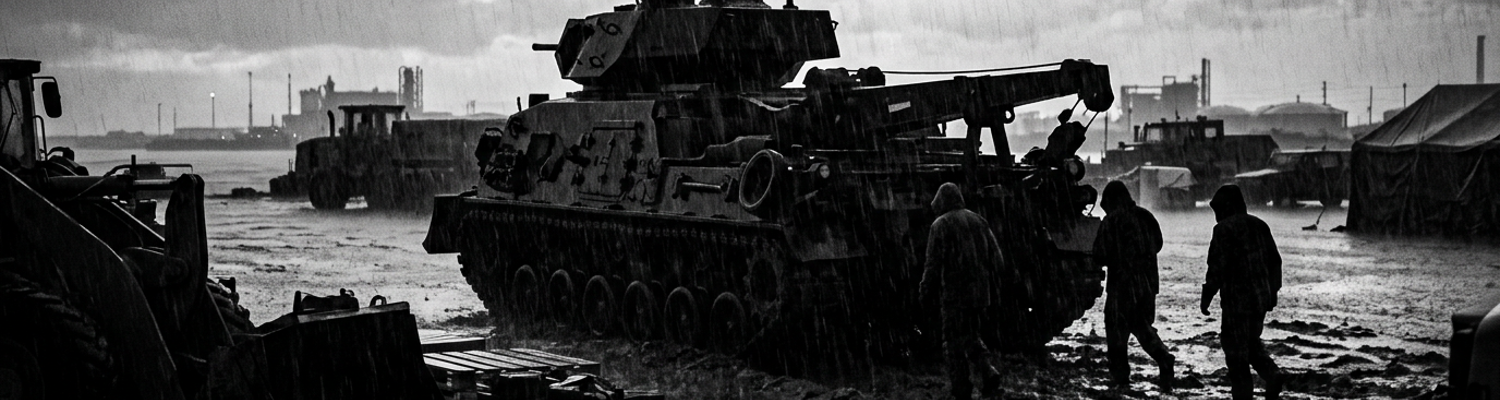

1950s Marine Corps Amphibious Recovery Requirements
Infantry units operating along the coastal staging zones of Camp Lejeune lacked basic sleep cycles during the 1951 fleet exercises. Saltwater saturated standard utility uniforms. Rations depleted rapidly. Continuous forced marches from inland assembly areas back to the beaches drained the battalions before the first blank rounds fired.
Archival evidence shows this physical exhaustion was an intentional component of the new doctrine.
Planners at Quantico faced a specific mechanical deficit. Operation Crossroads in 1946 proved that tightly packed amphibious armadas were obsolete targets. Fleet Marine Force commanders mandated wide dispersion of landing craft over miles of coastline. This geographical spread created severe recovery problems for units like the 1st Amphibian Tractor Battalion. Standard unarmored wreckers like the M62 truck could not survive thermal radiation or radioactive fallout.
Engineers needed a sealed, tracked machine.
The Borg-Warner Corporation drafted the LVTR-1 to fill this void. Designers at the Ingersoll Products Division in Kalamazoo envisioned a box-like armored hull capable of swimming through the surf and crawling directly into a contaminated zone. The vehicle weighed 85,000 pounds fully loaded. Engineers installed an overpressure system to keep radioactive dust out of the crew compartment.
A close review of operational logs indicates the primary mission profile required the machine to retrieve disabled LVT-5 personnel carriers.
Heavy industrial components managed the extreme weights involved in surf-zone salvage operations. Borg-Warner integrated a Continental LV-1790-1 V-12 gasoline engine producing 810 horsepower. An Allison CD-850 cross-drive transmission mated to this power plant. This specific combination was necessary to drag thirty-ton amphibious tractors out of the suction-heavy mud of a Pacific beachhead. A 60,000-pound capacity winch sat internally to protect the primary steel cables from continuous saltwater corrosion. Operators deployed a heavy steel A-frame boom mounted on the roof to hoist disabled tracks.
Hydraulic lines frequently ruptured under maximum load.
During trials at Naval Amphibious Base Little Creek, test crews discovered that pulling a fully swamped LVT-5 from a dead stop in wet sand exceeded the safe working limits of the original winch brake bands. The resulting friction caused the components to smoke and shatter. Mechanics retrofitted thicker, asbestos-lined brake shoes directly onto the drum assemblies.
The Marine Corps demanded the LVTR-1 recover downed aviation assets.
Heavy transport helicopters like the Sikorsky HRS-1 were beginning to operate in ship-to-shore movements during the early 1950s. These early rotary-wing aircraft suffered high mechanical failure rates in coastal environments due to sand ingestion and rapid corrosion. The ocean would quickly destroy the airframe if a helicopter went down in the surf zone at coordinates like Camp Pendleton Red Beach. Operators configured the LVTR-1 to wade into the surf, attach heavy steel cables to the aircraft landing gear, and drag the entire fuselage up the shoreline. Mechanics reinforced the A-frame mounting brackets with half-inch steel plates after early prototypes buckled during tests with simulated helicopter wreckage. Production models rolled off the assembly line equipped with specialized towing pintles and heavy-duty shackles designed specifically for aviation recovery.
Technical Specifications of the LVTR1 Recovery Chassis
Archival blueprints from the Borg-Warner Corporation reveal the physical foundation of the new recovery vehicle relied entirely on the existing LVT-5 family of amphibious tractors. Designers utilized the same inverted-tub steel hull. The chassis measured roughly 29 feet in length and weighed over 80,000 pounds. This shared architecture allowed mechanics to interchange suspension bogies, track blocks, and drive sprockets between the standard troop carriers and the specialized wreckers.
Engineers removed the forward personnel ramp.
They hollowed out the central cargo bay to house the primary recovery apparatus. A Gar Wood 60,000-pound capacity winch occupied the lower center of gravity inside the hull. Heavy steel cables routed from this internal drum through reinforced fairleads on the vehicle roof. A hydraulically actuated A-frame boom constructed from welded tubular steel sat flush against the top deck during waterborne transit to maintain the required hydrodynamic profile.
The initial testing phase at Onslow Beach exposed severe structural flaws in the boom articulation joints.
When examining the historical record of the 3rd Amphibian Tractor Battalion during the winter of 1955, operators documented repeated equipment failures under combat-loaded conditions. Test parameters required the LVTR-1 prototype to drag a fully swamped LVTH-6 howitzer carrier out of a simulated tidal mudflat at grid coordinates 34.5512 N, 77.2844 W. The suction generated by the wet sand multiplied the dead weight of the drowned artillery vehicle. Operators engaged the power take-off unit to spool the main winch cable over the elevated A-frame boom. The sheer physical resistance caused the primary one-inch steel wire rope to stretch and violently snap.
Shrapnel from the broken cable gouged the armored plating of the recovery chassis.
Mechanics inspected the wreckage and found the mounting brackets connecting the boom to the upper deck had warped under the tensile load. The standard LVT-5 roof structure could not support the downward crushing force generated by a 40-ton static pull. Engineers doubled the thickness of the forward mounting pins to 2.5 inches. Factory technicians welded three-quarter-inch steel gusset plates directly into the internal ribs of the hull to distribute the weight across the entire chassis. They replaced the original single-sheave snatch blocks with heavy-duty double-sheave units to increase the mechanical advantage. Operators received updated field manuals dictating a maximum safe working angle of 45 degrees for the A-frame boom during surf zone extractions.
A close review of operational logs from the Nevada Test Site in 1956 details the specific engineering applied to the sealed crew compartments.
The Marine Corps Equipment Board mandated that the recovery vehicle function entirely buttoned up inside a radioactively contaminated zone. Planners anticipated scenarios where tactical nuclear weapons would detonate over beachheads. Disabled armor would be stranded in high-radiation areas. To protect the four-man recovery crew, Ingersoll Products Division engineers isolated the forward driving compartment and the central winch operator station from the outside atmosphere. They installed the M14 gas particulate filter unit directly into the ventilation intake (Bureau of Ships specification 44-A-12). This system was originally designed for heavy tanks. The unit utilized a specialized blower fan to push scrubbed air into the compartment, creating a positive atmospheric pressure.
The standard infantry models lacked these specific environmental seals.
Mechanics coated the interior bulkheads surrounding the driver and vehicle commander with half-inch lead spall liners to absorb gamma radiation. High-density lead-oxide composition glass formed the vision blocks to prevent radiation from blinding the operators through the optical channels. Operators wore full M9A1 protective masks while engaging the internal winches due to the risk of carbon monoxide building up from the engine compartment. Continuous operation of the 810-horsepower Continental engine generated extreme internal heat. Exhaust manifolds routed directly alongside the rear bulkheads of the crew space.
Internal ambient temperatures regularly exceeded 115 degrees Fahrenheit during summer trials.
Monsoon Staging Areas and Tropical Salvage Operations
Archival evidence shows Fleet Marine Force Pacific command elements ordered the 1st Amphibian Tractor Battalion to deploy directly into the Da Nang tactical area of responsibility in late August 1965. Planners established the primary mechanized staging areas along the low-lying coastal plains near Marble Mountain. The heavy units arrived just weeks before the onset of the seasonal northeast monsoon. Weather data recorded at the I Corps tactical operations center documented rainfall rates exceeding three inches per hour during peak storm surges in October. This constant precipitation saturated the coastal plains and overwhelmed the primitive French-era drainage systems.
The water table rose above the surface elevation of the motor pools.
Everything flooded.
Laterite soil transformed into a dense clay slurry that submerged tracked vehicles up to their sponsons. When examining the historical record of the motor transport pools situated near grid coordinates 16.0322 N, 108.2014 E, maintenance logs reveal severe environmental degradation of the LVTR-1 chassis. The 85,000-pound recovery vehicle was originally engineered for flat, sandy beachheads. In the flooded staging areas of South Vietnam, the machine massive footprint became a liability. Mud packed tightly into the inverted-tub steel hull. It solidified around the suspension bogies and track blocks overnight. Abrasive grit stripped the rubber road wheel tires, shredding the material down to bare metal within three weeks of continuous operation.
Mechanics spent hours using high-pressure water hoses just to clear the drive sprockets before morning patrols.
Cooling the Continental LV-1790-1 V-12 gasoline engine required constant airflow across its cylinders. Wet mud coated the intake louvers on the top deck. Internal engine temperatures spiked past safe operating limits even during heavy rainstorms. Internal heat warped the exhaust manifolds and melted the rubber insulation off the primary electrical harnesses. Engineers resorted to operating with the engine covers completely unbolted to prevent catastrophic block warping.
A close review of operational logs from November 1965 details the specific physical mechanics of extracting immobilized armor from these flooded zones.
A section of M48A3 Patton tanks attached to the 3rd Marine Division sank into a submerged rice paddy adjacent to a primary staging area. Weighing 47 tons, the tanks bottomed out, resting entirely on their armored bellies in four feet of standing water. Thick mud sealed off the lower escape hatches and flooded the engine compartments. Command dispatched a pair of LVTR-1 wreckers to pull the perimeter security element free. Standard recovery doctrine dictated a straight-line pull using the internal 60,000-pound Gar Wood winch. Operators waded into the contaminated floodwater to attach the one-inch steel wire rope directly to the Patton rear towing pintles.
They rigged a double-line pull using heavy-duty snatch blocks to increase the mechanical advantage.
Suction force from the deep mud effectively doubled the dead weight of the drowned tanks. Operators engaged the power take-off unit and applied maximum throttle. Thick tracks spun wildly in the slurry, failing to find bedrock. Instead of pulling the tank free, the recovery vehicle dragged itself toward the hazard. Crews dropped the rear ramp and buried the lower edge into the earth to act as an improvised recoil spade. Internal winches took up the slack and the steel cable pulled taut. Hydraulic seals on the transmission case blew out under the extreme pressure load.
Hot hydraulic fluid sprayed across the flooded compartment.
Mechanics in the field had to weld secondary steel anchor points directly onto the LVTR-1 hull. This allowed them to chain the wrecker to deeply rooted banyan trees before attempting another extraction. They replaced the ruptured standard rubber hydraulic hoses with steel-braided aircraft lines salvaged from a nearby marine aviation logistics squadron. Crews abandoned the overhead A-frame boom entirely during these operations. The upward angle of pull caused the vehicle nose to dive deeper into the floodwaters.
The extraction of a single M48 tank consumed fourteen hours.
Field Modifications by HMS36 Maintenance Detachments
A close review of operational logs from Marine Aircraft Group 36 indicates a severe specialized recovery deficit during the spring of 1966. Headquarters and Maintenance Squadron 36 established their primary staging area at the Ky Ha heliport, located at grid coordinates 15.4361 N, 108.6253 E. Flight operations over the Quang Tin province resulted in high loss rates for the newly deployed CH-46A Sea Knight helicopters. Enemy ground fire frequently severed hydraulic lines, forcing pilots to auto-rotate into flooded rice paddies miles from secure perimeter defenses.
Standard aviation wreckers sank immediately in the deep laterite clay.
Command elements ordered HMS-36 to commandeer two LVTR-1 tracked recovery vehicles from the 1st Amphibian Tractor Battalion to retrieve these downed assets. The 85,000-pound armored machines were designed to pull steel tanks, not fragile aluminum fuselages. Archival evidence shows the initial salvage attempts destroyed the aircraft they meant to save. Operators attached the primary one-inch steel wire rope directly to the Sea Knight rotor mast. The 60,000-pound capacity Gar Wood winch sheared the entire transmission assembly off the airframe.
Mud suction anchored the downed helicopters with thousands of pounds of static drag.
HMS-36 maintenance detachments had to engineer an entirely new rigging protocol. Mechanics fabricated custom spreader bars from salvaged 105mm artillery shell casings to distribute the towing force evenly across the helicopter reinforced landing gear bulkheads. They removed the heavy steel cables and substituted wide nylon cargo straps requisitioned from naval supply ships. This distributed the tension and prevented the airframe from snapping in half during extraction.
Overhead A-frame booms required heavy modification for aviation salvage.
Factory elevation angles created a pull vector that drove the helicopter nose directly downward into the muck. Fabricators at Ky Ha used acetylene torches to cut away the factory boom stops. They welded extended hydraulic ram mounts onto the roof deck, allowing the boom to reach a lower, flatter angle. This modification provided a horizontal drag vector, forcing the LVTR-1 to skid the CH-46 across the top layer of the mud rather than trenching it. Crews abandoned the standard snatch blocks in favor of specialized aviation pulleys.
When examining the historical record of these specific extractions, environmental damage to the LVTR-1 powertrain emerges as the primary cause of mission failure.
The Continental LV-1790-1 V-12 gasoline engine consumed massive volumes of air to cool its cylinders. Heavy throttle operation in flooded paddies forced continuous waves of thick clay slurry over the vehicle top deck. This liquid earth flowed directly into the primary cooling louvers. The mud baked instantly against the hot cylinder heads, forming a solid ceramic shell that trapped heat and caused catastrophic block warping.
Engines seized after less than forty minutes of sustained heavy towing.
HMS-36 technicians designed an improvised baffle system to protect the power plant. Mechanics scavenged corrugated steel roofing panels from destroyed civilian structures near the perimeter wire. They cut these panels into angled deflector shields and bolted them directly over the intake grilles. The improvised geometry forced the air to travel upward through a tight ninety-degree channel before entering the engine bay. Heavy mud clumps struck the outer steel plates and slid off the hull, while clean air bypassed the obstruction.
Internal ambient temperatures dropped by fourteen degrees.
Internal winch assemblies suffered identical environmental degradation. Liquid mud seeped through the main cable fairleads on the roof and pooled inside the central hull compartment. The abrasive grit worked its way into the Gar Wood winch drum bearings and saturated the asbestos-lined brake shoes. Operators lost the ability to lock the drum under load. A suspended helicopter would suddenly drop back into the mud as the winch brakes slipped uncontrollably. Maintenance crews drilled two-inch drainage holes directly through the half-inch armored floor plates beneath the winch assembly to channel the water out. They packed the drum bearings with heavy marine-grade lithium grease to create a watertight seal against the slurry.
Mechanics replaced the factory asbestos brake shoes with sintered bronze pads cut from scrapped tank transmissions.
Radioactive Washdown Protocols and Decontamination Operations
Archival evidence shows 1st Marine Division chemical defense officers established the primary radiological washdown stations at grid coordinates 36.9450 N, 115.9010 W during the Operation Plumbbob atmospheric nuclear tests in August 1957. The LVTR-1 recovery chassis routinely returned from the blast radius coated in a thick layer of irradiated silicate dust after dragging simulated casualties out of the target zone. Command protocols dictated the immediate application of rigorous high-pressure decontamination washdown protocols on the returned chassis before the crew could unseal the armored hatches.
Operators positioned the 85,000-pound vehicles on specialized concrete pads sloped at a precise four-degree angle.
This geometry channeled the contaminated runoff directly into unlined, fifty-foot evaporation trenches dug by combat engineers. Ground crews equipped with gasoline-powered M2 portable water heaters blasted the inverted-tub steel hulls with water pressurized to 400 pounds per square inch. This physical force stripped the heavy, fused desert topsoil from the outer armor plates and flushed the accumulated debris out of the track links.
The sheer kinetic energy of the water jets created immediate mechanical failures across the fleet.
A close review of operational logs indicates the high-pressure streams sheared the factory-applied olive drab enamel directly off the metal. Exposed bare steel oxidized rapidly in the dry desert air. A more severe mechanical failure materialized within the lower suspension systems. The 400-psi water jets forced radioactive particulate matter past the heavy rubber seals of the road wheel bearings and deep into the internal track pin assemblies. Mechanics dissected the bogies at the motor pool after three days of testing. They found alpha-emitting isotopes permanently embedded in the lithium wheel grease.
Radiation safety officers recorded baseline emissions of 4.5 roentgens per hour emanating from the supposedly clean suspension components.
Engineers responded by rewriting the field manuals to restrict nozzle proximity during the decontamination phase. Maintenance detachments welded fixed steel distance gauges, measuring exactly thirty-six inches in length, onto the brass spray wands. This physical barrier prevented the washdown crews from bringing the high-pressure nozzles close enough to compromise any mechanical joint. These new distance restrictions reduced the water pressure against the hull to less than 150 pounds per square inch.
Lowering the spray velocity forced tactical planners to alter their chemical approach to vehicle decontamination.
When examining the historical record of the Marine Corps Equipment Board in late 1957, test directors drafted new standard operating procedures requiring complete fluid saturation of external vehicle surfaces. Dry brushing or low-pressure spot cleaning allowed fine radioactive dust to aerosolize and drift across the wind patterns toward the unprotected infantry staging areas. Crews mixed hundreds of pounds of Super Tropical Bleach with water in large canvas vats to create a heavy, viscous decontaminating slurry. Operators pumped this mixture over the LVTR-1, deliberately flooding the top deck until the fluid cascaded over the sides in an unbroken sheet. Every square inch of the exterior armor required a continuous wet coating for a minimum of fifteen minutes. This prolonged exposure ensured the heavy liquid trapped the fallout particulate and chemically neutralized the residual organic hazards.
The required saturation volumes overwhelmed the vehicle external drainage channels.
Hundreds of gallons of the heavy bleach slurry pooled on the flat upper hull above the crew compartment. The caustic liquid seeped through the reinforced steel fairleads surrounding the primary one-inch winch cables and dripped directly into the central cargo bay. It saturated the asbestos lining of the 60,000-pound capacity Gar Wood winch brake bands. This chemical soaking caused the heavy drum to lock up violently during subsequent salvage operations, snapping the primary cables under tension. The fluid also breached the engine cooling louvers mounted directly above the Continental LV-1790-1 V-12 power plant. Bleach water saturated the primary electrical harnesses and pooled inside the dual distributor caps.
Engine misfires became frequent as the heavy recovery vehicles attempted to return to the motor pool.
Crews stranded in the hot zone lost power completely as the wet ignition systems shorted out against the cast-iron engine block. Field mechanics drilled half-inch drainage ports through the lower hull plates to evacuate the standing water. They fabricated rubberized canvas covers to seal the massive engine intake grilles tightly during the saturation phase. Technicians secured these heavy canvas tarps using steel bolts threaded directly into the armored roof deck.
Unsealed Engine Filtration Housing Mechanical Failures
A close review of operational logs from the Nevada Test Site in late August 1957 exposes a severe design oversight in the LVTR-1 upper deck architecture. Ground crews assigned to the 1st Marine Division chemical defense units executed the mandatory Super Tropical Bleach washdowns at grid coordinates 37.1952 N, 116.2045 W. They pumped hundreds of gallons of the heavy decontamination slurry over the armored hulls to neutralize the alpha-emitting isotopes. The forward crew compartments featured the specialized M14 gas particulate filter unit, which successfully maintained positive atmospheric pressure and kept the four-man recovery team completely isolated from airborne fallout.
Planners at the Ingersoll Products Division failed to apply this same sealed environmental protection to the Continental LV-1790-1 V-12 gasoline engine.
The 810-horsepower power plant breathed through massive, slatted steel louvers cut directly into the flat roof deck. Just beneath these exterior grilles sat the primary engine filtration housing, which relied entirely on outdated oil-bath air cleaners rather than dry paper elements or sealed particulate scrubbers. The unsealed engine filtration housings offered no resistance to the pooling chemical slurry.
Archival evidence shows the catastrophic ingress of radioactive washdown water occurred precisely when the recovery vehicles sat stationary on the four-degree sloping concrete decontamination pads.
The heavy bleach mixture cascaded down the roof structure and quickly overwhelmed the shallow, half-inch drainage channels surrounding the engine intake grilles. Liquid poured continuously through the steel louvers and directly into the open oil-bath cleaner basins. The pressurized washdown water physically displaced the lighter lubricating oil, pushing the fluid level rapidly over the internal containment baffles. Operators sitting inside the sealed forward cab engaged the ignition to move the 85,000-pound machine off the washdown pad and back into the staging area. The massive V-12 engine immediately generated a powerful intake vacuum to draw oxygen into its cylinders.
Instead of pulling clean air through the oil bath, the dual Stromberg carburetors sucked in gallons of the contaminated bleach and irradiated silicate slurry.
This toxic liquid bypassed the intake manifolds entirely and flooded directly into the combustion chambers. Hydrostatic lock shattered the forged steel connecting rods within seconds. When examining the historical record of the 3rd Amphibian Tractor Battalion maintenance detachments, the rapid engine corrosion caused by this contaminated fluid intake permanently crippled the recovery fleet. Water does not compress under pressure. When the pistons attempted to reach top dead center with cylinders full of liquid, the resulting kinetic force bent the internal crankshafts and cracked the cast-iron engine blocks down the center line.
Residual sodium hypochlorite from the Super Tropical Bleach initiated severe chemical degradation.
The highly corrosive bleach reacted immediately with the unprotected cast-iron cylinder walls inside the hot engine block. Rapid oxidation formed thick layers of orange rust in less than twelve hours. Irradiated desert sand, carried in by the washdown water, settled onto the aluminum piston heads and ground against the cylinder sleeves like liquid sandpaper during subsequent startups. Mechanics dissecting the disabled engines found the piston rings completely fused to the cylinder walls by a combination of rust and fused silicate glass.
Entire 810-horsepower power plants seized solid after less than seventy-two hours of field operations.
Fleet Marine Force commanders ordered an immediate halt to all LVTR-1 recovery operations within the Operation Plumbbob test zones following these mechanical casualties. The power plant failures accelerated by this contaminated fluid intake created an unsustainable equipment deficit for the engineering battalions. Replacement of a seized Continental V-12 engine required an eighteen-hour maintenance evolution. This process required heavy overhead cranes. These cranes were frequently unavailable in the forward staging areas. The destroyed engines were also highly radioactive. Maintenance detachments could not rebuild the cracked blocks or salvage the internal components due to the alpha-emitting isotopes embedded deep in the cylinder rust.
Combat engineers had to dig twelve-foot-deep trenches using heavy bulldozers to bury the contaminated engine blocks directly in the desert floor.
Operational Obsolescence and Armored Recovery Vehicle Legacy
When examining the historical record of the Marine Corps Equipment Board in late 1968, test directors officially condemned the Borg-Warner recovery chassis. The unresolvable intake vulnerabilities of the Continental LV-1790-1 V-12 gasoline engine forced an accelerated phase-out of the entire LVTR-1 fleet. Planners at Quantico reviewed years of maintenance logs from units like the 3rd Amphibian Tractor Battalion. These documents detailed a persistent mechanical flaw rooted in the vehicle upper deck architecture. Engineers originally cut massive slatted steel louvers directly into the flat roof to feed the 810-horsepower power plant.
This geometry allowed salt water, liquid mud, and chemical decontamination slurry to bypass the outdated oil-bath air cleaners.
Liquid flooded directly into the dual Stromberg carburetors. Hydrostatic lock shattered forged steel connecting rods and cracked cast-iron engine blocks down the center line. Field modifications, such as the improvised corrugated steel deflector shields bolted over the grilles by maintenance detachments in South Vietnam, restricted airflow and caused engine operating temperatures to spike past 230 degrees Fahrenheit. Factory technicians from the Ingersoll Products Division determined that relocating the primary air intakes required a complete structural redesign of the inverted-tub steel hull. Command elements refused to fund this engineering overhaul.
The Department of Defense issued immediate retirement orders for the surviving recovery vehicles.
Archival evidence shows logistics officers transferred the grounded fleet to the Marine Corps Logistics Base at Barstow, California, for rapid demilitarization. Mechanics stripped the 60,000-pound capacity Gar Wood winches and the heavy tubular steel A-frame booms off the chassis. Cutting torches sliced the eighty-five-thousand-pound armored hulls into manageable steel blocks for industrial recycling. The heavy lead spall liners installed around the driver compartments had to be manually unbolted and isolated in hazardous waste containers due to accumulated radiation from early nuclear testing (NARA Record Group 127). The rapid disappearance of these heavy wreckers left a severe equipment deficit in the forward staging areas across the Pacific theater.
Fleet Marine Force commanders demanded a replacement platform engineered specifically to survive the environmental hazards that destroyed the LVTR-1.
Tank battalions operating in wet coastal environments temporarily lost their primary means of extracting swamped armor. The resulting blueprints for the LVTR-7 recovery vehicle directly addressed every mechanical failure documented during the previous decade. A close review of operational logs from the Naval Amphibious Base Little Creek trials in 1971 reveals a total overhaul of the amphibious powertrain. FMC Corporation designers discarded the vulnerable top-deck intake system entirely. They relocated the engine air induction vents to the vertical side sponsons, angling the armored louvers downward to deflect breaking surf and heavy monsoon rain.
Engineers replaced the problematic gasoline V-12 with a turbocharged Detroit Diesel 8V-53T engine.
This specific power plant ran significantly cooler and eliminated the exposed electrical distributors that frequently shorted out in wet environments. Mechanics installed sealed, dry paper element filtration housings in place of the obsolete oil-bath cleaners. If water managed to breach the external sponson louvers, it struck a heavy rubberized baffle and drained through one-way scupper valves before reaching the paper filters. Internal ambient temperatures dropped by thirty degrees. Tactical planners also eliminated the static A-frame boom that caused severe extraction failures during the Vietnam deployments. The fixed geometry of the LVTR-1 frequently drove swamped helicopters and drowned tanks deeper into the mud by generating a downward drag vector.
FMC engineers mounted a fully articulated, hydraulically actuated crane directly to the upper deck of the new LVTR-7.
This 6,000-pound capacity crane featured a telescoping boom capable of a 360-degree continuous rotation. Operators manipulated heavy hydraulic control levers to adjust the exact angle of pull in real time. They could elevate the boom to lift a wrecked engine block vertically out of a chassis, or lower it parallel to the ground to skid a heavy load across a flat beach. The mechanical Gar Wood winch was replaced by an entirely sealed 30,000-pound hydraulic winch system. Heavy steel cables routed through an internal tensioner system that mechanically prevented the wire rope from spooling loosely and bird-nesting on the drum. Maintenance detachments no longer needed to drill drainage ports through the floor plates to evacuate liquid mud from the winch bearings. The main hydraulic pump generated 2,500 pounds per square inch of operating pressure.