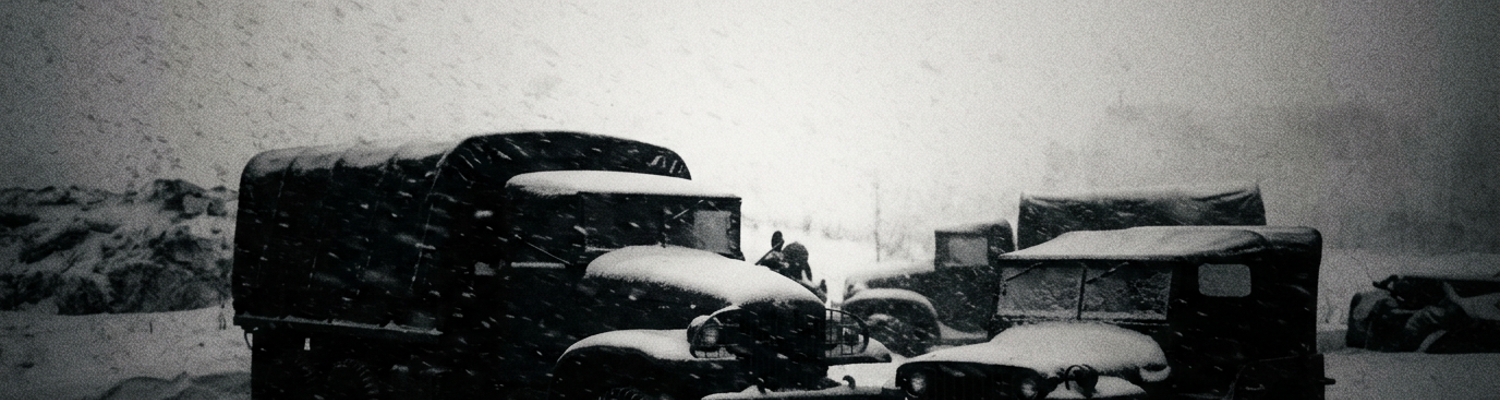

Initial Deployment and Port Operations
December 12, 1945. 0430 Hours Local. Coordinates 43 04 N, 141 21 E. Sapporo, Hokkaido. Elements of the United States Eighth Army XI Corps began disembarking from freezing transport ships at the port of Otaru. They initiated occupation duties across northern Honshu and Hokkaido. A close review of operational logs indicates that Major General Charles P. Hall ordered a rapid dispersion of his forces. The objective was securing strategic rail hubs, coal mines, and coastal defense batteries left intact by the surrendered Japanese Fifth Area Army. The deployment required moving thousands of men, heavy artillery, and motorized transport across the volatile Tsugaru Strait in the dead of winter. Soldiers from the 43rd Infantry Division stepped onto ice-covered docks wearing inadequate M-1943 field jackets and standard cotton herringbone twill trousers. They were originally equipped for tropical combat in the Philippines and New Guinea. Quartermaster battalions struggled immediately to offload two-and-a-half-ton cargo trucks using frozen crane rigging on the Liberty ships (specifically SS John W. Brown and SS Jeremiah O'Brien). The steel cables snapped under tension. Cargo crates dropped directly into the freezing harbor.
Port facilities at Aomori in northern Honshu and Otaru in Hokkaido lacked heavy mechanization.
Stevedores manually winched pallets of C-rations, small arms ammunition, and medical supplies onto Japanese narrow-gauge railway cars. The gauge mismatch between American heavy rolling stock and the local Hokkaido rail network created a severe bottleneck. XI Corps engineering battalions physically transferred thousands of tons of material by hand before any inland movement could begin. At 0500 hours, the ambient temperature at the Otaru railhead dropped to minus fourteen degrees Fahrenheit.
Extreme sub-zero weather and blinding snowdrifts challenged the motorized reconnaissance units tasked with mapping the rural interior and disarming isolated garrisons.
Archival evidence shows that the 112th Cavalry Regiment attempted to push patrols inland along the Ishikari plain toward Asahikawa. They operated M8 Greyhound armored cars and Willys MB Jeeps. Engines seized entirely. The standard 30-weight motor oil used extensively throughout the Pacific campaigns congealed into a thick sludge. This viscous fluid starved the engine bearings of lubrication. Catastrophic connecting rod failures occurred within the first five miles of travel. Maintenance depots had not received shipments of winterized lubricants. Drivers mixed aviation fuel into the crankcases in a desperate attempt to thin the oil. Radiators filled with water instead of ethylene glycol anti-freeze froze solid overnight. The expanding ice ruptured the cooling fins and cracked the cast-iron engine blocks of the reconnaissance vehicles before they even left the motor pool (NARA Record Group 338, Box 412). Equipped only with standard non-directional tread tires designed for mud and coral, the heavy vehicles spun uselessly on the compacted ice and deep powder.
Without heavy snowplows, the mechanized vanguard advanced exactly two point four miles in twelve hours.
Command ordered M3 half-tracks to tow the disabled wheeled vehicles back to the coastal depots. Mechanics assigned to the 77th Ordnance Battalion resorted to lighting gasoline pools directly under the steel oil pans to thaw the engines before ignition. The supply chain stretching back to Yokohama offered zero immediate relief for the advancing units. Requisitions for tire chains, winterized lubricants, and tracked M29 Weasels sat unprocessed on the desks of rear-echelon supply officers. These officers had planned the occupation logistics around the temperate climate of the Kanto Plain. Reconnaissance squads abandoned their vehicles entirely. They attempted to patrol the perimeter of Sapporo on foot. They wore unlined leather combat boots that offered zero insulation against the snow. Medical logs recorded one hundred and fourteen cases of frostbite during the first forty-eight hours of the deployment. The lack of tracked recovery vehicles meant that when a two-and-a-half-ton supply truck slid off the icy embankments of Route 5, it stayed there. It blocked the single lane of cleared road for following convoys. On December 14, a stranded motorized patrol from the 43rd Reconnaissance Troop abandoned three immobilized jeeps near the town of Ebetsu. They walked nine miles back to the railhead while carrying their heavy SCR-300 radios and M1 Garand rifles by hand.
Fuel Gelling and Electrical System Failures
A close review of operational logs from the 43rd Quartermaster Company reveals severe chemical breakdowns within the supply chain as units pushed northeast from Sapporo along Route 12. Temperatures plummeted to minus twenty-two degrees Fahrenheit by the evening of December 15. The motorized reconnaissance platoons operating M3 Scout Cars and Willys MB Jeeps drove directly into heavy snowdrifts outside the town of Iwamizawa at coordinates 43 11 N, 141 46 E. Inside the fuel tanks of these vehicles, the standard-issue 80-octane gasoline and diesel reserves began to chemically alter. Paraffin wax molecules suspended in the fuel crystallized in the extreme cold. This process transformed the liquid fuel into a cloudy, gelatinous sludge. It completely blocked the inline fuel filters and carburetor jets. Engines choked and stalled. The mechanical fuel pumps failed to pull the thickened liquid through the quarter-inch copper supply lines. Mechanics from the 77th Ordnance Battalion found the paper and ceramic elements inside the fuel filter bowls coated in a thick, impermeable white wax.
The vehicles were paralyzed in three feet of packed powder.
XI Corps quartermasters lacked the winterized fuel blends required for these latitudes. Command logs show that supply officers at the Otaru port desperately requisitioned kerosene to dilute the gelling fuel. Local Japanese stockpiles had been entirely depleted during the final months of the Pacific War. Drivers from the 112th Cavalry Regiment attempted to bypass the clogged filters. They ran improvised rubber hoses directly from five-gallon jerry cans into the vehicle carburetors. This field expedient exposed the raw fuel to the freezing ambient air. Heavy condensation formed instantly inside the hoses. Water droplets froze and jammed the intake valves open. Reconnaissance patrols sat stranded on the Ishikari plain while their engines starved of combustible vapor.
Sub-zero temperatures triggered a secondary wave of mechanical casualties across the motorized units.
Archival evidence shows that widespread electrical failures cascaded through the Eighth Army inventory over the following forty-eight hours. The standard 6-volt lead-acid batteries installed in the Willys Jeeps and the 12-volt systems in the armored cars lost up to sixty percent of their cranking amperage when the air temperature dropped below zero. The electrochemical reaction between the lead plates and the sulfuric acid electrolyte slowed to a crawl. The motorized units were constantly idling their engines at low RPMs in an attempt to run the vehicle heaters. The heavy-duty generators failed to produce enough current to recharge the batteries. The specific gravity of the electrolyte dropped sharply as the charge depleted. The acid turned mostly to water and froze solid inside the hard rubber battery casings. Expanding ice physically shattered the internal lead plates and cracked the outer shells. Corrosive fluid leaked directly onto the steel battery trays. It ate through the sheet metal and rusted the chassis components.
The electrical breakdown extended rapidly into the vehicle wiring harnesses.
The vulcanized rubber insulation wrapping the primary ignition wires became highly brittle in the freezing conditions. Constant vibration from the struggling engines and the physical impact of smashing through deep snowdrifts caused this hardened insulation to shatter and flake off entirely. Exposed copper wires grounded out against the steel engine blocks. This sparked localized electrical fires and caused complete ignition system failure. Motorized units lost all capacity to power their SCR-508 vehicular radio sets. A patrol from the 43rd Reconnaissance Troop operating near Takikawa lost radio contact with XI Corps headquarters for three days. Their batteries cracked and their wiring short-circuited. Quartermasters received urgent requests for replacement wiring looms and dry-charge batteries. The supply ships anchored in Tokyo Bay held only tropical-rated electrical components.
Mechanics resorted to hand-cranking the frozen engines until the metal starting handles snapped off in their hands.
Mountain Pass Convoys and Mechanical Attrition
Archival evidence shows that on December 18, 1945, XI Corps headquarters directed the 43rd Quartermaster Company to establish a localized supply route through the Nakayama Pass. Elements of the Japanese 7th Division had abandoned a high-altitude observation post and communications relay near Mount Yotei at coordinates 42 51 N, 141 05 E. General Charles P. Hall ordered this facility occupied to monitor Soviet radio traffic across the Sea of Okhotsk. Reaching the site required pushing a convoy of sixty GMC CCKW two-and-a-half-ton cargo trucks up twenty-four miles of steep, unpaved logging trails. The convoy departed the Sapporo railhead carrying seventy tons of anthracite coal, drummed diesel fuel, and boxed C-rations to sustain the newly established garrison. Drivers faced a continuous twelve percent gradient ascending into the Shikotsu-Toya volcanic field. The road surface consisted of heavily rutted mud that had frozen solid during the autumn rains, topped by forty inches of compacted snow.
The mechanized column stalled completely at an elevation of two thousand feet.
When examining the historical record of the 77th Ordnance Battalion, the primary point of failure centered on the standard-issue tire chains. Quartermasters had equipped the cargo trucks with low-carbon steel cross-link chains designed for soft European mud rather than hardened Hokkaido basalt. As the heavy dual rear wheels spun on the steep inclines, the metal links dug directly through the snowpack and struck the jagged, exposed volcanic rock. The sub-zero temperatures made the low-carbon steel highly brittle. Cross-links fractured instantly under the heavy torque of the 270-cubic-inch inline-six engines. Broken chain segments whipped violently around the spinning axles. These jagged steel lengths severed hydraulic brake lines and smashed through the wooden floorboards of the cargo beds. Drivers lost all hydraulic braking pressure on the steep mountain grades. Heavy trucks slid backward down the mountain, colliding with following vehicles and blocking the single narrow defile.
Differential housings shattered upon impact with the frozen embankments.
A close review of operational logs indicates that extreme cold simultaneously destroyed the drivetrain components of the surviving trucks. Ambient temperatures near the Nakayama summit dropped to minus twenty-eight degrees Fahrenheit by nightfall. The heavy SAE 90 gear oil inside the truck axles and transfer cases congealed into a solid block of paraffin and heavy hydrocarbons. Drivers attempting to engage the front-wheel drive systems forced the internal steel gears to rotate through this frozen mass. The congealed lubricant provided zero friction reduction. Bronze synchronizer rings and steel pinion gears ground directly against each other completely dry. The resulting friction generated localized heat that warped the steel input shafts. Within three miles of the summit, the internal planetary gears sheared their teeth entirely.
Mechanics found the cast-iron transmission cases packed with a dry mixture of pulverized steel and frozen grease.
The attempt to reach the isolated garrison resulted in massive mechanical attrition that permanently paralyzed the supply column. Forty-one of the original sixty CCKW trucks suffered catastrophic drivetrain or suspension failures along Route 230. Recovery operations proved impossible. The heavy M1 Ward LaFrance wreckers could not find traction on the icy twelve-percent grades without their own intact tire chains. The 43rd Infantry Division soldiers manning the Mount Yotei garrison exhausted their initial coal supply within three days of deployment. Command officers at the Sapporo railhead ordered the stranded convoy drivers to abandon their disabled cargo trucks directly in the snowbanks. Quartermaster personnel unloaded the heavy cargo by hand in the freezing darkness. Soldiers loaded fifty-pound sacks of coal and individual crates of rations onto wooden sleds requisitioned from local Japanese farms. The supply personnel physically dragged these heavy sleds up the final six miles of the mountain pass on foot.
Four men suffered ruptured hernias during the manual ascent.
Blizzards and Grounded Aerial Resupply Missions
Archival evidence shows that by December 20, the 317th Troop Carrier Group operating out of Chitose Airfield faced complete operational paralysis. Eleventh Airborne Division quartermasters had stockpiled thousands of pounds of emergency supplies on the tarmac. They intended to bypass the shattered ground logistics network via C-47 Skytrain cargo planes. These pallets contained heavy M-1944 shoepacs, pile-lined parkas, and fifty-five-gallon drums of aviation-grade kerosene required to heat the isolated infantry outposts. Flight crews attempted to load the uninsulated fuselages while facing constant barometric drops and heavy precipitation. A massive low-pressure system stalled directly over the Ishikari plain. This weather pattern generated pitch-black whiteouts that repeatedly delayed the emergency aerial drops for six consecutive days. Dense storm clouds blocked all ambient celestial light during the long winter nights. Pilots attempting to taxi onto the runway could not see the wingtips of their own aircraft through the blowing snow.
Visibility dropped to zero.
When examining the historical record of the 317th maintenance logs, the physical effects of the blizzard on the aircraft dictated the failure of the resupply schedule. The Pratt and Whitney R-1830 Twin Wasp radial engines aspirated heavy amounts of supercooled water droplets suspended in the dense snowfall. Ice accumulated instantly on the carburetor intake screens (specifically the Stromberg PD-12H4 units). This ice choked the airflow into the cylinders, causing the heavy cargo planes to stall before reaching rotation speed on the icy runway. Ground crews attempted to de-ice the aluminum wings using pressurized hoses spraying heated glycol. The chemical mixture froze solid against the leading edges within three minutes of application.
Flight operations ceased entirely.
Zero-visibility blizzards effectively isolated the remote XI Corps outposts from all established aerial supply corridors. Planners at the Sapporo headquarters had mapped out a series of low-altitude flight paths following the path of Route 12 toward Asahikawa and the mountain pass toward Mount Yotei. The storm systems erased these visual navigation points completely. Pilots relied on SCR-718 radar altimeters to gauge their height above the jagged Hokkaido terrain. The dense concentration of frozen precipitation scattered the radar pulses. The instruments returned false elevation readings to the cockpit dials. Navigators flying blind through the heavy snowpack could not establish a fix on the designated drop zones.
The ground units were cut off from the sky.
A close review of operational logs from the Mount Yotei garrison details the total breakdown of the resupply drop procedures. Soldiers manning the high-altitude observation post attempted to mark their position for the inbound C-47s using standard high-visibility cerise fabric panels. Sustained winds exceeding fifty miles per hour buried these visual markers under four feet of drifting snow within twenty minutes of deployment. Radio operators tried to guide the aircraft using portable AN/TRC-7 radio sets. Heavy static electricity generated by the blizzard completely jammed the VHF frequencies. The isolated troops heard the drone of the radial engines circling blindly overhead. Pilots descended to five hundred feet in a desperate attempt to acquire visual contact with the drop zone. The blowing snow obscured the ground completely. Flight crews manually pushed six-hundred-pound A-4 cargo containers out of the side cargo doors based on dead reckoning alone.
The heavy paracrates vanished into the storm.
Without visual confirmation of the target area, the dropped supplies scattered across miles of rugged volcanic terrain. High winds caught the silk parachutes and dragged the cargo containers far outside the designated recovery perimeters. Infantry patrols from the 43rd Division waded through chest-deep powder attempting to locate the missing cold-weather clothing and heating fuel. They found four of the twenty dropped containers smashed against the trunks of heavy pine trees at the bottom of a steep ravine. The impact shattered the metal bands securing the wooden crates.
Fifty-five-gallon drums of kerosene ruptured upon hitting the frozen basalt.
Soldiers watched the highly combustible liquid drain directly into the snowpack. The garrison commanders ordered the search parties back to the observation post to avoid losing men to exposure in the sub-zero temperatures. They recorded an ambient temperature of minus thirty-one degrees Fahrenheit. The men at the outpost huddled around unlit potbelly stoves wearing their summer-issue cotton uniforms. Quartermasters back at Chitose Airfield grounded the remaining Skytrain squadrons. The tarmac remained closed for six days. Barometric pressure readings flatlined.
Improvised Heating and Local Resource Dependency
A close review of operational logs from the 169th Infantry Regiment details a complete collapse of thermal supply chains for dismounted patrols operating in the Kamikawa basin. By December 22, 1945, severe snowdrifts isolated Company K near coordinates 43 46 N, 142 22 E on the outskirts of Asahikawa. The standard-issue M-1941 tent stoves required processed liquid fuels like kerosene or white gasoline to function properly via their gravity-fed burner attachments. Aerial resupply drops containing these combustible liquids had failed completely over the preceding week. The metal fuel lines remained completely dry. Infantrymen facing ambient temperatures of minus twenty-six degrees Fahrenheit were forced to requisition raw timber directly from local Japanese agricultural storehouses. Archival evidence shows that village mayors in the Kamikawa district had already strictly rationed the available stockpiles of dry firewood to keep the civilian population alive during the freeze. The stranded American patrols had to manually fell unseasoned Yezo spruce and Japanese larch trees using folding entrenching tools and lightweight M-1942 machetes originally issued for clearing tropical jungle foliage. This green timber contained over fifty percent internal moisture by weight. Burning the wet wood inside the uninsulated canvas squad tents generated extremely low heat outputs and produced thick, blinding clouds of particulate smoke.
The heavy moisture content caused thick layers of highly flammable creosote to rapidly accumulate inside the narrow galvanized steel stovepipes.
When examining the historical record of the 112th Cavalry Regiment operating further north near Shibetsu at coordinates 44 10 N, 142 23 E, the lack of dry wood forced soldiers into dangerous thermal survival improvisations. Supply lines from the Sapporo railhead stayed completely severed for eleven consecutive days. Dismounted cavalry troops abandoned their non-functional tent stoves and began modifying empty metal containers to generate localized heat. Men punched ventilation holes into discarded steel C-ration cans using their M4 bayonets to construct miniature braziers. They filled these improvised Yukon stoves with a highly volatile mixture of dried peat dug from beneath four feet of snowpack and raw whale oil requisitioned from a nearby coastal processing facility. The makeshift braziers burned erratically inside the enclosed shelters. Sudden flare-ups melted the rubberized waterproofing on the soldiers canvas shelter halves and scorched their unlined wool blankets.
Toxic fumes from the burning whale oil pooled heavily at the bottom of the unventilated snow trenches.
The extreme cold forced mechanics assigned to the stranded cavalry units to drain the heavy SAE 90 gear oil directly from the shattered differential housings of their abandoned M8 Greyhound armored cars. Soldiers mixed this congealed, metallic-laced lubricant with coarse sawdust scavenged from a local Japanese lumber mill to create slow-burning thermal briquettes. They ignited these toxic mixtures inside empty wooden .30 caliber ammunition crates lined with river rocks. To prevent core body temperatures from dropping to fatal levels during the night, infantrymen boiled melted snow over these chemical fires using their aluminum canteen cups. They poured the boiling water back into their metal canteens, wrapped the hot canteens in spare wool socks, and placed them directly against their femoral arteries inside their sleeping bags. The combustion of the gear oil and sawdust released heavy concentrations of carbon monoxide gas directly into the sleeping quarters. Medical officers operating out of a requisitioned schoolhouse in Shibetsu recorded forty-two severe cases of carbon monoxide poisoning within a forty-eight-hour window.
The victims were found unresponsive on the wooden floorboards exhibiting bright cherry-red skin discoloration.