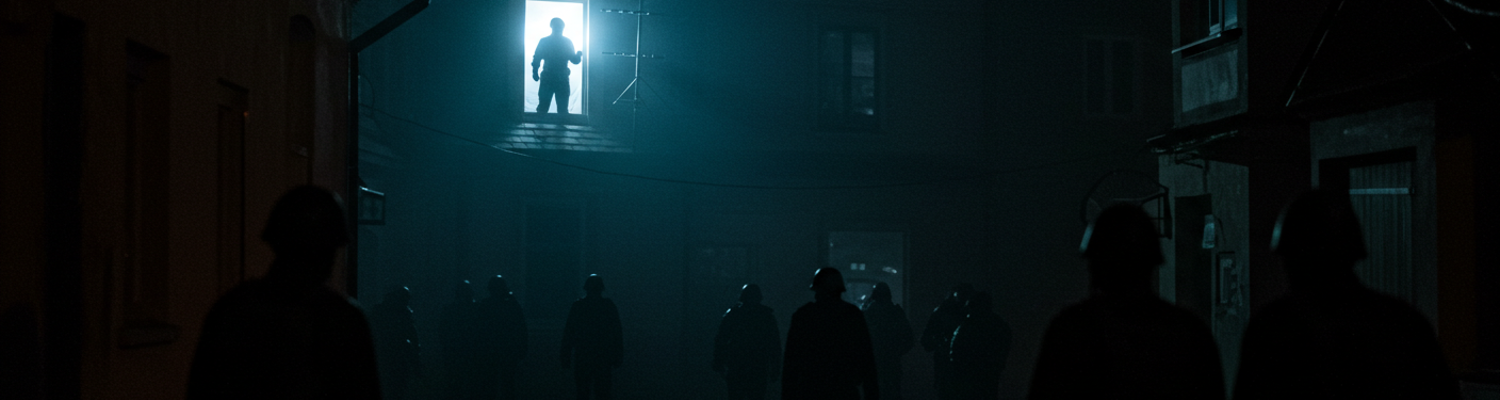

In occupied Europe, the German military security apparatus was a pervasive force. The Wehrmacht, Gestapo, and Abwehr dedicated enormous resources to control, creating an environment of inescapable surveillance. German radio intelligence, the Funkaufklärung, fielded thousands of personnel to monitor the airwaves. Mobile radio direction-finding (RDF) teams in disguised civilian trucks roamed cities, hunting the faint electronic whispers of clandestine transmitters. The act of communication could trigger a swift, violent response. The life expectancy for an Allied radio operator in this environment was six weeks.
The radio operator was the only link to London.
This individual, working in complete isolation to protect the resistance network, was the conduit for all clandestine activity. They were not saboteurs. Their singular, hazardous function was to transmit and receive intelligence. Archival evidence from Special Operations Executive (SOE) and Office of Strategic Services (OSS) records (NARA Record Group 226) details a constant flow of data: German troop concentrations, factory production schematics, supply train timetables, and post-raid bomb damage assessments. Three-man Jedburgh teams, comprising a commander, an executive officer, and a radio specialist, depended on this single point of contact to coordinate resistance with Allied invasion strategy, particularly after D-Day. A slow transmission or a failure to adhere to the changing schedule could bring disaster not just upon the operator, but upon the entire circuit. Command decisions affecting thousands of lives depended on messages pulsed from a hidden attic or a remote barn.
Operating behind enemy lines was a discipline of technical skill and nerve. The primary threat was German RDF, which could triangulate a signal's origin. In an urban area, a fix could be achieved in twenty to thirty minutes. This forced operators into a rigid routine: find a location, erect a 70-foot flexible antenna, assemble the radio, transmit the coded Morse message, dismantle everything, and disappear before the Gestapo arrived. The entire process had to be completed in under 20 minutes. Operators were under orders to use different locations for each transmission and never transmit at the same time on consecutive days. Operational logs show that successful operators moved constantly, leveraging intimate knowledge of local terrain. Some, like SOE operator Yvonne Cormeau, survived by defying expectations, transmitting for months from a single remote village the Germans assumed no Englishwoman would tolerate.
The mechanical core of these operations was the clandestine radio. The most famous was the American-developed SSTR-1, a modular set used by the OSS. Designed in 1942 by RCA employee Earl Anderson, the system could be packed into a suitcase. The SSTR-1 was a valve-based high-frequency radio, a significant improvement over earlier models. It was still a primitive machine. Power often came from a hand-cranked generator, a physically demanding task that added stress to the brief transmission window. The sets were vulnerable to damage from parachute drops, and the operator needed skills to perform field repairs on delicate vacuum tubes and wiring.
The sophisticated electronics of a clandestine radio were fragile. An operator’s life depended on their reliability, yet the environment of occupied Europe waged a constant war against the internal components. During the Ardennes Offensive in the winter of 1944, OSS and Jedburgh teams faced conditions that dismantled their equipment. The persistent freezing rain was a primary enemy. Moisture would seep into the power supply units of sets like the SSTR-1. Here, it would attack the vibrator, a mechanical device essential for converting low-voltage battery power to the high voltage needed for the vacuum tubes. A review of technical specifications shows the vibrator was a small, oscillating metal reed; a minuscule amount of frozen condensation on the contacts could prevent it from oscillating, rendering the radio silent. The cold also targeted the vacuum tubes. These glass-and-metal components were already susceptible to shock from a parachute drop, but extreme cold made them brittle. When an operator applied power, the sudden thermal shock of the filament heating could cause micro-fractures in the glass envelope, destroying the tube.
Summer in the French countryside presented an opposite, equally destructive set of challenges. OSS teams supporting the Allied invasion of southern France in August 1944 operated from poorly ventilated attics where ambient temperatures soared. Heat is a documented enemy of vacuum tube electronics. As temperatures inside the radio chassis climbed, the vacuum tubes would fail. More critically, the heat altered the properties of other key components. Technical manuals from the period detail how wax-paper capacitors, common in sets like the SSTR-1, would see their wax potting melt, leading to internal short circuits. Resistors would change their resistance value, causing instability in the oscillator circuits. This frequency drift was a serious tactical problem. A message transmitted on a drifting frequency might not be picked up by the receiving station in London. Worse, the signal could wander onto a frequency actively monitored by German RDF teams.
Beyond the extremes of winter and summer, the universal threats of moisture and battery limitations plagued operators. High humidity, especially in coastal areas, promoted condensation on circuit boards. This moisture contained contaminants that created conductive paths, causing short circuits or gradual corrosion that ate away at solder joints. The batteries themselves were highly sensitive to temperature. In the cold, the chemical reaction producing power slowed; a battery at 0°F (-18°C) could lose more than half its effective power. This forced an operator to cut transmissions short or resort to the physically demanding and dangerously noisy hand-cranked generator. In extreme heat, chemical reactions could accelerate, sometimes leading to the leakage of corrosive acid that would destroy the battery terminals and the radio's power unit. Field reports show a constant struggle to manage battery life, with operators making calculated risks on transmission length against the known degradation caused by the ambient temperature.
When a clandestine radio failed, it was a tactical emergency. A component failure mid-transmission put the operator on a clock set by German radio direction-finding teams. A transmission longer than twenty minutes was an invitation for capture. When the signal suddenly cut out, the operator had to make an immediate choice. Aborting the mission left their resistance circuit blind. Attempting a repair started a new countdown. Training films for the OSS SSTR-1 radio show a clinical process for diagnosing issues. The field environment was anything but clinical. The operator had to open the radio’s chassis with freezing fingers, often in darkness, the smell of ozone from a burnt component in the small space. They had to trace delicate wiring while their partner was either cranking a noisy generator or standing watch for approaching vehicles. Every second spent troubleshooting was a second the antenna remained deployed, an advertisement of their location.
The standard-issue repair kit was insufficient. A close examination of the contents for sets like the American SSTR-1 or the British B2 reveals a small collection of items: a few spare vacuum tubes, some extra fuses, a screwdriver. This was not enough for the realities of sustained field use. The kits contained no spare capacitors, resistors, or transformers, the components most likely to fail under the stress of fluctuating power and moisture. When a wax-paper capacitor melted or a resistor burned out, there was no replacement. The operator became an unwilling engineer, forced to improvise with scavenged materials. SOE and OSS after-action reports document agents cannibalizing civilian radios for parts, a dangerous activity that could arouse suspicion. In some cases, operators used foil from a gum wrapper as a makeshift fuse or attempted to resolder a broken wire using a nail heated in a candle flame. This required an extraordinary level of technical skill under intense pressure, knowing that using a component with the wrong value could destroy the irreplaceable radio.
Every moment spent fixing the radio betrayed the operator's position. A repair was not silent. To diagnose the problem, the set needed power, often from a hand-cranked generator. The distinctive, high-pitched whine of the generator was dangerously audible in a quiet rural area. Testing a repair required sending a signal, however brief, which could be picked up by German monitoring stations, confirming to any nearby RDF units that they were closing in on an active target. The antenna, a 70-foot wire, often had to remain strung up in a tree or on a roof during the entire maintenance period, a stark visual anomaly. The longer the repair took, the greater the probability of a German patrol stumbling upon the scene or a civilian reporting suspicious activity. The operator was completely exposed: stationary, distracted, and surrounded by the equipment broadcasting their presence. A failed repair attempt did not just mean a failed mission; it frequently meant a splintering door and the abrupt, violent end of the operator’s war.
An operator’s survival was tied to a fragile supply chain that began in England. For Jedburgh and SOE operatives awaiting resupply in occupied France, the entire system depended on a metal cylinder falling from the sky. These air drops were notoriously unreliable. Allied planners had to balance the need for supplies with a limited number of aircraft, meaning some Jedburgh teams were told to expect an eight-day wait for their first drop. The drop itself was a high-risk event. An aircraft flying low and slow at night was vulnerable, and the drop zone had to be secured by local resistance members. The accuracy of these parachute drops was poor. A canister could drift for miles, landing in a field visible to German patrols or getting lodged high in a tree, forcing a conspicuous recovery effort. The contents were often as problematic as the delivery. A rough landing could smash the delicate glass vacuum tubes of a spare radio or crack the casing of battery packs. For the operator on the ground, a failed drop was a psychological blow, reinforcing a sense of isolation.
Not all materials could be trusted to a parachute. Codebooks, one-time pads, and radio transmission schedules were too sensitive to risk falling into enemy hands. These items were moved via the courier network. This network was a relay race run by civilians, many of them women, who could move with less suspicion than military-aged men. Operational logs show these couriers transported intelligence, funds, and the sensitive cryptographic materials that were the lifeblood of clandestine communication. The fatality rate for these couriers was exceptionally high, estimated at 42 percent, as they navigated hundreds of miles of hostile territory, subject to random checkpoints and betrayal. For the radio operator, the courier’s arrival was a moment of extreme tension. A late courier created paralyzing uncertainty. It could mean they were delayed, or it could mean they had been captured. A captured courier potentially meant a captured codebook, which would allow the Germans to read all recent traffic and possibly impersonate the operator to London, a catastrophic security breach for the entire network.
The most persistent logistical failure was the shortage of fresh batteries and replacement parts. Clandestine radios were power-hungry, and their heavy, single-use batteries had a limited operational life. An operator was entirely dependent on resupply for power. When air drops were inaccurate or infrequent, batteries became a resource more precious than ammunition. This forced operators to make impossible choices. They could shorten their transmissions to conserve power, risking incomplete messages. Or, they could turn to the hand-cranked generator, a physically demanding device whose whine was an audible beacon to any German direction-finding teams. The lack of spare parts was just as debilitating. A single blown capacitor could render the radio useless. This slow decay of equipment due to a broken supply line led to the ultimate dread for an operator: total isolation. Cut off from command, unable to transmit or receive orders, the operator was left alone behind enemy lines with a silent suitcase of useless metal.
The operational tempo dictated by Allied high command was punishing. In the months leading up to the Normandy invasion, Jedburgh teams and SOE circuits were tasked with a constant stream of intelligence collection. Archival evidence from SOE and OSS records reveals a demanding schedule of pre-assigned transmission windows, or skeds. Operators were required to make contact at specific times, on specific frequencies, to pass along everything from the number of enemy vehicles crossing a particular bridge to the morale of German garrison troops. Failure to make a sked was not a minor issue; it could mean that intelligence for an upcoming bombing run was lost or that a scheduled air-drop for a local Maquis group would be aborted. This created pressure to transmit regardless of the tactical situation.
The primary hunter was the German Funkabwehr, a radio counterintelligence organization tasked with sanitizing the airwaves. By 1943, it had evolved into a lethal threat, deploying specialized intercept companies and mobile direction-finding (D/F) units across France. These were not just military units; elements of the Ordnungspolizei (Order Police) and Sicherheitsdienst (SD) also ran their own D/F teams, creating overlapping networks of agent hunters. A typical German D/F team operated in a disguised truck, a delivery van or laundry service vehicle, outfitted with sensitive receivers and a loop antenna. Stationary listening posts, sometimes hundreds of miles away in places like Augsburg and Nuremberg, would first detect a clandestine signal. They would then alert local teams, who would begin taking their own bearings to triangulate the source. In an urban area with a strong ground wave signal, a competent team could achieve a fix within twenty to thirty minutes, sometimes in as little as fifteen.
This mortal deadline dictated every physical action of the operator. The entire process of setup, transmission, and takedown had to be completed within a twenty-minute window to guarantee a margin of safety. The sequence was a drill in high-stakes efficiency. Upon reaching a new location, the operator first had to deploy the antenna, often a 70-foot flexible wire that needed to be strung into a tree or out of a high window, creating the most conspicuous visual signature of the operation. Next came the radio itself, connecting the transmitter, receiver, and power source. If using a hand-cranked generator, the physical exertion and audible whine added another layer of stress. Only then could the transmission begin: a frantic stream of Morse code tapped out from encrypted notes. Every character had to be perfect. A mistake would require a correction, costing precious seconds. Once the message was sent and receipt was confirmed, the entire process was reversed with even greater urgency, stowing the antenna and packing the set before melting back into the landscape.
The cycle was a closed loop of escalating danger. High-tempo intelligence demands from London forced more frequent transmissions. More transmissions provided the Funkabwehr with more opportunities to take bearings and narrow their search area. This intensified the psychological and physical pressure on the operator to perform the setup and takedown procedure with near-impossible speed. A single fumble, a snagged antenna wire or a dropped vacuum tube, could erase the thin margin between escape and a violent confrontation with a German arrest team.
For the clandestine radio operator, the war was a quiet, internal affair. Hypervigilance was a basic survival tool. The sound of a truck engine slowing down, a neighbor holding a gaze too long, the unexpected appearance of a police patrol, every mundane event was a potential precursor to arrest. This constant state of alert was physically and mentally consuming. After-action reports reveal that operators suffered from chronic insomnia, palpitations, and tremors, classic symptoms of a body locked in a perpetual fight-or-flight response. Paranoia became an operational necessity. An operator had to assume that any stranger could be an informant. In the dense urban areas of occupied France, where German counterintelligence agencies operated numerous mobile direction-finding teams, this fear was magnified. Any transmission was a beacon, and the operator lived with the certain knowledge that with every tap of the Morse key, a network of hunters was closing in. This produced a specific dread, a feeling of being constantly watched, which eroded an individual’s mental stability.
Sustained high stress degrades reasoning, reaction time, and working memory. For the radio operator, this manifested as critical errors. Mental exhaustion from hours of anxious waiting could cause an operator’s hand to slip while sending Morse code, forcing a time-consuming correction. It could lead them to misread a one-time pad, corrupting the encryption of a message bound for London. This impairment also slowed down the twenty-minute routine of setting up, transmitting, and dismantling the radio set. A mind dulled by fatigue was more likely to fumble with antenna wires or struggle to diagnose a technical fault, erasing the thin margin of safety that kept them ahead of German D/F teams. This constant mental strain was a form of exhaustion from which there was little recovery, creating a downward spiral where the stress of the job made the operator less capable of performing it safely.
This psychological decay was amplified by the operator’s enforced isolation. Standard military doctrine provides a soldier with the support structure of a unit, a social bond shown to be a key factor in maintaining psychiatric stability during combat. The radio operator had no such recourse. To protect the security of the wider resistance network, they were compartmentalized, often working alone in a safe house or a remote barn. They were a voice on the radio to London and a ghost to the circuit they served. This prolonged solitude meant there was no one to share the burden of fear with, no peer to validate their anxieties. When a near-miss with a German patrol occurred, the operator processed the terror alone. When a transmission failed, they bore the weight of that failure in silence. This lack of social support was a significant factor in the high rate of psychiatric breakdown. Medical discharge records from the period show a high percentage were for psychiatric reasons, with the dynamics of breakdown frequently linked to the absence of group cohesion. For the operator, the enemy was not just the German soldier, but the crushing weight of their own isolated thoughts.
The immense mental load of clandestine operations meant the operator’s own mind became a point of failure. Sustained stress and chronic sleep deprivation directly eroded an individual’s ability to perform complex technical tasks under pressure. This mental deterioration manifested in tangible, dangerous transmission errors. An operator’s unique rhythm on the Morse key, their fist, was a biometric identifier to the listening posts in London. As fatigue and anxiety set in, this fist would become heavy and clumsy. Operational records indicate a direct correlation between an operator’s time in the field and the frequency of sending errors. A mind dulled by exhaustion was more likely to transpose characters or misread the one-time pad used for encryption. Such a mistake required the operator to send a specific correction sequence, often a series of eight dots, and re-transmit the last correct group. This process wasted seconds, extending the transmission time and giving German Funkabwehr direction-finding teams a longer period to lock onto the signal. Every corrected error was a quantifiable measure of the operator’s declining mental state and a direct increase in their risk of capture.
The cumulative psychological pressure could lead to complete operational incapacitation. There are documented instances of operators, after months of isolation and a series of near-misses with German patrols, simply becoming unable to function. This was not a question of courage but of the total exhaustion of the human nervous system, a condition known at the time as combat fatigue even for those not on the front lines. The symptoms were severe. Some agents developed uncontrollable tremors that made keying Morse code impossible. Others experienced dissociative states where they could not recall the complex sequence of setting up the antenna and radio set. In the most extreme cases, an operator would become paralyzed by fear, refusing to transmit at all. This presented a catastrophic failure for the resistance circuit they served, cutting them off from Allied command and vital supply drops. For the individual, it was a descent into a state of profound crisis, alone in hostile territory with the full weight of their perceived failure. The very psychological traits that made them effective, discipline and a capacity for intense focus, crumbled under a burden that was never designed to be borne for so long.