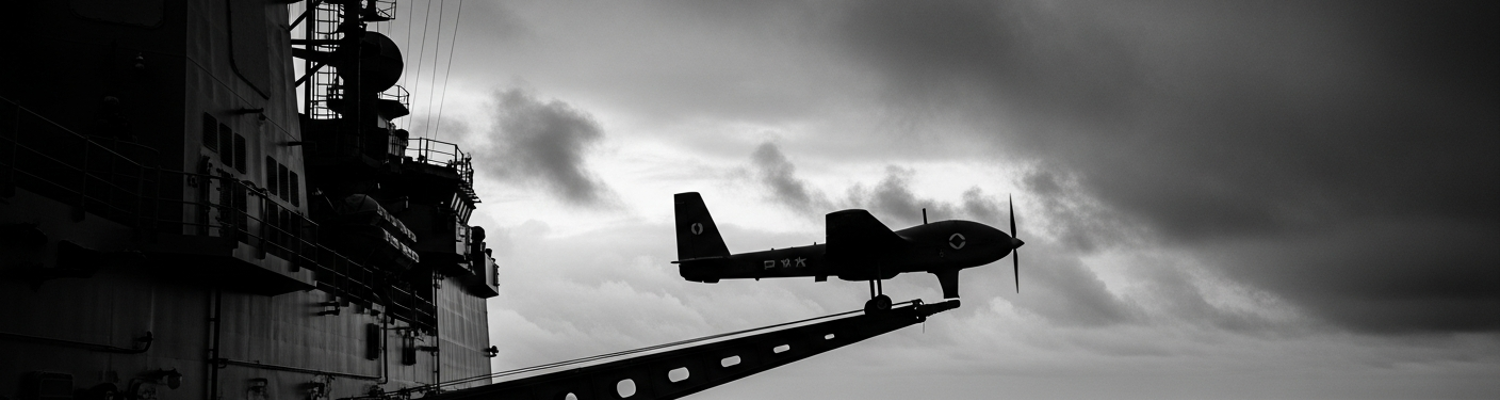

A low, persistent hum filled the plotting room aboard the USS Pennsylvania. For the junior officer updating the fleet’s operational charts, the world was the sharp scent of ink and the blue-tinted void of the Pacific Ocean spread across his table. With a sharpened pencil, he inscribed new grid lines over the Mandate Islands. It was a mundane task. Yet on this morning in 1938, the emptiness of the chart felt less like an absence of information and more like a gathering threat. These routine updates were the direct output of the Joint Army and Navy Board, an advisory body established in 1903 to coordinate inter-service planning. A review of its charter shows the Board was not a command authority but a group tasked with creating contingency plans. Here, in quiet rooms, the color-coded war plans were born. War Plan Orange, the blueprint for a conflict with Japan, was its most demanding project. The plan was predicated on a westward naval advance across thousands of miles of ocean. Its success depended on one thing the planners did not have: accurate intelligence.
Existing naval reconnaissance methods were a patchwork of aging techniques. The fleet’s primary eyes were the cruisers and destroyers of the scouting force. These vessels had to physically steam ahead of the main battle line, burning precious fuel and exposing themselves to attack. To extend their reach, battleships and cruisers were fitted with powerful catapults. A technical examination of these devices reveals a violent process. A gunpowder charge from a modified 5-inch shell propelled a Vought OS2U Kingfisher floatplane from a dead stop to 65 miles per hour in just 65 feet. The pilot and observer were shot into the sky on a mission constrained by the plane’s modest performance. Recovery was more hazardous, requiring the capital ship to slow and turn into the wind, creating a calm slick on the water to hoist the delicate aircraft aboard. This was a period of high vulnerability. The new aircraft carriers, Langley, Lexington, and Saratoga, offered a substantial leap in capability, but they were few in number and considered high-value assets not to be risked on routine scouting. Submarines could provide clandestine observation, but they were slow and their communication abilities were severely limited.
This need for better intelligence was driven by the geography of the Pacific. War Plan Orange assumed a trans-pacific campaign to relieve American forces in the Philippines. This journey would cross an ocean dotted with Japanese-controlled island chains like the Carolines, Marianas, and Marshalls. These islands were an intelligence black hole, fortified in secret after Japan’s withdrawal from international naval treaties. Planners in Washington needed to know the locations of airfields, fleet anchorages, and defensive fortifications. The annual Fleet Problem exercises consistently revealed the American Navy’s shortcomings. Fleet Problem IX in 1929 provided a stark lesson. In the exercise, the aircraft carrier USS Saratoga, commanded by Rear Admiral Joseph M. Reeves, detached from its main fleet, made a wide, undetected southern loop, and launched a successful surprise air attack against the Panama Canal locks. The attack, judged a complete success, demonstrated with clarity how a carrier force could use the ocean as a cloak, turning a reconnaissance failure into a strategic catastrophe. The lessons were understood, but Depression-era budgets prevented the construction of the six to eight carriers that planners felt were necessary.
The concept of a pilotless, radio-guided aircraft was not a product of the Second World War. It was a lingering idea from the first. As early as 1917, British inventor Archibald Low developed a prototype "Aerial Target" intended to function as a guided missile. Launched from a lorry using compressed air, the machine achieved a brief, radio-controlled flight before engine failure. The idea was revived in the 1930s for target practice. In America, the effort was championed by Hollywood actor and aviation enthusiast Reginald Denny. After founding a model airplane shop, Denny established the Radioplane Company in 1939. With engineers like Walter Righter, he refined his designs. The result was the Radioplane OQ-2, a simple aircraft with a 12-foot wingspan, powered by a small two-cylinder, two-cycle engine producing about six horsepower. Its Bendix control system was rudimentary, allowing a ground-based operator to guide the craft. After demonstrations for the U.S. Army, the first orders were placed. By June 1941, the OQ-2 was rolling off a production line in Van Nuys, California.
Its purpose was not combat, but destruction.
The primary function of these new machines, designated OQ by the Army and TDD (Target Drone, Denny) by the Navy, was to be shot down. Before their introduction, anti-aircraft gunnery practice was unrealistic, often limited to firing at large fabric sleeves towed in a straight line by a manned aircraft. This failed to simulate the speed or appearance of an actual attack. The Radioplane drones changed this. Operational logs indicate a typical training scenario involved launching the 104-pound drone from a 37-foot catapult. An operator on the ground or a ship would then fly the drone in patterns simulating attack runs. For gunnery crews, this presented a fast, three-dimensional target that looked and moved like an enemy fighter. The psychological effect was significant. Gunners could see their rounds striking the target, watching a wing tear off or the small fuel tank explode, providing immediate confirmation of a hit. If the drone survived, it would deploy a 24-foot parachute for recovery.
This program provided a solution to the growing problem of inaccurate anti-aircraft fire. The demand became enormous. From 1941 to 1945, Radioplane produced nearly 15,000 OQ-2 and related variants. As tens of thousands of these disposable aircraft were built, some planners began to consider alternative applications. Theoretical discussions emerged about repurposing the simple target drone for reconnaissance. The concept was to replace the recovery parachute with a lightweight, automated camera. The drone could be launched from a ship near a hostile shore, fly over an enemy island, and capture photographic intelligence without risking a pilot. However, technical analysis revealed numerous deficiencies. The drones had a flight endurance of only one hour and a top speed of 85 miles per hour, limiting their range. Their small airframes could not carry the heavy, high-resolution cameras used on dedicated reconnaissance planes. The radio-control systems were effective only over short, line-of-sight distances. The idea of using the OQ-2 for reconnaissance remained a footnote in planning documents.
Archived correspondence from the Joint Army and Navy Board between 1939 and 1940 reveals a body under mounting pressure. With war in Europe and Japanese expansionism in the Pacific, the Board’s mandate shifted from a theoretical exercise to an urgent necessity. Placed under the President's direct authority in July 1939, the Board’s discussions took on new weight. Within this context, a series of studies filed under the designation JB 350 began to address a persistent deficiency: the reconnaissance of heavily defended shorelines prior to an amphibious assault. War Plan Orange was predicated on an island-hopping campaign that would require dozens of such landings. The planners in Washington knew next to nothing about the true state of fortifications on Japanese-held islands.
The problem was the beach.
Existing doctrine, outlined in publications like Fleet Training Publication 167, relied on methods that were becoming obsolete. A submarine could perform a periscope survey, but this provided a distorted, water-level view. Sending a destroyer close to shore for a better look was a near-suicidal proposition against hidden coastal artillery. The most effective tool was the carrier-based observation aircraft, but this required placing a fleet carrier within range of land-based enemy bombers, a risk planners were unwilling to take for a preliminary survey. The JB 351 file shows a specific focus on this tactical dilemma. It was in these discussions that the radio-controlled target drone was first seriously considered. The deliberations recorded in the JB 352 series files show planners exploring the possibility of repurposing the simple machine. The appeal was obvious. The loss of a 108-pound drone was preferable to the loss of a pilot and his aircraft.
An entire section of the JB-352 study is dedicated to a technical feasibility analysis. The assessment centered on the OQ-2’s known performance: a top speed of 85 miles per hour, an endurance of one hour, and a rudimentary Bendix radio-control system reliable only over short, line-of-sight distances. This analysis proved to be the project’s undoing. The drone’s limited range meant it could only be launched from a vessel already close to the target island. Its tiny airframe could not carry the heavy cameras used in dedicated reconnaissance aircraft. Planners struggled with data recovery. A drone that flew out of radio range was a complete loss of information. The final memorandum, filed in late 1940, recommended deferring any further development. The board concluded that while the concept was sound, the technology was not. Resources were directed toward building more conventional reconnaissance aircraft, leaving the idea of unmanned reconnaissance a theoretical footnote.
The deferral was not the result of a single flaw, but the cumulative weight of many inconvenient truths. An examination of the Radioplane OQ-2’s architecture reveals the first hurdle: its engine. The six-horsepower, two-cylinder Righter O-15-1 engine was a two-cycle design. Unlike the Navy’s radial engines in its fighters, which ran on high-octane aviation gasoline, a two-cycle engine required its lubricating oil to be mixed directly into the fuel. This created a supply-chain anomaly. A fleet at sea was built around efficiency. Every vessel was plumbed and stocked for Navy Standard Fuel Oil and AvGas. The TDD-1, the Navy's designation for the OQ-2, needed its own unique blend, a gasoline-to-oil mixture. This was not a fuel that could be drawn from a ship’s main bunkers. It had to be hand-mixed in small batches and stored in separate containers, representing a logistical island in the flow of naval supply. Shipboard stowage plans from the period show every cubic foot of space was jealously guarded. The introduction of hundreds of gallons of this special fuel created a new class of supply that needed to be ordered, tracked, and stored.
This logistical strain was compounded by the human element. The Righter engine and its Bendix radio-control systems were alien to the standard naval mechanic. A ship’s company included highly trained aviation machinist’s mates, men capable of rebuilding a Pratt & Whitney R-1830 Twin Wasp. Their training and tools were geared toward complex, four-stroke powerplants. Early drone program proposals show that operating a unit of TDD-1 drones would necessitate a dedicated and separately trained maintenance crew. These technicians would be experts in the OQ-2’s particular failures: fouled spark plugs, ignition battery failures, and troubleshooting vacuum-tube-based radio receivers. They would require their own toolkits and a separate inventory of spare parts. On a large fleet carrier, this might have been a manageable addition. However, the vision for a reconnaissance drone was to operate it from smaller fleet auxiliaries where space and manpower were at a premium. Adding a self-contained unit of drone specialists with their own workshop was a significant organizational burden.
The final obstacles involved getting the drones into the air and back again from the deck of a non-aviation ship. A purpose-built aircraft carrier has an angled flight deck and powerful hydraulic catapults. A battleship had heavy-duty powder-charge catapults for multi-ton floatplanes. The 108-pound TDD-1 used a much lighter, spring-powered launcher, a 37-foot-long rail that had to be bolted onto the deck. Finding clear deck space on a crowded auxiliary vessel for this apparatus was a challenge. Operating it on a rolling sea presented a hazard to the deck crew. Recovery was an even greater liability. If the drone survived, it deployed a parachute for a water landing. The host ship would then have to slow or stop, maneuver alongside the bobbing drone, and use a crane to hoist the delicate airframe back aboard. This procedure turned the ship into a stationary target, a period of unacceptable vulnerability in hostile waters. The operational records of floatplane-scout missions are filled with instances of capital ships being put at risk during these slow recovery maneuvers. To subject a low-value auxiliary ship to the same danger for the retrieval of a cheap drone was a poor tactical trade-off.
An examination of interwar naval doctrine reveals that keeping a fleet at sea for extended periods was an unproven science. The logistical model that preceded it was a global network of coaling stations, a system that tethered fleets to predictable ports. While experiments in transferring fuel at sea had occurred as early as 1899, the techniques were hazardous. The standard procedure, the "station method," required the warship and the oiler to stop while heavy fuel hoses were manhandled across the water. The evolution was fraught with risk. A sudden swell could part the lines or cause the ships to collide. It rendered the fleet immobile. By the late 1930s, the U.S. Navy was making progress with alongside replenishment, but it was far from a perfected art. The introduction of fast new oilers of the Cimarron class, capable of keeping pace with the fleet, was a significant step forward. The logistical chain was built around two primary consumables: Navy Standard Fuel Oil for ships and high-octane aviation gasoline for aircraft. The system was designed for bulk, not niche requirements.
This is where the unmanned drone program collided with naval supply. The Radioplane TDD-1 was powered by a small, two-cycle engine. A technical assessment of this Righter O-15-1 powerplant shows it required its lubricating oil to be mixed directly with its fuel. This immediately created a logistical aberration. The fleet’s oilers were not equipped to handle a unique gasoline-oil premix. Every gallon of the drone’s special fuel had to be hand-mixed and stored in separate containers. This logistical splinter was magnified by the need for specialized human expertise. A ship’s company contained aviation machinist’s mates trained to service the complex Pratt & Whitney radials. A TDD-1 unit would require a dedicated, separately trained maintenance crew. This team would need its own unique toolkits and a separate manifest of spare parts. On the smaller auxiliary vessels envisioned as drone platforms, adding a self-contained unit of specialists was a significant organizational tax.
The final hurdles were physical. The 108-pound TDD-1 was launched from a light, 37-foot catapult rail. Finding clear deck space to bolt down this apparatus on a crowded transport was a challenge. The recovery process was an even greater tactical liability. If a drone survived its mission, it would deploy a parachute for a water landing. The host ship would have to stop, transforming the vessel into a stationary target in hostile waters, a risk deemed unacceptable for the retrieval of a disposable aircraft.
The Joint Board’s final resolution on the matter, filed under JB-352 in late 1940, was driven by cold arithmetic. The document does not dismiss the concept of unmanned reconnaissance but tables it, citing an imbalance between the system’s operational cost and its low potential return. The board’s members, senior officers responsible for preparing the nation for a global conflict with finite resources, viewed the proposed reconnaissance drone not as a revolutionary weapon but as a system with disproportionate logistical requirements. The primary source of this overhead was the drone’s powerplant. The TDD-1 required its own unique fuel blend, a gasoline-to-oil mixture with a ratio that could range from 8:1 to 30:1. This was not a fuel that could be drawn from a carrier’s main bunkers. It had to be hand-mixed, introducing a new, non-standard class of supply.
Concerns about unproven combat reliability formed the second pillar of the board’s resolution. The drone was a fragile machine of wood and fabric. Its Bendix radio-control system was rudimentary, relying on a direct line of sight. This tethered the drone to a maximum effective range of only a few miles, negating the advantage of scouting deep into enemy territory. Any loss of signal would cause the drone to automatically deploy its recovery parachute. Its maximum speed of 85 miles per hour made it an easy target for anti-aircraft fire, and its small airframe could not carry the cameras needed for effective photographic intelligence. The board concluded that resources were better spent on proven, if imperfect, reconnaissance methods.
The Joint Board’s 1940 decision was a quiet, logical conclusion based on the flawed technology of the day. It was a seemingly prudent choice that arrested American development of naval unmanned systems for years. A review of the Radioplane TDD-1’s technical file reveals a machine brimming with inadequacies for frontline reconnaissance. The Bendix radio-control system was effective only over a few miles of clear, line-of-sight distance. The airframe could not carry the heavy cameras needed for high-resolution imaging. The board saw these deficiencies and, rather than funding a program to solve them, moved on.
This decision created an innovation vacuum.
The resources and engineering talent that could have been dedicated to creating a more powerful engine or a relay-based control system were funneled into conventional programs. The Naval Research Laboratory, which had experimented with radio-controlled aircraft since the 1920s, had its priorities elsewhere. The idea of an unmanned, expendable reconnaissance asset was left on the shelf. This technological stagnation had a direct consequence on the development of fleet amphibious doctrine. Without a low-risk method for inspecting enemy beaches, the Navy was forced to double down on high-risk alternatives. The responsibility for close-in reconnaissance fell to submarines performing perilous periscope surveys and, increasingly, to men. The landings at Dieppe in 1942 and Tarawa in 1943 were driven by massive intelligence failures. In response, the Navy formalized the creation of its Underwater Demolition Teams (UDTs). Their primary function was to physically swim to hostile shores to map obstacles and survey beach gradients. An examination of early UDT operational records shows teams of swimmers, often wearing only trunks and fins, conducting nighttime reconnaissance within yards of enemy positions. The fleet adapted not by developing smarter technology, but by accepting a higher price in blood for the information it needed.
The strategic cost of the 1940 deferral came due in the Central Pacific. Nowhere was this more evident than on the morning of November 20, 1943, at the Battle of Tarawa. Marine Corps planners expected the tide to provide at least five feet of water over the coral reef fringing the island of Betio, allowing their Higgins boat landing craft to reach the beach.
The tide never came.
A rare neap tide left as little as three feet of water over the reef, hundreds of yards from shore. The LCVPs grounded. This forced the men of the 2nd Marine Division into a half-mile wade through chest-deep water, directly into the interlocking fields of fire of the island’s Japanese defenders.
The first waves were annihilated. While planners had been warned of the possibility of a “dodging tide,” they lacked definitive, real-time intelligence. A single TDD-1 drone, launched from a destroyer at dawn, could have flown a low pass over the reef. Even with a rudimentary camera, it would have transmitted one undeniable fact: the reef was not passable. That single piece of information could have prompted commanders to hold the vulnerable Higgins boats and commit all available tracked LVTs in the first wave, potentially saving hundreds of lives. The photographs that could have averted a disaster remained undeveloped, a direct consequence of a decision made three years earlier in a quiet Washington D.C. conference room.