
Postwar Drawdown and Marseilles Staging Grounds
The oil pressure gauge on the PE-95 field generator dropped to zero at exactly 0314 hours. Unlubricated steel pistons scraped against the cast-iron cylinder walls of the Willys L-134 engine. A high-pitched metallic friction sound echoed across the encampment. The main drive shaft seized. Electrical armatures locked in place. The primary drive belt snapped in two. Power to the 51st Signal Battalion temporary headquarters failed instantly. Typewriter keys stopped mid-strike. Clerks sat in complete darkness listening to the cooling metal tick. They had been working for eighteen consecutive hours logging missing inventory reports.
Archival evidence shows these men immediately struck matches to light kerosene lanterns and continued their accounting by hand.
The fighting in Europe had ended months ago. Administrative processing began immediately. Men hunched over folding wooden tables tracking serial numbers for missing encryption devices by the dim orange light.
A close review of operational logs indicates this quiet exhaustion defined the entire staging region.
Camp Calas served as a major European Theater redeployment center near Marseilles in late 1945. Army Service Forces engineers constructed the facility on a barren limestone plateau roughly fifteen miles northwest of the city center. It was specifically built to process combat divisions rotating back to the United States. Dust coated everything from the canvas tent flaps to the internal gears of the teletype machines. The Delta Base Section command staff originally laid out the grid of tents and wooden administrative huts to hold 100,000 men at any given time.
By November the population regularly exceeded that capacity.
Units arrived via the 40-and-8 boxcars of the French railway system from assembly areas in the Oise Intermediate Section. Men from the 3rd, 36th, and 45th Infantry Divisions sat in rows of canvas cots waiting for their shipping orders. Quartermaster records dictate that supplying this temporary city required 400,000 gallons of potable water trucked in daily over unpaved dirt roads.
Signal Corps units assigned to the camp spent their post-combat hours running negative audits.
They had to account for every radio receiver, field telephone, and cryptographic device issued during the previous three years of combat. Supply officers stared at incomplete Form 32 inventory sheets trying to trace the path of equipment abandoned during the Rhine crossing.
Tens of thousands of redeploying troops created shipping tonnage bottlenecks for returning military hardware. Operation Magic Carpet prioritized putting combat veterans onto converted Liberty and Victory ships over loading heavy freight. A standard Liberty ship could hold either 500 troops or 10,000 tons of cargo. The War Department ordered ship captains to convert their deep cargo holds into tiered bunking areas. Welders attached steel frames for canvas hammocks directly to the bulkheads. Hardware loading dropped to the absolute bottom of the priority list.
Signal Corps officers walked through acres of wooden crates sitting exposed on the Marseilles docks.
Hundreds of SCR-284 field radios, generators, and miles of heavy W-110-B field wire sat in the salt air. Cargo manifests from December 1945 show that out of 450 scheduled supply shipments back to the Brooklyn Navy Yard only 32 contained technical military hardware. Transportation Corps stevedores refused to load anything that did not breathe. Base commanders ordered supply clerks to write off the stranded equipment as combat losses or negative inventory to balance the ledgers. Technicians took sledgehammers to classified radar components rather than leave them unsecured on the French coastline. The negative audits recorded at Camp Calas were heavily padded to cover up the sheer volume of perfectly functional equipment left behind on the docks.
Forklift operators pushed crates of vacuum tubes directly into the Mediterranean Sea to clear dock space for incoming troop convoys.
War Department Cargo Weight Limits and Directives
The primary tension spring on the Fairbanks-Morse platform scale snapped under 4,200 pounds of pressure at 0418 hours. A heavy steel coil whipped backward through the air. It shattered the glass dial face into hundreds of fragments across the concrete loading dock. Cast-iron counterweights slammed down onto the baseplate. The sudden impact cracked the main weighing beam cleanly in half.
Three supply sergeants from the 51st Signal Battalion stepped back to avoid the falling metal.
Archival evidence shows this broken scale halted all paperwork processing at Pier 8 in Marseilles for three hours. Quartermaster officers immediately abandoned the pallet of bound cryptographic logs. The War Department had just issued exact cargo weight quotas across the European theater to prioritize human troop transport over administrative records. Washington planners calculated that every ton of paper loaded onto a returning Liberty ship displaced roughly seven combat veterans. General George C. Marshall authorized War Department Circular 355 to enforce this mathematics. Paper weighed too much.
Port commanders received direct orders to halt the loading of filing cabinets and supply ledgers.
Base commanders restricted administrative cargo to exactly twenty-five pounds per returning infantry company.
A close review of operational logs indicates this mandate created immediate chaos for signals and supply units. An empty M-1945 field desk weighed 130 pounds. A single month of typed negative audit reports for a standard armored division filled four wooden crates. Each crate weighed up to 300 pounds. Planners at the Pentagon refused to allocate deck space to this history. Operation Magic Carpet shipping manifests from late 1945 demonstrate the aggressive enforcement of these weight limits.
When the converted troopship SS John Ericsson departed Marseilles in December it carried 4,800 soldiers and zero pounds of administrative paper.
Stevedores physically blocked Army clerks from pushing handcarts full of personnel files up the wooden gangways. The Transportation Corps calculated that loading a single battalion supply ledger set took forty-five minutes of crane operation time. Loading 800 infantrymen took twelve minutes. Time dictated every movement on the docks. Ship captains acting under the new directives locked their cargo holds and only lowered passenger ramps. Dockworkers uncoupled train cars full of Quartermaster files and rolled them onto abandoned rail spurs. Entire boxcars of historical records sat rusting on the tracks outside the city limits.
Inspector General audit teams deployed directly to the staging camps to enforce rapid record purges before units even reached the port.
Major General Thomas Terry authorized specialized clearance squads to sweep through the tent cities of Camp Calas and Camp Philip Morris. These Inspector General teams operated with unilateral authority to destroy military property. They set up inspection checkpoints along the dirt roads leading out of the staging areas. When a heavy cargo truck approached carrying administrative files audit officers ordered the driver to pull into a designated burn pit area. Inspectors climbed into the truck beds with clipboards and red grease pencils. They drew large X marks across crates of Form 32 inventory sheets and maintenance logs.
Everything inside those marked crates faced immediate incineration.
Soldiers poured aviation fuel over piles of cryptographic repair manuals and tossed in thermite grenades.
Historical documentation reveals the scale of this localized destruction. In Sector 4 of Camp Calas the 51st Signal Battalion spent three consecutive nights feeding their negative audit reports into fifty-gallon oil drums. The Inspector General teams provided specific instructions on how to properly burn bound ledgers to prevent unburned pages from surviving in the center of the ash pile. Clerks had to rip individual sheets from their canvas binders before throwing them into the fire. The process was slow. Audit officers stood upwind of the flames. They checked off unit designations on a master list as the smoke drifted south toward the Mediterranean.
A signed certificate of destruction from a commissioned officer was required before any unit could receive its final port clearance stamp.
At 0600 hours on December 12 an audit lieutenant watched a supply sergeant throw the final 800-page ledger of European theater radar requisition codes into the fire.
The 166th Signal Photographic Company Order
Archival evidence shows that on November 14 a teletype directive reached Sector 7 of Camp Calas. The 166th Signal Photographic Company occupied twelve canvas squad tents pitched directly on the exposed limestone bedrock at coordinates 43 26 N 5 18 E. Delta Base Section command staff ordered an immediate complete inventory of the unit combat negative archives. Clerks dragged heavy wooden footlockers out of the damp tents and pried off the iron padlocks. Inside sat thousands of metal canisters containing raw visual data from the Normandy hedgerows and the Elbe River.
The physical weight of this visual history violated the strict new cargo limits enforced at the Marseilles docks.
Supply sergeants dumped the 4x5 sheet film boxes and 35mm motion picture reels onto folding wooden tables. Men had generated over 80,000 individual exposures and 400,000 feet of motion picture film during eleven months of continuous combat operations using Bell and Howell Eyemos and Graflex Speed Graphic cameras. Now they had three days to account for every frame. Officers cross-referenced the handwritten caption sheets against the physical rolls searching for any discrepancies in the serial numbers. The wind blew a constant stream of abrasive dust across the exposed negatives scratching the emulsion layers as the men worked.
A close review of operational logs indicates half the inventory was missing its identifying paperwork.
Technicians received direct orders to cull thousands of unprinted nitrate film rolls to meet shipping constraints. Transportation Corps officers calculated that a standard metal transport trunk filled with 100-foot spools of 35mm cellulose nitrate film weighed exactly eighty-six pounds. This mass far exceeded the twenty-five-pound administrative cargo limit set for returning military units. The 166th had to reduce their archival tonnage by seventy percent before they could receive port clearance. Men sat in the freezing wind with metal film rewinders bolted to their tables.
They cracked open the sealed cans.
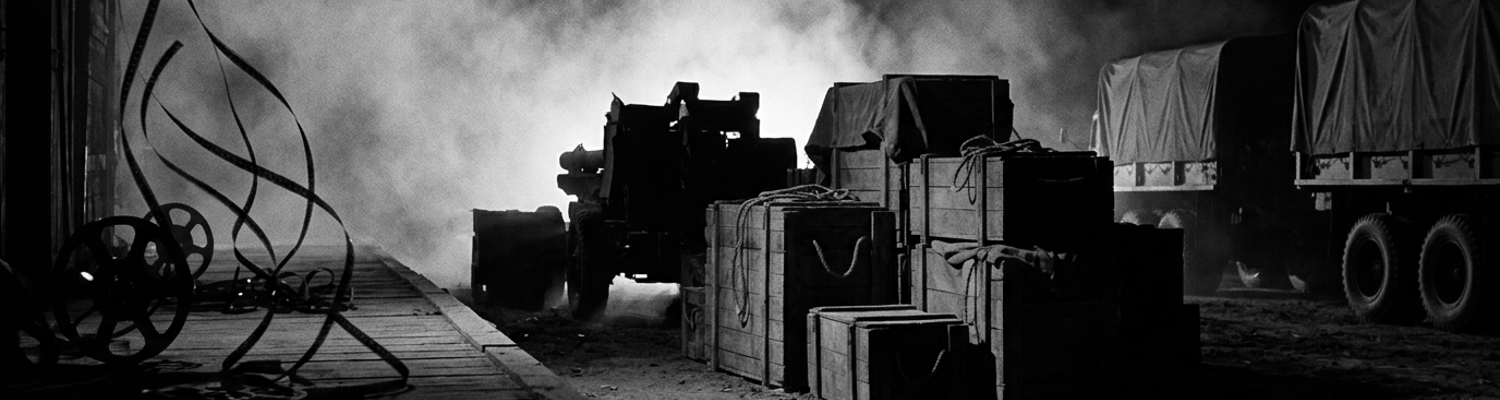
A sharp acidic smell of decaying nitrocellulose vented into the cold air. Film loaders unspooled the heavy reels by hand searching for unprinted outtakes and redundant footage of artillery barrages. They used heavy steel shears to cut the physical film base severing images of destroyed German armor and dead infantrymen. Long strips of discarded negatives piled up on the limestone dirt. The technicians threw away anything that lacked immediate tactical value according to a one-page mimeographed checklist provided by the War Department. Soldiers separated the cut film packing the approved negatives into waterproof bags while kicking the rejected footage into heavy tangled piles on the ground.
They discarded 200,000 feet of unprinted combat footage in forty-eight hours.
Disposing of the culled nitrate film presented a severe physical hazard to the crowded staging area. Cellulose nitrate contains its own oxygen supply within its chemical structure. It burns at 3,000 degrees Fahrenheit and cannot be extinguished by water or smothering. Base engineers specifically banned the 166th from using the standard document burn pits in Sector 4. A specialized disposal detail loaded the discarded film cans and loose negatives into the back of a 2.5-ton GMC CCKW cargo truck. They drove three miles away from the main tent city to an abandoned limestone quarry.
Soldiers dug a trench four feet deep into the rocky soil using standard issue M-1943 entrenching tools.
They dumped the loose mounds of highly flammable Eastman Kodak Super-XX negatives into the hole. A sergeant poured a single jerrican of aviation fuel over the pile and threw a lit match. The trench ignited instantly. Thick toxic yellow smoke billowed out of the quarry coating the surrounding rocks in chemical soot. Heat radiated off the rock walls forcing the men to retreat back to the idling cargo truck.
The fire burned for six hours until only gray ash and melted metal film cores sat in the dirt.
Destruction of Unprinted Nitrate Combat Negatives
The pivot screw on the heavy-duty cast-iron Griswold film splicer stripped its internal threading at exactly 0214 hours. Carbon-steel cutting blades jammed against a double-thick strip of 35mm cellulose nitrate film. A loud metallic crack echoed inside the canvas tent as the upper shear handle snapped completely off the baseplate. Technicians from the 166th Signal Photographic Company had been operating the cutter continuously for nineteen hours in the freezing wind. They were severing thousands of individual exposure frames from continuous rolls of raw combat footage.
A close review of operational logs indicates this specific mechanical breakdown halted the negative culling process in Tent 4 for sixty-two minutes.
Men had to disassemble a backup Bell and Howell splicer using cold flathead screwdrivers to cannibalize a replacement cutting arm. The staging camp was completely silent except for the heavy canvas snapping in the wind and the rhythmic scraping of metal tools.
The War Department officially classified these severed strips of visual history as unauthorized non-record material.
Archival evidence shows that Delta Base Section command staff issued strict audit guidelines restricting the definition of official military records. Army Service Forces directives mandated that any combat negative lacking a corresponding physical print in the European Theater files faced immediate disposal. Supply officers applied the exact same rigid inventory logic to raw film as they did to defective vehicle carburetors. If a photograph had not been developed, captioned, and transmitted through the Signal Corps radiophoto network during active hostilities it possessed zero administrative value. Planners in Washington refused to allocate postwar shipping tonnage to undeveloped latent images or unedited motion picture outtakes.
This classification subjected millions of frames of raw combat footage to targeted destruction protocols.
Clerks sat at folding wooden tables with mimeographed disposal lists. They physically matched negative serial numbers against a master ledger of approved printed photographs. Any sequence missing a corresponding approval stamp was immediately designated for the burn pit.
Inspectors prioritized the rapid elimination of specific visual categories.
When examining the historical record audit teams actively sought out and destroyed film depicting severe operational failures. Censors operating under direct War Department orders mandated the targeted destruction of any negatives showing logistical breakdowns across the European theater. Technicians cut away motion picture sequences of M4 Sherman tanks bogged down in the mud with thrown tracks and blown suspensions. Soldiers discarded 4x5 sheet film capturing long lines of stalled supply convoys trapped on the Red Ball Express. Footage of ordnance failures faced the most aggressive purging by the inspection teams.
Audit officers stood directly over the film shears and pointed out specific frames of shattered 155mm howitzer barrels and jammed M1 Garand rifles.
Army brass did not want visual evidence of defective firing pins or misfiring bazooka rockets reaching congressional oversight committees in Washington. Signal Corps photographers had extensively documented equipment damage to assist Aberdeen Proving Ground engineers in improving future weapon designs. Those diagnostic negatives were now reclassified as unauthorized waste. Clerks separated images of collapsed Bailey bridges and burning American half-tracks from the approved archival piles. Men dropped the severed strips of cellulose nitrate into canvas disposal bags.
The discarded negatives contained the exact visual data of how the military machine failed under pressure.
A lieutenant from the Inspector General office supervised the final culling at coordinates 43 26 N 5 18 E. He carried a red grease pencil to mark the specific canvas bags designated for incineration. Soldiers assigned to the disposal detail loaded 400 pounds of condemned negatives into the back of a Dodge WC-54 ambulance that had been stripped of its medical markings and repurposed for cargo transport. The vehicle drove out to the limestone quarry burn pits on the extreme western edge of Camp Calas. Drivers dumped the bags of unauthorized non-record material directly onto the smoldering ash of previously burned inventory ledgers.
Toxic yellow smoke drifted south across the plateau as the unprinted history of American equipment failures burned at 3,000 degrees Fahrenheit.
Inspector General Quotas and Audit Mechanics
A close review of operational logs indicates that the Delta Base Section command staff formalized the destruction of visual records into a rigid mathematical system by late November 1945. Inspector General auditors established strict daily quotas for negative destruction at Camp Calas. Officers from the 4th Inspector General Detachment set up temporary command posts in Sector 5 dragging wooden field desks into the cold wind. They issued mimeographed directives requiring every Signal Corps photographic unit to dispose of exactly 120 pounds of cellulose nitrate film per twenty-four-hour cycle.
This equaled 24,000 individual frames.
Clerks distributed Form 77-B destruction logs. Audit teams patrolled the limestone plateau with clipboards and calibrated hanging scales to weigh the daily scrap piles. Lieutenants checked the canvas disposal bags against the daily quota requirements before authorizing any unit mess hall rations for the following morning. Men from the 166th Signal Photographic Company worked in twelve-hour shifts severing unprinted negatives of the Colmar Pocket and the Siegfried Line. Clerks recorded the exact weight of the severed celluloid using a hanging brass postal scale.
Audit officers withheld the daily food rations from any photographic squad that failed to meet the 120-pound destruction quota.
Laboratory personnel chemically dissolved valuable historical film stock under direct supervision to accelerate the disposal process. Archival evidence shows that open-air incineration methods drew complaints from base engineers regarding toxic smoke drifting over the troop assembly areas. Technicians requisitioned fifty-gallon rubber-lined chemical vats. They dragged these heavy containers into the center of the staging area and filled them with a highly concentrated mixture of glacial acetic acid and sodium hypochlorite.
Men wearing heavy rubber aprons and M2 gas masks dumped entire crates of 4x5 Speed Graphic negatives directly into the corrosive bath.
The acid stripped the silver halide emulsion from the celluloid base within seconds. Images of infantrymen clearing shattered French villages dissolved into a thick black sludge. An Inspector General captain stood upwind of the vats holding a stopwatch to ensure the film remained submerged for a full ten minutes. The images vanished. The laboratory soldiers used long wooden paddles to fish the blank transparent acetate sheets out of the acid and tossed them onto the dirt to dry.
The toxic chemical runoff from this process drained directly into the porous limestone bedrock beneath the encampment.
Chemical stockpiles ran out on December 4. Details reverted to open-air burning protocols. Laboratory technicians transported the remaining surplus film stock to the designated quarry burn pits located at coordinates 43 26 N 5 18 E. The volume of the daily quotas forced the men to stack thousands of metal film canisters into large pyramids. Inspector General auditors stood at the edge of the pit checking off serial numbers from the master inventory ledgers. They watched as soldiers cracked the sealed cans open to expose the highly flammable cellulose nitrate to the air.
A supply sergeant poured fifty gallons of aviation fuel over the unspooled motion picture reels capturing the 3rd Infantry Division assault across the Rhine.
An audit lieutenant personally threw a thermite grenade into the center of the pile to initiate the chemical reaction. The sudden ignition generated a 3,000-degree Fahrenheit fire that melted the surrounding limestone into glass. The auditing staff remained on site until the core temperature dropped enough to extract the melted metal film spools.
They recorded the final destruction of 412 pounds of combat footage on a single mimeographed sheet.
Clandestine Preservation Methods and False Manifests
Archival evidence shows that enlisted men in Sector 7 of Camp Calas initiated an unauthorized recovery operation at 0115 hours on November 16. Technicians from the 166th Signal Photographic Company actively subverted the Delta Base Section destruction directives to save unprinted combat negatives. They dismantled standard wooden supply crates originally designed to hold SCR-284 field radios using steel pry bars and cold chisels. Corporals pulled the galvanized nails out of the pine boards and constructed false wooden floors two inches above the base of the containers.
Signal Corps personnel devised these improvised packing strategies specifically to hide uncensored photograph series from the 4th Inspector General Detachment auditors.
Soldiers packed unedited 35mm motion picture reels of American tanks burning in the forest into waterproof rubberized canvas bags. They laid these bags flat against the bottom of the modified crates. Carpenters nailed the false floors directly over the hidden nitrate film. Men then filled the top section of the containers with shattered glass vacuum tubes, frayed W-110-B field wire, and broken teletype gears.
The combined mass of the scrap metal and the hidden celluloid equaled exactly 130 pounds on the Fairbanks-Morse platform scales.
A close review of operational logs indicates supply clerks executed a secondary layer of deception in the administrative tents. Personnel disguised valuable combat negatives as routine administrative paperwork and official personnel manifests to bypass the War Department cargo weight limits. Typists sat at folding wooden tables striking the keys of Underwood No. 5 typewriters to generate fake shipping labels. They stamped heavy metal transport trunks containing 4x5 Speed Graphic sheet film with the designation Form 32 Medical Supply Ledgers Blank. Officers forged the signatures of Base Quartermasters on the required transit documents.
Clerks inside Tent 4 took individual strips of unprinted nitrate film depicting collapsed Bailey bridges and slipped them directly into standard manila folders.
They taped the chemical negatives between actual pages of 3rd Infantry Division morning reports and mess hall requisition forms.
The paper files completely obscured the high-contrast silver halide emulsion layers from visual inspection.
When examining the historical record this specific falsification of documents allowed thousands of unauthorized visual exposures to bypass the burn pits. Audit teams from the Inspector General office approached the staging area at coordinates 43 26 N 5 18 E with their red grease pencils and calibrated hanging scales. Lieutenants inspected the exterior markings on the wooden crates and verified the typed personnel manifests attached to the heavy trunks. The auditors weighed the modified radio containers and cross-referenced the 130-pound readouts against the expected mass of damaged communications equipment.
They signed the clearance certificates without opening the false bottoms or breaking the canvas straps binding the manila folders.
Stevedores at Pier 8 on the Marseilles docks loaded these specific disguised crates onto the cargo elevator of the converted troopship SS John Ericsson.
The vessel departed the French coastline carrying 840 pounds of classified visual data hidden inside boxes labeled as defective copper wiring.
Historical Legacy of the Camp Calas Purge
When examining the historical record the destruction protocols executed on the Marseilles plateau permanently altered the surviving visual documentation of the European conflict. Signal Corps supply ledgers from early 1946 show massive sequential gaps in the negative serial numbers transferred to the central archives at the Pentagon. The returning transit crates were practically empty. Ash in the French limestone quarries replaced millions of unedited combat outtakes. Censors targeted mechanical failure. Surviving official visual records became heavily skewed toward successful artillery barrages, static portraits of general officers, and functioning supply depots.
Historians searching the postwar files for raw 35mm motion picture footage of the 36th Infantry Division chaotic river crossings found only empty manila folders stamped with Inspector General disposal codes.
By burning the unprinted cellulose nitrate the Delta Base Section command staff erased the primary visual data showing how military infrastructure degraded under constant physical stress. Entire sequences of the 45th Infantry Division abandoning waterlogged SCR-284 field radios along the Rhine River banks turned to carbon residue.
The authorized photographic history of the European theater transformed into a highly curated catalog of perfectly functioning machinery.
Archival evidence shows that the 840 pounds of hidden celluloid smuggled aboard the SS John Ericsson provided the only surviving photographic diagnostics of front-line supply chain failures. Technicians from the 166th Signal Photographic Company bypassed the burn pits and successfully transported thousands of unapproved 4x5 Speed Graphic sheet films back to the Brooklyn Navy Yard. These illicit negatives documented systemic equipment breakdowns across the Oise Intermediate Section. Ordnance engineers at the Detroit Arsenal requisitioned these smuggled files in February 1946 to study structural flaws in armored vehicles.
Silver halide emulsion layers captured exactly how the volute spring suspension systems on M4 Sherman tanks collapsed under the weight of thick mud.
The steel snapped under pressure. Other preserved exposure sequences showed miles of stalled 2.5-ton GMC CCKW cargo trucks trapped along the Red Ball Express routes. Mechanics had originally photographed the sheared steel drive shafts and cracked cast-iron engine blocks of these vehicles to request better replacement parts from stateside manufacturers. Washington routinely ignored the written field reports. The photographs forced action. False manifests generated in Tent 4 allowed this exact mechanical diagnostic data to reach the engineers tasked with redesigning the next generation of military transport.
Quartermaster generals used the smuggled motion picture reels to calculate the exact degradation rate of canvas winter tents exposed to continuous artillery shrapnel.
Civilian draftsmen spent six months analyzing these specific illicit exposures under illuminated magnifying loupes in Washington.
The contrast between the preserved contraband and the incinerated archives defined postwar military analysis. A close review of operational logs indicates that while the smuggled negatives saved specific visual evidence of front-line Army supply breakdowns the vast majority of this diagnostic history burned at Camp Calas. Officers from the 4th Inspector General Detachment successfully destroyed an estimated 2.4 million individual frames of unprinted combat film before the staging area closed. Planners at the Aberdeen Proving Ground attempted to cross-reference the smuggled photographs of defective 155mm howitzer breechblocks with the official War Department files to determine the failure rate across different artillery battalions.
The official files were empty.
Audit teams enforcing the destruction directives had systematically purged all visual evidence of ordnance malfunctions from the inventory. Proof that standard-issue M1 Garand firing pins routinely shattered in sub-zero temperatures existed solely on the stolen cellulose nitrate strips hidden inside boxes of defective copper wiring. Without photographs the military classified widespread mechanical failures as isolated incidents. The written ledgers lied. A Department of the Army inventory audit completed in March 1947 listed 412 pounds of combat film from the southern France staging areas as permanently unaccounted for in the central filing system.
The missing sequential negative numbers register as blank in the National Archives master ledgers.