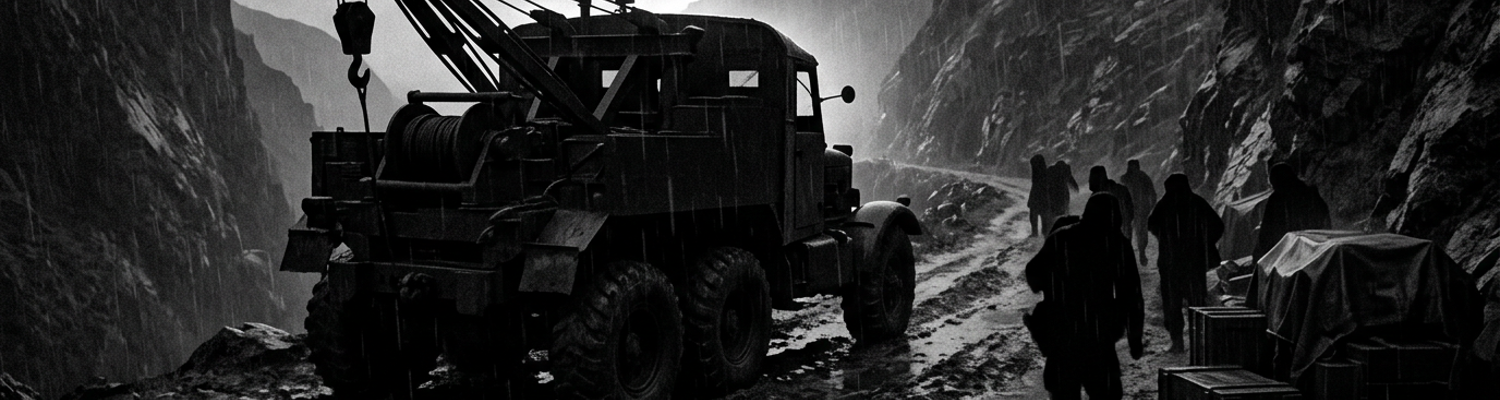

Villa Verde Trail Geography and Tactical Bottlenecks
Archival evidence shows that before the first shots fired in the Caraballo Mountains, severe physical degradation had already compromised the 32nd Infantry Division. The men spent the weeks leading up to March 1945 marching through torrential rains. Infantrymen carried up to eighty pounds of ammunition and combat gear through knee-deep mud. Subsisting on cold C-rations that frequently failed to reach the forward elements, units experienced rapid weight loss across the ranks. Supply lines broke down under the weight of the early monsoon season. Soldiers slept in waterlogged foxholes for consecutive weeks. Sleep deprivation compounded with chronic caloric deficits. Medical logs from late February indicate widespread outbreaks of amoebic dysentery and jungle rot. Hundreds of riflemen developed open, weeping ulcers on their feet and groins before they even reached the line of departure.
The approach march alone consumed the final margins of human stamina.
A close review of operational logs indicates the specific geographic nightmare facing Major General William H. Gill. The 32nd Infantry Division advanced along the narrow, mountainous Villa Verde Trail on Luzon in March 1945. They attempted to push through the Caraballo range to outflank Japanese forces holding the Cagayan Valley. The 127th Infantry Regiment led the initial assaults up a route nominally designated as a highway on pre-war maps. Ground reconnaissance quickly revealed a primitive, single-lane dirt track cut directly into the sheer faces of the mountain range. Elevation grades routinely exceeded thirty percent. Engineers from the 114th Engineer Battalion struggled constantly to widen the track just enough to accommodate an M29 Weasel or a standard quarter-ton jeep. Heavy rains turned the volcanic soil into a thick slurry. This mud clogged vehicle air intakes and snapped the drive sprockets on tracked transport. Supply convoys ground to a halt as lead vehicles slid off the unprotected precipices into the ravines hundreds of feet below. Quartermasters relied on exhausted Filipino carrying parties to haul heavy ammunition crates up the steep inclines entirely by hand.
Engineering units recorded daily landslides that erased entire sections of the dirt track.
Japanese defensive positions utilized high-elevation ridge overlooks to zero artillery fire onto narrow mountain defiles. General Tomoyuki Yamashita deployed elements of the Japanese 10th Division to exploit these exact topographical choke points. Enemy combat engineers spent months carving interlocking cave networks into the reverse slopes of the ridges dominating the Salacsac Pass. Forward observers positioned themselves on the highest peaks. They remained completely concealed by dense canopy and camouflaged spider holes. These spotters plotted specific coordinates along the most constricted segments of the Villa Verde track. When American columns entered these designated defiles, Japanese gunners unleashed concentrated bombardments using Type 94 75mm mountain guns and 150mm mortars. The steep canyon walls amplified the blast waves of the high-explosive shells. Shrapnel fragmented against the bare rock faces. The resulting spray of sharp stone multiplied the lethality of every detonation. Infantrymen caught in these kill zones had absolutely no avenue of lateral escape. The cliff walls rose vertically on one side of the trail and dropped into a sheer abyss on the other.
Medical detachments recorded an unusually high volume of secondary blast injuries caused by pulverized rock.
Examining the 127th Infantry Regiment casualty reports reveals the immediate tactical consequence of this terrain. Every artillery strike on the trail instantly severed the only medical evacuation route. When a shell destroyed a jeep or killed a pack animal, the wreckage physically blocked the path for hours. Stretcher-bearers had to climb over burning chassis and shattered rock to move the wounded rearward. Japanese mortar crews specifically targeted these resulting traffic jams. Gunners fired delayed-fuse shells designed to penetrate the soft mud before detonating. This technique maximized the upward blast force against soldiers attempting to take cover by pressing themselves into the dirt track. The 32nd Division medical collection points at the base of the trail began receiving casualties suffering from severe acoustic trauma and concussive hemorrhaging. Stretcher carries from the Salacsac Pass to the nearest battalion aid station required twelve hours of continuous physical exertion by four-man teams.
Four men carrying one stretcher for twelve hours.
Radio Grid Errors and Artillery Targets
Archival signal logs from the 32nd Infantry Division expose a severe breakdown in battlefield communications during the late March offensives. Forward observer teams utilizing standard-issue SCR-300 backpack radios struggled to maintain clear frequency modulation through the dense canopy. High iron-ore content within the Caraballo Mountains disrupted the weak radio-frequency signals. Static interference routinely masked incoming transmissions. Exhausted radio operators at the battalion command posts recorded heavily distorted grid coordinates from frontline medical triage units requesting immediate evacuation. Examining the historical record reveals that pre-war topographic maps issued to the 127th Infantry Regiment contained severe contour inaccuracies (Map Sheet 3241-I). Medical dispatchers cross-referenced garbled radio requests against these flawed maps. Commanders mistakenly ordered M29 Weasel ambulance tracks to converge on Grid Coordinates 14-King and 17-Baker. These specific locations were supposed to be secure casualty collection points positioned behind the reverse slopes of Hill 504.
The transmitted coordinates actually mapped directly onto an active Japanese pre-registered kill zone.
Signal corps technicians later identified the specific mechanical failure in the communication chain. Missing syllables and dropped audio signals caused dispatchers to transcribe a four as a nine during a frantic late-night transmission. This single transcription error sent a convoy of three M29 Weasels crawling up the most exposed segment of the Villa Verde Trail. Drivers navigated the twenty-degree inclines in first gear. The tracked vehicles lacked armor and carried heavy loads of wounded riflemen. They advanced blindly into the open defile just below the Salacsac Pass. Japanese forward observers from the 10th Division held elevated vantage points directly above this exact stretch of the dirt track. Enemy spotters immediately recognized the distinctive engine noise of the Studebaker six-cylinder engines echoing off the canyon walls. General Yamashita artillery batteries had already calculated the precise range and elevation data for this narrow choke point weeks in advance.
Japanese gun crews initiated their firing sequences before the first American vehicle even cleared the bend.
Concentrated bombardments from Type 94 75mm mountain guns began raining down on the creeping medical transports. A close review of operational logs indicates the extreme vulnerability of the M29 Weasel in a direct-fire environment. Designed originally for snow operations, the vehicle possessed a thin, unarmored steel hull offering zero ballistic protection against high-explosive fragmentation. The initial Japanese artillery salvos landed within ten yards of the lead Weasel. Shockwaves flipped the lightweight transport entirely off its rubber-padded tracks. Shrapnel tore through the thin side paneling. Jagged metal fragments instantly ignited the exposed gasoline lines routed near the rear passenger compartment. Casualties strapped into the cargo bed on canvas stretchers absorbed the primary blast force of the 75mm shells.
Stretcher-bearers walking alongside the vehicles were thrown off the cliff edge by the concussive pressure.
Heavy 150mm mortar rounds followed the initial 75mm barrage. These heavier munitions plummeted almost vertically into the canyon. Direct hits on the trail surface shattered the bogie wheels and sheared the drive sprockets off the remaining Weasels. The narrow dimensions of the mountain pass prevented the trailing drivers from executing any evasive maneuvers or reversing out of the impact zone. Burning vehicle chassis physically barricaded the single-lane dirt track. Medical personnel took cover behind the flaming wreckage. They attempted to drag surviving casualties out of the cargo beds. Japanese gunners simultaneously adjusted their fire for maximum lethality. Artillery crews switched to delayed-fuse ordnance that buried into the mud beneath the immobilized transports before detonating. The upward explosions ripped the undercarriages completely off the steel frames.
The convoy was annihilated in under four minutes.
M32 Recovery Vehicle Breakdown in Defiles
A close review of 32nd Infantry Division maintenance logs details a specific command error that occurred on April 4, 1945. Field commanders ordered an M32 Tank Recovery Vehicle from the 732nd Ordnance Battalion up the primary Villa Verde defile to extract a disabled bulldozer. The M32 was a heavily modified Sherman tank chassis equipped with a fixed A-frame turret, a sixty-thousand-pound capacity winch, and an 81mm mortar for smoke screening. Weighing over thirty-one tons, the armored machine was designed to operate on relatively flat European terrain or established roads. Dispatchers routed the recovery vehicle directly up a thirty-degree mountain incline composed entirely of saturated volcanic clay. The driver attempted to negotiate a sharp switchback just below the Salacsac Pass. The left-side track assembly slipped off the edge of the graded dirt path, shifting the vehicle center of gravity toward the sheer drop-off. The operator compensated by slamming the right-side steering lever and burying the throttle to force the machine back onto the solid track. The sudden torque applied against the deep mud caused the right drive sprocket to shear entirely off the final drive assembly.
The transmission casing ruptured under the stress, pouring hot gear oil directly into the muddy track.
Archival evidence shows this single mechanical failure completely paralyzed the division logistical network. The immobilized M32 sat diagonally across the narrowest section of the primary defile. Its left tracks dangled over a three-hundred-foot precipice. Its right hull pressed firmly against the solid rock face of the mountain. No physical clearance remained for any other vehicle to bypass the wreckage. Incoming surgical resupply columns from the 114th Medical Battalion immediately backed up behind the stalled tank. These quarter-ton jeeps carried shipments of refrigerated whole blood, dry plasma powder, and morphine syrettes requested by forward aid stations. Drivers jammed their transports into the narrow trail, unable to turn around due to the steep canyon walls and lack of reverse clearance. The traffic jam stretched for over a mile down the lower elevations of the Caraballo mountain range.
Medical personnel abandoned their idling jeeps and attempted to carry fifty-pound wooden supply crates by hand over the slick steel deck of the stalled recovery tank.
Examining the evacuation reports from the forward infantry regiments exposes the severe psychological toll this blockage inflicted on the frontline troops. Stretcher teams carrying wounded riflemen down from the Salacsac Pass encountered the trapped M32 from the opposite direction. Dozens of casualties suffering from severe shrapnel lacerations and traumatic amputations were placed directly into the mud in front of the armored vehicle. Evacuation convoys of M29 Weasels piled up behind the stretcher-bearers, creating a densely packed target in an open ravine. Medical officers watched their limited supplies of field dressings and tourniquets run out. Stockpiles of fresh equipment sat just fifty yards away on the other side of the tank. Sustained exposure to this inescapable bottleneck broke the mental endurance of the medical personnel. Combat fatigue manifested rapidly among the stretcher teams trapped in the killing zone. Orderlies stopped responding to direct commands from surgeons. Men sat down in the pooling water, staring blankly at the rock walls while ignoring the screams of the wounded soldiers lying beside them.
Four medics from the 127th Infantry Regiment simply dropped their canvas litters in the dirt and walked aimlessly back up the mountain toward the active artillery barrage.
Japanese forward observers attached to the 10th Division identified the massive concentration of trapped American vehicles within two hours of the M32 breakdown. Enemy gunners recalibrated their Type 94 75mm mountain guns to target the exact grid coordinates of the immobilized recovery tank. Ordnance crews desperately trying to rig a manual pulley system to the M32 A-frame boom abandoned their tools and scrambled for cover as the first high-explosive shells detonated against the cliff face. Shrapnel rained down on the exposed casualties waiting in the mud. The sheer volume of incoming fire prevented anyone from approaching the stalled tank to attempt further repairs. The primary evacuation route remained completely severed for forty-eight consecutive hours.
Over one hundred and twenty severe casualties were trapped in a concentrated artillery impact zone.
Surgical Operations of the 107th Medical Battalion
Medical deployment records indicate the 107th Medical Battalion established a forward clearing station at Grid Coordinate 22-Dog. This location was a narrow shelf of volcanic rock carved into the lower slope of Hill 504. Medical officers deployed standard-issue canvas ward tents directly into the saturated clay to handle the overflow of casualties from the 127th Infantry Regiment. Japanese artillery spotters attached to the 10th Division identified the white canvas tops through gaps in the triple-canopy jungle. Enemy gunners immediately bracketed the triage zone with Type 97 81mm mortars. Surgeons from the 107th Medical Battalion operated under sustained mortar bombardments and torrential mudslides for six consecutive days. High-explosive shells detonated continuously against the sheer cliff face directly above the medical encampment. The concussive blasts loosened thousands of tons of saturated topsoil and loose shale. Heavy monsoon rains accelerated the structural collapse of the ridge. A localized mudslide crashed straight through the rear wall of the primary surgical tent during an active laparotomy. Torrents of thick, brown sludge buried the portable sterilization tables and contaminated open abdominal wounds.
The PE-95 field generators powering the overhead surgical lamps choked on the airborne dirt and failed completely.
A close review of operational logs indicates the immediate mechanical and human breakdown following this power loss. Army surgeons resorted to operating by the weak, yellow beams of handheld flashlights held by exhausted orderlies. Sustained mortar barrages pounded the perimeter every fifteen minutes. The continuous percussive shockwaves caused the ground to vibrate violently. Medical personnel lost fine motor control during delicate vascular procedures. Scalpels slipped against exposed arteries.
The relentless noise of the Japanese bombardment eroded the basic mental faculties of the medical teams.
Triage officers recorded instances of severe combat fatigue setting in among the surgical staff. Attending physicians stopped speaking to their assistants. Nurses and orderlies stared blankly at the pooling blood on the canvas floor. They ignored the incoming stretchers. The psychological toll of operating under direct fire stripped away all professional detachment. Hands shook uncontrollably during attempts to tie off microscopic capillaries. One surgeon dropped his hemostats into the mud and walked aimlessly away from the operating table toward the active impact zone.
Military police had to physically tackle the officer to prevent him from wandering into the mortar barrage.
Examining the supply manifests from early April reveals the catastrophic impact of the M32 Tank Recovery Vehicle breakdown higher up the Villa Verde Trail. The stalled thirty-one-ton armored chassis physically severed the supply lines to the 107th Medical Battalion forward units. Quartermasters at the base camp loaded quarter-ton jeeps with glass bottles of Type O whole blood, dry plasma powder, and crates of ether. Drivers could not bypass the wreckage in the narrow defile. The blockade prevented surgical supplies from reaching forward medical units treating severe combat trauma. Forward medical stations ran entirely out of anesthetics within twelve hours of the initial blockage. Triage officers faced an influx of severe injuries from the Salacsac Pass, including shattered femurs and traumatic amputations caused by 150mm mortar strikes.
Surgeons clamped severed blood vessels and sawed through splintered bone on fully conscious patients.
Screams echoed constantly through the rain-soaked tents. Medical orderlies physically pinned thrashing infantrymen to the wooden operating tables. This prevented the men from tearing their own wounds open during unanesthetized amputations. Division command ordered the immediate rationing of all remaining medical stockpiles. Medical officers restricted the use of sulfa powder and penicillin exclusively to men with a high probability of survival. Enlisted riflemen with massive abdominal shrapnel lacerations were moved to a separate holding area away from the main surgical tent.
Triage personnel categorized these men as expectant.
No bandages or plasma remained to stabilize their collapsing blood pressure. Stretcher teams watched helplessly as their squad mates bled out into the mud. The psychological burden of condemning dozens of young men to death due to a mechanical traffic jam shattered the mental endurance of the triage units. Orderlies refused to enter the expectant tent. Medics sat in the torrential rain outside the clearing station. They rocked back and forth in the mud. They covered their ears to block out the sounds of dying soldiers.
The triage system collapsed entirely.
Acute Combat Fatigue and Medical Staff Breakdown
A close review of 114th Medical Battalion duty rosters from late April 1945 reveals the specific mechanical and biological failures occurring at the forward triage stations. Medical officers established a primary casualty collection point at Grid Coordinate 18-Charlie. This was a narrow shelf of exposed shale positioned just out of direct line-of-sight from the Salacsac Pass. The immobilized M32 Tank Recovery Vehicle down the trail prevented any personnel rotations, fresh surgeons, or medical reinforcements from reaching this exact location. Division command ordered the existing medical staff to process all incoming wounded from the 127th Infantry Regiment without any prospect of physical relief.
Surgeons and enlisted corpsmen worked continuously for seventy-two consecutive hours.
Archival evidence shows this sustained sleep deprivation rapidly dismantled the basic mental faculties of the triage units. Standard operating procedures dictated a strict rotation of surgeons every twelve hours to maintain the fine motor control required for vascular clamping and suturing. Division headquarters canceled these protocols entirely on the second day of the traffic jam. Medical personnel consumed heavy doses of Benzedrine sulfate tablets issued by the quartermasters to force their central nervous systems to stay awake during complex amputations. The amphetamines masked the exhaustion temporarily before inducing severe physiological side effects across the surgical staff. Hands developed uncontrollable tremors. Triage officers experienced microsleeps lasting several seconds while standing directly over open chest cavities. Orderlies hallucinated. They reported visual distortions in the tree canopy. They heard phantom radio transmissions over the ambient noise of the heavy artillery.
One anesthesiologist collapsed directly onto a wooden operating table and could not be revived.
Examining the casualty logs from this specific seventy-two-hour window exposes the extreme volume of trauma flooding into Coordinate 18-Charlie. Stretcher teams carried over two hundred and forty men down from the Salacsac Pass ridges during a continuous Japanese bombardment. Enemy gunners fired Type 94 75mm mountain guns to maintain a steady barrage on the single dirt track leading into the collection point. The concussive shockwaves from these high-explosive shells constantly rattled the canvas ward tents and knocked over portable sterilization trays. Shrapnel routinely tore through the fabric roofs. The blasts dropped hot jagged metal and pulverized rock directly into the sterile surgical fields. The high-tempo influx of mangled infantrymen overwhelmed the limited physical space available on the mountain shelf. Corpsmen stacked canvas litters three high against the muddy rock walls of the defile just to clear a walking path for the surgeons.
Blood pooled around the boots of the surviving personnel.
This inescapable exposure to continuous shelling and mass trauma triggered widespread psychological erosion across the medical detachments. Archival psychiatric reports from the 32nd Infantry Division detail the specific behavioral breakdowns of the frontline surgeons operating under fire. Professional detachment vanished entirely under the relentless noise and the sheer volume of accumulating gore. Highly trained physicians forgot basic anatomical procedures during high-stress interventions. A senior surgeon from the 114th Medical Battalion spent forty minutes attempting to ligate a severed femoral artery with the wrong gauge of surgical silk. He completely ignored the vocal corrections of his assistant. Enlisted medics stopped sorting patients by survivability or injury severity. Corpsmen walked past screaming riflemen with treatable extremity wounds to apply fresh bandages to corpses that had been dead for hours. The mental collapse manifested in sudden, catatonic apathy as the human brain overloaded.
Medical personnel simply stopped functioning as a cohesive military unit.
A military police detachment arrived on foot to deliver a crate of morphine syrettes. They found three corpsmen sitting waist-deep in a flooded bomb crater. The enlisted men were staring directly at the active Japanese ridgeline while 150mm mortar shells detonated less than fifty yards away. They had discarded their steel helmets and canvas medical kits entirely in the mud.
They refused to move.
Evacuation Route Isolation and Infantry Casualties
A close review of 114th Engineer Battalion daily reports details the environmental destruction of the primary supply artery just below the Salacsac Pass. Early monsoon rains saturated the volcanic topsoil of the Caraballo Mountains for two straight weeks. This continuous precipitation degraded the structural integrity of the sheer cliff faces overlooking the Villa Verde track. Thousands of tons of wet clay and loose shale detached from the upper ridges on the morning of April 6. Severe mudslides worsened mechanical blockades that already choked the narrow mountain defile. A massive wall of thick slurry crashed directly onto the previously disabled M32 Tank Recovery Vehicle and two trailing M29 Weasels. The mud completely buried the thirty-one-ton armored chassis. Dirt and debris filled the canyon from the rock face to the cliff edge, creating an impenetrable earthen dam over forty feet high. The impact sheared the remaining track assemblies off the M29 Weasels and crushed their unarmored hulls flat against the mountain wall.
Engineering crews lacked the heavy earth-moving equipment required to clear this hundred-ton obstruction.
This geological collapse entirely isolated forward clearing stations from rear echelon support. Quartermasters at the division base camp attempting to push quarter-ton jeeps up the trail found their routes physically erased. The 107th Medical Battalion operating at elevated coordinates suddenly lost all ground connectivity. No vehicles could bypass the massive slide. Foot traffic required climbing over unstable, wet clay while under active Japanese artillery bombardment from the 10th Division. Pack animals carrying wooden crates of medical supplies sank to their chests in the slurry and broke their legs attempting to extract themselves.
Supply convoys simply stopped their engines at the base of the slide.
Archival medical logs from the 127th Infantry Regiment show the immediate biological consequences of this complete isolation. Trapped wounded infantrymen remained in exposed staging areas directly beneath enemy observation posts. Stretcher-bearers had dragged these casualties down from the high-elevation ridge lines. They expected rapid mechanized evacuation to the rear. The mudslide trapped over eighty severe casualties in a flat, unprotected ravine designated as Coordinate 19-Easy. Medical officers exhausted their remaining stocks of Type O whole blood within three hours of the trail collapse. Dry plasma powder ran out shortly after. Medical personnel cut open their last remaining packages of sulfa powder and distributed it in microscopic quantities. Surgeons working under canvas tarpaulins had absolutely no intravenous fluids left to replace the massive blood loss occurring on the operating tables.
Quartermasters on the other side of the mudslide possessed hundreds of units of refrigerated blood that they could not physically deliver.
Without blood plasma or field resupply, the staging area devolved into an open-air holding zone for dying men. Japanese forward observers noted the high concentration of canvas litters accumulating at Coordinate 19-Easy. Enemy gunners recalibrated their Type 97 81mm mortars to target the trapped infantrymen lying in the mud. Shrapnel inflicted secondary amputations on soldiers already waiting for transport. Triage personnel watched men with treatable extremity wounds slowly bleed to death on canvas stretchers due to the total absence of plasma volume expanders. The psychological erosion among the medical staff accelerated rapidly under these conditions. Enlisted corpsmen applied dirty canvas tourniquets to the same stumps repeatedly. Orderlies stopped attempting to shelter the wounded from the driving rain or the incoming mortar fragments.
Two medics walked away from the staging area and sat down in a flooded shell crater.
Examining the triage records from Coordinate 19-Easy exposes the specific mechanical failure of the casualty collection system. Triage officers recorded dropping blood pressures across the entire patient pool. Men went into hypovolemic shock on the bare rock. The clearing station remained entirely cut off for another five days. Surgeons resorted to cutting strips off the uniforms of dead soldiers to use as makeshift pressure dressings. Medical personnel reported severe auditory hallucinations caused by the continuous Japanese shelling and the screams of the untreated casualties.
The breakdown was absolute.
Post-War Analysis of High-Tempo Combat Fatigue
A close review of the Army Service Forces Pacific Command audits from November 1945 details the exact mechanical bottlenecks encountered during the Caraballo offensive. Post-war engineering boards analyzed the topographical data from the Villa Verde trail to understand the complete collapse of the 32nd Infantry Division supply chain. Investigators focused heavily on the specific breakdown of the M32 Tank Recovery Vehicle at Grid Coordinate 18-Charlie. The official audit noted that authorizing a thirty-one-ton armored chassis on a twelve-foot-wide dirt track with a thirty-degree incline guaranteed a catastrophic single-point failure. The modified Sherman tank chassis was engineered for flat European terrain. When the driver attempted to force the slipping tracks back onto the muddy shelf, the right drive sprocket sheared completely off the final drive assembly. The heavy vehicle locked diagonally against the solid rock face of the mountain while its left track assembly dangled over a three-hundred-foot ravine.
This single mechanical failure physically severed the primary supply artery for an entire infantry regiment.
Quartermaster reports generated in Washington later that year examined the chain reaction caused by this un-bypassable choke point. The mountain pass lacked any lateral clearance. Supply jeeps from the 114th Medical Battalion stacked up in a tightly packed column stretching down the lower elevations. The post-war logistical review explicitly criticized Pacific campaign planning for failing to account for secondary bypass routes in volcanic mountain ranges. Army planners had designated the Villa Verde track as a primary mechanized supply route based on inaccurate pre-war topographic maps. Engineers on the ground lacked the heavy earth-moving equipment required to clear the hundred-ton mudslides that subsequently buried the stalled recovery tank. The investigation concluded that narrow mountain defiles present unacceptable risks for heavy mechanized transport.
Quartermaster generals immediately rewrote standard operating procedures to prohibit heavy armored recovery vehicles on single-lane mountain gradients.
Examining the psychiatric evaluations conducted at Letterman General Hospital in early 1946 exposes the severe psychological erosion documented among the surviving medical personnel. The Army Medical Department Board focused entirely on the triage units attached to the 107th and 114th Medical Battalions. Continuous exposure to high-explosive artillery fire and mass casualty influxes dismantled the basic operational capacity of frontline surgeons. The review board noted that seventy-two hours of sustained sleep deprivation pushed central nervous systems into acute failure. Triage officers consumed high quantities of quartermaster-issued Benzedrine sulfate tablets to stay awake. This amphetamine use masked physical exhaustion temporarily. It subsequently induced severe physiological side effects. Hands developed uncontrollable tremors. Surgeons lost the fine motor control necessary to ligate severed femoral arteries or suture open abdominal wounds.
Several enlisted corpsmen completely lost the ability to speak or process basic verbal commands.
The post-war medical audits recorded specific instances where professional detachment collapsed entirely under the strain of continuous combat operations. Army psychiatrists identified the un-bypassable traffic jams as the primary trigger for this mass psychological breakdown. Medical staff trapped behind the immobilized M32 watched hundreds of casualties bleed out on canvas stretchers due to the lack of dry plasma powder. The total inability to evacuate wounded infantrymen or receive fresh surgical supplies forced doctors to perform unanesthetized amputations in the mud. Evaluators determined that human endurance possesses a strict, measurable limit under continuous indirect fire. Orderlies developed severe auditory hallucinations. They heard non-existent radio transmissions over the ambient noise of the Japanese Type 94 75mm mountain guns. The sustained percussive blast waves from these high-explosive shells caused localized acoustic trauma and concussive hemorrhaging among the surgical staff.
Evaluators documented that twenty-two medical officers required permanent psychiatric discharge following the Caraballo campaign.