
Post-October 1993 Directives and the Retrograde Mandate
Shredded tourniquets and aerosolized hydraulic fluid coated the hangar floor at Mogadishu airport on October 4, 1993. The combat operation to dismantle Mohamed Farrah Aidid and his Habr Gidr clan dissolved into triage. Ground medics sliced through blood-soaked uniforms with blunt trauma shears. They shouted over the whine of hovering UH-60 turbines and the sharp crack of incoming 7.62x39mm rounds snapping into corrugated sheet metal. The operational plan prioritizing offensive urban sweeps had disintegrated.
Washington changed the entire premise of the deployment before the wounded reached Landstuhl.
Archival evidence shows that President Bill Clinton formalized this political reversal through an executive policy directive announced on October 7, 1993. This order mandated every American military unit to completely exit Somali territory no later than March 31, 1994. Joint Task Force Somalia stood up under Major General Carl F. Ernst to oversee this drawdown. Civilian leadership imposed rigid operational constraints. Soldiers received direct orders barring them from hunting militia leaders or pursuing weapon caches outside self-defense perimeters. Every infantry maneuver was suddenly tethered to a fixed calendar deadline. National command ordered heavy reinforcements to build an armored corridor for an organized exit. These assets included mechanized infantry and AC-130 gunships.
Encirclement replaced pacification.
A close review of operational logs indicates that American combat elements engaged in persistent firefights rather than passive garrison waiting over the subsequent five months. Elements of the 10th Mountain Division and Task Force 1-64 Armor fought running skirmishes along the 21 October Road and through the K-4 roundabout. They operated M1A1 Abrams tanks and M2A2 Bradley fighting vehicles. Militia gunners fired Soviet-era 82mm and 120mm mortars directly into the perimeter of the airfield and the port facility on a weekly basis. Shrapnel sprayed across aid stations and aviation maintenance tents. Medics managed blast injuries sustained during perimeter security patrols and route clearance duties. The rules of engagement permitted fire only in direct defense of United Nations supply lines or endangered troop positions. Vehicle commanders absorbed direct sniper and rocket-propelled grenade fire before clearing their weapon systems to return suppression bursts.
The final phase concentrated entirely on perimeter fortifications and property tracking.
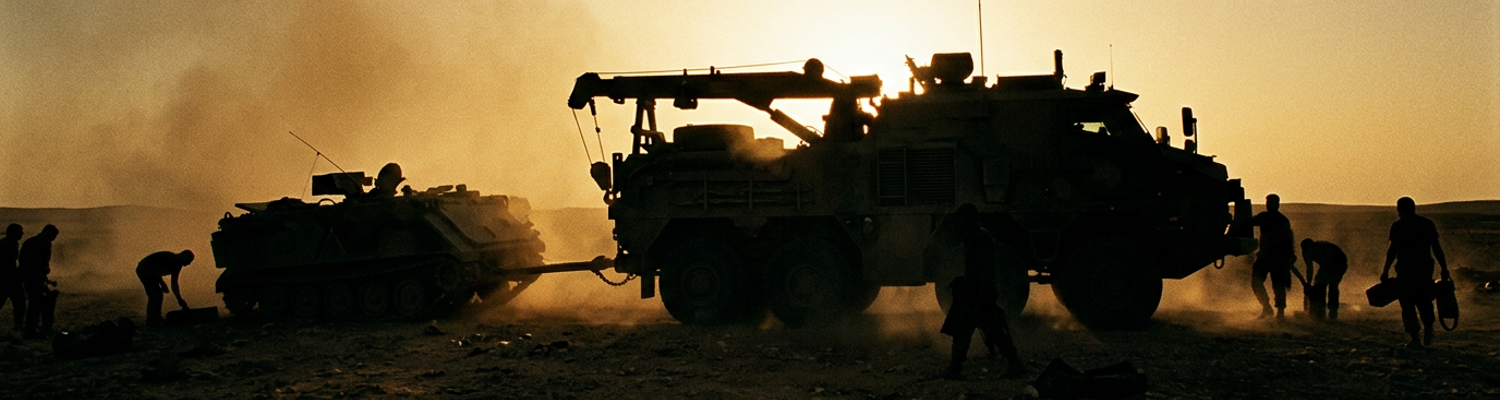
Combat engineers from the 41st Engineer Battalion hauled thousands of tons of crushed coral and concertina wire to construct defensive revetments around the New Port docks. They created concrete barriers to shield loading bays from sniper positions on adjacent rooftops. Supply personnel spent fourteen-hour shifts in triple-digit heat inside shipping containers. They cross-referenced serial numbers for night vision goggles and radio antennas against army property books (Department of the Army Form 2062). Every single tracked and wheeled vehicle had to pass through high-pressure water wash racks. This included dozens of M998 Humvees and armored recovery vehicles. Crews cleared Somali sand and biological matter to satisfy United States Department of Agriculture customs regulations prior to