
Engineering Origins and Rosette Seeker Development
Infantry squads in forward combat outposts faced relentless low altitude air strikes because their portable defense systems could not hit approaching enemy jets. Gunners operating the older FIM-43 Redeye missile had to wait until a Soviet fighter flew directly over their positions and exposed its hot tailpipe before the basic heat seeker could register a launch tone. Soviet pilots exploited this rear aspect weakness by releasing their rocket salvos and iron bombs from a safe distance before banking away outside the weapon reach. General Dynamics engineers began development on an advanced replacement program to give ground forces an all aspect weapon that could engage enemy aircraft head on. Technicians realized that detecting the faint friction heat generated by the nose cone and leading wing edges of a jet required an entirely new detection system capable of filtering out bright battlefield background clutter.
Designers solved this targeting hurdle by developing an argon gas cooled dual channel infrared and ultraviolet rosette scan seeker to guide the missile toward incoming targets. Optical mirrors inside the seeker head spun rapidly to trace a geometric rosette pattern across the sky, allowing internal sensors to compare heat signatures and ultraviolet light simultaneously. Soviet aircraft dropped magnesium flares to divert standard heat seeking warheads, but the dual channel processor recognized that real aircraft engines emitted ultraviolet radiation while artificial flares burned primarily in the infrared spectrum. Signals from the ultraviolet detector instantly overrode the misleading thermal bursts, steering the missile fins directly toward the cold metal outline of the jet rather than the blazing decoy. Argon gas stored under high pressure chilled the sensitive detector elements down to cryogenic temperatures within seconds of activation, sharpening the optical sensors so they could track tiny temperature differences against the open sky.
Gas and electrical current flowed directly into the seeker head from a metal battery coolant unit screwed into the launcher gripstock. Technicians faced severe design trade offs with this assembly, as the fragile internal seals and volatile chemical components carried strict shelf life limitations that degraded rapidly in harsh environments. Thermal battery cells inside the canister ignited to produce electrical current while releasing cryogenic gas, but the intense chemical reaction burned out completely after only forty five seconds. Gunners who failed to acquire, lock onto, and launch at an evasive target within that narrow forty five second window watched their seeker tone fade as the missile lost all power. Crews had to unseat the blisteringly hot depleted canister, discard it in the dirt, and seat a fresh unit while low flying attack helicopters circled overhead.
Soldiers practicing on live fire ranges discovered that moisture and desert dust seeped past damaged rubber seals, spoiling the volatile chemical mix inside stored batteries before crews could even twist them into the launcher. General Dynamics technicians reinforced the metal housings and added desiccant packs to the storage crates, but frontline units still had to handle each delicate cylinder with extreme caution. Field commanders ordered rigorous drills so gunners could practice tracking aircraft through the optical sight without prematurely twisting the battery into place and wasting scarce gas. Armory workers packed crate after crate of the completed FIM-92 weapon systems alongside spares of the volatile battery coolant units into climate controlled storage bunkers. Supply officers loaded the green fiberglass launch tubes onto transport pallets bound for overseas staging areas.
Rigorous Operator Training and Cryogenic System Demands
Forklifts hauled the strapped pallets directly into military receiving depots where infantry trainees discovered that firing the weapon required far more than simple point and shoot reflexes. Army instructors immediately confronted substantial misfire rates on practice ranges because the missile relied on a delicate battery coolant unit seating mechanism that easily malfunctioned under rough handling. Recruits had to press the cylindrical battery into the launcher gripstock and twist it into place with exact torque, but minor misalignment bent the tiny internal electrical contact pins or failed to puncture the pressurized seal. Soldiers who twisted the canister too violently stripped the locking lugs, while hesitant gunners failed to seat the chemical core fully, causing the launcher to freeze dead when the trigger was pulled. Instructors eliminated dozens of prospective gunners during these initial exercises, driving high training attrition within Army units as commanders refused to certify anyone who could not secure the volatile power cylinder flawlessly on the first attempt.
Gunners moved straight from mechanical drills to strict target acquisition procedures that demanded absolute mastery over pitch shifting audio tones. Internal electronics fed a constant drone through the gunner earpiece, shifting from a dull background purr into an ear piercing warble the moment the rosette seeker detected the thermal energy of an aircraft. Operators had to memorize the distinct difference between false echoes from hot clouds and the genuine tone of a jet tailpipe while tracking high speed targets through the open ring sight. Complex firing sequence timing forced the soldier to depress the uncage switch to let the seeker track independently, wait for the launch tone to stabilize, activate the chemical battery, and squeeze the firing trigger within five seconds. Hesitation of even a few seconds during this rapid countdown burned through the forty five second coolant reserve and caused the guidance gyroscope to tumble, ruining the missile flight before the rocket motor could even ignite.
Technicians deployed specialized field training simulators to drill these timing sequences repeatedly without expending multimillion dollar live missile rounds. Field units hauled bulky tracking head trainers and electronic projector domes to remote bases, but keeping these sensitive simulation consoles operational created severe logistical headaches. Desert dust and high ambient heat clogged the cooling fans on the electronic consoles, while daily physical abuse from hundreds of practice drills frayed the thick umbilical cables linking the launcher mockups to the central computer displays. Supply depots faced continuous shortages of the specialized test equipment, leaving frontline platoons unable to calibrate their practice launchers before scheduled field exercises. Repair crews often waited weeks for replacement circuit boards and diagnostic modules to ship from domestic factories, grounding entire classes of air defense trainees right before their deployment rotations.
Armorers wrestled with severe logistical bottlenecks while attempting to maintain pressurized coolant refills under harsh field conditions. Ground crews depended on heavy mobile gas pumps to recharge the reusable training cylinders with purified argon and nitrogen, but these temperamental mechanical compressors routinely seized up when fine sand penetrated their intake filters. Leaking pressure valves and compromised high pressure fittings allowed the volatile gas to bleed away into the air before tanks reached the required operational pressure of six thousand pounds per square inch. Supply sergeants had to ration every functional coolant bottle among frontline teams, forcing instructors to cancel live tracking runs and rely on dry mock up drills with inert plastic dummy tubes. Tactical commanders realized that fielding the sophisticated weapon required an entire industrial tail of clean gas bottles, delicate testing gear, and highly trained specialists working far behind the front lines. Air defense platoons packed their fragile diagnostic kits and remaining full coolant canisters into transport trucks, preparing to ship the temperamental weapon systems toward actual combat theaters overseas.
Operation Cyclone and the Afghan Supply Pipeline
Cargo aircraft delivered these crated weapon systems directly to Pakistani military depots under a covert CIA authorization directing hundreds of FIM-92 Stinger systems to Afghan mujahideen fighters starting in 1986. Central Intelligence Agency officers worked alongside Pakistani intelligence handlers at staging camps near Rawalpindi to unpack the launchers, test their electrical battery sockets, and teach guerrilla recruits how to listen for the rosette seeker tone. Field instructors shortened the complex American classroom syllabus into rapid practical drills, showing insurgent teams how to shoulder the thirty five pound launcher, twist the battery coolant unit into place, and track targets against the bright mountain sky. Logistics personnel divided the missiles among competing Afghan resistance factions, but moving the sensitive electronic weapons across the border into war zones required extreme physical effort. Insurgent teams lashed the fiberglass launch tubes and fragile coolant canisters onto pack mules, wrapping each component in heavy wool blankets to shield the internal gyroscopes from trail vibrations as they navigated rocky passes into eastern Afghanistan.
Mujahideen gunners uncrated the green fiberglass tubes in rocky scrubland outside Jalalabad airfield to intercept Soviet flights during landing and takeoff runs. Insurgent teams positioned along the flight corridor waited until heavily armored Mi-24 Hind gunships dropped low over the valley floor, activated their battery coolant units, and launched their missiles head on into the oncoming aircraft. Dual channel ultraviolet and infrared sensors ignored the clouds of burning magnesium decoy flares dropped by the pilots, guiding the warheads straight into engine bays and tail rotors. Multiple Mi-24 gunships and low flying transport aircraft crashed in flames around Jalalabad within the first weeks of operational use, delivering an immediate tactical shock to Soviet aviation regiments. Soviet helicopter pilots quickly abandoned aggressive low altitude strafing runs and climbed above fifteen thousand feet where the missiles could not reach them, while transport crews adopted steep spiral descents inside tight defensive perimeters to avoid ground fire.
Pakistani intelligence officers pushed hundreds of additional missile crates across the frontier to exploit the sudden retreat of Soviet airpower, but this surge shattered the administrative controls designed to monitor the weapons. American planners originally instituted a strict one for one exchange rule requiring fighters to return expended fiberglass tubes before receiving fresh rounds, but the decentralized reality of the guerrilla war quickly rendered this procedure unenforceable. Regional guerrilla commanders took control of distributed stockpiles inside their own mountain territories, routinely ignoring requests from foreign handlers for serial number tracking sheets and launch verification reports. Insurgent commanders treated the sophisticated launchers as personal political leverage, distributing unexpended missiles among loyal bodyguards, trading them to unaffiliated tribal warlords for food and ammunition, or burying them in dry caves as permanent emergency reserves. American supply officers discovered that serial number ledgers maintained in Islamabad no longer matched the physical distribution of hardware across the Afghan interior, leaving hundreds of live missile systems completely untracked in remote mountain arsenals.
Black Market Diversions to Iranian Gunboat Units
Afghan warlords moved these unmonitored weapon crates across rugged trails toward the Iranian border, turning their stockpiles into immediate financial and military profit. Regional tribal commanders in western provinces such as Herat established secret meeting sites along desolate frontier tracks to negotiate illicit transactions with Iranian Revolutionary Guard purchasing teams. Guard officers paid upwards of thirty thousand dollars in hard currency for each factory sealed wooden crate containing an intact FIM-92 Stinger launcher, while also swapping truckloads of machine gun ammunition, diesel fuel, and artillery shells to complete the transactions. Revolutionary Guard drivers hauled the olive drab fiberglass launch tubes and volatile battery coolant units into military trucks, concealing the sensitive American hardware beneath cargo tarpaulins before speeding westward through desert checkpoints toward logistics depots near Tehran. Iranian weapons specialists unbolted the wooden crates, tested the delicate internal battery sockets with electrical meters to check for transport damage, and confirmed that the rosette scan seekers remained operational despite the rough journey across the mountains. Guard commanders organized the functioning missile systems into dedicated weapon shipments and routed them directly south toward naval bases along the Persian Gulf coast.
Mechanics stationed at coastal boat basins such as Bandar Abbas modified Swedish built Boghammar speedboats to carry the American made missile systems into surrounding maritime choke points. Iranian technicians bolted padded aluminum brackets and rubber lined storage lockers inside the open cockpits of the forty foot fiberglass craft, giving crews a secure place to stow the thirty five pound missile tubes away from engine heat and salt spray. Dense maritime humidity and corrosive seawater mist continuously coated the exposed metal pins on the launcher gripstocks, forcing gunboat crews to clean the electrical contacts with alcohol swabs before every operational patrol. Boat gunners rehearsed firing routines in rough sea states, bracing their bodies against the plunging deck while lifting the bulky launcher and training its open optical sights on imaginary aerial targets. Revolutionary Guard commanders deployed these missile equipped speedboats to forward island bases on Farsi Island and Abu Musa, as well as reinforced oil platforms scattered across the narrow waters of the Strait of Hormuz.
Tankers navigating these contested transit lanes under Operation Earnest Will faced constant visual harassment and the lethal prospect of surprise missile ambushes from the newly equipped Boghammar squadrons. Lookouts aboard commercial supertankers reflagged under American registry swept their binoculars across the water, watching for low profile Iranian speedboats breaking away from coastal islands to shadow allied convoys. American naval aviators flying protective escort missions in SH-60 Seahawk helicopters, A-6 Intruder strike aircraft, and armed Army Task Force 118 gunships confronted extreme anti air danger during low altitude patrols over the transit channels. Navy and Army pilots recognized that the dual channel rosette seeker inside the Stinger ignored standard burning magnesium decoy flares and could acquire the heat signature of a turbine exhaust from almost any angle. Fleet commanders immediately altered their flight profiles, ordering helicopter crews to stay outside visual range of unvetted surface vessels and climb away from sea level to avoid sudden launches from small boat decks. Task force admirals overhauled their standing rules of engagement, granting aircrews explicit authority to destroy approaching Iranian gunboats with cannon fire and rockets the moment an operator on board hoisted a shoulder fired launcher toward an allied formation.
The Farsi Island Clash and Serial Number Verification
Helicopter crews assigned to Army Task Force 160 put these revised combat directives into action during a night patrol on October 8, 1987, when armed Iranian gunboats opened fire in the waters southwest of Farsi Island. Iranian Revolutionary Guard crews manning three high speed patrol craft fired heavy machine guns at an American observation helicopter scouting shipping channels near the island base. Pilots flying AH-6 Little Bird gunships immediately dropped out of the darkness to engage the hostile speedboats with rapid bursts from six barrel miniguns and salvos of high explosive rockets. Armor piercing machine gun rounds ripped through the light fiberglass hulls, detonating stored fuel tanks and shattering the outboard engines of the approaching flotilla. Explosions lit the surface as two of the attacking vessels sank into the Persian Gulf, while a third boat spun out of control and drifted across the water with severe damage. Night Stalker aviators circled the burning, disabled craft at low altitude to keep their weapons trained on the remaining survivors and prevent the crew from scuttling the vessel.
Sailors from an American surface patrol boarded the drifting Iranian gunboat under the protective guns of the circling helicopters to search for intelligence materials. Boarding teams quickly subdued the surviving crewmen, administered emergency field dressings to the wounded, and systematically searched the bloodstained wreckage before rising seawater could submerge the hull. Searchers forced open customized storage lockers bolted into the passenger compartments, illuminating several long olive drab cylinders packed in dense foam. Crewmen discovered undamaged FIM-92 Stinger launcher tubes resting securely in padded aluminum brackets designed to shield them from rough seas. Operators found intact gripstock assemblies, factory optical sights, and live battery coolant units sitting right beside the weapon tubes, ready for immediate firing against low flying aircraft. Boarding personnel gathered every missile component and packed the fragile hardware into transport crates to prevent any salt spray or deck debris from damaging the delicate seekers.
Ordnance experts aboard the frigate USS Thach unloaded the sealed crates to perform the initial technical inspection on the seized hardware. Technicians carefully wiped away engine oil and saltwater residue from the launch tubes, confirming that the dual channel rosette seeker heads and internal cooling channels remained in pristine mechanical condition. Specialists verified that the Iranian boat crews had received fully functional systems along with fresh thermal battery canisters capable of powering the optical tracking sensors. Naval officers recognized that finding intact American anti aircraft missiles on a hostile gunboat represented a catastrophic intelligence failure with direct operational consequences for allied forces. Intelligence teams drafted urgent priority dispatches to the Pentagon warning that Iranian speedboats possessed genuine head on engagement capability against carrier based strike aircraft. Security teams secured the missile tubes inside reinforced shipping containers and transferred them onto a high priority flight bound for military research facilities in the United States.
Pentagon analysts took custody of the shipping containers at a secure defense laboratory to conduct direct serial number verification on the recovered hardware. Technical investigators magnified the stamped factory markings engraved into the green launch tubes and matched each digit against covert Central Intelligence Agency inventory logs. Records confirmed that these specific recovered launcher serial numbers belonged to missile shipments originally destined for Afghan resistance factions fighting Soviet forces. Supply officers established that these exact weapons had passed through the covert pipeline in Pakistan before regional commanders diverted them westward across the border to Iranian buyers. Defense Department officials briefed congressional committees on the recovered serial numbers, verifying that American arms supplied to anti Soviet insurgents were now threatening American naval aviators in the Persian Gulf. Task force commanders responded to this forensic confirmation by ordering all Persian Gulf flight crews to install specialized infrared jammers on their airframes and fly escort routes beyond the known operational engagement envelope of the Stinger system.
Civilian Aviation Panic and Strategic Threat Escalation
Jetliners navigating regional Middle Eastern flight corridors carried no protective jamming equipment, exposing civilian air traffic to the lethal capabilities of the newly dispersed weapon. Interagency task forces uniting officials from the State Department, the Federal Aviation Administration, and intelligence agencies raised frantic alarms over the vulnerability of international passenger planes climbing through shared regional airspace. Flight corridors connecting major transportation hubs in Cairo, Dubai, Karachi, and Riyadh brought heavily loaded wide body jets directly over rugged desert terrain where unmonitored shoulder fired launchers could easily hide. Aviation specialists recognized that the Stinger dual channel rosette seeker, engineered to track agile combat jets through volleys of decoy flares, could effortlessly lock onto the massive thermal exhaust plumes of civilian turbofan engines from miles away. Cockpit crews flying civilian routes had no radar detectors or infrared warning sensors to alert them when a missile seeker acquired their aircraft from the ground. Intelligence bulletins circulated through Western capitals warning that hostile militias or terrorist cells could exploit the simple point and shoot design to destroy an airliner during takeoff or landing with virtually no advance warning.
Airport security directors initiated an emergency reassessment of perimeter defense standards to counter this sudden low altitude threat. Ground inspection teams surveyed the open fields, perimeter fences, and vacant access roads extending beyond runway thresholds, discovering that existing security boundaries ended just hundreds of yards from departure paths. Aviation authorities attempted to expand physical patrol zones outward several miles to keep missile teams beyond the weapon five kilometer striking distance, but residential neighborhoods and difficult terrain around major international airports rendered complete physical isolation impossible. Defense contractors simultaneously evaluated transport aircraft defensive countermeasure programs, testing whether commercial airliners could carry military flare dispensers or active infrared jamming pods under their wings. Engineers found that mounting these military systems onto civilian airframes created severe technical hurdles, as burning decoy flares risked igniting populated neighborhoods below and jamming pods overloaded standard civil electrical generators. Commercial pilots instead had to adopt modified takeoff profiles, forcing airliners to climb steeply at maximum engine power to clear vulnerable low altitude airspace as rapidly as possible.
Investigators on House and Senate intelligence committees convened urgent closed door hearings to scrutinize the clandestine operations that had created the aviation peril. Lawmakers interrogated Central Intelligence Agency officials over catastrophic accountability failures inside the covert pipeline, demanding to know how high tech anti aircraft missiles had passed from Afghan resistance stockpiles into hostile hands. Testimony revealed that intelligence managers had completely abandoned strict end use monitoring protocols, relying on informal paper tallies and unverified promises from foreign intermediaries rather than conducting physical inventory inspections. Agency witnesses admitted that field handlers could not locate scores of distributed launchers, nor could they account for hundreds of volatile battery coolant units that enabled the weapon to seek targets. Committee members pressed agency leadership on why earlier internal warnings regarding diverted shipments had been downplayed while hundreds of fresh missile crates continued flowing into the pipeline. Lawmakers ordered the intelligence agency to overhaul its clandestine oversight mechanisms immediately and draft an aggressive recovery strategy to buy back untracked missile hardware before black market brokers could sell additional crates to extremist groups.
Covert Buyback Operations and Hardware Obsolescence
Central Intelligence Agency case officers established multi million dollar covert buyback efforts across regional arms bazaars to reclaim loose FIM-92 systems from Afghan factions and black market syndicates. Intelligence operatives opened secret bank accounts and funneled millions of dollars in untraceable cash into regional trading hubs like Islamabad, Peshawar, and Quetta. Clandestine field handlers met with shadowy intermediaries in private safe houses, offering cash bounties reaching up to one hundred thousand dollars for every intact launcher and sealed missile tube delivered into American hands. Arms merchants and guerrilla fighters brought dozens of fiberglass tubes out of hidden mountain caches to collect the immediate cash payouts. American ordnance specialists inspected each returned weapon inside secured warehouses, photographing factory markings and recording serial numbers to verify that the retrieved launchers matched missing shipment manifests. Intelligence officers crated these purchased weapons and loaded them aboard military cargo planes bound for disposal facilities inside the United States.
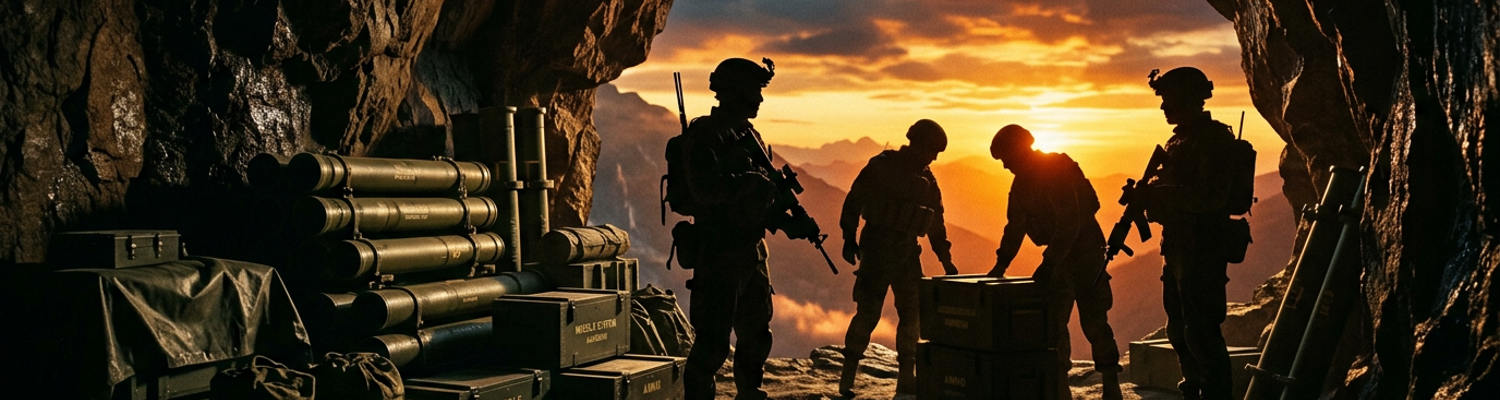
Smugglers and tribal warlords refused to surrender all of their crated launchers, calculating that retaining the advanced hardware granted them outsized regional prestige and military leverage. Resistance leaders rejected the foreign cash bounties or held out for even higher payouts, dispersing unexpended missiles across isolated mountain redoubts and desert compounds. Insurgent fighters wrapped the green fiberglass tubes in heavy wool blankets and stacked them alongside ammunition crates in deep limestone caves and damp dirt bunkers. Local commanders concealed additional missile components under compound floorboards and inside dry irrigation tunnels, intending to preserve the weapons for future combat against regional adversaries. These decentralized hideouts shielded hundreds of live missiles from foreign recovery teams, leaving the hardware stranded without factory maintenance in harsh frontier environments.
Water and humidity inside these earthen cave caches initiated rapid chemical degradation throughout the solid rocket propellants and delicate electronic assemblies. Extreme desert temperature swings expanded and cracked the rubber gaskets and metal seals on the argon battery coolant units, allowing the pressurized cryogenic gas to bleed away into the surrounding air over years of neglected storage. Internal thermal batteries suffered severe chemical breakdown as moisture rotted the electrolyte paste, preventing the cylindrical power canisters from delivering the high voltage needed to spin the missile gyroscopes. Guerrilla fighters who later attempted to power up an expired weapon heard no acquisition tone through the optical sight, because the vanished argon gas could no longer chill the rosette scan seeker to its sub zero operating temperature. Solid propellant rocket motors also absorbed ambient dampness through fractured casing seals, which spoiled the propellant grains and caused the booster charges to misfire. This physical and chemical collapse caused the operational neutralization of unrecovered missiles throughout the region, turning deadly precision weapons into inert tubes of fiberglass and dead circuitry.
Army air defense battalions accelerated this technological eclipse by transitioning their active inventories to the FIM-92B and reprogrammable microprocessor FIM-92C models. The FIM-92B variant replaced the basic single-channel infrared seeker with an advanced dual-channel optical rosette scan seeker that could distinguish aircraft exhaust plumes from bright magnesium decoy flares. Defense engineers expanded this countermeasure protection inside the FIM-92C model by installing reprogrammable microprocessor chips that technicians could update with new software code whenever hostile aircraft fielded modified jamming systems. Tactical units gained the ability to counter evolving aerial threats simply by inserting updated memory chips into the launcher gripstocks rather than building entirely new missiles. These digital enhancements left early baseline variants technically obsolete, ensuring that any surviving original missiles in foreign hands could no longer track modern aircraft equipped with contemporary infrared decoys. Ordnance personnel shipped the remaining baseline FIM-92A inventory to military depots for demilitarization, while air defense platoons locked the updated reprogrammable missile tubes onto combat vehicles bound for frontline bases.