
Dawn Triage at the Engineer Hill Medical Station
At 0315 hours on May 29, 1943, the field telephone line linking the frontline outposts at the base of the valley to headquarters went dead. Japanese wire-cutting parties had severed the WD-110 assault lines.
When examining the historical record, that sudden communications blackout marked the collapse of the outer security screen along Clevesy Pass. Japanese forces under Colonel Yasuyo Yamazaki drove through the gap between Company B of the 32nd Infantry and adjacent positions. These troops numbered roughly one thousand men. They carried Type 99 rifles, knee mortars, and captured American weapons. A thick maritime fog combined with freezing rain concealed their approach. Yamazaki's men bypassed isolated machine gun nests along the high tundra ridge. Frontline outposts fell in minutes under sudden bayonet thrusts. Without telephone lines or working SCR-300 field radios, no general alarm reached the second echelon. The radios had ceased operating after water seeped into their battery casings. Surviving riflemen fell back across two miles of soggy muskeg. Japanese assault squads pursued them closely. The attackers intended to seize the artillery parks and supply dumps higher up the valley slopes.
The path led straight into the camp of the 50th Engineer Combat Battalion.
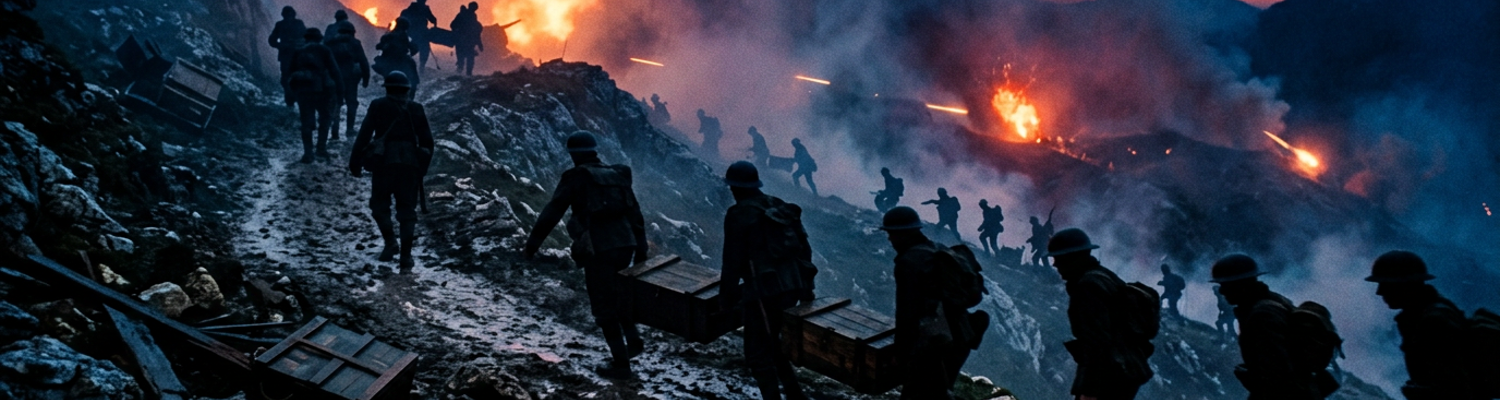
Archival evidence shows that Captain Donald D. Neale and Lieutenant Sanford Edwards of the 50th Engineer medical detachment received no warning. Shouting riflemen broke into the perimeter ten minutes before daybreak. Engineers, clerks, cooks, and walking wounded seized whatever weapons lay on tent floorboards. They turned the aid station into an ad-hoc fortress. Men rolled Caterpillar D7 bulldozers into defensive arcs. These heavy machines shielded the tentage against rifle fire. Heavy wooden crating, five-gallon fuel cans, and sacks of engineering sand formed improvised breastworks along the frozen mud shelf. Medical personnel laid aside scalpels. They picked up M1 Garand rifles and trench knives. Hand-to-hand combat erupted outside the supply marquee. Japanese soldiers hurled Type 97 hand grenades into tent flaps. Two water-cooled Browning M1917 machine guns were dragged from an engineering ordnance cache. Defenders secured them to timber sleepers. The gunners fired at point-blank range down the ravine approach until their radiator jackets boiled dry.
Wounded men piled three deep across the frozen turf.
A close review of operational logs indicates that triage operations began while Japanese snipers still targeted the tent roof from sixty yards away. External temperatures lingered near twenty-nine degrees Fahrenheit. Medical staff faced rapid patient hypothermia alongside traumatic wounds. Syrettes of morphine froze solid inside field bags. Medics held the metal tubes inside their mouths to thaw the liquid before injection. Shattered limbs and open chest wounds from 6.5mm Arisaka bullets covered the ground outside the canvas flaps. Extensive grenade fragment lacerations required immediate tourniquets. Blood froze directly onto the canvas litters before orderly staff could bind pressure dressings. By 0700 hours, medical personnel had treated over one hundred and forty American casualties on open stretchers. They simultaneously separated fifty-two enemy bodies piled along the forward revetment.
Surgeon records filed that morning documented ninety-two pints of blood plasma administered under direct small-arms fire before 0830 hours.
M3 Stuart Immobilization Across Massacre Bay Muskeg
Field dispatches scribbled in the hours following the Engineer Hill defense detail the total collapse of American armored mobility south of Jarmin Pass. Major General Albert E. Brown had originally committed the 7th Infantry Division Provisional Tank Platoon to provide direct fire support. The 17th and 32nd Infantry Regiments required heavy weapons as they pushed inland from Beach Yellow. Six M3 Stuart light tanks were ferried ashore on LCM landing craft. Personnel detached from the division cavalry reconnaissance troop crewed the vehicles. Navy coxswains unloaded the tanks onto the coarse volcanic gravel of the Massacre Bay shoreline. Company commanders anticipated using the 37mm M6 guns and sponson-mounted .30-caliber Browning machine guns to suppress concealed Japanese mountain guns. Entrenched machine-gun bunkers along the lower valley floor presented a significant threat. Field orders directed the platoon to advance across the coastal flats. They were to turn northwest and secure the rocky bottleneck leading toward Jarmin Pass.
Steel tracks sank straight into subarctic sponge.
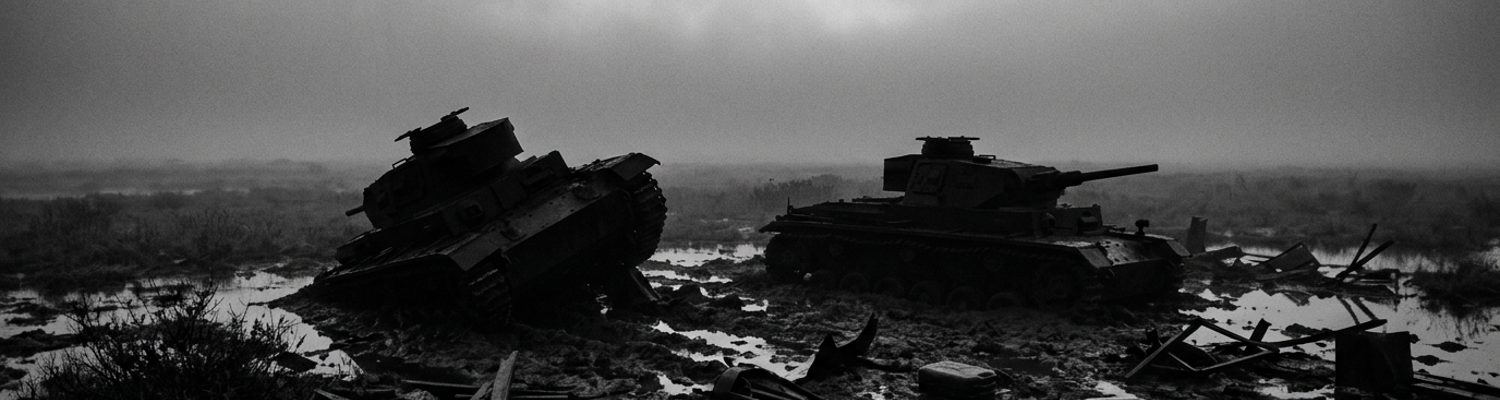
Archival evidence shows that the mechanical design of the M3 Stuart was completely unsuited for the sub-surface conditions of Attu. The vehicles weighed roughly thirteen tons. They rode on narrow T16E1 rubber-block tracks. This configuration exerted a ground pressure exceeding twelve pounds per square inch. This concentrated weight cut straight through the six-inch upper crust of wet tundra lichen. Beneath that fragile vegetative root system lay an unstable mixture of thawed permafrost, glacial silt, and saturated volcanic blue clay. Tank drivers shifted into second gear to cross the valley flats. Their tracks immediately lost all traction. Dense clumps of wet tundra moss packed into the open gaps of the drive sprockets. This debris stripped track teeth and forced the rubber track assemblies off the idler wheels. Three Stuarts threw their left tracks simultaneously within four hundred yards of the shingle beach. The remaining three vehicles spun their steel grousers uselessly. They dug their own suspension bogies into three-foot trenches. Their steel hulls bottomed out flat on the frozen permafrost subgrade.
The tanks became static pillboxes within two hours of leaving the shingle.
A close review of operational logs indicates that the mechanized breakdown quickly spread to the heavy recovery assets. Captain James R. Hosking ordered Caterpillar D7 armored tractors and Cletrac M2 high-speed tractors from the 50th Engineer Combat Battalion into the bog. Their objective was to carve a graded corduroy supply corridor through the swamp toward Jarmin Pass. The mission called for towing the stranded light tanks onto firmer shale. Engineers planned to bulldoze gravel tracks for two-and-a-half-ton cargo trucks bringing 105mm artillery ammunition to the forward batteries. The sixty-horsepower crawler tractors possessed broad steel tracks. The churned muck proved too deep. Repeated passes converted the saturated moss into an impassable paste. This slurry suctioned against tractor belly pans. Drivers attempted to winch the lead tractor out of a drainage sink. The pulling strain repeatedly sheared the five-eighths-inch steel cable drums. Within ninety minutes, four Caterpillar tractors sat buried past their final-drive housings near coordinate 52 degrees 50 minutes North, 173 degrees 11 minutes East. Their diesel exhaust stacks sputtered as sulfurous swamp water rose over their battery boxes.
Winch cables snapped under thirty tons of deadweight tension.
Supply officers recorded the operational fallout in a casualty and equipment loss tally drafted in the mud behind Beach Yellow at 1100 hours. The Provisional Tank Platoon had expended nearly two hundred gallons of aviation-grade gasoline per vehicle. They burned this fuel simply idling their Continental W-670 engines to run electrical bilge pumps. This kept batteries charged against the sub-freezing mist. None of the six tanks had fired a single 37mm round at an enemy position. Rations and mortar shells bound for the infantry had to be transferred from stalled truck beds. Exhausted engineer squads packed the dry small-arms ammunition into rucksacks. They walked single-file along slippery gravel ridges. Ordnance personnel noted that six light tanks, five heavy bulldozers, and eight amphibious tractors remained cemented in the Massacre Bay flats. Salvage crews required four days of dry weather and two complete engineering crane companies to unseat the first hull.
Subarctic Williwaw Exposure and Peat Revetment Failures
When examining the historical record, the structural collapse of American field fortifications on the forward slopes of Cold Mountain began within hours of their initial excavation. Combat engineers from Company A of the 50th Engineer Combat Battalion attempted to anchor defensive positions along the rocky crest. They worked to shield the 37mm anti-tank guns and mortar pits covering the Clevesy Pass approaches. The digging parties lacked timber revetment planks or corrugated iron sheeting. They cut sixteen-inch square blocks of alpine peat. Men stacked these blocks in alternating courses with volcanic shingle hauled up from glacial scree beds. This construction method proved disastrous in subarctic precipitation. Freezing rain and driving sleet soaked into the fibrous root networks of the sheared turf. The physical weight of each sod layer multiplied rapidly. Internal hydrostatic pressure exceeded the shear strength of the sod walls. Revetments liquefied into an acidic black slurry. This mud flowed down the thirty-degree grade. Saturated shingle collapsed inward. Two feet of frozen sludge filled the weapons pits. The debris jammed the traverse mechanisms of Browning M1917 machine guns and buried ready-service ammunition boxes under tons of collapsed hillside.
The earth fortifications dissolved under their own weight.
Archival evidence shows that the mechanical paralysis of the Provisional Tank Platoon generated a secondary medical catastrophe among the vehicle crews. Six crews of the 7th Cavalry Reconnaissance Troop remained confined within their flooded M3 Stuart tanks for over thirty hours. Their hulls had settled deep into the blue clay beneath Massacre Bay. Continental radial engines sputtered on auxiliary fuel tanks. The mechanical bilge pumps repeatedly choked on suspended peat fibers and volcanic grit. Four to eight inches of brackish ice water pooled across the lower fighting compartment floor plates. The tankers had landed wearing standard six-inch leather service shoes and light wool socks. They lacked waterproof rubber shoepacs. Immersion in near-freezing bilge water halted capillary circulation to their lower extremities. Prolonged cramped immobility in thirty-degree ambient temperatures accelerated the tissue damage. Recovery parties eventually extracted the first crewmen through the turret hatches. Acute peripheral neuropathy had already progressed to third-degree immersion foot and tissue necrosis. Medical logs from the shoreline aid station recorded that twelve of the twenty-four trapped tankers suffered severe gangrene. Four required bilateral trans-metatarsal amputations before evacuation to the transport ship Grant.
Standing water inside the fighting compartments froze directly around leather boots.
A close review of operational logs indicates that the physical destruction of defensive capability reached its peak when sub-zero williwaw winds descended over the exposed ridgelines. Violent katabatic gales accelerated off the glacial cirques of the upper mountain rim. These storms generated gusts exceeding eighty miles per hour. The effective wind chill dropped to fifteen degrees below zero Fahrenheit. Infantrymen of Company C, 32nd Infantry occupied open, flooded slit trenches along the exposed spur between Cold Mountain and Engineer Hill. They had no shelter halves or trench-board flooring. Their M-1941 cotton field jackets and standard wool trousers saturated completely during the morning rain. The fabric shed all thermal insulation as the gale-force winds stripped body heat at an accelerated rate. Core body temperatures dropped rapidly into severe clinical hypothermia. Shivering soldiers lost the manual dexterity required to feed eight-round en-bloc clips into M1 Garand rifles. They could not clear carbon-fouled operating rods. Company casualty manifests documented that cold-weather exposure incapacitated sixty-eight riflemen in a single six-hour span. Skeleton squads held the defensive sectors. Their frozen fingers could not depress the spade-grip triggers of their perimeter weapons.
First Sergeant Harold Miller logged thirty-four non-battle frostbite evacuations from Ridge 2 alone before noon on May 29.
High-Angle Mortar Bombardment of Immobile Armor
Japanese forward observers embedded along the high crests of Fish Hook Ridge quickly detected the immobilized American armor. The tanks sat stranded in the Massacre Bay muskeg at coordinate 52 degrees 50 minutes 22 seconds North, 173 degrees 11 minutes 45 seconds East. Battery teams from Colonel Yamazaki's mountain detachment deployed Type 97 81mm smoothbore infantry mortars into concealed reverse-slope defilades. Gunners elevated their launch tubes past seventy-five degrees to execute vertical plunging trajectories. The six M3 Stuart tanks were stuck up to their sponsons in frozen volcanic clay. Vehicle commanders could neither reposition nor alter their defensive angles. Japanese mortar crews walked their high-explosive fire across the grid using standard five-round bracket salvos. High-angle 81mm rounds plunged directly onto the horizontal surfaces of the light tanks. Rolled homogeneous steel plating on the top decks measured less than half an inch thick. One explosive shell detonated square across the rear engine deck louvers of Tank Four. The blast pierced the radiator core and severed the high-pressure fuel lines. Forty gallons of aviation gasoline ignited inside the compartment.
Plunging steel cracked open thin turret roofs.
Archival evidence shows that the nature of the island sub-surface geology multiplied the lethality of every incoming round across the valley floor. High-explosive mortar shells struck an unyielding sub-base of permafrost and dense volcanic andesite directly beneath the thin tundra moss. The rounds did not bury into yielding earth to absorb concussive blast energy. Instantaneous Type 100 impact fuzes detonated the picric acid charges right at the surface plane. Supersonic detonation waves shattered the frozen basalt into thousands of jagged rock splinters. These stone shards sprayed horizontally in wide, low cones at speeds exceeding three thousand feet per second. Field hospital reports documented that over sixty percent of compound fractures and arterial severances suffered by the 7th Cavalry Reconnaissance Troop were inflicted by rock fragments. High-velocity stone sliced through winter woolens with identical force to steel casing fragments. Hot stone shards punched holes through unarmored tractor crankcases. The debris shredded hydraulic rubber brake lines and punctured twenty-eight pneumatic tires across the stalled supply column.
Basalt rock fragments produced identical wounding patterns to artillery casing shards.
A close review of operational logs indicates that the adjacent support echelons suffered catastrophic losses due to a total lack of overhead armor. Combat engineers from the 50th Engineer Combat Battalion occupied open slit trenches and shallow drainage swales along the lower bench of Engineer Hill. Signalmen and ordnance repair details shared these exposed positions. Standard engineering supply tables had brought no heavy timber sleepers or corrugated structural steel sheeting ashore during the initial landing waves. Digging parties could not cap their fighting pits. Men pulled canvas shelter halves or empty burlap ration sacks across open trenches to shed rain. This fabric offered zero protection against plunging ordnance. Mortar bombs descending at near-vertical angles dropped directly into the uncovered excavations. High-explosive blasts inside these narrow stone-walled channels generated lethal overpressure. The shockwaves ruptured pulmonary tissue and shattered eardrums of unarmored clerks and mechanics. Company B of the 50th Engineers sustained thirty-one casualties among its headquarters section within forty-five minutes of mortar fire opening from the ridge. The unit lost its senior motor transport sergeant and two communications specialists when rock walls collapsed inward.
No timber was available to cover the open trenches.
Subordinate commanders on the valley floor scrambled to redistribute surviving personnel into the dead space beneath disabled vehicle chassis. Technicians from the 7th Division Ordnance Maintenance Company abandoned their open tool trailers. They crawled under the steel bellies of stranded Caterpillar D7 bulldozers to seek shelter from falling shrapnel and flying rock splinters. Shrapnel continued cutting field telephone lines laid across the scree. Motorcycle dispatchers ran on foot across exposed shale slopes to deliver coordinates to the 48th Field Artillery Battalion. Counter-battery fire from American 105mm howitzers finally suppressed two Japanese mortar pits on the northern spur by 1015 hours. Eighty-four punctured gasoline drums had already drained their contents into the surrounding mud.
Urgent After-Action Mechanical Reports and Doctrine
Junior officers assigned to the 7th Cavalry Reconnaissance Troop and the 50th Engineer Combat Battalion began compiling emergency technical assessments inside rain-soaked shelter tents near Massacre Bay on the afternoon of May 30, 1943. Lieutenant Robert S. Gardner and Captain James R. Hosking conducted physical inspections of the immobilized vehicle hulls. Sniper rounds still pinged off abandoned armor plates during their survey. These platoon leaders tabulated catastrophic failures across every drivetrain and electrical assembly committed to the beachhead. They wrote on damp field notebooks with graphite pencils. Sand and saturated blue volcanic silt had penetrated the unsealed rubber dust boots of the steering brake assemblies. This abrasive mixture ground drive pinions flat within four operating hours. Starter motors on the Continental W-670 radial engines burned out after repeated stalls in sub-freezing grease. Crews attempted manual crank starts. The thick engine oil caused hand-crank ratchets to break under human force. Corrosive saltwater spray had eaten away wire shielding inside ignition harnesses. This produced short circuits that deadened radio transmitters and drained 12-volt battery cells down to zero charge.
Pencil graphite tore through wet carbon paper.
Archival evidence shows that junior staff directed their sharpest technical criticisms at the track engineering of the M3 Stuart light tank. The vehicle weighed twenty-eight thousand pounds. It rested its mass upon standard T16E1 rubber-block tracks measuring only eleven and five-eighths inches in width. This narrow design yielded a ground contact pressure of roughly 12.8 pounds per square inch. Army engineers had created this specification for hard-packed mainland roads rather than subarctic muskeg. The saturated tundra of Attu possessed a shear strength incapable of supporting loads above four pounds per square inch. Steel track grousers acted as excavation blades. They sliced through the six-inch root lattice of moss and heather before depositing the vehicle belly pan directly onto liquid volcanic clay. Junior officers noted that the Army Ordnance Department had deployed the tanks without extended end connectors, broad wooden swamp cleats, or auxiliary track grousers. The tanks lacked flotation kits. Tundra vegetation tangled into tight knots around the idler wheels. This halted all track rotation and sheared the drive sprockets. Thirteen-ton steel boxes sat trapped in stationary defiles.
Twelve pounds of surface pressure sheared through six inches of root mass in three seconds.
A close review of operational logs indicates that these raw frontline reports prompted immediate doctrinal revisions regarding armored recovery operations in subarctic amphibious warfare. Western Defense Command planners had assumed standard M2 high-speed tractors and Caterpillar D7 bulldozers could drag disabled tanks using five-eighths-inch steel tow cables. Field experience proved that saturated muskeg acted like hydraulic suction. The mud doubled the required extraction force to more than sixty thousand pounds per hull. Winch gearboxes split under deadweight tension. Single-line pulls repeatedly dragged recovery tractors into the mud beside the stranded armor. Field revisions dispatched to the Amphibious Force Pacific Fleet dictated that future subarctic landings mandate heavy tracked recovery vehicles equipped with eighty-ton winches and thirty-inch flotation tracks. Planners banned armored movement across unmapped tundra without prior geotechnical soil cores conducted by engineer scouts. Field manuals were amended to require five hundred linear yards of steel pierced-plank landing mat or heavy timber corduroy laid over beach shingle before tracked armor could cross the tideline. Army procurement officers simultaneously dispatched urgent requisitions for low-ground-pressure amphibious cargo carriers. This accelerated testing of the tracked Studebaker T15 Weasel.
Ordnance technical officers attached forty-two mechanical defect sheets to the division after-action file before dusk on June 1, 1943. File designation 7-ORD-42 was sealed.