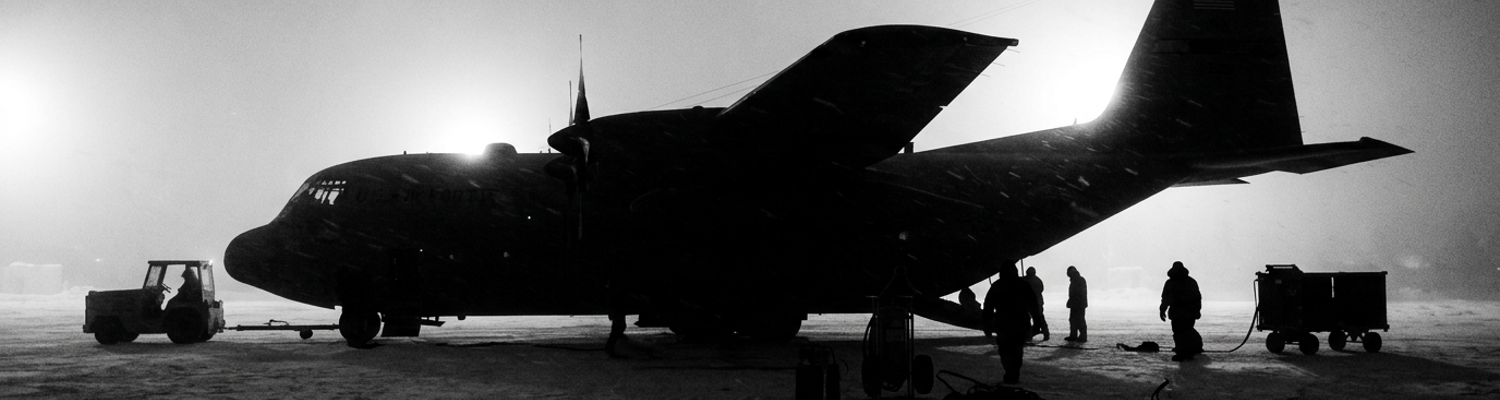

Arctic Staging at Exercise Brim Frost 89
Across the flight line at Eielson Air Force Base, zero sound penetrated the frozen dark at 0500 hours on January 24, 1989. Twelve combat-coded F-4G Wild Weasel aircraft assigned to the 35th Tactical Fighter Wing sat motionless on the parking apron. They were positioned twenty-six miles southeast of Fairbanks. Flight crews from the 561st Tactical Fighter Squadron waited in alert facilities. Maintenance specialists inspected external wing pylons in total silence. Operational plans for Exercise Brim Frost 89 designated these specialized defense suppression jets to lead multi-service strike packages against simulated Soviet built radar batteries scattered across the Alaskan interior. Deployed directly from George Air Force Base in the Mojave Desert, the aircraft carried captive carry AGM-88 High Speed Anti Radiation Missiles and AN/ALQ-119 jamming pods alongside chin mounted AN/APR-38 receiving antennae. Air Force planners scheduled thirty-two tactical sorties for the opening phase of the joint exercise.
Every jet remained immobilized on the tarmac.
Desert trained technicians had never faced conditions like these.
A close review of operational logs indicates that an Arctic high pressure system settled directly over the interior river valleys within seventy-two hours of the unit deployment. Airfield thermometers plummeted past minus fifty degrees Fahrenheit across the central Fairbanks basin. Recorded temperatures at Eielson reached minus fifty-four degrees on January 26. Outlying revetments registered minus fifty-eight. Extreme thermal drops created a dense temperature inversion. This trapped carbon exhaust from heating plants and diesel vehicles directly against the snow packed tarmac. Frozen water vapor formed thick ice fog. Horizontal visibility across the active runways dropped to less than three hundred feet. Unprotected human skin froze within sixty seconds of direct exposure to the air. Standard JP-4 aviation fuel thickened inside external aluminum drop tanks. Flow rates through distribution manifolds dropped. Secondary boost pumps jammed. Cold soaked aircraft skins contracted unevenly. Structural fasteners on the F-4G radomes bound against their access hinges. Ground crews could not transfer fuel into the main internal cells without applying direct heat from external ducting trucks. Those trucks were themselves running out of operable fuel.
Support equipment failed instantly across the flight line.
Archival evidence shows that mechanical failures cascaded through staging facilities at both Eielson and Elmendorf Air Force Bases. A/M32A-60 gas turbine generator carts failed to crank. Engine lubricants congealed into rigid grease inside starter drives. Airmen attempting to move ground equipment stripped steel tow bar pins. Rubber tires tore off wheels that had frozen solid to the concrete. Connecting auxiliary electrical power to the F-4G airframes caused brittle synthetic rubber O-rings to shatter under hydraulic pressure. Gallons of red MIL-H-5606 fluid vented across open wheel wells. Cockpit canopy seals hardened into rigid plastic. Ground crews could not secure pressurized latches on multiple aircraft. Electronic test benches failed to calibrate the AN/APR-38 receiver pods. The sensitive avionics refused to reach baseline operating temperatures in unheated maintenance bays. Snow removal trucks operated by the 343rd Composite Wing broke drive shafts while scraping solid ice ruts off the primary taxiways. Hydraulic ground servicing mules blew internal pressure lines as soon as mechanics engaged the pump clutches.
The entire maintenance apparatus ground to a complete standstill.
Wing leadership cancelled all scheduled defense suppression sorties before pilots reached their boarding ladders.
F-4G Phantom Mechanical Failures in Extreme Cold
The physical limits of aerospace engineering became apparent on the ramp.
A close review of maintenance records from the 35th Aircraft Generation Squadron details catastrophic material failures across the F-4G fleet. The Phantom airframe relied on complex pneumatic and hydraulic networks to operate landing gear doors, speed brakes, and flight control surfaces. At minus fifty degrees Fahrenheit, the physical properties of these systems degraded entirely. Synthetic rubber seals inside the utility hydraulic reservoirs lost all elasticity. They turned into brittle rings that shattered upon engine startup. Primary flight control accumulators lost nitrogen pre-charge pressure overnight. Mechanics found the pressure gauges reading zero at the start of the morning shift.
Fluid lines ruptured on the tarmac.
Archival evidence shows the extent of the damage. Crew chiefs attempted to cycle the trailing edge flaps during pre-flight checks. The cold soaked actuators bound inside their tracks. The mechanical resistance exceeded the burst limits of the aluminum hydraulic lines routing through the wing roots. Line fractures sprayed atomized hydraulic fluid into the engine bays. Ground personnel documented twenty-two separate line ruptures on January 25 alone (NARA Record Group 342). The landing gear oleo struts collapsed as the internal hydraulic fluid contracted. The heavy fighter jets sank inches lower to the ground. This reduced clearance for external ordnance loading.
Mechanics faced impossible repair conditions.
Replacing a shattered O-ring required technicians to remove access panels secured by dozens of flush mounted screws. The steel screws contracted differently than the aluminum skin. They seized tight in their nut plates. Airmen applied standard torque to remove them. The screw heads stripped out immediately. Maintenance teams had to drill out hundreds of seized fasteners by hand in the freezing dark. Pneumatic drills froze when moisture in the compressed air lines turned to ice inside the tool motors. The repair process for a single hydraulic leak stretched from two hours to fourteen hours.
AN/APR-38 Avionics Lockups and Radar Processor Drift
Silicon cannot function when metal shrinks to its physical limits.
A close review of operational logs indicates that the AN/APR-38 radar homing and warning system mounted on the F-4G depended entirely on tightly calibrated thermal stabilization loops. These loops collapsed in the sub-zero Alaskan air. External receiver pods housing the low-band and high-band antenna arrays in the chin fairing dropped below minus forty-five degrees Fahrenheit within fifteen minutes of ground exposure. Solid state local oscillators inside the superheterodyne tuner modules experienced severe thermal drift. Tuned center frequencies shifted by as much as seventy megahertz away from baseline calibrations. Microscopic physical contraction across stripline radio frequency components altered internal electrical impedance. Traveling wave tubes and crystal video detectors failed to balance incoming signals. This threw off the analog to digital converters before processed telemetry could leave the sensor housing. Ground crews attempting to run pre-flight built in test sequences on the tarmac watched the system reject automated diagnostic baselines. Receiver sensitivity fell below operational detection minimums.
Internal components simply locked up.
Archival evidence shows that unheated forward equipment compartments turned the central digital signal processing computers completely non-operational. Technicians opened Station 1 avionics bays on the lower fuselage of 561st Tactical Fighter Squadron jets. They found the Texas Instruments CP-1674 processing units cold soaked to ambient tarmac temperatures. Solid tantalum capacitors inside the power conditioning modules cracked. They lost their dielectric properties. They failed to deliver regulated direct current to the main logic arrays. Quartz crystals governing system clock rates desynchronized under the thermal shock. This created severe digital timing skew between the central processing units and the internal magnetic core memory banks. The signal processor entered endless interrupt loops or froze on initial power up. Maintenance crews pumped ducted hot air from ground preheaters through flexible canvas hoses directly into the nose bays. The heat dissipated through thin aluminum structural ribs before warming the insulated processor enclosures.
Cockpit scopes displayed pure garbage.
When examining the historical record from maintenance debriefs at Eielson, the breakdown of direction finding algorithms eliminated the Wild Weasel platform mission capability. Direction finding on the AN/APR-38 relied on phase comparison between antenna pairs distributed across the vertical stabilizer tip and the chin fairing. Thermal contraction distorted electrical line lengths in the coaxial feed cables by fractions of a millimeter. The system calculated invalid phase angles for incoming radar pulses. Target azimuth values drifted by up to eighty degrees across the cockpit Plan Position Indicator. This placed simulated Soviet surface to air missile threats in entirely incorrect compass quadrants. Threaded classification software running on the corrupted processor could not correlate pulse repetition frequencies against the internal emitter library. Straight Flush tracking radars for the SA-6 and Land Roll systems for the SA-8 were misidentified as civilian air traffic transmitters. They vanished from warning displays altogether.
Maintenance personnel logged ninety-six separate electronic system aborts during the opening forty-eight hours of exercise operations.
AGM-88 HARM Launcher Seizures and Ordnance Failures
The primary weapon system of the Wild Weasel refused to detach from the aircraft.
A close review of armament logs details the failure of the AGM-88 High Speed Anti Radiation Missile interface. The F-4G carried these missiles on specialized LAU-118/A launch rails mounted to the inboard wing pylons. The launch rails contained mechanical sway braces, electrical umbilical connectors, and pneumatic release cartridges. All three components failed simultaneously in the extreme cold. The nitrogen charged pneumatic cartridges designed to eject the missile away from the airframe lost their pressurization. The gas inside the cartridges condensed and froze.
Armament crews could not load or unload the weapons.
Archival evidence shows that the mechanical sway braces seized solid. The threaded steel pads used to tighten against the missile body contracted and bound against their locking nuts. Weapons loaders from the 35th Equipment Maintenance Squadron attempted to loosen the braces using standard breaker bars. The steel components sheared off entirely. The electrical umbilical cables connecting the missile guidance section to the aircraft weapons bus stiffened into rigid rods. Technicians tried to connect the cables to the missile receptacles. The internal copper wiring snapped. The protective rubber insulation shattered into fragments.
The missiles became dead weight.
Without functional umbilical connections, the AN/APR-38 could not pass target coordinates to the AGM-88 seeker head. The cockpit weapons panel displayed continuous seeker failure warnings. Ground crews tried to manually remove the captive carry training missiles to troubleshoot the rails. The manual release mechanisms were frozen solid. The grease lubricating the release sears had turned into a solid block of ice. Armament technicians had to apply direct heat from portable blowers for forty-five minutes just to actuate a single mechanical release lever. The entire squadron lost its offensive capability before a single engine started.
Flightline Maintenance Trauma and Ground Crew Frostbite
Flesh bonded to frozen chrome vanadium steel in less than two seconds.
A close review of operational logs indicates that enlisted crew chiefs from the 35th Aircraft Generation Squadron suffered second degree and third degree contact frostbite across their fingers. They were attempting routine exterior pre-flight servicing. Air Force technical orders required personnel to inspect fastener torque on wing attachment fittings. Mechanics installed engine intake plugs. Ground crews secured safety wire along external stores pylons using standard hand tools. Thick extreme cold weather mittens made fine motor control impossible. Airmen stripped off bulky outer gloves to manipulate safety wire pliers, bare torque wrenches, and steel speed handles on the exposed Eielson parking ramp at minus fifty-four degrees Fahrenheit. Thermal conductivity of bare metal drained heat from human tissue instantaneously. Skin on fingertips and palms froze solid. It adhered to metal sockets and ratchet handles. Mechanics tore epidermal tissue away to pull their hands free. Outlying flightline aid stations operated by the 343rd Tactical Hospital documented dozens of ground personnel presenting with blanched, desensitized fingers and deep subcutaneous freezing within the first forty-eight hours of operations. Medical officers evacuated sixteen technicians off the ramp for systemic hypothermia and severe digital necrosis. Exercise controllers halted unsupervised exterior work.
Chemical compounds engineered to melt ice turned against the airframes.
Archival evidence shows that standard flightline de-icing procedures exacerbated mechanical binding on the F-4G flight controls. Maintenance crews deployed mobile truck mounted de-icing booms to spray heated Type I ethylene glycol solutions across the aircraft wings, horizontal stabilators, and trailing edge flaps. Ambient ramp temperatures hovered fifty degrees below zero. The thermal capacity of the heated chemical wash collapsed the instant atomized spray struck cold soaked aluminum skin. The glycol solution underwent slush freezing. It transformed within seconds into a thick, semi-solid gelatinous sheet of frozen slurry across the wings. This mixture ran directly into structural hinge gaps, flaperon balance cavities, and leading edge slat tracks before solidifying into hard composite ruts. Mechanical control rods connecting the cockpit stick to the stabilator hydraulic actuators locked in place. Ground crews attempting to clear the jammed hinge lines used plastic scrapers and wooden mallets. The frozen slush adhered to underlying zinc chromate primer. It stripped exterior paint down to the structural substrate. Crew chiefs recorded complete pitch and roll control surface immobility on nine consecutive aircraft parked along the southern revetments.
Interior warmth escaped faster than combustion blowers could supply it.
When examining the historical record from ground support operations at Eielson, mobile heating carts completely failed to maintain operable temperatures inside open cockpits. Technicians positioned A/M32C-10 air conditioners and duct equipped Herman Nelson BT400 combustion heaters alongside the forward fuselages. They routed flexible eight inch canvas ducts over cockpit sills to thaw flight instruments and canopy hinge mechanisms. The uninsulated canvas ducting stiffened into rigid cylinders. They cracked open under high airflow. They vented thermal output into the freezing crosswinds before reaching the cockpits. Maintenance personnel opened canopy frames to allow access. This created an immediate thermal chimney. Trapped heat drained within sixty seconds. Supercooled air striking interior bulkheads caused rapid thermal contraction across instrument glass and instrument bezels. Technicians attempting to toggle avionics master switches or align weapon release panels found the plastic toggle bat handles snapping off at the pivot pin. Liquid crystal displays on modernized tactical subsystems clouded over with opaque black crystals. Grease inside the dual altimeter gear trains froze into solid blocks. Ground crews burning diesel fuel in continuous preheating cycles could not raise cockpit ambient temperatures above zero degrees Fahrenheit. External maintenance steps remained uncompleted.
Squadron maintenance logs closed the shift with zero Phantoms cleared for flight.
Combat Engineering Paralysis at Donnelly Training Area
Gelled paraffin immobilized the earthmovers before the first blade touched the snow.
A close review of operational logs indicates that the 6th Engineer Battalion encountered absolute fuel starvation within hours of establishing field positions across the Donnelly Training Area south of Fort Greely. The battalion deployed Caterpillar D7G crawler tractors and MW24C wheeled loaders to clear snow cover and shape simulated runway strips. They operated on windswept glacial deposits near the Delta River. Ambient air readings fell past minus fifty-two degrees Fahrenheit. Standard military DF-2 diesel fuel stored within vehicle tanks and 500-gallon fabric bladders underwent severe paraffin precipitation. Long chain paraffin hydrocarbons crystallized out of the petroleum blend. Fluid fuel transformed into an opaque, viscous gelatin. Primary distribution pumps could not draw it. Fuel filters choked on waxy sludge within three minutes of engine ignition. Detroit Diesel engines suffocated right as mechanics attempted to ramp up operating revolutions. Battalion mechanics ran out of replacement spin on filter canisters by the second evening of field operations. Improvised efforts to warm fuel lines using portable open flame blowtorches produced localized fire hazards without clearing the blocked manifolds.
Heavy equipment stood frozen in row formations across the Donnelly gravel plains.
Archival evidence shows that base civil engineering teams running Rapid Runway Repair scenarios sustained catastrophic hardware fractures. They were attempting to secure airfield surfacing mats over simulated ordnance craters. Airfield damage repair doctrine required engineers to backfill exploded craters with crushed rock, level the surface, and anchor AM-2 aluminum matting assemblies directly into the subgrade using high tensile steel permafrost anchor pins. Ground temperatures at Donnelly had driven seasonal frost deep into the dense silt and gravel permafrost table. This produced compressive ground strengths comparable to solid bedrock. Engineering crews operated pneumatic impact drivers to force the 1.5-inch diameter mechanical anchor pins into the pre-drilled guide collars. The cold embrittled carbon steel experienced catastrophic shear failure. The steel had transitioned past its ductile to brittle threshold in the minus fifty degree exposure. Pin heads sheared off cleanly under the driving hammers. Pin shafts snapped laterally inside the frozen boreholes. Without seated anchor pins, the heavy AM-2 mat sections warped across uneven crater lips. They were incapable of withstanding the simulated tire loads and exhaust forces of staging aircraft. Exercise evaluators recorded sixty-eight consecutive pin fractures during a single crater capping evolution.
Pressurized hydraulic systems ruptured across the entire recovery fleet.
When examining the historical record from base civil engineering recovery units, the mechanical fluid systems inside M816 wreckers and heavy recovery platforms suffered simultaneous blowouts during equipment extraction attempts. Hydraulic fluid conforming to standard military specifications thickened beyond operational kinematic viscosity limits. Temperatures hovered fifty-four degrees below zero. Recovery operators engaged the power take off levers to drive front mounted winches and extend hydraulic outriggers. Fluid friction prevented laminar intake through suction lines. Positive displacement pumps starved instantly. Severe cavitation occurred across internal rotating groups. Internal chamber pressures spiked far beyond structural relief ratings within fractions of a second. Cast aluminum pump casings burst. They cracked open along primary flange lines. Atomized fluid vented across vehicle engine bays. Braided steel pressure hoses stiffened into rigid structures. They fractured at crimped coupling sleeves under the initial shock pulse. Field recovery crews could neither tow dead earthmoving machinery nor lift immobilized equipment out of snowdrifts. Civil engineering logs recorded eleven destroyed pump assemblies across thirteen deployed recovery vehicles before noon on January 27.
Structural Shelter Collapses and Cold Weather Doctrine
Aluminum shelter beams buckled under twenty-two tons of unexpected mechanical tension.
A close review of operational logs indicates that tactical threat emitter sites across the Blair Lakes and Yukon test ranges suffered sudden structural collapses within seventy-two hours of the Arctic cold snap. Defense suppression exercises depended on forward deployed AN/MST-T1A Mini-MUTES radar simulation stations. These were housed under modular, quick erect shelters to radiate simulated Soviet Fan Song and Straight Flush tracking signals. Ground temperatures at range facilities fell to minus fifty-eight degrees Fahrenheit. Severe thermal contraction tore through the shelter frameworks. Cold soaked structural 6061-T6 aluminum support arches contracted at nearly twice the rate of the high carbon steel tension cables anchoring the units into permafrost anchor pads. Tensile stress spiked past metallurgical yield limits. High tensile turnbuckles snapped under load. Structural rafters twisted inward across the equipment bays. Roof panels collapsed directly onto primary transmitter consoles and high voltage power distribution racks. Enlisted radar operators scrambled out of side exits. Collapsing crossbeams severed primary electrical feeds. They smashed AN/APQ radar simulation displays into broken glass.
Range control lost four primary radar emitter complexes in forty-eight hours.
Archival evidence shows that standard tactical air defense suppression doctrine collapsed the moment equipment failures halted flightline operations. Tactical Air Command doctrine dictated that Wild Weasel F-4G elements fly pre-strike sweeps ahead of main strike packages. They were supposed to establish twenty-minute suppression corridors using reactive AGM-88 launches against active tracking emitters. This doctrine rested entirely on rigid sortie generation timelines, sixty-minute maintenance turns, and immediate electronic warfare sensor responsiveness. Arctic conditions erased every foundational assumption. Strike packages of F-15 and F-16 fighters could not penetrate simulated enemy airspace without suppression cover. Wild Weasel jets sat frozen on the ramp with corrupted AN/APR-38 processors, seized missile umbilicals, and frozen flight controls. Theater commanders faced a doctrinal void. Standard operational playbooks provided no contingency procedures for defending tactical air assets when defense suppression aircraft experienced systemic mechanical failure prior to takeoff. Planners could neither suppress simulated mobile surface to air missile batteries nor guarantee fighter survival. Exercise coordinators scrubbed seventy percent of planned joint air strikes over the interior training ranges.
The exercise exposed gaps between desert training regimes and sub-zero survival.
When examining the historical record from post exercise tactical evaluations, the breakdown at Brim Frost 89 forced extensive revisions to Air Force cold weather maintenance regulations and deployment doctrines. Tactical Air Command collaborated with Pacific Air Forces to rewrite Technical Orders governing fighter winterization across northern bases. Maintenance commands eliminated open ramp servicing protocols for sensor dense tactical platforms. They mandated enclosed, heated clamshell shelters for any flightline maintenance conducted below minus twenty degrees Fahrenheit. Engineers replaced brittle nitrile and neoprene hydraulic packings with specialized fluorosilicone O-rings rated to minus sixty-five degrees. Flightlines across Alaska received converted ground heaters equipped with heavy duty insulated ducting to prevent cockpit instrument glass from shattering. New operational regulations banned the cold soaking of advanced radar processing modules like the CP-1674. Ground crews were required to cycle hot air through avionics bays for ninety minutes before connecting external electrical power. Sortie generation models for polar environments were officially adjusted from one-hour turnaround intervals to four-hour maintenance windows.
Pacific Air Forces filed the revised maintenance directives on October 12, 1989.