
Clandestine Signals in the Green Hell
Operational logs from Fort Bragg, North Carolina, show the 149th Military Intelligence Group's deployment to Vietnam in the autumn of 1966. The unit was not a frontline combat force. Its personnel were specialists, technicians, and analysts. Their primary headquarters was established at Tan Son Nhut Air Base, operating under the command of the 525th Military Intelligence Group. The initial mission absorbed smaller intelligence detachments already in-country, focusing on human intelligence collection (HUMINT). This placed their advanced electronic equipment and highly trained personnel directly into the tactical cauldron of South Vietnam. The headquarters company in 1968 (per NARA Record Group 472) consisted of 189 personnel tasked with supporting intelligence operations across the country.
The environment itself was the first enemy.
Establishing the infrastructure for signals intelligence meant carving secure, climate-controlled spaces from a landscape defined by oppressive humidity and monsoon rains. The Tet Offensive in January 1968 dramatically sharpened their objectives. The strategic shock of the attacks created an intense focus on tracking People's Army of Vietnam (PAVN) and Viet Cong main force units to prevent another surprise. This required deep penetration of enemy operations through signals intercepts, interrogations, and analysis of captured materials. The 149th’s mission fed directly into this strategy.
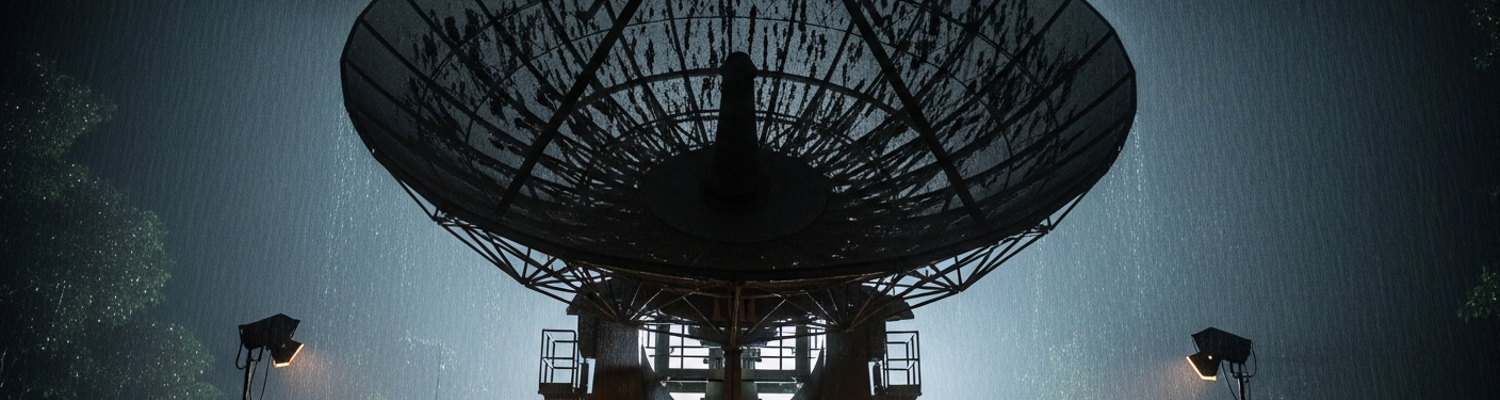
Receiving and processing early satellite intelligence was an experimental and physically demanding enterprise. The technology was new. The Initial Defense Satellite Communications System (IDSCS) had only recently become operational, providing the first global military communications network from space. On the ground, this meant using cumbersome, “transportable” terminals like the AN/TSC-54. Such a system consisted of a large electronics shelter, a massive 45-kilowatt diesel generator, and a multi-part antenna array weighing several tons. A declassified Central Intelligence Agency document from 1966 confirms a transportable ground station near Saigon provided two channels for data and teletypewriter communications to Hawaii. Operating this equipment in a jungle presented innumerable mechanical failure points. The heat was corrosive, and unstable power from generators could destroy sensitive vacuum tubes. Keeping the large dish antennas precisely aligned with orbital assets was a constant, hands-on struggle.
The High-Value Target
The establishment of any high-technology footprint was a battle against the environment before a single shot was fired. The term “clandestine” for these satellite ground stations did not imply a small, hidden operation. It meant placing a multi-ton, power-hungry, and sensitive electronic installation into a jungle while attempting to shield it from destruction. The site required clearing dense vegetation for equipment pads and defensive perimeters. Combat engineers performed this initial, arduous work, creating a hundred-yard-deep defensive zone of barbed wire, mines, and cleared fields of fire.
Fast-growing vegetation had to be constantly cut back. It threatened to obstruct antenna paths and provided concealed avenues of approach for enemy forces. The entire enterprise was an open secret to any enemy reconnaissance team, given the massive noise and heat signature from the required 45-kilowatt diesel generators. The operational vulnerabilities of the equipment itself were profound. The AN/TSC-54 terminal was a collection of heavy shelters, generators, and a large antenna that was exceptionally difficult to assemble and maintain. Its electronic heart relied on delicate vacuum tubes highly susceptible to heat and power fluctuations.
Technicians faced a grueling cycle of troubleshooting in sweltering conditions.
The simple act of handling a part could introduce moisture or grime that led to another failure. Beyond the electronics, the physical integrity of the antenna dish was paramount. A slight settling of the ground or the concussive shock from a nearby mortar strike could knock the dish fractions of a degree out of alignment, severing the link to a satellite thousands of miles away. This made the ground station a fragile, high-value target. An enemy sapper team did not need to destroy the entire compound. Disabling the generator or warping the antenna dish with a satchel charge was enough to achieve a mission kill.
A War Against Physics
For high-technology units like the 149th Military Intelligence Group, the physical environment of Southeast Asia was a relentless adversary. It actively worked to decompose their most sensitive equipment. The combination of extreme humidity, monsoon rains, and high temperatures created a perpetually hostile setting for the new satellite communications technology. The very air, thick with moisture, became a corrosive agent.
The most immediate front in this environmental war was fought against mold, humidity, and rust. The AN/TSC-54 terminals, with their massive dish antennas, were a collection of metallic surfaces and precision joints almost perfectly designed to capture and retain moisture. During the monsoon season, a fine scratch in a coat of olive-drab paint could blossom with orange surface rust within hours. Technicians found that humid air, often laden with salt, would creep into the seams of antenna panels and waveguide assemblies. This moisture fed the growth of pervasive mold and fungus, which thrived in the hot, damp conditions.
This was not a cosmetic issue. The metabolic processes of these microorganisms damaged the coatings on circuits and insulators, creating pathways for electrical shorts or signal degradation. Mycelial filaments grew across insulators and within connectors, altering their dielectric properties and interfering with the faint microwave signals captured from orbit. Keeping these arrays functional involved a thankless daily regimen of manually cleaning surfaces, treating corrosion, and applying moisture-displacing compounds to every vulnerable part.
Inside the supposedly protected electronics shelters, the situation was often just as dire. These shelters relied on electrical air conditioning units, but the units themselves were prone to failure under the strain of continuous operation. When an air conditioner failed, the internal environment of the shelter rapidly equalized with the jungle outside. Condensation formed on every surface. For the data processing equipment of the 1960s, this was catastrophic. Magnetic tape drives, essential for recording intelligence data, were acutely vulnerable. Moisture could cause the layers of tape on a reel to stick together, physically damaging the media. Condensation on the read/write heads led to immediate data corruption. The functionality loss extended to core memory systems, where moisture could cause shorts in the intricate hand-woven matrices of wires and ferrite rings, and to paper-based teletype machines, where damp paper swelled and jammed the mechanisms.
Battlefield Engineering
The signal engineers of the 149th Military Intelligence Group were a specialized breed. Their Military Occupational Specialty training at Fort Monmouth prepared them to maintain complex electronics in controlled environments. They were schooled for nineteen weeks on systems like the AN/TSC-54, learning to diagnose and repair satellite terminals in sterile, well-lit workshops. Vietnam immediately challenged their textbook procedures. Their real job became a nonstop cycle of troubleshooting under the worst possible conditions.
The year 1968 transformed technical maintenance into a combat role. When Tan Son Nhut Air Base came under rocket and mortar attack, the sensitive satellite equipment was exceptionally vulnerable. A near-miss from a 122mm rocket could send a shockwave through the ground sufficient to knock the heavy antenna dish minutely out of alignment. Shrapnel could shred the delicate waveguide assemblies that channeled microwave signals. In these moments, the signal engineers were forced to act under fire. Repair was a desperate scramble.
Technicians crawled from their bunkers in darkness, exposed to sporadic fire, to assess damage. A primary task was the physical realignment of the antenna, a procedure requiring precise adjustments to heavy mechanical components while the threat of another attack was imminent. They had to diagnose complex electronic failures, like a blown klystron tube in the transmitter or a fried parametric amplifier in the receiver, using handheld diagnostic tools with unsteady power.
There was no time to wait for the proper channels.
The logistical chain for supplying replacement parts was notoriously slow. A request for a specific vacuum tube or a proprietary circuit board for an AN/TSC-54 could take weeks or months to fulfill. This reality forced the signal engineers into a pattern of systematic cannibalization and creative scavenging. To keep the satellite link operational, technicians would strip components from any available source. A cooling fan from a wrecked radio jeep might be jury-rigged to a power converter inside an electronics shelter. Capacitors and wiring would be pulled from destroyed surveillance radars or battle-damaged aircraft electronics. This practice was a high-stakes gamble. Installing a component that was not perfectly matched could cause a cascade failure, potentially burning out other irreplaceable parts and disabling the entire terminal.
A Single Digit of Failure
The entire satellite intelligence enterprise in 1968 was a tenuous chain. A single weak link could corrupt critical battlefield information. In one documented incident from late 1968, a teletype message containing updated coordinates for a suspected PAVN mortar battery was transmitted to the 149th’s ground station at Tan Son Nhut. The data was intended for a 1st Cavalry Division unit operating near the Cambodian border. Before retransmission, the data stream passed through the AN/TSC-54’s processing shelter. A momentary power sag from the overworked diesel generator caused a single processing card in the teletype-to-digital converter to drop a series of bits.
The error was not catastrophic enough to be detected as a system fault. It manifested as a subtle corruption of the numerical data. The grid coordinate for the enemy position was altered by a single digit, shifting the target location by several hundred meters. The garbled data, now carrying the weight of authenticity from a high-technology source, was relayed onward.
This transmission error was compounded by the acoustic chaos of the jungle. For the forward air controller and the artillery fire direction center (FDC), clear communication was a constant struggle. The dense jungle canopy and humid atmosphere created severe degradation for VHF radio signals, resulting in a constant, crackling static that could obscure words. At night, the cacophony of insects and animals could drown out human voices. Within this auditory fog, the corrupted grid coordinate received from the satellite feed was passed from the FDC to a 105mm howitzer battery of the 3rd Battalion, 82nd Artillery. There was no reason to question its validity.
The artillery battery executed the fire mission. The high-explosive shells impacted harmlessly in an empty stretch of jungle. The real danger came minutes later when the 1st Cavalry patrol, moving based on the last known intelligence, stumbled into the actual, un-shelled PAVN mortar position. They were met with immediate and accurate fire. Simultaneously, the errant artillery shells from the first fire mission had landed alarmingly close to a U.S. Marine reconnaissance team operating miles away, forcing them to break radio silence with a frantic call to check fire. An after-action investigation traced the chain of failure back through radio logs and maintenance reports to the AN/TSC-54 terminal. The official report listed the cause as a “data transmission error,” a sterile conclusion for a failure that originated in orbit and almost ended with American casualties.
The Randomness of Survival
The human intelligence and counterintelligence patrols of the 149th Military Intelligence Group were not standard combat units. Their mission was to conduct clandestine operations, meet with local assets, and infiltrate or extract trained personnel. These small teams, often just two or three specialists, moved through the countryside in unmarked vehicles or on foot, their vulnerability compounded by their isolation. The data flowing through the satellite link at Tan Son Nhut was their lifeline, providing the latest assessments of enemy positions and safe routes. A corruption of this data turned this lifeline into a liability.
A patrol moving on what it believed was secure intelligence could be sent directly into a prepared ambush. A team operating on information that was hours or even days old was effectively moving blind. The enemy was not a static line on a map. They were a fluid presence.
Survival was a matter of random chance.
Archival analysis of after-action reports from the Tet Offensive period reveals countless instances where survival was dictated by factors entirely outside of a soldier’s control. A jeep full of intelligence specialists might be saved from a command-detonated mine because their driver stopped to ask for directions, delaying their arrival at the kill zone by thirty seconds. Another patrol might take a five-minute break for water just a hundred meters short of an enemy machine gun nest. The men on these patrols were highly trained, but no amount of training could predict the exact location of a booby trap or the precise moment a mortar crew would decide to fire. This brutal lottery was a constant source of psychological stress.
This randomness was amplified by the profound sensory confusion of the battlefield. The constant, high-decibel shriek of jungle insects blended with the crackle and hiss of the PRC-25 radio, making it difficult to discern vital commands from meaningless static. Visually, the triple-canopy jungle created a world of deep shadows and confusing terrain, where a hidden enemy bunker could be indistinguishable from a termite mound. For the intelligence patrols of the 149th, whose job often involved discreetly observing contacts, this environment was a nightmare. Every shadow could hold an enemy. Every unexpected noise could signal an imminent attack. When contact was made, the roar of M-16s, the whump of mortars, and the percussive blast of grenades created a disorienting and terrifying soundscape where coherent thought was a struggle and survival often depended on pure instinct.