
Property Control Operations and Clerical Transfer
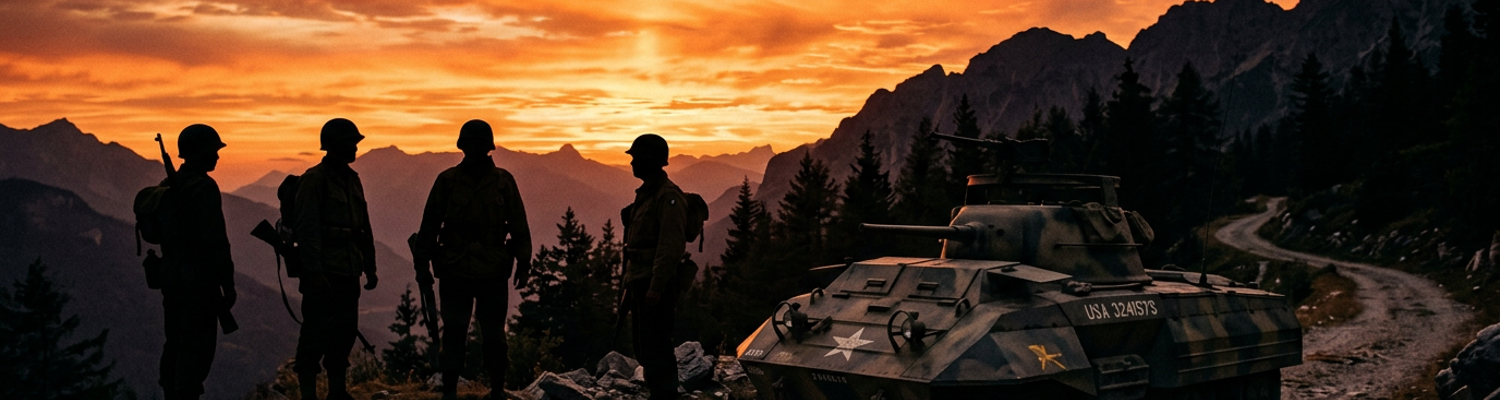
Radio batteries clattered against the metal floorboards of an M8 Greyhound armored car as patrol crews checked their antennas in the pine forests along the Enns River demarcation line. Scout teams from United States Forces in Austria secured their M1 carbines, inspected heavy canvas field packs, and monitored the narrow gravel road cutting through the steep Austrian foothills. Morning moisture coated the cold steel hulls of the reconnaissance vehicles while the radio operator adjusted the frequency dials on an SCR-508 receiver to maintain contact with headquarters. Operational orders from regional command instructed the unit to verify perimeter security around an isolated storage complex tucked into the limestone ridges nearby. Silence hung over the valley as the motor patrol waited for clearance to advance along the boundary separating the American and Soviet occupation zones. Drivers started their Hercules JXD engines and prepared to roll out toward the checkpoint as exhaust fumes drifted into the wet mountain air.
Property Control Branch officers within the US Allied Commission for Austria administered hundreds of former German Wehrmacht real estate assets across Upper Austria and Salzburg between April and August 1950. Routine demilitarization policy dictated the clerical transfer of strategic assets like Linz-Hörsching airfield and subterranean munitions caches in the Salzkammergut to Austrian civilian trustees. Occupation headquarters in Vienna expected these handovers to proceed through signed inventory ledgers, property releases, and routine liaison meetings with local municipal officials. Clerks in headquarters filing rooms treated the fortified sites as simple civilian real estate, ignoring the tactical value of the heavy artillery shells, explosive charges, and rifle cartridges still packed inside the damp mountain chambers. Field commanders on the front line recognized that these massive supply depots sat within immediate striking distance of Soviet motorized units stationed across the river.
Soviet reconnaissance units took advantage of this administrative gap by probing the access roads that connected the river crossings to the depot entrances. Tactical alarms sounded along the perimeter when an American motorized patrol spotted unauthorized Soviet troop movements descending toward an isolated ammunition vault. Corporal Miller jammed his headset against his ears inside the command scout car, struggling to send an urgent contact report over the tactical radio network. Static covered the radio frequency as atmospheric interference and dense rock walls in the mountain pass broke the transmission into fragmented, garbled phrases. Headquarters staff in the rear responded with administrative transfer codes and clerical inquiries rather than defensive combat clearances, leaving the isolated patrol without clear combat orders.
Gunners rotated the thirty-caliber machine gun turrets on the armored cars toward the tree line as distant diesel engines echoed through the damp woods. Crewmen chambered rounds into their weapons and deployed behind timber barricades near the thick concrete entrance of the underground bunker. Corporal Miller repeatedly tapped the brass radio telegraph key to bypass the scrambled voice channel, transmitting the coordinates of the approaching foreign vehicles to tactical command. Patrol leaders refused to abandon the stockpiles to an unannounced crossing, establishing blocking positions across the single gravel approach road. Drivers cut their vehicle engines to listen for metal tracks grinding against rock, bracing for an armed clash over property that headquarters had labeled as surplus storage.
Korean War Outbreak and Strategic Property Freezes
Exhaust smoke drifted away as silence settled over the gravel road, leaving the scout crews straining to hear the rumble of Soviet armor across the Enns boundary. Corporal Miller pressed his canvas-padded headset tight against his ears inside the command car, listening past the atmospheric hum as an urgent transmission crackled over the tactical radio receiver. The sudden outbreak of the Korean War in June 1950 compelled Lieutenant General Geoffrey Keyes to freeze all pending civilian property transfers across the American occupation zone. Priority radio flashes and courier dispatches stamped with emergency codes immediately halted the clerical handover ledgers that occupation clerks had prepared for local Austrian trustees. General Keyes ordered occupation forces to treat every piece of captured German military infrastructure as an active defensive position rather than surplus real estate awaiting civil disposition. Patrol commanders on the river boundary received orders to retain total tactical control over every locked gate, perimeter fence, and concrete munitions storehouse under their jurisdiction.
United States Forces in Austria reassessed former Wehrmacht depots and barracks complexes as fortified emergency redoubts against the Soviet Central Group of Forces. American intelligence officers estimated that the motorized rifle divisions and heavy tank formations of the Red Army held an overwhelming numerical advantage along the demarcation line, making isolated occupation outposts vulnerable to a sudden westward thrust. Planners abandoned procedures to transfer facilities like the Linz-Hörsching airfield and subterranean Salzkammergut ammunition caverns into civilian hands, recognizing that these reinforced structures offered vital protection against air strikes and artillery barrages. Army engineers surveyed the thick reinforced concrete ceilings and rock-hewn passages, calculating how many infantry battalions and supply trucks each bunker complex could house during an invasion. Quartermasters immediately canceled all outgoing freight train shipments that had been organized to haul captured ordnance, small arms, and vehicle components to commercial salvage yards. Soldiers restacked the heavy wooden crates of artillery shells and rifle cartridges inside the deep stone vaults, turning administrative storage facilities into combat magazines ready for immediate issue.
Sandbags piled up around the subterranean blast doors as combat engineers converted the storage portals into defensible machine gun bunkers. Crews strung barbed wire entanglements through the pine underbrush and across the single gravel approach road, creating interlocking lanes of fire designed to channel attacking vehicles into clear sights. Telephone wires uncoiled from heavy wooden spools through the forest floor, linking fortified underground command rooms directly to hidden observation posts overlooking the Soviet crossing points. Corporal Miller fed the new physical landlines into the auxiliary terminal of his radio console, securing a reliable communication route back to tactical headquarters that could withstand atmospheric interference and mountain rock shadows. Reconnaissance scouts deployed through the trees with anti-tank bazookas and thirty-caliber light machine guns, digging two-man fighting pits into the rocky soil along the depot boundary. Vehicle drivers angled the armored scout cars behind earthen berms, keeping their gun turrets trained on the timberline where foreign reconnaissance patrols continued to probe the access routes.
Spotters scanned the eastern bank of the Enns River through high-powered field binoculars, watching for dust clouds and engine exhaust that signaled advancing mechanized columns. Gun crews inside the armored hulls locked twenty-round ammunition belts into their machine guns and checked the firing pins of their secondary weapons, ready to engage any unauthorized vehicle that breached the timber barricades. Messengers sprinted through the depot yard with typed combat rosters, assigning every available mechanic, clerk, and guard to specific fighting positions along the outer trench lines. Tactical commanders in Salzburg dispatched reinforced motorized columns toward the river crossings, determined to hold the fortified depots as frontline strongpoints rather than surrender strategic territory to an unexpected Soviet push. Corporal Miller clicked his microphone switch and transmitted the confirmed grid coordinates of his patrol, reporting that the perimeter defenses stood fully manned and prepared for combat.
Reconnaissance Patrols Along the Enns Demarcation Line
Headquarters radio operators in Linz logged Miller's transmission and routed fresh patrol sectors directly to the tactical operations board. Mobile motorized reconnaissance elements from the 350th Infantry Regiment and the 4th Reconnaissance Battalion conducted patrols along the volatile Enns River demarcation line. Scout platoons operated M8 Greyhound armored cars and quarter-ton utility trucks equipped with pedestal-mounted machine guns, watching every bridgehead and ford where Soviet troops might push westward. Drivers kept their engines running on low idle at hidden road bends to avoid giving away their positions, while gunners monitored the eastern riverbank through vehicle vision slits. Patrol commanders held strict orders to avoid cross-river firefights, yet they remained positioned to contest any unauthorized crossing near the highway choke points.
Granite canyons flanking the river forced the American scout columns to divert their secondary patrols into steep mountain passes where former Wehrmacht storage facilities sat concealed. Frontline units operated under strict operational security and fragmented signal nets while surveilling isolated alpine munitions installations. Drivers switched off headlights and relied on blackout marker lamps as their vehicles climbed unpaved logging roads through thick pine canopies. High rock ridges consistently blocked high-frequency radio waves, splitting tactical commands into isolated sectors that could not reach central dispatchers in Salzburg. Patrol leaders dispatched motorcycle messengers across miles of mountain switchbacks whenever routine radio checks failed to penetrate the deep valleys. Physical signal breaks forced scout detachments to make tactical decisions on their own without immediate fire support from division artillery.
Artillery forward observers embedded with the 4th Reconnaissance Battalion hauled portable radio transceivers up exposed cliffs to establish line-of-sight relays above the dead zones. Wire teams unspooled miles of field cable from heavy reels on their backs, anchoring physical telephone lines directly to pine trunks along the perimeter roads. Rifle squads from the 350th Infantry Regiment fanned out through the underbrush around the depot blast doors, setting tripwires, observation posts, and interlocking fields of fire. Scout crews monitored the access roads for unmarked civilian vehicles and probing Soviet patrols, aware that any sudden movement could ignite a wider confrontation across the demarcation line. Gun crews kept their weapons loaded and aimed at the tree line while mechanics repaired loose steering rods and overheating water pumps on the idling scout cars.
Mechanics wiped grease from their wrenches as a scout car driver signaled the approach of an unidentified dust cloud rising over the eastern river road. Drivers slammed their armored view flaps shut and shifted their transfer cases into gear, wheeling the vehicles into angled defilade positions behind the depot entrance. Corporal Miller twisted the frequency dial of his SCR-508 radio set once more, battling the persistent mountain static to transmit an updated enemy movement flash to tactical command. Infantrymen chambered rounds into their M1 Garand rifles and dropped into the freshly dug foxholes along the gravel approach road. Patrol leaders raised their field glasses toward the tree line, watching the dust cloud resolve into Soviet reconnaissance vehicles rolling toward the demarcation boundary.
Signal Network Breakdowns and Alpine Perimeter Alarms
Trucks and armored scout cars from the Soviet Central Group of Forces rolled across the unmarked boundary line with their headlights dark, stopping barely fifty yards from the forward American timber obstacles. American motorized patrols detected this unauthorized Soviet motorized movement as the foreign convoy turned directly toward the contested former Wehrmacht depot, nearly triggering an active armed clash across the demarcation line. Gunners in the M8 armored car swung their thirty-seven-millimeter cannons into battery and leveled their coaxial machine guns at the lead foreign vehicle. American riflemen dropped behind rock parapets and pushed their weapon safeties forward, ready to fire if the foreign troops attempted to breach the compound perimeter. The opposing column halted at the road fork, its commander standing upright in the hatch while soldiers in heavy field coats unslung submachine guns and pointed them toward the bunker revetment. Both sides remained locked in a tense standoff along the narrow gravel access path, their engines idling while American patrol officers waited for immediate guidance from tactical command.
Miller slammed his fist against the metal casing of the SCR-508 radio set as harsh static flooded the voice channels inside the command car. Mechanical radio failures struck the transmitter at the critical moment, caused by cracked vacuum tubes and overheated power converters strained by steep mountain driving. Antenna whips vibrated violently against wet pine branches, shedding signal strength into the sheer granite bluffs flanking the Enns River valley. Miller switched his equipment over to manual telegraphy and tapped out the emergency flash code for hostile motorized infiltration, yet atmospheric interference broke the tone bursts into fragments. Garbled cipher transmissions hampered immediate tactical coordination between frontline reconnaissance teams and USFA Tactical Command, leaving both echelons unable to share critical operational data. Headquarters operators in Salzburg logged only disjointed bursts of code, leaving tactical commanders blind to the unfolding confrontation on the river road.
Radio operators at USFA Tactical Command struggled to assemble the corrupted cipher groups arriving over the alpine relay net. Incomplete encryption blocks prevented staff officers from verifying whether the reconnaissance team faced a minor navigational mistake or a deliberate motorized assault. Division controllers refused to release artillery fire support or dispatch mechanized reinforcements without authenticated grid coordinates, creating a dangerous communication gap between headquarters and the isolated river post. Relay stations located on high mountain crags tried to retransmit the scrambled signals, but the limestone ridges deflected the high-frequency waves into dead air. Time slipped away while staff officers argued over whether to uphold routine peacetime property procedures or authorize defensive fire across the demarcation line.
Gunners held their fire along the depot perimeter, relying on hand signals and revving vehicle engines to warn the foreign convoy away from the blast doors. Scout crews kept their thirty-caliber machine guns trained on the idling column, maintaining visible combat readiness while their communications remained completely severed. The Soviet commander inspected the sandbagged firing pits and armored car turrets through his binoculars, assessing the fortified entrance before signaling his drivers to shift into reverse. Metal gears ground loudly as the foreign trucks and scout cars turned around on the narrow road shoulder, withdrawing back toward the eastern river crossings without firing a shot. American soldiers maintained their fighting positions behind the rock revetments until the sound of foreign engines faded entirely from the valley. Miller unfastened his headset and began stripping down the malfunctioning radio components to solder fresh connections before the next scheduled patrol check.
Defense Doctrine Reorganization in Austria
Miller touched the heated soldering tip to the cracked wiring harness, securing the fractured circuit inside the receiver before testing the power switch. Battery voltage hummed through the metal chassis as the SCR-508 radio sprang back to life, allowing the patrol to transmit their after-action report up to tactical headquarters in Salzburg. Staff officers reviewed the incident logs and realized that administrative confusion over real estate had nearly provoked an armed battle with foreign forces on the river boundary. The depot crisis prompted USFA to shift its operational posture from peacetime constabulary administration to active defensive military readiness in Central Europe. General Keyes and his operational staff formally canceled all remaining property handover schedules, instructing occupation forces to treat isolated supply installations as fortified combat positions rather than civil transfer parcels. Motorized detachments received immediate instructions to defend every munitions cache, rail yard, and underground fuel tank against unauthorized foreign entry.
Bulldozers excavated deep anti-tank ditches along the gravel roads leading to the subterranean vaults, while riflemen stacked sandbags five feet high around the concrete blast doors. Signal corps specialists strung armored telephone cables through mountain culverts and erected directional microwave relay towers on granite ledges to eliminate the dead zones along the Enns River. Supply detachments delivered recoilless rifles, anti-tank mines, and live armor-piercing ammunition directly to forward bunker crews, replacing peacetime police equipment with frontline combat gear. Infantry squads cleared interlocking fields of fire through the pine trees, placing trip flares and concertina wire barriers across every foot trail leading toward the perimeter. Motorized scout teams operated on continuous twenty-four-hour combat rotations, keeping their engines warm and their machine-gun belts loaded for immediate engagement against any foreign vehicle crossing the boundary.
Sentries barred civilian Austrian trustees from the perimeter gates, enforcing the complete halt on local property handovers across the American zone. Strategic military depots and logistics hubs were retained under armed American control until the Austrian State Treaty was finalized in 1955. Quartermaster companies filled the limestone tunnels with thousands of tons of fuel barrels, artillery ammunition, and dry field rations intended to sustain American combat units during a general European war. Logistics officers stationed armed guards at every rail siding and bunker entrance, turning away regional magistrates and civil clerks who arrived with old property claim forms. Work details poured reinforced concrete over exposed bunker entrances and installed steel blast shields, ensuring the stockpiles could withstand heavy artillery bombardment. American field commanders incorporated these mountain storage complexes into their primary defense plans, preparing to hold the rocky terrain in depth.
Drivers kept their vehicle engines running on low idle behind reinforced timber revetments on the mountain passes, while gunners scanned the river crossings through vehicle vision slits. Miller sat before the repaired radio set in the command vehicle, adjusting his headset to monitor the refreshed tactical network and logging signal checks from neighboring outposts. Wire teams inspected the physical telephone lines running along the rock face, confirming that direct firing data linked forward observation posts with divisional artillery batteries in the rear. Mechanics replaced worn brake shoes and tightened drive chains on the armored scout cars, working under canvas tarps to conceal their tools from foreign spotters across the river. Crews loaded fresh belts of thirty-caliber ammunition into their vehicle-mounted weapons and pulled dark camouflage netting over their hulls, remaining in their fighting positions as darkness settled across the Enns valley.