
The AN/PSC-5 Spitfire satellite terminal went dark at 03:17 AM. A single red light on the tactical operations center display board indicated a lost link, then it too extinguished. For the 42 men of Task Force Razor, all communication with the outside world was severed. They were isolated.
The chain of events leading them to this ridge overlooking the Drin River valley began three weeks prior in a sterile cabinet room. A review of the initial intelligence briefing, designated TOP SECRET//SI/TK//ORCON, reveals a grim operational picture. National Reconnaissance Office satellite imagery, cross-referenced with signals intelligence, painted the primary Drin River valley as a fortified death trap. Yugoslavian 3rd Army elements had turned the valley into a layered defensive system. Key chokepoints were covered by pre-sighted 120mm M75 mortar batteries dug into reinforced revetments. Thermal imaging identified the heat signatures of at least four ZSU-23-4 Shilka anti-aircraft guns positioned to command aerial approaches. Human intelligence confirmed SA-7 Grail teams, making low-flying aircraft untenable. A geological survey highlighted the valley’s unstable shale-heavy western wall, a feature defending forces could exploit with explosives to create rockslides and block any armored advance.
This assessment directly led to Operations Order 99-04, a reconnaissance mandate for an unconventional flanking route. The directive, codenamed LOWLAND STEP, was a direct order from Joint Task Force command. It bypassed standard doctrinal approaches. The mandate was not merely to find a path; it was to find, chart, and prepare a route capable of allowing a light infantry battalion to bypass the main defenses and deploy onto the enemy’s flank within a 48-hour window. Equipment was to be kept to a minimum to avoid detection. Archival planning documents show the pressure to find a solution that avoided a direct, frontal engagement. The order stipulated that the reconnaissance element must traverse the unmapped network of ravines east of the Drin, a region dismissed by previous assessments as impassable for any organized military force.
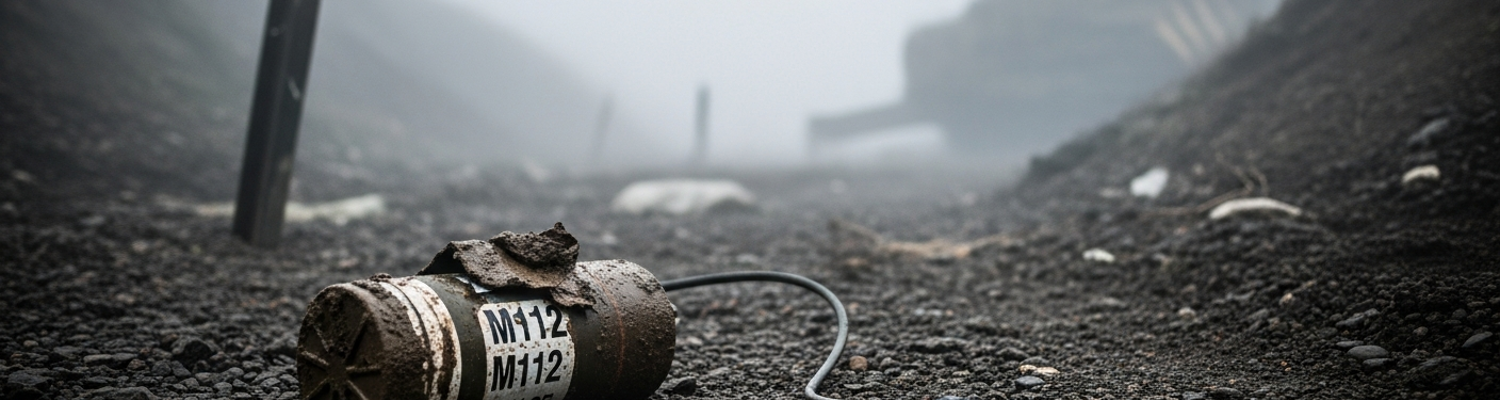
Execution of this high-risk mandate fell to a purpose-built team. Operational logs identify the force as Task Force Razor, a composite platoon from the 75th Ranger Regiment’s C Company, 1st Battalion, and a sapper detachment from the 37th Engineer Battalion. The composition was deliberate. The Rangers provided expertise in stealth and long-range patrolling, equipped with M4A1 carbines fitted with AN/PEQ-2 infrared illuminators. The combat engineers were key to overcoming the terrain. They carried a non-standard loadout focused on mobility: lightweight sectional ladders, extensive rope systems, and compact M112 C-4 demolition charges for obstacle reduction. Their insertion was a low-altitude helicopter drop 15 kilometers from their starting point at grid coordinate 42.25°N, 20.58°E, executed under the cover of a passing weather front.
The search for a flanking route began on foot in the eastern highlands overlooking the Drin. This region of limestone karst formations and steep ravines had been dismissed in planning assessments as impassable. The terrain was a vertical challenge. A close review of the sapper team’s after-action reports details the physical toll of the ascent. The men were forced to abandon standard movement techniques, relying on rock-climbing equipment and physical endurance to traverse sheer faces. Progress was measured in feet per hour. The Ranger element provided security, establishing micro-perimeters at every halt, their M4A1s and AN/PEQ-2 designators scanning opposing ridgelines for observation posts. The sapper detachment from the 37th Engineer Battalion made the breakthrough. Using sectional ladders and rope-and-pulley systems, they navigated a series of interconnected, dry wadis and animal trails. This network, invisible to aerial and satellite reconnaissance, formed a continuous, covered path snaking down toward the valley floor, bypassing the main enemy defense belts. The route received the designation The Serpent's Spine in operational logs.
The path was suitable only for single-file movement, not organized troop formations.
From a hastily established observation post concealed within a rock cluster high on the valley’s eastern wall, codenamed Vulture's Nest, Task Force Razor began assessing enemy defenses. The view was unobstructed. Using M25 stabilized binoculars and AN/GVS-5 laser rangefinders, the teams spent 36 hours sketching the layout of Yugoslavian positions onto acetate map overlays. The intelligence gathered was alarmingly detailed. They identified the precise locations of three dug-in 82mm M69A mortar pits, their aiming stakes visible. Further analysis confirmed at least four Zastava M84 machine gun nests, likely manned by elements of the 549th Motorized Brigade, their interlocking fields of fire creating a formidable defensive web. Critically, every enemy position was oriented west, anticipating a conventional assault up the valley. Their rear and eastern flank, protected by what they assumed was impassable terrain, were almost completely exposed. The task force logged enemy patterns: guard rotations, resupply vehicle movements, and locations of field latrines.
The discovery of The Serpent's Spine and the enemy's vulnerability presented a tactical opportunity outside of established doctrine. Standard operating procedure for a reconnaissance element was to observe and report. With their AN/PSC-5 Spitfire terminal destroyed, reporting was impossible. The platoon commander, a Ranger Captain, faced a decision that would normally reside at the battalion level. He was isolated, holding a key to unlock the valley, but with no way to tell his superiors. The mission parameters were improvised. The focus shifted from pure reconnaissance to route preparation for a larger force. Sappers, whose M112 C-4 charges were intended for loud obstacle removal, were re-tasked to silently widen narrow passages along The Serpent's Spine using only entrenching tools and rock bars. It was a slow, back-breaking, and dangerously quiet process. Rangers began rehearsing silent takedowns of the sentries they had observed at the route’s exit point. Climbing ropes, originally for the ascent, were re-laid as fixed handrails to guide a larger follow-on force through the most treacherous sections in darkness.
The infiltration commenced as dense weather patterns enveloped the area. As Task Force Razor descended into The Serpent's Spine, a ground fog rolled up from the Drin River, filling the ravines. Operational logs show visibility was reduced to less than 15 feet. This rendered their night vision equipment nearly useless. The standard-issue AN/PVS-7B goggles were overwhelmed by the moisture in the air. The infrared energy from their AN/PEQ-2 illuminators refracted off the water droplets, creating a blinding, milky-white wall in their optics. Movement became a matter of placing a hand on the shoulder of the man in front. Then the Yugoslavian mortar pits began a campaign of harassing fire. They were not firing for effect, but for illumination. Parachute flares from 82mm mortars ignited high above, casting a brilliant magnesium light that burned at over 850,000 candlepower. For the soldiers in the ravine, this created a disorienting cycle of blindness. The intense light overloaded the automatic cutoff feature of their NVGs, plunging them into total darkness. As their natural vision struggled to adjust, the flare would burn out, and they would be plunged back into the black abyss, their devices slowly resetting. This strobe effect silhouetted the men against the rock walls for any enemy observer.
The route narrowed into a tight, rock-strewn defile no more than ten feet wide. The lead sapper stopped. His fiberglass probe had detected the pressure plate of an anti-personnel mine. After-action reports indicate the presence of multiple Yugoslavian PMA-2 mines, a low-metal content blast mine notoriously difficult to detect. With the fog limiting visibility and the threat of illumination flares present, an explosive breach was out of the question. The task had to be performed by hand, in silence. The lead sapper, attached by a safety line, began clearing a path. Lying on his stomach, he used the tip of his probe to feel for the edges of each device, his sense of touch replacing his vision. Every inch had to be cleared before the man behind him could move forward. A single mistake would not only kill the sapper but would trigger a chain reaction of sympathetic detonations. Communication was a series of pre-arranged tugs on the rope. Each discovered mine was marked not with a light, but with a small pile of stones.
Documenting this ordeal were two embedded photographers from the 55th Signal Company (Combat Camera). Their mission was to record operations for after-action review and historical preservation. A review of their photographic contact sheets reveals the challenges they faced. Equipped with early digital cameras and low-light lenses, they had to capture imagery without compromising light discipline. A flash was forbidden. They relied on the brief light of enemy flares and the faint green backsplash from the soldiers' NVGs to illuminate their subjects. The resulting images were grainy and unsparing. They show the concentration on the face of the sapper as he probes the soil, sweat beading on his brow. Other frames capture the tense posture of the Rangers providing security, their faces obscured by helmets, their weapons pointed into the white nothingness. These photographers were combat-trained soldiers, moving within the tactical formation. Their work provided a raw, unfiltered perspective on the human factors of the operation that technical reports could never convey.
The next obstacle was a deliberate denial of terrain measure. A deep, concrete-lined railway culvert that passed under The Serpent's Spine had been partially destroyed. The blast had collapsed the roof, choking the defile with twisted steel rebar and massive chunks of reinforced concrete. Standard-issue M112 C-4 blocks were insufficient. A simple breaching charge would be too loud and would likely not clear the tangled steel. The sappers from the 37th Engineer Battalion had to create a series of precise, surgical cuts. This required them to improvise linear-shaped charges. Working in the fog-shrouded darkness, they carefully unwrapped their C-4 blocks. The malleable explosive was kneaded and reshaped by hand into long, thin strips. Archival evidence from sapper field manuals shows this was a doctrinal last resort, as modifying the explosive could lead to unpredictable performance. The sappers pressed these improvised strips of C-4 into the V-shaped channels of metal picket stakes, creating crude cutting charges designed to focus the blast energy along a single line. Several were needed, each placed with precision against key structural rebars.
With the shaped charges in place, a second threat had to be addressed. The area around the collapsed culvert was another minefield. Analysis of the sapper team's after-action reports indicates a change in enemy tactics. Instead of the PMA-2 mines, this was a defensive belt of larger anti-tank mines, likely laid to prevent any attempt at clearing the culvert with engineering vehicles. While less sensitive to foot pressure, their blast radius was immense. Explosive breaching was the only option, but the standard M58 Mine Clearing Line Charge (MICLIC) is a vehicle-mounted system they did not have. The solution was a field-expedient Bangalore torpedo. The sappers assembled their improvised line charge using sections of a lightweight reconnaissance ladder as the frame. They packed their remaining C-4 along its length, lacing it with detonating cord. Two Rangers then low-crawled forward, pushing the nearly 20-foot-long device ahead of them until it lay across the densest part of the minefield. The friction of the ladder against a concealed mine’s pressure plate could set everything off.
The detonation of the Bangalore was timed to coincide with the smaller cracks of the shaped charges on the rebar. The single, rolling boom was a calculated risk, designed to sound like one large, inexplicable event rather than a series of military explosions. For 30 seconds after the blast, a shower of dirt, rock, and metal fragments rained down. Then, silence. A narrow, 100-meter-long lane through the minefield was clear. Simultaneously, the precisely cut steel rebars in the culvert gave way, causing a cascade of concrete that opened a tight, crawlable passage through the obstruction.
The cleared path was just enough for the light infantry of Task Force Razor, and the larger battalion intended to follow, to pass through in single file. The maneuver enabled a rapid tactical flank against the dug-in Yugoslavian forces. Post-operation assessments confirm the enemy positions were entirely oriented towards the main Drin valley, their heavy machine guns and mortar pits facing west. They had no flank security to the east, believing the terrain was their protection. The appearance of an assault force materializing from an impassable ravine caused a failure in command and control. The flanking force did not engage in a prolonged firefight; they systematically dismantled the enemy’s rear area, neutralizing command posts, mortar crews, and logistics nodes before the frontline troops knew they were under attack. The shock of being enveloped from a direction deemed impossible led to a rapid collapse of the defensive line along that sector.
The narrow lane cleared by the sappers was the channel for the assault. A review of the operation’s tactical logs shows the Rangers of Task Force Razor moved through the breach first. Their passage through the rubble of the culvert and the mine-cleared path marked the start of the flanking maneuver. They did not wait. Emerging from the eastern ravine, they fanned out into pre-assigned assault teams, using the acetate map overlays from Vulture's Nest to navigate. Their movements were swift. The primary targets were not the frontline fighting positions, but the enemy’s central nervous system. The first Ranger element moved with practiced silence, advancing on the coordinates of the primary command post. A second element peeled off towards the identified 82mm M69A mortar pits. This was a decapitation strike, executed in near-total darkness, intended to sow chaos and cripple the enemy’s ability to coordinate a response. The attack unfolded in minutes.
The engagement with the numerically superior position was a dismantlement. Archival analysis of enemy communications intercepts from the period shows a force descending into chaos. The Yugoslavian positions, manned by the 549th Motorized Brigade, were oriented entirely to the west. Their strength was in their interlocking fields of fire from Zastava M84 machine guns, weapons with an effective range up to 1,000 meters, all pointed away from the actual attack. The shock of an organized force appearing from terrain believed to be impassable was devastating. Reports from the lead Ranger elements describe enemy soldiers in rear-area positions abandoning their posts, confused by the sudden eruption of suppressed small-arms fire from within their own perimeter. The defending commander was cut off from his frontline troops, his communications severed before he could issue an order. The mortar crews were neutralized before they could fire an illumination round. This created a ripple effect of paralysis; the frontline machine gunners, hearing the muffled sounds of the attack behind them, were left isolated and without orders, their tactical advantage negated.
Success depended entirely on the path cleared by the combat engineers. Post-operation assessments are unequivocal: without the narrow lane forged by the improvised Bangalore torpedo and the demolition of the concrete culvert, the flanking maneuver would have been impossible. That cleared path represented the culmination of the sappers' core functions: enabling mobility and overcoming obstacles. The path was just wide enough for a single man to pass, which dictated the light-infantry nature of the assault and prevented any armored support. This limitation forced a reliance on speed and surprise over firepower. The cleared lane was a temporal window of opportunity created by hand, under pressure, allowing the main assault force to pour through before the Yugoslavian units could recognize the new axis of threat and reorient their defenses. The technical skill of the 37th Engineer Battalion in clearing that final, complex obstacle was the direct enabler of the tactical and psychological collapse of a superior and heavily dug-in enemy force.
The physical and psychological erosion of Task Force Razor accelerated after 96 continuous hours of operations. A review of after-action medical reports reveals the toll. The unit suffered from a cumulative lack of sleep, with most men averaging fewer than four hours per 24-hour period, a deficit known to degrade cognitive function and reaction time by as much as 25 percent. This was not simple tiredness. It was a descent into a state of exhaustion where the body fails in unpredictable ways. The constant tension of operating deep within hostile territory, combined with the physical exertion of navigating The Serpent's Spine, created a cascade of physiological stress responses. Soldiers reported muscle tremors that made fine motor tasks, like operating a radio or cleaning a rifle, difficult. Auditory and visual hallucinations became common; men would momentarily see figures in the periphery or hear voices in the wind, classic symptoms of sleep deprivation and hypervigilance. One Ranger, a seasoned NCO, had to be physically stopped by his team leader from firing on a rock formation he had mistaken for an enemy patrol. The incident was a stark indicator of how the line between reality and perception was blurring.
This physical decay was mirrored by a psychological breakdown. The constant threat, isolation, and weight of the mission began to fray unit cohesion. The normal banter that sustains small units evaporated, replaced by terse commands and long silences. A phenomenon known as combat fatigue was setting in. Its symptoms were evident across the task force: slower reaction times, indecision at critical moments, and a disconnection from the immediate surroundings. A review of the command log fragments that survived shows a marked increase in minor disciplinary issues. A soldier failing to maintain noise discipline. Another forgetting equipment during a halt. These were not acts of defiance but symptoms of minds pushed beyond their capacity to process information. The unit’s leadership found themselves shifting from tactical leaders to psychological support, constantly assessing their men for the thousand-yard stare that signaled a soldier was nearing his breaking point.
The human element nearly shattered at the final obstacle. After clearing the minefield and culvert, the task force had to ascend a steep, scree-covered slope to reach their assault position. Here, the accumulated fatigue and stress reached a climax. A young sapper, tasked with securing a climbing rope, froze halfway up the slope. He was not paralyzed by enemy fire, but by his own body's refusal to obey. Operational logs document that the soldier simply stopped moving, unable to go up or down, his hands locked onto the rope. The mission and the lives of 41 other men hung in the balance, stalled by the mental and physical exhaustion of one individual. It was a case of combat stress reaction. The platoon sergeant, moving with incredible risk, climbed up to the soldier. There was no shouting. He clipped the soldier’s harness to his own, and for the remainder of the climb, physically hauled the unresponsive man up the slope with him. This act, witnessed by the entire unit, became a focal point. It was a raw, desperate moment that encapsulated the pressure the force was under. The soldier had not failed due to a lack of courage, but because the sustained, high-tempo operation had pushed him past an observable breaking point.
The intelligence gathered by Task Force Razor flowed back to high command as a collection of unfiltered, primary-source data. A formal After-Action Review (AAR) began within hours of the unit’s exfiltration. The debriefing centered on two assets: the hand-drawn acetate map overlays from Vulture's Nest and the digital contact sheets from the 55th Signal Company’s photographers. The map overlays provided a visual record of the enemy’s flawed defensive posture, with every machine gun nest and mortar pit oriented away from The Serpent's Spine. The photographic evidence was more compelling. Analysts were not looking at diagrams, but grainy, low-light images of combat engineers packing C-4 into improvised shaped charges and Rangers preparing a Bangalore torpedo from a reconnaissance ladder. This was not doctrine; it was battlefield innovation born of necessity, captured on camera. The intelligence provided a granular account of how a supposedly impassable route was forced and how a complex obstacle was breached through ingenuity, providing a proof-of-concept for unconventional flanking maneuvers.
This was not a theoretical discussion.
This raw data formed the operational core of Cabinet Briefing 2/23/99. A review of the briefing’s archival annexes reveals the presentation relied heavily on the unfiltered combat camera footage. Instead of just describing the improvised demolition, the briefing showed senior leaders the exhausted, dirt-streaked faces of the sappers as they worked. The presentation directly contrasted satellite imagery of the impassable eastern highlands with the photographers' images of Task Force Razor moving through them. The effect was to shatter pre-existing operational assumptions about the Drin River valley sector. The success of the Sapper's Gambit provided hard evidence that the enemy's reliance on terrain for flank security was an exploitable vulnerability. The briefing argued that small, engineer-centric units could be used as a scalpel to bypass fortified positions, neutralizing command nodes and creating psychological collapse before a main assault began. It directly led to a reassessment of operational plans, shifting focus away from costly frontal assaults and toward exploiting similar terrain-based weaknesses across the theater.
For the men of Task Force Razor, the mission’s conclusion was not an end to the ordeal. Post-deployment medical screenings revealed the lasting psychological cost. The 96 hours of sustained, high-stress operations, marked by severe sleep deprivation, had induced symptoms of Combat Stress Reaction (CSR) across the unit. In the weeks following their return, soldiers reported persistent hypervigilance, an inability to sleep, and significant irritability. The sapper who had frozen on the final ascent became a clinical case study, diagnosed with acute CSR and requiring immediate intervention to prevent the onset of a chronic post-traumatic stress disorder. A review of unit medical records indicates that a significant percentage of the task force sought behavioral health support within six months of the operation. Many struggled to de-escalate from the level of alertness required to survive in The Serpent's Spine, reacting to everyday sounds as immediate threats. The final entry in the unit's medical annex, dated six months post-operation, noted that 30 percent of the task force remained on limited duty status due to behavioral health flags.