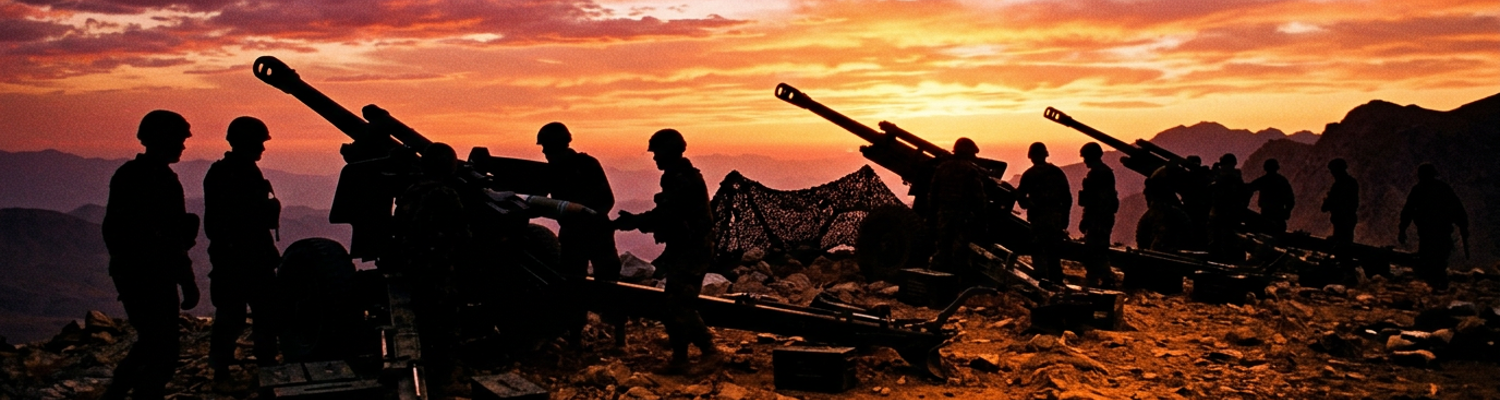

Artillery Shell Rationing on the Gustav Line
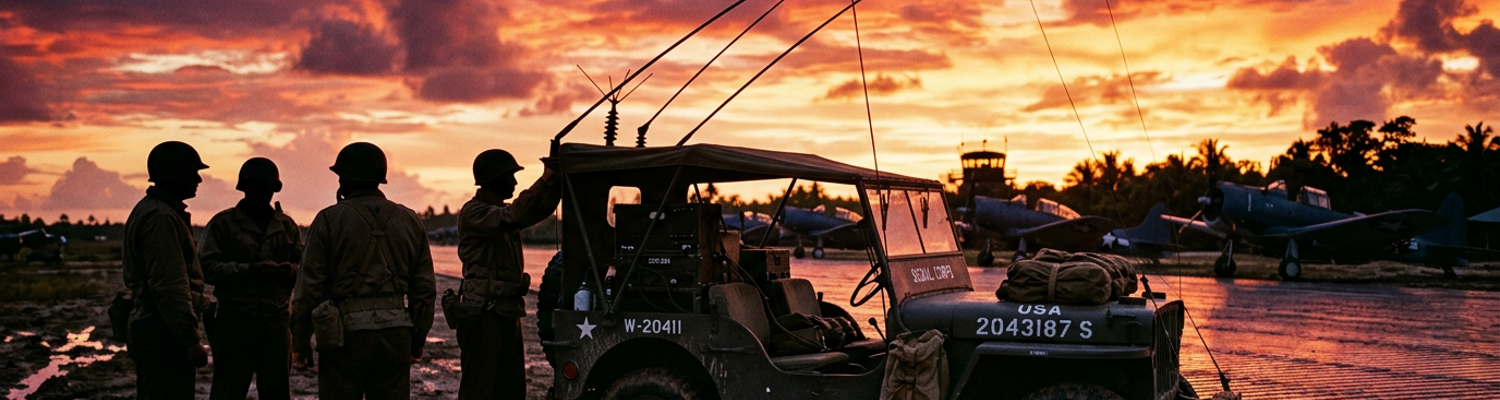
Copper field telephone wires snapped under incoming shell splinters near Cervaro, instantly isolating forward observers of the 151st Field Artillery Battalion from their higher headquarters. Radio operators twisted their dials across dead frequency channels, leaving frontline gun crews with no incoming target coordinates and no direct orders from Fifth Army command. Linemen crawled out through freezing rain to locate the breaks, but exploding artillery shells continually shredded the fresh wire as fast as crews could unspool it. Artillery officers across the sector suddenly had to manage their guns on their own initiative while grappling with a logistical stranglehold handed down from rear supply depots. Fifth Army instituted severe daily shell rationing along the Gustav Line in January 1944, capping 105mm howitzer batteries to strict quotas of twenty to twenty five rounds per tube. Truck convoys had failed to move adequate ammunition tonnage through the rain soaked mountain passes from Naples, leaving forward supply dumps dangerously low on artillery munitions across the entire front.
Ammunition shortages at these forward dumps forced staff planners to transform routine call for fire missions into an exhausting administrative obstacle course. Forward observation officers were required to formally compile and justify detailed firing dossiers under stringent expenditure oversight before receiving fire authorization. Spotters shivering in forward slit trenches had to write down exact target coordinates, map grid references, estimated enemy troop counts, and projected destruction values on paper clipboards before sending requests back through regimental telephone switchboards. Staff officers at division headquarters scrutinized these handwritten forms, routinely rejecting or slashing the requested round counts while frontline infantrymen waited in waterlogged foxholes for defensive fires that never arrived. Exhausted lieutenants frequently watched their target coordinates become completely obsolete while telephone operators argued with rear echelon logisticians over every single high explosive round. Gunners loaded their howitzers only after receiving verified approval stamps, wasting critical minutes while targets shifted across the valley floor.
Targets escaped destruction along the valley floor because restricted ammunition allocations forced batteries to withhold suppressive fire against fleeting German infantry movements and mortar positions. Observers peered through battery commander periscopes, tracking German machine gun squads that crossed open fields in broad daylight without facing a single incoming shell. Enemy mortar crews took advantage of this forced silence by setting up their steel baseplates along exposed ridgelines, firing several rapid salvos into Allied trenches, and packing their equipment away before anyone approved a retaliatory strike. Batteries of the 151st sat idle on their recoil spades, forbidden from engaging these brief targets because higher regulations reserved their twenty round allowances exclusively for repelling full scale counterattacks. Frustrated artillerymen slammed their breech blocks shut on empty chambers as they listened to German machine guns chewing through friendly infantry platoons only hundreds of yards ahead. Infantry companies pinned down by unmolested German heavy weapons suffered rising casualty lists while American howitzers behind them remained cold and quiet.
Artillery observers of the German Fourteenth Panzer Corps noticed these quiet American gun lines and immediately ordered their heavy mortars forward onto exposed ridges. German combat engineers took advantage of the missing American fire by fortifying stone houses and pouring concrete bunkers right along the base of Monte Cassino. Battery commanders in the 151st Field Artillery Battalion realized that strict obedience to the rationing quota was handing complete tactical dominance to the enemy. Forward lieutenants cut off by severed wire networks decided to bypass the paperwork entirely, unlocking their shell caches without permission and preparing their howitzers for immediate, unauthorized fire missions. Gun crews grabbed brass casing rounds from the ammunition pits, aimed their tubes directly at active German muzzle flashes, and prepared to fire on their own authority.
Observation Challenges on Monte Castellone
Artillery spotters needed clear observation perches to guide these unauthorized shells onto active German positions, compelling forward observers of the 34th Infantry Division to occupy exposed forward posts on the freezing karst limestone of Monte Castellone and Hill 593. Solid rock made standard entrenchment impossible, as entrenching tools bounced off the flinty ground and left men unable to dig foxholes deeper than a few inches. Spotters piled loose boulders into low sangars, creating primitive parapets that offered little real cover against high explosive ordnance. German artillery spotters entrenched across the ravine on Monte Cassino and the surrounding crests spotted these crude rock rings immediately and smothered the limestone ridge with continuous counter battery fire. Detonating shells shattered the exposed karst surface, blasting thousands of flying limestone shards that tore through uniforms alongside jagged metal casing fragments. Concussions shook the ridge without pause, leaving forward observers pinned flat against frozen stone while they struggled to locate German mortar positions firing from the ravines below.
SCR-284 radio sets carried to the crest in heavy canvas packs offered no reliable communication across the shell swept mountain slopes to report these mortar positions. Freezing rain and sleet had waterlogged the canvas covers during the climb, allowing moisture to seep into internal tuning coils and high frequency circuitry. Observers relied on waterlogged SCR-284 radio sets whose dry cell batteries suffered rapid operational degradation in sub zero alpine conditions, losing chemical charge as temperatures plummeted along the windblown cliffs. Battery voltage dropped below functional limits within ten to fifteen minutes of operation, transforming vital voice transmissions into faint bursts of unusable static. Radio operators unbuckled the metal sets, blew warm air into the crystal sockets, and shoved cold battery blocks inside their field jackets against their bare chests to revive them with body heat. These desperate warming efforts produced only brief, sputtering signals before the alpine chill killed the chemical cells completely, cutting the forward observers off from the waiting howitzer batteries.
Copper telephone wire remained the only working communication line between the forward ridge and the gun pits, but the rugged terrain destroyed the wires as fast as crews laid them. Spools of assault wire dragged over razor sharp limestone ledges suffered severe fraying as wind and foot traffic dragged the insulation across sharp rock edges. German mortar barrages and relentless artillery salvos continually sheared the taut strands, silencing fire direction circuits without warning. Severed field telephone wire lines across jagged rocky outcrops routinely forced artillery spotters to expose themselves to hostile fire to maintain battery communications. Spotters and forward linemen abandoned the meager shelter of their rock sangars, crawling out across open limestone shelves in plain view of enemy machine gun nests to trace the broken cable by hand. Men traced the wire through icy mud and drifted snow with numb hands, knowing that every minute spent exposed on the skyline invited direct sniper fire and high explosive airbursts.
Linemen spliced the severed copper cores together with dull pocketknives, wrapping the bare junctions with sticky black friction tape while enemy shells showered them with rock splinters. Restored connections crackled to life over the sound powered handsets, allowing forward observers to shout quick azimuths and range corrections back to the 151st Field Artillery Battalion before the next impact. Artillery officers scribbled the fresh coordinates on greasy plotting boards and relayed the data directly to gun captains standing ready at open howitzer breeches. Gun crews loaded high explosive shells and fired in rapid succession along the hidden valley draws, hurling rounds directly at the flashing German mortar pits identified by the spotters. Explosions detonated along the German ridgelines as the American shells struck home, initiating an escalating duel of independent artillery fire that Fifth Army staff officers could no longer monitor or restrict.
M2A1 Howitzer Mechanical Failures in Karst Terrain
M2A1 howitzer barrels recoiled violently against their carriage mounts as crews accelerated their rate of fire to sustain this independent artillery duel across the valley. Support batteries of the 151st Field Artillery Battalion battled fouled hydraulic recoil cylinders caused by pervasive, abrasive limestone rock dust thrown up by their own muzzle blasts. Each high angle detonation sent powerful shockwaves across the dry karst terrain, pulverizing the surrounding stone into fine chalky powder that hung in thick clouds over the gun pits. This gritty mineral dust settled instantly over the oiled steel surfaces of the howitzers, clinging to the exposed piston rods as they cycled backward. The abrasive particles worked past worn packings and entered the internal oil reservoirs, scoring the cylinder walls and preventing the hydraulic fluid from absorbing the shock of recoil. Barrels jammed out of battery or crept forward sluggishly, forcing gunners to heave the hot steel tubes back into firing position with wooden pry bars while incoming counter battery fire bracketed their positions.
Loaders fought through the incoming shrapnel to shove fresh rounds into open howitzer breeches, but the loading mechanisms resisted every stroke. Crews endured persistent jamming of horizontal sliding wedge breeches exacerbated by mismatched lots of reclaimed propellant hauled up from rear supply dumps. These salvaged ammunition stocks combined different powder batches that left heavy carbon deposits and sticky chemical tar inside the chamber walls after firing. The tacky residue mixed with airborne limestone grit, forming a thick paste that coated the sliding guide tracks and wedge faces. Breech blocks locked halfway across the openings, forcing assistant gunners to strike the operating handles with wooden mallet heads to seal the chambers before pulling the lanyard. Heavy blows chipped the steel levers and warped the operating pins, slowing battery fire rates to a fraction of their normal speed while target coordinates continued to change.
Propellant charges hastily assembled from these salvaged lots burned unevenly inside the fouled chambers, compounding the struggle to strike those shifting targets. Irregular propellant burn rates produced erratic muzzle velocities, complicating target registration in high angle mountain trajectories over the jagged terrain. Gun crews elevated their howitzers past forty five degrees to loft shells over towering limestone ridges into hidden German ravines, a steep firing angle where even tiny variations in internal chamber pressure created massive deviations at the point of impact. Identical elevation settings and charge increments sent consecutive high explosive projectiles plunging wildly off course, with some rounds sailing thousands of yards beyond the target while others fell short onto friendly positions. Forward observers watching from the cliffs of Monte Castellone could not establish a reliable artillery bracket, as each correction shouted over the telephone produced a completely unpredictable landing pattern. Battery commanders could neither predict nor correct the flight paths of their shells as long as inconsistent powder lots governed the velocity of their weapons.
Gunners halted their fire missions to break open stacked ammunition crates and inspect the individual powder bags by flashlight. Artillerymen pulled cloth propellant increments out of the brass shell casings, sorting the charges across damp shelter halves to match manufacturer codes and lot stamps by hand. Crews discarded swollen powder packets discolored by moisture and scraped burnt carbon flakes from the casing mouths with pocketknives before reassembling matched sets of powder bags. This tedious sorting process temporarily silenced American guns along the sector, leaving forward infantry units without defensive coverage as German mortars resumed heavy shelling across the valley. Battery chiefs loaded the re sorted rounds back into their cleaned howitzers one piece at a time, preparing to test their improvised charge combinations against active enemy machine gun nests along the lower slopes.
Target Escalation Along the Monastery Ridge
Gunners yanked their firing lanyards, sending the reassembled high explosive shells arcing toward the lower rocky draws where German machine guns had pinned down American infantrymen. The newly calibrated impacts churned up dirt around the forward German machine gun nests, but concealed German mortar teams continued to drop heavy, accurate barrages onto American staging trenches from hidden defilade positions. Spotters struggling to suppress concealed German mortar teams pinpointed fortified masonry outbuildings below the Benedictine abbey as suspected observation posts. Binocular lenses revealed reinforced stone walls, sandbagged cellar openings, and narrow slit windows in these outbuildings that commanded complete visual control of the approaches up the slope. Forward observers marked these stone structures on their gridded maps as priority targets, concluding that German fire direction teams inside were feeding precise coordinates to the mortar pits tucked safely behind the ridgeline. Spotters dialed their field telephones to request quick suppressive barrages against the stone buildings, only to run headfirst into strict rationing rules that barred individual howitzer batteries from firing unapproved rounds.
Howitzer battery commanders confronted bureaucratic expenditure rules that blocked them from firing quick, localized rounds at the active stone outbuildings. Strict ammunition rationing protocols incentivized battery commanders to bundle small harassing fire missions into high echelon requests for heavy interdiction strikes. Artillery officers merged individual frontline spotter reports into large, consolidated intelligence packets that characterized the masonry outbuildings as major enemy strongpoints. Battery captains argued on their target submission sheets that small caliber howitzer shells could not penetrate thick masonry, justifying requests for massed concentrations from heavy corps artillery groups. Field clerks compiled these paperwork bundles into priority fire dossiers, attaching urgent danger tags to show that German observation from the masonry clusters threatened the entire sector. Corps headquarters staff officers accepted the bundled dossiers as vital defensive targets and approved extensive multi battery fire plans, scheduling dozens of heavy guns to bombard the cluster of structures just beneath the crest.
Maps circulated through rear command posts rapidly blurred the physical separation between the outbuildings on the slope and the historic walls standing directly above them. The rigid fire coordination chain progressively elevated tactical target designations from localized outbuildings to the broader abbey complex itself. Staff officers who reviewed the bundled target dossiers assumed that German mortar spotters could only maintain visual control of the valley by operating directly from the monastery windows and rooftops. Intelligence summaries generated at division level began listing the entire Benedictine abbey as the primary source of enemy artillery observation rather than the small stone sheds at its base. Division planners reclassified the entire mountain crest as a single fortified defensive position, concluding that neutralizing the lower masonry outbuildings required smothering the high ground above with heavy ordnance. Corps commanders endorsed these expanded target assessments, formally submitting the monastery structure into the Allied heavy bombardment schedule.
Artillerymen at fire direction centers filled their plotting boards with new grid coordinates centered on the high abbey walls. Operations officers transferred these revised target grids to battery plotting sheets, replacing the small outbuilding coordinates with the broad footprint of the ancient monastery. Gun crews hoisted heavy high explosive projectiles onto loading trays and adjusted their deflection angles upward, aligning their howitzer tubes toward the very summit of Monte Cassino. Supply trucks navigated frozen mountain passes to haul heavy caliber shells directly to the forward ammunition pits to support the expanded interdiction mission. Battery commanders stood behind their firing lines with stopwatches, waiting for the corps fire direction net to broadcast the final execution order that would unleash massed artillery fire against the mountaintop. Linemen clamped fresh copper telephone wire into battery switchboards to ensure that the initial firing salvos would trigger simultaneously across every American and Allied gun pit along the Gustav Line.
Bombardment of Abbey Monte Cassino
Switchboard operators relayed fire commands across the newly secured telephone lines, directing howitzer crews to prepare their initial registration salvos. Escalated fire requests and observation reports from forward infantry units and artillery spotters had steadily convinced Allied leadership that German forces were using the mountaintop sanctuary, culminating in the February 15, 1944 Allied air and artillery strike against the abbey. Flight leaders from the United States Army Air Forces guided waves of Boeing B-17 Flying Fortresses, North American B-25 Mitchells, and Martin B-26 Marauders into the sky above the Liri Valley to initiate the combined arms assault. Bomb bay doors swung open as hundreds of heavy and medium bombers droned over the summit, blanketing the historic buildings in timed patterns while corps artillery pieces fired continuous salvos to box in the target area. High explosive detonations tore through the open courtyards and multi story cloisters, sending heavy shockwaves down the mountain slopes that rattled the panoramic telescopes and gun mounts of the 151st Field Artillery Battalion positioned in the valleys below.
Bombers and heavy artillery dropped over one thousand tons of high explosives directly onto the monastery complex, shattering the historic structure into massive rubble mounds while American gun crews tracked the impacts from their firing pits. Exploding demolition bombs pulverized the thick stone facades, the ancient library, and the high defensive bell tower into jagged fragments of karst rock and white chalk dust. Shockwaves sheared through the perimeter terraces, triggering rockslides that tumbled down the mountainside and buried the lower communication trenches previously used by American assault squads. Spotters on Monte Castellone adjusted their optical instruments through the expanding dust clouds, identifying surviving structural fragments to call in additional high angle artillery concentrations. Gun captains in the 151st Field Artillery Battalion ordered continuous fire against the mountain slopes, dropping high explosive shells into the perimeter ravines to cut off any enemy movement toward the burning summit.
Shrapnel and pulverized limestone blanketed the perimeter ravines, revealing that the bombardment completely collapsed the upper multi story masonry walls while leaving thick subterranean cellars and vaults largely intact. Thick arched foundations built centuries earlier resisted the falling wreckage, creating a vast network of reinforced underground shelters beneath mounds of shattered rock. German paratroopers of the 1st Parachute Division rushed up the reverse slopes immediately after the bombing ceased, crawling through the gaps in the debris to occupy the intact subterranean spaces. Parachute infantrymen dragged MG 42 machine guns, heavy mortar baseplates, and cases of belted ammunition into the dark basements, converting the protected cellars into fortified command posts and ammunition depots. German combat engineers knocked firing slits through the lower stone foundations, establishing interlocking fields of fire across the mountain crest that American artillery spotters could neither penetrate nor suppress.
Observers of the 34th Infantry Division peered through their optical instruments from Monte Castellone, discovering that the massive mounds of rubble provided fortified firing parapets for the newly arrived German paratroopers. Concealed German machine guns and snipers immediately pinned down Allied infantry squads attempting to climb the exposed limestone terraces below the ruins. Battery officers in the 151st Field Artillery Battalion received urgent calls for defensive concentrations, but high explosive 105mm howitzer shells merely chipped the thick stone mounds without penetrating the subterranean German positions beneath. Gun crews exhausted their daily shell allocations against the solid heaps of broken masonry, leaving Allied assault battalions pinned without effective artillery support along the lower ridges. Allied infantry commanders halted the uphill advance and ordered their surviving rifle companies to pull back into the rocky draws under cover of white phosphorus smoke shells.
Fallschirmjäger Defense in Monastery Rubble
Soldiers of the German 1st Fallschirmjäger Division watched the retreating Allied companies vanish into the hanging chemical smoke and rapidly occupied the pulverized basalt and brick rubble to construct fortified machine gun nests and sniper perches. Combat engineers hauled heavy MG 42 machine guns through mounds of shattered masonry, wedging steel bipods into cracked floor tiles and fractured window frames to command the open western approaches. Pioneer squads dragged timber balks, iron reinforcement rods, and thick granite blocks across collapsed archways, building reinforced overhead shelters that shielded gunners from incoming shrapnel. German riflemen scrambled into jagged heaps of pulverized brickwork with scoped Mauser rifles, finding stable firing positions that overlooked every ravine and draw where Allied troops sought cover. The destruction eliminated the previously respected demilitarized perimeter, transforming the abbey ruins into an impregnable defensive strongpoint.
Paratroopers of the 1st Fallschirmjäger Division converted the deep cellars and crypts beneath the ruined monastery into an interconnected subterranean fortress because the obliterated perimeter cleared away all previous operational restrictions. Squad leaders dug communication corridors through the fallen debris, opening paths between intact vaulted rooms so reinforcements could move through the mountain summit under complete cover. German mortar crews lowered heavy 81mm tubes into deep bomb craters, utilizing the steep mounds of shattered stone as natural blast walls that concealed their muzzle flashes from American forward observers. Machine gun teams established interlocking fields of fire that blanketed every goat path and rocky crest leading toward the peak, ensuring that any forward movement across Snakehead Ridge and Hill 593 would face immediate crossfire. Combat messengers hauled wooden crates of belted ammunition and water canisters through the dark basement tunnels, filling underground supply rooms to prepare for prolonged siege warfare.
Spotters of the 1st Fallschirmjäger Division climbed into the highest remaining wall fragments with scissors binoculars to direct coordinated mortar barrages as Allied assault forces formed up along the rocky slopes. Riflemen of the 4th Indian Division and supporting units advanced through this defensive shellfire to storm the monastery slopes, but subsequent Allied assaults ground to a costly halt against the rubble fortress, illustrating the strategic crisis provoked by initial tactical fire escalation. Concealed German machine gunners held their fire until attacking platoons reached the wire entanglements strewn across the cratered terraces before opening up with high speed bursts. Allied infantrymen took cover behind jagged limestone boulders, unable to climb over the twenty foot piles of broken masonry under persistent flanking fire from paratrooper snipers. Wounded soldiers filled the narrow draws as company commanders pulled their pinned platoons back toward the lower ridge lines under renewed barrages of enemy mortar shells.
Howitzers of the 151st Field Artillery Battalion fired continuous protective barrages into the rocky ravines to shield the retreating riflemen from pursuing German counterattacks. Battery commanders ordered their gun crews to pound the monastery ruins with maximum high explosive charges, yet the heavy shells merely rearranged the surface debris without penetrating the reinforced subterranean vaults beneath. Crushed basalt and masonry fragments absorbed the explosive energy of each American detonation, creating even deeper craters and steeper stone barricades that favored the German defenders. Allied medium tanks attempting to clear the winding access roads threw their steel tracks against massive limestone blocks or slid off narrow shoulders into steep gorges. Forward observers on Monte Castellone packed away their broken optical instruments and signaled rear headquarters that the shattered abbey now stood as an impenetrable barrier blocking the entire Allied advance toward Rome.