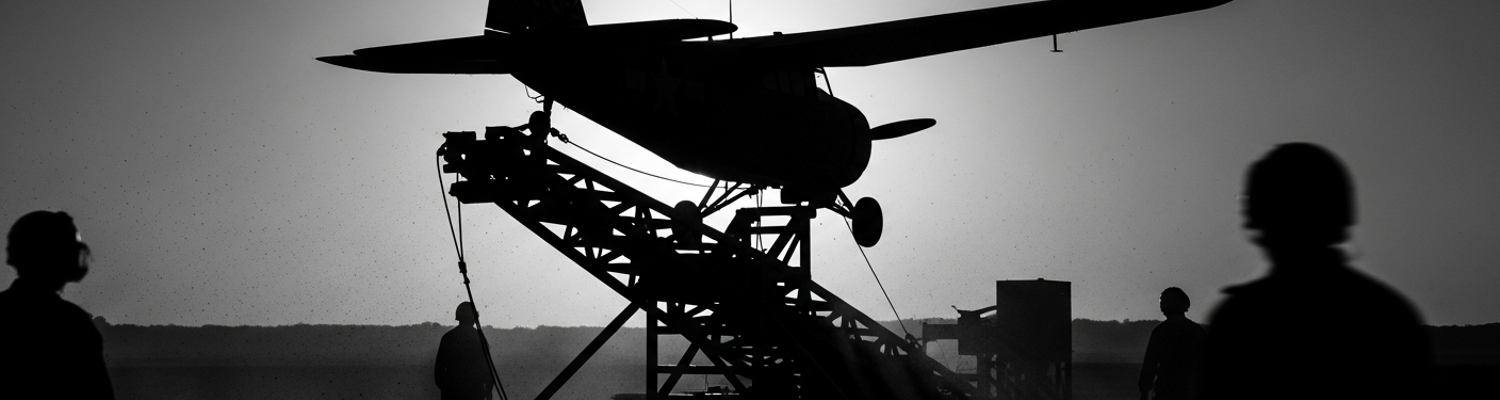

Early Radioplane Development Initiatives
Operational logs show that long before the first production model, the concept of unmanned aerial reconnaissance was a subject of pointed discussion within military circles. The U.S. Navy explored pilotless aircraft as early as 1936, years before reliable remote guidance was mature. These pre-war dialogues centered on the potential of a small, inexpensive aircraft to penetrate contested airspace without risking a pilot. Planners envisioned such machines for spotting naval gunfire or conducting photographic reconnaissance over heavily defended targets. The technology of the era, however, consistently failed to meet military requirements. Crude radio-control systems adapted from the hobbyist market and unreliable small-displacement engines were the primary obstacles. Early demonstrations, like those by Reginald Denny with his RP-1 prototype in 1935, often ended in crashes from signal loss or engine failure, reinforcing skepticism among senior officers. The concept was sound. The hardware was not. It was the promise of a more robust target drone, not a spy plane, that would finally secure the necessary funding.
The entry of the OQ-2 Radioplane into the U.S. Army's inventory in 1941 marked the first mass-produced unmanned aerial vehicle in American history. An initial 1940 order for 53 units of the earlier RP-4 model was followed by a much larger contract for the refined RP-5 design, officially designated the OQ-2. Developed by the Radioplane Company, a firm founded by actor and aviation enthusiast Reginald Denny, the OQ-2 was a simple machine built for a single purpose. Its airframe was a high-wing monoplane of wood with a welded-steel-tube fuselage. Power came from a Righter O-15-1 two-cylinder, two-stroke engine producing a meager six to seven horsepower. This tiny power plant, designed by Walter Righter, turned a pair of contra-rotating propellers to counteract torque. The aircraft had a wingspan just over 12 feet and weighed around 105 pounds. It was launched from a 37.7-foot catapult and guided by a ground operator using a Bendix radio control system reliant entirely on line-of-sight. Its operational ceiling was 8,000 feet with an endurance of about one hour, capable of speeds up to 85 miles per hour. Over 15,000 units would be manufactured between 1941 and 1945. The U.S. Navy procured its own identical version under the TDD-1 designation.
The primary, and intended, purpose of the OQ-2 was to be shot down. Anti-aircraft gunnery training in the pre-war years had relied on towed target sleeves. These were slow, predictable, and offered little realistic simulation of an actual enemy attack. The Radioplane offered a small, fast, and erratically moving target that forced gun crews to contend with a far more challenging problem. An operational training drill involved a dedicated drone crew, often working in primitive, windswept conditions. They would uncrate and assemble the drone, fuel its small tank, and mount it on the catapult launcher. On command, the operator, hunched over the control box, would guide the drone into the sky as live ammunition from anti-aircraft batteries filled the air around it. The goal for the gunners was a kill. The goal for the drone operator was to fly a path that was both realistic for training but evasive enough to potentially save the aircraft for another day. A recovery parachute was included, but it was often a moot point. Watching a drone explode after a direct hit was a satisfying and effective training outcome. The ground crews were then tasked with recovering the wreckage, if possible, and salvaging any usable parts for the next flight, creating a relentless cycle of assembly, flight, destruction, and repair.
Pioneering Drone Unit Operations
The initial deployment of Radioplane OQ-2 drones was not a large-scale, centrally managed rollout. It was a piecemeal distribution to small, experimental units tasked with inventing doctrine on the fly. Archival records point to the first Army contracts in 1940 and 1941 sending trickles of the RP-4 and the newly designated OQ-2 models to anti-aircraft artillery (AAA) training centers across the United States. At locations like Fort Miles in Delaware, crews from the Civilian Air Patrol, composed of volunteers with prior aviation or mechanical experience, were initially responsible for the assembly, launch, and recovery of these new assets. The military later formed dedicated detachments, such as the 6th Tow Target Squadron at Biggs Army Airfield in Texas and specialized groups at Liberty Field, Georgia, to formally integrate the drones into training regimens. These early units, like the Drone Section of the USA Surveillance Unit in Europe, operated with considerable autonomy. A unit often comprised just a handful of enlisted men and a junior officer. Their entire world was the drone package: a dozen aircraft, a catapult launcher, and a ground control station, all considered a single piece of equipment.
Operating these early drones was a visceral, hands-on affair defined by mechanical unreliability. The ground crew’s day began with uncrating and assembling the wooden airframe, a process of attaching the 12-foot wingspan to the simple fuselage. They would then fuel the Righter O-15-1 two-cylinder engine with its 1.2-gallon gasoline tank, a mixture sufficient for about an hour of flight. The engine itself was a temperamental machine, prone to flooding and often requiring frantic needle-valve adjustments to achieve maximum RPMs just before launch, as it had no in-flight throttle control. The operator, hunched over the Bendix radio control box, used a simple joystick. This system was not proportional; it could only send one command, up, down, left, or right, at a time. An early version even used a rotary telephone dial to input commands. Launching the 105-pound drone was a moment of high tension. The drone was flung into the air from a 37.7-foot catapult, a violent start where the lack of roll control and the engine’s torque made the aircraft highly unstable. Strong headwinds were essential to prevent the drone from immediately crashing just feet from the launch rail.
Once airborne, the drone became the central actor in a simulated battle space designed to be chaotic for the gunnery crews below. These exercises in contested airspace were the entire point. The drone operator, often called a beeper pilot, was tasked with flying patterns that mimicked enemy attack runs. This meant executing dives, climbs, and sharp turns to present a challenging, unpredictable target. Flying at a top speed around 90 mph, the small OQ-2 at a range of 200 yards appeared to gunners like a full-sized fighter plane at 500 yards, providing a realistic training perspective. The operator had to constantly fight the machine’s limitations while trying to evade the live anti-aircraft fire. The fifth function on the control box, a single button, was for parachute deployment. This could be triggered by the operator or, in some cases, automatically by a direct hit on the radio receiver, allowing for potential recovery. Often, however, the exercise ended with the drone’s complete destruction, a successful outcome for the AAA trainees whose skills were being sharpened for the realities of air defense.
Miniaturized Radio Component Procurement
A review of operational logs from the earliest drone detachments reveals the most significant barrier to effective operations was the fundamental fragility of the drone’s own guidance system. The Bendix radio control system, while functional in concept, was an assembly of non-militarized components ill-suited for the rigors of field deployment. Its electronic heart consisted of a high-gain superregenerative receiver containing nine delicate vacuum tubes. These glass tubes were acutely sensitive to vibration and shock, a catastrophic vulnerability when the primary method of launch was a violent 37.7-foot catapult that subjected the airframe to immense stress. Failures were common and immediate. Maintenance records from units like the 6th Tow Target Squadron at Biggs Army Airfield frequently note drones becoming unresponsive the instant they left the launch rail. They would spiral into the ground not from operator error, but from a cracked vacuum tube or a solder joint broken by the initial shock. Sourcing replacements for these specialized parts devolved into a logistical nightmare. These were not standard-issue military components found in the regular supply chain; they were commercial electronics. A single drone unit might be rendered non-operational for weeks, waiting on a specific Bendix receiver or a particular type of vacuum tube to be shipped from a civilian factory.
The Righter O-15-1 two-cylinder, two-stroke engine was a marvel of miniaturization that produced between six and seven horsepower, yet it was a source of constant frustration for ground crews. Field maintenance reports show that its temperament was its defining characteristic. The engine had no in-flight throttle control. Its carburetor needle valve was manually adjusted for maximum RPMs just before launch and it ran at full power for its entire flight. This pre-flight tuning was a dark art. A fuel mixture set too rich would foul the spark plugs and cause the engine to bog down on the launch rail, while a mixture set too lean would cause it to overheat and seize in mid-air. Crews developed a practiced ear, listening for a specific high-pitched whine that indicated a perfectly tuned engine ready for flight. Even then, failure was common. The engine’s reliance on a fuel-oil mixture for lubrication meant that carbon deposits rapidly built up on the pistons and in the exhaust ports, a condition that required frequent and laborious manual cleaning. The contra-rotating propellers, while effective at countering torque, introduced another point of failure in their complex gearing system, which was lubricated by a passive splash of oil. A stripped gear in this housing would lead to an immediate, unrecoverable spin.
Beyond the constant battle with engines and radios, the very airframe of the OQ-2 demanded unique and unending maintenance. Constructed of wood with a welded-steel-tube fuselage, the drone was not designed for durability. A successful mission often ended with the drone descending by its 24-foot parachute, but even a soft landing could result in a cracked wooden wing spar or bent fuselage tubing. Crews became de facto carpenters and welders, using wood glue, fabric patches, and scrounged sheet metal to return damaged drones to service. Recovery was the first and most critical step of this maintenance cycle. If a drone went down over water, as they frequently did in naval gunnery exercises, the saltwater would swiftly corrode the engine internals and ruin the sensitive Bendix electronics. This created a frantic race against time, with crews in small boats dispatched to retrieve the wreckage before it was lost or damaged beyond repair. The primary objective was always the recovery of the engine and the radio receiver, the two most expensive and difficult-to-replace components. The battered wooden airframe itself was often considered expendable, a disposable shell for the precious mechanical and electronic core that ground crews fought so hard to keep operational.
Drone Airframe Attrition Rates
An examination of anti-aircraft training regimens from the period reveals an operational tempo where the destruction of government property was not an unfortunate byproduct but its explicit goal. The Radioplane OQ-2 was designed to be shot down, and anti-aircraft artillery units obliged with vigor. For every drone that successfully evaded live fire and was recovered by parachute, dozens more were consumed. The very definition of a successful mission was the violent obliteration of the airframe, a tangible confirmation that gunnery crews were honing their skills on a realistic, fast-moving target. This created a constant, voracious demand for new airframes, with Radioplane and its subcontractors producing nearly 15,000 OQ-2 and OQ-3 models. The operational cycle was relentless: uncrate, assemble, launch, get shot down, and, if anything was left, salvage.
The high combat loss rate was compounded by an equally punishing rate of non-combat attrition. Technical failures and operational accidents were a constant feature of daily life for drone crews. Maintenance logs from the era are replete with entries detailing engine failures on the launch catapult, mid-air seizures, and radio control dropouts. The Righter O-15-1 engine, a two-cylinder, two-stroke power plant, was famously temperamental. Its connecting rods were known to fail, and severe carbon buildup on the cylinder heads required spark plug changes as frequently as every 15 hours of run time. Corrosion was a persistent enemy, with moisture quickly pitting the cast iron piston rings and cylinder liners, sometimes seizing the engine completely. The Bendix radio control system was no more reliable; its delicate vacuum tubes were highly susceptible to the shock of a catapult launch, often failing the moment the drone left the rail. A drone spiraling into the ground seconds after launch was a common sight for the ground crews who had spent hours preparing it.
Even a successful flight rarely ended without damage. The drone's parachute recovery system was intended to allow for reuse, but the reality was often far harsher. A controlled descent could still end with the 108-pound airframe hitting the ground hard enough to crack a wooden wing spar or bend the fuselage. Landings in trees or rough terrain were common, requiring difficult and sometimes dangerous recovery operations. In naval gunnery exercises, a water landing was a race against time, as saltwater would swiftly corrode the engine’s internals and ruin the radio components. The primary goal of any recovery mission was to retrieve the engine and the radio receiver, the most expensive and hardest-to-replace items.
This relentless cycle of destruction and failure placed a significant strain on the Army’s quartermaster supply system. The OQ-2 was not built from standard-issue military components. Its engine, propellers, and radio system were sourced from specialized civilian manufacturers like Righter and Bendix. A shortage of a single part, from a specific vacuum tube to a propeller gear, could ground an entire drone detachment for weeks. Field maintenance became an exercise in cannibalization. Wrecked airframes were hauled back to the workshop and systematically stripped of every usable screw, wire, and tube. It was common for units to maintain a hangar queen, a single, unflyable drone that served as a designated parts repository to keep the others airborne. The Quartermaster Corps, accustomed to supplying standardized military equipment, struggled to forecast the needs of units that consumed non-standard, commercially sourced aircraft at such a high rate.
Enlisted Personnel Physical Toll
An analysis of operational records reveals that for the enlisted men of the Army’s nascent drone detachments, the greatest physical threat was the drone itself. The launch of an OQ-2 was a moment of controlled, mechanical violence fraught with physical risk. A 108-pound airframe was flung into the air by a powerful catapult, and any failure at this critical stage had immediate consequences for the ground crew standing mere feet away. An engine that failed to produce full power on the rail or a structural failure in the wooden airframe could cause the drone to pivot or cartwheel off the launcher. This transformed it into an unguided projectile aimed directly at the operating crew. Accident summaries indicate instances of drones crashing just feet from the catapult, their contra-rotating propellers shattering and sending sharp fragments across the launch site. The small 1.2-gallon fuel tank, while minor in volume, represented a significant fire hazard in any launch-phase crash, threatening the crew and their sensitive control equipment.
The psychological burden of persistent equipment failure was as draining as any physical exertion. Field maintenance logs show that the two core components of the OQ-2 system, the Righter O-15 engine and the Bendix radio receiver, were sources of profound and unending frustration. The Righter engine was notoriously temperamental, operating with no in-flight throttle control and requiring its single carburetor needle valve to be manually adjusted for maximum RPMs just before launch. This tuning was a dark art performed by ear; an engine set too rich would bog down and fail on the catapult, while a lean setting could cause it to seize from overheating in mid-air. Carbon buildup on the pistons and spark plugs was rapid, and corrosion was a constant enemy, with moisture quickly pitting the cast iron piston rings and cylinder liners. The Bendix radio system was equally fragile. Its guidance system relied on a set of nine delicate vacuum tubes that were acutely vulnerable to the severe shock of a catapult launch. It was a common and deeply demoralizing experience for a crew to spend hours assembling, fueling, and tuning a drone, only to watch it become unresponsive the instant it left the rail due to a cracked vacuum tube or a broken solder joint, spiraling uselessly into the ground.
This constant battle against the machine’s inherent flaws took a significant psychological toll. The beeper pilots, hunched over a control box with a simple, non-proportional joystick, were engaged in a high-stress battle from the moment of launch. Their control system could only send one all-or-nothing command at a time, up, down, left, or right, making smooth flight a constant struggle against the drone’s inherent instability. This was compounded by the absolute necessity of maintaining a direct line of sight; if the operator lost sight of the small, fast-moving drone in haze or at range, the aircraft was often lost completely. The operator was thus trapped between competing objectives: flying an evasive, realistic pattern for the anti-aircraft gunners, while simultaneously trying to nurse the fragile drone through its flight without triggering an engine or radio failure, all while hoping to fly it well enough to potentially save it for another day. Even a successful parachute recovery was merely the start of more grueling physical labor, as crews were dispatched to retrieve the 108-pound machine from wherever it landed, be it trees, rough terrain, or coastal waters, and haul it back to begin the cycle of repair and inevitable failure once more.
Secretive Testing Environments Stress
A review of unit logs from the nascent drone detachments at sites like Fort Bliss in Texas and Camp Davis, North Carolina, reveals an operational climate defined by intense, compounding stressors. These crews operated in highly isolated conditions, often in punishing desert heat or coastal humidity, far from established support infrastructure. The secrecy surrounding their mission, which involved developing entirely new military doctrine, created a bubble of psychological pressure. They were tasked with perfecting a technology that was fundamentally unreliable, yet their work was deemed critical for preparing thousands of anti-aircraft gunners for combat. This isolation was not just geographic but also professional; the men were unable to discuss the specifics of their frustrating and often dangerous work with anyone outside their small detachment, a factor known to increase susceptibility to occupational burnout and stress. The very environment was an antagonist, with the fine dust of the Mojave fouling delicate engine components and the salt-laced air at coastal bases like Camp Davis accelerating the corrosion of metal airframes and sensitive electronics.
The cycle of operations for a ground crew was one of intense, repetitive labor culminating in frequent, demoralizing failure. A typical day involved hours of meticulous assembly and tuning of the OQ-2 drone, a machine known for its mechanical hostility. Crews wrestled with the Righter O-15 engine, a two-stroke power plant where corrosion was a constant threat to the cast iron piston rings and cylinder liners. The engine’s bronze bearings could fail if the oil-fuel mixture was improperly prepared, and the Bendix radio-control system, with its delicate glass vacuum tubes, was notoriously vulnerable to the shock of catapult launch. After hours of preparation, a drone might become unresponsive the moment it left the launch rail, undoing a full day’s work in seconds. The pressure on the beeper pilot was acute; they were expected to fly realistic, evasive patterns to train gunners while simultaneously nursing a fragile, unstable aircraft through its one-hour flight time, often losing sight of the small model in the haze and losing the aircraft entirely. This relentless loop of building, launching, and watching the fruit of their labor be destroyed, either by design or by malfunction, led to high rates of emotional exhaustion and cynicism within the units.
The work was not just psychologically taxing; it was physically dangerous. Medical logs and accident reports from the period document a consistent pattern of field injuries directly attributable to the drone systems. The catapult launch was a moment of particular peril. A drone weighing over 100 pounds was propelled to 65 mph in under 40 feet. Any engine hesitation or structural failure on the launch rail could cause the drone to cartwheel or pivot, transforming it into an unguided projectile aimed at the crew members positioned just feet away. The contra-rotating propellers, spinning at high RPM, were another significant hazard; a launch-phase crash could cause the blades to shatter, sending sharp wooden or metal fragments across the launch site. Burns from hot engine components and handling gasoline in primitive field conditions were common. Recovery operations also presented physical risks, as crews were dispatched into rough terrain or coastal waters to retrieve downed drones, leading to sprains, fractures, and other injuries associated with hauling heavy, awkward wreckage. These were not combat casualties in the traditional sense, but they required consistent field medical attention, placing an additional strain on these small, self-contained units.