
A panicked transmission, technically terse, sliced through operational radio traffic. The message indicated a Marine aviator, callsign Voodoo One-One, was hit. Multiple strikes reported. He signaled a fire warning, a catastrophic loss of flight controls, and confirmed his aircraft was going down. This communication marked the violent beginning of a cascading failure along the Demilitarized Zone.
The aircraft was a Douglas A-4 Skyhawk from Marine Air Group 13 (MAG-13), operating from the expeditionary airfield at Chu Lai. On this sortie in November 1966, the Skyhawk was on an armed reconnaissance mission. This work demanded pilots fly low enough to visually identify targets of opportunity. The flight path took it over the littoral zone just north of the DMZ, a sliver of coastline transformed by the North Vietnamese Army into one of the most concentrated air defense zones on the planet. Archival evidence (NARA Record Group 127) shows this region was saturated with anti-aircraft artillery. The NVA had layered their defenses, creating interlocking fields of fire from weapons of various calibers, from heavy radar-guided 57mm cannons down to ubiquitous 37mm automatic cannons and heavy machine guns. For the A-4 pilot, dropping below the effective ceiling of radar-guided surface-to-air missiles only placed him squarely in the lethal envelope of the AAA. As the Skyhawk banked over the coast, these batteries opened fire in a coordinated barrage. Multiple high-explosive shells, likely from 37mm or 57mm emplacements, found their mark. The small, rugged airframe of the A-4 was torn into. The pilot felt the impact as a series of violent shudders. Warning lights illuminated the cockpit as hydraulic lines, severed by shrapnel, bled out pressure. This loss of hydraulic power rendered the flight control surfaces sluggish and then completely unresponsive. The Skyhawk was no longer a nimble attack jet. It was an unguided projectile.
The attack occurred over one of the most tactically sensitive pieces of geography in the theater. The littoral zone adjacent to the Vietnamese DMZ served as a primary infiltration and logistics hub for the North Vietnamese Army. The NVA had spared no expense in fortifying it. A review of operational logs from the period indicates American aircrews regarded this specific coastal area with extreme caution. The concentration of AAA was so dense that it created a virtual wall of flak for any aircraft operating below 10,000 feet. The defenders were well-practiced, holding fire until an aircraft was at its most vulnerable point. Low, slow, and committed to an attack run. A USMC pilot flying into this zone was knowingly entering a space where enemy firepower was a near certainty. The NVA garrison was substantial, numbering in the thousands within just a few square miles. Any downed American aviator would face a prepared, numerically superior, and organized military force.
The Skyhawk was dying.
With his aircraft completely out of control, the pilot had no alternative but to eject. Pulling the handle initiated an explosive sequence that blew the canopy clear and fired the rocket-assisted seat, hurtling him out of the tumbling airframe. He was thrown into the windblast before his parachute deployed, bringing a sudden, jarring halt to his descent. Below lay the turbulent, gray waters of the Gulf of Tonkin, churned by coastal currents and November weather patterns. His problems had just begun. He descended directly into the heart of the enemy’s strength. From the moment his parachute blossomed, his position was known to thousands of NVA soldiers along the shore. Their response would be immediate. North Vietnamese doctrine from the period shows an emphasis on capturing downed American pilots for their intelligence value. The pilot’s splashdown placed him in a desperate race. He was a single man in a survival raft, while an overwhelming enemy force prepared to dispatch coastal patrol boats to his location.
The nascent search and rescue operation was immediately crippled by a failure of communication. In the critical opening minutes, the rescue effort possessed no actionable intelligence on the pilot’s location. The very systems designed to prevent such a scenario became instruments of confusion. The pilot’s wingman, now circling over a hostile coastline, was engaged in a frantic effort to relay coordinates, but the information chain was already breaking down. At the tactical level, the Search and Rescue Coordination Center (SACC) at Da Nang received conflicting data. Archival evidence shows initial reports flowing into the SACC from various listening posts did not form a coherent picture. They presented a mosaic of contradictory grid squares, a direct result of atmospheric distortion and the sheer volume of radio traffic saturating shared frequencies. The urgency of the situation had flooded the guard channels.
This was not a simple case of a missed word. It was a systemic breakdown.
The core of the problem lay in the garbled transmissions attempting to pinpoint the pilot’s position. The A-4 Skyhawk was equipped with standard UHF and VHF radios. The pilot’s own initial transmissions were cut short during the violent ejection. The burden of reporting fell to his wingman. A close review of operational logs indicates the initial location was passed as a set of geographical coordinates. Under the extreme stress of combat and while maneuvering to evade enemy fire, the wingman’s transmission was partially clipped. Compounding this, the signal was relayed through an airborne command and control aircraft, which added another layer of potential electronic corruption. The resulting coordinates received by the SAR helicopter crews and their escorting A-1 Skyraiders were ambiguous. The difference of a single digit in a grid coordinate could mean a deviation of thousands of meters, a fatal discrepancy when searching for a small life raft in the Gulf of Tonkin under constant threat from shore batteries. The rescue forces were launched into a state of uncertainty, forced to search a wide area based on what amounted to an educated guess.
Faulty signals from the pilot’s own survival equipment then compounded the difficulty. Upon ejecting, the pilot would have activated his personal survival radio, the AN/URC-4. These small, hand-held radios were designed to emit a continuous beacon signal that rescue aircraft could home in on using directional finding (DF) equipment. The system was simple and, in theory, effective. In this instance, the system failed. The initial beeper signal was detected, but it was intermittent and weak. This suggested either damage to the radio during the ejection sequence or a partially depleted battery. SAR crews, instead of receiving a strong, steady tone to guide them, were chasing a ghost. The signal would appear, only to fade, leading the search aircraft on erratic paths. The mountainous terrain of the coastline further interfered, causing the weak radio waves to bounce and scatter. This created false returns and made it impossible for the DF equipment to lock on. The pilot was adrift, his electronic lifeline sputtering, leaving the inbound rescue teams effectively blind.
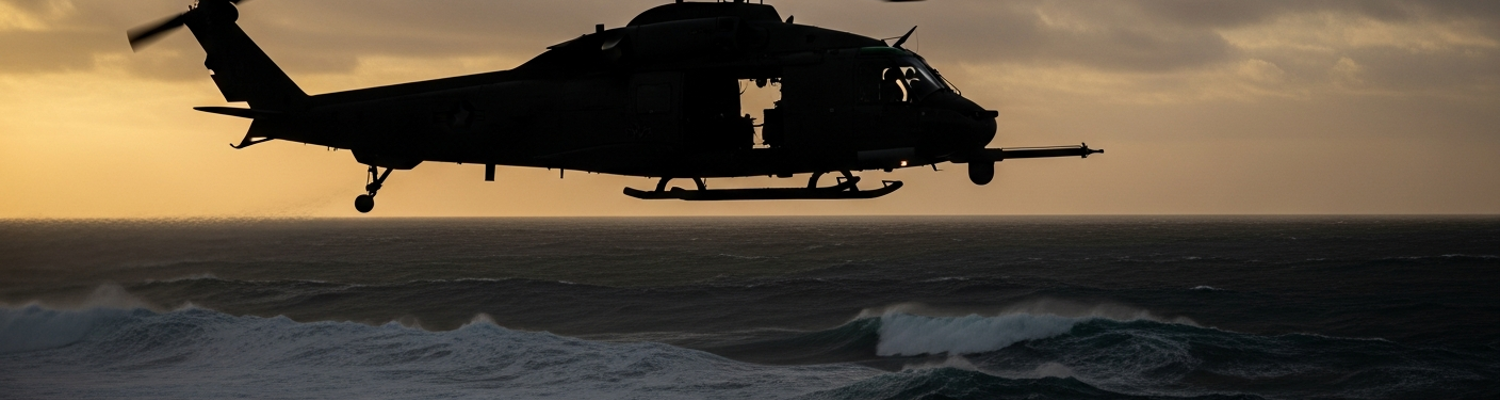
The entire SAR enterprise was buckling. The two primary rescue airframes available, the Sikorsky UH-34 Sea Horse and the Bell UH-1E Huey, were being flown to their breaking points. Marine helicopter squadrons, including HMM-163 and VMO-2, were tasked with an overwhelming slate of missions from troop transport to armed reconnaissance. This relentless operational tempo left no slack in the system. When a SAR mission materialized, there was no reserve of fresh aircraft or crews; helicopters were simply pulled from other ongoing tasks. An examination of maintenance logs from this period (per declassified NAVAIR summaries) reveals a system perpetually in crisis. The UH-34, a reliable but aging piston-engine design, was particularly susceptible to the hot, corrosive environment. Its Wright R-1820-84 engine, a massive air-cooled radial, required constant attention to prevent overheating. Magnesium alloy components in the airframe were highly vulnerable to saltwater corrosion, a constant battle for maintenance crews at seaside airfields like Chu Lai.
For the newer, turbine-powered UH-1E Hueys, the problems were different but no less severe. The conditions of Vietnam inflicted a heavy toll on components. Main rotor blades, rated for one thousand flight hours, often required replacement after just two hundred. The constant demand for sorties meant scheduled maintenance was often deferred. The practice of cannibalization, stripping parts from one damaged helicopter to get another flying, was rampant. A Naval Aviation summary from February 1966 explicitly noted that parts shortages and corrosion were the two greatest maintenance challenges. For the downed Skyhawk pilot, this meant the helicopters dispatched to save him were drawn from a pool of overworked, mechanically strained machines.
Fuel was another weapon the enemy did not have to fire. The logistical chain required to get JP-4 jet fuel to forward operating bases like Dong Ha or Phu Bai was long and fragile. These forward airfields were essential for staging SAR missions close to the DMZ, but they were at the end of a tenuous supply line. Any interruption had immediate effects. A review of operational logs from late 1966 shows multiple instances where helicopter missions were curtailed specifically due to low fuel states at forward arming and refueling points (FARPs). For a rescue operation, where time is measured in minutes, a delay of even thirty minutes to wait for a fuel truck could be the difference between retrieving a pilot and recovering a body. The helicopters that did launch often did so with just enough fuel for the mission, leaving no reserve for an extended search.
Maintenance at the forward bases was a study in controlled chaos. These locations lacked the extensive facilities of larger bases like Da Nang. Headquarters and Maintenance Squadron 13 (H&MS-13), responsible for intermediate-level maintenance for MAG-13, was based at Chu Lai, miles from the immediate operational area. This meant any significant mechanical issue on a helicopter staged at Dong Ha required either flying the crippled aircraft back or waiting for specialized teams and parts to be flown north. The fine red dust of the region infiltrated engine intakes and contaminated lubricants. The intense humidity and salt air accelerated corrosion on every exposed metal surface. A UH-1E from VMO-2 or a UH-34 from HMM-163, landing at a forward strip, was met by an exhausted ground crew with limited tools and an even more limited supply of spare parts. They were forced to make difficult triage decisions, prioritizing repairs that would get an aircraft back into the air the fastest.
The expanding search effort rapidly became a vortex, pulling in an unsustainable number of aircraft from MAG-13 and adjacent units. What began as a standard two-helicopter rescue mutated into a large-scale operation within the first hour. The initial confusion over the pilot’s location meant the search grid was dangerously large. Rescue helicopters were forced into low-altitude, fuel-intensive search patterns over the Gulf of Tonkin, well within range of North Vietnamese coastal artillery. The NVA defenders, having just downed one aircraft, were on high alert and used the predictable flight paths of the slow-moving helicopters for target practice. North Vietnamese doctrine shows a clear tactical emphasis on using downed pilots as bait to destroy more valuable rescue assets. The result was a high-stakes environment where rescue crews were simultaneously hunting for a life raft and dodging anti-aircraft fire.
This constant threat forced a major escalation. It was no longer a simple search. It became a combined-arms combat operation. To protect the vulnerable helicopters, MAG-13 began diverting its primary offensive assets. The A-4 Skyhawks based at Chu Lai. Squadrons like VMA-211 and VMA-311, whose daily schedule was packed with pre-planned strikes for ground units, were retasked. Their new objective was Suppression of Enemy Air Defenses (SEAD). These A-4 pilots flew perilously close to the very AAA sites that had downed their comrade, employing rockets and cannon fire to silence the NVA guns and create temporary windows for the helicopters to search. The sky became a layered, violent tableau. While helicopters skimmed the waves and A-4s engaged shore batteries, F-4B Phantoms from MAG-11 at Da Nang established a high-altitude Combat Air Patrol (CAP) to guard against any potential MiG threat. The rescue of a single pilot now commanded a significant portion of the 1st Marine Aircraft Wing’s available fixed-wing assets in the I Corps tactical zone.
The cost was measured in canceled sorties.
Every aircraft redirected to the coastal rescue was an aircraft removed from another mission. A review of operational planning documents reveals the effect. An A-4 Skyhawk pulled for a SEAD mission was one less aircraft available to provide emergency close air support for a Marine infantry unit in contact with the enemy. Flight operations in support of ongoing ground campaigns like Operation Prairie were likely delayed or flown with reduced support. Interdiction strikes aimed at disrupting the flow of supplies down the Ho Chi Minh Trail were postponed. The diversion represented a significant tactical victory for the NVA. For the cost of a few dozen artillery shells, they had not only destroyed a USMC attack jet but had also effectively neutralized a dozen more, tying them up for hours in a reactive, defensive operation. This forced reallocation of air power demonstrated the fragility of air resources.
The aerial battlefield drew a high price for every minute the operation remained active. For the helicopter crews of squadrons like HMM-163 and VMO-2, the experience was a trial. As their UH-34s and UH-1Es descended into low-altitude search patterns, they became predictable targets. A review of similar SAR missions shows that NVA AAA crews were disciplined. They would allow the slow-moving helicopters to commit to a search leg before opening fire. Tracers from 37mm and 57mm cannons would walk across the water, creating geysers as they impacted the sea around the aircraft. Helicopter pilots were forced into violent, wrenching evasive maneuvers at wave-top height while crew chiefs and door gunners returned fire with M60 machine guns, insignificant against fortified positions. Several aircraft reported near-misses where the concussive force of an exploding shell violently shook the airframe.
This intense enemy fire resulted in direct, cumulative damage. While a catastrophic hit might not have occurred in the opening phase, the constant barrage inflicted an accumulation of mechanical failures. A UH-1E from VMO-2, pulling out of a search pattern, returned to a forward base with dozens of shrapnel holes in its thin aluminum skin. Analysis of similar combat incidents reveals that such damage had severe consequences. A single piece of hot metal could sever a non-critical hydraulic line, causing a slow bleed-out only discovered post-flight. It could chip a main rotor blade, an injury that demanded an immediate, time-consuming replacement. Even minor damage to the fuselage required grounding the aircraft for inspection and repair, pulling it from an already over-taxed operational roster. For every helicopter that returned with battle damage, the pool of available rescue assets shrank.
The A-4 Skyhawks of MAG-13 flying SEAD missions were also taking hits. One aircraft might return to Chu Lai with its control surfaces damaged by shrapnel, making for a hazardous landing. Another might suffer engine damage from ingesting debris thrown up by a nearby explosion, forcing an immediate shutdown. The great majority of U.S. aircraft losses throughout the war were due to anti-aircraft artillery, the very weapon system dominating the coastline. For every Skyhawk or Huey sent into the contested zone, the NVA was extracting a heavy price, even without scoring a definitive kill. Each damaged aircraft represented a loss of operational availability that rippled through the 1st Marine Aircraft Wing. A helicopter grounded for three days of sheet metal repairs was a helicopter that could not transport troops for Operation Prairie or perform a medevac. This exchange was a tactical victory for the North Vietnamese.
The entire enterprise was crippled from its inception by a breakdown of communication and technology. At Da Nang, the SACC was overwhelmed with a flood of contradictory information. The initial grid coordinates passed from the downed pilot’s wingman were corrupted, distorted by the stress of evasive maneuvering and repeated through multiple airborne radio relays. The result was ambiguity. This forced rescue crews to launch not to a specific point, but into a vast and uncertain search area.
Compounding the locational uncertainty was the failure in the pilot’s own survival equipment. The standard-issue AN/URC-4 survival radio, a vacuum-tube device, proved to be a source of frustration. Archival evidence suggests these radios were prone to damage during violent ejections. The rescue helicopters and their A-1 Skyraider escorts were hunting for a steady beacon tone. Instead, they chased a ghost signal. The transmission was intermittent and weak, preventing the airborne searchers from ever achieving a solid lock. The mountainous coastline only worsened the problem, causing the weak radio waves to bounce and scatter, creating false returns that sent the search aircraft on frustrating and fuel-wasting diversions.
This combination of flawed intelligence and failing hardware cascaded into a major tactical blunder. With no precise location, the on-scene commander committed the rescue helicopters to a broad, grid-based search pattern. This sent the slow-moving UH-34s and UH-1Es on predictable, low-altitude flight paths directly into the North Vietnamese anti-aircraft envelope. NVA doctrine was clear: a downed pilot was bait. The coastal defense gunners waited for the helicopters to become settled in their search legs before opening fire with a coordinated barrage of 37mm and 57mm cannons. The rescue crews were now in a desperate fight for their own survival.
The crisis rapidly escalated, consuming a disproportionate amount of Marine air power. The initial SAR package was no longer viable. The mission had transformed into a complex operation. To have any chance of protecting the helicopters, MAG-13 began diverting its primary offensive assets. A-4 Skyhawks from VMA-211 and VMA-311 were pulled from their scheduled sorties to fly SEAD missions. These attack jets were now tasked with dueling the very AAA sites that had shot down their comrade. The sky over the coastline became a crowded battlespace, with F-4B Phantoms from MAG-11 arriving to provide high-altitude combat air patrol against any MiG threat. This diversion of assets was a significant, if unintended, victory for the North Vietnamese. For the cost of downing one aircraft, they had effectively neutralized a significant portion of the 1st Marine Aircraft Wing’s strike capability in the I Corps region. An A-4 that was suppressing enemy fire for a rescue helicopter was an A-4 that was not providing emergency close air support for a Marine infantry unit in contact with the enemy. The operation to save one man had jeopardized many more on the ground.