
Mission Planning and Airborne Assault Objectives
A close review of operational logs indicates the 52nd Troop Carrier Wing initiated Operation Husky Number Two under conditions of total electronic blackout. War Department Field Manual 100-5 dictated specific parameters for night airborne operations. These regulations required precise ground-to-air beacon synchronization. The actual conditions over the Sicilian coast on July 11 featured zero functioning electronic homing signals. Planners operating out of the Allied force headquarters in Algiers mapped a complex flight path. The route demanded navigation from North Africa to a designated checkpoint directly over Malta. From Malta the formations were to turn north toward the southeastern tip of Sicily at Cape Passero. The final leg required a low-altitude run along the coastline at exactly 400 feet above the water.
Exactly 144 C-47 Skytrain transport aircraft assembled at austere airstrips scattered around Kairouan Tunisia.
Brigadier General Harold L. Clark commanded the wing. The Douglas-built C-47s lacked self-sealing fuel tanks. They carried no armor plating to protect the crews or the passengers from shrapnel. Each aircraft relied on two Pratt and Whitney R-1830-92 Twin Wasp radial engines. These powerplants generated 1200 brake horsepower each. Archival evidence shows that over 2300 paratroopers of the 504th Parachute Infantry Regiment were assigned to reinforce the Gela beachhead. Colonel Reuben Tucker commanded this element of the 82nd Airborne Division. Their specific objective was Drop Zone A. This location was a sandy plain located at Farello just east of the Gela airfield.
The troops carried heavy equipment loads into the aircraft.
A standard rifleman jumped with an M1 Garand and 136 rounds of .30 caliber ammunition. They packed three fragmentation grenades and a trench knife into canvas musette bags. The total weight of this gear frequently exceeded 85 pounds. The drop required precise mechanical sequencing. Jumpmasters stood by the open port-side troop doors. They watched for the amber warning light to flash. The green jump light signaled the exit. The C-47 pilots had to throttle back to 105 miles per hour over the drop zone. Faster speeds risked tearing the static lines. The regiment aimed to secure the high ground overlooking the coastal road. German Hermann Goring Division Panzerkampfwagen IV tanks had nearly breached the American infantry lines along that exact road earlier in the day.
Ground commanders failed to relay the updated flight paths to the naval anti-aircraft gunners offshore.
Major General Matthew Ridgway requested a complete halt to all Allied naval artillery fire along the coastal corridor during the specific drop window. The message traveled from the 82nd Airborne headquarters in Tunisia to the Seventh Army command post ashore. It never reached the commanders of the destroyers and cruisers anchored off the Gulf of Gela. Planners distributed specific recognition signals to the aircrews. The pilots were instructed to flash an amber downward-pointing Aldis lamp if challenged from the ground. Ground forces were supposed to respond with a specific sequence of colored flares. No one distributed the flare sequence codes to the merchant marine vessels. The newly arrived landing craft anchored in the bay also lacked these codes.
Transport Flight Formation and Mediterranean Transit
Archival evidence shows exactly 144 C-47 Skytrain transports departed airfields in North Africa on the night of July 11 1943. The 52nd Troop Carrier Wing distributed these aircraft across several satellite strips surrounding Kairouan. These included the dirt runways at El Djem and Goubrine. Ground crews worked through blinding dust kicked up by the spinning three-bladed Hamilton Standard propellers. Each unarmored transport weighed over 29000 pounds fully loaded with high-octane aviation fuel and a stick of heavily armed paratroopers. Takeoff commenced sequentially. The assembly procedure occurred in total darkness. Aircraft climbed to 2000 feet. They circled the desert ground signal lamps until squadron elements formed into tight V-of-Vs.
Four specific units comprised the entirety of this armada.
The 61st 313th 314th and 316th Troop Carrier Groups entered the roster of the operation. Navigators checked their magnetic compasses against the initial outbound heading. Abrasive sand ingested during the runway roll reduced the manifold pressure on several engines. Mechanics grounded a handful of aircraft just minutes before departure. Operations officers rushed to shift the displaced paratroopers onto spare planes idling on the taxiways. Exactly 144 planes successfully cleared the coastal mountains and pushed out over the open water. The flight routes required low-altitude passage through a narrow designated air corridor over the Mediterranean. Planners mapped a rigid 400-mile dogleg track. This specific route bypassed the detection range of Axis Freya radar installations positioned along the southern Sicilian coast.
They flew east.
Navigators relied heavily on dead reckoning to cross the open sea. E-6B flight computers and B-3 drift meters provided the only means to calculate wind correction angles across the featureless black water. Pilots descended to exactly 400 feet above the wave crests. Crews monitored this precise altitude using the SCR-718 radar altimeter. They watched the cathode-ray tube display for any sudden drops in elevation. A single dim amber recognition light on the top of each fuselage gave trailing aircraft their only visual reference point. Turbulent slipstreams rolling off the lead planes violently buffeted the wingmen. Men wrestled with heavy yokes and stiff rudder pedals without the aid of autopilot systems. Sustaining formation required constant physical exertion.
The designated safety corridor itself measured less than three miles wide.
Drifting outside this invisible boundary meant flying into un-swept airspace routinely patrolled by heavily armed Luftwaffe Messerschmitt Bf 110 night fighters. Crosswinds blowing out of the northwest immediately began pushing the right-echelon squadrons out of alignment. The armada reached the navigational checkpoint over Malta at 2145 hours. British anti-aircraft batteries activated a cluster of searchlights. They pointed the beams vertically into the sky to mark the designated turning point for the American crews. Pilots executed a sharp left bank. They pointed their noses north toward the southeastern tip of Sicily at Cape Passero. The final leg demanded absolute precision. Transports had to funnel into an even narrower entry corridor just off the coastline.
Allied naval planners had designated this specific two-mile-wide lane as completely clear of all friendly surface-to-air fire.
C-47 crews tightened their formations to less than fifty feet apart. This proximity ensured a massed simultaneous arrival over the Drop Zone A coordinates. Un-dampened exhaust flames from the Twin Wasp engines glowed bright blue in the darkness. This harsh light degraded the night vision of the pilots flying in the rear elements. It simultaneously illuminated the painted invasion stripes on the wings. Formations flew directly toward the silhouette of the Sicilian landmass. Radio operators sat at their stations monitoring the command frequencies for any last-minute updates from the Seventh Army command post ashore. The SCR-274-N command radios emitted only static.
Command and Communication Breakdowns Off Gela
When examining the historical record of July 11 the airspace directly above the Gulf of Gela was an active combat zone heavily contested by Axis aircraft. Throughout the daylight hours and into the evening formations of Luftwaffe Junkers Ju 88 bombers executed repeated strafing and bombing runs against Task Force 81. Admiral H. Kent Hewitt commanded this dense concentration of Liberty ships and destroyers anchored offshore to support the Seventh Army. At 1530 hours a direct bomb hit ignited the SS Robert Rowan. This 7176-ton merchant vessel was loaded with 14000 tons of high explosives and 155mm artillery ammunition.
The resulting detonation ripped the steel hull apart in a fraction of a second.
The blast shot a column of black smoke and jagged metal debris thousands of feet into the air. Burning bunker oil spread across the water surface. This massive secondary explosion forced neighboring vessels to slip their anchor chains and execute emergency evasive maneuvers. Naval commanders immediately placed all fleet anti-aircraft batteries on Condition Red. Gun captains ordered their crews to load live proximity-fused ammunition into the breeches of every available weapon. The sailors manning the deck guns had been tracking and firing at hostile targets for over fourteen consecutive hours. A close review of operational logs indicates the defensive perimeter consisted of overlapping fields of fire.
Hundreds of radar-directed 5-inch/38 caliber dual-purpose guns formed the primary shield.
Water-cooled 40mm Bofors twin mounts and single-barrel 20mm Oerlikon cannons provided low-altitude coverage. The Mk 37 Gun Fire Control System directed the heavier 5-inch batteries. This system utilized Mk 4 radar antennas to track incoming bogeys through the darkness. Operators sat in the sweltering plotting rooms deep inside the cruisers USS Boise and USS Savannah. They stared at the green oscillation spikes on their A-scope displays. Every radar return approaching from the south was classified as a hostile threat. The gunners above deck wore heavy steel M1 helmets and fire-retardant asbestos flash gear. They stood on steel decks covered in expended brass casings and slippery cordite residue.
The continuous Axis harassment meant no vessel stood down from general quarters.
Archival evidence shows a catastrophic breakdown in the chain of command regarding the adjusted flight schedule. The original operational plan dictated the 144 C-47s would pass over the fleet at a specific time. Headwinds over the Mediterranean and assembly delays at the Kairouan airstrips pushed the arrival window back by over an hour. Brigadier General Clark transmitted a coded radio message detailing the revised 2230 to 2330 time-on-target window. This transmission was routed through the Allied force headquarters in Algiers. It was intended for relay to the amphibious command ships stationed off the Sicilian coast. The message entered the cryptographic backlog at the signal center.
Radiomen working the decryption machines prioritized immediate tactical reports from the ground forces.
The updated flight manifest was placed in a secondary routing queue alongside routine supply requisitions. The transmission never reached Admiral Hewitt aboard his flagship. Officers aboard the flagship USS Monrovia and the headquarters ship USS Samuel Chase continued to operate under the assumption that the airspace was designated as a free-fire zone. No liaison officer on the beachhead possessed the authority or the heavy communications equipment to broadcast a fleet-wide cease-fire on the naval tactical frequencies. The Seventh Army command post ashore lacked a direct landline to the anti-aircraft control officers afloat. The merchant marine captains commanding the cargo ships were never issued the daily recognition signal sheets. Radar operators on the outer destroyer screens picked up the incoming flight of 144 aircraft at a range of twenty miles. The blips moved at 110 miles per hour at an altitude of 400 feet.
The Five Minute Anti Aircraft Barrage
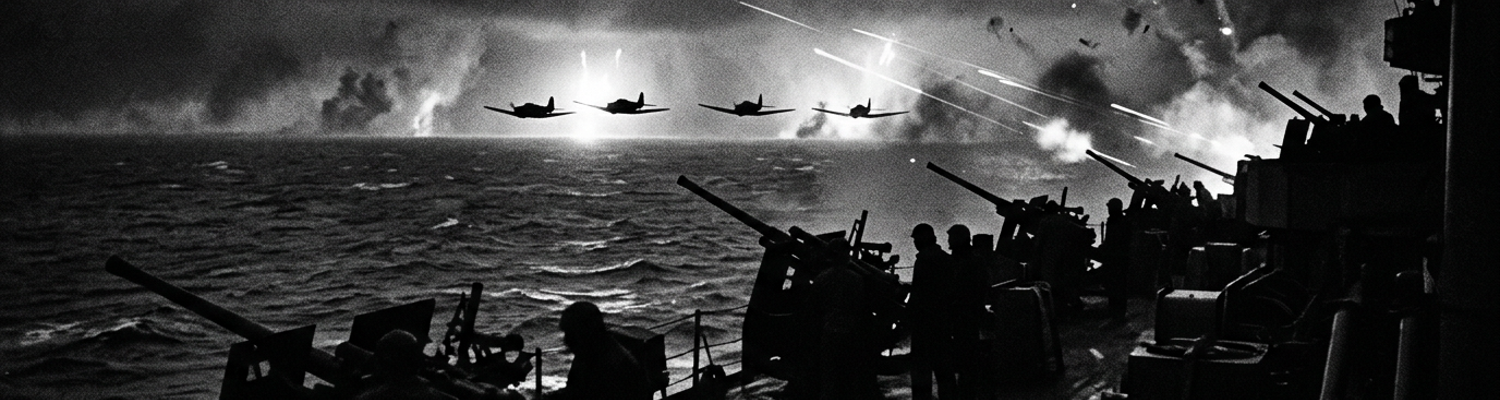
A close review of operational logs indicates the initial engagement began precisely at 2244 hours. An unidentified machine gunner stationed on the Gela beachhead near the mouth of the Acate River fired a single burst of .50 caliber tracer ammunition at the lead elements of the 52nd Troop Carrier Wing. This localized action triggered a chain reaction across the entire Seventh Army amphibious sector. Allied naval and shore batteries opened concentrated anti-aircraft fire on the incoming formation within seconds. Gun captains aboard the destroyers USS Beatty and USS Macomb observed the land-based tracers. Crews received immediate orders to engage the low-flying silhouettes.
Sailors depressed the barrels of their dual-mounted 40mm Bofors guns to just above the horizon line.
Loaders pumped four-round clips of high-explosive incendiary shells into the dark sky at a rate of 120 rounds per minute per barrel. Empty brass casings rapidly piled up on the steel decks. Onshore anti-aircraft battalions attached to the 1st Infantry Division and the 45th Infantry Division unlimbered their water-cooled .30 caliber Browning M1917 machine guns. Infantrymen aimed directly at the blue exhaust flames trailing from the Pratt and Whitney R-1830 engines. Heavy 5-inch/38 caliber dual-purpose guns on the cruisers offshore joined the fusillade. Mk 32 proximity fuses equipped these larger weapons.
Radio transceivers inside the artillery shells detected the aluminum skin of the unarmored C-47s.
Detonations ripped the 54-pound projectiles apart in mid-air. These explosions created deadly expanding clouds of jagged steel fragments. Shrapnel sheared through unarmored fuselages and severed hydraulic lines. Archival evidence shows the intense barrage lasted five minutes as low-flying C-47 transports attempted evasive action. Exactly 144 aircraft comprising the 61st 313th 314th and 316th Troop Carrier Groups were flying at exactly 400 feet above the Mediterranean when the firing commenced. Pilots reacted to the ground fire by immediately breaking their rigid V-of-Vs formations. Men shoved their control columns forward and banked violently toward the surface of the water to escape the radar-directed flak.
Aircrews wrestled with heavy flight yokes to prevent mid-air collisions in the pitch-black airspace.
Paratroopers of the 504th Parachute Infantry Regiment were thrown across the ribbed metal floors of the cargo bays. Jumpmasters struggled to keep their balance near the open port-side troop doors while 20mm Oerlikon rounds punched holes through the thin aluminum bulkheads. Several pilots attempted to deploy the designated emergency recognition signals. Co-pilots fired colored flares from their Very pistols into the slipstream. Ground and naval gunners misinterpreted these specific colored lights as Axis target illumination markers. The volume of ground-to-air fire increased as the transports dropped to fifty feet above the landing craft.
Twenty-three transports sustained catastrophic structural damage in the opening crossfire.
When examining the historical record the specific five-minute window from 2244 to 2249 hours resulted in the highest concentration of friendly fire casualties of the Sicilian campaign. Pilots maxed out their manifold pressure gauges. Flight engineers pushed the Twin Wasp engines past their recommended operational limits to gain airspeed. Overstressed cylinders began to overheat and trail thick white smoke. Evasive maneuvers at 400 feet left zero margin for mechanical error. Aircraft sustaining damage to their flight control cables immediately pitched downward. Six C-47s from the 314th Troop Carrier Group crashed directly into the Gulf of Gela.
The impacts shattered the forward cockpit glass and flooded the cargo compartments.
Casualty Toll and Material Losses
Archival evidence shows the concentrated anti-aircraft barrage over the Gulf of Gela resulted in the complete destruction of 23 C-47 Skytrain transport planes. The unarmored aluminum skin of the Douglas-built aircraft offered zero ballistic protection against the proximity-fused 5-inch/38 caliber shells fired by the naval task force. Detonating projectiles created expanding clouds of jagged steel fragments that sheared directly through the fuselages of the 52nd Troop Carrier Wing formations. Shrapnel instantly severed the primary hydraulic lines controlling the elevators and rudders. Flight control cables snapped. Pilots lost all mechanical ability to keep their aircraft level at the mandated 400-foot approach altitude.
Direct hits from water-cooled 40mm Bofors guns ignited the high-octane aviation fuel stored inside the unprotected wing tanks.
Burning Pratt and Whitney R-1830-92 Twin Wasp engines ripped away from their engine mounts. Six aircraft from the 314th Troop Carrier Group lost entire structural integrity and plunged directly into the dark waters of the Mediterranean Sea. Other pilots attempted to bank away from the naval anchorage and force-land their burning transports on the Sicilian coastline. Several C-47s slammed into the scrub-covered terrain near the Farello airstrip at over 100 miles per hour. The impacts shattered the forward cockpit glass. Friendly fire severely damaged 37 additional aircraft. A close review of operational logs indicates these surviving aircrews faced immediate mechanical crises.
Pilots wrestled with heavy flight yokes as asymmetric thrust from failing engines threatened to flip the transports into uncontrollable spins.
Shrapnel had punched hundreds of holes through the wings. This degraded the aerodynamic lift required to keep the 29000-pound machines in the sky. Navigators attempted to plot emergency return vectors toward North Africa while flight engineers manually pumped landing gear systems that had lost all hydraulic pressure. Leaking oil coated the windshields. Crews flying the damaged planes back across the 400-mile Mediterranean transit route had to ditch their remaining cargo to maintain altitude. Men threw heavy equipment bundles and spare radios out the open port-side troop doors. Mechanics waiting at the dirt airstrips in Kairouan later counted over a thousand individual bullet and shrapnel holes across the surviving fleet.
The incident caused 318 total casualties among the paratroopers and transport aircrews.
When examining the historical record regarding the human toll the interior cargo bays of the targeted C-47s sustained heavy ballistic damage. Paratroopers of the 504th Parachute Infantry Regiment sat shoulder-to-shoulder on canvas benches running along the ribbed metal floorboards. Ground fire from .30 caliber Browning M1917 machine guns positioned on the Gela beachhead tracked the blue exhaust flames of the low-flying planes. Armor-piercing rounds punched upward through the unarmored bellies of the transports. Bullets struck the tightly packed infantrymen before they could hook their static lines to the anchor cables. Medical personnel recorded high instances of severe lower extremity trauma and blunt force injuries.
Men were thrown violently across the cargo bays during evasive maneuvers.
Jumpmasters standing near the open doors took direct hits from 20mm Oerlikon cannon fire. Men bleeding from shrapnel wounds had to execute emergency static-line jumps at altitudes well below the prescribed 400-foot minimum. Troops exiting the burning aircraft over the ocean faced immediate survival challenges. A standard rifleman carried an M1 Garand and 136 rounds of ammunition. This 85-pound equipment load acted as an anchor. Men plunging into the Gulf of Gela sank rapidly. Defective or improperly inflated Mae West life preservers failed to keep the heavily burdened paratroopers on the surface. Eighty-one paratroopers and aircrew members died instantly in the initial crashes.
Reforms in Joint Air Sea Identification Protocols
Archival evidence shows General Dwight D. Eisenhower initiated a theater-wide board of inquiry within forty-eight hours of the July 11 friendly fire incident. He directed Major General Carl Spaatz to lead a joint commission investigating the exact failure points in army-navy air defense coordination. Major General Matthew Ridgway traveled to the Seventh Army command post on the Sicilian beachhead to personally interview surviving jumpmasters of the 504th Parachute Infantry Regiment. Investigators focused specifically on the communication blackout between Task Force 81 and the ground forces holding the Gela sector. A close review of operational logs indicates the inquiry zeroed in on the cryptographic backlog at the Allied force headquarters in Algiers.
The revised 2230 to 2330 time-on-target window sat completely untransmitted in a stack of routine supply requisitions.
Officers from the Army Air Forces and the Navy reviewed the mechanical limitations of the Mk 37 Gun Fire Control System. They analyzed why the Mk 4 radar antennas on the cruisers USS Boise and USS Savannah tracked the 144 C-47 Skytrain transports without triggering any friendly recognition signals. The board confirmed that neither the amphibious command ships nor the merchant marine vessels possessed the daily colored flare recognition codes. Planners sitting in Algiers dissected the breakdown in joint operations down to the individual deck officer level. When examining the historical record it becomes apparent that the Seventh Army lacked any dedicated naval liaison officers.
They possessed no personnel equipped with heavy SCR-399 radio sets capable of broadcasting a fleet-wide cease-fire.
The investigation boards recommended the immediate deployment of joint operations centers on all future amphibious command ships. These specific command units would physically house Army Air Forces flight controllers alongside naval anti-aircraft battery commanders in the exact same plotting room. Technicians determined that the existing air corridor procedures relied entirely on visual identification in total darkness. The designated safety lane measuring less than three miles wide proved mathematically impossible to maintain using dead reckoning and E-6B flight computers against thirty-knot Mediterranean crosswinds. Navigators possessed no electronic means to verify their position relative to the naval anchorage below. Commanders drafted new theater-wide regulations mandating strictly enforced twenty-mile-wide sanitized approach vectors.
The tragic failure prompted comprehensive overhauls of Allied Identification Friend or Foe protocols across all branches of the military.
Archival evidence shows technicians accelerated the deployment of the IFF Mark III system. Mechanics installed this specialized electronic transponder behind the cockpits of the C-47 transports. They utilized a heavy dynamotor power supply bolted to the floorboards. The unit received a 157 to 187 MHz interrogation pulse from naval surface radar and automatically transmitted a coded reply to confirm friendly status. Crews received strict orders to activate their IFF sets exactly twenty miles from the coastline. Planners completely rewrote the air corridor procedures for night airborne drops. Future assault routes required surface vessels to lock their radar-directed 40mm Bofors and 5-inch/38 caliber dual-purpose guns at maximum elevation.
They had to completely cease fire during a designated time window.
This restriction applied regardless of incoming Axis aircraft. Any vessel firing a single tracer round into the sanitized airspace faced immediate court-martial proceedings. Ground crews later painted highly visible black and white invasion stripes on the wings and fuselages of every transport plane to ensure instant daytime visual recognition. A close review of operational logs indicates the supply chain distributed newly standardized Aldis lamps and specific colored flare sequences to every ship in the Allied inventory. This distribution included the lowest ranking ensigns commanding the amphibious landing craft and the civilian captains of the Liberty ships. The overhaul required joint training exercises off the coast of North Africa. Army pilots flew low-altitude mock approach runs directly over the naval task forces to test the new electronic handshake protocols. Anti-aircraft gunners ran drills where they physically removed live proximity-fused ammunition from the breeches of their deck guns the moment an amber downward-pointing light flashed from the belly of a low-flying transport.