
Initial Assault Wave Communications Failure and Surfline Bottlenecks
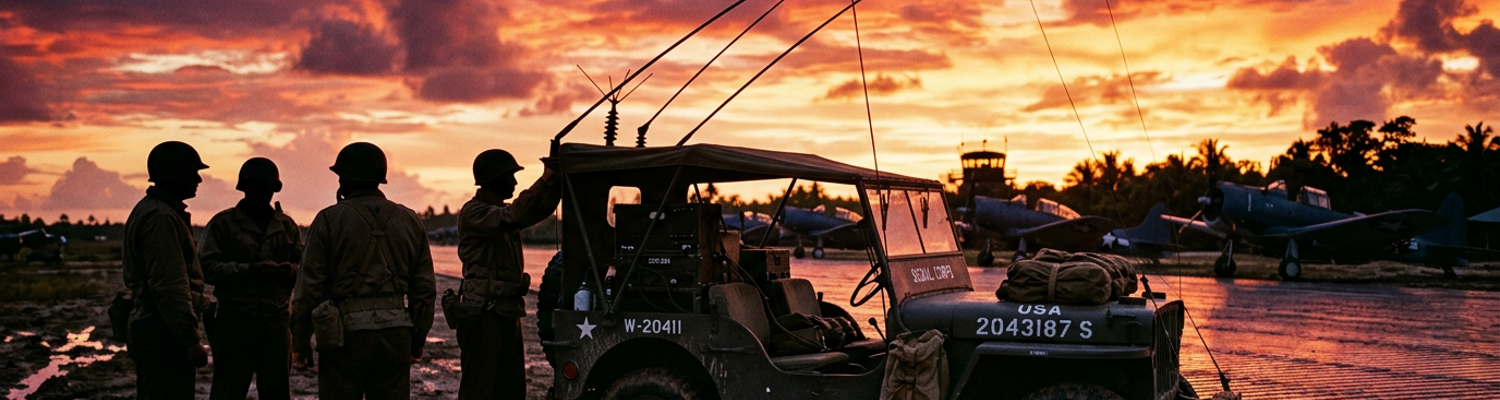
At 0415 hours on July 10, 1943. The exact moment the primary SCR-299 radio truck of the 16th Regimental Combat Team rolled off a ramp into an unseen five-foot tidal sinkhole. Communication with headquarters severed completely. Salt water flooded the radio housing. This shorted out the vehicle-mounted transmitter coils. Frontline assault waves were instantly isolated from the senior command staff aboard the command ship USS Ancon offshore.
Archival evidence shows that early morning reports from the beach abruptly stopped. Assault commanders remained blind to conditions on the shoreline. Frontline infantry stepped out into complete tactical isolation. They could not correct misdirected incoming fire. They could not warn secondary transport waves of the obstacles ahead.
The invasion schedule collapsed along the surfline before dawn.
When reviewing operational logs, naval records indicate that Red and Green Beaches were ringed by underwater sandbars. These beaches spanned the shoreline on either side of the Gela River mouth. The sandbars sat roughly two hundred feet out from the high-water mark. Coxswains piloting wooden Higgins boats and Landing Craft Mechanized hit these submerged sand ridges at ten to twelve knots. They mistakenly assumed their hulls had struck dry land. Ramp doors dropped forward into deep water.
Engine blocks of incoming vehicles drowned immediately.
Heavily loaded assault troops were pushed into sea trenches. Breaking waves generated by thirty-knot Mediterranean winds caught the sterns of empty craft. The waves spun them sideways. They broached flat against the surf. Large Landing Ship Tanks attempted to bridge the shoals using steel pontoon causeways behind these smaller craft. LST-313 and LST-375 were among them. The causeways buckled under the weight of incoming equipment.
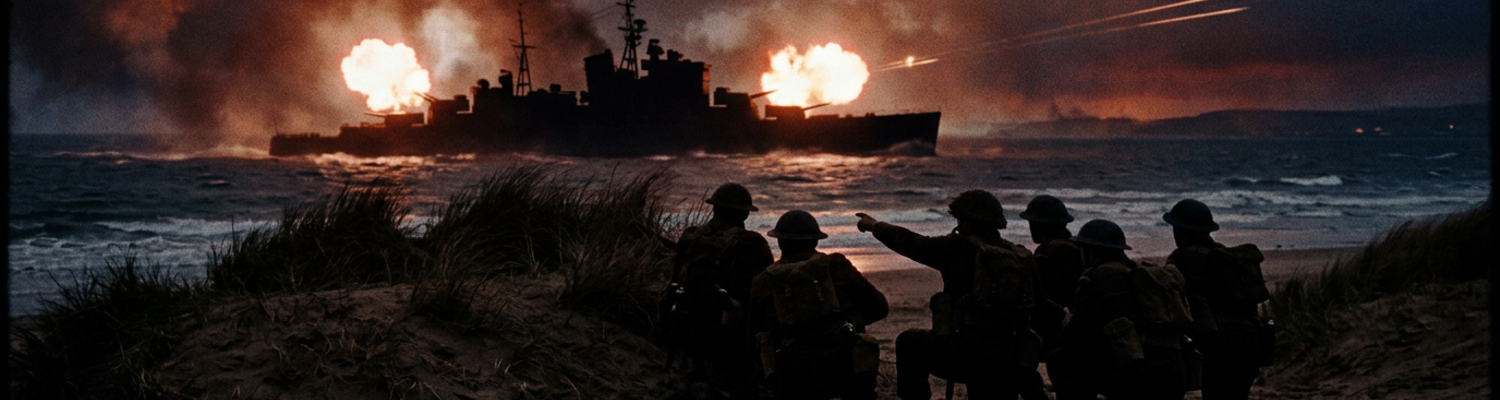
Italian 76mm coastal defense guns positioned around the Gela pier zeroed in on the bottlenecks within minutes. Krupp-built 105mm guns located inland on the high ground joined the barrage. Shells struck fuel bladders and ammunition-laden trucks parked tightly across the open decks of LST-313. Fires ignited. The ship was destroyed. Wrecked Landing Ship Tanks and broached landing craft burned along the surfline on Red and Green Beaches.
The beachhead had become an impassable mechanical obstacle.
Archival evidence shows that the 540th Engineer Shore Regiment struggled immediately to secure traction on waterlogged coastal silt under sustained enemy artillery fire. They expected coarse sand. They expected hard-packed sand capable of bearing heavy engineering machinery. The regiment met an unstable deposit of coastal silt saturated by high surf instead. Heavy Caterpillar D7 bulldozers driven off the ramps lost track traction within minutes. They sank past their final drives into the waterlogged ground.
Shore engineers attempted to stabilize exit lanes using rolls of steel Sommerfeld tracking and wire netting. Loaded two-and-a-half-ton trucks ripped the metal links apart as soon as their wheels spun under load. Tractor transmissions stripped when operators attempted to tow stuck vehicles against the incoming tide. Salt water washed directly into air intakes. Steering clutches seized. Winches froze.
Company engineers worked to free stalled tracked vehicles. Battery salvos from the Herman Goring Panzer Division struck the wet sand around them. Work crews were using hand shovels to dig out buried axle housings by midday. Shell fragments from Italian 47mm anti-tank guns punched holes through unarmored fuel drums stacked along the dune line.
Mediterranean Base Section Planning Errors and Rejected Reconnaissance
Archival evidence shows that the trafficability tables dictating engineering equipment assignments for the assault originated inside the planning rooms of the Mediterranean Base Section. This occurred at the Hotel Saint-Georges in Algiers during May 1943. Logistical staff faced severe deficits in recent littoral bathymetric data. They gathered pre-First World War Italian commercial shipping manifests. They pulled regional mining surveys from the Caltanissetta sulfur and coal basin to project beach firmness.
These commercial records classified the coastal shelf between Licata and Scoglitti as a hard calcarenite substrate overlaid with dense maritime gravel. Some of these records dated back to 1912. Base engineers used this commercial geological data to project that the coastal flats near the Gela River mouth possessed a bearing capacity exceeding thirty-five pounds per square inch. The exact coordinates were 37 degrees 04 minutes North and 14 degrees 15 minutes East.
This analytical error determined the equipment manifest for the 540th Engineer Shore Regiment. Planners concluded that heavy vehicles could operate without extensive corduroy trackway. They sent standard Caterpillar D7 bulldozers to the staging ports in Bizerte equipped with narrow eighteen-inch street tracks rather than wide swamp grousers. Standard operating instructions directed quartermasters to maintain truck tire inflation across all GMC CCKW two-and-a-half-ton transports at forty-five pounds per square inch. This inflation level was calculated for hard macadam rather than saturated marine alluvium.
Paper estimates replaced physical soil samples.
A close review of operational logs indicates that Allied aerial reconnaissance units provided clear evidence of severe littoral hazards weeks prior to embarkation. Flight crews from the North African Photographic Reconnaissance Wing flew low-altitude sorties across the southern Sicilian littoral throughout early June 1943. They operated modified P-38 Lightnings and British Spitfire PR Mark IXs out of airfields in Tunisia. Stereoscopic analysis of wave refraction patterns along the Gulf of Gela demonstrated that the sea floor was unstable.
Winter flash-flood discharges from the Gela and Dirillo rivers shaped the sea floor. These rivers deposited soft silt across the littoral floor. Photo interpreters identified runnels. They identified shifting submerged bars. They mapped an erratic beach gradient that swung unpredictably from a manageable 1-in-50 incline to an impassable 1-in-120 shelf within eighty yards of the shoreline.
Joint Planning Staff officers in Algiers dismissed these aerial assessments. Senior planners argued that the identified wave lines indicated temporary seasonal surf patterns rather than fixed geological obstacles. They chose to leave the primary amphibious gradient tables unaltered. Landing craft approach tables continued to predict a flat 1-in-80 incline all the way to dry land.
The staff disregarded the photographs entirely.
Engineer officers received beach portfolios that omitted the photographic warnings entirely during pre-assault briefings. Amphibious planners made no adjustments to the assigned lengths of naval pontoon causeways. They allocated standard two-by-thirty-element assemblies. These assemblies were thirty yards too short to bridge the deep troughs identified behind the outer sandbars.
Company commanders in the 531st and 540th Shore Engineer Regiments boarded transport ships at Oran believing their mechanized equipment would roll onto hard pack immediately upon exiting vessel ramps. No specialized mud sleds were added to the initial assault echelons. No heavy tracked recovery tractors were added to assist bogged vehicles.
Transport quartermasters packed wire-mesh Sommerfeld track rolls beneath heavy artillery ammunition crates in the lowest cargo holds of Liberty ships. This prevented rapid access during the initial beachhead consolidation. The final naval operations annex committed eight landing craft tank flotillas to fixed approach channels. Aerial interpreters had mapped underwater mud banks three feet below mean low water in those exact channels.
The engineering plan relied on thirty-year-old trade charts.
Gela River Alluvial Sediment and Submerged Sandbar Topography
When examining the historical record, hydrographic surveys conducted along the southern Sicilian coast after the landings show that the Gela River flushed hundreds of tons of loose alluvial sediment directly into the littoral current every spring. Prevailing westerly longshore drift caught this silt output. The drift piled it into submerged mobile ridges between three hundred and five hundred yards seaward of the waterline.
Depth soundings charted by naval survey teams recorded sudden bottom anomalies. Water depth dropped abruptly from twelve feet down to barely three feet over a horizontal distance of less than twenty yards. Deep scour trenches lay behind these shallow bars. Backwash currents carved these trenches. They trapped stagnant pools four to seven feet deep.
Assault transports heading toward the river mouth encountered an unstable underwater topography. This topography shifted position with every change in wave frequency.
The sea floor acted as a physical barrier long before the landing craft reached the beach.
A close review of operational logs indicates that coxswains guiding the initial assault flights of the 16th and 26th Regimental Combat Teams misjudged these submerged bars for the true shoreline in the pre-dawn darkness. Loaded Higgins boats slammed into the outer sand ridges at full throttle. Each boat carried thirty-six infantrymen with sixty-pound assault packs. They beached hard three hundred yards out from the dry dunes.
Bow ramps dropped. Soldiers stepped off into the deep intervening troughs. They plunged over their heads into seven feet of water while carrying heavy BAR ammunition and Bangalore torpedoes. Heavier Landing Craft Mechanized carrying vehicles suffered worse fates. Propeller screws ground into the dense sandbars. Brass shafting bent. Reduction gearboxes stripped.
Marine cooling intakes sucked in suspended sand. Water jackets clogged. Diesel engines on LCM-3 craft seized from thermal shock within ninety seconds of grounding.
Wrecked hulls pinned to the bars blocked the narrow navigable lanes to the river mouth.
Archival evidence shows that the inland topography compounded this hydrographic trap. High Mediterranean winds had built an extensive system of eolian sand dunes stretching two thousand yards along the coastal shelf. These coastal dunes lacked any silt or clay binders. They were composed of fine uniform quartz grains rounded by persistent wind erosion. This created an uncompacted surface with near-zero shear strength.
Engineering test data preserved in the records of the 540th Engineer Shore Regiment reveal that this loose dune sand collapsed under bearing pressures as low as eight pounds per square inch. Standard unladen GMC CCKW 353 six-by-six trucks produced static ground pressures exceeding forty pounds per square inch at standard factory tire inflations. Heavy vehicles exiting landing craft ramps broke through the crust immediately. Their narrow military-tread tires excavated deep ruts rather than propelling the vehicles forward.
No wheeled vehicle moved ten yards through the dunes under its own power.
Efforts to move supply trains across the soft sand collapsed. Engineer assault companies lacked sufficient quantities of steel Marston matting and heavy Sommerfeld wire mesh during the first six hours of the assault. Transport quartermasters had loaded the heavy rolls of perforated steel planking under crated field artillery shells in the lower cargo bays of offshore freighters. Shore parties were left with only light burlap rolls and salvaged chicken wire.
Dodge three-quarter-ton command cars and M3 half-tracks attempted to climb the low dune slopes toward the coastal highway. Their drive axles sank until the differential housings dragged flat against the sand. Spinning drive wheels shredded the light chicken wire within seconds. Loose steel strands wrapped tightly around universal joints and brake drums.
Maintenance crews using truck-mounted Tulsa winches stripped their drive gears attempting to pull buried trucks out of the dunes. Rows of immobilized transports were left parked wheel-hub deep in sand three hundred yards east of the Gela River.
Caterpillar D7 and DUKW Drivetrain Failures in Coastal Silt
Archival evidence shows that by 0830 hours on July 10, the recovery doctrine of the 540th Engineer Shore Regiment had broken down entirely in the surfline off Red Beach Two. Shore party engineers confronted six M2A1 105mm howitzers of the 33rd Field Artillery Battalion sinking into offshore sandbanks two feet below the surface. Regimental mechanics attached steel towing bridles directly to the front pintles of diesel-powered Caterpillar D7 bulldozers. They hoped low-gear drawbar pull could overcome the marine suction anchoring the weapon carriages.
Tractors applied maximum forward torque while seawater surged over their track assemblies. Steel tracks churned wet silt into deep pits. The bulldozers listed twenty degrees to port. Bevel gear sets and final drive pinion teeth faced resistance far exceeding their rated twenty-six thousand pounds of drawbar capacity inside the cast-iron drivetrain housings.
Shock loads traveling back up the track chains fractured final drive assemblies. Spur gears sheared clean off their splined axles. Five heavy tractors were left dead in three feet of breaking saltwater.
Cast-iron gear teeth shattered under the deadweight of submerged guns.
A close review of operational logs indicates that the 540th had landed twelve D7 tractors during the primary assault echelons to establish clearance corridors. Mechanics attempted field repairs along the surf while 88mm shells detonated across the wet sand. Replacement drive sprockets and pinion shafts sat buried in cargo holds twenty miles out at sea.
Salt water poured past deteriorated felt oil seals on the drowned tractors. The water mixed with crankcase lubricants to create an abrasive slurry. This slurry seized the steering clutches. Tractors dispatched to drag the disabled bulldozers clear suffered the exact same mechanical shearing. Drivers locked the steering brakes to pivot on the saturated calcarenite shelf. The hardened steel drive pinions sheared completely. Seventy percent of the regiment tracked extrication plant was immobilized before noon.
Amphibious operations suffered an identical mechanical collapse ten miles east along the coastline.
When examining the historical record of Company C of the 453rd Amphibian Truck Company, thirty-six GMC DUKW-353 amphibious trucks entered the coastal mud flats near the Dirillo River to deliver palletized artillery ammunition. Standard operating manuals instructed drivers to shift from marine propeller drive to six-wheel-drive low range while transitioning across the surf. The six-ton amphibious hulls hit viscous water-saturated silt that enveloped the axles up to the hull bottoms instead of firm sand.
Drivers engaged the auxiliary power transfer cases at continuous full throttle. This generated internal friction that pushed gearbox oil temperatures past three hundred degrees Fahrenheit. Cooling air ducts designed for highway speeds drew zero airflow as vehicles wallowed stationary in the mud. Synthetic rubber seals burned away. Gear lubricants broke down into thin black smoke. Internal needle bearings welded themselves directly to the output shafts.
Every bogged amphibious hull blocked the following supply wave.
Shore engineers attempted to recover the immobilized amphibious transports using vehicle-mounted drum winches. Crews ran thirty-ton steel cables from the front bumper fairleads of the DUKWs to concrete anti-tank obstacles on the dune crest. They ran the hydraulic winches off vehicle power take-off units.
The continuous pulling load required to extract a six-ton hull buried axle-deep in coastal mud exceeded the winch system structural ratings. Drive chains snapped under tension. Worm gears inside the hydraulic winch cases stripped their teeth under peak torque loads. Operators who tried running cables through snatch blocks watched the mounting bolts tear loose from unreinforced sheet-metal hull mountings.
Twenty-two DUKWs sat derelict between the breakers and the low dunes by 1400 hours. Their transfer cases locked solid. Their shredded winch cables trailed uselessly through the coastal mud.
Kedge Anchor Failures and Landing Craft Tank Strandings
Archival evidence shows that by 1000 hours on July 10, the shoreline along Red and Green Beaches had deteriorated into a solid barrier of grounded steel. Thirty-knot westerly swells pushed incoming Landing Craft Tank assemblies broadside against the submerged sand shelf two hundred yards offshore. Coxswains attempted to drop stern kedge anchors prior to grounding. The flukes dragged uselessly through the unconsolidated silt without catching.
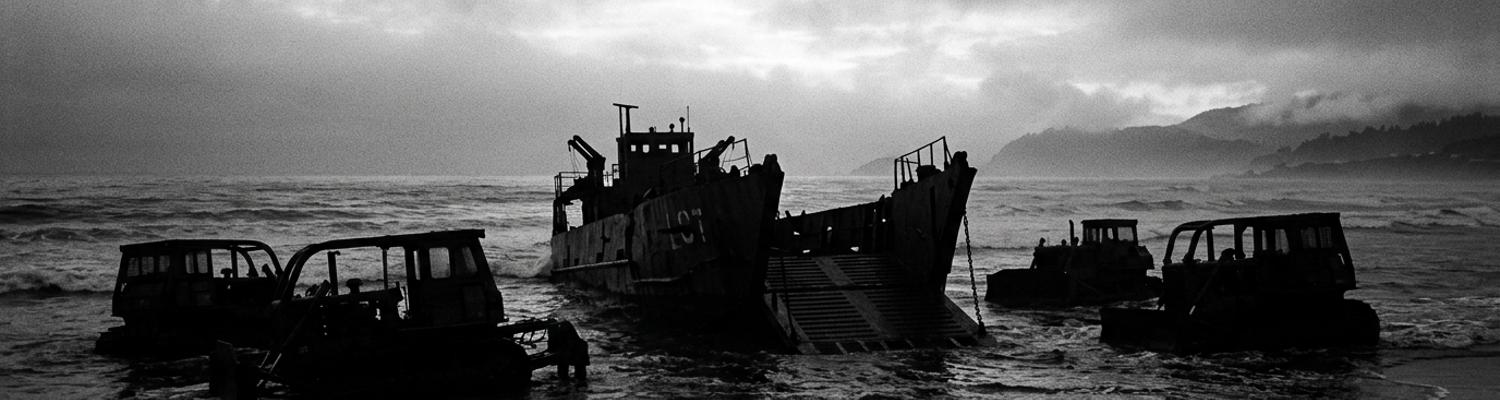
Heavy breakers rolled unchecked over the low gunwales of LCT-195 and LCT-242. Their three-cylinder diesel engines swamped. The craft swung ninety degrees beam-to-beach. Sixteen grounded craft lay broadside along an eight-hundred-yard stretch of sand within three hours. They were pinned flat against the shallows.
Incoming waves rammed secondary assault craft directly into the exposed ribs and rudders of these grounded hulls. Fuel tanks punctured. Propeller drive shafts bent. Access lanes charted for subsequent unloading waves vanished entirely beneath a continuous line of broached hulls. Every clear run into the dune exits was blocked.
Wrecked landing craft formed an impassable barrier across the surfline.
A close review of operational logs indicates that the failure to secure stern cables converted standard beaching runs into instantaneous strandings. Standard amphibious landing doctrine required an LCT to drop its seven-hundred-pound kedge anchor one hundred yards offshore. This kept constant tension on the cable drum to winch the craft backward off the shelf after unloading.
The loose calcarenite bottom provided zero holding ground for the anchor blades. Winch operators engaged their deck machinery to pull free. Brake linings glazed under the strain. Steel cable drums stripped their drive dog clutches. Uncontrolled craft drifted immediately into adjacent landing corridors.
Four Landing Craft Mechanized carrying M4 Sherman tanks of the 753rd Tank Battalion attempted to bypass the bottleneck at Green Beach by running the Gela River shoals directly. They slammed into the half-submerged wreckage of a swamped LCM-3. Bow ramps jammed against twisted wreckage. Vehicle crews were prevented from dropping their forward aprons. Incoming coxswains behind them threw their marine gearboxes into emergency reverse. Reduction gears stripped. Five more craft were left dead in the breakers.
Deep-draft salvage tugs sat pinned five miles out at sea by Italian coastal batteries.
When examining the historical record across the 1st Infantry Division sector, the inability to clear grounded LCTs and LSTs triggered an acute forty-eight-hour offload paralysis across the littoral perimeter. Beach party salvage details lacked shallow-draft recovery tugs. They lacked bulldozers with sufficient tractive pull to drag a three-hundred-foot vessel like LST-375 off the sandbar.
Standard shore recovery tractors attempting to pass tow lines snapped two-inch wire cables as tide waters dropped. The massive vessels were left perched high and dry on the outer shoals. Offload capacity plummeted to less than fifteen percent of scheduled operations between the morning of July 10 and the afternoon of July 12. Transports offshore held their holds closed. They were unable to dispatch follow-on waves of artillery ammunition and replacement parts to the beaches.
Field artillery units onshore repelled the counterattacks of the Hermann Goring Panzer Division. They rationed their remaining 105mm high-explosive rounds to less than ten shells per gun per hour. Supply vessels sat fully laden in deep water while frontline infantry fought without vehicular anti-tank weapons. They were trapped behind a deadlocked shoreline that naval salvage teams could neither clear nor bypass.
Sixty-eight broached hulls still littered the surfline between Gela and the Dirillo River forty-eight hours after the initial dawn landings.
Naval beach party records from July 12 show that shore engineers resorted to cutting torch teams from the 540th Engineer Shore Regiment. They physically severed the steel superstructures of stranded landing craft just to open a twenty-yard clearance channel through Red Beach One. Mechanics burned through frame ribs and bulkhead plating with oxyacetylene torches while working chest-deep in water under sporadic 150mm artillery fire from Ponte Olivo.
Severed deck plates and jagged engine blocks were hauled onto the dry sand using winches anchored to deadmen buried in the backshore dunes. Naval salvage officers recorded that twenty-six LCTs lay permanently wrecked or firmly embedded in the shoals by 1600 hours on D-Day plus two. Three LSTs and fifty-four smaller landing craft shared the same fate. The beachhead was left with fewer than four usable vehicle offload slots across three entire regimental landing zones.
Stranded M1 Antitank Guns and the Hermann Goring Counterthrust
Archival evidence shows that by midday on July 10, the 16th and 26th Regimental Combat Teams had pushed three to five miles inland toward Highway 115 and the high ridges of Piano Lupo. They were completely stripped of their divisional armor support. Infantrymen had dug defensive foxholes along the exposed limestone hills near coordinates 37 degrees 07 minutes North and 14 degrees 18 minutes East. They possessed little more than rifles, light machine guns, and entrenching tools.
Every single towed 57mm M1 antitank gun assigned to the regimental antitank companies sat chained down inside flooded landing craft five miles back at the water edge. Others were abandoned axle-deep in coastal sand. Heavy three-quarter-ton Dodge WC-52 trucks tasked with hauling the guns had drowned their distributors during the surf transition. Sixty-four artillery carriages were stranded along the tide line.
Gun crews were forced to leave their weapons behind and march inland carrying empty ammunition crates. They lacked prime movers to drag the 2,700-pound pieces up the soft bluffs. Divisional tables had promised thirty-six mobile M10 tank destroyers from the attached 601st Tank Destroyer Battalion to anchor the regimental flanks against enemy armor. The thirty-ton vehicles sat trapped on the decks of Landing Ship Tanks anchored two miles off the Sicilian coast instead. Sunken craft blocked them from approaching the beachhead.
Not a single American antitank gun crossed Highway 115 before nightfall.
A close review of operational logs indicates that the mechanized offload schedule suffered total paralysis because naval cargo planners had stowed heavy tracked armor beneath general cargo in the second-echelon convoys. Landing officers attempted to bring LCT-242 and LCT-197 into the Gela River shoals with elements of Company B of the 601st Tank Destroyer Battalion. Submerged gravel banks grounded the vessels two hundred yards out in six feet of water.
Water entered the open exhausts of the M10s. The twin General Motors 6-71 diesel engines seized before the tracks could make contact with the sea bottom. Winch cables snapped as shore parties attempted to pull the swamped sixty-thousand-pound tank destroyers through the surf with D7 tractors. Regimental commanders inland sent urgent radio transmissions requesting armored reinforcement. Beach masters had no working amphibious ramps to discharge the vehicles. Forward platoons across both combat teams had to hold open roads against armor with nothing heavier than hand-held infantry weapons.
The infantry faced German panzers with hand weapons.
When examining the historical record of the armored fighting on July 10 and 11, the Hermann Goring Panzer Division launched two coordinated counterthrusts against the American perimeter. They used ninety tanks from the 1st Panzer Regiment. Advanced elements of Kampfgruppe Schmalz and Kampfgruppe Conrath swept directly across the Gela plain toward the positions of the 16th and 26th Infantry. They spearheaded out of Niscemi and the airfield complex at Ponte Olivo.
The German thrust deployed mixed formations of Panzerkampfwagen III medium tanks and Panzer IVs with high-velocity 75mm guns. Seventeen fifty-six-ton Tiger I heavy tanks from the 504th Heavy Panzer Battalion joined the assault. Infantry squads dug into the olive groves of Piano Lupo engaged the charging vehicles using 2.36-inch M1A1 bazookas at ranges under thirty yards.
The small shaped-charge rockets failed repeatedly against the heavy rolled homogeneous armor of the German vehicles. Rocket warheads detonated harmlessly against the four-inch frontal plates of the Tiger tanks. They deflected off the heavy glacis or burst against track skirts without cracking the hull armor. American gunners took severe burns from backblast as they fired from exposed slit trenches while German 7.92mm machine guns raked the sandbag parapets.
Rockets ricocheted off German frontal armor without leaving a dent.
Naval gunfire support offshore became the sole barrier preventing the Hermann Goring Division from rolling over the regimental positions and crushing the beachhead. Forward observers from the 1st Shore Fire Control Party climbed telephone poles and water towers along Highway 115. They used battery-powered SCR-536 radios to transmit target coordinates directly to warships operating five miles offshore.
Light cruisers USS Boise and USS Savannah maneuvered into close-range firing positions along the four-fathom line. The destroyers USS Shubrick and USS Butler accompanied them. The six-inch guns of Boise fired over two thousand rounds of high-explosive ammunition directly into the German armored columns advancing past the Abbio Priolo crossroads between 1040 and 1630 hours on July 11.
The sheer kinetic shock of two-hundred-pound naval shells striking the dry earth overturned forty-ton panzers. Drive sprockets shattered. Tracks severed. German tank formations broke apart under continuous five-inch and six-inch naval broadsides. Their armored advance halted two thousand yards short of the landing beaches.
USS Boise expended over two-thirds of its six-inch magazine ammunition before the panzer assault broke.
Jurisdictional Conflicts Between Navy Beachmasters and Army Engineers
Archival evidence shows that command authority on Red and Green Beaches fragmented the moment landing ramps hit the sand. Authority split between two separate military branches operating under opposing operational mandates. Navy Beachmaster units from the 8th Amphibious Force claimed sovereign control over the wet beach seaward of the high-water line. They focused strictly on clearing the approach channels and preventing landing craft from backing up into incoming waves.
Officers of the 540th Engineer Shore Regiment operated under United States Fifth Army directives fifty yards up the slope. These directives designated the shore party commander as the sole manager of beach exits, vehicle dispersal corridors, and tactical supply dumps. Neither service held supreme authority over the other on the tidal shelf.
Mediterranean Base Section amphibious doctrine had failed to establish an integrated chain of command for shore operations. This doctrine was drafted during rushed inter-service conferences in Oran two months earlier. Lieutenant Commander beachmasters ordered landing craft coxswains to ram incoming craft directly onto whatever open sand was left. They sought to empty transport holds offshore at maximum speed.
Army engineer captains countermanded those orders from the dune line. They ran into the breaking surf to physically wave off Landing Craft Mechanized carrying non-combat equipment. The regimental beachhead desperately needed heavy tracked tow vehicles and direct-fire weapons.
Two separate service branches fought each other for control of twenty yards of wet sand.
A close review of operational logs indicates that this division of authority destroyed any coherent prioritization of arriving materiel. The 16th Regimental Combat Team was fighting off tank assaults from the Hermann Goring Division without divisional antitank guns. Navy offload crews continued clearing general cargo vessels anchored five miles out.
LCTs and LCMs repeatedly discharged pallets of standard C-rations, canvas wall tents, and quartermaster administration crates directly into the surfline. Narrow transit corridors were buried under dry goods that frontline infantry could not use. Shore party commanders demanded priority beaching slots for the 57mm antitank guns and tracked D7 bulldozers waiting offshore. Beachmasters refused to hold back inbound craft. They argued that pausing the flow of landing craft would expose offshore flotillas to German Ju 88 dive-bombers.
Combat engineers watched cases of office stationery and replacement field uniforms wash into the dunes. Immobilized field guns of the 33rd Field Artillery Battalion sat chained to the steel decks of LST-375 out in the transport lanes.
When examining the historical record, this operational deadlock persisted because signal communications between the beach control parties and the offshore transport squadrons dissolved completely before mid-morning. Army shore parties were equipped with portable SCR-284 radio sets. Navy beach parties relied on waterproofed TBX pack transceivers to reach the transport division flagships.
Heavy Mediterranean swells repeatedly swamped the landing parties during their approach. These swells reached six to eight feet across the shoals. Salt water entered the unsealed canvas field bags of the SCR-284 units. The paper capacitors saturated. The dynomotor power supplies shorted out before operators could establish a single network net with the command vessel USS Ancon.
Naval beach party radio operators carrying TBX transceivers took full drenchings in the surf. Breaker impacts cracked delicate quartz frequency crystals inside the tuning housings. Saltwater corrosion grounded antenna terminals within minutes of landing.
Visual signaling methods collapsed alongside the electronic sets. Thick dust clouds thrown up by Italian coastal shells completely blinded shore signalmen. Black smoke pouring from the ruptured fuel oil tanks of LST-313 obscured the beach. Signalmen attempting to use daytime blinker lamps and red semaphore flags could not see the ships.
Every transport offshore operated in blind isolation.
Transports of Transport Division 3 continued loading landing craft with arbitrary cargo manifests. They sent hundreds of tons of secondary divisional supplies toward beach coordinates that were already physically choked with burning steel. Naval cargo masters on the transport Barnett dispatched five successive waves of light weapons carriers to Red Beach Two without receiving confirmation that engineering crews had secured an exit through the dune crest.
Over eighty percent of the message traffic between shore engineers and the naval attack group sailed back and forth on motor launches by 1300 hours on July 10. Dispatch runners drowned or disappeared into the surf before reaching their assigned ships.
Engineer Special Brigade Restructuring and Overlord Adjustments
The near-catastrophe at Gela forced the War Department to restructure Engineer Special Brigades into integrated combined-arms beach management units.
Archival evidence shows that the Joint Chiefs of Staff dissolved the independent command structure that had split authority between Navy beachmasters and Army engineer shore regiments. They did this after reviewing the inter-service chaos on Red and Green Beaches. General Lesley J. McNair and War Department planners in Washington drafted revised tables of organization and equipment for the 1st, 5th, and 6th Engineer Special Brigades preparing in the United Kingdom.
Planners eliminated the divided jurisdiction by placing all personnel operating on the shoreward side of the low-water mark under a single unified Army beach brigade commander. Each restructured brigade absorbed an entire naval beach battalion. This included the 6th and 7th Naval Beach Battalions. Naval communications teams and salvage parties became organic subordinates to the shore engineer colonel.
Specialized Joint Assault Signal Companies were established to replace the fragile radios that failed in the Sicilian surf. These JASCO units integrated sixty-channel VHF radio nets, portable switchboards, and dedicated air-liaison teams into self-contained thirteen-man beach party communications teams. Quartermaster truck companies, military police traffic control platoons, and ordnance bomb-disposal squads were formally incorporated into the brigade echelon. This ended the practice of relying on uncoordinated attachments.
No naval officer maintained authority to dump unrequested cargo along assault corridors without written clearance from the shore brigade command post.
A close review of operational logs indicates that the hard-learned operational lessons from the Gela surf directly altered landing craft scheduling protocols for Operation Overlord. Naval planners under Rear Admiral Alan G. Kirk and British planners at COSSAC discarded fixed rigid-interval offload timetables. They were shocked by the sixty-eight broached hulls that paralyzed the Gela River shoals.
The landing tables for Omaha and Utah Beaches abandoned continuous assault waves that drove blind into sandbanks. They replaced them with tide-contingent approach corridors timed strictly against rising water cycles. Heavy Landing Ship Tanks received mandatory orders to beach exclusively on a falling tide or discharge cargo across newly developed Rhino ferries anchored five hundred yards out in deep water. This prevented beaching craft at high tide where dropping water stranded vessels for twelve hours.
Offshore assembly areas were shifted from five miles to twelve miles seaward of the coast. They were protected by dedicated naval salvage groups equipped with shallow-draft salvage tugs stationed every four hundred yards along the approach lanes.
A grounded vessel that failed to kedge off the shelf within five minutes faced immediate destruction by tractor-mounted demolition charges.
When examining the historical record of pre-invasion mechanical testing at the Amphibious Training Center in Woolacombe, engineers overhauled maintenance protocols to prevent the drivetrain collapses that crippled the 540th Engineer Shore Regiment. Standard Caterpillar D7 and D8 bulldozers had their cast-iron final drive housings replaced with reinforced cast-steel casings. These casings were designed to withstand sudden shock loads exceeding thirty-five thousand pounds of drawbar pull.
Ordnance mechanics designed sheet-metal wading trunks that extended engine air intakes and exhaust stacks six feet above tractor hoods. They sealed crankcase breathers and starter motors with synthetic neoprene gaskets. Amphibian truck companies operating GMC DUKW-353s received field-installed bilge pump modifications and high-capacity auxiliary oil coolers. This eliminated the transmission seizures that destroyed Company C on the Sicilian mudflats.
Technicians mandated central tire inflation systems that enabled DUKW drivers to drop tire pressures from forty-five to twelve pounds per square inch from inside the cab while entering soft sand. Quartermasters placed tracked Caterpillar D8 tractors and heavy recovery winches onto the primary beachhead clearance manifests. Mechanized extrication equipment touched the shoreline before wheeled combat supply vehicles left their transport decks.