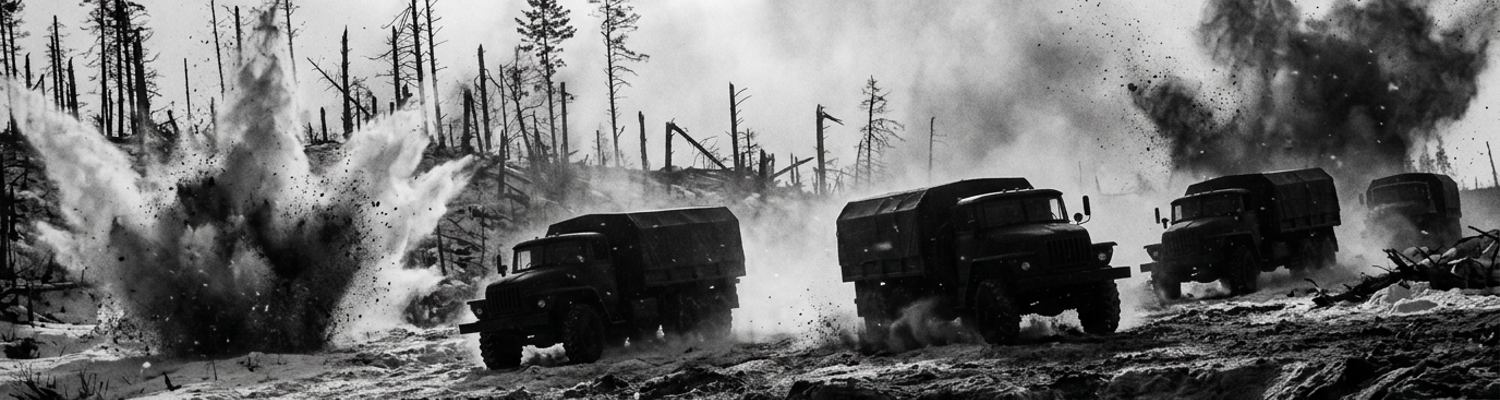

Interwar Subsistence Models and Vosges Winter Conditions
Regimental planners for the 114th Infantry Regiment received exactly thirty-six hours to organize a forward supply dispersion across the fortified approaches of Siersthal. Operations staff faced an unforgiving countdown. Winter weather fronts were tracking directly toward the Low Vosges. Division command insisted on immediate jump-off times.
Divisional combat orders arrived on December 8, 1944.
Quartermasters had zero margin for trial runs. A sudden freeze and thaw cycle turned primary supply trails into deep clay trenches. The countdown clock compelled officers to push forward on paper estimates. Physical reconnaissance was impossible.
The battle clock ignored the physics of human fuel consumption.
When examining the historical record, the foundational error of the operation traced back nineteen years to rural New Jersey farmlands. State agronomists conducted extensive field surveys across Ocean County in 1925. They tracked the metabolic energy output of civilian agricultural workers engaged in manual labor. The War Department adopted these exact survey baselines when drafting nutritional distribution tables for the New Jersey National Guard. This was the parent formation of the 114th Infantry. Bureaucrats pegged the standard daily ration at 3,750 calories. They operated on the assumption that a soldier digging revetments expended no more energy than an East Coast farmhand harvesting cranberry bogs in mild weather.
These figures migrated directly into peacetime subsistence tables.
Quartermasters simply multiplied troop numbers by this standardized figure. They assigned bulk shipments of Type B and C rations based entirely on interwar peacetime farm metrics.
Archival evidence shows that these peacetime projections disintegrated during the second week of December 1944 in the Northern Vosges. Temperatures dropped below zero Fahrenheit. Driving sleet soaked uniform wools. The mountain topography presented elevations exceeding five hundred meters choked with dense pine cover and heavy mud. Moving infantry equipment on foot through the mud near Siersthal required continuous physical exertion.
A fully equipped rifleman carrying forty-five pounds of combat gear burned between 5,800 and 6,400 calories every twenty-four hours.
This energy output was required simply to maintain internal body warmth and step over washed-out logging paths. The standard daily allotment delivered less than two-thirds of that physiological baseline. This created an unbridgeable daily net deficit of over 2,000 calories per man. Standard cargo trucks bogged down to their axles along Route Nationale 62. The men had to carry their own supplies forward on foot over eight miles of steep trails.
Cold and starvation struck simultaneously.
A close review of operational logs indicates that this acute nutritional collapse crippled the fighting capacity of the 114th Infantry Regiment. Shivering depleted muscular glycogen reserves within forty-eight hours of occupation. Riflemen became incapable of digging through frozen topsoil to construct proper overhead cover. Core body temperatures dropped. This induced systemic lethargy and severe loss of motor coordination among the front-line companies pinned down in wet foxholes. Riflemen struggled to manipulate the frozen operating rods of their M1 rifles. Weapons crews could no longer drag 81mm mortar tubes up slippery slopes without fainting. Combat medics documented widespread hypoglycemia. Rapid weight loss averaged ten pounds per man across five days. An immediate surge in trench foot cases incapacitated nearly twenty percent of Company G before direct enemy contact occurred.
Logistical Collapse Along the Siersthal Front
By midday on December 11, the road to Siersthal had transformed into an active artillery kill zone.
Archival evidence shows that elements of the German 25th Panzergrenadier Division zeroed their heavy mortar batteries directly onto the sunken defiles linking Enchenberg to the frontline positions. The 361st Volksgrenadier Division joined this bombardment. Targeted volleys of high explosive shells pulverized the narrow dirt path designations known locally as Trail 14 and Chemin Rural 4. Steel fragmentation stripped the bark off flanking pine stands. The blasts severed the landline communications wires strung between the 114th Infantry regimental command post and the 2nd Battalion forward observation post. Heavy fragments sheared brake lines on forward quartermaster vehicles. They punctured radiators on three-quarter-ton Dodge weapons carriers. Deep craters tore into the switchbacks where the mud had swallowed tire chains.
German observers stationed on the high concrete observation domes of the Simserhof fortifications possessed direct lines of sight onto every exposed crest.
Spotters registered pre-sighted impact grids with three-round spotting salvos. They delivered continuous five-minute area suppressions whenever vehicle engine noise drifted across the draw. Ripped up by continuous detonations, wooden corduroy log reinforcements turned into scattered debris.
The primary artery was cut.
A close review of operational logs indicates that the physical severance of the road quickly collided with rigid regimental doctrine. Seventh Army and 44th Infantry Division supply standing operating procedures enforced an uncompromising ban against sending unarmored wheeled transport through any corridor under registered indirect fire. Depot personnel from the 44th Quartermaster Company halted all two-and-a-half-ton GMC CCKW cargo trucks six miles south of the fighting lines at Petit-Rederching.
Division logistics staff officers refused to clear soft-skinned vehicles into the interdiction zone without armored escorts.
The attached light tanks of the 749th Tank Battalion were already fixed to static hull-down infantry support bunkers along the regimental flank. Quartermaster drivers sat on idling running boards. They were forbidden by direct written orders from attempting individual runs across the open fields. Combat teams could not override divisional risk protocols. Ninety tons of dry provisions, winter clothing, and small-arms ammunition sat immobile in rear-echelon muddy assembly yards. Forward rifle platoons engaged German counterattacks without resupply.
The forward battalions were burning through reserves they could not replace.
When examining the historical record of December 12, Company E and Company F reported an immediate drop in basic survival stores. Battalion ammunition distribution points outside the western outskirts of Siersthal held fewer than forty crates of .30-caliber M2 ball ammunition. This inventory was insufficient to feed their water-cooled M1917A1 machine guns and squad-level M1 Garand rifles for sixteen hours of sustained defensive contact. Squad leaders ordered riflemen to restrict target engagements to point-blank encounters within fifty yards. Each man was rationed to five eight-round en-bloc clips. Automatic rifle teams running M1918A2 Browning Automatic Rifles had to strip ammunition out of linked machine gun belts by hand when dedicated box magazines ran dry.
Subsistence disintegrated on the exact same timeline.
Forward dumps held only 310 intact K-ration units to sustain over eight hundred cold combat soldiers clinging to frozen foxholes. Riflemen divided single wax-sealed dinner units between four soldiers across twenty-four hours. These units consisted of a two-ounce tin of canned pork and luncheon meat, biscuits, and a dry beverage packet. Regimental supply logs recorded that 2nd Battalion had fewer than twelve rounds of M2 ball per rifleman remaining in company dumps at midnight on December 12.
German Fire Dominance Around Fort Simserhof
Archival evidence shows that German engineers from the 25th Panzergrenadier Division systematically repurposed the subterranean fortress complex of Ouvrage Simserhof into an elevated defensive anchor.
Constructing new field fortifications proved unnecessary. French military engineers had already poured thousands of tons of steel-reinforced concrete directly into the limestone ridges overlooking the Schwalb River basin. Combat teams moved into the reinforced subterranean combat blocks. They established fortified machine-gun nests and forward observation centers inside the armored steel cupolas of Blocs 1, 2, and 5. Elevated more than three hundred and eighty meters above sea level, these concrete cloches provided German observers with clear sightlines over the open valley floor funneling south from Siersthal toward Enchenberg. Heavy MG 42 machine guns were wedged into armored embrasures engineered a decade earlier to withstand sustained naval caliber bombardments.
Optical rangefinders mounted behind hardened viewing slits allowed artillery spotters to track individual human movements across the frozen valley floor at ranges exceeding three thousand meters.
When examining the historical record of December 13, German gunners had reinforced these high-elevation perches with heavy direct-fire artillery batteries. Battery commanders positioned dual-purpose 8.8-centimeter FlaK 36 guns along the reverse slopes and concealed tree clearings flanking Fort Simserhof. They locked an interlocking direct-fire grid across every open transit road. High-velocity barrels firing Sprgr. L/4.5 explosive shells and Pzgr. 39 armor-piercing projectiles possessed muzzle velocities exceeding eight hundred and twenty meters per second. This enabled gun crews to hit moving targets along the valley floor with flat trajectories that eliminated dead space.
Shell flight times across the open draws measured less than three seconds.
German gun teams registered their firing tables on specific road markers, stone farm structures, and culvert crossings along the exposed stretches of Route Departementale 35. Any quartermaster truck stepping into daylight view drew synchronized salvos from multiple emplacements. These salvos shattered soft-skinned cabs and sheared engine blocks off chassis frames before drivers could reach roadside drainage ditches.
Daylight vehicular movement along the valley floor became completely impossible.
A close review of operational logs indicates that this localized direct-fire envelope brought supply movement into immediate conflict with United States Army Field Service Regulations. Explicit provisions within FM 100-5 prohibited commanders from committing unarmored transport columns into open corridors subjected to observed direct anti-tank and heavy-caliber fire. Regimental and divisional motor transport officers faced strict administrative and legal prohibitions against exposing soft-skinned two-and-a-half-ton trucks to direct line-of-sight artillery without prior counter-battery suppression or extensive smoke screening. Seventh Army logistics directives reinforced this restriction. They ordered transport sections to park unarmored vehicles outside direct-fire zones until combat arms reduced the enemy gun positions.
Division logistics heads refused to issue route clearances to the 114th Infantry Regiment forward supply trains.
They cited manual protocols that categorized daylight resupply runs across the Siersthal approaches as unauthorized losses of material. Regimental logistics records show that thirty-two loaded cargo trucks remained grounded at Petit-Rederching while frontline companies outside Siersthal fired their final rations and small-arms clips.
Tactical Timing of German Artillery Reload Cycles
Archival evidence shows that an unauthorized mechanical stopwatch decided the movement of American rations across the Siersthal gap.
When examining the historical record, the plan originated inside a forward listening post manned by the 114th Infantry regimental supply sergeant. Crouched behind sandbags along the northern rim of the Enchenberg ridge overlooking Trail 14, this non-commissioned officer spent eighteen consecutive hours tracking German anti-tank gunners through standard M13 field binoculars. He mapped the acoustic signatures and muzzle dust of dual-purpose 8.8-centimeter FlaK emplacements positioned three thousand yards away near Fort Simserhof. Each time an American scout jeep or infantry patrol drew fire, his finger clicked down on a pocket timer. He recorded interval gaps between target detection, initial sighting shots, rapid battery volleys, and subsequent silent periods.
German crews belonged to battery elements of the 25th Panzergrenadier Division.
They operated according to strict Wehrmacht fire-direction manuals that dictated rapid four-round surface barrages followed by sustained weapons servicing. The sergeant logged twenty-two distinct firing engagements across two days. He charted how the sustained turnaround speed of anti-tank crews decayed as freezing weather and barrel heat cycles forced gunners into predictable physical routines.
Physical exhaustion slowed the German gun line down.
A close review of operational logs indicates that mathematical analysis of these handwritten logbooks uncovered a workable operational loophole. Regimental calculations revealed a reliable ninety-second window required for German 88mm crews to traverse, adjust deflection, and reload following a concentrated volley. Firing four rounds of Sprgr. L/4.5 explosive ordnance created high barrel pressures and fouled the sliding wedge breech blocks with burning propellant residue. German loaders had to wait for hydro-pneumatic recoil cylinders to fully return the barrel into battery before unlatching the housing. Shifting fire to an unexpected secondary corridor along Route Departementale 35 required two separate gunners to crank mechanical handwheels through wide arcs of traverse.
Each handwheel rotation moved the carriage only fractions of an azimuth degree.
Gunners had to reset their optical deflection drum on the ZF 20 sighting unit. They re-leveled the panoramic sight bubbles against mountain cant. They verified revised range estimations on elevation scales. While loaders wrestled forty-pound brass shells from steel transport cases stacked in icy revetments, ninety full seconds ticked away before the firing pin could strike the next primer cap.
Survival required gambling an entire column on that single ninety-second void.
The regimental quartermaster accepted the risk that any mechanical stalling or timing anomaly meant guaranteed vehicle loss. Moving a two-and-a-half-ton GMC CCKW cargo truck across the 800-yard exposed mud stretch between the tree line and the sunken roadbed consumed seventy-two seconds at maximum axle torque. Drivers were instructed to wait in hiding until German batteries unloaded a registered volley against diversionary targets. They would then drop clutches and floor gas pedals onto frozen tire ruts.
This left an eighteen-second safety margin.
If a single six-cylinder GMC 270 engine suffered vapor lock, the vehicle became an immobilized target in open line of sight. If a differential cracked under the strain of clay suction, the truck was lost. If a tire chain snapped and jammed a rear dual wheel, the crew would die. Thin sheet-metal cabs and canvas cargo tops offered zero protection against steel fragments traveling over eight hundred meters per second. German spotters on Simserhof held optical crosshairs over the valley floor. They waited for reload cycles to complete. A stalled truck caught in the opening could neither reverse nor maneuver away. This ensured direct hits that would incinerate three tons of dry rations and kill the quartermaster crew within seconds.
Fleet Preparation and Doctrinal Deviations
Archival evidence shows that maintenance mechanics at the Petit-Rederching staging area began modifying four standard unarmored GMC CCKW 2.5-ton trucks at dawn on December 14.
These six-wheel-drive platforms carried factory curb weights exceeding ten thousand pounds. They were encumbered by heavy tarpaulins, steel frame bows, lateral wooden troop seats, and secondary running equipment. Mechanics unbolted the steel cargo bows. They tore away the thick green canvas canopies. They unfastened the timber troop racks to shed hundreds of pounds of deadweight. Wrenches sheared away redundant metal brackets, spare wheel mounts, and pioneer tool racks holding axes and shovels bolted behind the cabs. Mechanics drained excess fluids from auxiliary storage tanks. They disconnected governor linkages on the 269.5-cubic-inch GMC 270 overhead-valve engines. This allowed carburetors to pull maximum fuel flow despite the risk of throwing connecting rods.
Stripping the open beds flattened the profile against winter crosswinds blowing off the Simserhof ridges.
It lowered rolling resistance across the frozen ruts. Every modification pursued a single variable. That variable was raw road acceleration across the 800-yard kill zone. Armor offered no salvation against heavy anti-tank shells.
A close review of operational logs indicates that this unauthorized daylight sprint was organized entirely outside established command hierarchies. Seventh Army regulations and 44th Infantry Division standing orders strictly forbade daylight motor transport through unsuppressed artillery kill zones without direct authorization from the division G-4 logistics section. Knowing that division bureaucrats at Sarre-Union would take twenty-four hours to deny the request, the 114th Infantry regimental supply sergeant bypassed battalion transport officers and regimental staff entirely. Enlisted personnel rounded up volunteer drivers from Service Company in private. They pulled men aside behind fuel storage sheds away from company officers.
The sergeant laid out the ninety-second timer calculations on the hood of a Dodge command car.
He showed drivers the precise intervals between German FlaK 36 battery volleys. No formal trip tickets were cut. Route clearance forms remained blank in regimental desks. No operational request crossed into the message centers of the 44th Division headquarters.
The quartermaster staff had gone rogue.
When examining the historical record, the physical organization of the vehicle beds directly inverted standard field service packing doctrine. Standard Army supply tables mandated heavy ballast at the forward bulkheads to distribute axle weights evenly across the chassis. Enlisted handlers dismantled this configuration completely. They restaged supplies specifically for immediate manual offloading without entering the truck beds. Crates containing .30-caliber M2 ball ammunition were packed in herm