
M107 Deployment and Doctrine
A fire mission request arrived over the radio net at 02:17 on 11 May 1969. The coordinates were XT 273 841. The target was an enemy concentration deep within the rugged terrain of Quang Ngai Province. For the gun crews of the 3rd Battalion, 18th Field Artillery Regiment, attached to the Americal Division, this was standard procedure. Their primary weapon system was the M107 self-propelled gun, an instrument defined by its extreme range. The M107 was designed for fire support from positions far removed from the front lines. Its 175mm M113 gun could propel a 147-pound projectile over 20 miles, a capability that outranged the enemy’s Soviet-supplied 130mm M-46 field guns. This reach was the foundation of its doctrine. Its missions were interdiction of supply lines, destruction of command-and-control infrastructure, and counter-battery fire against enemy artillery threatening American firebases.
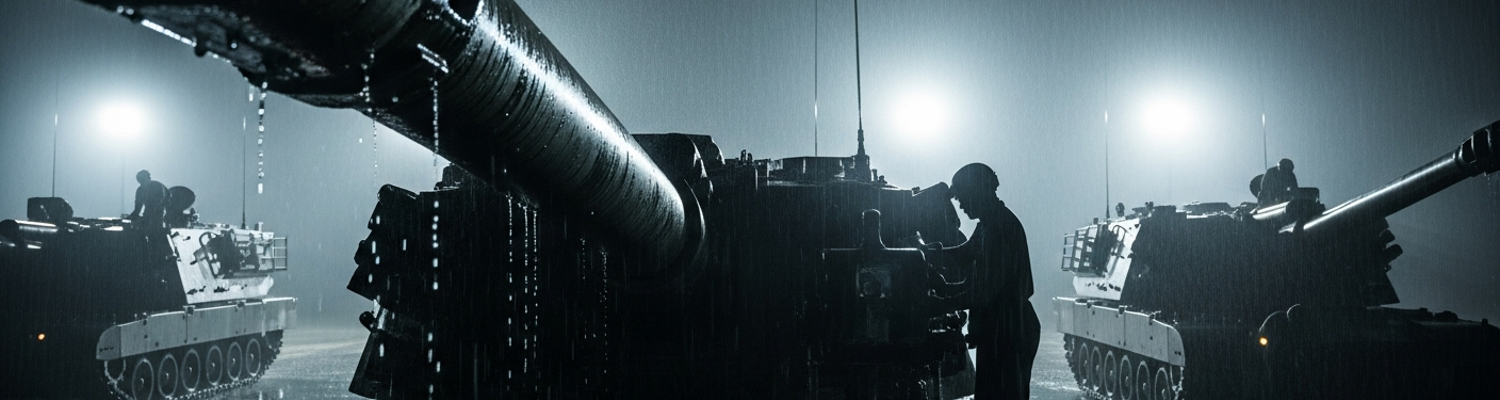
The gun operated from a lightly armored, open-topped chassis shared with the M110 8-inch howitzer. This design prioritized air-transportability and mobility over crew protection. A crew of thirteen operated the weapon, though only five could ride on the vehicle itself. The remaining crew and all ammunition followed in M548 cargo carriers. To fire, a large hydraulic spade at the rear of the hull dug into the earth, bracing the 28-ton vehicle against its own violent recoil.
A review of operational logs from 1969 (NARA Record Group 472) shows the 3rd Battalion, 18th Artillery was heavily engaged across the Americal Division’s area of operations. This sector encompassed the notoriously difficult terrain of Quang Ngai and Chu Lai provinces. The battalion, having converted to a dual M107 and M110 configuration in 1966, had moved to Chu Lai in April 1967 to support Task Force OREGON. It was formally attached to the Americal Division by February 1968. Its batteries were distributed among a network of fire support bases built on hilltops for maximum range and 360-degree fields of fire. From these positions, the M107s conducted their primary missions: Harassment and Interdiction fires. These were not strikes against observed enemy forces. They were pre-planned bombardments of suspected enemy locations, trails, or assembly areas, typically conducted at night. The environment itself was an adversary. The monsoon climate turned the red earth of the firebases into a thick mud that impeded vehicle movement, while the high operational tempo led to severe barrel wear. Early M107 gun tubes suffered from rapid bore erosion that degraded accuracy and initially limited barrel life to just 300 rounds, though improved materials later extended this.
The execution of a long-range fire mission was a detached, mechanical process. A request for fire came from a higher headquarters to the battalion’s Fire Direction Center. There, personnel performed tactical fire direction, planning the mission and allocating it to a specific gun battery. The battery’s own FDC then handled the technical calculations. They converted map coordinates into a specific elevation and deflection for the gun crew, accounting for factors like altitude, weather, and propellant temperature. These commands were relayed by wire or radio to the gun line. On the open deck of the M107, the crew manhandled the projectile and separate-loading powder bags into the breech. The gunner used hydraulic controls to lay the long barrel on the precise azimuth and elevation. The target was an abstraction, a set of numbers on a chart. The crew had no visual on the impact zone miles away in the dark jungle. Their world was the deafening report of the gun, the percussive shockwave, and the acrid smell of burnt propellant.
Forward Observer Communications Failure
The effectiveness of long-range artillery depends on an unbroken chain of information. It is a link between the forward observer who sees the target and the gun crew who must engage it. In the context of the May 1969 fire missions in Quang Ngai Province, this chain was repeatedly broken. Operational logs from the Americal Division show the primary communication method for deep reconnaissance patrols was the AN/PRC-25 radio. This system had significant vulnerabilities in the Vietnamese environment. The AN/PRC-25 was a line-of-sight FM radio. Its signal was easily absorbed or deflected by the dense triple-canopy jungle and mountainous terrain. A forward observer team attempting to relay coordinates from a valley floor was often unable to reach an airborne relay, let alone the Fire Direction Center miles away. While the radio itself was durable, its handset was notoriously susceptible to the region’s extreme moisture. This led many Radio Telephone Operators to cover them in plastic bags, a field expedient that was not always successful.
The alternative was equally fraught.
Running physical landlines using WD-1/TT field wire was a slow, arduous process that exposed line-laying teams to ambush. The thin copper-and-steel wire was frequently severed by animal activity, rockslides, or the unchecked growth of jungle vegetation. Enemy patrols specifically targeted these lines, understanding that cutting them was as effective as destroying a radio. For the 3rd Battalion, 18th Field Artillery, this meant fire mission requests were often received with incomplete data or not at all. This forced a reliance on pre-planned firing schedules rather than observed, real-time targets.
Target acquisition was further complicated by the heavily fortified nature of the operational area. Quang Ngai Province was a long-established enemy stronghold. The terrain was not a neutral battlefield; it had been engineered into a fortress. Archival analysis of enemy tactics reveals a sophisticated doctrine of camouflage and concealment. Bunkers were not crude holes but complex structures built with layers of earth, logs, and rock, designed to withstand all but a direct hit from heavy artillery. Entrances were hidden beneath root systems or in thickets of bamboo, making them nearly invisible to aerial observation. People’s Army of Vietnam and Viet Cong forces utilized an extensive network of tunnels, allowing them to move men and materiel unseen, often emerging to attack from unexpected directions before disappearing. This created a landscape of fleeting targets. An observer might glimpse an enemy squad on a trail, but by the time he could relay the coordinates and a fire mission was approved, a process that could take several minutes, the target would have vanished. The act of observation was a high-risk activity. The glint of an optic or the snap of a twig could betray a patrol’s position, inviting a mortar attack or a close-quarters ambush from an enemy that held a profound home-field advantage.
The cumulative effect of these challenges was a catastrophic loss of real-time intelligence. Artillery effectiveness is based on a feedback loop: the observer calls for fire, the guns fire, and the observer adjusts the impact. Without that observer, the guns are firing blind. A trained FO can correct a shell’s impact with a few words, turning a near miss into a direct hit. When communications failed, this capability was lost. The FDC, deprived of updates, could only assume the rounds were landing on target as plotted on their maps. This forced artillery units like the 3rd of the 18th into a doctrinal corner, relying heavily on Harassment and Interdiction fire missions. These were not precision strikes but massed bombardments of map grid squares where the enemy was suspected to be. The absence of real-time data meant fire plans were based on intelligence that could be hours or even days old. The gun crews on the M107s were reduced to a mechanical function, sending 147-pound projectiles into the darkness with no confirmation of their effect.
The Blind Barrage Decision
Authorizing an unobserved fire mission represented a severe doctrinal conflict for the command staff of the 3rd Battalion, 18th Field Artillery. U.S. Army field artillery doctrine was built upon the principle of observed fire. To fire without this observation was to contradict the core tenets of accuracy and efficiency, introducing enormous risk. An unobserved barrage into an active area could strike friendly forces as easily as it could the enemy, a possibility that weighed heavily on the chain of command. A review of after-action reports from the period highlights a recurring pattern of hesitation in these scenarios. The battalion FDC, upon receiving a broken or unconfirmed request, was procedurally bound to exhaust every option to re-establish contact with an observer before resorting to blind fire. This involved attempting to raise the patrol on multiple radio frequencies and even trying to contact other friendly units in the vicinity who might have a visual on the target area.
The decision was a calculated gamble.
The calculus was compounded by the quality of the available intelligence. The fire mission request that came through the radio static at 02:17 was fragmented and barely coherent, a plea from an unidentified source under duress. The coordinates were clear, XT 273 841, but nothing else was. The FDC personnel had to rely on a composite of stale and incomplete data to construct a picture of the battlefield. This involved overlaying the reported grid square onto maps showing the last known or suspected enemy positions, information that was often hours old. Intelligence from long-range reconnaissance patrols, aerial observation, or signal intercepts provided a general understanding of enemy movement patterns, but it could not pinpoint a specific unit’s location at a precise moment. The garbled transmission suggested a friendly unit in contact, forcing the command to weigh the high probability of intelligence inaccuracy against the certainty of American losses if no support was provided.
A close review of operational logs from similar incidents shows the decision-making process was never instantaneous. The time between the initial, broken call for help and the final command to fire was a period of intense pressure. After failing to establish clear communication, the battalion FDC would elevate the request to the Americal Division’s Artillery command, adding another layer of command and another delay. Within the tactical operations centers, officers were forced to debate the potential outcomes. Every second that passed while they attempted to verify the target was another second the unit on the ground was left to fend for itself. The pressure was not just tactical but psychological, amplified by the disembodied, panicked voices heard over the radio net. The final command to fire was an act of desperation, a last resort when all other options had been exhausted and the potential for friendly losses from inaction outweighed the grave risks of unobserved fire.
Impact on Landing Zone Professional
The command to fire for effect sent the crews of the 3rd Battalion, 18th Field Artillery into mechanical motion. On the gun line, 147-pound M437A2 High Explosive projectiles were rammed into the hot breeches of the M107s. Powder bags were loaded. The gunners, working from firing data calculated miles away, confirmed their elevation and deflection. The order was given. In sequence, the long tubes of the 175mm guns erupted, spitting projectiles into the night sky toward coordinates XT 273 841. Archival analysis of M107 performance logs from this period shows that gun tubes suffered from severe bore erosion, a condition that degraded accuracy by causing unpredictable wobbles in a shell’s flight path. A minute error in the FDC’s calculations, a slight deviation caused by a worn barrel, or an unforeseen atmospheric shift could send a round hundreds of meters off target at extreme range. The fire mission was intended to suppress a major People’s Army of Vietnam assault on the perimeter of Landing Zone Professional, a position held by elements of the 1st Battalion, 46th Infantry Regiment. The shells were on their way. Their trajectory was wrong.
For the infantrymen of the 1st Battalion, 46th Infantry, the night of May 11th had already descended into a desperate struggle. They were repelling a coordinated ground assault by the PAVN V-16 Sapper Battalion, a specialized unit trained to infiltrate and destroy firebases. The air was thick with the explosions of enemy mortars and rocket-propelled grenades as sappers attempted to breach the concertina wire. Then came a new sound. It was a high, whistling shriek, familiar to every soldier in Vietnam as incoming artillery. But this was different. The sound was heavier, deeper, the distinctive noise of American heavy guns. Before the men on the perimeter could process the discrepancy, the first 175mm shells landed among their positions. The impacts were immediate. Unlike enemy mortars, which often detonated on the surface, the heavy artillery shells were designed for destruction, tearing through bunkers and defensive works. Each explosion threw a lethal spray of steel fragments across a wide radius, obliterating fighting positions and turning the fortified perimeter into a kill zone. The ground heaved violently. Men who had been firing out at the attacking enemy were suddenly annihilated from behind by their own supporting fire.
Confusion turned to horror. The initial assumption was a terrifyingly accurate enemy mortar barrage, but the sheer destructive power was out of proportion. Over the radio net, frantic shouts began to override the sounds of combat, screaming for the artillery to cease fire. A check fire was ordered, but not before several more rounds landed inside the American lines. In the sudden, ringing silence that followed, the scope of the disaster began to reveal itself. The immediate aftermath was a scene of carnage, made worse by the ongoing threat from the still-present PAVN force. Medics and surviving soldiers scrambled from their positions, moving through the darkness and shattered earth to aid the wounded, unsure if another volley was imminent. Initial casualty reports, relayed back through a chaotic command net, were fragmentary and grim. Dozens of soldiers were reported killed or wounded. The blind barrage intended to save the defenders of LZ Professional had instead become part of the assault.
The Aftermath in the Fire Direction Center
For the Radio Telephone Operator in the 3rd Battalion’s Fire Direction Center, the war was a stream of auditory data. He was the human filter for the chaos erupting miles away, an experience delivered through the crackle and hiss of the radio net. FDC operational logs show these positions were nerve centers where multiple radio nets converged. The RTO had to mentally isolate the desperate, garbled transmission from an infantry platoon in contact from routine logistics chatter. The initial call from the vicinity of LZ Professional was just one more voice in a storm of static, barely coherent and laced with panic. He strained to decipher callsigns and grid coordinates, passing them on as written notes to the FDC plotters.
Then, minutes after the M107s began firing, a new wave of transmissions flooded the net. They were different. They were calls to check fire, the most dreaded command in artillery operations. The calls were frantic, overlapping, and came from multiple callsigns at once, creating an incomprehensible wall of sound. The RTO was the first to hear the direct evidence of the catastrophe, the panicked reports of friendly casualties mixing with the ongoing sounds of combat. He was a direct witness to the unfolding horror, yet completely powerless, his only function being to relay the fragmented audio of the disaster to a command staff struggling to comprehend an impossible situation.
The psychological impact on the artillerymen was corrosive. For the gun crews on the M107s, the act of firing was a detached process built on trust in the system. Trust that the unseen forward observer, the FDC, and the officers had provided correct data. When the after-action report confirmed their rounds had killed and wounded dozens of American infantrymen, that trust was shattered. Psychiatric analyses from the period reveal that fratricide incidents induced a unique and severe form of moral injury. Unlike combat against a clear enemy, friendly fire created a deep sense of guilt and complicity. The crews, who took pride in their ability to deliver life-saving fire support, were now responsible for the deaths of the very men they were supposed to protect. The M107, a symbol of American power, became a source of horror. This bred a quiet resentment and suspicion of the entire command structure. Every subsequent fire mission would be fraught with anxiety, a lingering fear that another error in the chain of command could turn them into killers of their own comrades once more.
This was not a failure of a single man, but a systemic breakdown that affected the command element. When the frantic check fire calls deluged the radio net, the officers in the battalion FDC and the Americal Division’s artillery headquarters faced an agonizing dilemma. The information was delayed, contradictory, and incomplete. The initial fire mission was requested to save a unit under heavy assault; ceasing fire prematurely could lead to that unit being overrun. Yet, the sheer volume and panic of the incoming calls indicated a disaster. Commanders struggled to reconcile conflicting reports under extreme time pressure. They were staring at maps and acetate overlays, trying to match garbled callsigns to known friendly locations that might be hours out of date. Every second spent trying to verify the source of the check fire call was another second that shells might be landing on friendly troops. The final order to cease fire, when it came, was an admission that control had been lost.
Operational Paralysis and Enemy Exploitation
The check fire command, screamed over the radio net from multiple sources around LZ Professional, brought an immediate halt to the operations of the 3rd Battalion, 18th Field Artillery. For the M107 gun crews, the sequence was reversed in stunned silence. The rhythm of loading and firing ceased, leaving only the ringing in their ears and the smell of burnt propellant in the humid night air. A review of standard artillery procedure from the period shows a verified check fire order, especially one linked to a suspected friendly fire incident, triggered a complete lockdown of the fire mission. All firing data, including the charts, logs, and calculations produced by the Fire Direction Center, was immediately impounded as evidence for the inevitable investigation. The guns were declared cold on the line. They were forbidden from firing until the situation was clarified.
This created an operational paralysis.
This paralysis on the gun line created a deadly vacuum on the battlefield. The PAVN V-16 Sapper Battalion, whose assault had initiated the call for fire, was still actively engaged in breaching the perimeter of LZ Professional. A review of PAVN sapper doctrine reveals their attacks were designed to exploit chaos and sow confusion. They used stealth and surprise to get inside a firebase’s wire before initiating a close-quarters assault with satchel charges and automatic weapons. The friendly fire incident, while devastating to the American defenders, did little to blunt the sapper attack. It aided the attackers. Defensive positions and machine gun nests that had been oriented outward to repel the assault were destroyed from behind by their own artillery. The command structure on the firebase was thrown into disarray, attempting to organize a defense while simultaneously dealing with mass casualties from an unexpected direction. The sappers, experts at infiltration, now had a shattered and disoriented perimeter to push through. The most effective tool for breaking up such a concentrated ground assault, massed artillery fire, was now off the table. The surviving infantrymen of the 1st Battalion, 46th Infantry were left to fight on, aware that their most powerful weapon was unavailable and that the enemy was still inside the wire. The investigation that followed would scrutinize every step in the chain of command, from the initial fragmented radio call to the final order to fire, permanently altering the battalion's operational protocols.