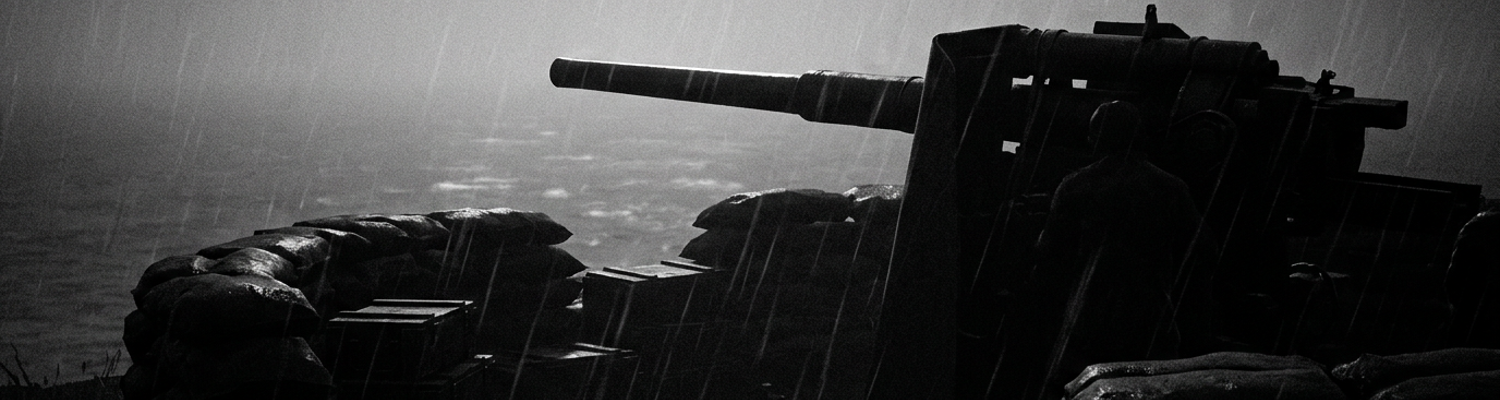

Enlisted Dugouts and Sand Revetments
Ninety-millimeter M1A1 anti-aircraft guns fired twenty-three-pound high-explosive shells at twenty-seven hundred feet per second. Heavy 155-millimeter field pieces threw ninety-five-pound projectiles over fourteen miles. Dual-purpose 40-millimeter Bofors automatic cannons operated with a cyclic rate of 120 rounds per minute. Fifth Army quartermasters deposited this heavy ordnance into the salt-marsh fringes of northwestern Tuscany during the first week of December 1944. Elements of the 92nd Infantry Division moved into the sector. Specialized coastal artillery gun crews and combat engineer detachments accompanied them. These units carved firing positions directly into the maritime dunes running three thousand yards south of the Cinquale Canal. Sand revetments were scraped out between low scrub pines and shoreline drift ridges. These positions faced directly into the fixed sights of Axis observation posts stationed high up on Monte Brugiana and the coastal heights of Massa.
Loose beach sand immobilized gun carriages within hours.
When examining the historical record of coastal battery emplacements along Highway 1, technical field reports show a rapid degradation of defensive earthworks. Digging trenches along the Versilia coastline proved mechanically ruinous for the occupying units. Sand dune trenches collapsed under heavy winter precipitation. Enlisted men shored up parapets with green pine logs and wire netting. They used soggy burlap sandbags that rotted within forty-eight hours of exposure to the salt air. Beneath the surface crust, the water table rose to within thirty inches of the floorboards. Brackish ground water filled enlisted dugouts. This standing water drowned field telephone wires and corroded exposed firing pins. Salt spray blown off the Ligurian Sea penetrated the traversing gears of the 90-millimeter shore batteries. The salt stripped factory grease and jammed traverse rings. Gunners resorted to scouring the mechanics by hand with diesel-soaked rags. Infantrymen assigned to security perimeters around the revetments dug two-man slit trenches directly into the wet dunes. Their wool overcoats absorbed gallons of ocean mist while they tracked gun flashes across the water.
Nobody stayed dry for longer than twenty minutes.
A close review of operational logs indicates continuous attritional contact along the line south of the canal. Archival evidence shows that Roll 384 daily morning reports systematically cataloged nightly harassing fires. These barrages pounded the dune revetments between 2200 and 0430 hours without fail. Axis gun crews positioned across the water at Punta Bianca zeroed their heavy coastal batteries on the American battery sectors. They dropped 152-millimeter and 170-millimeter shells into the sand. High-velocity airbursts from dual-purpose 88-millimeter batteries on the Massa hillsides accompanied the heavy naval shells. Commando parties drawn from the German 148th Reserve Division slipped across the Cinquale sandbars in rubber rafts during the dark intervals between artillery barrages. Italian San Marco Marine Division detachments waded through the coastal shallows to probe the defensive wire. Morning reports on Roll 384 consistently itemized shattered field wiring and blown parapets. The logs recorded missing picket sentries and shrapnel casualties sustained while men slept inside timber-roofed burrows under direct sandbag hits.
The sea wind blew the smell of cordite straight into the sleeping holes.
Forward outposts detected movement across the canal wash. Gunners fired blind into the surf line using preset deflection angles. Ammunition handlers dragged heavy brass casings through knee-deep sand berms. Cold salt crust split the skin on their fingers. Direct-fire 40-millimeter crews swept the coastal dunes with high-explosive tracer strings to break up incoming boarding parties. Morning entries on Roll 384 recorded daily ammunition expenditures climbing past six hundred rounds of small-arms fire per battery sector. Dozens of artillery barrages were expended against shapes slipping back across the canal line before dawn. Battery logs recorded three enlisted artillerymen wounded by mortar fragments inside their revetment at coordinate 932-618 on December 18. Medical orderlies pinned their field dressings down with dune sand to prevent the ocean gale from ripping the gauze away.
Punta Bianca Naval Rifle Bombardments
Battery logs reveal the exact mechanics of German counter-battery operations along the Ligurian coastline. Batteria Dante De Lutti and Batteria Chiodo occupied the sheer limestone cliffs of Punta Bianca. This promontory sat directly west of the Magra River mouth. German naval artillerists belonging to Marine-Artillerie-Abteilung 618 operated four 152-millimeter naval rifles. Organisation Todt construction battalions had housed these weapons in reinforced concrete casemates. Their fire-control stations maintained direct observation over the entire coastal plain stretching down toward Forte dei Marmi. American ninety-millimeter coastal batteries frequently opened fire across the Cinquale Canal. Howitzers from the 598th Field Artillery Battalion also engaged targets from the dune line. German observers registered the muzzle signatures