
Aftermath and Geopolitical Fallout of Operation Breakup
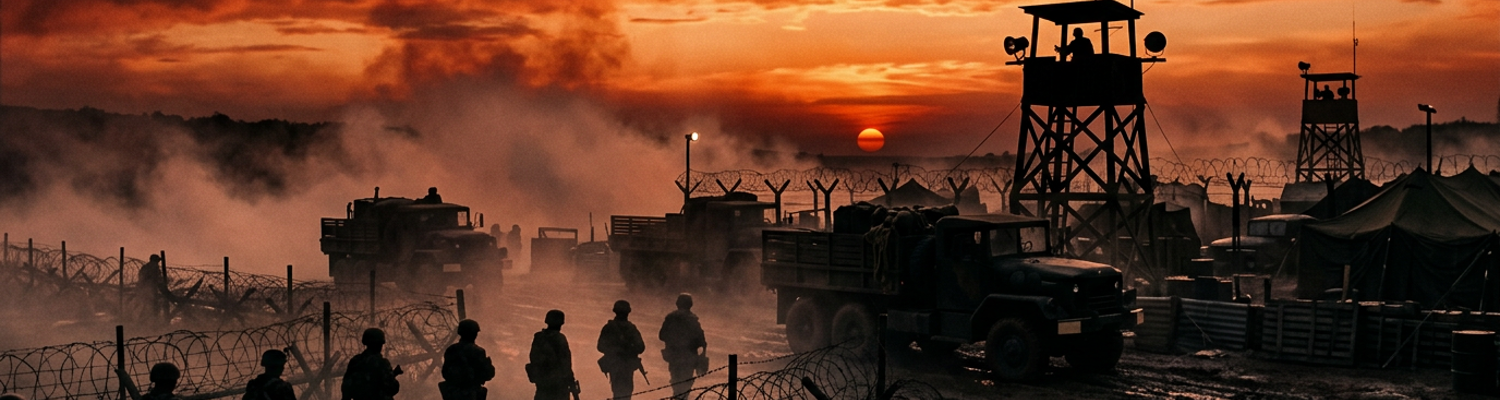
Brigadier General Haydon L Boatner gave his combat engineers and infantry regiments an urgent forty-eight hour deadline to build brand new barbed wire enclosures and secure heavy transport. Mechanics labored through the night under glaring floodlights to repair armored bulldozers and diesel transport trucks while supply clerks hauled hundreds of spools of heavy concertina wire off landing craft along the muddy shoreline. Paratroopers from the 187th Airborne Regimental Combat Team sharpened bayonets, loaded drums of tear gas, and stacked canvas stretchers to maintain complete tactical readiness. Boatner directed Patton tanks and infantry to crush the militant inmate command inside Compound 76, battering the central compounds into submission. Armed guards drove thousands of dazed prisoners out of the smoldering wreckage into open muster fields under the aimed machine guns of newly erected perimeter towers.
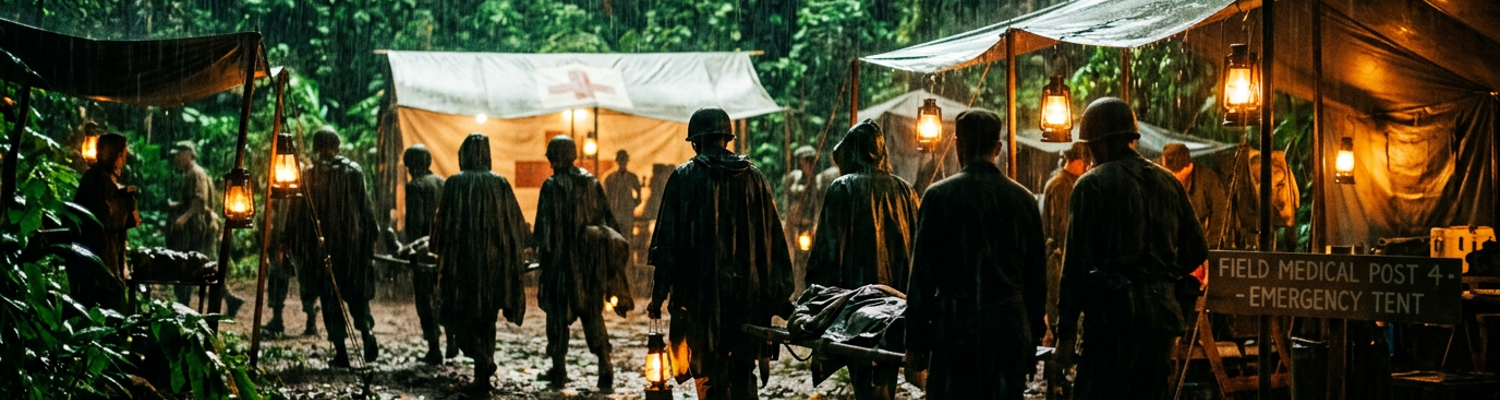
Machine gunners kept their sights locked on the crowded muster fields as military police divided the massive detainee population into small, isolated columns. Boatner directed the immediate dispersion of over 160,000 North Korean and Chinese detainees away from the central valley and into small, fortified 500-man enclosures across Geoje and offshore islands. Army engineer battalions used earthmovers to carve out fresh camp grids on the rocky slopes of Geoje while Navy utility vessels ferried thousands of segregated captives across choppy straits to satellite facilities on neighboring Yongcho-do and Pongam-do. Each newly constructed compound contained exactly eight barracks pens wrapped in double concertina fences, high-voltage lighting, and wide firebreaks that prevented prisoners from passing messages or organizing mass resistance across company lines. Clerks and medics processed every captive through fingerprint tables, registration desks, and delousing sheds, compiling the first accurate administrative rosters and cataloging scores of wounded prisoners pulled from the cleared compounds.
North Korean and Chinese delegates at Panmunjom seized on these medical tallies and casualty records to stall the Korean War armistice negotiations. General Nam Il stood before the conference table inside the truce tent and read the numbers of dead and wounded inmates aloud, transforming the combat action on Koje Island into an international propaganda offensive against the United Nations Command. Communist negotiators accused American guards of running death camps, arguing that the deployment of tanks, flame weapons, and bayonets against captured soldiers represented a direct violation of the Geneva Conventions. Beijing and Pyongyang used the public controversy over the camp casualties to insist that all prisoners wanted to return home and were only held back by United Nations violence. United Nations negotiators spent endless sessions answering formal protest notes while Eighth Army officers in the field rushed to complete physical fortifications around the new island pens to prevent any further tactical disruptions to the peace talks.
Tactical Breach by the 187th Airborne Regimental Combat Team
Paratroopers from the 187th Airborne Regimental Combat Team caused this urgent construction race because their tactical assault on Compound 76 had turned the central valley into a shattered battleground. Soldiers moved along the camp perimeter wearing protective gas masks and steel helmets, fixing long bayonets to their rifles as mechanical tear gas generators pumped thick chemical clouds into the enclosure. Inmates organized inside the compound refused orders to assemble, tying wet towels over their faces and brandishing hundreds of crude spears forged from flattened ration cans, iron fence pickets, and sharpened tent poles. Airborne platoons hurled volleys of concussion grenades into the outer drainage ditches, utilizing concussive shockwaves to stun charging groups of prisoners without causing widespread shrapnel fatalities. Thick clouds of blinding gas and concussive explosions failed to shatter the defensive line as thousands of disciplined captives stood their ground behind heavy barricades of wooden bunks and earthen ditches.
M46 Patton tanks from the 64th Tank Battalion rumbled forward to crush these fortified barricades when dismounted paratroopers could not pierce the tangled defenses. Tank drivers accelerated their machines directly through the perimeter fences, snagging hundreds of feet of concertina wire across their steel tracks while bow-mounted flame throwers discharged long streams of burning liquid into the inner compound. Sheets of roaring fuel set wooden guard shanties on fire, consumed rows of canvas tents, and scorched the network of open trenches where prisoners crouched with spears. Armor crews spun their treads over mud-brick walls and overturned sandbag revetments, cutting wide gaps through the compound perimeter that exposed the central grounds. Steel treads ground the remaining wire entanglements deep into the mud, clearing smoldering pathways for the waiting airborne squads to enter.
Riflemen surged through these smoldering pathways with fixed bayonets, colliding with clusters of North Korean prisoners in brutal hand-to-hand combat. Inmates charged from behind burning tents with forged pikes and threw heavy rocks at short range, forcing the soldiers to defend themselves with rifle butts, trench knives, and point-blank blasts of tear gas. Squad leaders directed their men through the choking smoke to bypass isolated pockets of resistance, driving straight toward the fortified center where the secret prisoner committee maintained control. Paratroopers cleared the barracks rows with concussion grenades and aggressive bayonet thrusts, subduing militant groups and cornering the senior North Korean officers inside a reinforced earthen command bunker.
Lee Hak-ku retreated into this subterranean command bunker, directing his personal security detail to fight to the finish with iron pipes, tent stakes, and sharpened blades. Airborne soldiers kicked open the timber door, threw concussion grenades into the dark interior, and plunged down the dugout stairs into a violent grapple with the surviving guards. Allied paratroopers traded blows in the confined space, beating down the staff officers with rifle stocks and wrestling the struggling senior colonel to the dirt floor. Soldiers hauled Lee Hak-ku out of the underground pit by the collar of his torn uniform, pulling him past his fallen aides and dragging him across the compound under armed guard. Security teams pushed the captured colonel into a waiting truck for immediate transfer to a maximum-security interrogation cell while riflemen formed a perimeter around the smoking ruins of Compound 76 to herd the remaining prisoners toward the muster fields.
Kidnapping of Brigadier General Francis Dodd
Lee Hak-ku had established his militant control inside the wire five weeks earlier during the abduction of camp commander Brigadier General Francis Dodd at the sally port of Compound 76. Dodd approached the wire without an armed security squad alongside camp provost marshal Lieutenant Colonel Wilbur Raven to discuss complaints about food rations, medical treatment, and firewood deliveries. Inmate work parties gathered near the open gate under the pretense of hauling fuel, quietly surrounding the entry point while North Korean representatives extended the conversation with trivial administrative questions. Captives suddenly surged through the threshold, seizing both officers by their jackets and dragging them toward the compound interior. Raven locked his arms around a heavy gatepost and fought his captors until American guards drove the attackers back with bayonets, but the surging mob pulled Dodd deep into the barracks rows. Inmates slammed the wooden gate shut, hoisted red flags over the barricades, and held Dodd captive inside a reinforced earthen tent.
Inmates used this command tent as an interrogation center, exploiting Dodd to craft written confessions of American war crimes under constant threats of violence. Detainee leaders questioned the general day and night, forcing him to listen to formal charges of murder, starvation, and torture that the inmate committees planned to broadcast to the world. Armed guards patrolled the perimeter with improvised spears while inmate runners carried written ultimatums to the gate, warning that Dodd would face a tribunal and execution if troops attempted a rescue. Brigadier General Charles Colson arrived to take command of the island garrison and found his tactical options severely limited by the sprawling camp layout and the vulnerability of the hostage. Colson lacked the infantry reserves and armored vehicles necessary to breach the compound without provoking mass riots across the island, prompting him to open direct telephone negotiations with the prisoner leadership. Detainee spokesmen rejected his initial compromises and demanded sweeping political admissions, warning Colson that Dodd would face a public tribunal if the American command did not accept their exact terms.
Colson signed a negotiated agreement containing coercive political statements to satisfy these ultimatums, desperate to preserve the life of his fellow general before the militant committees carried out their execution threats. Detainee exploitation of Dodd succeeded in extracting written confessions of war crimes as Colson formally admitted that United Nations troops had committed physical violence, bloodshed, and unlawful actions against captured prisoners. Inmate delegates copied the signed admission onto large paper banners, reading the text aloud through megaphones to neighboring compounds and celebrating an unprecedented political triumph over the American military. Prisoner representatives then conducted a final administrative roll call with Dodd to review the signed pledges and verify that camp authorities would stop voluntary screening. North Korean guards escorted Dodd to the sally port, handing the uninjured general back to American custody after seventy-eight hours of captivity.
General Mark W Clark ordered the immediate relief of both Dodd and Colson upon the release of the hostage, moving decisively from Far East Command headquarters in Tokyo to repudiate the humiliating document. Clark announced to international reporters that the signed confession was completely invalid because detainee leaders had extracted it under the threat of physical murder. Military police placed both relieved generals under close administrative supervision and escorted them onto transport aircraft bound for Japan. Clark reduced Colson to his permanent peacetime rank of colonel, relegated Dodd to administrative reserve duties, and ended their professional advancement within forty-eight hours. Logistics officers and staff planners immediately received orders to assemble fresh combat battalions, tanks, and barbed wire shipments from mainland supply depots to prepare for the forcible retaking of Compound 76.
Insurgent Command Networks and Subterranean Enclosures
Planners organizing these fresh combat units faced an enemy that had already converted Compound 76 into an organized military fortress behind United Nations lines. North Korean Senior Colonel Lee Hak-ku had established a clandestine political commissar network that functioned as a ruthless shadow government throughout the entire six-thousand-man enclosure after concealing his senior staff rank during his capture at Tabu-dong. Lee organized the captive soldiers into formal regiments, battalions, and specialized political cells, assigning dedicated communist commissars to oversee every tent row and barracks building. These political commissars enforced iron discipline among the prisoners, distributed handwritten ideological pamphlets, and relayed strategic instructions smuggled into the camp from North Korean truce negotiators at Panmunjom. Inmate couriers moved coded messages, maps, and administrative directives between adjacent compounds by hiding paper slips inside communal laundry bundles, hollowed-out turnips, and water buckets. Political officers also conducted daily indoctrination sessions across the compound grounds, drilling thousands of captives to chant party slogans in unison and isolating anyone who expressed reluctance to follow communist orders.
Prisoners carried out these party orders by excavating an extensive network of subterranean escape tunnels, command bunkers, and concealed communication trenches directly beneath the prisoner barracks. Work parties pulled up wooden floor planks inside the sleeping quarters to dig deep vertical access shafts into the damp clay soil with sharpened mess kits, flattened ration cans, and stolen drainage shovels. Inmates worked in continuous shifts to haul tons of dirt up through the trapdoors in canvas sacks, quietly concealing the excavated spoil under building foundations, inside deep latrine pits, and across outdoor vegetable gardens during daily exercise hours. Underground sappers shored up the narrow tunnel walls using structural timber cut from perimeter shanties, disassembled wooden bunks, and broken packing crates to prevent catastrophic cave-ins. Concealed communication trenches connected adjacent barracks rows below ground level, allowing courier runners to bypass open compound avenues and move between quarters without detection by American watchtower sentries. Lee Hak-ku used the largest subterranean bunker as his central command post, installing reinforced timber ceiling supports, concealed ventilation pipes, and clandestine power taps spliced into camp electric cables to power emergency lighting and hidden radio receivers.
Guards appointed by Lee Hak-ku used this underground command post to conduct kangaroo courts, torture sessions, and summary executions of anti-communist prisoners completely beyond the reach of United Nations guards. Security squads seized suspected defectors, Christian detainees, and any prisoners who expressed a desire to refuse repatriation, hauling them into darkened barracks and subterranean pits for intensive questioning. Interrogators tied bound victims to overhead structural beams and beat them with iron pipes, barbed wire whips, and sharpened tent stakes during grueling torture sessions designed to extract written confessions of espionage. Commissars then convened midnight kangaroo courts where party officers read prewritten charges, denied the accused any defense, and sentenced dozens of dissenting captives to immediate death as reactionaries. Execution details carried out these verdicts in complete silence, strangling condemned men with communication wire, clubbing them to death with heavy wooden tent mallets, and burying the bodies beneath the barracks floorboards or deep within compound latrines. Compound leaders barred American medical personnel and unarmed camp inspectors from entering the enclosure gates, keeping the physical evidence of these internal purges hidden while the underground fortress prepared for open war against the Eighth Army.
Surveillance Dead Zones and Perimeter Security Breakdowns
Doctors from the camp medical detachment stood outside the chained compound gates with inspection clipboards and vaccination kits while communist prisoner representatives turned them away at spearpoint. Detainee leadership refused to permit Allied personnel or medical inspectors entry for routine headcounts and sanitation inspections, asserting sovereign control over the enclosure grounds. Sanitation crews carrying barrels of chemical disinfectant and clean water testing kits arrived at the sally ports each morning, only to face tightly packed prisoner defense squads brandishing sharpened tent stakes and heavy iron bars. Inmate spokesmen shouted administrative ultimatums through the wire, warning that any American or South Korean soldier attempting to cross the inner gate threshold would trigger an immediate mass riot. Camp commanders chose to avoid violent perimeter clashes, instructing their officers to accept falsified muster rolls written by captive clerks that hid internal kangaroo courts, beatings, and subterranean tunneling operations. Allied supply details simply shoved daily rations of bulk rice, dried fish, and coal briquettes across the sally port threshold and retreated, abandoning the inner perimeter entirely to the prisoner leadership.
Guards from the American and Republic of Korea garrison ceased all internal camp patrols, leaving the interior of massive six-thousand-man compounds entirely unpoliced by Allied soldiers. Military police platoons and infantry sentries restricted their movements strictly to the narrow catwalks and perimeter dirt roads running along the outer fences. Inmates moved without restriction between rows of canvas squad tents, mess huts, and latrines without ever encountering an armed United Nations soldier. Prisoner regiments exploited this complete lack of internal patrols to stage formal military drills, conduct political indoctrination classes, and organize combat cells in broad daylight. Compound leaders erected secondary wooden barricades, strung woven straw mats across the central lanes, and dug deep perimeter drainage ditches to block the view from the outer fence catwalks into the compound living quarters. Perimeter sentries could only peer through field binoculars from high platforms as prisoner brigades maintained their own internal checkpoints and enforced their own military discipline inside the barbed wire.
Watchtowers along the perimeter fence offered little real visibility into these fortified enclosures once daylight faded over the island valley. Inadequate perimeter searchlight arcs mounted on the guard watchtowers failed to overlap across the fence lines, creating severe optical blind spots between adjacent posts. Dense coastal fog rolled inland from the sea every evening, blanketing the damp valley floor and scattering the incandescent light beams into a thick, milky haze. Sentry crews struggled with frequent diesel generator failures and narrow reflector beams that left broad sections of the perimeter wire wrapped in total blackness. Prisoner courier teams took advantage of these optical blind spots to crawl between adjacent compounds, passing smuggled tools, contraband messages, and tactical instructions directly through the unmonitored fence gaps. Guard commanders attempted to plug these gaps by assigning extra riflemen to the elevated tower platforms, but sentries still spent their night watches staring helplessly into blind pockets of coastal fog while inmate networks moved freely beneath the dark wire.
Quartermaster Salvage and Detainee Arsenal Fabrication
Prisoners hauled loads of discarded metal, broken tools, and construction salvage across these darkened perimeter sectors directly into the heart of their living quarters. Eighth Army supply personnel committed a catastrophic logistical failure by failing to catalog incoming shipments, register scrap building materials, or restrict detainee access to discarded hardware. Quartermaster dumps and engineer maintenance depots across Koje Island operated with practically no salvage accountability, dumping dented fuel drums, tangled concertina wire, iron pipe fittings, and splintered timber into unfenced pits alongside the active compounds. Detainee labor details assigned to unload supply landing craft, clear drainage ditches, and haul camp garbage systematically collected iron bars, nails, hacksaw blades, and steel files, slipping them past indifferent sally port guards who never conducted physical searches. Supply officers viewed these growing heaps of industrial debris merely as useless waste, leaving thousands of disciplined North Korean and Chinese captives with uncontrolled access to the raw materials of war.
Detainees established unmonitored camp workshops inside darkened squad tents, partitioned mess halls, and underground bunkers to convert these stolen supplies into an organized combat arsenal. Inmate carpenters used pilfered crosscut saws, wood rasps, and broken glass to shape hundreds of crude wooden swords, heavy cudgels, and bludgeons for close-quarters fighting within the narrow barracks rows. Captive soldiers pulled down structural pine and ash support poles from their own sleeping quarters, sharpening and fire-hardening the tips to produce sturdy tent-pole pikes that easily outdistanced standard American rifle bayonets. Chemical specialists among the captured North Korean veterans recovered sulfur, charcoal, and potassium nitrate from agricultural fertilizer sacks, dispensary chemicals, and match heads to manufacture unstable batches of black powder explosives. Work parties packed this black powder into discarded tin ration cans and iron pipe sleeves fitted with woven cotton fuses, creating lethal homemade grenades and concussion charges designed to rupture perimeter fences. Prisoner training cadres distributed these wooden swords, pikes, and explosives across the compound lanes during secret midnight drill sessions, teaching infantry squads how to counter tear gas assaults and assault American guard posts.
Metalworkers forged more than three thousand spears, flails, barbs, and knives in clandestine fires fueled by cooking charcoal and scraps of diesel-soaked timber to finish arming these strike battalions. Captives cut fifty-five-gallon steel fuel drums into flat sheets with sharpened cold chisels, hammering the heavy metal over stone anvils to produce razor-sharp dagger blades, triangular spearheads, and trench knives. Labor details stripped lengths of high-tensile barbed wire from inner perimeter fences and discarded spools, twisting the thorny strands around wooden handles to construct heavy flails and flexible combat whips. Kitchen crews dismantled metal mess hall supplies, slicing aluminum serving platters, ladles, and galvanized wash tubs into jagged throwing barbs, cleavers, and heavy knuckledusters. Blacksmiths heated these jagged blades over open mess-hall hearths, plunging the glowing red metal into water buckets to temper the edges before lashing the finished spear points onto long poles with braided communication wire and canvas strips. Compound commanders stacked these finished weapons beneath false floorboards and inside hollowed-out drainage trenches, ready to deploy thousands of armed fighters against the first Allied soldiers who breached the inner gates.
Second Logistical Command and Extreme Overcrowding
Inmates held the inner gates so easily because Eighth Army logistics officers had crammed over 160,000 North Korean and Chinese prisoners into enclosures originally engineered for fewer than 50,000 personnel. Transport ships and landing craft unloaded thousands of new captives onto the beaches of Koje Island every week after United Nations forces captured massive columns of enemy soldiers during the retreats of late 1950 and early 1951. Engineers had surveyed the island valley to hold small, segregated groups of detainees, but the sudden influx overwhelmed every construction plan and building schedule. Staff planners responded by stretching boundary fences, tearing down internal dividing lines, and herding as many as six thousand men into single, massive compounds meant to house only a fraction of that number. Tents stood jammed together with scarcely two feet of space between their canvas walls while open ground disappeared under sprawling latrine trenches, cook shacks, and mud pits. Camp authorities could not walk down the clogged interior lanes without pressing against thousands of hostile captives, creating dense human crowds that completely eliminated regular military control.
Second Logistical Command detachments assigned to manage these overflowing camps lacked the manpower to reassert authority across the wire. Army personnel managers treated Koje Island as a rear-echelon supply depot rather than a frontline maximum-security prison, assigning clerical staff, young draftees, and convalescing soldiers who had no training in corrections. Guard units suffered from severe understaffing, producing guard-to-prisoner ratios exceeding one to thirty across the central valleys. Sentries posted along the outer catwalks looked down at thousands of disciplined captives while knowing that a single platoon of riflemen stood responsible for an entire compound of six thousand veteran enemy soldiers. Exhausted sergeants rotated men between tower watches and fence walks without relief, leaving entire sections of the perimeter manned by lone soldiers who could not leave their posts to investigate disturbances. Guard commanders recognized that sending small squads into the packed tent rows would only get their men surrounded and captured, so they ordered their troops to stay outside the fences and monitor the perimeter from a distance.
Quartermaster trucks backing up to the camp sally ports deepened this operational withdrawal by delivering vital goods into a broken supply system. Cargo ships arriving from supply bases in Japan and Pusan triggered chronic supply delivery bottlenecks along the narrow island beaches, dumping unsorted crates of barley, dried fish, coal briquettes, and winter uniforms onto open docks without sufficient labor or transport to process them. Island depot personnel lacked the forklifts, covered warehouses, and cargo manifests needed to sort incoming shipments, leaving heavy crates and torn burlap bags stacked in the coastal mud. American drivers rushed loads of bulk supplies to the enclosures without weighing or cataloging the shipments, dumping rice sacks and clothing bales directly into the dirt outside the compound gates. Guard detachments standing outside the wire could not safely enter the crowded enclosures to hand out rations individual by individual, so camp officers turned over the entire delivery process to organized prisoner work details. Gate sentries unlocked the heavy padlocks just wide enough for inmate work parties to drag the bulk rations inside, leaving the inventory in the hands of the compound leadership.
Prisoner committees seized the food and clothing shipments at the sally ports, converting the daily distribution into an effective tool of ideological control. Political commissars stockpiled sacks of rice, dried pollack, and warm wool jackets in central supply tents, withholding daily meals from prisoners who failed to attend political lectures or questioned party directives. Captives who refused to sign communist petitions or resisted compound discipline had their ration cards torn up and their blankets confiscated, leaving them to sleep without food on bare ground while loyal strike squads received double rations and sturdy footwear. Compound bosses traded excess rice sacks and canvas wrapping sheets to inmate workshops in exchange for newly forged knives, iron spears, and wooden bludgeons. American supply clerks continued to unload thousands of pounds of bulk food at the sally ports every morning without checking who received it, signing receipt tallies handed through the wire by prisoner clerks and latching the gates behind their retreating trucks.
Foundational Site Selection and Structural Flaws
Trucks rattling away from the locked sally ports followed narrow dirt supply roads laid out during the hasty late-1950 selection of Geoje Island as an isolated offshore detention center. Eighth Army staff officers had chosen the rugged island off the southern coast of Korea because its surrounding sea channels promised a natural barrier against mass prisoner escapes, but the mountainous terrain lacked the basic physical infrastructure needed to support thousands of people. Civil engineers sent to survey the island valleys warned theater headquarters about critical fresh water and power shortages that threatened the daily operation of the entire detention complex. Local mountain streams dried to shallow trickles during the freezing winter months, and the isolated island possessed no central electrical power plant, distribution grid, or high-voltage lines. Maintenance crews struggled to keep portable canvas water purification units functioning and drilled emergency shallow wells that repeatedly pumped cloudy, silt-laden water, while small gasoline and diesel generators broke down constantly under heavy electrical overloads. Quartermaster details hauled emergency drinking water across rough dirt trails in rubberized canvas bladders, leaving sentries to stand guard over completely darkened hillsides whenever generator mechanical failures blacked out the valley.
Sentries peering into these darkened valleys guarded sprawling, high-capacity barbed-wire compounds housing up to six thousand men rather than defensible company-sized subdivisions. Standard military detention guidelines called for small enclosures holding no more than several hundred captives, which would allow guard squads to conduct regular daily roll calls, inspect living quarters, and break up physical disturbances before inmates could organize. Engineer battalions discarded these proven safety limits because the massive influx of North Korean and Chinese captives overwhelmed all available supplies of steel fence pickets, spools of concertina wire, and timber support posts. Bulldozers scraped the valley floor into massive rectangular pens that enclosed dozens of canvas squad tents inside single perimeter fences, packing thousands of disciplined enemy soldiers into ungovernable spaces. Guards patrolled only the distant outer catwalks, unable to see through the dense rows of tents or stop captive officers from building inner barricades, digging concealed tunnels, and holding secret political meetings. Inmates took advantage of the extensive blind spots inside these enormous enclosures to dig communication trenches and set up physical checkpoints that locked American personnel completely out of the compound interiors.
Officers at Eighth Army headquarters tolerated these fortified checkpoints because theater operational assumptions prioritized frontline combat resupply while treating rear-echelon internment logistics as a secondary administrative burden. Theater planners directed almost every available cargo vessel, heavy transport truck, and artillery shipment directly to combat units fighting Chinese and North Korean armies along the active battle lines. Logistical commands treated the island pens merely as passive rear holding areas where captive soldiers would wait quietly for armistice negotiators to conclude peace talks at Panmunjom. Quartermaster depots routinely sent their oldest equipment, broken utility vehicles, and least experienced personnel south to Geoje, rejecting repeated requests from camp officers for additional barbed wire, searchlights, and trained military police units. Supply sergeants on the island received only bare survival rations to dump outside the perimeter gates, leaving understrength guard companies to watch helplessly as an organized enemy force fortified itself inside the wire.