
Formation of TRUST on the Carso Plateau
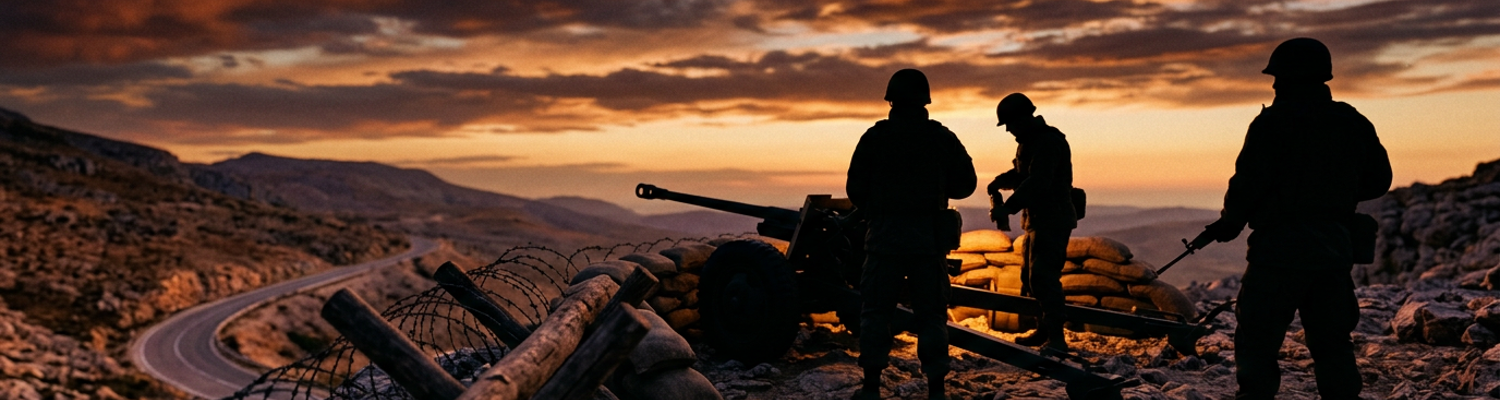
Gunners of the 351st Infantry Regiment dragged their 57mm M1 anti-tank cannons across the jagged limestone of the Carso Plateau during the summer of 1947. Rigid rubber tires snapped axle assemblies as crews hauled the low-slung carriages through unpaved scrubland without tracked prime movers. Mechanical failures multiplied just as the United States Army inactivated the battle-tested 88th Infantry Division and reflagged its veteran infantrymen as an independent command titled Trieste United States Troops. Major General Bryant E. Moore assumed command of this new unit, known as TRUST, and immediately clashed with War Department budget officers who stripped away his medium tanks. Bureaucrats in the Allied Military Government compounded the crisis by insisting that bringing heavier artillery into the region would provoke cross-border clashes with the Yugoslav Fourth Army. Moore disregarded these diplomatic objections and ordered his company commanders to muscle their fragile light anti-tank guns directly onto the high ground overlooking the city.
Limestone shelves across the elevated terrain overlooking the city blunted steel pickaxes and shattered standard entrenching shovels. Infantrymen could not dig protective pits into the solid bedrock to shield their exposed artillery pieces from incoming fire. Soldiers compensated by gathering surface boulders and packing loose gravel into heavy canvas bags to build reinforced breastworks around each gun position. State Department liaisons intervened during this construction phase, arguing that above-ground stone firing parapets resembled permanent fortresses and violated demarcation agreements. Military engineers sidestepped the diplomatic monitors by hauling bags of quick-drying cement out to the outposts under cover of darkness. Crews mixed the cement to glue the rock slabs into sturdy gun emplacements that could withstand heavy impacts.
Sandbags and heavy wooden timbers anchored the split trails of the 57mm M1 guns to absorb the violent recoil shock of those heavy impacts against the bare stone. Telephone wire teams ran insulated communications lines from these reinforced stone parapets across the rock fields. Cables tethered every isolated gun crew directly to battalion command posts located further down the mountain slopes. Command posts utilized those hardwired networks to establish an integrated belt of frontline barricades across every designated movement corridor facing the Yugoslav boundary. Yugoslav motorized units and tanks stood parked just past the Morgan Line boundary markers, holding access to the narrow valleys leading downhill toward the harbor. British occupation authorities clashed with American regimental planners over these roadblock procedures, demanding joint administrative reviews before troops could install steel rails or plant defensive obstacles across disputed roads.
Moore terminated the endless committee meetings regarding those disputed roads by directing TRUST engineers to drop heavy log barriers and string triple-strand concertina wire across the pavement. Engineers aligned the barricades to channel hostile armored columns into pre-registered fields of fire. Gunners at the roadblock positions tracked approaching patrol vehicles through their optical sights and kept armor-piercing shells loaded in the breeches of their 57mm guns. Crews maintained constant vigilance over the narrow mountain passes, knowing their light weapons represented the only physical barrier between the Yugoslav armor and the vulnerable port below. Sentries stood watch beside the loaded artillery pieces, waiting for any sign of movement from the foreign tanks parked just beyond the boundary markers.
Inter-Service Command Friction and Municipal Priorities
Sentries standing watch near those boundary markers alarmed Major General Sir Terence Airey, who viewed hair-trigger weapons as an immediate danger to peace. Airey commanded the British Element Trieste Force, known as BETFOR, while simultaneously holding office as the Allied Military Governor of Zone A with theoretical command over all occupation troops. Moore insisted that TRUST answered exclusively to an independent American chain of command that retained total authority over the tactical defense of its assigned roadblock sectors. British staff officers argued that keeping anti-tank barrels trained on Yugoslav border patrols violated joint occupation guidelines and stripped field commanders of diplomatic room to maneuver. Moore rejected British requests to place his roadblock outposts under unified BETFOR control, insisting that his primary mission involved stopping an armored breakthrough rather than managing frontier diplomacy. Messages between Airey at Duino Castle and Moore at his downtown Trieste headquarters failed to resolve the deadlock, leaving the frontier divided into competing national spheres of military authority.
Bureaucrats inside the Allied Military Government stepped into this divided sphere of military authority by demanding that TRUST tear down its heavy barricades to restore civilian commerce across the region. Administrative directors warned that concrete roadblock obstacles, log barriers, and armed inspection lanes choked off daily truck shipments of fresh produce, milk, and coal needed by city residents. British and American civil affairs officers argued that economic stability and municipal governance in Trieste mattered far more than building fortified battle positions against an unproven armored threat. American battalion commanders pushed back hard against the civil administrators, refusing to remove the roadblock barricades or open highway choke points that served as their primary anti-tank fields of fire. Administrative officials drafted formal notices instructing checkpoint guards to waive vehicle inspections, attempting to force the issue through paperwork.
Platoon leaders tore up the administrative paperwork and turned back uninspected civilian trucks at gunpoint. Moore backed his junior officers by declaring that frontline military preparedness took total priority over municipal administration, keeping his roadblock crews on round-the-clock combat alert. BETFOR patrol units responded to this round-the-clock alert by applying a contrasting British operational doctrine along the northern edge of Zone A. British doctrine emphasized subtle deterrence, relying on roving scout cars, light foot patrols, and keeping heavy support weapons hidden in rear depots to calm border tensions. TRUST doctrine pursued the opposite approach of aggressive, high-visibility deterrence designed to convince the Yugoslav Fourth Army that any probe across the Morgan Line would trigger an immediate battle. American crews kept their 57mm guns uncamouflaged on open roadbeds, posted heavily armed infantry squads in plain view of Yugoslav observation posts, and conducted loud firing drills at daily roll call.
Airey protested that the loud firing drills at daily roll call invited lethal border clashes, warning that exposed anti-tank outposts lacked operational depth. British intelligence officers predicted that the isolated American gun crews would be quickly surrounded and destroyed in the opening minutes of a mechanized assault. Moore disregarded the British warnings and ordered his frontline gunners to keep their weapons anchored to the pavement. Artillerymen locked their sights onto the border crossings, maintaining their aggressive stance despite the mounting political pressure from their allies. Supply sergeants began tallying their ammunition reserves to ensure the forward positions could sustain a prolonged firefight if the diplomatic situation collapsed completely.
Incompatible Ordnance and Conflicting Engagement Rules
Ammunition reserves needed for the forward positions if the diplomatic situation collapsed completely dwindled rapidly when shared Allied depots failed to provide matching replacement parts and shells for the American 57mm M1 guns. American ordnance officers discovered that while their weapon shared an origin with the British Ordnance Quick-Firing 6-pounder, the two armies manufactured their ammunition with different casing rims, propellant primers, and internal pressures. British anti-tank shells in BETFOR warehouses could not be chambered into American breechblocks due to these dimensional discrepancies. TRUST gun crews faced severe combat load shortages while thousands of British rounds sat useless only miles away in joint storage facilities. Mechanical breakdowns worsened the crisis because American and British factories used different screw threads and bolt standards, making it impossible to swap critical parts such as firing pins, recoil recuperator seals, and breech springs between allied units. Ordnance mechanics scavenged damaged carriage assemblies and worn components from abandoned battlefields in northern Italy, leaving gun crews with barely enough operational weapons to cover their exposed roadway barricades.
Barricades along the Morgan Line remained dangerously incomplete as bureaucratic snarls halted shipments of essential revetment materials to the outposts. Supply depots in southern Italy delayed deliveries of heavy timber, steel pickets, and corrugated iron sheeting, while transportation coordinators gave rail priority to municipal food shipments bound for downtown Trieste. Isolated gun positions on the rocky Carso slopes received only trickles of barbed wire, forcing crews to string single strands of rusted wire between scrub bushes instead of anchoring deep belts of triple-strand concertina across the roads. Limestone terrain prevented troops from digging deep drainage trenches or earthworks, causing improvised rock revetments to collapse whenever autumn rainstorms washed away the loose gravel backing. Outpost crews packed empty wooden ammunition boxes with stone chips to shore up their crumbling parapets, working through the night while watching Yugoslav reconnaissance patrols probe the unbarricaded gaps along the boundary line.
Patrols from the Yugoslav Fourth Army routinely tested the unbarricaded gaps along the boundary line, triggering a sharp conflict between civilian administrators and American tactical commanders over how to respond. Civil administrators in the Allied Military Government and State Department diplomats issued standing directives that forbade frontline gunners from firing across the frontier under any circumstances. Diplomats ordered the soldiers to rely on civilian police monitors and formal written protests to settle boundary violations. Major General Moore and his battalion commanders rejected these restrictions, issuing countermanding tactical instructions that authorized anti-tank gunners to fire immediately if armed foreign troops or armored scout cars breached the roadblock perimeter and refused to halt. Regimental officers argued that waiting for political clearance during a motorized border rush would get their crews overrun and killed before a message could reach headquarters in Duino. Platoon commanders held both sets of written orders in their hands at the checkpoints, torn between civilian threats of court-martial for provoking war and tactical orders to defend their positions against sudden attack.
Corporals stationed at the roadway barriers chose tactical defense against sudden attack over administrative protocol by chambering live shells whenever foreign vehicles approached without stopping. Field telephone operators ignored incoming calls from nervous civil affairs liaisons and relayed direct firing data from company command posts instead. Gun crews slammed heavy steel barrier gates across the lanes, leveled their 57mm gun muzzles directly at vehicle radiator grilles, and hooked their lanyards to the firing mechanisms in plain view of approaching drivers. Yugoslav scout car commanders halted their vehicles within yards of the gun barrels, surveyed the loaded artillery pieces, and reversed course back toward their side of the Morgan Line. Moore backed his junior leaders against immediate political fury from Allied Military Government directors, filing formal endorsements that commended the gun crews for holding the border through direct show of force.
Severed Communications During the R-Day Standoff
Couriers delivered formal commendations regarding this direct show of force to the barricades just as the midnight transition of September 15 to 16, 1947, brought the Italian Peace Treaty into full effect under the operational designation of R-Day. International diplomats expected the treaty to resolve contested borders peacefully, but the midnight deadline created an immediate crisis as Yugoslav Fourth Army columns mobilized to occupy every foot of territory up to the new boundary line. American outpost crews scrambled to lock down their checkpoints across the limestone ridges, watching vehicle headlights converge on the narrow mountain roads leading directly toward the city. Regimental officers inside the TRUST command post prepared to relay emergency fire plans to each roadblock position, expecting constant telephone contact to govern every tactical engagement. Tactical commanders knew that any unauthorized shot could ignite full-scale combat with the Yugoslav units massing outside the perimeter gates.
Telephone wire strung across the jagged limestone rocks formed the only direct link between those perimeter gates and regimental headquarters at Opicina. Trouble struck immediately after midnight when sharp limestone ledges, military vehicle tracks, and deliberate sabotage cut the vulnerable cables across multiple valleys. Switchboard operators at the Opicina regimental command post cranked their magneto generators and called into dead lines, unable to reach the isolated roadblock squads. Signal Corps repair teams rushed into the darkness with spools of replacement wire, but heavy rifle fire and rugged terrain stopped them from splicing the severed lines back together. Catastrophic failure and severance of the tactical field telephone wire stripped commanders of their ability to monitor the border, blinding the regimental staff at the exact moment the Yugoslav army pushed forward.
Lieutenant Colonel Alfred Booth faced the full weight of this sudden blindness as the Yugoslav army pushed forward, leaving his forward detachments operating in total communicative isolation without clear orders from higher command. Booth commanded the frontline battalion positions tasked with holding the primary highways into Trieste, yet his tactical radio sets could not penetrate the deep karst valleys to re-establish contact with Opicina. Runners dispatched through the rocky scrubland either lost their way in the pitch-black terrain or ran directly into Yugoslav patrols that had already slipped across the unmapped frontier. American platoon leaders looked to Booth for guidance on whether to open fire on approaching vehicles, but the absence of headquarters direction forced the detachment commander to rely entirely on his own battlefield judgment. Conflicting policy directives from earlier civil affairs meetings made the situation even more perilous, leaving Booth to balance political warnings against the immediate physical safety of his surrounded men.
Booth chose the survival of his surrounded men over diplomatic protocol, ordering gunners to lock armor-piercing shells into their 57mm anti-tank guns and aim directly at the lead Yugoslav vehicles. American squads manned their improvised stone parapets with machine guns cocked, shining heavy vehicle spotlights across the roadbeds to freeze the advancing foreign troops in their tracks. Yugoslav armored car commanders ground to a halt only inches from the log barriers, confronting American gun captains who stood beside their weapons with lanyards pulled tight. Hours passed without a single telephone ring from the Opicina switchboard, keeping both sides locked in a silent standoff under the glare of headlights. Booth maintained the roadblock defenses through the remainder of the night until morning light revealed the Yugoslav columns halting their advance and establishing fixed positions on the treaty line.
Frontline Showdown with the Yugoslav Fourth Army
Yugoslav soldiers stepped past their temporary bivouacs on the treaty line minutes after sunrise, driving an entire infantry battalion directly toward the isolated American roadblocks. Heavy draft horses hauled wheeled anti-tank artillery pieces along the narrow dirt road, kicking up thick clouds of limestone dust behind the marching Yugoslav companies. TRUST riflemen watched the formation approach from behind their low rock revetments, holding their M1 Garand rifles ready while numbering barely thirty men against hundreds of advancing troops. Yugoslav officers waved their arms and deployed their rifle companies into skirmish lines along the flanking brush, moving their horse teams forward to unlimber anti-tank cannons directly in front of the American barrier logs. Drivers hauled the heavy wooden-spoke artillery carriages into firing position on the pavement, dropping the trail spades into the dirt and aiming their muzzles straight at the American checkpoint bunkers. American gun crews and riflemen gripped their weapons in silence, recognizing that a single misfire would instantly trigger an overwhelming artillery duel against their exposed positions.
Artillery barrels leveled at point-blank range against those exposed positions left frontline American lieutenants under immediate threat of tank and cannon fire while higher headquarters completely blocked defensive fire support. Yugoslav T-34 tanks clattered up the roadway behind the horse-drawn guns, rotating their heavy turrets to cover the American roadblock positions with armor-piercing shells. Small-unit commanders inside the checkpoint trenches cranked emergency radios and shouted for permission to register defensive mortar and howitzer strikes on the massing Yugoslav armor. Staff officers at BETFOR headquarters and Allied Military Government liaisons refused every single fire request, ordering the lieutenants to withhold fire because higher political authorities feared igniting an international conflict. Bureaucrats in rear command centers insisted that firing a single artillery round would violate diplomatic agreements, leaving platoon leaders without higher-echelon authorization to protect their men. Lieutenants stood pinned against their own barricades, forced to hold their ground under the barrels of enemy armor without a single supporting shell from American artillery battalions.
American lieutenants resolved the crisis of missing support from their artillery battalions by stepping past their barricades into the middle of the road, placing their bodies directly between the opposing gun lines to demand an immediate halt. Frontline sergeants cocked their 57mm anti-tank guns and lined up their sights on the Yugoslav lead tank, showing the Yugoslav battalion commander that the roadblock squad would fire the instant an enemy track crossed the boundary line. Yugoslav battalion officers examined the locked-and-loaded American weapons, realizing that any further forward movement would force a bloody firefight that their political leadership had not formally authorized. Yugoslav commanders signaled their teamsters to hitch the draft horses back to the artillery carriages and ordered their infantry companies to shoulder their arms and withdraw toward the hills. This resolute tactical standoff halted the push of the Yugoslav Fourth Army in its tracks and permanently established the operational perimeter of the Free Territory of Trieste. American rifle squads maintained their watch on the cleared roadway, securing the frontier line against further encroachment.