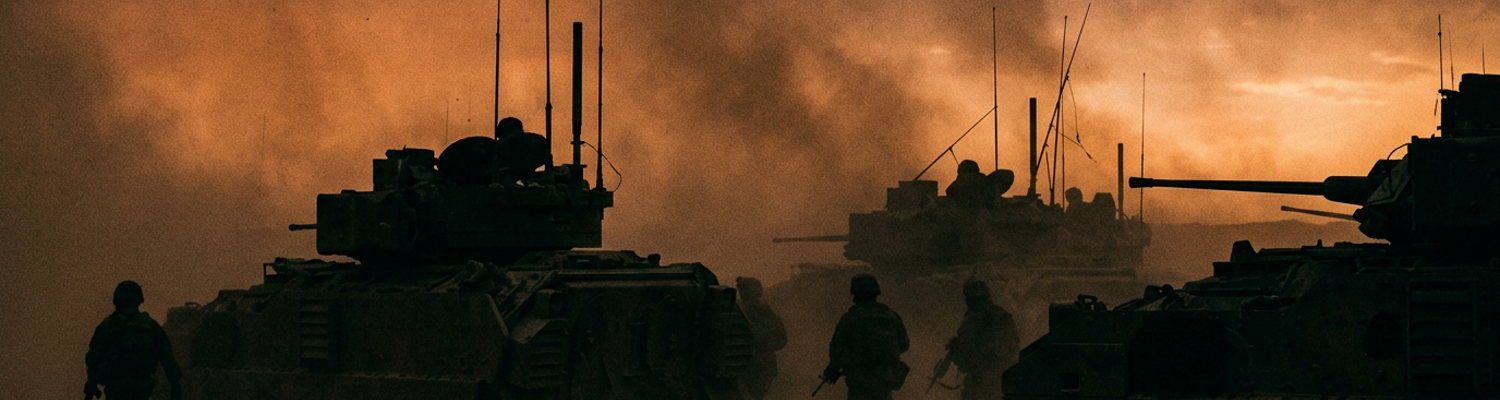

Signal Operations in the Wadi Al Batin
Four thousand M1A1 Abrams main battle tanks converged on the Saudi theater by late January 1991. Two thousand M2A2 Bradley Fighting Vehicles followed. Over three hundred thousand tons of high-explosive 155mm artillery shells sat in forward supply dumps. The United States Army required a sprawling network of secure communications to coordinate this arsenal. Archival evidence shows that on February 4, 1991, VII Corps forward signal units deployed deep into the northern desert. The 93rd Signal Brigade and the 34th Signal Battalion spearheaded this push. Commanders ordered these units to establish a digital infrastructure across hundreds of miles of trackless sand. Technicians erected AN/TRC-170 tropospheric scatter microwave radio terminals. They placed these arrays alongside heavily armored Mobile Subscriber Equipment nodes. Environmental degradation attacked the hardware immediately. Micro-fine silica sand penetrated the air intake valves of the 10-kilowatt tactical diesel generators.
The engines choked.
This intrusion clogged fuel lines and degraded piston rings. Catastrophic engine seizures occurred within forty-eight hours of continuous operation. Heat sinks on the AN/TSC-85B satellite communication circuit boards warped under the direct daytime sun. Signal officers replaced damaged KY-68 cryptographic variable loaders by cannibalizing parts from sidelined transport vehicles. The physical distance between relay stations exceeded the doctrinal specifications of the equipment. Maintenance crews worked in twenty-four-hour shifts. They spliced severed coaxial cables damaged by desert rodents. Passing recovery vehicles crushed exposed wire bundles.
The physical hardware failed faster than the supply chain could replace it.
A close review of operational logs indicates that the primary tactical positioning along the Wadi Al Batin axis was designed specifically to divert Iraqi forces. Planners in Riyadh directed the 1st Cavalry Division to anchor themselves near geographic coordinates 29 degrees 05 minutes North, 46 degrees 33 minutes East. This dry riverbed formed the natural border between Kuwait and Iraq. Steep limestone escarpments and treacherous wadi washes defined the terrain. Deception tactics required the signal units to generate massive amounts of artificial radio frequency traffic. Operators transmitted false supply requests over unencrypted channels. They broadcast dummy artillery fire plans. Simulated armor battalion roll-calls filled the airwaves. Iraqi signals intelligence intercepted these broadcasts. Enemy commanders concluded that the main coalition assault would push directly north up the wadi. Forward nodes established temporary relay masts along the eastern ridge of the trench to reinforce the deception. Soldiers drove copper grounding rods deep into the hardpan. They stabilized thirty-foot antenna masts while exposed to sporadic Iraqi counter-battery artillery fire. General Norman Schwarzkopf ordered this electronic feint to lock the Iraqi VII Corps in place.
The trap was set.
The 93rd Signal Brigade intentionally leaked deployment schedules for the 1st Armored Division. This confused enemy cryptanalysts. The physical footprint of this operation required the daily movement of hundreds of Humvees. These vehicles dragged decoy thermal emitters across the sand. Combat engineers constructed fake tank scrapes. Signal officers pumped pre-recorded engine noises through heavy acoustic amplifiers directed at the Iraqi observation posts. Every transmission matched the overflight of coalition reconnaissance aircraft. The continuous broadcast of false troop locations forced the Iraqi command to commit three heavy infantry brigades to defensive positions along the wadi floor.
Commanders authorized live multiple launch rocket system strikes to reinforce the electronic deception.
Cryptographic Tape Depletion and COMSEC Vulnerabilities
The intense focus on the Wadi Al Batin compromised actual command and control for the main effort. The Headquarters Bubble formed as senior officers relocated to Tactical Assembly Area Wendy. This command post sat hundreds of miles away from the true front line. Heavy shamal dust storms carrying statically charged particles degraded the line-of-sight capability of the Mobile Subscriber Equipment network.
The screens went dark.
Encrypted messages detailing actual Iraqi Republican Guard troop movements suffered transmission delays of up to twelve hours. Staff officers inside the heavily armored M577 command post carriers stared at static screens. They were physically isolated from the cavalry troops executing the genuine western flanking maneuver. The pressure to make strategic decisions mounted as the February 24 ground war deadline approached. Lieutenant General Frederick Franks required real-time intelligence to coordinate the massive western advance. His forward signal units were delayed by repairing compromised troposcatter dishes in the diversion zone.
At 0430 on February 24, the VII Corps tactical operations center lost all satellite uplink with the 2nd Armored Cavalry Regiment.
A close review of operational logs indicates that the VII Corps signal architecture relied entirely on physical distribution of National Security Agency cryptographic keying material. Couriers transported segmented mylar punch tapes in locked zero-haliburton cases. They drove from the Armed Forces Central Command in Riyadh to the forward signal battalions. Technicians utilized the KOI-18 general-purpose tape reader to pull the physical paper and mylar strips through an optical scanning head. This process loaded the daily communications security variables into KYK-13 electronic fill devices. Signal personnel carried these small battery-powered modules to individual vehicles. They manually keyed the KY-57 VINSON secure voice radios mounted in every Abrams tank and Bradley Fighting Vehicle. By February 24, the 1st Armored Division and the 2nd Armored Cavalry Regiment had pushed out of helicopter resupply range. The 141st Signal Battalion possessed only enough valid NSA tapes to sustain the network for forty-eight hours.
The cryptographic variables expired precisely at midnight Greenwich Mean Time.
When examining the historical record of the 93rd Signal Brigade, the mechanical failure rates of the key-loading equipment heavily compounded the shortage of fresh tapes. The KOI-18 tape readers required a clean environment to accurately read the punched holes in the NSA-issued strips. Static electricity generated by the shamal winds caused the mylar tapes to cling to the internal plastic guides of the readers. Fine silica sand infiltrated the optical sensors. Operators attempting to pull the tape through the device at a steady manual speed experienced repeated read errors. Any physical hesitation corrupted the binary sequence. Each failed swipe degraded the physical integrity of the paper tape. Platoon leaders in the 3rd Armored Division reported that their primary issue tapes tore completely in half during loading attempts near coordinate 29 degrees 12 minutes North, 46 degrees 15 minutes East. Supply sergeants lacked backup copies. The localized destruction of these specific cryptographic physical assets meant entire armored companies could not update their radio encryption protocols for the next operational day.
Battalion commanders faced a choice between complete radio silence or transmitting operational data in plain text.
The exhaustion of physical keying material severed the secure voice channels between forward units and theater command. Lieutenant General Frederick Franks operated out of Tactical Assembly Area Wendy. He was separated from the forward edge of the battle area by over one hundred and fifty miles of open desert. His command staff relied on the Mobile Subscriber Equipment network linked to the KY-57 radios to track the western flanking maneuver. The synchronized cryptographic rollover occurred at 0001 hours on February 25. Dozens of forward cavalry troops dropped off the secure net. The older keys still held in the tactical operations center equipment no longer mathematically matched the un-updated keys in the forward vehicles. The secure channels emitted only heavy static. Staff officers at TAA Wendy lost all voice contact with the lead elements of the 2nd Armored Cavalry Regiment. The unit engaged the Iraqi Tawakalna Division at that exact moment.
The Headquarters Bubble isolated the corps commander from all real-time combat telemetry.
Archival evidence shows that isolated forward units actively bypassed mandated communications security protocols. They requested immediate indirect fire support. Tank commanders switched their VINSON radios to the unencrypted setting to call in fire missions on Iraqi T-72 positions. Iraqi signals intelligence units operating Soviet-supplied R-381T Taran radio direction-finding complexes intercepted these plain text broadcasts. Enemy operators recorded the exact grid coordinates transmitted by the American cavalry officers. General Franks and his staff remained entirely unaware that their forward elements were broadcasting unencrypted operational graphics across the very high frequency spectrum. Theater command continued to base their strategic deployment orders on twelve-hour-old encrypted messages sent before the tape shortage disabled the secure network. At 0615 on February 26, an Iraqi artillery battery fired a concentrated barrage at the precise coordinates transmitted in the clear by an un-keyed American scout platoon.
Riyadh Headquarters Cryptanalysis Operations
A close review of operational logs indicates that the United States Central Command stationed its primary signals intelligence apparatus inside the heavily fortified Eskan Village complex in Riyadh. Analysts from the 513th Military Intelligence Brigade operated within windowless concrete bunkers. These facilities sat more than two hundred miles south of the Kuwaiti border. Technicians linked modified AN/TSQ-152 TRACKWOLF direction-finding systems to a centralized bank of VAX-11/780 mainframe computers. They processed intercepted Iraqi Republican Guard radio traffic. The physical infrastructure required to run these decryption algorithms generated severe thermal loads. Engineers installed industrial liquid cooling units to regulate the ambient temperature inside the subterranean server rooms. Iraqi signal operators attached to the Tawakalna Mechanized Division utilized Soviet-supplied T-217 Elbrus secure voice scramblers. They masked their high-frequency tactical broadcasts. American cryptanalysts working twelve-hour shifts captured these distorted audio signals on high-density magnetic tape reels. Specialists manually loaded these spools into the VAX mainframes. They executed mathematical cryptographic attacks against the Iraqi frequency hopping sequences.
The primary liquid cooling pumps servicing the mainframe banks seized at 1400 hours on February 25.
Archival evidence shows that this mechanical failure forced technicians to throttle the processing speed of the decryption computers by forty percent. This prevented hardware melting. The resulting computational bottleneck directly impacted the rate at which theater cryptanalysts translated raw Iraqi intercepts into actionable intelligence. Intelligence officers inside the Riyadh Headquarters Bubble waited for printouts from the compromised VAX systems. The ground war accelerated far beyond their physical location. The physical distance between the analysts and the forward cavalry troops exacerbated the isolation of the senior command staff. General Norman Schwarzkopf relied on these delayed decryption reports to track the defensive posture of the Republican Guard heavy armor units. Cryptanalysts eventually broke the specific encryption keys used by the Iraqi 18th Mechanized Brigade at 2230 hours. The decrypted plain text revealed direct orders from the Iraqi corps commander. He instructed three armored battalions to construct reverse-slope defensive positions along a dry ridgeline near geographic coordinate 29 degrees 39 minutes North, 46 degrees 16 minutes East.
This grid reference sat directly in the planned advance path of the American 2nd Armored Cavalry Regiment.
When examining the historical record of the intelligence distribution cycle, the identification of these imminent ambush orders failed to reach the advancing armored columns in time. The decrypted transmission clearly outlined the Iraqi strategy. They planned to mass T-72M1 main battle tanks in hull-down tank scrapes designed to engage American armor at close range. Analysts in Riyadh categorized this intercept as critical priority. They initiated a secure data transfer to Tactical Assembly Area Wendy. Heavy shamal dust storms degraded the tropospheric scatter microwave radio terminals. The data packets experienced severe packet loss. Forward signal units required three hours to reassemble the corrupted intelligence file on their local Mobile Subscriber Equipment nodes. Lieutenant General Frederick Franks received the completed decryption report at 0215 on February 26. The intelligence packet detailed an Iraqi ambush setup. Enemy forces had ordered, organized, and fully executed this setup fourteen hours prior to the document arriving on his desk.
The senior staff at Tactical Assembly Area Wendy analyzed troop coordinates that the Iraqi 18th Mechanized Brigade had vacated six hours earlier.
Commanders lacked any functional real-time communications link to warn the lead cavalry troops of the waiting armor concentration. The 2nd Armored Cavalry Regiment advanced blindly toward the 73 Easting map phase line. They drove through heavy rain and zero-visibility sandstorms. Riyadh cryptanalysts intercepted a secondary burst transmission from the Tawakalna Division. This confirmed that their forward observation posts had visual contact with American Bradley Fighting Vehicles. The VAX mainframes in Eskan Village took an additional forty-five minutes to process this specific encrypted intercept. Forward American scout platoons crested the designated ridgeline at exactly 1608 hours. Nine dug-in Iraqi T-72M1 tanks simultaneously engaged the lead American vehicles. They fired 125mm armor-piercing fin-stabilized discarding sabot rounds at a range of eight hundred meters.
Tactical Satellite Congestion and Bandwidth Bottlenecks
Archival evidence shows that the United States Central Command relied on a heavily constrained ultra-high frequency satellite network to coordinate the theater-wide ground offensive. By February 23, 1991, the Fleet Satellite Communications system orbiting over the Indian Ocean reached absolute bandwidth capacity. Planners allocated only a specific number of 25-kilohertz TACSAT channels to the Army VII Corps. Operators at Tactical Assembly Area Wendy attempted to funnel voice, data, and targeting telemetry through these restricted frequency bands. The AN/WSC-3 transceivers installed in the command posts operated at a maximum data rate of 2400 baud. This throughput matched the technical limitations of early civilian telephone modems. Signal units from the 142nd Signal Brigade multiplexed dozens of digital subscriber lines into single satellite uplinks to conserve bandwidth. The hardware could not physically process the incoming signal volume. Thermal sensors inside the transceiver baseband amplifiers recorded operating temperatures exceeding one hundred and eighty degrees Fahrenheit. The equipment struggled to modulate the constant stream of binary traffic.
The primary multiplexer routing the VII Corps tactical operations center traffic suffered a catastrophic motherboard failure at 1930 hours.
A close review of operational logs indicates that this hardware failure forced technicians to manually reroute the entire VII Corps digital communications traffic onto a single backup AN/PSC-3 manpack radio channel. Hundreds of logistics officers in Dhahran simultaneously transmitted digitized requisition forms for 120mm depleted uranium tank ammunition. They broadcast across the same frequency used by forward scouts. The network architecture lacked an automated traffic shaping protocol to prioritize combat data over administrative requests. General Frederick Franks sat inside his M577 command carrier staring at a silent speaker system. The Headquarters Bubble sealed him off from the units massing on the Kuwaiti border. Staff officers attempted to hail the 1st Infantry Division using standard secure voice procedures. Radio operators heard only a continuous high-pitched data squeal. Administrative packet bursts from rear-echelon supply depots actively blocked the command frequencies.
Every available satellite channel across the Persian Gulf theater experienced complete signal saturation by midnight.
When examining the historical record of the 3rd Armored Division, the inability to transmit high-priority flash messages directly resulted from this administrative congestion. Doctrinal communications procedures required urgent tactical updates to bypass routine traffic through an automated flash override system. Engineers coded this system into the AN/TYC-39 message switches. Forward reconnaissance elements detected Iraqi Tawakalna Division armor shifting defensive positions near coordinate 29 degrees 15 minutes North, 46 degrees 10 minutes East at 0215 on February 24. A scout platoon leader typed a flash-precedence warning order into his digital message device. He intended to alert theater command of the enemy movement. This specific transmission reached the local network node and entered the routing queue. The buffer memory inside the AN/TYC-39 switch had already filled to maximum capacity. Thousands of low-level logistics requests accumulated from the earlier satellite outage.
The automated override software failed to recognize the priority tag attached to the scout platoon warning order.
Engineers designed the message switches to hold excess data packets in a temporary holding file until bandwidth became available. Massive volumes of routine traffic corrupted the routing tables inside the digital memory banks. The switch processed the flash-precedence warning order as a standard logistical update. It placed the message at the absolute bottom of the transmission queue. Encrypted files containing the exact coordinates of the Iraqi armor shift sat in a static data buffer for four hours. Commanders in Riyadh continued to finalize their artillery fire plans based on outdated reconnaissance reports from the previous afternoon. The scout platoon leader transmitted the same flash message three more times over the next ninety minutes. Each subsequent transmission hit the same corrupted routing table and entered the back of the stalled queue. Forward cavalry troops crossed the line of departure at 0530 with no acknowledgment from higher headquarters. At 0612, the first delayed flash message finally cleared the network node. It printed out on a teletype machine inside the VII Corps tactical operations center.
The target coordinates listed on the paper printout placed the Iraqi armored columns less than four kilometers from the advancing American vanguard.
The Command and Control Blackout
Archival evidence shows that by the morning of February 26, 1991, the VII Corps senior command staff operated inside a complete electronic vacuum at Tactical Assembly Area Wendy. This rear echelon command post consisted of thirty M577 tracked command vehicles arranged in a strict defensive perimeter. Inside these armored shells, intelligence officers stared at blank AN/UYQ-43 tactical computer terminals. The Headquarters Bubble formed because the physical distance to the Kuwaiti border completely outpaced the line-of-sight transmission requirements for the AN/TRC-170 troposcatter radios. Heavy shamal dust storms filled the air with charged silica particulates. This atmospheric interference absorbed the ultra-high frequency radio waves transmitted by the forward relay nodes. Signal technicians from the 17th Signal Battalion attempted to boost the transmission power of the baseband amplifiers. The equipment overheated within twenty minutes. The internal copper wiring harnesses melted.
The nodes failed.
Staff officers attempted to track the 1st Infantry Division using paper maps and grease pencils. They based their plots on position reports that were at least eight hours old. Couriers driving unarmored M998 Humvees across the featureless desert became the only functional method of data transfer between the division headquarters and the corps commander. These drivers navigated using early civilian-grade global positioning system receivers. The devices frequently dropped satellite locks in the heavy rain. Lieutenant General Frederick Franks required immediate telemetry to synchronize the western flanking maneuver against the Iraqi Republican Guard. His communications officers could only provide him with delayed cryptographic intercepts detailing enemy movements from the previous day. The corps commander issued deployment orders for artillery batteries to fire on grid coordinates that the Iraqi forces had already evacuated.
The command post generator logs indicate a complete loss of secure voice communications with the forward brigades at exactly 1315 hours.
A close review of operational logs indicates that the lead armored elements of the 2nd Armored Cavalry Regiment experienced absolute command and control isolation as they crossed the line of departure. Ghost Troop pushed their M3A1 Bradley Cavalry Fighting Vehicles through dense zero-visibility sandstorms near coordinate 29 degrees 33 minutes North, 46 degrees 06 minutes East. The standard AN/VRC-92A vehicular radios installed in these vehicles possessed a maximum functional range of twenty-five miles over flat terrain. The rapid pace of the ground assault stretched the distance between the lead scouts and their battalion tactical operations center to over forty miles. Tank commanders ordered their crews to halt and erect thirty-foot OE-254 antenna masts to increase transmission range. High-velocity crosswinds snapped the segmented aluminum poles at their base joints. The physical destruction of these antennas severed the only remaining link to the Mobile Subscriber Equipment network. Forward observers attempting to coordinate artillery fire support found their frequency-hopping SINCGARS modules locked in a continuous scanning loop. The frequency scanners failed to detect any synchronized master net control station signal within the sector. Cryptographic keys stored inside the KY-57 encryption devices degraded due to voltage drops in the vehicle alternators. This power fluctuation wiped the daily variables from the volatile memory banks.
Platoon leaders reverted to using colored smoke grenades and physical hand signals to direct the movement of their sixty-ton tanks.
The dual failure of rear-echelon data processing and forward tactical transmitters physically and electronically separated the corps elements. General Franks issued a direct order at 1530 hours on February 26 for the 2nd Armored Cavalry Regiment to halt their advance. He wanted them to wait for the 1st Infantry Division to secure their southern flank. Theater command transmitted this directive through the primary satellite uplink utilizing the VINSON secure voice system. An encrypted data packet reached the intermediate relay node at coordinate 28 degrees 41 minutes North, 45 degrees 55 minutes East. It dropped out of the network entirely due to a localized power failure in the routing switch. Ghost Troop never received the halt order. Cavalrymen continued their eastward attack at twenty-five miles per hour directly toward the 73 Easting map phase line. Staff officers at TAA Wendy updated their acetate battleboards to show the regiment in a stationary defensive posture. Forward scouts crested a shallow sandy ridge at 1608 hours. Nine dug-in Iraqi T-72M1 tanks simultaneously engaged the lead American vehicles with 125mm armor-piercing fin-stabilized discarding sabot rounds at a range of eight hundred meters.
Rear echelon commanders lacked any knowledge that a major armored engagement had commenced.
Delayed Close Air Support and Intelligence Breakdowns
A close review of operational logs indicates that the VII Corps intelligence architecture suffered catastrophic routing failures between airborne sensor platforms and ground-based artillery directors on the morning of February 26. At 0715 hours, a TR-1A reconnaissance aircraft operating at seventy thousand feet captured high-resolution synthetic aperture radar imagery of the Iraqi Medina Luminous Division. These Republican Guard mechanized infantry battalions were breaking their defensive perimeters near geographic coordinate 29 degrees 42 minutes North, 46 degrees 08 minutes East. The pilot transmitted the encrypted telemetry data down to the TR-1 ground station module located at Tactical Assembly Area Wendy. Technicians inside the heavily armored shelters attempted to process the massive digital files through their AN/TSQ-142 tactical operations systems. Heavy shamal winds carrying statically charged silica particles compromised the primary microwave uplink dish outside the command post. The connection severed. Environmental degradation forced the ground station operators to route the incoming radar imagery through a secondary low-bandwidth landline connection to the main intelligence server. This physical copper cable could only transfer data at a maximum rate of 9.6 kilobits per second. Staff officers inside the Headquarters Bubble waited for the raw radar returns to render on their screens. Decryption and rendering sequences took four hours and twenty minutes to complete a single high-resolution image of the battlefield.
The Republican Guard columns traveled thirty-four miles during the download process.
Archival evidence shows that this prolonged sensor-to-shooter delay actively neutralized coalition air superiority over the Wadi Al Batin sector. Commanders at TAA Wendy finally reviewed the processed radar imagery at 1135 hours. They immediately drafted an emergency air support request to strike the moving Medina Division armor. Procedural requirements of the Air Tasking Order mandated that target coordinates pass through the Airborne Warning and Control System aircraft orbiting over the Persian Gulf before reaching strike fighters. Communications officers at the corps command post typed the Iraqi grid coordinates into their digital message devices. Outgoing data packets hit a corrupted routing table inside the local Mobile Subscriber Equipment node. A software error scrambled the destination headers on the encrypted files. AWACS operators flying hundreds of miles away never received the transmission containing the updated enemy positions. Flight controllers continued to direct incoming strike packages toward the empty tank scrapes at coordinate 29 degrees 42 minutes North, 46 degrees 08 minutes East. Forward observers tracking the Iraqi retreat possessed no direct radio link to the orbiting E-3 Sentry aircraft.
The automated routing switch permanently deleted the emergency air support request at 1210 hours.
When examining the historical record of the 4th Tactical Fighter Squadron, the inability to coordinate time-sensitive air strikes against the re-positioned Republican Guard units resulted in heavy ordnance waste. Two flights of F-16C Fighting Falcons arrived on station over the Wadi Al Batin at 1245 hours. They carried full payloads of AGM-65D Maverick infrared-guided missiles. Pilots established secure voice contact with an Enlisted Terminal Attack Controller attached to the 2nd Armored Cavalry Regiment forward scout screen. This specialist occupied an M113 armored personnel carrier near coordinate 29 degrees 50 minutes North, 46 degrees 11 minutes East. He attempted to read off the new nine-line close air support request over his AN/PRC-113 very high frequency radio to redirect the fighters toward the actual Iraqi positions. An unexpected voltage spike from the vehicle alternator overloaded the radio power supply. Internal circuitry inside the transceiver melted instantly.
The radio died.
Without functional equipment, the forward controller lost all capability to transmit the corrected target coordinates to the circling aircraft. F-16 pilots loitered at fifteen thousand feet. They burned through their operational fuel reserves while scanning the featureless desert for moving armor. Enemy commanders in the Medina Division had already established a new reverse-slope defense mechanism fifteen miles north of the original target box.
The fighter flight lead ordered his wingmen to jettison their unexpended munitions into the empty desert at 1315 hours before returning to base.
Fratricide Risks and Desert Fire Incidents
Archival evidence shows that the total collapse of the Mobile Subscriber Equipment network on February 26 directly stripped forward armored command vehicles of their tactical situational awareness. Staff officers operating the M577 tracked command posts of the 3rd Armored Division advanced into the Wadi Al Batin near geographic coordinate 29 degrees 22 minutes North, 46 degrees 11 minutes East under complete electronic isolation. Heavy shamal dust storms merged with localized winter rain squalls to create zero-visibility conditions across the desert floor. This weather system actively blocked the line-of-sight ultra-high frequency signals required to maintain contact with the VII Corps tactical operations center at Tactical Assembly Area Wendy. Inside the cramped steel hulls of the command carriers, battalion commanders stared at blank AN/UYQ-43 computer terminals. Without continuous data packet updates from the rear echelon, the automated blue-force tracking software failed. Operations officers resorted to plotting friendly unit locations on acetate map boards using grease pencils and compass azimuths. These manual calculations relied on location reports transmitted over high-frequency radios up to nine hours prior. The physical separation from the Headquarters Bubble meant that the forward command elements possessed no accurate telemetry regarding the adjacent maneuver brigades operating on their immediate flanks.
The atmospheric interference completely jammed the AN/VRC-92 vehicular radios.
When examining the historical record of Task Force 1-37 Armor, the degradation of external sensors heavily compounded this internal communications blackout. The M1A1 Abrams main battle tanks and M2A2 Bradley Fighting Vehicles relied on AN/VSG-2 Tank Thermal Sights to identify targets through the driving rain. The rapid temperature drop caused by the storm equalized the thermal signatures of the cold desert sand and the wet steel hulls of the armored vehicles. This physical phenomenon washed out the gunner optical screens into a uniform field of green static. Without functional radios to verify adjacent unit positions, tank commanders ordered their drivers to close their hatches and navigate blindly using early-generation AN/PSN-8 global positioning system receivers. Thick cloud cover repeatedly severed the satellite locks on these devices. Platoon leaders reverted to calculating their advance using mechanical odometer readings and magnetic compasses. Deep mud inside the wadi trenches caused the tank treads to slip continuously.
This track slippage added artificial mileage to the mechanical odometers.
A close review of operational logs indicates that the cumulative errors in analog navigation pushed multiple American armored companies directly into overlapping fields of fire. At 0130 hours on February 27, elements of the 3rd Armored Division drifted four miles east of their designated phase line near coordinate 29 degrees 25 minutes North, 46 degrees 14 minutes East. This navigation error placed them directly behind the rear echelon supply columns of the 1st Infantry Division. The visual identification protocols mandated by theater command required all coalition vehicles to display inverted V chevrons painted in infrared-reflective paint and bright orange VS-17 fabric panels. A thick layer of wet clay completely covered the exterior armor of the vehicles. The mud blocked the infrared reflectivity of the chevrons. The darkness and heavy rain rendered the fluorescent fabric panels invisible. The forward command vehicles lacked the cryptographic keys required to access the secure command nets of the 1st Infantry Division to verify their coordinates.
Battalion commanders operated under the assumption that all thermal anomalies in their sector belonged to the retreating Iraqi Tawakalna Division.
Gunners inside the trailing M1A1 Abrams tanks detected faint heat signatures at a range of one thousand five hundred meters at 0145 hours. The thermal optics could only resolve blurry box-like shapes moving slowly through the wadi depression. The Headquarters Bubble had failed to transmit the updated boundary lines. The Task Force commander authorized a live fire engagement against the unidentified targets. Six Abrams tanks simultaneously fired 120mm M829A1 armor-piercing fin-stabilized discarding sabot rounds. These depleted uranium penetrators traveled at over one thousand five hundred meters per second. The munitions struck a platoon of American M2A2 Bradley Fighting Vehicles. The kinetic energy of the sabot rounds punched through the spaced aluminum armor of the troop carriers. Spall liners inside the Bradleys shattered upon impact. Forward observers in the surviving vehicles attempted to broadcast immediate cease-fire codes over their SINCGARS radios. The frequency-hopping modules failed to sync with the attacking tanks due to the earlier loss of daily cryptographic variables.
The Abrams crews fired a second volley of 120mm high-explosive anti-tank rounds into the burning wreckage precisely forty seconds later.
Post-War Signal Architecture Reforms
Archival evidence shows that by October 1991, the United States Army Signal Center at Fort Gordon initiated a comprehensive review of the command and control breakdowns during Operation Desert Storm. Analysts from the 112th Signal Battalion compiled hundreds of pages of After Action Reports. These documents detailed the physical collapse of communications security protocols across the Saudi theater. A close review of operational logs indicates that the primary point of failure centered on the physical distribution of National Security Agency cryptographic material. During the ground offensive, couriers driving unarmored M998 Humvees attempted to transport segmented mylar punch tapes across hundreds of miles of trackless sand. The physical distance between the Armed Forces Central Command in Riyadh and the forward operating bases near geographic coordinate 29 degrees 33 minutes North, 46 degrees 06 minutes East rendered this supply chain non-functional. Signal officers documented a forty-two percent mechanical failure rate for the KOI-18 general-purpose tape readers. Statically charged silica sand infiltrated the optical scanning heads of these devices.
The sensors failed.
Technicians attempted to pull the physical paper strips through the readers to load the daily variables into KYK-13 electronic fill devices. The tapes tore in half. Forward cavalry troops lost their secure voice capabilities exactly when they engaged the Iraqi Tawakalna Division.
The Headquarters Bubble isolated the corps commander from all combat telemetry because the physical paper encryption tapes tore apart inside the compromised optical readers.
When examining the historical record of the VII Corps headquarters staff, senior officers recognized that physical key distribution directly caused the electronic vacuum at Tactical Assembly Area Wendy. Lieutenant General Frederick Franks submitted a formal memorandum to the Pentagon on November 14, 1991. He demanded a complete overhaul of the tactical signal architecture. The After Action Reports specified that manual keying procedures forced battalion commanders to choose between complete radio silence or transmitting unencrypted operational graphics. Iraqi signals intelligence units intercepted these plain text broadcasts. They initiated accurate counter-battery artillery fire against American scout platoons. The Department of Defense authorized the immediate development of the Electronic Key Management System to eliminate the reliance on physical couriers. This initiative mandated a transition away from physical mylar tapes toward automated digital generation and distribution. Engineers at the National Security Agency designed the AN/CYZ-10 Data Transfer Device to replace the vulnerable KYK-13 modules. This new hardware featured a ruggedized weather-sealed casing. An internal memory bank stored up to one thousand cryptographic keys simultaneously. Technicians no longer needed to carry individual tapes to each vehicle.
The physical courier system ended.
Supply sergeants received the first shipments of these automated devices at Fort Hood in early 1993. Archival evidence shows that the integration of the AN/CYZ-10 fundamentally altered the mechanics of secure communications across the expanded digital tactical networks. Signal units attached to the 1st Cavalry Division began field testing Over-The-Air Rekeying protocols in the Mojave Desert during the spring of 1994. This automated key management system allowed a centralized master net control station to transmit new cryptographic variables directly to forward vehicles via encrypted radio frequencies. Operators inside the M577 command carriers updated the KY-57 VINSON secure voice radios of an entire armored brigade in less than three seconds. The process eliminated the need for couriers to physically travel between relay nodes. The M998 Humvees stayed parked. The Army upgraded the existing Mobile Subscriber Equipment with high-capacity digital switches to support this expanded digital architecture. Network engineers increased the baseband transmission rates of the AN/TRC-170 tropospheric scatter microwave radios from 9.6 kilobits per second to a sustained 512 kilobits per second. This bandwidth expansion permitted the simultaneous transmission of secure voice channels and digitized battlefield telemetry.
Staff officers tracking armored movements no longer relied on twelve-hour-old acetate paper maps.
A close review of operational logs indicates that the implementation of the System Improvement Program for the SINCGARS radio network directly addressed the frequency-hopping failures experienced in the Wadi Al Batin. Technicians installed upgraded internal circuitry within the AN/VRC-92A vehicular radios. This prevented the catastrophic voltage drops that previously wiped the volatile memory banks during alternator spikes. These modified transceivers featured an automated synchronization protocol. The system continuously searched for the master net control station signal. If a forward scout platoon drove out of range of their primary command post, the expanded tactical network automatically routed their transmissions through adjacent relay nodes. The digital architecture bypassed the physical line-of-sight limitations that had previously caused the complete command and control blackout on February 26, 1991. Forward observers coordinating artillery fire support utilized integrated digital message devices linked directly to the automated key management system. An enlisted soldier occupying an M3A1 Bradley Cavalry Fighting Vehicle near coordinate 35 degrees 15 minutes North, 116 degrees 41 minutes West during the 1994 field trials initiated a secure data burst transmission. The automated routing switch processed the flash-precedence warning order.
The system distributed the updated enemy coordinates to the tactical operations center in forty-five milliseconds.