Union Forces Capture Savannah to Conclude Sherman March to the Sea
Major General William T. Sherman completed his five-week campaign across Georgia as federal troops occupied Savannah following the Confederate evacuation.
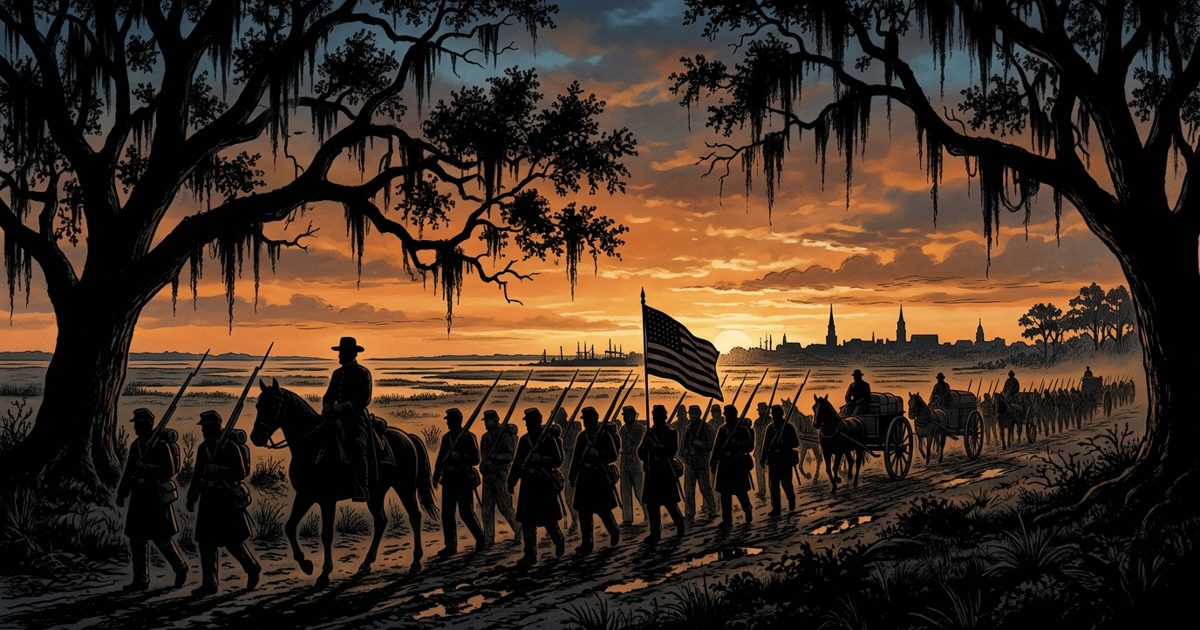
Lieutenant General William J. Hardee abandoned Savannah under cover of darkness across a makeshift pontoon bridge spanning the Savannah River into South Carolina. Hardee recognized that his garrison of roughly ten thousand soldiers could no longer defend the coastal city against sixty thousand veteran Union troops. His retreat ended weeks of Union advances across Georgia and prevented his army from being trapped against the sea. Union pickets from Brigadier General John W. Geary's division noticed the deserted enemy earthworks shortly before dawn.
Mayor Richard Dennis Arnold rode out of Savannah with a small city council delegation to meet Geary's advancing infantry. Arnold formally surrendered the city to Union authority, trading full civil compliance for protection against looting and arson. Geary's 28th Pennsylvania and 147th Pennsylvania regiments entered the streets in good order and raised the national colors over the city exchange. Sherman arrived hours later from coastal communications stations to establish headquarters inside the Gothic Revival mansion of local cotton merchant Charles Green.
Green's residence provided Sherman with telegraph facilities to report the culmination of the Savannah campaign directly to Washington. Sherman drafted a message offering the city, alongside one hundred and fifty captured heavy artillery pieces and twenty-five thousand bales of cotton, as a Christmas gift for President Abraham Lincoln. Federal engineers immediately began clearing Confederate sea mines from the Savannah River and reopening the harbor to resupply ships from the Atlantic Fleet. Possession of Savannah secured a deepwater logistics base that enabled Sherman's forces to launch their subsequent Carolinas campaign two months later.