CHRONOLOGICAL RECORD
November 18 Across U.S. Military History
10 Verified Events
1781
Continental Army
• American Revolutionary War
British Forces Evacuate Wilmington Under Patriot Pressure
Brigadier General Griffith Rutherford led North Carolina militia forces toward Wilmington as British commander Major James Craig withdrew his garrison by sea. British troops abandoned their artillery and supplies following Lord Cornwallis' surrender at Yorktown. Patriot forces occupied the port city by midday, effectively ending the final British military occupation in North Carolina.
1863
U.S. Army
Landmark Event
• Civil War
Abraham Lincoln Arrives at Gettysburg Train Depot
President Abraham Lincoln arrived at the Gettysburg train station aboard a locomotive on the evening before the cemetery dedication. Lincoln traveled to the home of attorney David Wills on the town square, where he put the final revisions on his Gettysburg Address. Union honor guards and wounded veterans greeted the commander-in-chief along crowded streets.
1890
U.S. Navy
Landmark Event
• Pre-Dreadnought Era
Armored Battleship USS Maine Slides Down Slipways
Shipbuilders launched the armored battleship USS Maine at the New York Navy Yard in Brooklyn before thousands of spectators. Miss Alice Tracy Wilmerding christened the hull, which represented one of the first modern armored capital ships constructed by the United States. Maine subsequently entered service as a cornerstone of the emerging steel navy.
1903
Joint Service
Landmark Event
• Early 20th Century
United States Signs Strategic Panama Canal Treaty
Secretary of State John Hay and Panamanian diplomat Philippe Bunau-Varilla signed a historic treaty establishing the Panama Canal Zone under permanent United States administration. American armed forces received exclusive authority to fortify, protect, and operate the proposed waterway connecting the Atlantic and Pacific Oceans. The pact transformed American naval defense strategy by eliminating the need to sail around South America.
1917
U.S. Navy
• World War I
Naval Aviators Fly First American Combat Patrol
Pilots of the First Aeronautic Detachment launched flying boats from Naval Air Station Le Croisic on the coast of France. The mission marked the first aerial patrol flown by American military aviators over European waters in World War I. Naval aviators searched coastal shipping lanes for Imperial German U-boats attempting to disrupt Allied convoys.
1922
U.S. Navy
Landmark Event
• Interwar Era
Commander Kenneth Whiting Performs Historic Catapult Launch
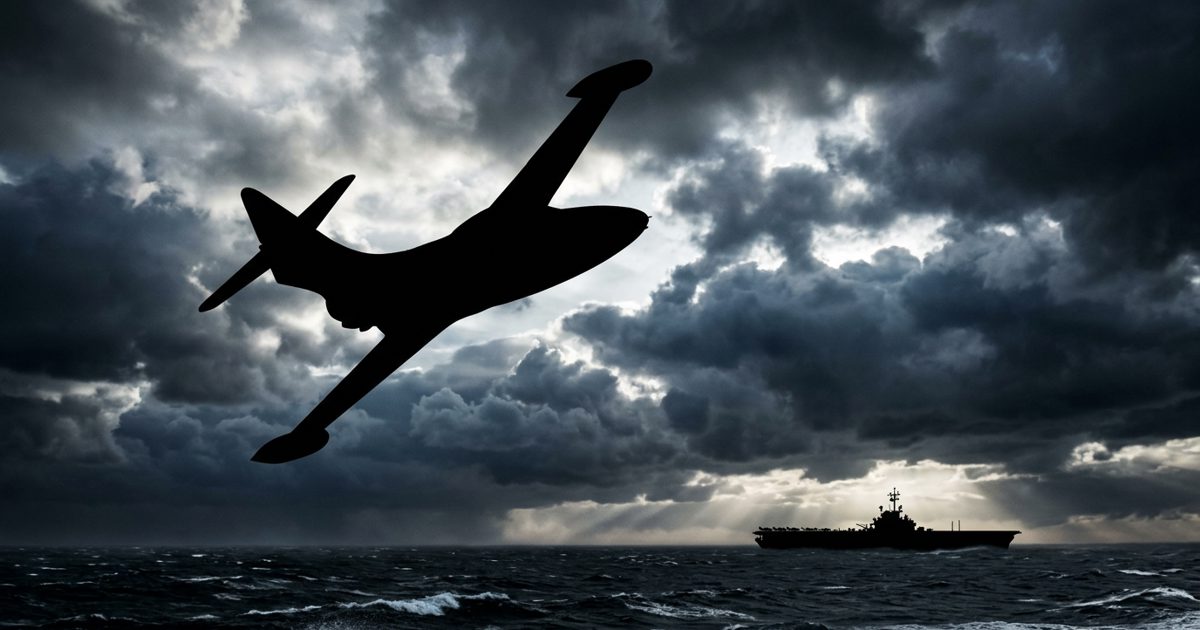
Commander Kenneth Whiting piloted a PT seaplane off the flight deck of USS Langley in the York River of Virginia. Whiting executed the first catapult launch ever conducted from a United States aircraft carrier. The successful test proved that flattops could launch combat aircraft without relying solely on standard deck takeoff runs.
1944
U.S. Army
• World War II
Sergeant Alfred Nietzel Sacrifices Life at Heistern
Sergeant Alfred B. Nietzel defended his squad position in Heistern, Germany, against a fierce German counterattack during the Battle of Hürtgen Forest. Nietzel ordered his surviving men to retreat to safety while he covered them with machine gun and rifle fire. His defensive stand halted the German assault before an enemy grenade killed him.
1944
U.S. Navy
• World War II
Destroyer Escort Lawrence C. Taylor Sinks I-41
Destroyer escort USS Lawrence C. Taylor joined escort carrier aircraft east of the Philippines to hunt a submerged contact. Hedgehog anti-submarine projector barrages from the warship trapped and destroyed the Japanese fleet submarine I-41 in deep water. The sinking removed a dangerous torpedo threat against American invasion forces operating in Leyte Gulf.
1965
U.S. Army
Landmark Event
• Vietnam War
First Cavalry Division Concludes Battle of Ia Drang
Soldiers of the 1st Cavalry Division consolidated their defensive perimeter around Landing Zone Albany as North Vietnamese forces broke contact and withdrew toward Cambodia. The airmobile clash validated helicopter cavalry deployment tactics in dense highland terrain. American casualties reached 234 dead across six days of intense combat, while enemy losses exceeded 1,200 soldiers.
1978
U.S. Navy
Landmark Event
• Modern Era
McDonnell Douglas Hornet Makes Historic First Flight
Pilot John E. Krings took off in the prototype McDonnell Douglas F/A-18 Hornet from Lambert Field in St. Louis, Missouri. The fifty-minute maiden flight demonstrated the twin-engine jet's digital fly-by-wire flight control system and stability. The Hornet entered operational service as the primary carrier-capable strike fighter for the Navy and Marine Corps.