Full Calendar
THIS DAY IN U.S. MILITARY HISTORY • NOVEMBER 17 1965 U.S. Army Vietnam War

Ambush at Landing Zone Albany in the Ia Drang Valley

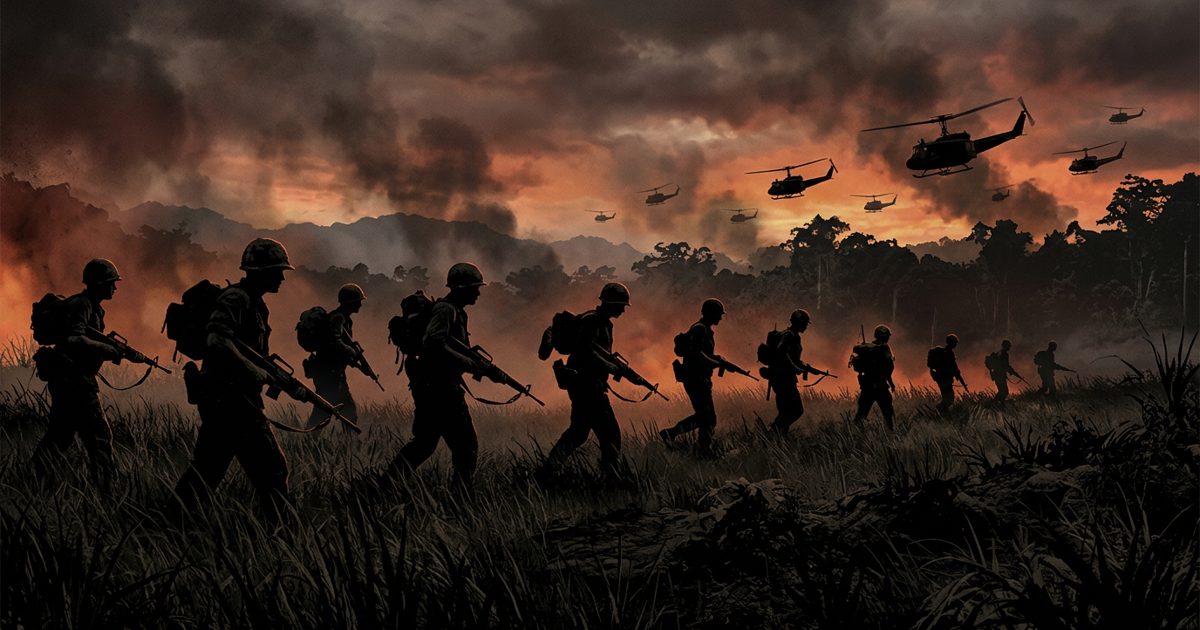
Soldiers of the Second Battalion Seventh Cavalry encounter entrenched North Vietnamese regulars in dense elephant grass during the bloodiest single day of the early airmobile campaign.
Ambush at Landing Zone Albany in the Ia Drang Valley

Lieutenant Colonel Robert McDade led roughly four hundred soldiers of the 2nd Battalion, 7th Cavalry Regiment on an overland march through the dense jungle of the Ia Drang Valley. American commanders ordered the column to trek three miles from Landing Zone X-Ray toward a small clearing designated Landing Zone Albany to make way for incoming B-52 bomber strikes. Soldiers pushed through chest-high elephant grass in sweltering heat, their formation stretching into an extended line over five hundred yards long. Two North Vietnamese scouts captured along the trail alerted McDade to enemy forces nearby, prompting him to halt the column and call company commanders forward for a conference.

North Vietnamese regulars from the 66th Regiment seized on the halted, dispersed American column to spring a sudden ambush from concealed positions in the grass and tree lines. Machine-gun fire and mortar rounds tore through the center of the column, cutting off company leaders at the front from their platoons strung out along the trail. American cavalrymen dropped into the brush and engaged enemy soldiers at point-blank range, fighting in isolated pockets with rifles, hand grenades, and bayonets. Smoke and waist-high grass obscured visibility, forcing forward observers to direct artillery support from distant fire bases with extreme caution to avoid hitting friendly positions.

Helicopter gunships and Douglas A-1E Skyraiders dropped napalm and rockets onto surrounding tree lines as night fell over the clearing. Surviving cavalrymen consolidated their perimeter, treated wounded comrades, and held off scattered North Vietnamese probes until dawn broke across the valley. Relief companies from the 1st Battalion, 5th Cavalry arrived the following morning to secure the landing zone and coordinate medical evacuations for the battered battalion. American casualties totaled 155 soldiers killed and 124 wounded, concluding the bloody Ia Drang campaign and proving to military planners that North Vietnamese regulars would aggressively exploit close-quarters jungle terrain to blunt American airmobile tactics.

CHRONOLOGICAL RECORD

November 17 Across U.S. Military History

8 Verified Events
1777 Continental Army Landmark Event • American Revolutionary War

Continental Congress Submits Articles of Confederation for Ratification

Delegates gathered in York, Pennsylvania, voted to send the Articles of Confederation to the thirteen states for official ratification. This landmark pact established the first constitutional framework for collective defense, continental troop requisitions, and centralized military command under General George Washington across the Revolutionary War.

1856 U.S. Army • American Indian Wars

United States Army Establishes Fort Buchanan in Arizona

Soldiers under Major Enoch Steen established Fort Buchanan along the Sonoita River in newly acquired Gadsden Purchase territory. Patrols from the remote frontier post guarded overland mail stages, surveyed the southern border corridor, and monitored Chiricahua Apache bands across the rugged desert terrain of present-day southern Arizona.

1863 U.S. Army Landmark Event • American Civil War

Confederate Forces Open the Siege of Knoxville

Confederate Lieutenant General James Longstreet deployed twenty thousand infantrymen and artillery crews to encircle Knoxville, Tennessee. Union Major General Ambrose Burnside directed the defense of the city, ordering soldiers and local laborers to fortify earthworks and protect vital eastern Tennessee railway supply junctions against Confederate assaults.

1901 U.S. Marine Corps • Philippine-American War

Marines Scale Samar Cliffs to Capture Insurgent Stronghold

Captain Hiram I. Bearss and Captain David D. Porter led detachments of Marines up two-hundred-foot volcanic cliffs using bamboo ladders along the Sohoton River on Samar. Marines overran fortified gun batteries, seized hidden weapons caches, and destroyed forty insurgent cannons to secure the mountain redoubt.

1915 U.S. Marine Corps Landmark Event • Banana Wars

Marines Storm Fort Riviere to Crush Caco Stronghold

Major Smedley Butler directed American Marines and sailors from the battleship USS Connecticut in a coordinated assault against Fort Riviere in northern Haiti. Butler crawled through a narrow stone drain into the old French bastion with his men, subduing insurgent fighters and capturing the fortified mountain stronghold.

1943 U.S. Navy • World War II

Navy Commissions Light Aircraft Carrier USS Bataan

Shipbuilders completed the light aircraft carrier USS Bataan at New York Shipbuilding in Camden, New Jersey. Captain Valentine H. Schaeffer placed the vessel in commission for the United States Navy, making it the first American warship named in honor of a battle from World War II.

1944 U.S. Army • World War II

Lieutenant Bernard Ray Clears Hurtgen Forest Barricade

Bernard J. Ray led his infantry platoon against heavily fortified German defensive works near Schevenhutte, Germany. Ray moved forward alone under mortar fire with bangalore torpedoes and primer cord, sacrificing his life to detonate the charges and blast a clear path through barbed wire.

1969 Joint Service Landmark Event • Cold War

Strategic Arms Limitation Talks Open in Helsinki

Diplomats and military officers from the United States convened with Soviet counterparts in Helsinki, Finland, to open the Strategic Arms Limitation Talks. Negotiators addressed limits on intercontinental ballistic missiles and submarine-launched weapons to stabilize nuclear deterrence between the two superpowers during the Cold War.

NAVAL WARFARE 1917

Destroyers Fanning and Nicholson Sink German U-Boat U-58

Lookouts aboard the destroyer USS Fanning spotted a small periscope cutting through rough seas off the coast of Queenstown, Ireland. Lieutenant Arthur S. Carpender immediately sounded general quarters, increased speed, and directed the warship toward the submarine track to protect an eastbound Allied merchant convoy. Fanning dropped a pattern of depth charges over the estimated position of German submarine U-58, detonating underwater explosions that wrecked the U-boat motors and ruptured its diving rudders.

German commander Gustav Amberger blew his ballast tanks and brought the crippled submarine to the surface, prompting Fanning and the nearby destroyer USS Nicholson to open fire with their bow guns. Crewmen poured out of the submarine hatches with hands raised, waving white rags to signal their surrender before scuttling charges sent U-58 to the ocean floor. American sailors launched whaleboats to pull four officers and thirty-five German enlisted men from the frigid water. The successful engagement marked the first time in United States naval history that American destroyers forced an enemy submarine to the surface and sank it in combat.