Brigadier General Anthony McAuliffe Rejects German Surrender Demand at Bastogne
Encircled American paratroopers of the 101st Airborne Division hold the vital road junction against four German divisions during the Battle of the Bulge.
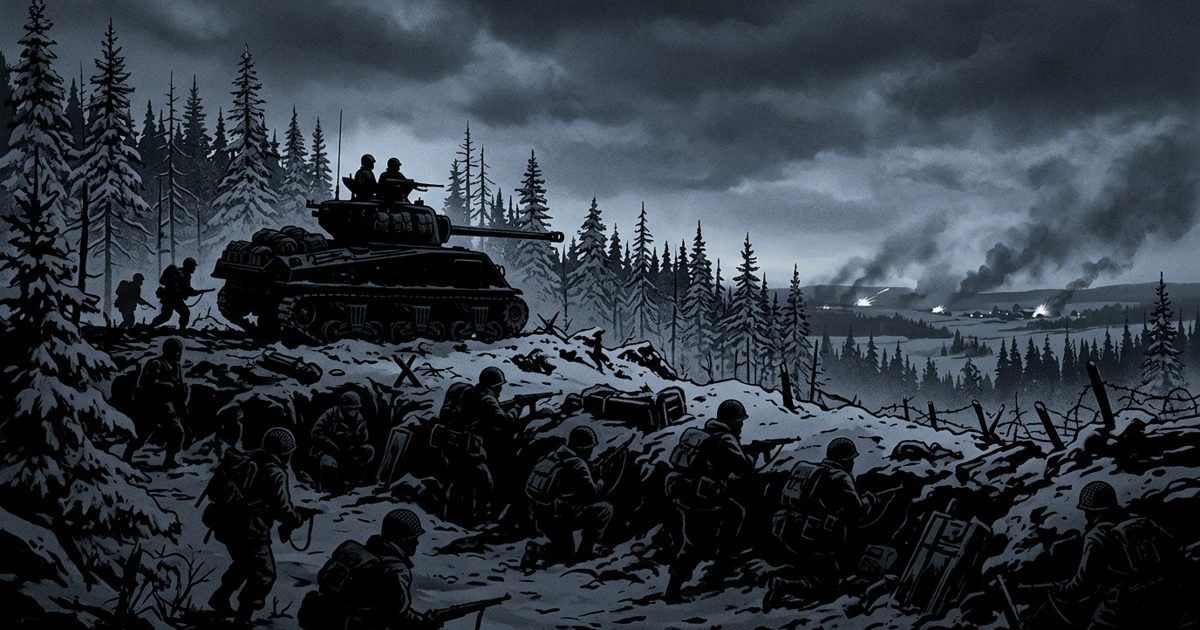
German officers carrying white flags emerged from the dense woods south of Bastogne along the Arlon road on the morning of December 22, 1944. Major Wagner of the 47th Panzer Corps approached the lines of the 327th Glider Infantry Regiment, bearing a formal ultimatum addressed to the American commander. The document stated that German armored units had surrounded the crossroads town and demanded surrender within two hours under threat of artillery bombardment. American sentries blindfolded the officers and forwarded the ultimatum to division headquarters.
Brigadier General Anthony McAuliffe, acting commander of the 101st Airborne Division, read the enemy demand inside his command post at the Bastogne barracks. McAuliffe dismissed the ultimatum immediately and dropped the paper onto the floor with a blunt exclamation of disbelief. Division operations officer Lieutenant Colonel Harry Kinnard suggested using that spontaneous verbal reaction as the official written reply. Staff officers typed a formal rejection consisting solely of the word nuts, which couriers carried back to the waiting German delegation.
Colonel Joseph Harper handed the sealed response to the German officers and clarified that the American slang meant an absolute refusal to capitulate. German artillery opened fire later that afternoon, launching infantry and panzer assaults against the frozen perimeter. Defending paratroopers and tankers from the 10th Armored Division repelled every thrust despite critical shortages of ammunition, medical supplies, and winter clothing. Relief forces from the 4th Armored Division pierced the German encirclement four days later, preserving the hub and collapsing the German offensive timetable.