Henry Knox Arrives at Fort Ticonderoga to Mobilize Continental Artillery
Continental Army colonel Henry Knox reached Lake Champlain in 1775 to extract heavy ordnance needed to break the British siege lines around Boston.
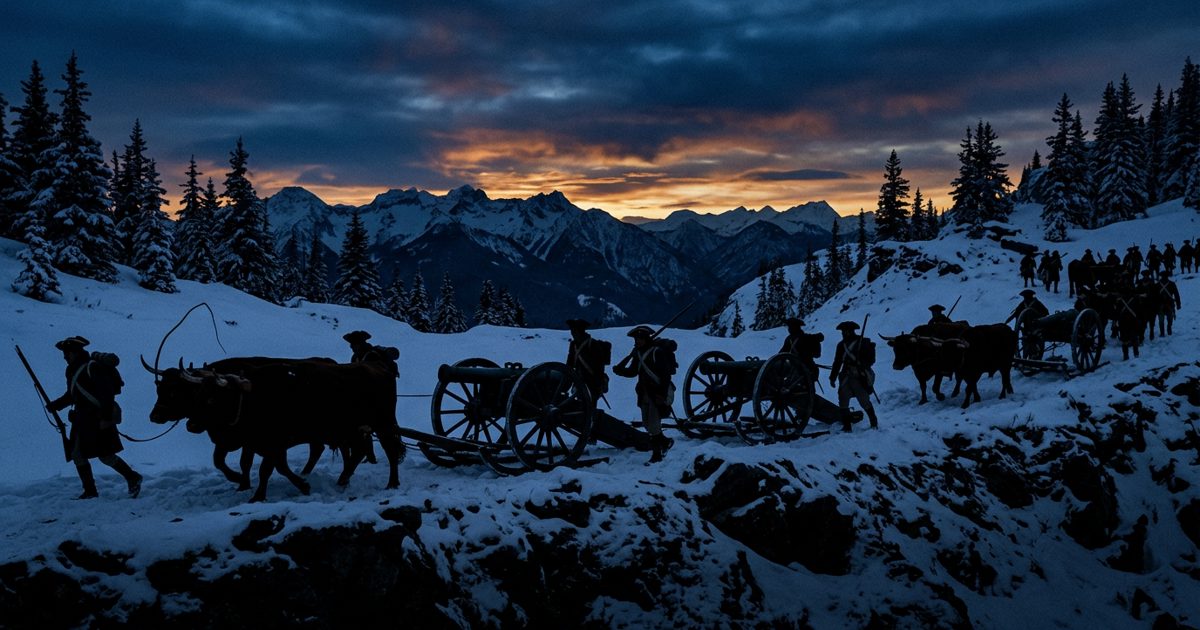
Colonel Henry Knox reached Fort Ticonderoga on December 5, 1775, carrying direct orders from General George Washington to retrieve heavy siege artillery for the Continental Army. American forces surrounding British-occupied Boston possessed ample infantry but completely lacked the heavy ordnance required to dislodge the fortified garrison. Knox inspected the captured fortress stores on Lake Champlain and selected fifty-nine functional pieces, including heavy cannons, mortars, and howitzers weighing sixty tons. British warships in Boston Harbor remained unchallenged until these guns could reach the high ground ringing the port.
Soldiers from the garrison dismantled the weapons and loaded them onto flat-bottomed scows for transit across Lake George. Teamsters assembled forty-two heavy wooden sledges and hired eighty yoke of oxen to haul the barrels over the frozen Berkshire Mountains. Thin ice repeatedly cracked under the weight, sending several cannons into freezing water before recovery crews pulled them up with ropes and tackle. Knox pushed the caravan through deep snow drifts, keeping teamsters and draft animals moving across dangerous river crossings.
Drivers delivered the final sledges into the Continental camp at Cambridge on January 24, 1776. Washington deployed Knox's artillery atop Dorchester Heights under darkness on March 4, placing the British fleet within direct range of plunging fire. British commander General William Howe recognized his tactical defeat and evacuated eleven thousand soldiers and loyalists by sea. Continental regiments marched into Boston on March 17, 1776, securing their first major strategic victory of the Revolutionary War.