Air Cavalry Clashes at Landing Zone X-Ray in Ia Drang
Lieutenant Colonel Hal Moore leads the 1st Battalion 7th Cavalry into the first major clash against North Vietnamese regulars in 1965.
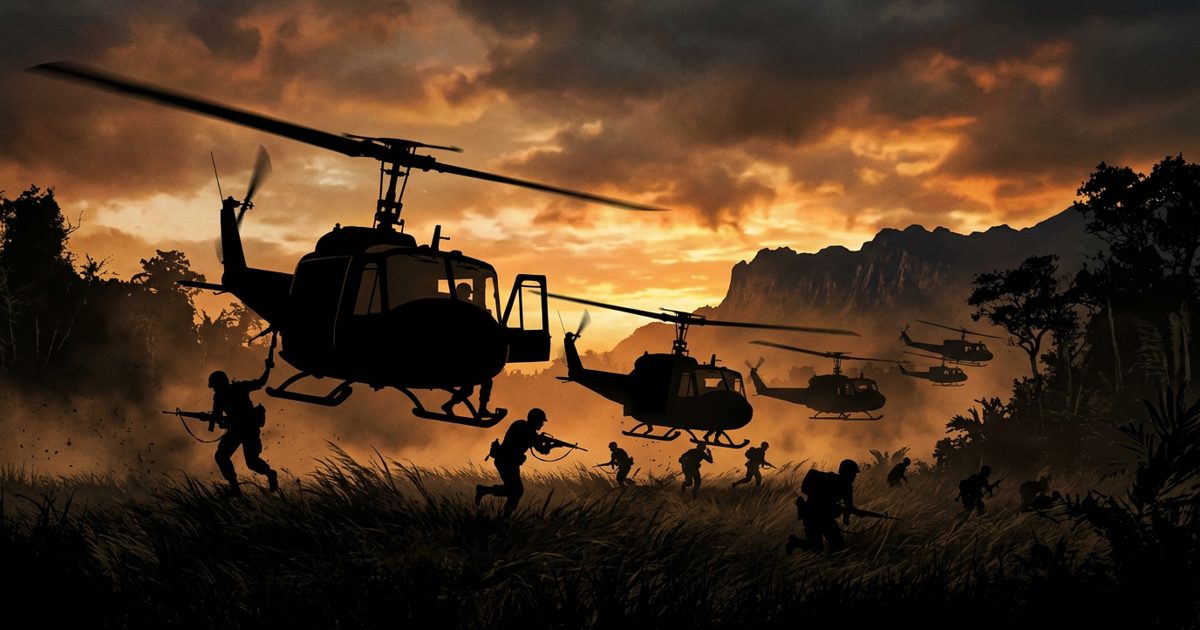
Helicopters ferried troopers of the 1st Battalion, 7th Cavalry Regiment into a remote clearing designated Landing Zone X-Ray at the base of the Chu Pong Massif on November 14, 1965. Lieutenant Colonel Harold G. Moore jumped onto the high elephant grass with the lead assault wave of sixteen UH-1 Huey helicopters, initiating the first major clash between American combat troops and North Vietnamese regulars. Limited lift capacity meant Moore could insert only one company at a time, leaving his vanguard dangerously isolated while helicopters shuttled back to the Plei Me staging base. Hostile scouts monitored the landing, and within minutes heavy machine-gun and mortar fire swept across the clearing.
North Vietnamese soldiers belonging to the 33rd and 66th Regiments emerged from concealed bunkers on the surrounding ridges and slammed into Company B. Second Lieutenant Henry Herrick pursued fleeing scouts onto the right flank, where intense crossfire suddenly cut off his platoon from the battalion perimeter. Platoon leaders formed a shallow defensive perimeter in the scrub, fighting through close-quarters assaults that killed Herrick and multiple squad leaders within the opening hour. Moore deployed incoming elements of Company A and Company C to anchor the tree line, directing all available fire into the ravines to shield the isolated pocket.
Artillery batteries positioned six miles away at Landing Zone Falcon hurled thousands of high-explosive shells into the Chu Pong slopes to break up massed charges. Air Force fighter-bombers streaked overhead, dropping napalm and fragmentation ordnance within yards of Moore's embattled lines to keep the perimeter intact through dusk. Major Bruce Crandall and Captain Ed Freeman braved intense anti-aircraft fire in unarmed Hueys, flying fourteen hazardous sorties into the landing zone to deliver ammunition and extract wounded men. Moore's perimeter held through the night, validating the mobility of helicopter air assault doctrine under sustained jungle combat.