
Baltic Chokepoints and CIG Situation Report 3
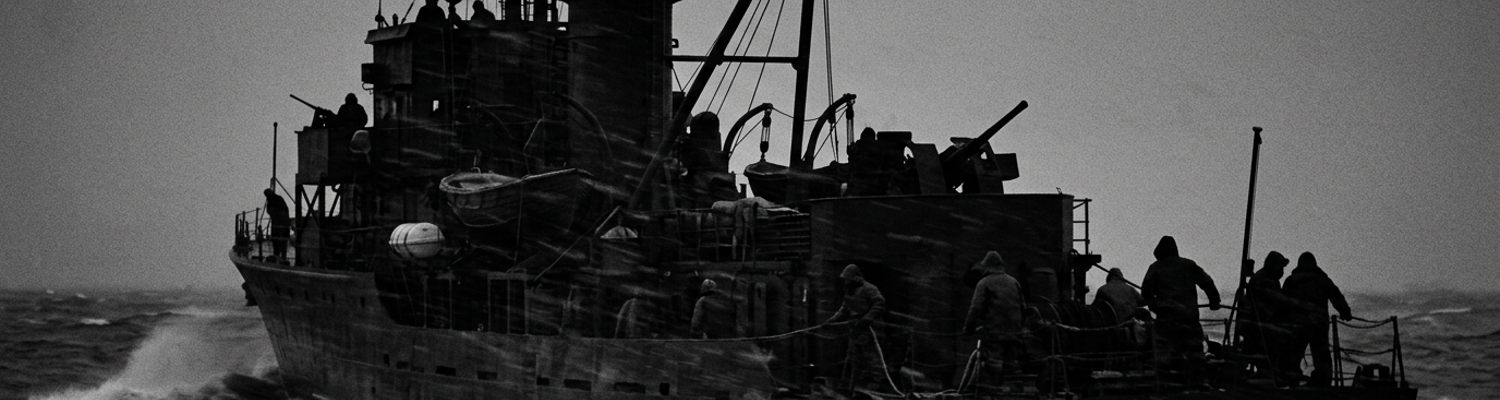
Clearing decaying naval mines from the Danish straits required demobilized post-war crews. They relied on failing auxiliary diesel engines. A close review of operational logs indicates that aboard the 136-foot wooden-hulled auxiliary motor minesweepers off the Jutland banks in early 1946, enlisted sailors worked around the clock. Freezing spray coated the decks. Corroded winch drums seized constantly. Salt encrustation locked the mechanical cable cutters. Exhaust manifold gaskets on the twin Cleveland Model 268A diesel engines blew out under the strain of towing heavy magnetic sweep tails against the Baltic currents. Young firemen breathed heavy fumes in the bilges. Bilge pumps choked on coal dust and marine growth. On the slick wooden decks, seamen worked without survival suits. They handled steel sweep wires that snapped under peak tensions and whipped across the fantail with fatal force.
The water was thirty-eight degrees.
Cold enough to kill a fallen deckhand in under seven minutes.
Central Intelligence Group Denmark Situation Report 3 detailed an urgent strategic crisis across these waters. The intelligence assessment warned Washington about the Soviet Red Banner Baltic Fleet. Soviet forces were expanding naval maneuvers westward from occupied bases in Kaliningrad and Swinemunde. Soviet torpedo cutters and armed patrol craft probed Danish territorial boundaries surrounding Bornholm Island. They staged unannounced live-fire gunnery drills within visual distance of the eastern approaches to the Danish sounds.
CIG analysts confirmed that Soviet naval commanders were tracking merchant traffic passing through the Great Belt and the Oresund.
They deliberately exploited the unmapped barrier minefields left behind by the German Kriegsmarine. This restricted Western surface movements. Intelligence officers warned that Moscow sought operational control over the exit corridors leading into the North Sea. Reconnaissance trawlers mapped Scandinavian defensive emplacements. They tested Danish military compliance along the maritime frontier.
Soviet hydrographic vessels shadowed every open channel night and day.
Directives issued by US Naval Forces Europe responded immediately to the intelligence warnings. Task Force 125 was dispatched to assert a physical Western naval presence across the Danish strait approaches. The operational orders mandated the urgent clearance and physical defense of maritime border infrastructure. This focused specifically on deep-water pilot stations at Frederikshavn. It included the submarine communication cables running along the seabed off Korsor. The exposed navigation lights flanking the Gedser channel required immediate securing. Enlisted crews in Task Force 125 received orders to run continuous sweeping operations in Force 7 gales across the Kattegat. They dragged five-hundred-ampere electric pulsing cables through the swells. This detonated German acoustic-magnetic ground mines buried beneath shifting seabed sands. Lookouts stood four-hour night watches in drenched wool coats. They searched through zero-visibility fog for floating German contact mines that had broken their mooring cables off the island of Laeso.
A single severed sweep wire took four hours of manual hauling across an iced deck to retrieve.
Archival evidence shows that during one routine run through the Langeland Belt, the lead minesweeper suffered total failure of its port reduction gear. Seawater breached the contaminated stern tube packing. The enlisted engineers spent eighteen straight hours in waist-deep oily bilge water. They uncoupled the frozen drive shaft by hand with pipe wrenches. Heavy currents pushed the crippled vessel toward uncharted mine lines three miles off the Danish shoals.
Deployment of Task Force 125 Clearance Units
A close review of operational logs indicates that the muster for Task Force 125 coastal clearance units commenced in freezing drizzle at the docks of Esbjerg on February 14, 1946. Enlisted Gunners Mates, Minemen, and specialized demolition ratings drawn from Naval Demolition Units received immediate assignments. They deployed alongside armed security details from the 10th Marine Barracks detachment. Supply sergeants issued the clearance parties standard wool-lined oilskin jackets. Canvas leggings froze rigid when wet. Ratings received non-magnetic brass probing needles designed to detect firing pins without triggering magnetic influence fuzes.
Security guards loaded heavy M1 Garand rifles and Thompson submachine guns with oil-free bolts.
This prevented the mechanisms from jamming in the coastal frost. Briefings held inside unheated quonset huts laid out the immediate physical hazard. Thousands of unmapped German coastal barrier charges littered the area. These included wooden-cased Holzmine 42 boxes that evaded portable detectors. Anti-personnel S-mines rigged with corroded tripwires covered the tidal flats. Demolition men packed six-pound satchels of composition C-2 directly into canvas musette bags. They slung sixty-pound loads across shoulders already bruised from days of handling frozen heavy gear.
Salt crust froze solid inside the unlubricated rifle chambers within forty minutes of muster.
Archival evidence shows that the technical clearance apparatus broke down almost immediately during the early sweeps. Enlisted ratings equipped with SCR-625 mine detectors discovered that the battery packs failed in temperatures below thirty degrees Fahrenheit. The search coils registered false audio signals every time the search head scraped against iron-rich Baltic glauconite sands. When detectors went silent, ratings were forced onto their stomachs. They probed the sand manually with three-foot brass rods. They inserted the tips at a forty-five-degree angle every two inches into the frozen mud. Demolition teams routinely struck anti-tank Tellermines fitted with secondary anti-lifting fuzes hidden underneath the pressure plates.
Navy ratings worked with numb, ungloved fingers.
They dug out the impacted wet sand surrounding the brass Z.Z.42 pull-igniters. A single slip of a wooden scraper would shear the rusted retaining pin. Armed security details stood guard ten paces back. They scanned the gray horizon through the sleet for displaced naval contact mines washing in on the surf. They maintained a cordon against displaced civilians wandering toward the marked danger flags.
Nobody had dry socks.
When examining the historical record, the initial staging of working parties across the freezing tidal salt marshes of the Skallingen peninsula exposed the clearance detachments to direct environmental attrition. Daily clearance zones sat in low-lying marshes at geographic coordinates 55 degrees 30 minutes North, 8 degrees 12 minutes East. Twice-daily North Sea tides flooded the mudflats under three feet of icy salt brine. Enlisted work details unloaded flat-bottomed wooden punts. They dragged them by hand through dense coastal silt that pulled rubber boots off the men. Two tracked M29C Weasel cargo carriers assigned to transport demolition charges threw their rubberized track belts into the marsh mud within three hundred yards of the staging line. The aluminum drive sprockets sheared when salt sand packed into the bogie assemblies. Seamen and firemen had to shoulder the wooden crates of lead-coated det cord and ammonium nitrate boosters. They waded waist-deep through twenty-nine-degree tidal channels. Floating chunks of slush ice cut through their heavy denim trousers.
Hypothermia set in before the second sweep of each morning could begin.
Corpsmen stationed at the marsh edge treated thirty enlisted men on the first morning for immersion foot and severe salt ulcers that cracked open on their shins. Electrical blasting caps repeatedly misfired. Salt water seeped into the crimped lead sheaths. Demolition ratings had to unpick the live charges with pocket knives to replace the saturated booster pellets. Working parties used wooden stakes to mark safe footpaths through the gray mud. They drove pine timber four feet deep into the marsh bed to stay ahead of the incoming flood tide.
The high tide submerged the stake markers twice every twenty-four hours.
This wiped out marked pathways across the mud by nightfall.
Submerged Canal Basements and Fortified Quays
A close review of operational logs indicates that clearance teams from Task Force 125 entered the fortified waterfront installations along the Esbjerg docks on February 28, 1946. They faced heavily flooded subterranean labyrinths built beneath the German naval workshops and torpedo storehouses. Kriegsmarine demolition squads had blown the seawall sluice gates prior to their surrender. This drove four feet of black harbour silt and tidal backwash into the interconnected masonry basements of Pier 2. Navy demolition specialists and enlisted ratings had to wade through these pitch-black sub-basements in chest-high water. They carried waterproof brass flashlights that flickered out whenever dampness breached the rubber O-rings.
German garrison engineers had retrofitted the low ceilings with steel I-beams.
These supported concrete blast roofs overhead. The water had drowned dozens of concealed scuttling charges, unexploded 10.5-centimeter artillery shells, and taut tripwires strung between iron support pillars. Demolition men dragged canvas utility rafts through submerged archways by hand. They felt along the slime-slick brickwork with bare palms to trace severed electrical cables back to German junction boxes. Every step forward stirred up thick sediment that reduced water clarity to zero within seconds.
Submerged iron beams tore through rubber wading suits instantly.
Archival evidence shows that inspection details suffered severe chemical burns and systemic infections from direct contact with the trapped liquid pool filling the bunker vaults. Saturated industrial runoff had blended with thousands of gallons of spilled synthetic diesel fuel. Lead-acid battery fluid from sunken launch batteries mixed with decomposing organic waste flushed down through bombed drainage conduits. The stagnant mix gave off pockets of concentrated hydrogen sulfide gas. This collected in unventilated air pockets beneath the vaulted ceilings. Seamen vomited directly into the water before they could adjust their Mark IV diaphragm gas masks. Without functional skin barrier ointments or chemical decontamination kits, enlisted men developed weeping dermatitis across their groins and armpits after three hours of immersion.
Medical reports filed by naval corpsmen in the Esbjerg harbor sector noted forty-two hospital admissions in the first week.
Acute cellulitis caused by bacterial entry through minor shrapnel scratches and split cuticles incapacitated the men.
Breathing the air caused immediate dizziness.
When examining the historical record, structural decay inside the fortified quays created an unpredictable physical threat during manual inspection runs. Heavy aerial bomb strikes from late 1944 had cracked the load-bearing granite foundation walls of the western warehouse basin at geographic coordinates 55 degrees 28 minutes North, 8 degrees 26 minutes East. Saturated by months of North Sea tidal surges, multi-ton chunks of unsupported masonry and wet concrete slabs broke loose without warning from the ceiling vaults. Clearance details probed the foundations for unexploded delayed-action ordnance below. Two ratings from Demolition Team 4 were trapped against an iron bulkhead when a three-hundred-pound section of brick barrel vault collapsed into the flooded passage. It crushed their hand-cranked water pump. Both men were pinned beneath the waterline until fellow seamen used crowbars to lever the rubble clear.
The team lost three hydraulic jacks in the mud before freeing the pinned men.
Inspection parties inside the canal cellars along the eastern basin worked in six-man teams. Hemp lifeline ropes tethered them to the quay bollards above. Demolition ratings used non-sparking bronze chisels to pry loose rusted iron grating covers. They cleared out dead water rats, decayed timber crossbeams, and unexploded German coastal barrier fuses wedged into the drainage sumps. Underwater shockwaves inside confined concrete chambers would instantly rupture a swimmers lungs. Personnel were forbidden from using standard explosive counter-charges to shatter rusted hatch hinges. Mechanics chipped through hardened lime deposits by hand while kneeling in thirty-four-degree chemical slurry. They used bronze hacksaw blades that dulled against corroded German armor plate after twenty minutes of continuous manual cutting. Divers inspecting the exterior timber pilings beneath the quays found six magnetic scuttling charges. Copper telephone wire lashed them directly to the granite footing stones.
Environmental Exposure and Severe Immersion Foot
A close review of operational logs indicates that during the first week of March 1946, gale-force winds exceeding forty-five knots drove sub-zero North Sea sleet directly into the open bridge wings of Task Force 125 auxiliary craft. These vessels were sweeping the Horns Rev shoals at geographic coordinates 55 degrees 31 minutes North, 7 degrees 58 minutes East. Archival evidence shows that ambient air temperatures dropped to eighteen degrees Fahrenheit. Sea water washed across the low freeboards of the 136-foot minesweepers at thirty-four degrees. Enlisted lookouts and winch operators wore issue N-1 deck jackets lined with alpaca wool and outer cotton-twill shells. They paired these with rubber-coated foul-weather overalls. Driving sleet and continuous salt spray penetrated the neck closures and wrist cuffs within twenty minutes of standing watch on the fantail.
Once saturated, the heavy canvas garments stiffened into rigid layers of ice.
This restricted arm movement and weighed over thirty pounds. Down below in the crew berthing spaces, steam radiators failed when auxiliary boiler valves seized with salt crust. The compartments remained unheated and drenched in condensation. Ratings had no facilities to dry their clothing. Oncoming watchstanders had to pull on damp wool sweaters that had been hanging in wet chain lockers. Bunks in the forward quarters remained soaked through as water pounded the hull seams and breached the hatch coamings.
Racks of replacement socks ran out across all three divisions within seventy-two hours of leaving port.
When examining the historical record, Task Force 125 clearance units assigned to the barrier shoals off Blavandshuk operated under continuous thirty-six-hour sweeping schedules without relief. Sleet squalls coated the open cable drums in glazed ice. Deck ratings had to strike the metal drums with lead mauls to free the winch brake shoes. Seamen worked without insulated gloves. Wet wool adhered instantly to the frozen steel sweep cables. This ripped skin from the palms whenever a wire kicked under towing tension. The diesel-fired galley range aboard YMS-311 broke its fuel delivery line during a Force 8 squall on March 4. This cut off hot food. Forty-four crewmen had to subsist on cold canned rations and brackish water drawn from contaminated potable tanks. Damp cold settled permanently into the wooden hulls. Bilge water rose above the floorplates in the aft compartments. It drenched sea bags stored under lower bunks and ruined spare uniforms with oily brine.
Every pair of service boots on board was completely waterlogged by the fourth day of the sweep.
Medical logs filed by the Task Force 125 dispensary at Esbjerg document fifty-eight acute cases of severe immersion foot among ratings between March 2 and March 16. Enlisted men stood twelve-hour shifts on open wooden decks. Their feet were compressed inside soaked wool socks and uninsulated rubber boots. Constant contact with salt water at near-freezing temperatures caused sustained peripheral vasoconstriction. This shut down blood flow to the extremities. When ratings finally removed their boots in the unheated berthing spaces, their feet appeared gray, swollen, and numb to pinpricks. As the tissue warmed inside damp sleeping bags, severe burning set in. Blistering and the sloughing of necrotic skin across the heels and ball joints followed. Navy corpsmen lacked dry gauze bandages and zinc oxide ointment. They dusted open sores with sulfa powder and wrapped exposed feet in cut-up mattress covers. Eighteen ratings suffered full-thickness tissue breakdown down to the plantar fascia. This left them unable to stand.
Ratings who could no longer walk crawled on their knees to reach their duty stations at the sweeping winches.
Archival evidence shows that on March 11, the commanding officer of the clearance detachment at Fano Island requested permission from US Naval Forces Europe to withdraw three auxiliary sweepers. Forty percent of the deck force was medically unfit for duty. The request was denied due to strict clearance timetables set by the Allied naval control committee in Copenhagen. Demolition ratings suffering from advanced stage-two immersion foot were ordered to continue beach reconnaissance sweeps along the Skallingen tidal flats. They wrapped their swollen feet in burlap sandbags secured with telephone wire. This replaced boots that no longer fit over their inflamed joints. Five ratings developed systemic cellulitis from secondary infections tracking up the saphenous veins. Motor launches evacuated them to the Danish civilian hospital in Ribe.
Corpsmen amputated six gangrenous toes from two seamen in the harbor sickbay.
This occurred before the squadron completed its second pass across the bar.
Demolition Operations in Tidal Salt Marshes
A close review of operational logs indicates that during the clearance of tidal estuaries flanking the Ho Bugt basin at coordinates 55 degrees 33 minutes North, 8 degrees 17 minutes East, demolition details from Task Force 125 were ordered to eliminate submerged German coastal anti-landing belts. They operated completely submerged in fluid mud. Kriegsmarine coastal pioneers had anchored reinforced steel hedgehogs, jagged railway iron goring-stakes, and heavy timber tripods across the shallow salt flats. Half-inch rusted steel cable lashed each cluster. Corroded 15-centimeter naval shells booby-trapped the formations. Enlisted ratings had to crawl on their stomachs through saturated beds of clay in three feet of opaque gray marsh runoff. They located the anchor points entirely by sense of touch. Silt stirred up by the incoming swell suspended thousands of fine sediment grains in the water column. This blinded the men as soon as their face masks broke the surface. Demolition ratings lashed twenty-pound blocks of Composition C-2 directly against the cold-rolled steel flanges using tarred marline twine and friction tape. They looped waterproofed primacord branch lines from charge to charge beneath the surface while blind. The slightest knot slippage or unseated booster meant the high explosive package would be washed free into the navigation cut by the following swell.
Visibility under the churned marsh mud was zero inches.
Archival evidence shows that unexploded ordnance settled deep into the shifting benthic sediment of the tidal channels. Blind excavation presented immediate hazards to Demolition Unit 3 (Bureau of Ordnance File 77-A). German aerial bombs dropped during early mine-laying missions and misfired 8.8-centimeter coastal shells lay buried up to five feet underneath the surface mud. They were often wedged directly beneath the foundations of demolished timber flood barriers. Navy minemen had to submerge their upper bodies into the sub-freezing slurry without diving helmets. They felt blindly along the encrusted steel casings to identify mechanical percussion fuzes, clockwork anti-handling devices, or cracked picric acid boosters. Salt sediment packed tightly around the firing pins. Standard non-magnetic scrapers jammed. Enlisted men dug the gray silt out with their bare fingernails. Every charge rigged in the tidal marsh required an exact calculated mass of explosive packed precisely against the dead-center axis of the ordnance casing. If the mud shifted and created a three-inch void between the satchel and the target bomb, the counter-charge would merely detonate the mud. This left the live main charge armed on the floor of the tidal channel.
The salt mud swallowed two brass pry-bars and three satchel assemblies before noon.
When examining the historical record, the manual assembly of firing trains under the Skallingen flats exposed ratings to dangerous handling conditions driven by peripheral hypothermia. Enlisted men lost tactile sensation in their hands within ten minutes of entering the thirty-degree salt brine. This caused involuntary muscle tremors in their fingers as they attempted to mate Mark 2 non-electric blasting caps to waterproof safety fuses. These standard issue copper detonators contained volatile lead azide and fulminate of mercury compounds. They turned brittle and prone to friction-induced firing when exposed to freezing air temperatures. Using M2 hand crimpers with numb, clumsy hands produced inconsistent pressure on the thin metal sleeves. Too loose a crimp permitted briny mud to foul the black powder core. An eighth of an inch of misplaced pressure directly crushed the high-explosive base charge. Ratings held live detonator tubes between stiff, bleeding lips to keep the explosive core above freezing. They kneeled in the sediment while a four-knot incoming tidal bore pushed against their shoulders. The current swept loose equipment downstream into deep water.
A dropped blasting cap disappeared into the black sediment forever.
Operational records from the Esbjerg clearance sector report that on March 18, Demolition Team 2 struggled through a shifting spring tidal surge. It rose four feet in twenty-five minutes across the marsh shoals. Minemen attempting to wire electric squibs to an eight-charge demolition chain found their wire terminals stripped by drifting ice sheets and heavy mud flows. Two ratings suffered fractured wrists when the weight of the tidal surge pinned them against the jagged edge of an uncleared steel obstacle before they could secure their charges. Another lost two fingernails attempting to crimp an explosive booster inside an unvented timber revetment. Demolition teams abandoned three half-rigged clearance lines as the water crested over their wool head coverings. Eight live tetryl booster blocks remained secured to submerged railway irons forty yards off the marsh baseline.
Replenishment Failures and Severed Fuel Lines
A close review of operational logs indicates that logistical coordination disintegrated on March 22, 1946, along the outer shoals of the Graadyb channel at geographic coordinates 55 degrees 26 minutes North, 8 degrees 15 minutes East. Task Force 125 replenishment doctrine required deep-draft station tenders, drawing twenty-two feet of water, to anchor five miles seaward outside the ten-fathom curve. This avoided unmapped German bottom mines. Shallow-water LCT-501 and two fifty-foot LCM lighterage craft were ordered to bridge this distance through shifting coastal sandbars. They needed to take on diesel fuel, replacement detonators, and freshwater. Thick sea smoke and continuous freezing drizzle blinded visual observers within thirty minutes of anchor release. Salt ice coated the glass lenses of the twelve-inch carbon-arc signal searchlights mounted on the bridge wings of the tenders. The halyards on the signal masts froze solid inside their bronze block sheaves. This rendered flag hoists completely unusable. Down in the radio compartments of the wooden lighters, damp sea air saturated the vacuum tubes and unshielded coils of the SCR-508 radio sets. Immediate short circuits across the six-volt lead-acid storage batteries followed.
No voice contact survived between the shallow-water craft and the offshore anchorage after noon.
Archival evidence shows that junior officers commanding the tenders refused to alter anchor coordinates or deploy pilot boats into the shallows without verified acoustic clearance data from London headquarters. Trapped outside the surf line without radio contact, lighterage coxswains attempted to dead-reckon across the sandbanks using hand-held magnetic compasses. The needles swung erratically near submerged iron wreckage. Two LCMs grounded hard on the outer ridge of the Fano spit at low water. They buckled their steel hull plating. Thirty-four-degree brine swamped their open engine compartments before the tenders even realized the craft were off course. Onboard the tenders, signalmen burned through dozens of magnesium signal flares that vanished into the low fog ceiling without receiving acknowledgment. Enlisted ratings aboard the stranded lighterage burned diesel-soaked rags in empty grease buckets on their open cargo decks to generate black smoke markers. Offshore wind shear dispersed the plumes directly across the breakers. Station commanders kept their auxiliary engines shut down to conserve fuel oil. The stranded crews waited six hours in freezing weather for the next high tide.
The tenders held three hundred tons of diesel forty cables away.
When examining the historical record, emergency attempts to execute underway hose transfers across open swells on March 24 triggered mechanical failures along the outer reef. Enlisted deck gangs on auxiliary motor minesweepers attempted to haul four-inch reinforced synthetic rubber fueling hoses across eighty feet of turbulent water between the pitching vessels in heavy Force 6 swells. The sweepers rolled through arcs of thirty degrees out of phase with the drifting lighter hulls. Sudden surge tensions repeatedly exceeded the breaking strength of the three-inch Manila messenger lines. On the fantail of YMS-318, an eight-foot swell caught the lighterage pontoon. It yanked the delivery hose taut and snapped the bronze cam-locking couplings directly at the manifold flange. High-pressure diesel surged from the split casing at forty pounds per square inch before the pump watch below could isolate the transfer valves. Escaping petroleum sprayed into the eyes of three enlisted seamen. It knocked them across the wet iron deckplates and lacerated their hands on exposed hose-clamp bands.
Twelve hundred gallons of 50-cetane diesel spilled directly into the churning North Sea breakers within four minutes.
Operational reports preserved in the Task Force 125 records demonstrate that the severed lines drained the forward storage tanks of two minesweepers below emergency operating reserves. Heavy currents pushed the slick directly into the surf zone where demolition teams were probing submerged beach obstacles. Caustic petroleum residue coated the canvas diving suits and rubber face seals of coastal clearance ratings. The oil dissolved the adhesive tape securing waterproof detonating cords to underwater high-explosive charges. Working parties had to abort the demolition of nine steel hedgehogs along the Skallingen baseline. Salt brine mixed with diesel fuel entered the open suction strainers of the shallow-draft lighters. It clogged the primary fuel filters of their Gray Marine 6-71 diesel engines with black asphaltic sludge. Mechanics on the beach worked with hand pumps to flush contaminated fuel lines while waves broke over the engine cowlings. Four sweepers sat stranded without motive power within three miles of uncleared magnetic mine channels.
Supply Manifest Errors and Ration Shortages
A close review of operational logs indicates that logistical breakdowns originated hundreds of miles south inside the naval supply depot at Bremerhaven during the final week of March 1946. Quartermaster clerks processing resupply manifests entered incorrect five-digit stock destination codes. They mislabeled seventy-five tons of Class I ten-in-one combat rations intended for the coastal clearance parties at Esbjerg as surplus machinery packing material bound for Kiel. Two supply convoys consisting of six-by-six GMC trucks arrived at the Skallingen staging depot on March 27. They carried wooden crates filled entirely with bronze reduction-gear bearings and replacement marine carburetor gaskets. Demolition teams and coastal security details from the 10th Marine Barracks detachment received zero cartons of C-rations, tinned meat, or dry biscuit packs. Enlisted shore parties working twelve-hour tides along the mudflats had consumed their last standard emergency chocolate bars and instant coffee packets thirty-six hours earlier. Station officers attempting to locate the missing freight discovered that clerical routing slips (Naval Supply Depot Manifest 44-B) had distributed three hundred cases of balanced field rations across three decommissioned drydock warehouses along the lower Weser river.
The shore detachments had no food.
When examining the historical record, clearance crews operating in the tidal channels between Fano and the mainland suffered severe metabolic exhaustion within forty-eight hours of the supply failure. Minemen wading through waist-deep thirty-degree brine required an intake of at least four thousand calories per day to maintain core body temperature against the freezing wind. Deprived of dry carbohydrates and proteins, ratings scavenged through abandoned German coastal mess halls in search of discarded civilian root vegetables. They boiled rotten rutabagas in salt water over blowtorches. Corpsmen attached to Demolition Unit 4 reported thirty-seven enlisted men incapacitated by severe gastrointestinal cramps, vomiting, and acute ketosis after eating damp, mold-covered rye bread retrieved from bombed harbor cellars. Blood sugar levels dropped so low that deck ratings collapsed while lifting forty-pound demolition packs onto the Skallingen sandbars.
Seamen were chewing raw lard to stop shivering.
Archival evidence shows that the clerical failure compounded when cargo manifests for heating fuel were routed to naval occupation headquarters in Hamburg instead of the Danish coastal sector. Shore parties stranded on the Skallingen peninsula at coordinates 55 degrees 32 minutes North, 8 degrees 11 minutes East were forced to seek shelter inside abandoned German Regelbau 668 concrete personnel bunkers half-buried in the coastal dunes. These reinforced bombproof fortifications lacked mechanical ventilation. They had flooded with six inches of stagnant drainage water after winter storms cracked their outer seal coats. Without drums of heating kerosene or sacks of bituminous coal, interior ambient temperatures inside the thick masonry chambers hovered at twenty-eight degrees Fahrenheit. Moisture seeped through the porous bunker ceilings. Hanging ice sheets formed and dripped continuously onto canvas cots and damp wool blankets. Ratings burned empty wooden ammunition crates and soaked telephone poles inside the blast vestibules to create heat. Heavy downdrafts pushed dense carbon monoxide and acrid pine smoke directly into the sleeping vaults. This blinded the occupants and triggered violent coughing fits.
By April 2, nine enlisted men were hospitalized in Esbjerg.
They suffered carbon monoxide poisoning and second-degree frostbite on their extremities after spending four nights pressed against wet concrete blast walls.
Ordnance Extraction Delays and Unit Isolation
A close review of operational logs indicates that the withdrawal timetable for coastal evacuation craft collapsed completely across the Graadyb estuary during the storm surge of April 4, 1946. Three mechanized landing craft from the Task Force 125 boat pool, designated LCM-44, LCM-89, and LCT-501, attempted to breach the sand spit at coordinates 55 degrees 29 minutes North, 8 degrees 16 minutes East. They were tasked with extracting Demolition Unit 3 along with forty-two tons of recovered German ordnance. Salt brine mixed with floating fuel slicks from the March replenishment disaster had penetrated the low-mounted air intakes of the Gray Marine 6-71 diesel engines. Within twenty minutes of entering the breaker zone, black asphaltic sludge clogged the primary duplex fuel strainers. This starved the injectors and cut fuel pressure from forty pounds per square inch down to absolute zero. Mechanics bled the supply lines with hand-operated primer pumps while freezing surf broke over the open engine wells. The fuel was thoroughly ruined with sediment. Without motive power to counter the six-knot tidal rip, the lighters were swept sideways into the outer mudflats.
The reserve diesel tanks aboard all three evacuation craft were pumped bone-dry by dawn.
Archival evidence shows that Task Force 125 headquarters at Bremerhaven declined to risk deep-draft salvage tugs inside the unmapped mine channels of the Fano shallows to tow the disabled craft. Staff officers radioed orders directing the stranded beach masters to anchor the dead lighters against the tidal flats using wire kedge lines and wait for high water. Grounded hard on the sandbanks, the open lighters took aboard green water that washed over their steel cargo decks. This shorted out the battery banks and drowned the radio transmitters before any distress traffic could clear. Demolition ratings and deckhands watched their only evacuation route settle into four feet of shifting silt sixty yards from the shoreline. Stacks of recovered high-explosive ordnance sat marooned on the low-tide mark. Breaking swells threatened to roll the five-hundred-pound bomb casings back into the boat channels.
Nobody came to take off the men or the explosives.
When examining the historical record, twenty-four enlisted men from Demolition Unit 3 and an eight-man armed guard from the 10th Marine Barracks detachment found themselves completely cut off inside the waterlogged ruins of a blasted German coastal artillery redoubt on the Skallingen spit. Flooded under three feet of icy storm wash, the shattered concrete masonry of the former Kriegsmarine strongpoint at coordinates 55 degrees 30 minutes North, 8 degrees 14 minutes East served as the mandatory holding zone for recovered German coastal barrier munitions. Demolition personnel were ordered to maintain twenty-four-hour physical guard over four hundred corroded naval contact mines, aerial depth bombs, and wooden-cased anti-personnel charges stacked directly inside the flooded casemates. The high-explosive fillers, composed primarily of German cast Amatol and picric acid compounds, were actively decaying under continuous immersion in salt brine. Toxic yellow crystals of lead picrate had crusted over the rusted casings and pooled across the waterlogged brick floors. This ultra-sensitive contact explosive formed when picric acid leached into iron and masonry.
A dropped rifle butt against the crystallized floor could initiate an instant sympathetic detonation across the entire stockpile.
Operational reports demonstrate that the enlisted security detail endured ninety-six continuous hours of isolation inside the damp, unheated ruins without hot rations or relief watches. The slightest physical shock risked disturbing the volatile picrate crusts. The men were forbidden from building fires, dragging timber for elevated duckboards, or clearing the rubble choking the drainage grates. Marines and navy ratings stood guard knee-deep in thirty-two-degree sea water. Their M1 Garand rifles slung over frozen wool overcoats that weighed thirty-five pounds from absorbed moisture. Severe sensory exhaustion settled over the watch details as wind whistled through the jagged bomb craters in the concrete ceiling overhead. Saturated boots prevented peripheral blood flow. Feet turned into dead, pulpy white flesh that split open under the seams of the wool socks.
Medical logs report that civilian fishing smacks finally approached the Skallingen shallows on April 8 to deliver field rations.
Nineteen enlisted watchstanders had to be carried out of the redoubt on litter stretchers with advanced peripheral nerve damage in their lower legs.