
Systematic Document Destruction Across Tokyo
Investigators from General Douglas MacArthur advance legal section packed mimeograph machines, canvas evidence bags, and field typewriters into transport crates under a strict deadline to reach Tokyo. Mechanics in Manila tuned truck engines through the night while intelligence officers loaded translation dictionaries and map cases into cargo holds. Radio monitoring stations warned these teams that Japanese command centers were obliterating paper records across the capital before occupation troops could secure government buildings. Imperial General Headquarters issued emergency directives in mid-August 1945 mandating the systematic incineration of operational orders, personnel files, and military police records. Army couriers rushed these written orders to ministerial bureaus and military garrisons, directing commanders to throw classified paperwork into boilers and open courtyards. Clerks in Tokyo immediately emptied metal lockers and wooden cabinets, stacking bundles of secret correspondence next to outdoor burn barrels.
Bonfires in those ministerial courtyards quickly merged into massive blazes across the city. Dense ash plumes from military and ministerial incinerators covered central Tokyo for days preceding the arrival of advance Allied occupation forces. Black soot fell continuously over the Imperial Palace, the Ministry of War compound at Ichigaya, and the naval offices at Kasumigaseki. Furnace grates warped under relentless heat as military personnel shoveled cipher books, troop mobilization orders, and daily logbooks into the flames. Building custodians wheeled metal carts piled high with telegraph ledgers into courtyard pits, stirring the fuel with iron poles to keep oxygen flowing to the embers. Smoke poured from chimney flues across the city until deep pits of glowing carbon filled the open yards behind each ministry.
Bureaucrats shovel-fed these pits night and day to erase administrative files detailing state-sanctioned atrocities and prisoner-of-war camps across Asia and the Pacific. Detention facility rosters, execution logs, and records of forced labor detachments vanished into soot before international authorities could inspect the compounds. Military police field officers broke up charred file binders with heavy spades and sifted the remains to ensure that names, dates, and unit stamps were completely unreadable. Ministerial supervisors ordered carbonized papers crushed into fine powder and dumped into sewer drains or carried out to Tokyo Bay. Soldiers loaded the empty steel file drawers onto transport trucks and drove them to metal salvage depots to clear the storage rooms.
Jeeps carrying Allied advance officers arrived at these cleared storage rooms inside the Ministry of War compound at Ichigaya, where inspection teams stepped past cold furnace grates and dust-covered corridors. Legal personnel carried portable floodlights, evidence tags, and fingerprint kits into the basement archives to search for any surviving paperwork. Officers found only scattered scorch marks, torn folder covers, and heaps of gray debris near the ventilation intakes. Prosecution directors immediately organized sorting details and ordered military police to seal every doorway to halt further tampering. Teams began bagging the remaining soot and paper scraps from boiler rooms, establishing a triage line inside the damaged auditorium to piece together the surviving fragments.
Legal Section Mandate and Mobilization
Plywood tables lined the drafty auditorium floor to hold these scorched remnants as legal officers examined the debris under portable work lamps. General Douglas MacArthur established the legal section under executive order provisions to collect evidence and prepare indictments for the International Military Tribunal for the Far East. Legal officers operating under this mandate needed signed cabinet resolutions, official imperial rescripts, and intact operational logs rather than charred fragments to construct valid criminal charges. Investigators quickly realized that boiler room sweepings alone could not sustain international courtroom charges against Japanese wartime leadership. Staff officers drafted emergency seizure orders demanding immediate physical custody of all surviving government archives across the capital before ministerial employees could destroy secondary paper trails. Armed couriers carried these directives to municipal offices while military police posted sentries at every government doorway to halt the removal of remaining records.
Eighth Army civil affairs teams coordinated with Allied intelligence detachments in early 1946 to secure administrative buildings across Tokyo, reinforcing those doorway sentries with aggressive searches. Counterintelligence agents and military police moved through the Ministries of War, Navy, and Foreign Affairs, padlocking file vaults and seizing metal lockboxes before workers could empty them. Search teams forced open rusted safe doors with crowbars and bolt cutters when Japanese custodians claimed that office keys were lost or destroyed in air raids. Intelligence specialists searched attic crawlspaces, elevator shafts, and subterranean heating ducts to uncover hidden parcels of naval records and secret imperial military police dossiers. Patrols cordoned off regional police stations, railway offices, and telegraph substations to capture carbon copies of burned military dispatches. Civil affairs officers impounded Japanese military transport trucks parked in ministry courtyards to prevent ministerial personnel from hauling concealed crates into suburban hiding spots.
Truck convoys hauled these impounded crates directly to Allied legal headquarters, depositing thousands of unsorted folders onto processing tables. Prosecution teams established tight timelines to assemble evidentiary dossiers before the formal arraignment of high-level suspects. Attorneys divided their staff into specialized investigative units, assigning each team to build comprehensive biographical case files for twenty-eight primary military and civilian leaders, including former prime minister Hideki Tojo. Researchers combed through captured cabinet meeting minutes, diplomatic dispatches, and prisoner administration logs to tie specific commanders directly to aggressive war planning and systematic battlefield atrocities. Evidentiary gaps left by the August fires continually slowed this workflow, as missing military orders forced attorneys to search for obscure secondary endorsements and carbon duplicates. Lead prosecutors warned their staff that failing to establish clear chains of command in these paper dossiers would jeopardize their indictments during opening hearings.
Attorneys recruited bilingual Japanese personnel and unvetted ministry clerks to decipher handwritten notations and reconstruct these broken chains of command. Translators worked under continuous military guard, smoothing out heat-curled paper leaves and verifying official vermilion seal stamps on recovered army ordinances. Legal officers cross-checked each translated document against radio broadcast transcripts and regional command rosters, watching closely for intentional mistranslations or omitted names. Typists worked through the night cutting mimeograph stencils to produce identical English copies of every verified memo, telegram, and interrogation summary. Clerks bound these verified pages into heavy manila folders, labeling each completed dossier with defendant names and specific criminal counts. Armed couriers locked the finished case files into steel transport chests and delivered them directly to the chief prosecutor office for final indictment drafting.
Impoundment Operations at Ichigaya
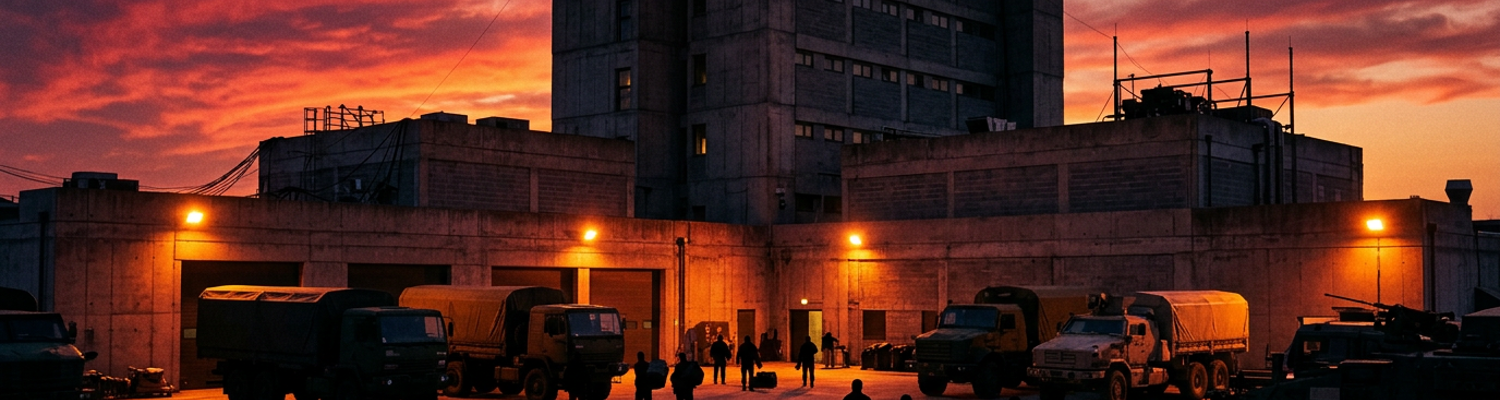
Attorneys inspected those newly arrived transport chests in the prosecution offices and recognized that the indictments still lacked the core institutional registries needed to prove systematic high-command conspiracy. Eighth Army personnel seized the former Imperial Japanese Army War Ministry headquarters and military academy facilities at Ichigaya Heights to secure the primary administrative complex before remaining ministerial paper trails vanished entirely. Troops rolled armored scout cars and heavy weapons carriers through the front iron gates, establishing manned roadblocks and sandbagged machine-gun positions across every terraced road leading down into central Tokyo. Infantry squads with fixed bayonets cleared the cavernous three-story concrete headquarters building, ordering hundreds of Japanese military clerks, typists, and staff officers away from their desks and into central assembly courtyards. Military police officers padlocked the building exits, severed external communication wires, and posted sentries at every fire door to prevent ministry personnel from smuggling out concealed parcels or lighting new burn barrels. Combat engineers rigged portable gasoline generators on the grounds and strung heavy electric cables through the windowless corridors, bathing the dark administrative wings in bright light for incoming search detachments.
Investigators picked up heavy crowbars, evidence containers, and battery-powered floodlamps to follow those illuminated cables directly down into the subterranean levels of the fortified compound. Allied investigators cordoned off subterranean vaults, office complexes, and partially scorched storage rooms containing surviving War Ministry and Navy Ministry registries. Legal specialists navigated flooded floorboards, cold furnace grates, and soot-covered concrete stairs to reach reinforced steel safe rooms where Japanese custodians had attempted to incinerate records during the final days of the war. Investigators pried open warped fire doors and jammed metal filing cabinets with pry bars, uncovering damp binders of officer appointment rolls, daily operational journals, and naval personnel ledgers that had escaped the courtyard bonfires. Japanese caretakers and naval custodians caught hiding behind boiler room partitions surrendered master safe keys under armed guard, revealing hidden crawlspaces behind ventilation ducts packed with intact wartime files. Inspection crews carefully packed these smoke-blackened paper bundles into heavy canvas evidence sacks and wooden crates, padding the fragile, heat-damaged leaves with cotton batting to prevent brittle paper fibers from crumbling into dust.
Soldiers carried the sealed wooden crates and evidence sacks up the basement stairs and loaded them onto four-wheel-drive flatbed trucks waiting in the courtyard. Seized documents were transferred into secure record depositories established within the fortified Ichigaya compound. Depository clerks systematically logged each incoming container in administrative ledger books under the direct supervision of armed military police sentries, stacking the wooden crates inside dry, temperature-controlled archival rooms behind reinforced steel security grates. Civil affairs specialists and bilingual intelligence teams unsealed the crates on wide timber workbenches, carefully flattening heat-curled sheets beneath weighted glass plates while verifying imperial vermilion seal impressions against official government gazettes. Legal researchers cross-referenced these recovered ministerial personnel logs and operational directives against preliminary suspect dossiers, successfully reconstructing the unbroken chains of command connecting senior cabinet members directly to field operations across Asia. Couriers locked the newly verified War Ministry and Navy Ministry registries into heavy steel storage chests and delivered prioritized evidence packets directly to prosecution drafting rooms across the complex.
Translator and Interpreter Section Operations
Attorneys unbolted those heavy steel storage chests and carried the prioritized evidence packets directly into the workrooms of the Allied Translator and Interpreter Section. Linguists sorted, indexed, and translated thousands of salvaged Japanese-language records under unrelenting deadlines imposed by international trial directors. Enlisted men and Allied intelligence officers smoothed heat-curled leaves of onion-skin paper across long plywood trestles, cataloging burned ledgers and torn carbon receipts into master tracking registers. Processing crews labeled every recovered bundle with red grease pencils, recording the precise basement vault or boiler room where search teams had found it. Dust and soot particles rose from the brittle paper as linguists worked beneath bare overhead bulbs, forcing staff to clean typewriters and magnifying glasses continually throughout each shift. Translators created standardized English summary sheets for every legible page, attaching urgent review flags to any recovered sheet that mentioned senior cabinet officials or military conferences.
Linguists and Allied specialists worked alongside unvetted former ministerial clerks and demobilized bureaucrats to decipher specialized military characters, shorthand, and bureaucratic filing systems that concealed these senior-level decisions. Western-educated intelligence officers understood standard literary Japanese, but they struggled against complex imperial idioms, technical naval abbreviations, and rapid brush shorthand used during secret cabinet debates. Demobilized government typists and low-ranking registry clerks sat on folding chairs beside American sergeants, explaining how ministerial bureaus used distinctive cross-filing stamps and numbered routing slips to track sensitive memoranda. Armed military police paced between the desks to ensure that these unvetted Japanese workers did not slip vital documents into their coats or scratch out incriminating names with penknives. Cooperative clerks explained how imperial offices used double-entry receipt logs to track classified directives, enabling Allied teams to link disjointed carbon memos with official ministerial authorizations.
Translators flagged fragmentary orders and cabinet minutes directly relevant to the tribunal indictment once those disjointed carbon memos were matched with ministerial authorizations. These designated chapters charged Japanese leaders with planning and waging aggressive wars across China, Southeast Asia, the Pacific, and the Soviet frontier, demanding absolute documentary proof of centralized conspiracy. Linguists highlighted margin notes on liaison conference summaries where prime ministers and military chiefs had formally approved invasion timetables and territorial annexations. Language specialists marked matching drafts of Imperial General Headquarters directives that demonstrated how field armies had executed state policy rather than acting on rogue local initiative. Typists prepared clean English stencils of these prioritized files, labeling each finished translation with exact cross-references to the corresponding counts in the prosecution charter.
Mimeograph machines pressed ink through those newly cut stencils to produce identical evidence packets for trial attorneys working in the indictment drafting rooms. Legal officers assembled these verified translations into prosecution binders alongside photographic prints of the original Japanese texts and official verification certificates. Chief prosecutors examined the completed packets under desk lamps, integrating the translated cabinet minutes directly into their draft indictments to establish high-command culpability. Armed couriers packed the finalized evidentiary dossiers into padlocked dispatch cases and carried them down the central corridor toward the tribunal registry, delivering the documentary foundation needed for the opening arraignment hearings.
Reconstruction of Military Command Chains
Registry clerks unlocked those padlocked dispatch cases inside the tribunal filing office and discovered that defense attorneys had already lodged formal challenges against the broad command structures listed in the initial charges. Allied prosecutors realized that general cabinet decrees and Imperial General Headquarters communications alone could not prove which specific generals had exercised direct operational control over troops on the ground. Japanese defense counsel planned to argue that chaotic battlefield conditions and severed radio communications had left local army units isolated from Tokyo, making imperial cabinet members blameless for regional atrocities. Investigators used surviving Imperial Japanese Army service records and personnel gazettes to map precise command relationships across theaters of operation. Research teams gathered damp stacks of official army personnel gazettes and cross-referenced them with surviving officer appointment rolls salvaged from the War Ministry basements. Analysts tracked every transfer, field promotion, and staff assignment across huge butcher-paper wall charts to identify the exact dates when accused officers assumed active command over division and brigade formations, allowing prosecution staff to pin these updated command diagrams directly above their workbenches so trial attorneys could track the operational movements of suspect division commanders day by day.
Trial attorneys examined those wall diagrams and directed search teams to find the specific administrative paper trails linking Tokyo policymakers to mistreated captive populations in remote prison compounds. Salvaged administrative files established organizational links between the War Ministry Prisoner of War Information Bureau and field-level camp commandants. Translators sorted through soot-encrusted monthly logs, camp inspection rosters, and prisoner transfer forms recovered from the reinforced vaults beneath the Ichigaya complex. These internal records proved that bureau directors in central Tokyo regularly received detailed tallies of prisoner deaths, tropical disease rates, and reduced calorie rations straight from local camp commandants across Southeast Asia. Japanese staff clerks in Tokyo had initialed incoming camp telegrams and stamped administrative replies directing camp administrators to extract heavy manual labor regardless of prisoner physical condition, prompting legal researchers to organize these carbon copies of official reprimands, medical supply rejections, and punitive camp regulations into chronological sequences showing continuous high-level control. Couriers bundled these damning administrative memos into specialized evidence folders to counter defense arguments that rogue camp guards had acted without ministerial oversight.
Defense lawyers prepared aggressive legal motions to exclude these paper bundles, arguing that salvaged documents pulled from burned basements had been altered or contaminated during Allied recovery efforts. Documentary chains of custody were rigorously audited to withstand evidentiary objections from international defense counsel. Legal officers systematically inspected every ink stamp, canvas sack label, and storage ledger to guarantee that every exhibit complied with strict rules of legal admissibility. Evidence specialists reviewed every individual recovery tag by cross-matching the numbers stamped on canvas bags against the original seizure logs kept by military police guards stationed across the Ichigaya compound, while auditors gathered sworn affidavits from the original American searchers and Japanese archival clerks who had handled each binder to record every physical handoff from the flooded basement vaults to the translation desks. Staff clerks bound these verification affidavits directly to the front covers of the completed trial dossiers, creating an unbroken and verifiable paper trail for every single page introduced into the tribunal record. Armed guards loaded the newly certified case files onto heavy handcarts and wheeled them through the double security doors of the courtroom antechamber for the opening arguments of the international trial.
Alternative Evidence and Intercepted Dispatches
Prosecutors inspecting the case files on those handcarts inside the antechamber quickly confronted evidentiary chasms where incinerated official registries left high-level policy decisions unrecorded. Investigators worked through the night to bridge evidentiary chasms caused by incinerated registries, cross-referencing seized private journals from senior staff officers including Colonel Akiho Ishii. Search details had confiscated these personal diaries from private residences and hidden footlockers across Tokyo, uncovering candid daily accounts that detailed informal ministerial debates, troop deployments, and military conferences. Staff officers like Ishii had recorded frank notes on secret debates within the Military Affairs Bureau, revealing how senior generals had steered cabinet decisions, suppressed dissenting opinions, and drafted aggressive expansion policies. Legal analysts aligned these handwritten diary entries alongside charred paper scraps salvaged from the Ichigaya boiler rooms, confirming that surviving fragments of official authorizations matched the exact dates, meeting agendas, and participant rosters noted in the officer journals. Clerks marked these corroborated journal passages with red grease pencils and transferred the comparison folders to intelligence desks for verification against external communications.
Military intelligence teams integrated decrypted diplomatic and military radio dispatches preserved from wartime signals intelligence operations into those incoming case folders. Allied intercept stations across the Pacific had recorded and deciphered these coded wireless transmissions throughout the war, preserving verbatim transcripts of secret communications flowing between Imperial General Headquarters and regional commands. Cryptanalysts combed through bound volumes of raw intercepts to locate matching date stamps, transmission frequencies, and recipient addresses that corresponded with the recovered staff notebooks and scorched carbon memos. Radio traffic showed Japanese ambassadors and field generals reporting their compliance with specific ministerial directives, effectively proving that central authorities in Tokyo had coordinated military aggression across multiple theaters. Officers matched these intercepted wireless cables directly against the entries in the staff diaries, establishing an unbroken timeline that showed high-ranking commanders issuing operational orders days before major hostilities commenced. Couriers packed these combined signal intercepts and verified journal transcripts into locked leather briefcases, transporting the evidence packets directly to detention centers holding top military suspects.
Interrogators carrying those locked briefcases into Sugamo Prison conducted focused sessions with incarcerated cabinet members and former generals. Custodial interrogations of key ministerial figures at Sugamo Prison corroborated salvaged paper fragments regarding high-level policy directives. Questioning teams placed charred carbon drafts and decrypted radio transcripts on bare wooden tables directly in front of former ministers, systematically dismantling their claims that local field forces had acted without central approval. Confronted with their own signatures on surviving fragments and detailed notes recorded in staff officer journals, imprisoned officials admitted that the cabinet had planned strategic operations and drafted official mobilization decrees. Stenographers recorded these detailed admissions while legal officers drafted formal affidavits that verified the authenticity of the recovered documents. Military police escorts collected the signed depositions, locked them into steel dispatch boxes alongside the corroborating intercepts, and drove the finalized evidentiary dossiers back through the city gates toward the Ichigaya courtroom.
Evidentiary Impact on the Indictment
Prosecutors unlatched those steel dispatch boxes inside the drafting office and spread the verified dossiers across long consultation tables to prepare the formal indictment papers. Legal officers immediately organized the translated ministry logs, personnel gazettes, and interrogation records into fifty-five separate criminal counts. The recovered records formed the empirical backbone for establishing systemic command responsibility under tribunal charter provisions. This charter article gave the international court legal authority over crimes against peace, conventional war crimes, and crimes against humanity, allowing prosecutors to charge senior officials for failing to halt systemic atrocities committed by subordinate troops. Analysts paired every recovered administrative memo with confirmed troop movements, demonstrating that cabinet ministers in Tokyo had maintained continuous operational supervision over distant army garrisons. Chief prosecutors fastened these verified documents to the master indictment files, assembling an overwhelming documentary record to lay before the bench.
Clerks secured these newly assembled exhibits into reinforced display binders so trial attorneys could track specific acts of brutality back to imperial ministry desks. Charred and pieced-together archival remnants successfully linked senior cabinet leaders to widespread prisoner mistreatment and civilian massacres across occupied territories. Recovered carbon copies from the War Ministry Prisoner of War Information Bureau proved that high-ranking generals and cabinet directors had received weekly notifications detailing rampant starvation, forced labor casualties, and medical neglect along the Burma-Siam railway and in Philippine prison compounds. Burned fragments recovered from boiler room grates revealed written instructions directing field garrisons to execute captured Allied aircrews and eliminate civilian populations during tactical withdrawals. These surviving fragments prevented defense attorneys from claiming that isolated local units had acted without the knowledge or approval of government leaders in Tokyo. Evidence officers stamped master exhibit numbers along the edges of every laminated sheet and loaded the binders into courtroom handcarts for the prosecution staff.
Technicians wheeled handcarts of those completed trial binders into the tribunal records room as Allied military commands across Asia and Europe studied the salvage techniques developed at Ichigaya. The Ichigaya clearance operation set a precedent for military government documentary triage during early Cold War international war crimes adjudications. Legal commands running concurrent military tribunals in Yokohama, Manila, and occupied Germany adopted the exact methods used at Ichigaya, sealing municipal incinerator yards and employing demobilized foreign clerks to sift through scorched record repositories. Intelligence teams recognized that modern industrial bureaucracies generated multiple copies of administrative files, proving that investigators could establish state culpability even after central archives had been burned. Specialists in the Ichigaya basement fed every surviving Japanese record through rotary microfilm cameras to duplicate thousands of fragile paper leaves onto high-density film rolls. Armed sentries locked these master film canisters inside reinforced zinc transport cases and transferred them to underground storage vaults beneath the Supreme Commander headquarters.