
Operational Transition Under Operation Switchback
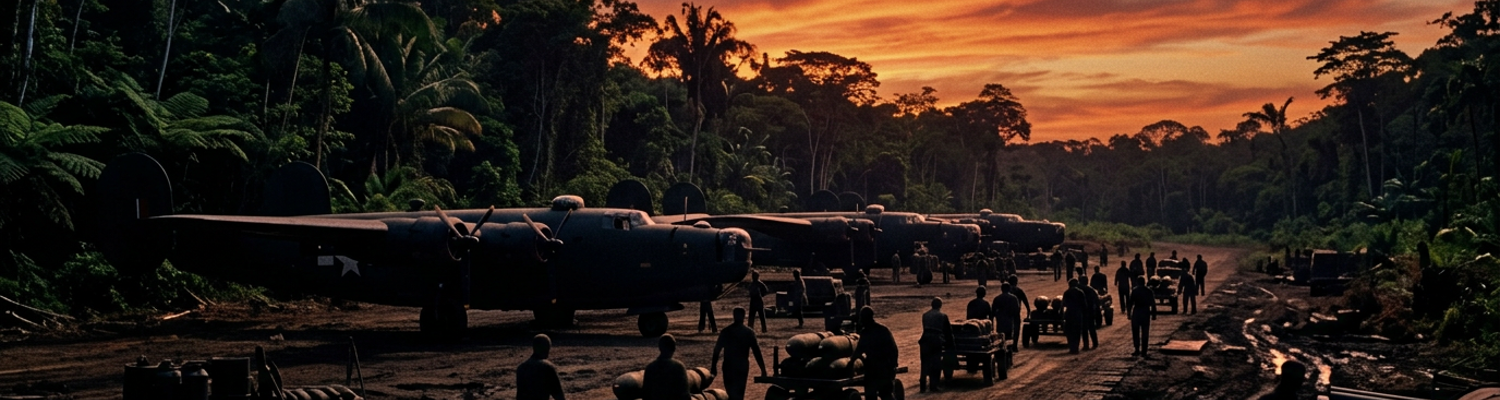
C-123 Provider transport aircraft shuddered as their reverse pitch propellers threw thick clouds of red laterite dust across the unpaved airstrips of the Central Highlands. Flight mechanics kicked heavy wooden crates of M1 carbines, 81mm mortar baseplates, and canned rations down the rear cargo ramps directly into waiting M35 trucks. Ground teams hauled these weapons into base depots to execute Operation Switchback, the formal transfer of the Civilian Irregular Defense Group program from Central Intelligence Agency management to Military Assistance Command Vietnam control between 1962 and 1963. Senior commanders in Saigon calculated that conventional military leadership could convert these independent tribal defense units into an organized paramilitary screen without losing the trust of the native population. Supply sergeants logged serial numbers on official manifests and wired battery powered field radios into command bunkers, tying formerly isolated frontier redoubts to a rigid centralized network.
Radio operators transmitted combat directives over these newly installed frequencies to redirect indigenous units away from their home territories. Military Assistance Command Vietnam leadership reoriented the Montagnard irregulars from localized village self defense to offensive border surveillance and long range interdiction along the Annamite Range. Tribal riflemen who had previously guarded family grain stores around their home villages now marched deep into steep mountain valleys to track North Vietnamese infiltration trails. Heavy canvas rucksacks, steel helmets, and field rations replaced the traditional hunting weapons and communal routines of the original Buon Enao defense project. Patrol leaders established fortified border outposts in isolated gaps near the borders of Laos and Cambodia, demanding that Montagnard companies engage armed North Vietnamese units far from their ancestral homes.
Captains commanding Special Forces A Detachments at these remote border outposts encountered intense friction with conventional staff officers in Saigon. Staff bureaus at headquarters required these twelve man teams to submit standardized morning reports, supply inventories, and formal operational logs that clashed with the flexible methods developed under civilian intelligence supervision. Regular army inspectors criticized the loose informal arrangements that American advisors maintained with tribal elders, insisting instead on rigid hierarchical lines of authority. Bureaucratic paperwork and formal reporting chains forced field detachments to spend critical tactical hours completing requisition forms rather than maintaining weapons or monitoring jungle avenues of approach. Staff colonels also mandated that all operational plans pass through South Vietnamese Special Forces counterparts, introducing an extra layer of political suspicion that alienated both the American advisors and the tribal irregulars.
Advisors assigned to the Special Forces teams openly questioned this calculated gamble, warning that forcing traditional tribal enemies under South Vietnamese authority courted armed revolt. Pentagon planners weighed the operational math of seventy thousand armed Montagnard irregulars securing hundreds of miles of mountainous border against the fragile stability of a dozen isolated outpost garrisons. Strategic justification rested entirely on the urgent need to halt North Vietnamese troop infiltration down the Annamite corridors before conventional combat units were ready to deploy. Doubts multiplied in the field as South Vietnamese officers withheld combat ammunition and insulted indigenous strike leaders during daily morning assemblies. Montagnard company commanders responded by conducting covert night meetings in their barracks at Buon Sar Pa, inventorying their remaining ammunition boxes and finalizing tactical plans to turn their rifles against their Vietnamese counterparts.
CIDG Outposts Along the Annamite Range
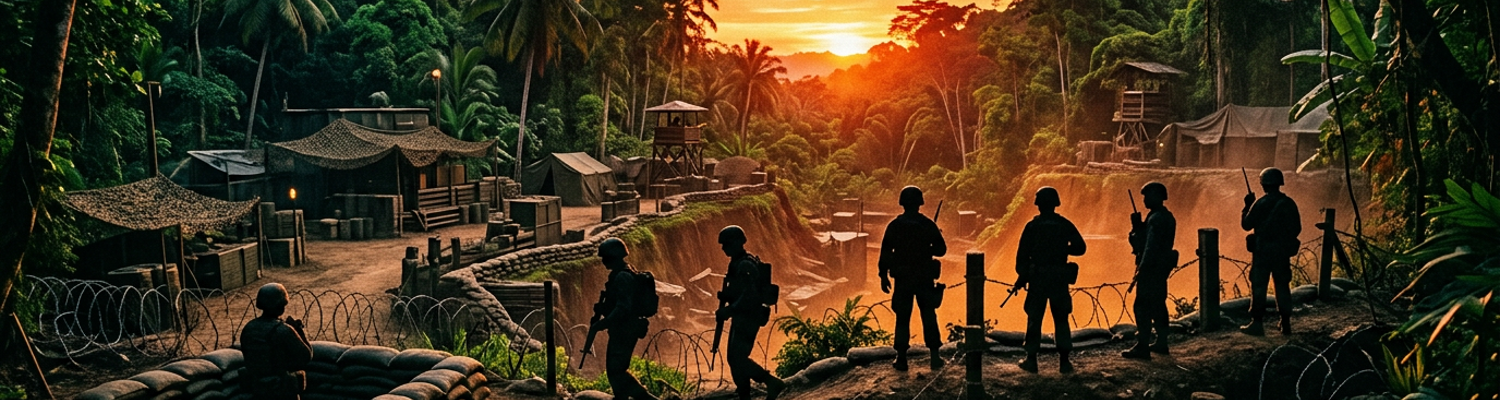
Ammunition caches hidden beneath the bamboo floorboards at Buon Sar Pa expanded every night while twelve man US Army Special Forces detachments slept just yards away inside the same fortified compound. American Green Berets operated under an uneasy dual command structure alongside South Vietnamese Special Forces at remote border camps including Buon Sar Pa, Bu Prang, and Ban Don. Sandbagged trenches and rolls of barbed wire physically separated the American advisory teams from their South Vietnamese counterparts and the indigenous Montagnard strike forces inside each triangular redoubt. South Vietnamese officers regularly insulted the native strikers, refused them equal pay, and withheld clean water rations, pushing tribal loyalties to a breaking point. Tribal fighters carefully concealed their growing mutiny from both the South Vietnamese officers and the American sergeants who patrolled beside them along the border.
Patrol columns tracked fresh boot prints and flattened brush through dense bamboo thickets to locate Viet Cong infiltration routes entering Darlac Province directly from the Ho Chi Minh Trail. Military planners positioned these frontier outposts along the Annamite Range to plug natural mountain gaps and disrupt enemy troop movements arriving from bases in Cambodia and Laos. Strike force companies composed of Rhade and Mnong tribesmen conducted multi day patrols across steep ridges, planting claymore mines on known infiltration paths and ambushing communist supply squads. Deep ravines and trackless jungle cut off these forward bases from any overland rescue, leaving each camp isolated on high ground cleared of vegetation. Communist ambushes destroyed supply trucks attempting to negotiate the unpaved mountain roads, severing ground communications and leaving the camps completely surrounded by hostile terrain.
Dirt airstrips carved out of the red highland clay provided the only practical lifeline for the isolated garrisons at Buon Sar Pa, Bu Prang, and Ban Don. Cargo planes like the twin engine C-123 and C-7 Caribou negotiated treacherous downdrafts through mountain passes, braking hard on short uneven runways that dissolved into deep red mud during the monsoon season. Enemy snipers and heavy machine gun crews hidden in the high jungle canopy regularly sprayed approaching transports, turning the vital aerial resupply corridors into deadly funnels. Mechanical failures often forced transport pilots to turn back toward central airfields at Pleiku or Ban Me Thuot, delaying essential shipments of artillery shells, dry rations, and fresh medical plasma. Radio operators watched cloud decks drop over the runway thresholds while field technicians struggled to patch waterlogged ruts with pierced steel planks, leaving the camps with dangerously depleted supply dumps.
Commanders in Saigon weighed the extreme vulnerability of fewer than forty American advisors against the strategic gain of controlling thousands of armed indigenous scouts across Darlac Province. Senior military leaders gambled that tribal hatred of communist forces would keep the Montagnards loyal to the anti communist cause, choosing to ignore repeated field warnings about boiling racial hostility inside the camps. Field advisors on the ground cautioned that South Vietnamese officers were treating their irregular troops like conscripted laborers rather than combat partners, warning that the slightest tactical misstep would spark an internal explosion. Striker leaders at Buon Sar Pa recognized that the isolated outposts depended entirely on erratic supply drops and could not be quickly reinforced by government troops. Strike force sergeants quietly unlocked local weapons lockers after midnight, distributing M1 carbines and filled magazines to waiting Rhade fighters before taking up firing positions outside the South Vietnamese command bunkers.
Ethnic Cleavages and the Rise of FULRO
Rhade strikers leveled their carbines at the bunker apertures because months of daily humiliation had turned the garrison compounds into hostile territory. Luc Luong Dac Biet camp commanders treated the indigenous Montagnard fighters with open cultural contempt, addressing them with derogatory racial slurs and denying them basic field courtesies. South Vietnamese officers routinely pocketed portions of the strike force payroll through corrupt kickback arrangements with civilian merchants in nearby towns, while withholding clean drinking water and standard medical supplies from tribal dependents living around the perimeter. Luc Luong Dac Biet personnel avoided dangerous jungle patrols along the Annamite Range, choosing instead to remain behind sandbagged blast walls while ordering indigenous companies to face enemy ambushes alone. Strike fighters endured public beatings and arbitrary wage deductions from Vietnamese officers who openly questioned their intelligence and human worth. Highland squad leaders recorded every stolen wage and unpunished assault, smuggling detailed reports of these abuses past the compound gates directly to underground political organizers.
Couriers carried these grievance reports into highland villages where local communities faced systemic discrimination and forced assimilation policies ordered by successive Saigon administrations. President Ngo Dinh Diem and subsequent military regimes abolished traditional highland autonomy, closed tribal customary courts, and declared ancestral communal territories to be state property. Government programs relocated over fifty thousand ethnic Vietnamese settlers from coastal provinces onto confiscated tribal lands, dispossessing native farmers of fertile rubber plantations and forcing indigenous children to abandon their mother tongues in state schools. South Vietnamese administrators stripped village elders of administrative authority, replacing traditional chiefs with coastal officials who enforced strict assimilation decrees. Tribal chiefs reacted to these land confiscations and cultural suppressions by sending envoys into secret jungle encampments to merge their separate resistance movements into a single coalition.
Rhade leader Y Bham Enuol organized these separate tribal factions into the United Struggle Front for the Oppressed Race during covert meetings near the Cambodian frontier. Y Bham Enuol, an influential civil rights advocate who had survived five years of political imprisonment under the Diem regime, united Rhade, Jarai, Mnong, Cham, and Khmer Krom activists under the French acronym FULRO. Front delegates established an underground command structure, drafting formal political demands for regional sovereignty, the restitution of stolen ancestral lands, and the creation of an independent highland army completely free from South Vietnamese authority. FULRO leaders evaluated the severe military risks of fighting Saigon while North Vietnamese infiltration increased, concluding that armed rebellion inside the outposts was their only practical leverage to halt state assimilation. Resistance coordinators calculated that controlling thousands of irregulars armed with American weapons gave them the operational strength to force political negotiations without surrendering to communist insurgents. Y Bham Enuol signed mobilization orders for his strike force commanders, dispatching secret couriers through mountain tracks to coordinate simultaneous strikes across five frontier outposts.
Montagnard sergeants received these mobilization orders inside Buon Sar Pa, Bu Prang, Ban Don, Buon Mi Ga, and Buon Brieng, recognizing that the tactical moment favored a mutiny. Military Assistance Command officers in Saigon had accepted an extraordinary gamble by arming three thousand resentful highlanders while leaving camp control to despised Luc Luong Dac Biet units. Saigon planners justified this arrangement through tactical arithmetic, calculating that small cadres of American advisors and South Vietnamese officers could keep the irregulars pointed at communist infiltration routes regardless of ethnic friction. American field advisors repeatedly questioned this logic, submitting urgent intelligence warnings that tribal strikers would inevitably turn their weapons against their abusive commanders. Senior commanders ignored these warnings because regular army divisions could not be spared from guarding coastal cities to patrol the trackless border gaps. Strike leaders at Buon Sar Pa cut the exterior telephone lines, chambered rounds into their M1 carbines, and kicked open the bunker doors to arrest their Luc Luong Dac Biet officers.
MACV Intelligence Failures in II Corps
Luc Luong Dac Biet commanders surrendered their sidearms in utter shock because intelligence sections at Military Assistance Command Vietnam and Army of the Republic of Vietnam II Corps headquarters had completely failed to detect the insurrection. Clandestine political agitators from FULRO had moved freely between Buon Sar Pa, Bu Prang, Buon Mi Ga, and Ban Don for weeks, swearing in tribal recruits and coordinating simultaneous mutiny plans right under the eyes of allied advisors. Intelligence officers at II Corps headquarters in Pleiku tracked conventional North Vietnamese battalions across their wall maps, but they ignored the courier trails and covert night meetings connecting the Civilian Irregular Defense Group outposts. Allied commanders had accepted a reckless gamble by assuming that mountain tribesmen lacked the organizational skill to execute cross camp operations without detection. Headquarters planners calculated that keeping tribal companies isolated in remote frontier garrisons would prevent any widespread collective action, leaving advisory staff completely unaware of the political network linking thousands of armed strikers. Couriers slipped past perimeter checkpoints night after night, carrying hand written orders that bound five separate border outposts into a unified rebel brigade.
Administrators in Ban Me Thuot had actually intercepted several of these FULRO manifestos during routine village searches, yet South Vietnamese authorities consistently dismissed the autonomy demands as localized labor disputes. District chiefs and Luc Luong Dac Biet commanders treated tribal petitions for regional sovereignty and the restitution of ancestral lands as simple complaints over delayed pay or insufficient rice rations. South Vietnamese bureaucrats told American advisors that highlanders were unsophisticated forest dwellers who cared nothing for politics and could be quickly pacified with minor cash bonuses. Saigon officials calculated that doling out small payroll adjustments would easily preserve garrison stability, gambling that economic handouts could substitute for genuine legal protection and cultural respect. Tribal elders and strike force sergeants repeatedly watched corrupt officials pocket standard clothing allowances and ignore their written manifestos, confirming to the irregulars that armed revolt was their only path to political recognition. Strikers gathered in barracks corners to sharpen bayonets and review tactical assignments while government administrators in the provincial capital continued to report that local camp labor remained quiet and obedient.
Analysts at Military Assistance Command headquarters reinforced this administrative misjudgment through an ingrained analytical bias that attributed all highland unrest strictly to Viet Cong infiltration. American intelligence sections evaluated every tribal grievance, work slowdown, and clandestine meeting entirely through the framework of Cold War communist subversion, refusing to believe that indigenous nationalism existed on its own terms. Special Forces sergeants on the ground submitted field reports warning that deep ethnic hatred and South Vietnamese oppression were driving the Rhade and Mnong toward mutiny, but staff officers repeatedly marked those warnings as communist inspired rumors. Command planners justified their tactical inaction by calculating that aggressive border patrols against Viet Cong supply trails would keep striker minds focused entirely on the communist threat. Senior commanders gambled that American weapons and tactical radios could be distributed to thousands of disenfranchised natives without triggering an armed backlash against the South Vietnamese officers placed over them. Rhade mutineers exploited this strategic miscalculation by systematically seizing base radio huts and training heavy machine guns on the highway, cutting off regional garrisons before II Corps commanders in Pleiku even realized an internal war had broken out.
The September 1964 Montagnard Mutiny
Gunners slammed heavy machine gun bolts forward at 0200 hours on September 20 1964, launching a coordinated armed insurrection across five Civilian Irregular Defense Group camps surrounding Ban Me Thuot. Strike commanders at Buon Sar Pa, Bu Prang, Ban Don, Buon Mi Ga, and Buon Brieng turned their American issued carbines against their South Vietnamese handlers, shattering the fragile allied command structure across Darlac Province in a matter of minutes. Mutinous Rhade and Mnong strikers executed dozens of South Vietnamese Special Forces soldiers who had abused and humiliated them for months, dragging sleeping officers from their bunks to be shot in the garrison trenches. Rebel squads captured scores of surviving Luc Luong Dac Biet troops and locked them into perimeter holding cells, while simultaneously confining twelve man American Special Forces detachments to their own operations bunkers without inflicting physical harm. Strike leaders weighed an audacious operational calculation, gambling that wiping out their South Vietnamese oppressors while shielding American Green Berets would compel Washington to support an independent Montagnard state rather than back Saigon. Mutineers loaded crates of mortar shells, machine gun belts, and captured ammunition into convoy trucks, swinging the heavy perimeter gates open to assemble an armed column on the dark highway.
Truck tires churned through red mud as rebel convoys rolled down Route 14 into the center of Ban Me Thuot before sunrise. Hundreds of armed highlanders fanned out through the deserted streets, disarming startled police outposts and surrounding government compounds without encountering organized resistance. Rebel squads executed several municipal administrators who had enforced harsh assimilation decrees and captured dozens of South Vietnamese government officials, marching the bound prisoners into central administrative courtyards at gunpoint. Strike force detachments systematically occupied vital municipal facilities across Ban Me Thuot, throwing sandbag barricades around the telephone exchange, securing the civilian airfield, and seizing the provincial treasury. FULRO commanders accepted an immense tactical gamble by committing their frontier guerrilla force to static urban positions, calculating that holding the provincial administrative center gave them irreplaceable leverage to force direct negotiations with American diplomats. Assault teams cemented that operational leverage by breaching the perimeter of the provincial radio broadcast station and seizing control of the audio transmission consoles.
Radio transmitters hummed at full power as rebel announcers stepped up to the studio microphones to broadcast their political manifestos across the Central Highlands. Rhade broadcasters read impassioned bilingual declarations in native dialects and French, announcing the birth of an autonomous Montagnard homeland and ordering all South Vietnamese civil and military personnel to vacate ancestral tribal territories immediately. Government monitors in Saigon and Pleiku listened in horror as the rebel transmission urged every indigenous strike company along the border to turn their rifles against coastal authorities and join the highland liberation struggle. American officers assigned to Advisory Team 33 suddenly faced an explosive dilemma, caught directly between three thousand entrenched tribal rebels and furious South Vietnamese generals who demanded immediate tactical air strikes against the captured provincial capital. Strike force gunners braced for the expected government counterattack by hauling heavy machine guns onto municipal rooftops, zeroing mortar tubes on the southern highway, and anchoring fortified checkpoints across every major urban avenue.
Besieged Advisory Detachments in Darlac Province
Checkpoints on those municipal avenues sealed off all ground access to the provincial interior, isolating American Special Forces detachments trapped inside mutinous base camps throughout Darlac Province. Strike force companies at Buon Sar Pa, Bu Prang, Buon Mi Ga, and Ban Don disarmed their twelve man advisory teams and locked the Americans inside wooden billets and sandbagged command bunkers. Captain Charles Darnell and his men at Buon Sar Pa found themselves held under armed guard while Rhade mutineers marched dozens of captured South Vietnamese soldiers into perimeter trenches as hostages. High bamboo stockades and fields of barbed wire cut the Green Berets off from outside relief, leaving them without vehicle transport, landline communications, or tactical backup. Team members watched their captors distribute ammunition boxes along the inner trench line, recognizing that the slightest physical resistance would trigger a camp wide firefight. Advisory sergeants kept their hands away from emergency weapon racks, calculating that their survival depended entirely on maintaining composure amidst hundreds of heavily armed tribesmen.
Radios inside the besieged bunkers soon crackled with strict operational orders transmitted directly from Military Assistance Command headquarters in Saigon. General William Westmoreland issued urgent directives instructing all American personnel to maintain strict neutrality and avoid engaging either the Montagnard rebels or South Vietnamese forces. Military Assistance Command planners gambled on diplomatic mediation, calculating that a single bullet fired by an American advisor would destroy years of counterinsurgency cooperation and turn seventy thousand highland irregulars into active enemies. Field commanders openly doubted whether captive Special Forces detachments could survive as unarmed pawns between two vengeful factions, yet Saigon justified the policy because the border defense program could not continue without tribal manpower. Green Berets received orders to act strictly as neutral intermediaries, using their personal rapport with tribal strike chiefs to prevent executions while remaining detached from South Vietnamese retaliatory schemes. Advisors swallowed their professional instincts and complied, locking their sidearms in footlockers while South Vietnamese generals in Pleiku clamored for immediate armed retribution.
Tanks and motorized infantry from the Army of the Republic of Vietnam 23rd Division mobilized immediately to assault Buon Sar Pa and crush the rebellion by force. Heavy M113 armored personnel carriers, truck mounted infantry battalions, and M101 105mm howitzers rumbled out of provincial garrison depots onto the dirt roadways of Darlac Province. South Vietnamese commanders calculated that an overwhelming display of mechanized combat power would shatter rebel morale and restore governmental authority before FULRO could expand its territory. Division staff officers rejected American requests for restraint, doubting the value of negotiations and drafting detailed plans to pulverize the mutinous camps with sustained artillery fire. This tactical gamble created an immediate crisis, because sixty South Vietnamese hostages and Captain Darnell and his captive Special Forces team were trapped inside the designated target grid at Buon Sar Pa. Division artillery forward observers adjusted their spotting scopes along the highway ridgelines, ready to open fire as soon as combat columns completed their encirclement of the perimeter wire.
Howitzers dropped their heavy trail spades into the red dirt four miles from Buon Sar Pa as armored vehicles established a tight cordon around the rebel redoubt. Montagnard strikers aimed 57mm recoilless rifles and heavy machine guns straight at the government armor, refusing to surrender their positions or release their prisoners. American advisors inside the camp house negotiated across field telephone wires and compound fences, placing their physical bodies directly between the opposing gun barrels to prevent a slaughter. Advisory commanders calculated that they had only hours before government batteries unleashed high explosive barrages, forcing Green Beret officers to walk unarmed into the open ground between the lines. Captain Darnell and senior liaison officers persuaded tribal leaders to delay defensive fire while simultaneously warning division commanders that an artillery barrage would kill dozens of allied prisoners. South Vietnamese officers reluctantly halted the assault countdown, leaving armored crews idling in their hatches while American negotiators worked to dismantle the standoff weapon by weapon.
Colonel John Freund and Unarmed Crisis Diplomacy
Colonel John Freund, the Deputy Senior Advisor to II Corps, seized the lull around the idling armor by defying standard evacuation directives that ordered all American personnel to withdraw from the rebellion. Headquarters planners in Saigon had instructed all advisory personnel to remain neutral and evacuate threatened outposts immediately, calculating that intervening in an armed indigenous revolt would compromise American standing and draw the military assistance mission into a direct civil war. Freund rejected that operational math, recognizing that following the standard evacuation protocol would abandon sixty captive South Vietnamese soldiers and Captain Darnell and his besieged Special Forces detachment to immediate execution. South Vietnamese division commanders in Pleiku were already calculating flight times for fighter bombers and preparing to blanket Buon Sar Pa with high explosive artillery shells the moment government patience expired. Field advisors and intelligence staff openly doubted whether any American officer could bridge the bitter racial divide without provoking a lethal volley, yet Freund justified his insubordination as the only operational tactic that could prevent a camp wide bloodbath. Freund stripped off his pistol belt, left his communications vehicle behind, and stepped past the outer government checkpoints on foot toward the mutineers and their perimeter without carrying a single weapon.
Montagnard sentries tracking Freund and his solitary approach through the perimeter wire aimed their American made M1 carbines directly at his chest from sandbagged fighting pits. Tribal fighters manned heavy machine guns along the red dirt revetments at Buon Sar Pa, deeply suspicious of any movement from the government lines but uncertain whether to shoot a lone unarmed American colonel. Freund advanced through the cleared minefield lanes with his empty hands held visible at chest height, deliberately giving the nervous highlanders no physical pretext to trigger a defensive volley. Every forward yard into the fortified camp narrowed the margin between a temporary truce and a devastating artillery barrage from the Army of the Republic of Vietnam batteries zeroed on the compound. Strikers atop the earthen parapet lowered their gun barrels as the colonel reached the main gate, allowing him to pass through the barbed wire and walk directly past the operations bunker where Captain Darnell and his advisory team remained confined under guard. Armed highlanders fell in behind Freund and escorted him past lines of tied South Vietnamese hostages to the battalion headquarters hut, where dissident Montagnard commanders stood assembled in full combat kit.
Colonel Freund opened direct face to face negotiations with the dissident Montagnard commanders entirely in fluent French, using the shared colonial language that tribal officers had learned during their service with French forces. Freund warned the rebel leaders in blunt formal terms that South Vietnamese howitzers would level Buon Sar Pa within the hour if the mutiny continued, emphasizing that an artillery strike would kill their own families living in the adjacent tribal quarters. Dissident commanders replied in French with detailed operational grievances, insisting that years of ethnic oppression and stolen pay justified their insurrection and demanding complete highland autonomy under American protection. Freund countered their demands with harsh battlefield reality, explaining that executing government hostages would destroy all political sympathy in Washington and force regular army divisions to crush the Montagnard population without restraint. Rebel officers debated the ultimatum around the perimeter map table, calculating that Freund and his personal pledge to arrange safe conduct and sponsor official peace talks in Pleiku provided their only tactical exit from an unwinnable siege. Dissident commanders accepted the terms, ordering their squad leaders to lower the insurgent flags, release the South Vietnamese prisoners to American custody, and clear the heavy weapon emplacements before government batteries received orders to commence firing.
Resolution Terms and Strategic Repercussions
American sergeants cut the hemp ropes binding sixty South Vietnamese soldiers inside the Buon Sar Pa trenches, completing the first step of the emergency pact brokered by Colonel Freund. The formal agreement secured the unconditional release of all captured South Vietnamese personnel in exchange for a complete grant of general amnesty and direct political negotiations with Saigon. Advisory officers monitored the transfer of every prisoner across the camp ditch, watching battered Luc Luong Dac Biet lieutenants climb into waiting transport trucks without their weapons. Military leaders in Saigon accepted this calculated gamble against the furious objections of regular army commanders who demanded public court martials and firing squads for every mutineer. Prime Minister Nguyen Khanh weighed the operational math of executing tribal strikers against the certainty of losing five fortified border camps and triggering open warfare across Darlac Province. Saigon planners justified the amnesty concession because the national army could not spare combat divisions from the coastal lowlands to replace seventy thousand indigenous irregulars along the infiltration corridors. Mutinous strike companies dismantled their roadblocks, surrendered control of the provincial radio station in Ban Me Thuot, and returned to their perimeter quarters, while rebel leaders prepared detailed dossiers of ethnic grievances for high level talks.
Government delegates met with highland tribal elders at the October 1964 Pleiku conference, carrying direct orders from Saigon to defuse the ethnic crisis through administrative reforms. Prime Minister Khanh addressed the assembled Rhade, Jarai, and Mnong representatives, delivering a package of state concessions that granted symbolic indigenous representation in the national assembly and promised formal land titles for ancestral highland territories. Ministers pledged to establish a specialized directorate for ethnic minority affairs in the capital and authorized the teaching of native dialects in highland primary schools alongside Vietnamese. Saigon planners calculated that these verbal guarantees and symbolic titles would pacify the strike forces without transferring actual administrative authority or military command away from coastal officials. Tribal delegates listened to the speeches with deep skepticism, recognizing that bureaucratic land certificates did not remove corrupt lowland district chiefs or halt the steady confiscation of traditional hunting grounds. Dissident leaders collected their position papers and exited the conference hall, calculating that political petitions would never secure genuine autonomy from a government that viewed mountain tribes as secondary subjects.
Luc Luong Dac Biet officers returning to frontier command posts reinforced their bunker walls with heavy timber and installed double perimeter locks, cementing a permanent fracture of trust within the Civilian Irregular Defense Group network. South Vietnamese commanders refused to conduct long range jungle sweeps without heavy American escorts, suspecting that their own Montagnard scouts would execute them on isolated mountain trails. Green Beret advisors shouldered the exhausting daily burden of monitoring camp armories, counting inventory round by round to prevent strikers and officers from shooting one another over daily disputes. Dissident tribal organizers answered this renewed surveillance by preserving their underground chain of command, maintaining FULRO as an active armed faction that operated out of base camps in the Cambodian border jungles throughout the remainder of the war. Clandestine couriers ferried weapons, payroll shares, and strike orders between frontier outposts, sustaining an armed resistance that launched renewed mutinies in 1965 and fought against both South Vietnamese regulars and communist forces through the fall of Saigon. Strikers at Buon Sar Pa cleaned their American supplied carbines behind closed barracks shutters, caching spare rounds beneath loose floorboards to prepare for the next highland rebellion.