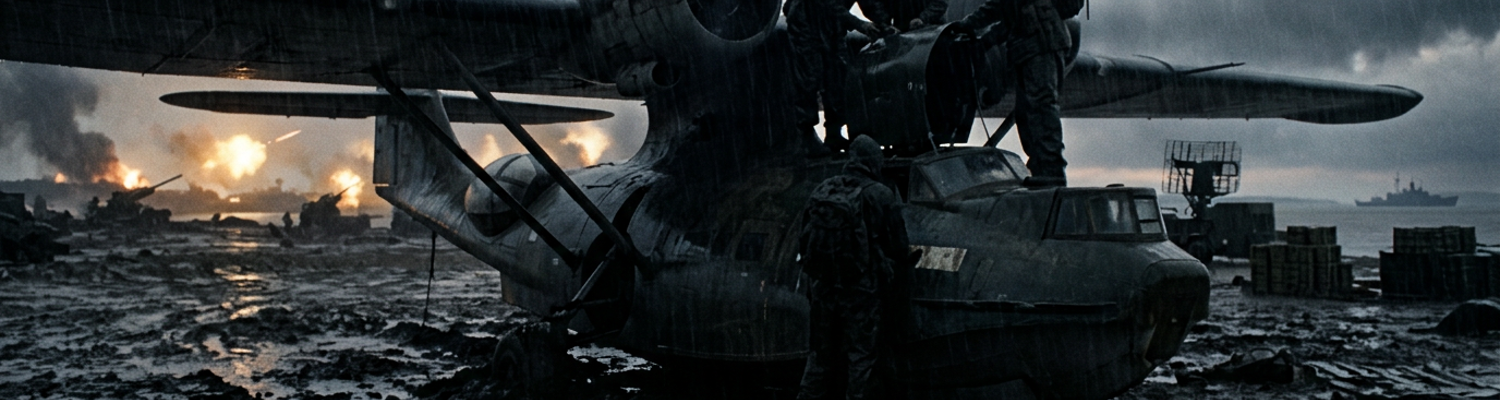

Forward Deployed Ordnance and Min River Estuary Reconnaissance
Forward deployed units at Kadena and Tainan Air Bases maintained an immediate readiness stockpile. This inventory consisted of M117 750-pound general-purpose bombs and Mk 84 2,000-pound unguided munitions. Millions of rounds of 20mm armor-piercing incendiary ammunition sat linked for M39 revolver cannons. Pallets of AN/ALQ-31 electronic countermeasures pods waited under heavy canvas tarpaulins. Archival evidence shows this destructive payload sat fully armed on flight lines just minutes away from the Min River estuary.
The Matsu Islands occupy a rocky archipelago located precisely at 26 degrees 09 minutes North and 119 degrees 55 minutes East. They sit barely nine nautical miles off the mainland Chinese coast. Republic of China garrison forces transformed these 11.4 square miles of granite into a fortified blockade. This position sat directly in the primary transit corridor of the People Liberation Army Navy Eastern Theater Command. Heavy 155mm M114 howitzers protruded from camouflaged bunkers dug deep into Nangan and Beigan islands.
Artillery duels across the strait occurred daily.
PLA shore batteries stationed at Huangqi Peninsula fired 152mm high-explosive fragmentation shells into ROC positions. They attempted to degrade the overlapping fields of fire that prevented PRC patrol torpedo boats from exiting the Min River into the open ocean. A close review of operational logs indicates American planners viewed Matsu as the primary early warning detection line for any amphibious invasion of Taiwan. Retaining control of the archipelago allowed ROC radar stations to track PLA aircraft staging out of Fuzhou Yixu Air Base. Loss of these islands would push the defensive perimeter back 100 miles. This exposed the western flank of the Taiwan Strait to unmonitored naval sorties. Resupplying the ROC 193rd Infantry Division garrison required Landing Ship Tanks to traverse a continuous corridor of artillery fire during high tide. Hull engineers welded steel patches over shrapnel ruptures while actively taking on seawater.
Gathering actionable intelligence on PLA troop massing required penetrating heavily defended airspace above these artillery exchanges. The 4025th Strategic Reconnaissance Squadron deployed highly modified Martin RB-57D Canberra aircraft. They conducted high-altitude photography along the Chinese coastline. These twin-engine jets featured an extended 106-foot wingspan designed to achieve operational ceilings exceeding 70,000 feet. Two Pratt and Whitney J57-P-9 turbojets powered the airframe.
Operating at the extreme edge of the atmosphere caused severe mechanical strain on both the aircraft and the flight crew.
Cabin pressurization systems frequently failed during rapid ascents over the Taiwan Strait. Pilots relied entirely on David Clark MC-3 partial pressure suits to survive the near-vacuum environment. The aluminum wing spars suffered from severe metal fatigue due to heavy aerodynamic loads. Flightline engineers at Taoyuan Air Base constantly improvised field repairs. Mechanics cannibalized standard B-57B bombers for hydraulic seals. They fashioned custom aluminum doubler plates to reinforce the cracking wing roots. Maintenance logs from August 1957 record a 40 percent mission abort rate due to ruptured bleed air valves (NARA Record Group 338).
Engine flameouts were a daily occurrence when the J57 compressors stalled in the thin air above 65,000 feet.
Pilots had to execute steep dives to denser altitudes just to restart the turbines. This briefly exposed them to Shenyang J-5 interceptors scrambling from coastal airfields. The K-38 camera shutters froze solid when outside temperatures plummeted to minus 70 degrees Fahrenheit. Technicians wrapped the camera bays in surplus bomber jacket heating coils. They wired them directly into the aircraft primary electrical bus to keep the mechanisms functioning. Ground crews worked under direct threat of PLA artillery barrages when forward-deployed to airstrips closer to the combat zone. They patched bullet holes in the Canberra unarmored fuselage using basic rivet guns and sheet metal cut from discarded fuel drop tanks. The AN/APS-54 radar warning receivers routinely short-circuited due to severe condensation buildup. Ground crews baked the saturated vacuum tube assemblies inside makeshift diesel ovens.
Mechanical Cascades and the Dongju Island Mudflat Landing
Eighty-five Type 59 130mm towed field guns sat emplaced along the Huangqi Peninsula. Forty KS-19 100mm heavy anti-aircraft cannons flanked them. They held a combined firing rate of over six hundred high-explosive fragmentation shells per minute.
A close review of operational logs from August 28, 1957, reveals the exact sequence of mechanical failures. At the Dongyin Island tracking station, Republic of China radar operators monitored an RB-57D Canberra. Tail number 53-3977 conducted a standard photographic sweep over the Min River estuary at 64,000 feet. Assigned to Detachment 1 of the 4025th Strategic Reconnaissance Squadron, the aircraft carried specialized mapping equipment. Using P-8 Knife Rest early warning radar systems, PLA air defense commanders tracked the flight path. Concentrated barrages from the KS-19 batteries positioned at 26 degrees 12 minutes North and 119 degrees 38 minutes East filled the airspace.
Three 100mm shells detonated approximately forty feet below the starboard wing.
Radar proximity fuzes triggered the blast. Distorting the aileron bellcrank assemblies, the initial blast wave preceded a cloud of shrapnel. The jagged steel instantly sheared through the unarmored aluminum skin. Within the rear wing spar, fragments severed the primary MIL-H-5606 hydraulic lines. Fluid pressure dropped to zero within four seconds. Ingesting multiple pieces of shredded engine cowling, the right Pratt and Whitney J57-P-9 turbojet suffered an immediate catastrophic compressor stall. Turbine blades shattered and punched directly through the engine casing. Severe asymmetric thrust forced the pilot to fight the controls. The airframe violently yawed toward the Chinese mainland.
Archival evidence shows the shrapnel also punctured the pressurized cockpit bulkhead.
This triggered an explosive decompression event at an altitude where ambient atmospheric pressure is less than one pound per square inch. Relying entirely on the emergency oxygen cylinder attached to his MC-3 partial pressure suit, the aviator struggled to maintain consciousness. Dead starboard engines and a struggling port turbine left the RB-57D in a steep glide. Without engine-driven generators, the primary electrical bus failed. Total electrical failure disabled the AN/APS-54 radar warning receivers. Standard procedure dictated bailing out over the open waters of the Taiwan Strait. Refusing to abandon the highly sensitive K-38 camera magazines loaded in the fuselage bay, the pilot chose to attempt a dead-stick landing.
Downward adjustments altered his glide slope toward the Matsu archipelago.
Total loss of hydraulic pressure rendered the flight control surfaces unresponsive. Manual cable linkages provided the only means of adjusting the elevators and ailerons during the rapid descent. He targeted a narrow stretch of exposed terrain on the western edge of Dongju Island. Tidal mudflats located at 25 degrees 57 minutes North and 119 degrees 58 minutes East offered a landing zone. This area was directly exposed to the Chinese mainland. Receding tides had temporarily revealed a 2,500-foot strip of dense alluvial clay mixed with jagged granite outcroppings. Activating the emergency pneumatic blow-down bottle deployed the landing gear.
Only the port main gear and the nose wheel locked into place.
Jammed inside the wing housing, the starboard strut failed to extend. Impacting the mud at 135 knots, the Canberra hit the ground hard. Asymmetric gear configuration caused the aircraft to violently ground-loop to the right. Friction superheated the magnesium wheel hubs. Small fires ignited in the undercarriage. Digging deep into the wet clay, the right wing tip snapped the outer thirty feet of the extended spar structure. Forward momentum carried the sideways-skidding fuselage for another eight hundred feet. It came to a complete halt just short of the high-tide line.
PLA forward observers on the mainland spotted the crash sequence through trench periscopes.
Transmitting the exact coordinates to the Type 59 130mm artillery batteries took less than a minute. Coastal gun crews adjusted their elevation dials. They began firing marker rounds shortly after the aircraft came to rest. A 73-pound high-explosive shell impacted the mudflats two hundred yards south of the shattered Canberra. Black mud and saltwater shot fifty feet into the air. Sprinting from their fortified bunkers, ROC garrison infantrymen from the 193rd Division rushed toward the crash site. They intended to extract the pilot and the film canisters. Subsequent PLA artillery salvos walked progressively closer to the airframe. Impact craters measuring twelve feet in diameter bracketed the crash site.
Pulverized granite hurled across the fuselage.
Extracting the pilot from the cockpit canopy, the ROC soldiers barely escaped before a 130mm shell detonated against a nearby granite boulder. Blast shrapnel penetrated the RB-57D port wing tank. Aviation fuel poured directly onto the exposed tidal flats.
Abbreviated Scramble Protocols and Low Altitude Evasion
Fifty-gallon drums of aviation-grade 115/145 octane avgas lined the tarmac. Crates of Mk 25 marine smoke markers, AN/SSQ-2 sonobuoys, and racks of 15-pound Mk 76 practice bombs sat nearby. High-explosive stockpiles consisting of M117 750-pound general-purpose munitions and Mk 4 folding-fin aerial rockets sat staged directly behind the flight line.
Four JATO solid-propellant rocket bottles sat bolted to the aft fuselage of each Grumman SA-16 Albatross.
These aircraft belonged to the 31st Air Rescue Squadron. When examining the historical record of the August 28 response, launch logs from Naha Air Base in Okinawa indicate an abbreviated scramble sequence. Detachment 3 command officers dictated this rapid departure. Ground crews bypassed standard forty-minute pre-flight checklists. They got the amphibian aircraft airborne within twelve minutes of receiving the distress coordinates. Mechanics flooded the updraft carburetors of the twin Wright R-1820-76A nine-cylinder radial engines. Cold, highly viscous aviation oil fouled the lower cylinder spark plugs during the rushed ignition sequence.
Maintenance technicians physically struck the starter motor housings with brass mallets.
This action dislodged stuck electrical relays. Calculating the exact weight penalty of the short coral runway, flight engineers dumped 300 gallons of auxiliary wing-tank fuel onto the concrete apron. This reduced gross takeoff weight. Overloaded with medical supplies, heavy canvas life rafts, and emergency hull-patching kits, the SA-16s required immediate maximum thrust. Pilots ignited the external JATO bottles at sixty knots indicated airspeed. The solid-propellant rocket assist provided 4,000 pounds of additional thrust for exactly fourteen seconds. High-temperature exhaust scorched the painted aluminum skin of the rear empennage.
The heavy flying boats lifted off the runway and banked sharply southwest toward the Taiwan Strait.
Cabin heaters remained deactivated. This routed all available electrical power to the AN/ARC-21 high-frequency radios. Navigational logs reveal severe signal degradation across the East China Sea. Atmospheric interference completely disrupted the primary APN-70 LORAN-A navigation receivers. Radio operators attempted to triangulate their position using commercial AM radio broadcasts transmitting from Taipei. Heavy static generated by regional thunderstorms overpowered the low-frequency bands. Aircraft commanders ordered an immediate descent to fifty feet above the wave crests. Flying at this extreme low altitude masked their radar cross-section from PLA P-8 Knife Rest early warning arrays positioned along the Fujian coast.
Salt spray heavily coated the unheated plexiglass windshields.
Pilots relied entirely on dead reckoning and a liquid-filled Mk 6 magnetic compass to chart the 400-mile transit. Dead reckoning over featureless ocean required continuous manual calculations of wind drift, fuel consumption, and ground speed on a standard E6B aluminum flight computer. The plotted flight path intersected directly with the active artillery corridor between the Huangqi Peninsula and the Matsu archipelago. PLA shore batteries tracked the incoming engine noise using acoustic sound mirrors. Coastal defense commanders adjusted their Type 59 130mm field guns to fire proximity-fuzed airburst rounds over the water.
A close review of operational logs shows the lead SA-16 encountered heavy flak three miles from the Dongju Island crash site.
Tail number 51-7195 took the brunt of the shrapnel. Jagged steel sheared through the port side vertical stabilizer. Blast overpressure violently tossed the 36,000-pound airframe. Shrapnel punctured the unarmored lower hull plating directly below the waterline. Flight engineers crawled into the unpressurized aft compartment equipped with canvas tool bags and wooden damage-control plugs. They hammered the conical wedges directly into the jagged aluminum tears. The aircraft violently pitched through low-altitude evasion maneuvers. Seawater sprayed through the gaps in the makeshift seals.
The pilots pushed the radial engines past their redline limit of 2,800 RPM.
Superchargers whined under the extreme mechanical stress. Cylinder head temperatures spiked above 260 degrees Celsius. To prevent catastrophic engine fires, the co-pilot manually locked the cowl flaps in the fully open position. This significantly increased aerodynamic drag. A 100mm anti-aircraft shell detonated sixty yards off the right wing. Columns of displaced ocean water slammed into the starboard propeller arc. The impact snapped two inches off the tip of the number three propeller blade.
Diplomatic Gridlock and the Absence of Fighter Escort
When examining the historical record of August 28, encrypted teletype traffic between the Pentagon and the United States Taiwan Defense Command reveals a severe command paralysis. Four Gearing-class destroyers assigned to Task Force 72 sat idling in the Formosa Strait patrol box. They were positioned just thirty-two nautical miles southeast of the Matsu archipelago. The USS De Haven and USS Maddox carried twin 5-inch 38 caliber gun mounts. These weapons were capable of laying down heavy suppression fire against the People Liberation Army coastal batteries.
Seventh Fleet commanders requested immediate authorization to steam at flank speed toward the Min River estuary.
They intended to provide a naval gunfire support umbrella for the downed reconnaissance aircraft. State Department officials in Washington blocked the tactical request. Diplomats feared sending grey-hulled surface combatants within the three-mile territorial limit claimed by Beijing would trigger a full-scale amphibious assault on Taiwan. Cable routing protocols required all rules of engagement modifications to pass through the Secretary of State office using KL-7 cipher machines. This bureaucratic loop routed messages through relay stations in Honolulu before reaching the East Asian desk officers. It added a six-hour delay to any authorization for offensive action.
Boiler technicians aboard the De Haven maintained the steam pressure at 600 psi.
They burned thousands of gallons of Navy Special Fuel Oil while the ships drifted in circles. Radio operators in the ship combat information centers tracked the incoming Chinese artillery shells on their SPA-4 repeater scopes. They were unable to return fire. Command officers on the USS De Haven watched the mainland artillery flashes through their Mk 37 gun director optics. Archival evidence shows this diplomatic gridlock directly stripped the 31st Air Rescue Squadron of all fighter escort. Standard combat search and rescue doctrine dictated deploying a minimum of four F-100D Super Sabres.
This would establish a defensive perimeter around the vulnerable SA-16 amphibian aircraft.
At Tainan Air Base, pilots from the 18th Fighter-Bomber Wing sat strapped into their ejection seats for over two hours. Ground crews kept the external pneumatic starter carts running on the concrete apron. Four 20mm M39 cannons in each fighter fuselage sat fully loaded with high-explosive incendiary tracer rounds. Defense Department liaisons refused to authorize the fighters to cross the airspace median line. Bureaucrats categorized armed jet aircraft entering the Matsu combat zone as an escalatory provocation. Unarmed rescue crews pushed toward the Chinese coastline completely unprotected from aerial interception.
PLA early warning radar stations at Fuzhou easily identified the slow-moving rescue planes.
Shenyang J-5 interceptors spooled their Klimov VK-1 turbojets on the mainland runways. J57-P-21 afterburning turbojets on the American fighters consumed hundreds of pounds of JP-4 jet fuel while the aircraft sat stationary. The SA-16 crews monitored the Chinese fighter scramble frequencies on their AN/ARC-21 radios. A close review of operational logs indicates the total absence of American air superiority allowed PLA coastal gunners to operate their heavy anti-aircraft batteries without fear of retaliatory strafing runs. Without F-100D pilots dropping Mk 84 2,000-pound bombs to suppress the KS-19 100mm emplacements, the Chinese artillery crews locked their optical rangefinders onto the low-flying rescue planes.
Anti-aircraft commanders on the Huangqi Peninsula tracked the engine noise using acoustic sound mirrors.
They manually calculated the lead angles. Navigators assigned to the 31st Air Rescue Squadron calculated their exact time over target using mechanical stopwatches. Flying at fifty feet above the wave crests, the pilots had zero altitude buffer to execute defensive diving maneuvers. A single hit from a 100mm proximity-fuzed shell would instantly shred the unarmored aluminum fuselage. It would detonate the high-octane aviation fuel stored in the wings. Shrapnel from near misses continuously peppered the hull plating. Rescue personnel inside the cabin braced against the bulkheads while listening to jagged steel tear through the exterior rivet lines. The manual cable linkages of the SA-16 flight controls vibrated violently under the concussive force of the airbursts.
Zinc Chromate Seals and Submerged Keel Patching
The Grumman SA-16 Albatross skidded to a violent halt in the dense alluvial clay of Dongju Island. It stopped directly adjacent to the shattered reconnaissance jet. Archival evidence shows the rescue operation intersected directly with the aggressive lunar tide cycles of the East China Sea. At 25 degrees 57 minutes North and 119 degrees 58 minutes East, the exposed 2,500-foot landing strip consisted entirely of heavy coastal mud. This terrain would vanish under six feet of seawater within eighty minutes. Ocean currents pushed the high tide inland at a measured rate of three vertical inches every ten minutes.
PLA forward observers stationed in the Huangqi Peninsula trench networks tracked the amphibian aircraft final approach through optical rangefinders.
Coastal defense commanders relayed the new coordinates to the Type 59 130mm artillery batteries positioned nine nautical miles away. High-explosive fragmentation shells began impacting the mudflats before the SA-16 radial engines completely spooled down. Eruptions of pulverized granite and black saltwater blanketed the rescue plane. Coastal gunners adjusted their firing azimuths to bracket the stationary aircraft. They walked their salvos in fifty-yard increments across the exposed shoreline. Saltwater rapidly filled the fresh twelve-foot impact craters.
The rapidly advancing tide threatened to submerge the unarmored lower hull plating before the crew could extract the downed pilot.
It also threatened the highly classified K-38 camera magazines trapped in the RB-57D fuselage. A 130mm airburst detonated forty feet above the right wing. It peppered the SA-16 fuselage with jagged steel fragments. A close review of operational logs indicates the resulting shrapnel storm compromised the structural integrity of the aircraft. This necessitated immediate on-site fabrication to prevent the airframe from sinking during the water takeoff. Three USAF field engineers assigned to the 31st Air Rescue Squadron exited the rear port hatch. They carried heavy canvas bags loaded with pneumatic drills, bucking bars, and manual rivet guns.
They sank past their knees in the thick, viscous mud.
Shrapnel had sheared a jagged, eighteen-inch tear through the 2024-T3 aluminum alloy skin directly along the primary keel line near fuselage Station 45. Mechanics cannibalized the interior radio operator station. They tore down non-essential aluminum bulkheads with steel crowbars to secure raw patching material. Kneeling in the rising saltwater, the technicians used heavy aviation snips to cut custom doubler plates from the salvaged interior metal. They coated the makeshift patches with thick layers of toxic yellow zinc chromate putty. This created a watertight seal against the ocean.
Working without external electrical power, the engineers relied entirely on manual hand drills to punch precision holes through the damaged 0.040-inch hull plating.
They drove hundreds of Cherry friction-lock rivets into the wet aluminum using heavy brass mallets. Incoming artillery barrages forced the maintenance crew to repeatedly dive into the freezing saltwater to avoid flying shrapnel. Mud and debris continuously fouled the mechanical actions of their hand tools. The incoming tide reached the lower chines of the SA-16 hull. It completely submerged the damaged keel section before the repairs were finished. Field engineers held their breath and submerged their upper bodies into the murky water to secure the final row of fasteners along the bottom edge of the metal patch.
Cold saltwater poured through the gaps in the makeshift seal before the zinc chromate putty could fully cure.
Two technicians remained inside the unpressurized aft compartment. They manually operated rotary bilge pumps to expel the incoming ocean water. A nearby 100mm shell impact threw a wave of heavy coastal mud directly into the exposed starboard Wright R-1820 radial engine cowling. Mechanics had to rapidly flush the intake manifold with raw 115/145 octane aviation fuel to clear the debris. The water level continued to rise past the main landing gear struts.
Neoprene Oxygen Hose Bypasses and Hot Start Procedures
When examining the historical record of the salvage effort, archival evidence reveals the 130mm airburst that compromised the SA-16 hull plating simultaneously showered the starboard engine nacelle with jagged steel fragments. Shrapnel sliced directly through the primary aluminum fuel conduit supplying the right Wright R-1820-76A radial engine. Aviation-grade 115/145 octane avgas sprayed violently across the superheated exhaust stacks. A detachment engineer immediately triggered the cockpit firewall shutoff valve to starve the localized fire. This action isolated the starboard wing tank.
It completely disabled the engine required to lift the overloaded amphibian off the dense alluvial clay.
Standard technical manuals dictated a complete engine shutdown and a factory replacement of the rigid half-inch aluminum manifold lines. Ground crews possessed zero factory replacement parts. The 31st Air Rescue Squadron mechanics had to fabricate an emergency bypass using non-standard components stored in their canvas tool bags. Flight engineers unspooled twenty feet of flexible, wire-reinforced neoprene oxygen hose originally intended for the high-altitude pressure suits. They manually routed this rubber tubing from the auxiliary bomb bay fuel transfer pump directly out the starboard blister window. Routing the hose required passing it over the leading edge of the wing directly exposed to incoming shrapnel.
Technicians strapped themselves to the exterior wing struts with nylon cargo webbing to avoid slipping off the wet aluminum surface.
A close review of operational logs indicates the standard maintenance protocol for fuel system repairs required a sterile, static-free hangar environment equipped with pneumatic tools. Mechanics on the Dongju Island mudflats performed this bypass while subjected to overlapping fields of fire from the Type 59 field guns on the mainland. Heavy coastal mud blasted over the engine cowlings with every nearby artillery detonation. Technicians used heavy brass snips to cut the damaged rigid aluminum tubing away from the carburetor inlet. They forced the oversized neoprene oxygen hose over the threaded brass fuel inlet fitting. Securing this connection required wrapping the joint in thick layers of industrial friction tape.
They tightened three stainless steel worm-gear clamps using a manual flathead screwdriver.
The auxiliary transfer pump generated forty pounds per square inch of fluid pressure. Unrated for fuel transfer, the rubber oxygen hose bulged significantly under the heavy avgas load. Engineers safety-wired the entire assembly to the exterior engine mount using 0.032-inch stainless steel wire. This prevented the vibrating radial engine from shaking the makeshift connection loose. They coated the entire rigged junction in heavy aviation grease. This repelled the highly corrosive saltwater spraying from the nearby artillery impacts. PLA forward observers adjusted their firing azimuths based on the visible fuel vapor venting from the shattered nacelle.
Command decisions made by the aircraft commander prioritized immediate engine ignition over all standard fire safety checklists.
Protocol mandated a five-minute vapor purge of the engine nacelle before attempting a restart after a fuel line rupture. Detachment officers ordered an immediate hot start to escape the kill zone. Cold aviation oil and saltwater spray already fouled the R-1820 lower cylinders. The flight engineer manually primed the starboard carburetor by overriding the electrical relay with a steel crowbar. Raw 115/145 octane avgas surged through the neoprene bypass hose. Artillery fragments continued to strike the heavy wing structure directly above the mechanics. They lay flat against the aluminum skin while operating the manual primer toggles.
High-explosive 130mm rounds impacted the tidal flats less than fifty yards from the fuselage.
Concussive shockwaves violently shook the unrated rubber hose against the sharp edges of the torn engine cowling. Technicians stuffed heavy canvas rags between the jagged aluminum and the bulging fuel line to prevent friction tears. Zip-tying the rags directly to the engine mount required heavy-duty nylon straps. The right radial engine fired. It immediately expelled a thick cloud of black smoke across the rising tide.
Manual Block and Tackle Hauling Under Artillery Fire
A close review of operational logs detailing the Dongju Island recovery reveals the physical mechanics required to extract the classified payload. The downed RB-57D fuselage rested eighty yards from the Grumman SA-16 Albatross. A continuous stretch of dense alluvial clay separated the two aircraft. Two K-38 camera magazines weighed 450 pounds each. Encased in reinforced aluminum housings, these units sat jammed inside the deformed reconnaissance bay. Pararescue jumpers from the 31st Air Rescue Squadron waded into the mudflats carrying standard nylon extraction harnesses.
Suction generated by the wet clay immediately trapped their boots.
Extracting the heavy equipment by hand proved physically impossible under the incoming artillery fire. Flight engineers rigged a non-standard winch system to bridge the gap between the two aircraft. They unspooled a quarter-inch braided steel cable from the SA-16 internal cargo hoist. Routing this line out the aft port hatch required bypassing the standard directional fairleads. Technicians dragged the heavy steel line across the mud. They wrapped a heavy-duty canvas cargo strap around the exposed main landing gear strut of the shattered Canberra.
This makeshift anchor point allowed them to attach a snatch block pulley directly to the wrecked airframe.
Threading the steel cable through the pulley created a mechanical advantage to haul the camera magazines across the tidal flats. The primary electric winch motor overheated and seized after retrieving exactly fourteen feet of cable. Archival evidence shows the rescue crew immediately abandoned the burned-out electrical hoist. Six men positioned themselves inside the unpressurized aft compartment of the Albatross to initiate a manual hauling operation. They cannibalized three steel tie-down rings from the floor grating to fabricate a crude block and tackle system. Mechanics attached heavy nylon cargo straps to the primary steel cable using friction knots.
Pulling in unison, the crew dragged the 450-pound camera housings through the thick mud three feet at a time.
The heavy aluminum casings dug deeply into the terrain. Displaced clay piled up in front of the magazines. This doubled the required pulling force. Artillery shells from the mainland Type 59 130mm batteries detonated in the shallow water seventy yards away. Blast waves knocked the hauling crew off their feet. They recovered their footing. Standing on the wet aluminum floorboards, they resumed pulling the nylon straps until the first K-38 magazine hit the SA-16 hull plating. Ocean water crested the lower chines of the amphibian aircraft and flooded the aft compartment.
When examining the historical record of the departure sequence, the rapidly advancing tide cycle forced the aircraft commander to execute extreme engine overload procedures.
Six feet of seawater would completely submerge the landing zone within twenty minutes. The SA-16 sat heavily bogged down in the alluvial clay. It carried the extracted camera magazines, the injured reconnaissance pilot, and a hull full of trapped saltwater. Standard amphibious takeoff protocols dictated a two-mile unobstructed water run to achieve the required 85-knot rotation speed. The Dongju Island mudflats offered zero open water. Massive surface friction locked the hull in place. Overcoming the suction of the clay required instantaneous, maximum thrust.
Detachment 3 pilots bypassed the mechanical manifold pressure limiters on the twin Wright R-1820-76A radial engines.
Factory specifications restricted these nine-cylinder powerplants to 51 inches of manifold pressure to prevent catastrophic internal failure. The co-pilot manually pushed the throttle quadrants to the physical firewall. This forced the superchargers to deliver 58 inches of pressure. Raw 115/145 octane aviation fuel flooded the cylinders. Cylinder head temperatures spiked past 280 degrees Celsius within ten seconds of the throttle advancement. Mechanics in the rear compartment ignored the deafening engine noise and prepared for the violent extraction. The pilots simultaneously ignited the four external JATO solid-propellant rocket bottles bolted to the aft fuselage.
This provided a sudden 4,000-pound thrust spike.
The extreme torque from the overloaded radial engines caused the unarmored aluminum airframe to shudder violently. Steel safety wire held the mechanical throttle linkages locked in the wide-open position. The port engine ejected bright orange flames from the exhaust stacks. Internal valves warped under the extreme heat. The massive combined force of the overloaded radials and the rocket assist violently broke the suction hold of the alluvial clay. The heavy flying boat lurched forward through the shallow saltwater. Shrapnel from a nearby 130mm airburst punctured the upper wing skin as the aircraft accelerated across the tidal flats. The airspeed indicator registered sixty knots before the hull completely cleared the water.
Extraction Protocol Overhauls and Winch Assembly Upgrades
Archival evidence shows the Grumman SA-16 Albatross broke contact with the Dongju Island mudflats carrying an additional 1,100 pounds of recovered payload and personnel. Detachment 3 flight engineers immediately prioritized the medical stabilization of the 4025th Strategic Reconnaissance Squadron pilot. The aviator suffered from severe decompression sickness following the explosive pressure loss at 64,000 feet. Mechanics stripped away the outer layers of his ruptured David Clark MC-3 partial pressure suit using trauma shears. They connected his helmet directly to the aircraft primary low-pressure oxygen manifold.
Shrapnel fragments from the initial KS-19 100mm proximity blast remained embedded in his right shoulder.
A medic packed the wounds with standard-issue sterile gauze while the unpressurized amphibian aircraft climbed to a cruising altitude of 500 feet. Resting on the aluminum floor grates nearby, the two extracted K-38 36-inch focal length camera magazines sat coated in heavy alluvial clay. Saltwater from the flooded aft compartment washed over the sealed aluminum housings during the aggressive banking maneuvers required to evade mainland radar arrays. The heavy canvas cargo straps used to drag the magazines across the tidal flats remained knotted around the casings. A close review of operational logs indicates the flight crew maintained strict radio silence during the 400-mile transit back to Okinawa.
Navigators relied on dead reckoning to bypass the active patrol zones of Shenyang J-5 interceptors staging out of Fuzhou Yixu Air Base.
The damaged starboard Wright R-1820-76A radial engine ran on the jury-rigged neoprene oxygen hose for the entire two-hour flight. Cylinder head temperatures hovered near the redline limit of 260 degrees Celsius. Touching down on the coral runway at Naha Air Base, the SA-16 blew its port main tire. This occurred due to structural distortion in the landing gear strut caused by the concussive force of the PLA artillery barrages. Strategic Air Command intelligence officers immediately boarded the disabled flying boat on the active taxiway. They manually unlatched the K-38 camera bays and extracted thousands of feet of nine-inch Kodak aerial reconnaissance film.
Armed military police loaded the sealed film canisters directly into a waiting C-124 Globemaster II for immediate transport to processing facilities in Hawaii.
When examining the historical record of September 1957, the near-loss of a highly classified payload triggered a complete overhaul of combat search and rescue doctrine for covert operations. Pentagon planners reviewed the encrypted teletype traffic that kept four Gearing-class destroyers idling in the Formosa Strait while the rescue crew took heavy fire. The six-hour delay caused by routing rules of engagement modifications through State Department KL-7 cipher machines in Honolulu was deemed an unacceptable risk to flight personnel. United States Taiwan Defense Command officers drafted new emergency extraction protocols bypassing civilian diplomatic channels entirely. Command authority for initiating Rescue Combat Air Patrols shifted directly to forward-deployed tactical commanders.
Under the revised directive, 18th Fighter-Bomber Wing pilots stationed at Tainan Air Base received pre-authorization to cross the airspace median line.
F-100D Super Sabres would now launch concurrently with the SA-16 amphibian aircraft during any future distress calls. Technical deficiencies exposed during the Dongju Island recovery also forced immediate mechanical upgrades across the 31st Air Rescue Squadron fleet. Maintenance crews at Naha Air Base fabricated custom quarter-inch steel armor plates. They bolted these directly over the exterior aluminum fuel conduits of the Wright R-1820 radial engines to prevent future shrapnel severances. The failure of the internal electric cargo hoist on the mudflats prompted an immediate requisition order for heavy-duty extraction gear.
Supply officers replaced the standard quarter-inch braided steel cables with 3/8-inch high-tensile wire rope capable of dragging 2,000 pounds of dead weight.
Mechanics ripped out the factory-installed winch motors. They installed upgraded 28-volt DC gear-driven hoists equipped with internal thermal overload limiters. Ground crews welded additional steel tie-down rings directly into the primary fuselage bulkheads to support manual block and tackle hauling operations. The new winch assemblies drew eighty amps of continuous current directly from the aircraft primary electrical bus.