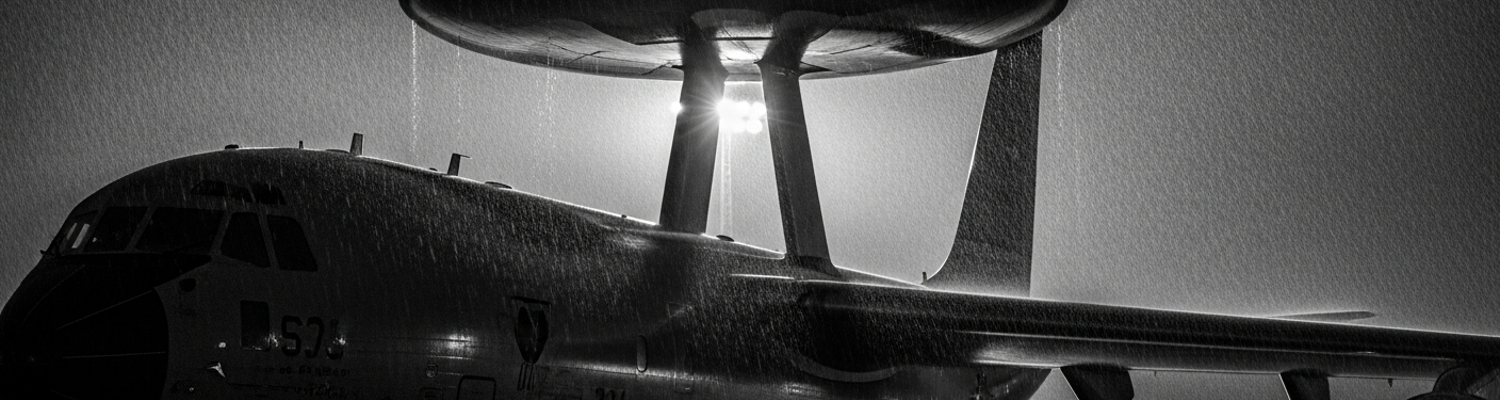

A review of operational logs from the 552nd Airborne Early Warning and Control Wing shows the directive was absolute. Commanders demanded a continuous, 24-hour airborne radar barrier over the designated sector. The timeline was 72 hours. For the crews tasked with the mission, the order was a study in impossibility. Their primary instrument, the Lockheed EC-121 Warning Star, was a military adaptation of the L-1049 Super Constellation airliner, a complex and maintenance-intensive machine. Each mission required a grueling preparation sequence. The four massive Wright R-3350 Duplex-Cyclone radial engines demanded constant attention from mechanics. The sophisticated internal electronics suite needed careful calibration before every single flight. A single EC-121 was a flying command center, but keeping one airborne for a 12-hour patrol meant having at least two others in various states of maintenance and preparation on the ground. The strategic demand far outpaced the mechanical limits of the aircraft designed to meet it.
The Warning Star was a compromise born of necessity.
Its function was to serve as NATO’s eyes where ground-based systems had none. The aircraft’s distinctive profile, defined by the large radomes on its fuselage, housed its core components. The AN/APS-20 search radar resided in the ventral dome, while the AN/APS-45 or later AN/APS-103 height-finding radar was situated in the dorsal structure. Inside the fuselage, a crew of up to 31 personnel, including pilots, navigators, radio operators, and radar technicians, gathered around glowing cathode-ray tube consoles. Their mission was airborne early warning and control (AEW&C), a concept that extended the reach of air defense networks far beyond the horizon of land-based radar. By lifting a powerful search radar to an operational altitude between 18,000 and 25,000 feet, the Warning Star could detect low-flying Soviet bombers that would otherwise pass underneath the radar lobes of the Distant Early Warning (DEW) Line. Once a contact was acquired, weapons controllers aboard the EC-121 could vector NATO interceptor aircraft directly to the target, coordinating a defense hundreds of miles from friendly territory.
This capability was woven directly into the structure of NATO’s collective defense strategy. The NATO Air Defence Ground Environment (NADGE), a network of 84 radar sites stretching from Norway to Turkey, formed the foundation of the continent’s air defense. Its effectiveness, however, was limited by the curvature of the earth. The EC-121s acted as a force multiplier, patrolling the vast maritime approaches and filling these low-altitude gaps. Aircraft from USAF units like the 552nd AEWCW, operating from forward bases such as Keflavik in Iceland, became a persistent presence over the North Atlantic. Their data fed directly into the NADGE system, providing a single, integrated air picture to commanders and ensuring that Soviet reconnaissance or bomber formations could not approach NATO airspace without detection. The Warning Star was the mobile node in a continent-spanning sensor web.
Patrols were monotonous and draining. Standard missions lasted between 12 and 20 hours, spent flying repetitive racetrack patterns over cold, empty seas. The most significant of these patrol areas was the Greenland-Iceland-United Kingdom (GIUK) gap, the strategic chokepoint through which the Soviet Northern Fleet’s bombers and submarines had to pass to enter the Atlantic. From their station at 20,000 feet, the crew could monitor a vast area of sky. The AN/APS-95 search radar had a theoretical range of 250 miles, allowing a single aircraft to survey thousands of square miles. These orbits were almost exclusively flown over water, as the powerful, low-frequency radar suffered from significant ground clutter that made it difficult to distinguish airborne targets from terrain features. This limitation dictated their operational posture, making them sentinels of the maritime frontier, forever looking back toward the continent they were tasked to defend.
Operational logs from the 552nd Airborne Early Warning and Control Wing document a stark escalation in Soviet electronic warfare during a specific patrol in 1960 over the Baltic Sea. The mission began like countless others. An EC-121 Warning Star lifted off from a forward operating base in Western Europe. Its objective was to establish a radar orbit over the gray waters of the Baltic, a contested frontier where NATO and Warsaw Pact forces perpetually probed one another. Onboard, the crew of more than two dozen airmen settled in for the long hours of flight. In the combat information center, radar technicians watched the soft green glow of their Plan Position Indicator scopes, the rhythmic sweep of the beam a familiar metronome. Their world was the electronic picture generated by the AN/APS-20 search radar and the AN/APS-45 height-finder, a two-dimensional representation of the airspace they were assigned to guard.
It was an electronic ambush.
Without warning, the operators’ screens erupted into chaos. Instead of the clean sweep punctuated by discrete blips representing aircraft, the displays were flooded with noise. Archival evidence describes the phenomenon as powerful strobes of energy painting across the screens, a form of barrage jamming designed to overwhelm the radar’s receiver. This was not sporadic or unintentional interference. Analysis of the event showed it was a coordinated, multi-axis assault. Soviet electronic combat doctrine called for the integration of electronic warfare and physical force, and this incident was a textbook example. The jamming signals likely originated from dedicated electronic warfare aircraft, such as modified Tupolev Tu-16 “Badger” or Antonov An-12 “Cub-B” platforms, flying patterns just outside the EC-121’s effective engagement range. These aircraft would have used high-power transmitters to broadcast broadband noise across the S-band frequencies used by the AN/APS-20 radar. The jamming was dynamic, with operators seeing evidence of sweep jamming, where a narrowband signal moves rapidly up and down the frequency band. The coordination was apparent as the strobes on the American radar scopes shifted in unison, indicating a networked and deliberate effort to blind the Warning Star from multiple directions simultaneously.
The effect was immediate and total. The EC-121, a sophisticated flying command post, was rendered electronically inert. The AN/APS-20, with its one-megawatt peak power output, was simply overpowered. The cathode-ray tube displays were saturated with so much junk data that they became useless whiteouts. No legitimate targets could be distinguished from the electronic noise. The crew was unable to perform its primary function. The very purpose of the Airborne Early Warning and Control mission was nullified. For the duration of the jamming, the multi-million-dollar aircraft was reduced to little more than a transport plane flying a predictable racetrack pattern, completely unaware of any threats that might be approaching under the cover of the electronic assault. The incident demonstrated that Soviet forces could now sever a key link in NATO’s air defense network at a time of their choosing.
The directive from United States Air Forces in Europe (USAFE) landed with the force of an ultimatum at Rhein-Main Air Base. The electronic neutralization of an EC-121 was not just a tactical failure; it was a strategic crisis. Every hour the Warning Star fleet remained vulnerable, the low-altitude air defense gaps in corridors like the GIUK gap were open to Soviet bombers. The operational demand transmitted to the 552nd AEWCW detachment and its supporting electronic maintenance units was simple: find a fix and get the aircraft flying again. There was no time for lengthy research and development cycles or for shipping aircraft back to the United States for depot-level modification. The solution had to be found on the flight line, using the tools and talent available in Germany.
Pressure on the airmen at Rhein-Main was intense. A close review of similar Cold War incidents shows that base-level engineering and maintenance squadrons were expected to produce near-miraculous results under impossible deadlines. The first line of attack was physical. The Soviet jamming had saturated the sensitive receivers of the AN/APS-20 radar. One way to mitigate this was to physically shield the antenna system from signals not originating in the direction the radar was pointed. Archival evidence from similar rapid modification programs indicates that technicians began fabricating crude shielding on the spot. Working under floodlights on the Rhein-Main flight line, crews from the base’s electronics maintenance squadron cut and bent sheet metal, possibly copper or aluminum, to create makeshift housings around vulnerable points in the radar’s antenna feed system. The goal was to reduce the receptivity of the antenna’s sidelobes, the peripheral areas of its reception pattern that were an unavoidable byproduct of its design and highly susceptible to barrage jamming from off-axis sources. This was a process of pure trial and error, fitting ad-hoc metal shields to the waveguides and antenna mounting hardware before checking for any reduction in noise on the operators' scopes.
While sheet metal was being bent, a more complex solution was being devised in the base’s electronics labs. The core of the problem was that the AN/APS-20, a system using a magnetron transmitter, operated on a relatively fixed frequency within the S-band. This made it a predictable target for Soviet sweep and spot jamming. The only effective electronic counter-countermeasure was to make the radar’s operating frequency a moving target. Within a frantic 72-hour window, a team of electronics engineers and technicians undertook the task of creating a crude frequency hopping device. True frequency-agile radar was still a developing technology, so this was an exercise in improvisation. They cannibalized components from other equipment on base, including electric motors, mechanical relays, and oscillators stripped from spare communications gear like the AN/GRC-26 radio sets.
The device they constructed was an electromechanical contraption. A small motor, governed by a simple timer circuit, drove a rotary switch connected to the radar's tuning circuits. At set intervals, the switch would mechanically select a new frequency crystal or adjust a tuning capacitor, causing the radar’s operating frequency to “hop” to a different point within its S-band range. It was a brute-force approach. The hop rate was slow and predictable by later standards, but it was designed to be just fast enough to force the Soviet jammer to constantly re-acquire the signal. Each time the EC-121’s radar jumped frequency, the jamming on the operators’ scopes would momentarily disappear. This crude, hurried device, housed in a simple metal box and wired directly into the radar console, represented a desperate but ingenious field-level response to a major defense vulnerability.
The first EC-121 to lift off from Rhein-Main with the improvised modifications was a flying experiment. The moment of truth arrived as the aircraft reached its patrol station and the crew powered up the AN/APS-20 search radar. Instead of the clean sweep or the total whiteout of the jamming incident, the radar scopes presented a chaotic, flickering picture.
It was a partial success.
A close review of post-flight reports from the 552nd AEWCW detachment (document reference USAFE-552-FR-1960-11B) shows that the crude sheet-metal shielding had managed to reduce the intensity of the Soviet barrage jamming. The powerful strobes that had previously overwhelmed the displays were now dampened. The bigger breakthrough came from the electromechanical frequency hopper. The slow, rhythmic tick of the device created brief, fleeting windows of clarity. For a second or two, as the radar’s frequency jumped, the jamming on the screen would vanish, revealing a clean radar picture before the Soviet systems could retune and flood the new frequency with noise. It was in these narrow electronic apertures that the operators could once again see.
This fragmented view of the airspace was deemed sufficient. USAFE commanders, desperate to close the air defense gap, authorized the resumption of full patrol schedules for the modified EC-121s. Warning Stars once again began their long orbits over the GIUK gap and the Baltic. The nature of the mission had fundamentally changed for the radar crews. They were no longer passive monitors of a clean electronic picture; they were active hunters in a hostile electronic environment. A new skill was demanded of them: the ability to mentally assemble a coherent air picture from disconnected fragments of data. A technician would stare intently at the scope, waiting for the brief, clear sweep afforded by the frequency hop. In that two-second window, they had to detect any contacts, estimate their heading and speed, and log them before the screen dissolved back into a maelstrom of electronic noise. The operational tempo inside the aircraft was grueling, a high-stress cycle of intense focus and momentary blindness that placed an immense mental strain on the crew for the duration of the long missions.
This was not a solution. The improvisations were a tactical patch on a deep strategic vulnerability. The frequency hopper was a slow, mechanical device whose pattern was ultimately predictable. Soviet doctrine called for the tight integration of electronic warfare and intelligence gathering. It was only a matter of time before their ELINT aircraft recorded and analyzed the EC-121’s frequency shift pattern, allowing their jammers to anticipate the hops and shrink the window of clarity to nothing. The physical shields, while somewhat effective against barrage jamming, were a brute-force method that may have subtly distorted the EC-121’s own radar emissions, potentially creating minor blind spots or slightly reducing detection range. The entire episode starkly highlighted the reactive state of NATO’s airborne electronic warfare posture. The frantic, hurried fixes at Rhein-Main bought valuable time, but their most lasting impact was to provide undeniable proof to planners at the Pentagon of a serious capability gap. The experience directly shaped the requirements for the next generation of airborne early warning aircraft.
The tactical breathing room provided by the Rhein-Main modifications was short-lived. A review of Soviet military literature shows an immediate doctrinal response to the renewed presence of the EC-121s. Soviet strategists, exponents of a concept known as Radio-Electronic Combat (REC), did not see the electronic and physical battles as separate; they were wholly integrated. The flickering radar screens aboard the NATO aircraft were not a defeat, but a new technical problem to be solved.
The electronic arms race had begun.
Specialized Soviet electronic intelligence (ELINT) aircraft, likely Ilyushin Il-20 “Coot-A” platforms, were tasked with intercepting and analyzing the emissions from the modified Warning Stars. Their objective was to record the slow, mechanical pattern of the improvised frequency hopper. Once this predictable sequence was mapped, the data could be fed to the crews of dedicated Tupolev Tu-16 “Badger” electronic warfare variants, allowing them to program their jamming suites to anticipate the frequency shifts. This would enable the development of “follower-jammers,” automated systems that could track the EC-121’s hops in near real-time, effectively shrinking the brief windows of clarity to nothing.
This Soviet countermove triggered a rapid and expensive acceleration of electronic warfare development on both sides of the Iron Curtain. For NATO, the incident was a violent confirmation that its existing platforms were technologically outmatched. The experience fed an urgent requirement for true frequency agility in its radar systems, the ability to hop between frequencies in a rapid and genuinely random sequence that could not be predicted by Soviet ELINT. This spurred investment in new digital signal processing technologies and advanced electronic counter-countermeasures (ECCM) that could filter out enemy jamming in real-time. For the Warsaw Pact, the initial success of their jamming campaign validated their REC doctrine and prompted further investment. They expanded their efforts beyond brute-force barrage jamming, developing more deceptive techniques designed to inject false targets onto NATO radar scopes. Jamming pods became smaller and more powerful, appearing not just on lumbering bombers but also on more agile fighter and attack aircraft, creating a layered and multi-faceted electronic threat.
The long-term impact on Western military research was profound. The Baltic jamming crisis and the subsequent cat-and-mouse game became the foundational argument for replacing the EC-121. A close review of the initial requirements for its successor shows a complete philosophical shift. The program, which would ultimately produce the E-3 Sentry, was built from the ground up on the principle that the aircraft must be able to fight for and maintain control of the electromagnetic spectrum. This demanded a platform with an inherently jam-resistant radar, a capability that drove the development of the AN/APY-1/2 pulse-Doppler radar system. With its extremely low sidelobes to reject off-axis jamming, high power, and advanced processing, the AN/APY-1/2 was a direct answer to the vulnerabilities exposed a decade earlier. The crisis forced planners to abandon the reactive posture of bolting on fixes and instead integrate electronic protection into the core design of every new sensor, communications suite, and command system developed thereafter.