
### Pacific War Logistics Bottlenecks
The plan to resupply Filipino guerrillas by submarine was a mathematical failure from its outset. A review of operational logs from 1942 and 1943 (NARA Record Group 38, Submarine Patrol Reports) documents the total dominance of the Imperial Japanese Navy over the sea lanes of the Western Pacific. This was not a porous screen; it was a layered, multi-domain system of control. Allied planners in Australia and Hawaii looked at a map saturated with Japanese power. From the major fleet bases at Truk and Rabaul, Japanese naval forces projected force across thousands of miles of ocean. The primary routes into the Philippines, the center of the resistance, were guarded by choke points like the Luzon Strait, the Sibuyan Sea, and the Sulu Archipelago. Each was patrolled by destroyers, torpedo boats, and a vast network of converted fishing trawlers armed with depth charges and machine guns.
Japanese air power, operating from captured American airfields like Clark Field on Luzon, maintained constant surveillance. The surface was a death zone. A submarine attempting to transit these waters, such as the USS Trout on its early supply runs, was forced to spend most daylight hours submerged. It crawled at a few knots, bleeding precious battery life. The threat was not a random encounter. Japanese doctrine included dedicated anti-submarine hunter-killer groups, known as Kaibōkan, specifically designed to sweep these channels clear. For a submarine commander, the mission required navigating a three-dimensional underwater gauntlet. The sound of a propeller could mean discovery, and discovery meant a sustained, methodical depth charge attack.
Distance was a physical constraint. A submarine leaving Fremantle, Australia, faced a 2,500 nautical mile transit just to reach Mindanao. Pearl Harbor was even more distant. This translated into a one-way trip of nearly two weeks at a steady surface cruising speed, a luxury that was never afforded. The operational norm was a grueling, month-long round trip spent mostly in enemy-controlled territory. A Gato-class submarine, designed as a long-range patrol and attack vessel, was now being asked to perform as a cargo transport. Every cubic foot of space was contested. A decision to load 50 tons of supplies meant a corresponding reduction in torpedoes. This diminished the submarine’s ability to defend itself or prosecute targets of opportunity. It also reduced space for spare parts, fresh food, and the crew’s personal effects. The constant running of diesel engines on the surface and electric motors below put an immense strain on the machinery. Mechanical failures of engines or air conditioning units deep in the tropics could cripple a boat hundreds of miles from any friendly port.
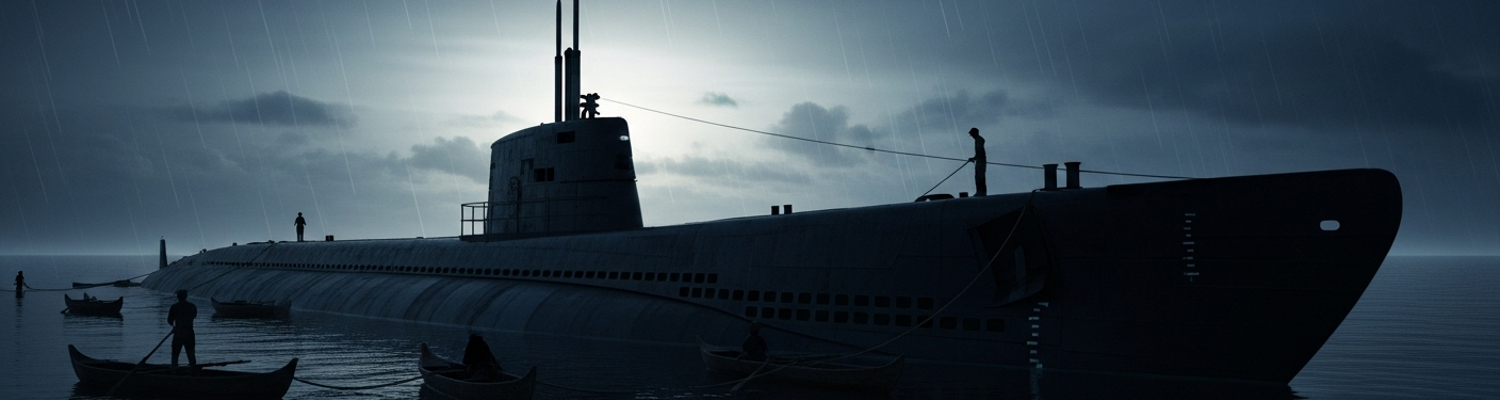
The guerrilla units were ghosts. After the fall of Corregidor in May 1942, American and Filipino forces that refused to surrender melted into the mountains and jungles. Archival evidence shows their initial communications with General MacArthur’s headquarters in Australia were sporadic, often conducted with salvaged, failing radio equipment powered by makeshift generators. Their requests were specific: ammunition for M1 Garands and .45 caliber pistols, explosives for sabotage, radio vacuum tubes and batteries, and above all, medical supplies like quinine to combat rampant malaria. Surface ships were incapable of breaking through the Japanese naval blockade. Heavy bombers of the era lacked the extreme range and payload capacity to make a meaningful difference from Australian bases. This left the submarine as the only viable instrument. The rendezvous itself was a high-stakes operation. It demanded a covert night-time surfacing in a secluded, pre-arranged cove. The submarine became a vulnerable, stationary target. It would sit on the surface for hours. During this time, tons of cargo were moved by hand to small outrigger canoes. Guerrillas paddled the small boats back and forth from shore. The entire process was a whisper in the dark, conducted under the ever-present risk of a Japanese patrol vessel appearing over the horizon.
Submarine Clandestine Supply Operations
Fleet submarines were repurposed for cargo delivery, an operational shift that signaled the severity of the Allied position. Operational records of the unit designated SPYRON show a specific reliance on the aging V-boats USS Narwhal (SS-167) and USS Nautilus (SS-168). These were among the largest submarines in the U.S. Navy. Their significant size was both a critical asset and a dangerous liability. Originally designed as long-range fleet scouts in the 1920s, their large, 371-foot hulls and double-decker construction offered voluminous internal space compared to the newer, more nimble Gato-class boats. Planners saw an opportunity. Following refits, these behemoths could transport up to 100 tons of supplies, more than triple the capacity of a standard fleet boat. This came at a price. The torpedo-handling gear in their forward rooms was stripped out to create cargo holds. A few torpedoes were retained in the tubes for self-defense. Their size made them slow to dive and less maneuverable. Their older diesel engines were notoriously noisy, making them liabilities in contested waters against improving Japanese anti-submarine capabilities. They were, in essence, expendable assets repurposed for a high-risk transport role that no other vessel could fulfill.
Navigating to the clandestine rendezvous points demanded a level of operational skill that pushed crews and their equipment to the absolute limit. The final leg of the journey involved threading through shallow, reef-strewn, and often poorly charted Philippine coastal waters. A submarine commander approaching a destination like Baculin Bay on Mindanao or a secluded cove on Panay had to rely on intermittent periscope observation and dead reckoning. The approach was almost always made at night and required the boat to run on silent running. This was not a passive state. It was an active, all-consuming procedure where non-essential machinery was shut down to eliminate noise. The air conditioning and refrigeration units, vital for crew endurance and food preservation in the tropical heat, were switched off. The gyroscopic compass, a source of constant hum, was often secured. Below decks, the crew was ordered to maintain absolute silence. They moved like ghosts through the compartments and spoke only in whispers to avoid any sound that could be transmitted through the hull and detected by enemy hydrophones. Speed was drastically reduced to minimize propeller cavitation, the formation of noisy bubbles. The submarine crawled forward at a few knots, vulnerable and blind in the darkness. A single mistake, a dropped wrench, or a miscalculation of the tide could result in running aground within earshot of a Japanese garrison.
Maximum danger occurred on the surface. After successfully navigating the underwater approach, the submarine would surface under the cover of darkness in a pre-arranged location. The spot was often identifiable only by a sequence of shielded light flashes from the guerrilla reception party on shore. For the next several hours, the warship became a stationary target. Lookouts scanned the horizon for the silhouette of a Japanese patrol boat while the crew and guerrillas worked feverishly. The transfer of cargo, from heavy crates of Garand rifles and ammunition to delicate radio vacuum tubes, was a grueling process of manual labor. Supplies were passed hand-to-hand up through the hatches and loaded onto small outrigger canoes, or bancas, paddled by the guerrillas. The entire evolution was a race against the moon. A Japanese destroyer or even an armed trawler appearing over the horizon would force an immediate crash dive. Such an emergency maneuver would mean abandoning tons of irreplaceable supplies on the submarine’s deck and potentially leaving the guerrilla shore party to be captured. On March 3, 1944, the USS Narwhal was forced to abort a delivery of 70 tons of supplies off Cabadbaran when three Imperial Japanese Navy destroyers were detected approaching the area, a demonstration of the razor-thin margins of these operations.
Critical Provisions for Guerrilla Warfare
Cargo manifests from the SPYRON missions show a consistent demand for small arms and ammunition. Guerrilla units, often starting with a motley collection of captured Japanese Arisaka rifles, old Philippine Constabulary weapons, and a few M1911 pistols, were desperate for standardization. The delivery of M1 Garand rifles, M1 carbines, and Thompson submachine guns represented a significant upgrade in firepower and morale. Ammunition, typically .30-06 for the Garands and .45 ACP for pistols and Thompsons, was the single heaviest and most voluminous category of supply. A single run by Narwhal could deliver over 90 tons of stores, a large portion of which was ammunition. Each brass-cased cartridge was a finite resource, its delivery the result of a perilous 2,500-mile journey. Explosives, usually blocks of TNT, were just as prized. These were for the methodical destruction of infrastructure: blowing bridges, derailing trains, and sabotaging Japanese supply depots. Packing these materials required specific procedures. Ammunition was kept in sealed metal containers to protect it from the crushing pressure and pervasive dampness of a submerged submarine. Sensitive blasting caps and fuzes were packed separately to prevent accidental detonation during depth charge attacks. The delivery of 70,000 rounds by the USS Tambor in early 1943 was a typical early injection of supplies that proved the concept’s viability.
Operational medical records confirm that disease, not combat, was the primary source of attrition for guerrilla units. Malaria was rampant in the jungles and mountains where the resistance fighters operated. Before the fall of the Philippines, there were cinchona plantations on Mindanao that produced quinine, but these were either destroyed or fell under Japanese control, cutting off the primary anti-malarial treatment. The delivery of quinine tablets via submarine was therefore a matter of absolute survival. A guerrilla fighter shaking with the fever and chills of a malaria attack was a liability, unable to fight or even march. Without a steady supply of quinine for both treatment and prophylaxis, entire units would have become combat-ineffective within weeks. Alongside quinine, sulfa drugs were another high-priority medical item. In a pre-penicillin environment, any significant wound from combat or even a simple infection from a cut could lead to sepsis and death. Sulfa powder, dusted directly into a wound, was the most effective field treatment available to fight bacterial infections. The supply runs also carried basics like bandages, surgical dressings, and rudimentary surgical instruments, all of which were virtually nonexistent in the isolated guerrilla camps.
Without contact, the resistance was blind and fragmented. The entire guerrilla enterprise depended on a fragile electronic nervous system powered by submarine-delivered parts. Early resistance groups were isolated, unable to coordinate their actions or report intelligence to General MacArthur’s Southwest Pacific Area headquarters (SWPA) in Australia. The first special missions, such as the one by USS Gudgeon in January 1943, focused on landing trained agents with portable radio equipment. These radios were the link allowing scattered bands on different islands to function as a unified force. Mission logs show a constant demand for radio components. Vacuum tubes, fragile glass bulbs essential for radio operation, frequently failed in the jungle humidity and from the physical shock of combat. The most consistently requested item, however, was batteries. Field radios were power-hungry. Without a steady supply of dry-cell batteries, they became useless boxes of wire. Submarines like the USS Nautilus and Narwhal would dedicate significant cargo space to crates of batteries and hand-cranked generators. They also delivered the all-important codebooks, which allowed for secure transmission of intelligence on Japanese troop movements, shipping, and fortifications. A delivery on March 2, 1944, by the Narwhal to Butuan Bay, Mindanao, included 80 tons of cargo, a significant portion of which was communications gear destined to keep the intelligence network operational.
### Improvised Coastal Medical Interventions
SPYRON mission logs document a secondary function: impromptu medical clinics conducted on the decks of surfaced submarines and in the shadows of Philippine coastlines. A submarine had no doctor. Its sole medical provider was an enlisted Pharmacist’s Mate. These corpsmen, trained for the enclosed and relatively sterile environment of a submarine sickbay, were suddenly tasked with becoming frontline combat medics and public health officers in a few frantic hours. During a rendezvous, as crates of ammunition and radio parts were being passed to outrigger canoes, the corpsman would set up a makeshift aid station on the wet, steel deck. Under the dim glow of a shielded battle lantern, a line of guerrilla fighters would form. The corpsman had minutes with each man, forcing a brutal triage. He was seeing the accumulated effects of months of jungle warfare with no medical support.
What they encountered was a catalog of degradation. Guerrilla after-action reports and the memoirs of American officers who fought with them show a force being systematically broken by disease. Malaria and dysentery were the primary threats, incapacitating more fighters than Japanese patrols. Beyond these endemic killers, the corpsmen faced the direct results of combat. Wounds from Japanese Arisaka rifles, bayonets, and mortar fragments were often weeks old, festering in the humid climate. Simple cuts and leech bites, if left untreated, would balloon into tropical ulcers, eating away flesh down to the bone. The corpsmen also treated the severe effects of malnutrition, including beriberi, which afflicted both American and Filipino resistors. The medical intervention was a race against time, treating the most severe cases before the submarine had to submerge and vanish before sunrise.
His tools were tragically insufficient. A submarine Pharmacist’s Mate was equipped for the common ailments of a 90-man crew, not for the systemic health collapse of a guerrilla army. His entire medical locker might occupy a space smaller than a closet. The standard kit contained basic diagnostic tools, morphine syrettes, bandages, a few surgical instruments like scalpels and forceps, and sulfa drugs. Sulfa powder, dusted directly into a debrided wound, and sulfa tablets were the only available weapons against the rampant bacterial infections. Penicillin was not yet widely available in the field. For surgery, the corpsman was on his own. He performed procedures like amputating gangrenous digits or removing shrapnel with rudimentary tools and often without adequate anesthesia. The patient would be lying on a canoe or a section of the beach. The supplies brought in by the submarine, quinine, sulfa, and bandages, were consumed almost immediately. The medical aid rendered during these brief contacts was a desperate act of battlefield maintenance, a fleeting attempt to hold back a tide of disease and decay.
### Scarcity and the Lottery of Survival
Survival became a function of geography and timing. The arrival of a submarine was a moment of profound consequence, but its life-saving cargo was a drop of water on a fire. A single vessel like the USS Tambor might deliver two tons of supplies, including medical stores, but this was for an organization of thousands spread across an entire archipelago. The distribution of these finite resources was inherently random. A guerrilla unit operating near a designated rendezvous point, such as Labangan on Mindanao, might receive a windfall of quinine and sulfa drugs. Another unit, just fifty miles deeper in the mountains, would get nothing. A fighter’s life did not depend on his bravery or skill but on the sheer luck of being in the right place on the right night when a submarine surfaced. This created a brutal lottery of life and death, dictated not by tactical necessity but by proximity to a secluded cove on a submarine captain's chart.
The moral weight of this scarcity fell upon the shoulders of a single enlisted man: the Pharmacist’s Mate. During those frantic hours on a darkened beach, he made immediate and absolute decisions. With only a small locker of medical supplies to draw from, he faced a line of sick and wounded men. This was triage in its most elemental form. A fighter with a festering shrapnel wound might be deemed treatable, receiving a debridement and a dusting of sulfa powder. Another with a severe abdominal injury, requiring surgery far beyond the corpsman’s capacity, might be given a comforting word and left to die. The corpsman had to calculate who could be returned to the fight. He was not just a healer but an instrument of battlefield logistics, allocating hopelessly inadequate resources in a desperate effort to maintain the guerrilla force as a viable fighting entity. Every tablet of quinine and every bandage was a choice with life-or-death implications.
Submarine Crew Operational Strain
War patrols for supply submarines lasted between 60 and 90 days, most of it inside enemy-controlled waters. This was not idle transit. For the crews of boats like the USS Gudgeon or USS Tambor on their early 1943 missions, the daily routine was a grueling exercise in risk management and sensory deprivation. Daylight hours were spent submerged, crawling at a few knots on battery power to avoid detection. The air inside the steel hull would grow foul and oxygen-depleted over a 12-hour dive, thick with the smell of diesel fuel, sweat, and cooking odors.
It was a physically and mentally exhausting existence. The internal temperature of a Gato-class boat operating in the tropics could soar past 100 degrees Fahrenheit, with humidity near 100 percent. While American fleet boats were equipped with air conditioning, these power-hungry systems were immediately shut down during silent running or to conserve battery life. The compartments turned into a sweltering, dripping jungle of steel. Sleep was a rationed commodity, dictated by watch schedules and the constant possibility of a call to battle stations. The psychological burden of the ever-present threat was inescapable. Veterans spoke of learning to distinguish the sound of a friendly escort vessel’s propellers from the high-pitched whine of a Japanese destroyer’s screws. The metallic groans and creaks of the hull under the pressure of a deep dive, or the percussive shock of a distant depth charge, became the soundtrack to their existence. Morale would consistently hit its lowest point around the halfway mark of a patrol, a phenomenon known as the third-quarter phenomenon, where the initial adrenaline had faded and the return home still seemed impossibly distant.
This strain was compounded by the unique nature of their cargo missions. After enduring weeks of this pressure-cooker environment to reach a clandestine rendezvous, the crew would witness firsthand the desperation of the Filipino resistance. They saw the emaciated fighters, ravaged by malaria and malnutrition. The crew of the USS Narwhal, having hauled 92 tons of cargo across thousands of miles, would then spend hours on a dangerously exposed surface, passing crates to men who looked like ghosts. There was an acute psychological burden in this exchange. The submariners knew that the tons of ammunition, radio batteries, and quinine they delivered were a mere fraction of what was needed.
The final act of a supply drop was often the most mentally taxing. As dawn approached, the submarine had to submerge and disappear, leaving the guerrillas and their meager new supplies on the shore. On several occasions, a mission had to be aborted entirely due to the sudden appearance of a Japanese patrol, forcing the submarine to crash dive and abandon tons of cargo on deck, as happened to the Narwhal in March 1944. The crew was forced to live with the knowledge that their failure to deliver, for whatever reason, could be a death sentence for the very people they were sent to help. This was a brutal calculation of risk, leaving the submarine crew to carry the moral weight of insufficiency back with them into the silent depths.
Logistical Impact on Pacific Warfare
Clandestine submarine supply directly enabled the guerrilla intelligence network. Before these missions, resistance groups across the Philippine archipelago were electronically deaf and isolated. The initial special missions, like that of the USS Gudgeon in January 1943 which landed a six-man party with 2,000 pounds of equipment on Negros, were specifically designed to correct this. These were electronic nervous system transplants. By June 1944, this network had expanded to include 169 active radio stations, encompassing coast-watcher posts, guerrilla command nets, and weather stations. The intelligence flowing from these submarine-supplied outposts was a primary weapon. Guerrilla observers, using equipment delivered by boats like the USS Nautilus and USS Narwhal, provided SWPA headquarters in Australia with precise, real-time data on Japanese naval movements, troop concentrations, and supply depot locations. This information directly enabled the wider Allied war effort, guiding American carrier strikes and fleet movements.
The entire resistance effort was governed by the hard strategic limitations of its supply line. The submarine was the only viable delivery system, but it was a hopelessly restricted one. A standard Gato-class fleet boat, when stripped for cargo, could carry perhaps 30 tons of supplies. Even the giant V-boats, the USS Narwhal and USS Nautilus, specifically refitted for transport duty, could haul a maximum of around 100 tons. In total, from early 1943 to January 1945, the entire submarine force managed to deliver just 1,325 tons of equipment. This was for a guerrilla organization that eventually numbered over 33,000 armed personnel under just one commander, Colonel Wendell Fertig, on Mindanao alone. The numbers dictated the strategy. There was never a possibility of equipping the Filipino resistance for conventional, sustained combat. The submarine bottleneck ensured their role would be confined to intelligence gathering, sabotage, and harassment.
This thin logistical thread, stretching thousands of miles across hostile seas, defined the ceiling of what the resistance could achieve. The operational tempo of resistance units did not follow a strategic plan so much as it ebbed and flowed with the arrival of a submarine. A close reading of unit histories shows that prior to a rendezvous, guerrilla activity would decline sharply. With ammunition for their M1 Garands running low and radio batteries depleted, commanders were forced to conserve resources, avoid contact, and wait. The arrival of a submarine like the USS Tambor, which delivered two tons of supplies to Mindanao in March 1943, would trigger an immediate increase in local engagements. A delivery of 90 tons of ammunition and stores from the Narwhal in November 1943 was a massive injection of combat power. With fresh .30-06 rounds, explosives, and quinine to put fever-wracked soldiers back on their feet, ambushes could be planned and bridges could be blown. The entire guerrilla war pulsed to the rhythm of a handful of overworked submarines.