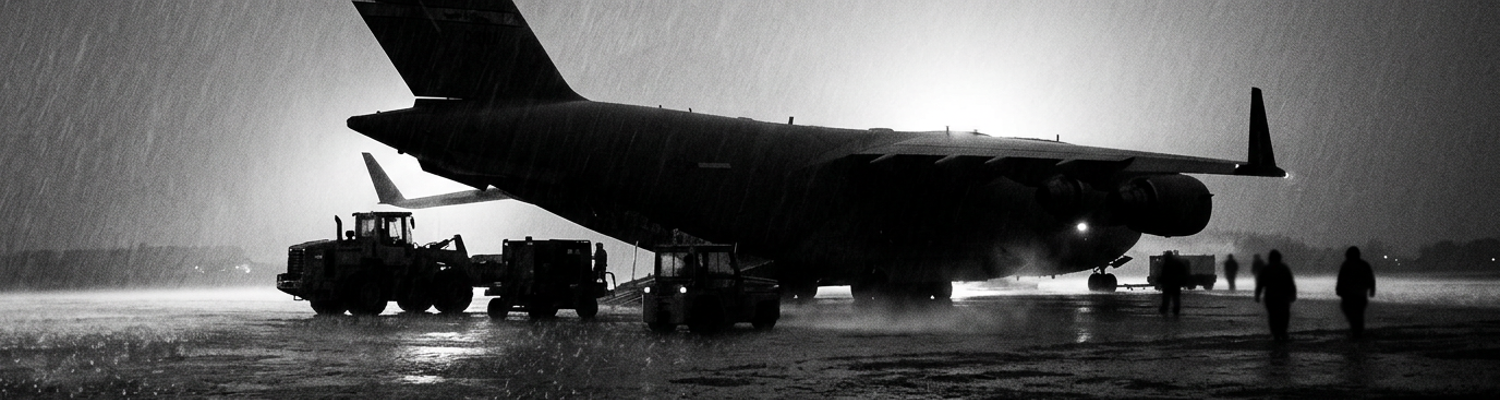

Trans Pacific Airlift Limitations in July 1950
01 JULY 1950 0800Z COORDINATES 33.8828 N 130.6536 E. Archival evidence shows the Pacific Division of the Military Air Transport Service initiated heavy equipment airlifts to Japan under severe mechanical duress. The North Korean Peoples Army crossed the 38th Parallel six days prior. Republic of Korea Army lines collapsed against Soviet supplied T34 85 tanks. Far East Command demanded immediate delivery of anti tank weapons. They specifically requested the new 3.5 inch M20 Super Bazookas and their shaped charge rockets. The burden of moving this materiel fell to the aging fleet of Douglas C54 Skymasters. These four engine transport planes were originally built for World War II operations. They had already accumulated thousands of flight hours during the Berlin Airlift.
The aircraft were structurally fatigued before they even taxied onto the runway at Fairfield Suisun Air Force Base in California.
A close review of operational logs indicates the 1500th Air Transport Group received orders to push every available C54 into the trans Pacific corridor by the second week of July 1950. Mechanics worked eighteen hour shifts replacing worn Pratt and Whitney R2000 Twin Wasp engines just to get the airframes certified for overwater flight. Ground crews loaded the fuselages with heavy wooden crates containing 90mm recoilless rifles and high explosive anti tank rounds. The loading process bypassed standard weight distribution protocols. Loadmasters shoved crates directly against the aft bulkheads to maximize interior volume. This shifted the center of gravity dangerously close to the rear aerodynamic limits.
Pilots fought heavy yokes during rotation.
Tail skids dragged across the California concrete during takeoff.
When examining the historical record of the mid Pacific transit routes the physical constraints of the C54 dictated the entire supply chain. The aircraft possessed a maximum gross takeoff weight of 73000 pounds. Crossing the 2400 mile oceanic void between California and Hickam Field in the Territory of Hawaii required massive fuel loads. Aviation gasoline consumed the vast majority of the allowable weight limits. The payload capacity for actual cargo dropped to barely 10000 pounds per flight. Upon landing at Hickam flight engineers calculated the fuel requirements for the subsequent island hopping legs to Johnston Atoll and Kwajalein. Headwinds across the central Pacific during July forced navigators to mandate maximum fuel reserves for the westbound flights.
The math did not work.
Strict trans Pacific payload weight limits forced crews to offload mechanical spare parts directly onto the aprons at the Hawaii transit hubs. Base commanders at Hickam issued direct orders prioritizing combat munitions over aircraft maintenance supplies. Ground handlers physically stripped crated R2000 engine cylinders and spare hydraulic pumps from the cargo bays. They removed landing gear struts and replacement magnetos. They left these components sitting on wooden pallets under the tropical sun next to Runway 8. Flight engineers argued aggressively with dispatchers about the missing parts. A C54 operating at maximum continuous power across the Pacific burned oil at an accelerated rate. The engines routinely blew cylinder heads in flight. The R2000 engines fouled spark plugs and sheared accessory drive shafts during prolonged cruise settings.
Without replacement parts in the cargo hold a single engine failure at a forward base in Japan would ground the aircraft indefinitely.
Operations officers ignored the complaints.
They ordered the loadmasters to fill the newly emptied cargo space with more crates of 3.5 inch rockets. The military command structure in Hawaii decided a grounded transport plane in Japan was an acceptable trade off for getting anti tank weapons to the Pusan Perimeter. Mechanics at Hickam watched the ground handlers tie down the munitions using heavy chain binders.
The Skymasters departed Hickam trailing heavy black exhaust from over rich fuel mixtures.
Staging Area Overload at Ashiya Air Base
15 JULY 1950 0600Z COORDINATES 33.8828 N 130.6536 E. Ashiya Air Base sat on the northern coastline of Kyushu Japan. It was directly exposed to the corrosive saltwater winds blowing off the Genkai Sea. Archival evidence shows Far East Command designated this pre war fighter installation as the primary staging hub for all airlift operations into the collapsing Korean peninsula. Geography dictated the selection. Ashiya was located exactly 130 miles across the Korea Strait from the Pusan Perimeter. This proximity made it the closest heavy lift capable airfield to the active combat zones. The 374th Troop Carrier Wing operated from its dual asphalt runways. They received the incoming trans Pacific flights that had just completed the island hopping transit from California. Douglas C54 Skymasters touched down at maximum landing weights around the clock. Ground crews directed the exhausted airframes toward unpaved expansion ramps covered in pierced steel planking.
Loadmasters shoved heavy wooden crates of 3.5 inch rockets and 155mm howitzer shells out the cargo doors.
They prepared to transfer the munitions to smaller twin engine C47 Skytrains. Sometimes they reloaded them onto refueled C54s bound for primitive dirt airheads like K2 at Taegu and K9 at Pusan East. The 374th Troop Carrier Wing assumed responsibility for receiving and sorting this continuous flow of material. Dispatchers calculated payload weights using chalk on blackboards inside corrugated metal quonset huts near the control tower.
The base infrastructure buckled under the sudden accumulation of aircraft.
A close review of operational logs indicates the deliberate decision to abandon maintenance flyaway kits in Hawaii triggered a mechanical collapse on the Ashiya flight line. Mechanics attached to the 374th Maintenance Squadron faced a ramp crowded with incoming C54s requiring mandatory fifty hour inspections. The Pratt and Whitney R2000 Twin Wasp engines suffered extreme thermal stress during the overwater crossings. Cylinder heads cracked under the strain. Spark plugs fouled heavily with lead deposits from aviation gasoline running at maximum continuous power settings for hours at a time. Without the replacement parts stripped from the cargo holds at Hickam Field maintenance chiefs grounded aircraft permanently to harvest their components. Crew chiefs documented the organized cannibalization of airframes parked along the eastern perimeter fence. Technicians drained red MIL H 5606 hydraulic fluid from the reservoirs of grounded planes using tin buckets to service outbound flights. Maintenance officers established a rigid triage system for incoming aircraft. Planes exhibiting severe structural fatigue or multiple engine failures were immediately towed to the salvage line.
The inventory of functional replacement magnetos dropped to zero by the third week of July.
The influx of heavy combat cargo compounded the mechanical deficit across the entire installation. Munitions and medical supplies piled up on the tarmac in high stacks. The number of airworthy transport planes plummeted daily. Pilots assigned to fly the next leg into the Korean airheads refused to sign off on aircraft forms due to excessive engine oil leaks. The short heavily loaded landings at Ashiya wore down the brake pucks on the main landing gear assemblies. Supply officers sent urgent teletype messages to Haneda Air Base in Tokyo requesting spare brake linings. The intra theater supply chain was completely saturated. Aircraft mechanics worked outside in torrential monsoon rains. They attempted to patch shredded tires and replace sheared accessory drive shafts using basic hand tools. Ground crews broke open wooden crates to verify the contents against faded shipping manifests. The required 90mm recoilless rifles frequently arrived mixed with low priority items like office furniture or unneeded cold weather gear. This sorting process delayed the loading of outbound flights. The cargo consumed even more physical space on the ramp. The heavy wooden crates containing the Super Bazooka rockets sat under waterproof tarpaulins just feet away from transport planes that possessed no functioning oil coolers.
Flight engineers physically removed defective propeller governors and left them on the steel matting.
Base commanders ordered the construction of temporary maintenance nose docks out of scavenged wood and canvas to shield the open engine nacelles from the coastal storms. The backlog of grounded machinery occupied every available square foot of hardstand space. Incoming flights from Guam entered holding patterns over the Korea Strait. Ground handlers used tractors to drag disabled C54s into the muddy grass fields adjacent to the active runway. The staging area designed to rapidly push anti tank weapons to the front lines transformed into an open air salvage yard. Mechanics stripped aluminum cowling panels off the hangar queens to patch flak damage on the few remaining operational transports.
Monsoon Degradation of Pierced Steel Planking
18 JULY 1950 1400Z COORDINATES 35.8941 N 128.6014 E. A close review of operational logs from K2 Air Base at Taegu exposes the total breakdown of runway infrastructure during the peak of the Korean summer monsoon season. Relentless precipitation saturated the Nakdong River valley. Ground crews of the 822nd Engineer Aviation Battalion had hastily laid thousands of sheets of Pierced Steel Planking over uncompacted dirt to support the incoming airlift. This Marston Matting relied on a series of integral bayonet style connector pins along the edges of each ten foot steel panel to lock into adjacent sheets. Continuous downpours created a deep highly corrosive mud. This mud seeped upward through the circular lightening holes stamped into the metal. A thick slurry encased the interlocking joints. Chemical oxidation accelerated rapidly in the high humidity. Rusty steel connector pins lost their load bearing cross sections within a matter of days. Constant friction from heavy aircraft tires rolling over the oxidized joints ground the weakened steel into a fine orange paste.
The locking mechanisms disintegrated entirely under the stress.
Archival evidence shows the loss of these structural pins caused individual steel planks to separate laterally across the primary landing strip. A fully loaded C54 Skymaster touching down at ninety miles per hour transferred over seventy thousand pounds of kinetic energy directly into the compromised surface. Unattached ten foot steel panels kicked upward upon contact with the heavy bomber style landing gear. Jagged edges of the displaced matting sliced through the pressurized rubber tires. They gouged the thin aluminum belly skins of the transport planes. Hydraulic lines running through the lower fuselage shattered when struck by the flying steel. Aviation engineers waded into knee deep water attempting to realign the heavy panels by hand. The 822nd deployed specialized lever tools called matting pullers to drag the sheets together. The rusted slots tore open under the pulling force. They found the subgrade completely liquefied. The underlying soil foundation possessed zero bearing capacity. Continuous rain prevented the dirt from drying enough to support the mandated weight limits. Cargo pilots aborted landings and diverted back to Japan after observing the runway surface physically separating beneath the aircraft touching down ahead of them. Unpinned steel sheets slid several feet horizontally through the mud during high speed braking maneuvers.
Base commanders ordered heavy construction vehicles directly onto the deteriorating flight line.
They pushed the loose steel back into position.
This directive subjected the engineering equipment to severe mechanical abuse. Structural shifts in the unstable runway matting forced Caterpillar D8 bulldozers and motorized LeTourneau scrapers to operate on a violently uneven shifting steel surface. Loose pierced steel planks overlapped and created sharp steel steps across the runway profile. When a twenty ton bulldozer drove over these sudden vertical deviations the steel tracks caught on the exposed edges of the matting. Lateral shifting of the matting beneath the tracks applied severe torsional loads to the undercarriage rollers. Abnormal mechanical strain transferred directly into the drive sprockets and suspension assemblies. Operational records from the engineering motor pool document a rapid rise in broken track pins and sheared final drive shafts. Two and a half ton dump trucks carrying crushed rock to fill the mud sinkholes suffered snapped leaf springs. Their dual rear axles dropped into voids where the steel matting had completely sunk into the earth. Liquid mud forced its way into the unsealed wheel bearings of the dump trucks. This destroyed the internal races. Heavy equipment on the flight line lacked any suspension travel designed for hard jagged metal impacts. Operators reported steering columns vibrating violently as the tires of their vehicles wedged between the separated steel panels.
Motor pool technicians cannibalized broken steering knuckles from disabled graders to repair the few remaining functional tractors.
Heavy Equipment Mechanical Failures in the Field
22 JULY 1950 0930Z COORDINATES 35.1783 N 129.1242 E. Archival evidence shows the 802nd Engineer Aviation Battalion initiated emergency earthmoving operations at K9 Air Base near Pusan under highly degraded mechanical conditions. Heavy construction equipment became the absolute limiting factor in expanding the forward airheads to accommodate incoming C54 Skymasters. The motorized graders and tractor drawn scrapers assigned to the engineering units were World War II surplus machines. They were pulled from open storage depots in Okinawa and Japan. Decaying rubber seals and brittle hoses compromised the machinery before the first steel blade touched the Korean dirt. Monsoon rains transformed the active construction zones into deep tracts of liquefied clay. Engineering commanders ordered equipment operators to run Caterpillar No 12 motor graders continuously to establish a crowned subgrade for runway drainage. The machines ran twenty hours a day in water that frequently crested over their tandem rear drive axles. High speed rotation of the heavily treaded earthmoving tires threw continuous sheets of liquid mud directly onto the exposed diesel engine blocks.
The sediment bypassed every external mechanical defense.
A close review of operational logs indicates pervasive mud contamination clogged grader fuel lines within days of continuous airfield operations. The standard fuel tank breather valves on the Caterpillar graders lacked specialized environmental shielding. Thick clay caked over the venting mechanisms. It eventually forced its way into the primary diesel reservoirs as the tanks drew in outside air to replace consumed fuel. Suspended particulate matter heavily contaminated the diesel supply. This abrasive slurry flowed directly into the primary woven cotton fuel filters. It saturated the elements with dense mud within forty eight hours of deployment. Mechanics lacking replacement filter cartridges attempted to wash the cotton elements in low grade gasoline. The deeply embedded mud permanently restricted fuel flow. The secondary brass screen filters failed next. Microscopic sediment bypassed the compromised screens and entered the high pressure fuel injection pumps. The tight tolerance steel plungers inside the pumps scored heavily against their barrels due to the lack of clean lubrication. Fuel pressure dropped below the minimum threshold required to crack the injection nozzles. Graders stalled directly in the center of the active flight line. Operators abandoned the immobilized equipment in deep mud pits. Ground crews physically dragged incoming transport aircraft around the dead machines using heavy chains.
Base commanders dispatched recovery teams to tow the stranded graders.
When examining the historical record of the 802nd Engineer Aviation Battalion motor pool severe corrosion and fine grit accumulation seized scraper hydraulic systems across forward operational zones. The engineers relied on LeTourneau carryall scrapers towed by Caterpillar D8 tractors to excavate the hillsides surrounding K9. They transported fill dirt to the runway expansion areas. These scrapers utilized exposed hydraulic rams to raise and lower the heavy steel cutting bowls. The local soil contained high concentrations of abrasive silica sand. Constant downpours mixed this silica with iron oxide washed off the decaying Pierced Steel Planking. The resulting slurry bonded to the polished chrome surfaces of the hydraulic cylinder shafts. Every time an operator activated the hydraulic controls to lift the scraper bowl the retracting shafts dragged the abrasive grit directly through the primary rubber wiper seals. The silica tore deep longitudinal gouges into the synthetic rubber chevron packing. Contaminated rainwater and fine dirt bypassed the shredded seals and entered the closed loop hydraulic systems.
Internal mechanical destruction accelerated rapidly.
The grit laden hydraulic fluid circulated directly into the main gear pumps. Abrasive particles milled away the internal brass wear plates. This destroyed the tight clearances required to build hydraulic pressure. Water contamination simultaneously initiated rapid galvanic corrosion on the exposed steel valve spools inside the directional control blocks. The rust expansion caused the spools to jam tightly inside their cast iron housings. Equipment operators physically broke the steel control levers inside the tractor cabs attempting to force the seized valves open. Without hydraulic pressure the heavy steel scraper bowls dropped completely into the liquefied earth. This anchored the equipment deep in the mud. The D8 tractors spun their steel tracks uselessly attempting to pull the disabled scrapers. Field mechanics possessed no replacement hydraulic seals. They had no spare pumps or clean MIL H 5606 fluid. Technicians attempted to bypass the seized hydraulic lines by welding heavy steel chains directly from the scraper frames to the lifting yokes. This locked the bowls in a permanent raised position. They executed these rough field modifications using portable oxy acetylene torches under heavy tarpaulins in the pouring rain.
Abandonment of Standard Repair Doctrine
A close review of operational logs from the 374th Maintenance Squadron at Ashiya Air Base indicates a total collapse of standard United States Air Force maintenance protocols by the final week of July 1950. Technical Order 00 20 1 dictated strict replacement schedules for Pratt and Whitney R2000 engine components. It covered hydraulic accumulators and structural fasteners. Crew chiefs normally executed a mandatory grounding of any Douglas C54 Skymaster exhibiting excessive manifold pressure drops. They grounded planes with frayed elevator control cables or cracked exhaust stacks. The prescribed doctrine required mechanics to completely strip and rebuild the Bendix Stromberg carburetors after specific flight hour thresholds. Severe supply shortages stemming from the trans Pacific airlift offloads at Hickam Field stripped the Ashiya supply depots of all required replacement parts. Base engineering officers officially suspended the technical orders out of sheer necessity. Mechanics received direct commands from the 374th Troop Carrier Wing to implement a run to failure methodology across the entire heavy transport fleet. Flight line technicians erased red grounding crosses from the DD Form 781 aircraft maintenance logs without performing the mandated safety inspections. They dispatched Skymasters back out over the Korea Strait with known hydraulic leaks in the main landing gear struts. They ignored heavily worn magneto contact points.
Ground crews packed leaking brake line reservoirs with thick axle grease.
This artificially maintained line pressure during the short flights to Taegu.
When examining the historical record of the ramp operations the coastal saltwater environment of northern Kyushu rapidly oxidized the exposed steel hardware on the heavily abused airframes. High humidity monsoons blowing off the Genkai Sea accelerated the chemical degradation of the main landing gear trunnion bolts. It attacked wing spar attach angles and the steel studs securing the engine exhaust manifolds. Short overweight landings on the pierced steel planking at K2 and K9 required frequent replacement of the Bendix multi disc brake assemblies. Technicians attempting to remove the main wheel hubs on the Ashiya tarmac found the heavy retaining nuts completely seized by thick layers of rust. Standard aviation grade penetrating solvents were entirely absent from the theater inventory. Mechanics shattered their standard issue hand tools attempting to force the oxidized hardware loose. Maintenance personnel from the 374th began scavenging the overgrown perimeter of the pre war Japanese fighter installation. They looked for chemical alternatives to break the seized metal. They hacked through dense coastal brush near the eastern revetments. They discovered dozens of rusted 55 gallon drums buried in the mud.
These abandoned drums contained degraded Imperial Japanese military diesel fuel left over from the end of the Pacific War in 1945.
Mechanics hauled the heavy steel barrels back to the active flight line using motorized tug tractors. Salvaged Japanese diesel oil possessed an extremely high sulfur content. It had separated into a thick caustic sludge over five years of unregulated thermal cycling. Ground crews used brass drift pins to punch holes in the rusted barrel lids. They decanted the liquid top layer into empty ammunition tins to use as an improvised penetrating solvent. They soaked heavy cotton rags in the dark fluid. They wrapped them tightly around the corroded landing gear bolts. They covered seized cowl flap hinges and oxidized exhaust studs. Leaving the diesel soaked rags on the metal joints for several hours allowed the aggressive hydrocarbons to eat through the heavy iron oxide layers. Maintenance personnel then applied three foot steel breaker bars to the nuts. They used their entire body weight to apply massive physical torque to snap the chemical bonds. High sulfur diesel dissolved the rust just enough to force the threads to turn against the steel shanks. This highly corrosive improvised solvent stripped the protective cadmium plating completely off the reusable aviation hardware.
Crew chiefs threaded the bare steel bolts back into the airframes without any anti seize compound.
Improvised Infrastructure Stabilization Techniques
A close review of operational logs from K9 Air Base reveals the rapid physical disintegration of the runway shoulders under the continuous weight of inbound Douglas C54 Skymasters. The 802nd Engineer Aviation Battalion had excavated deep open air trench drains parallel to the primary landing strip. They needed to manage the severe monsoon runoff. Heavy transport planes touching down at seventy three thousand pounds transferred massive kinetic energy through the pierced steel planking directly into the waterlogged clay subgrade. This dynamic loading created severe hydrostatic pressure within the soil beneath the metal matting. The unpaved earth along the runway margins lacked the internal shear strength to support the outward displacement of the compressed mud. Sections of the subgrade began shearing off. They collapsed directly into the open drainage ditches.
The entire eastern edge of the active flight line dropped eighteen inches below the required operational grade.
Engineering commanders recognized standard repair procedures were impossible due to the total absence of authorized construction materials. Archival evidence shows these specific field improvisations sustained airhead operations despite the severe breakdown of official logistics channels. Far East Command logistics manifests from August 1950 confirm zero shipments of standard Portland cement reached K9 for three consecutive weeks. Sandbags and heavy timber were completely absent. The intra theater supply chain out of Japan prioritized 3.5 inch anti tank rockets over base stabilization materials. The 802nd Engineer Aviation Battalion bypassed the empty supply depots. They deployed salvage teams to a destroyed civilian rail yard located three miles south of the perimeter. Troops manually extracted hundreds of lengths of raw rusted steel reinforcement bars from the shattered concrete foundations of the rail depot.
Flatbed trucks hauled the heavy bundles of salvaged iron directly to the sinking runway.
Combat engineers standing knee deep in the flooded trench drains executed a crude but highly effective stabilization plan. Using twelve pound long handled sledgehammers technicians hammered the raw rebar vertically into the collapsing trench walls. This prevented imminent runway shoulder collapse under heavy load. They drove the jagged one inch thick steel rods four feet down into the dense underlying hardpan at tight six inch intervals. This physical barrier created an improvised retaining wall. It directly intercepted the lateral movement of the liquefied clay. Ground crews scavenged shattered asphalt and heavy river rocks. They packed the dense debris into the voids between the rebar and the failing dirt walls. The vertical steel pins absorbed the outward pressure generated by the aircraft tires rolling over the adjacent pierced steel planking.
The raw iron held the runway shoulder in place.
When examining the historical record of the unloading aprons the surface mud presented an equally severe threat to the parked transports. C54s stopped on the unpaved expansion ramps immediately began sinking into the saturated earth up to their magnesium brake assemblies. Without official engineering supplies to build proper hardstands loadmasters ordered ground handlers to dismantle the heavy wooden artillery crates the moment they extracted the anti tank munitions. Carpenters laid the thick pine boards directly over the deepest mud pits on the parking ramps. This created temporary corduroy taxiways.
Supply trucks backed directly over the splintered wood to reach the cargo doors.
Maintenance crews expanded this scavenging effort to the aircraft themselves to create stable load bearing surfaces. Technicians used crash axes to strip large sections of corrugated aluminum skin from the lower fuselages of disabled C54s parked in the adjacent salvage yard. They dragged these metal panels through the mud. They positioned them beneath the main landing gear tires of the operational transports. The broad surface area of the cannibalized aircraft skins displaced the concentrated weight of the fully loaded Skymasters across a wider section of the unstable clay. Heavy equipment operators used motorized graders to push mounds of crushed gravel over the aluminum sheets to lock them into the mud.
Aviation engineers bolted the scavenged fuselage panels directly to the edges of the pierced steel planking using salvaged engine exhaust studs.