
Anatomy of the Bell H-13 Sioux
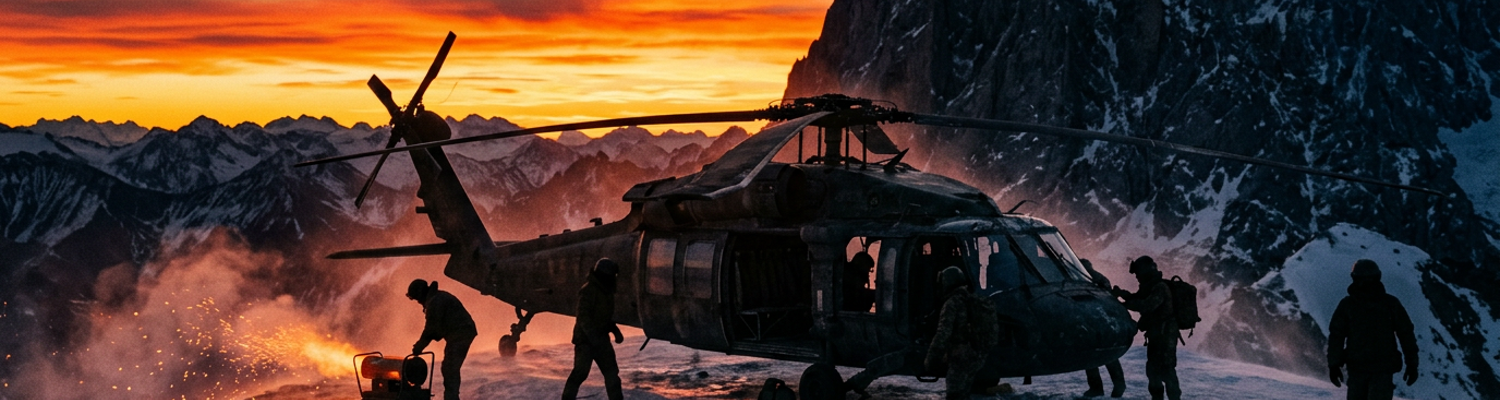
Canvas litters rattled against frozen mud as crew chiefs checked mounting brackets outside a forward aid station north of the 38th parallel. Freezing winds swept down the surrounding granite ridges, coating the bare aluminum frame of the Bell H-13 Sioux in a thin layer of frost. The machine looked fragile against the steep Korean hillside, bearing little resemblance to a standard military aircraft. Designer Arthur Young built this light rotary airframe with an open tubular steel tail boom and a two-bladed main rotor system governed by an inertial stabilizer bar. This stripped-down geometry saved crucial weight, but it left the mechanical core of the helicopter completely exposed to sub-zero temperatures and drifting snow. Flight mechanics worked quickly with numbed fingers to tighten control linkages and clear ice from the exposed engine bay directly behind the cabin where the power plant rested.
Engine mechanics focused their attention on the bare metal cylinder heads of the Franklin O-335 horizontally opposed piston engine. The civilian platform was powered by a marginal 200-horsepower motor originally developed for light crop dusters and training aircraft operating near sea level. The six-cylinder motor lacked a supercharger to force air into the intake manifolds. Cold winter temperatures helped thicken the air somewhat, yet high Korean elevations deprived the unpressurized cylinders of the atmospheric pressure required to maintain full rated power. Pilots watched their fuel trucks and fuel gauges with constant anxiety, knowing that every ten gallons of aviation gasoline added sixty pounds of dead weight to an already strained machine. Every extra pound forced the engine to run at its absolute mechanical limit just to keep the rotor blades spinning fast enough to generate vertical thrust.
Rotor blades turned through the thin mountain air, but marginal engine power output severely degraded rotor lift and payload margins when operating in high mountain altitudes. High elevation combined with sudden weather shifts across jagged mountain passes meant that the rotor system rarely produced enough lift to hover vertically out of narrow frontline clearings. Pilots had to abandon standard hover takeoffs entirely, instead sliding the skids across frozen gravel bars to build forward airspeed until translational lift kicked in. Eighth Army commanders quickly recognized that peacetime civilian performance charts were useless in the central highlands, forcing detachment officers to calculate flight weights down to individual pounds before dispatching a mission. Flight surgeons stripped heavy long-range radios, toolkits, extra batteries, and even the cabin doors from the airframe so that the aircraft could carry two wounded soldiers wrapped in insulated blankets on the exterior skids.
Steel brackets clamped to the landing skids held two wire basket litters that transformed the fragile observation craft into a stripped-down flying ambulance. Ground crews slid litter patients into these external stretchers and secured clear plastic shields over their heads to deflect rotor wash and freezing wind. Wounded infantrymen lay fully exposed to sub-zero mountain gales during flight, separated entirely from the pilot sitting inside the clear acrylic bubble cabin. Pilots lifted the vibrating machine inches off the ground, feathering the collective control while the stabilizer bar worked above the rotor mast to counter violent wind gusts. Ground guides signaled the overloaded Bell H-13 into the gray sky as the pilot nosed the machine down the ridge toward a field hospital in the valley below.
Deployment of the Second Helicopter Detachment
Captain Albert C. Sebourn had established the operational route into that very valley when he landed at Pusan on November 22, 1950, commanding the 2nd Helicopter Detachment equipped with four H-13B aircraft. Riggers and mechanics unloaded the crated Bell airframes onto the freezing Pusan docks, unbolting shipping frames and inspecting rotor assemblies that had traveled across the Pacific Ocean by cargo ship. Mechanics worked through stinging harbor winds to bolt tail booms onto fuselage frames, attach the two-bladed wood and steel rotor assemblies, and test the fuel lines feeding the Franklin piston engines. Cold coastal weather immediately caused rubber gaskets to crack and hydraulic fluid to thicken inside the control linkages, forcing maintenance teams to warm engine blocks with portable gasoline blowtorches before ground testing could proceed. Flight tests over the harbor revealed that each helicopter barely produced enough vertical lift to clear dockside cranes when carrying full fuel tanks, warning Sebourn that his pilots would have to strip every ounce of surplus weight before flying toward the front lines.
Eighth Army headquarters directed these stripped aircraft north, assigning the detachment directly under the Eighth Army surgeon to bypass shattered road and bridge networks during the general winter withdrawal. Retreating infantry divisions were clogging narrow dirt supply routes with stalled trucks, overturned artillery pieces, and thousands of civilian refugees fleeing southward through driving blizzards. Blown bridges over icy rivers and frozen rutted mountain trails meant that standard wheeled ambulances required ten to twelve hours to travel twenty miles. Placing the detachment under the direct command of the chief medical officer allowed the army to bypass standard division transport bureaucracy and dispatch the four helicopters immediately to the most cut-off battalions. Pilots plotted flight paths directly over mountain ridges and frozen rivers, ignoring the choked mountain roads entirely as they carried whole blood and medical supplies forward to isolated defensive perimeters.
Flight crews returning from those isolated perimeter runs were attached directly to the 8055th Mobile Army Surgical Hospital to provide rapid battlefield triage and forward evacuation. Doctors and corpsmen marked off flat clearings in the frozen mud using red canvas panels, providing a designated touchdown spot just fifty yards from the canvas surgery tents. Litter bearers ran directly toward the turning rotor blades the moment an H-13 touched its skids to the ground, unbuckling frozen canvas straps to slide critical patients off the exterior racks without waiting for the engine to shut down. Surgeons standing at the tent flaps performed immediate triage on head wounds, chest penetrations, and torn limbs within seconds of an aircraft arrival, wheeling soldiers onto preheated operating tables while pilots refueled from five-gallon jerry cans. Close integration between the helicopter detachment and surgical hospital staff allowed pilots to launch return flights within thirty minutes of landing.
Mechanics maintained this rapid turnaround pace under brutal field conditions, working without heated hangars or shelter in sub-zero winter winds. Frost accumulated thick coats of ice across the exposed tubular steel frames every night, forcing ground crews to scrape rotor blades with wooden paddles and cover engine cowlings with wool blankets. Pilots carried extra engine oil inside the small cabin bubble to keep the fluid from thickening in the cold before the next emergency call arrived from retreating frontline units. Captain Sebourn rotated his four aircraft continuously across mountain gaps as the winter retreat accelerated, dispatching every airworthy ship to lift critically wounded soldiers out of perimeter pockets before advancing enemy forces overran the landing zones.
Navigation Across Mountain Corridors
Pilots including First Lieutenant Willis G. Shawn and First Lieutenant Joseph L. Bowler took over these frontline sorties when flight operations formally began on January 1, 1951, guiding their overloaded H-13 helicopters into unsecured mountain perimeters to haul out critical casualties. Eighth Army units fell back through freezing valleys under relentless enemy pressure, forcing Shawn, Bowler, and their fellow detachment aviators to set their skids down on cratered roadbeds and frozen riverbanks just yards from advancing infantry. Cockpit dashboards inside the small bubble canopies lacked the basic navigational aids standard on heavier army transport planes. Pilots flew combat evacuation missions without onboard radar, homing beacons, or gyroscopic flight instruments such as an attitude indicator or a directional gyro. Flight crews relied solely on an unheated magnetic compass, an erratic pressure altimeter, and a simple airspeed indicator, leaving them vulnerable whenever winter squalls obscured the jagged ridgelines. Low cloud ceilings pushed the helicopters down into twisting ravines, where pilots had to scan the gray horizon with their bare eyes while fighting intense turbulence that slammed against the exposed tail booms.
Crews navigated through blinding snowstorms and freezing fog by hugging frozen riverbeds and following military telegraph wire lines whenever low clouds blotted out the twisting ravine walls. Packed river ice and dry gravel bars provided unmistakable visual pathways through the mountain passes, guiding the H-13s toward battalion aid stations without the risk of flying straight into hidden granite cliffs. Copper telegraph cables offered an equally vital trail through zero visibility fog banks, showing pilots the exact path of the mountain road even when drifting snow buried the vehicle tracks below. Aviators flew mere feet above the ground, matching the helicopter skids to the tops of wooden telephone poles while the rotor wash kicked up blinding clouds of white powder. Clear plastic litter hoods protected the faces of the wounded men strapped to the skids, but freezing gales tore through the open sides of the stretchers as the aircraft crept forward along the telephone poles through the gray mist.
Copper telegraph wires posed a deadly hazard alongside their navigational benefits, because sagging field cables and snapped lines frequently hung across the narrow flight paths. Flight crews watched through frost-covered acrylic bubbles for sudden black lines against the white landscape, ready to pull up on the collective pitch lever to prevent the wooden main rotor blades from chopping through heavy wire. Sub-zero air rushing around the cabin bubble caused pilot flight controls to stiffen, while moisture inside the unheated pitot tubes froze solid and knocked out the airspeed gauges entirely. Pilots judged their forward momentum by tracking fence posts, boulders, and abandoned trucks along the roadbed, keeping the Franklin engine running near its maximum revolutions per minute to counter rotor blade icing. Exhaust gases from the manifold drifted directly back toward the exterior litters, where wounded infantrymen endured freezing airflow while wrapped in heavy woolen casualty blankets.
Stretcher patients arrived at forward surgical clearings with frost coating their blankets, having survived flights through blinding mountain gaps where wheeled ambulances could not move. Ground marshals directed Shawn, Bowler, and other detachment aviators onto marked red canvas pads as soon as the sound of their two-bladed rotors echoed out of the river mist. Medics pulled frozen mounting pins from the external skid brackets and carried the wounded into heated surgery tents while crew chiefs inspected the Bell airframes for ice buildup. Mechanics refueled the tanks directly from five-gallon jerry cans and checked the exposed tail rotor drive shafts for cracked bearings before clearing each H-13 for its next run into the frozen passes.
Modifications and Skid Mounted Litter Panniers
Metal landing skids on these cleared machines bore the brunt of an unexpected operational demand because the factory cabin could only hold a single pilot and one seated passenger. Frontline ground crews and mechanics devised field modifications by fabricating external stretcher panniers strapped directly across the landing skids. Maintenance specialists welded steel brackets, bent electrical conduit, and repurposed cargo tie-downs to lock standard military stretchers onto the horizontal cross tubes outside the plexiglass bubble. These improvised racks held two wounded men in a horizontal position parallel to the fuselage, placing their weight directly over the helicopter landing gear struts. Crew chiefs bolted quick-release pins and safety clamps onto the metal framework so litter teams could slide a basket on or off within seconds under turning blades. Every weld and bolt had to endure severe engine vibrations and rough mountain touchdowns without snapping in the freezing cold.
Rotor wash beat down against these open panniers with brutal force as soon as the aircraft lifted into the winter air. Ground personnel enclosed litter-bound casualties in protective canvas hoods fitted with clear plexiglass nose cones to deflect freezing rotor wash and windblast. Medics wrapped patients in layered wool blankets and waterproof rubber sheets, then drew heavy fabric covers over the length of the stretcher baskets. The curved plexiglass domes at the head of each litter allowed medical teams to check a soldier face through the transparent shield while keeping bitter mountain gales from freezing exposed skin or blowing away bandages. Exhaust fumes and swirling powder snow still battered the outside of the pods during flight, but the sealed nose cones prevented rushing air from suffocating wounded men traveling at sixty knots. Ground handlers tightened leather cinch straps along the perimeter of the panniers before takeoff to keep the canvas from flapping into the spinning main rotor path.
Mechanics securing those cinch straps had to strictly monitor lateral center of gravity limits when strapping wounded personnel to opposite external skids. A heavy casualty on the port side paired with an empty litter or a light patient on the starboard side pulled the rotor mast off center, exhausting the limited cyclic trim available in the small cockpit. Ground crews compensated for mismatched loads by tossing sandbags, spare ammunition crates, or five-gallon water cans into the lighter litter to equalize the aircraft balance. Flight medics lashed ballast directly onto the opposite skid before the pilot pulled collective pitch if an evacuation site had only one critical casualty to move. Pilots felt any remaining imbalance through the vibrating control stick the moment the skids left the snow, forcing them to adjust pedal pressure and cyclic tilt to keep the airframe level.
Steel brackets on the landing skids required constant inspection after these uneven flights, revealing hairline cracks caused by asymmetric loads and violent airframe vibration. Cold metal fatigue posed a continuous threat on the rocky riverbanks and ridgelines where pilots set down to collect casualties. Wrench-wielding ground crews replaced sheared retention bolts and straightened bent tubular pannier frames using blowtorches and hand tools in open-air maintenance revetments. Eighth Army medical officers noted that despite the extreme mechanical strain and crude materials, these skid modifications turned an otherwise fragile observation craft into a dependable flying ambulance. Maintenance teams stockpiled prefabricated pannier assemblies at forward collection points so fresh stretchers could be bolted onto returning helicopters the moment empty frames suffered damage.
Hypothermia Countermeasures and In Flight Medical Support
Panniers bolted onto the landing skids exposed wounded soldiers directly to the brutal Korean winter the moment the helicopter lifted into the air. Rotor wash drove freezing air through every gap in the litter frames, while slipstream gales at sixty knots dropped effective temperatures down past twenty degrees below zero along the granite mountain passes. Patients suffered acute exposure to sub-zero temperatures, requiring ground medics to secure thermal blankets and heat pads inside the external pods. Frontline medics packed chemical heat pads around the torso, neck, and extremities of each wounded man before drawing thick wool blankets tight over shock-depleted bodies. Combat surgeons knew that soldiers with severe trauma lost their ability to regulate internal heat, making sudden hypothermia as lethal as the original shrapnel or bullet wound. Rubberized canvas hoods were then cinched firmly over the stretcher baskets and secured to the frame brackets, creating an insulated cocoon to trap residual body warmth before the pilot pulled collective pitch.
Bottles of intravenous plasma presented an immediate survival challenge in this sub-zero atmosphere, because the life-saving fluid turned to solid slush within minutes of reaching flight altitude. Freezing plasma blocked the narrow needle conduits, cracked fragile glass containers, and cut off vital circulation support for soldiers who were already bleeding to death. Standard field plasma kits hung from metal brackets on the outside of the fuselage froze into unusable blocks of ice long before the helicopter cleared the first ridgeline. Aviators quickly devised an improvised physical method to keep the vital intravenous solutions moving during long flights across enemy-held ridges. Pilots placed intravenous plasma bottles inside their own insulated flight suits against their skin to maintain fluid warmth during transit. Body heat radiating from the pilot chest through heavy wool undershirts kept the liquid at a stable temperature while the aircraft vibrated through freezing mountain drafts.
Rubber intravenous tubing channeled this warmed fluid from inside the pilot flight suit out through small access holes cut into the plexiglass bubble toward the external stretchers. Bitter air rushing past the cabin immediately threatened to freeze the slow-dripping fluid as it crossed the uninsulated gap between the pilot seat and the exterior skids. Flight crews routed intravenous plasma tubes directly into the cockpit modest cabin heater ducting to prevent fluids from freezing solid at altitude. Warm air diverted from the engine blower circulated directly around the rubber lines, keeping the plasma liquid and flowing as it exited the canopy and entered the sealed litter panniers. Aviators reached down between adjustments on the cyclic control stick to feel the flexible hoses with their bare fingertips, confirming that hot air was still shielding the liquid from the freezing mountain gale.
Litter bearers at mobile surgical hospitals rushed out across the frozen turf the moment the helicopter skids settled onto the red cross landing markers. Medical teams pulled the quick-release pins from the pannier mounts, uncoupled the warm plasma lines, and carried the wrapped stretchers straight into heated pre-operative wards. Triage surgeons discovered that casualties who would have died of hypothermia or vascular collapse during hours on frozen mountain roads arrived with stable pulses and fluid infusions still running freely. Ground mechanics checked the heater ducts for soot, refueled the fuel tanks from five-gallon cans, and handed fresh plasma bottles to the pilot to tuck against his chest before the next evacuation launch.
Casualty Clearing Operations with Forward MASH Units
Pilots gripped their collective pitch levers and lifted away from the hospital clearings to answer urgent radio requests from front-line battalions. Administrative restructuring soon followed this expanding operational tempo. Eighth Army command reorganized the 2nd Helicopter Detachment in mid-1951, redesignating it as the 8191st Army Unit to operate alongside sister detachments and maintain standardized aeromedical coverage across the front. Flight leaders stationed two or three Bell machines directly beside each surgical compound so pilots could scramble without waiting for central corps approval. Ground mechanics kept maintenance tool kits and fuel drums right beside the designated landing pads, replacing worn spark plugs and patching frayed rotor edges while engines cooled. Aviators rotated through continuous daytime standby watches, sitting inside cold cockpits with topographic maps strapped to their knees until emergency flare signals or field telephone calls marked the next pickup zone.
Battalion aid stations laid out bright red canvas markers across hillside clearings so approaching H-13 pilots could spot the pickup zones through drifting battlefield smoke. Ground evacuation over rutted mountain passes normally required ten to fifteen hours of jarring travel inside four-wheel-drive trucks, during which extreme vibration, hypothermia, and internal hemorrhaging claimed the lives of countless soldiers before they ever reached a surgeon. Bell aviators bypassed shattered roads entirely, lifting litter patients out of narrow ravines and delivering them straight to hospital intake pads within twenty to thirty minutes. Direct aeromedical transport slashed post-admission mortality rates at forward-deployed Mobile Army Surgical Hospital units to 2.5 percent. Clinical staff attributed this dramatic survival rate to the speed of the rotary airframe, which delivered critical casualties to trauma specialists before hemorrhagic shock drained their remaining blood volume.
Surgeons and corpsmen ran out to the landing skids the moment an incoming Bell settled onto the frozen hospital turf. Litter teams detached the external wire panniers, unbuckled the patient restraints, and carried the wounded directly into pre-operative triage tents warmed by kerosene stoves. Triage officers cut away blood-soaked field uniforms under electric bulbs, establishing immediate operative priorities while the helicopter Franklin engine idled outside on the pad. This steady aerial pipeline sustained Eighth Army medical clearing operations through every major defensive engagement and counteroffensive. Army H-13 detachments evacuated more than 18,000 casualties from forward battle lines directly to surgical clearing stations. Every flight removed a wounded soldier from inaccessible mountain terrain and placed him onto an operating table with his chest cavity open to the surgical lights.
Doctors worked around the clock on those operating tables while mechanics labored outside to keep the fragile Bell airframes airworthy. Relentless flight schedules over rugged granite peaks rapidly wore out main rotor bearings, loosened stabilizer bar linkages, and cracked tubular steel skid mounts. Ground crews kept the 8191st Army Unit and its sister detachments operational by salvaging structural components from damaged helicopters and fabricating new mounting pins on mobile repair trucks. Maintenance specialists inspected push-pull control rods for hairline fractures, patched fuel cells damaged by small-arms fire, and scrubbed frozen mud from the external litter baskets between sorties. Crew chiefs wiped frost from the acrylic cockpit bubbles and waved pilots back into the air the moment fresh litters were clamped to the landing skids.
Piston Engine Limitations and Sikorsky H-19 Transition
Rifle bullets ripped through thin acrylic canopies as soon as climbing helicopters crossed ridgelines held by communist infantry forces. Combat exposure highlighted the acute physical vulnerability of the open cockpit and fragile piston engine to communist infantry small-arms fire. Ground troops firing standard rifles and light machine guns easily punctured the unarmored bubble, leaving pilots exposed without metal plate protection or self-sealing fuel cells. Stray rounds shattered cooling fins on the exposed Franklin piston engine, severed rubber oil lines, and cracked cylinder heads within seconds of entering low-altitude approach corridors. Pilots often felt their controls shake violently as hot engine oil sprayed across the rear frame, forcing them to execute emergency landings in unsecured creek beds rather than delivering their external patients to rear hospitals. Damaged aircraft limped back to forward aid stations with oil smoke trailing from cracked crankcases, dumping emergency maintenance burdens onto frontline medical units while wounded soldiers continued to arrive.
Litter casualties accumulated faster than surviving Bell helicopters could lift them from overrun perimeter trenches. The strict two-litter external payload limit created operational bottlenecks during high-volume mass casualty clearing actions. Communist massed-infantry offensives routinely generated dozens of critical trauma cases at a single battalion aid station within two hours, swamping the capacity of two-stretcher airframes. Pilots had to fly repetitive round-trip shuttles across contested valleys, yet a pair of Bell machines could evacuate only four soldiers per hour under ideal flying conditions. Critically wounded soldiers lay on frozen ground beside landing markers for hours while triage officers decided which two men would fill the external panniers on the next inbound flight. These severe evacuation delays cost soldiers their lives when internal bleeding and shock overwhelmed their bodies while overworked flight detachments ran their Franklin engines until the cylinders cracked.
Franklin piston engines suffered persistent mechanical breakdowns after months of hauling maximum loads across freezing mountain altitudes. Engine cylinders cracked, drive belts frayed, and cooling fans failed under the relentless strain of continuous full-throttle climbs. Ground mechanics found metal shavings inside engine oil sumps after routine flights, indicating that small civilian powerplants could not endure relentless military trauma operations. Payload ceilings and mechanical strain on light piston craft drove Eighth Army to field the larger Sikorsky H-19 and establish permanent dedicated aeromedical ambulance companies. Army aviation planners realized that temporary provisional detachments operating modified civilian scout helicopters could not sustain long-term front-wide trauma support. Medical planners therefore organized specialized ambulance companies with dedicated maintenance personnel, heavy supply pipelines, and permanent command structures, placing these new units directly under Eighth Army control to manage the heavier aircraft.
Sikorsky H-19 Chickasaw helicopters arrived in forward staging bases to take over mass evacuation operations from the light Bell machines. Mechanics serviced the new aircraft with their powerful radial engines mounted in the nose and enclosed passenger compartments that could carry up to six litter patients at once. Flight surgeons assigned trained medical technicians directly inside the heated main cabin to monitor vital signs, adjust bandages, and manage blood plasma bottles out of the freezing slipstream. Combat medics wheeled multiple stretchers straight through wide cargo doors into the protected interior, eliminating the dangerous task of strapping frostbitten men onto exposed skid brackets. Maintenance crews parked the smaller H-13s in support revetments to handle isolated tactical scout runs while the larger Sikorsky transports took over primary casualty shuttle lines to mobile surgical hospitals.