
Operational Breakdown Along the Orion-Bagac Line
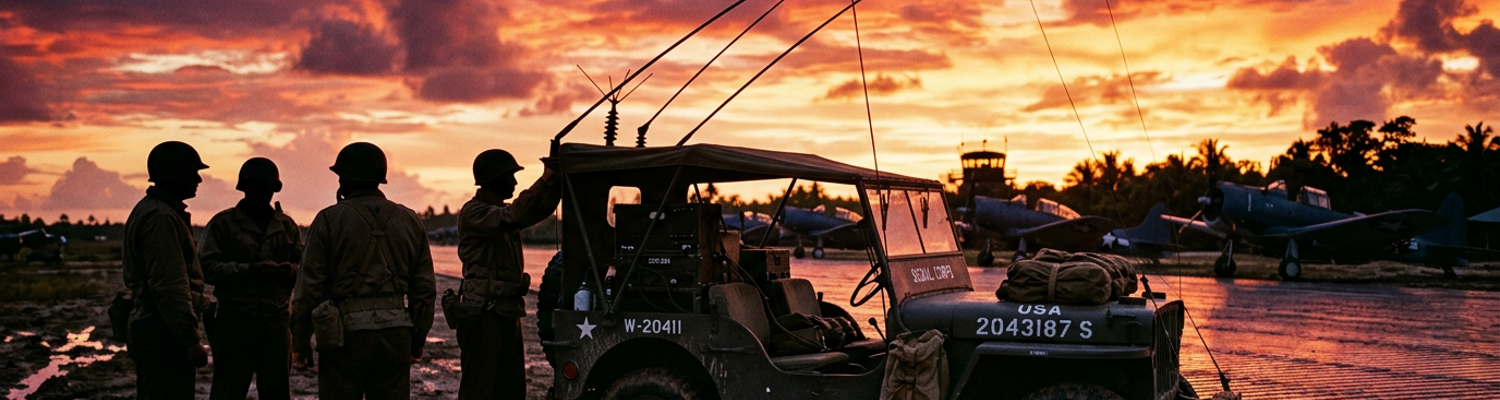
Telephone wires snapped under artillery fire across the Mount Samat sector, severing contact with rear headquarters and forcing frontline units to rely entirely on their own initiative. Major William J Priestley, an officer serving with the 31st Infantry Regiment, had spent months coordinating rear-guard movements and defensive stands as Allied troops retreated south down the rugged Bataan Peninsula. American regular soldiers fought brutal delaying actions along jungle trails and dried stream beds, yielding ground slowly while absorbing relentless air attacks and heavy shellfire. Defenders established a final fortified barrier known as the Orion-Bagac line, but Japanese artillery bombardments quickly cut tactical wire networks between battalion command posts. Priestley worked without reliable radio traffic or motorcycle dispatch couriers, attempting to hold defensive positions as adjoining units lost contact across their flanks and fell back into the deep jungle.
Infantry battalions fell back in disorder through dense ravines, splitting the Orion-Bagac defensive line into isolated pockets. Supply routes collapsed under continuous Japanese air strikes, leaving thousands of frontline troops without food rations, clean drinking water, or essential medical supplies. Soldiers survived on quarter rations of rice and canned salmon for weeks, and severe outbreaks of malaria, dengue fever, and dysentery quickly destroyed the physical stamina of entire companies. Ammunition depots burned or emptied their magazines as frontline troops expended their final rifle rounds and mortar shells against advancing enemy formations. Severed wire connections and dead radio batteries prevented company commanders from calling in artillery fire or transmitting coordinates to sector headquarters. Isolated pockets of American infantrymen fought separate skirmishes from open foxholes and dry creek beds without central coordination.
Tanks and assault troops of the Japanese Fourteenth Army overran these exposed foxholes, ending organized combat resistance across the southern peninsula. Major General Edward P King Jr realized that his troops could no longer mount an effective tactical defense or evacuate the thousands of sick and wounded soldiers packing the roadside aid stations. King knew that continuing the battle would cause the immediate destruction of an army that was already starving, sick, and immobilized without ammunition. King sent an emissary forward under a white flag made from a bedsheet and rode in an open staff car to meet Japanese officers near Cabcaben on April 9, 1942. King accepted the complete, unconditional surrender of the United States Armed Forces in the Far East on Bataan, terminating four months of combat operations.
Soldiers smashed rifle bolts and threw artillery breechblocks into jungle ravines as surrender directives reached frontline sectors. Major Priestley assembled the surviving soldiers of his unit and instructed them to destroy remaining combat hardware before enemy patrols arrived. Regimental staff officers burned field orders, operation maps, and personnel muster rolls in roadside brush fires to keep military records out of enemy hands. Priestley watched flames destroy these documents, recognizing that the loss of official paperwork would erase the operational history of the defense unless someone recorded the facts. Priestley slipped a compact notebook and a pencil into his uniform pocket just before Japanese infantrymen surrounded the regimental clearing. Japanese guards stripped the men of their canteens, helmets, and wristwatches, then marched the disarmed column onto the dusty main road toward Mariveles to join thousands of other captives.
Clandestine Debriefings at Cabanatuan POW Camp
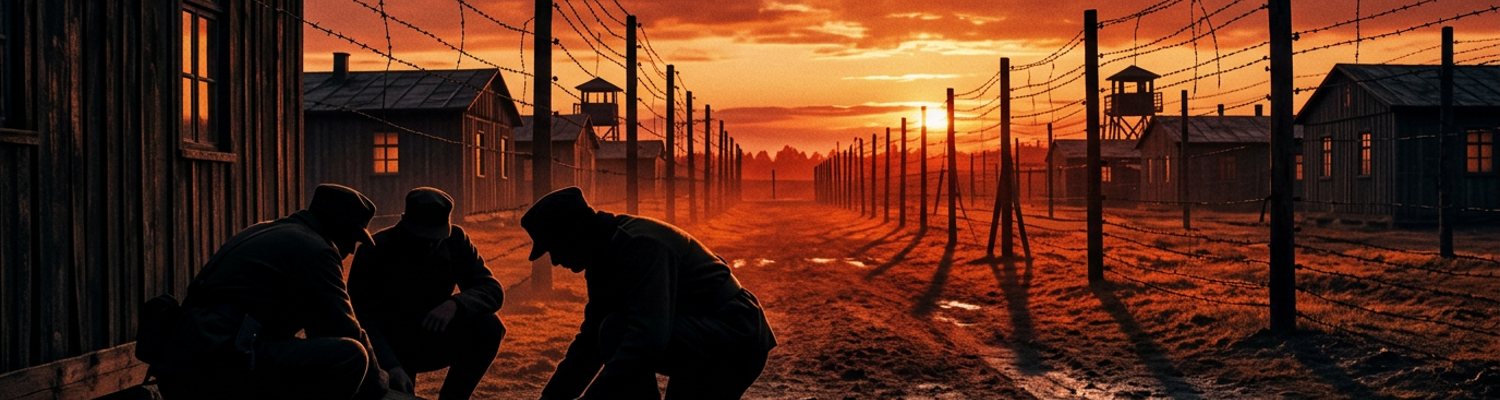
Prisoners stumbled through the perimeter gates of Cabanatuan POW Camp Number One after surviving the brutal overland trek and suffocating railway boxcars from Bataan. Japanese guards confined thousands of American soldiers and Filipino Scouts inside the barbed wire enclosures of the former agricultural station, restricting the daily food supply to meager cups of watery rice gruel and boiled native greens. Starvation rations of less than six hundred calories a day quickly destroyed the physical resilience of the garrison, accelerating catastrophic outbreaks of wet beriberi, amoebic dysentery, and cerebral malaria across the crowded bamboo barracks. Dozens of sick captives perished every morning in the primitive zero wards, where medical officers lacked basic quinine, sulfur drugs, and sterile bandages to treat the infected men. Major Priestley suffered through recurring bouts of shivering malarial fever and severe intestinal illness, but he kept his stub of graphite pencil and blank notebook leaves hidden beneath his clothing. Priestley initiated immediate operational interviews to capture the fading memories of dying men.
Major Priestley slipped through the dark corridors of the barracks during evening roll calls to initiate methodical oral history debriefings with surviving leaders. Surviving field-grade and company-grade officers from disparate Philippine Division commands, including the 31st Infantry Regiment, the 45th and 57th Infantry of the Philippine Scouts, and attached provisional artillery groups, provided firsthand testimonies of their sectors. Priestley sat on low bamboo slats with battalion commanders and rifle company captains, questioning each officer about defensive troop dispositions, local counterattacks, and the precise timing of frontline collapses. Trusted soldiers stood watch near the barrack doorways, whispering tactical warnings whenever Japanese guards stepped onto the dirt company streets. Priestley compared the spoken accounts against surviving pocket diaries and worn field maps, cross-referencing contradictory memories to confirm factual accuracy before writing down each entry. Priestley recorded these verified details onto his hidden paper scraps, building a physical archive of the lost campaign.
Sheets of scrounged ledger paper captured this recovered operational intelligence through systematic documentation of frontline maneuver timelines, tactical command failures, and casualty figures. The written records tracked regimental movements along the Orion-Bagac line minute by minute, highlighting the precise moments when communication wire collapses stranded battalions without defensive artillery support. Priestley documented the disastrous consequences of delayed retreat orders, uncoordinated flank withdrawals, and tactical miscalculations that left exposed infantry platoons surrounded by Japanese armor. The archive listed regimental casualty tallies with stark clarity, detailing hundreds of combat dead, missing scouts, and hospitalized men who never received field evacuation. Priestley separated battle casualties from men incapacitated by malaria and starvation, providing an unvarnished balance sheet of human attrition throughout the final defensive stands. Priestley stacked these filled pages into thick bundles beneath his sleeping mat.
Priestley assembled the finished archive sheets into compact rectangular packets to prepare them for clandestine concealment. The assembled intelligence packet contained defensive sector sketches, unit strength returns, and chronological narrative accounts detailing every major skirmish fought by the Philippine Division. Priestley folded the delicate ledger leaves tightly and inserted them into protective layers of salvaged canvas and scrap raincoat rubber to block moisture and insects. Fellow prisoners fabricated improvised bindings from copper telephone wire and scrap metal strips gathered from camp work details. Priestley loosened the bamboo floorboards beneath his sleeping bunk in Barracks 11, carving out a dry cavity in the hard dirt to cache the historical papers beyond the reach of Japanese search parties. Priestley lowered the waterproofed archive into the excavated trench and tamped loose soil over the opening.
Tradecraft and Compilation of Illicit Field Logs
Bamboo floorboards dropped back across the disturbed dirt, concealing the buried cavity from Imperial Japanese Army guards patrolling the central camp corridor. Priestley relied on a network of trusted prisoners assigned to outside labor details to obtain additional writing supplies despite round-the-clock enemy surveillance. Prisoners scrounged blank pages from abandoned commercial ledgers in Cabanatuan town, tore empty endpapers from damaged books, and snatched discarded wrappers from Japanese supply sheds. Men smuggled graphite pencil stubs through the camp gates by taping the short pieces inside their groin wraps, tucking them into hollow tool handles, or pressing them into the split soles of their worn leather boots. Japanese sentries subjected returning work parties to aggressive physical strip-searches at the main gate, beating any captive caught with unapproved paper goods or writing tools. Smuggled paper fragments and pencil leads were transferred hand to hand through the dark latrine trenches and reached Barracks 11 without alerting the compound guards.
Priestley unrolled these crinkled paper scraps across his sleeping platform and ironed them smooth with the flat side of a canteen. Survivor accounts arrived in chaotic, conflicting fragments because trauma, hunger, and tropical disease had blurred the memories of the battered frontline soldiers. Priestley interviewed artillery spotters, machine gunners, and company clerks, cross-checking every contradictory claim against independent accounts to establish verifiable facts. He organized these scattered personal recollections into standardized operational logbooks that followed regular military staff protocols. Each entry charted precise defensive positions, weapon inventories, command decisions, ammunition expenditures, and confirmed casualties for every battalion along the Bataan front. Priestley bound these detailed tables into new paper bundles for burial.
Kempeitai military police agents actively hunted for written documentation of combat strengths and treated illicit staff logs as acts of armed espionage. Plainclothes Kempeitai operatives and camp guards burst into the barracks without warning to overturn bunks, probe thatched roofs with bayonets, and strip-search inmates on the dirt floors. Prisoners caught with unauthorized writing faced brutal interrogations in the camp guardhouse, where guards used waterboarding, severe beatings, and electric shocks to extract confessions. Failure to name collaborators or surrender concealed records resulted in public executions by beheading or firing squads in the open fields beyond the barbed-wire fence. Priestley countered this lethal threat by stationing a chain of prisoner lookouts who coughed or whistled whenever Japanese patrols approached the barracks entrance. Priestley shoved current writing leaves into hollow bamboo bunk legs and slipped his pencil stubs beneath his tongue whenever lookouts flashed the danger signal.
Guards marched through the barracks doorway, inspected the silent men resting on their bunks, and walked back outside without noticing the hollow bamboo timber. Priestley retrieved the rolled ledger sheets from the interior of the wood as soon as the boots of the patrol faded down the dirt road. He compiled the verified combat timelines into final narrative drafts, verifying every regimental loss against his master casualty rosters. Helpers wrapped the completed field logs in scrap rubber insulation, lifted the loose bamboo floorboards, and slid the fresh packets into the subterranean soil cavity. Priestley shoveled dry dirt over the opening, hammered the bamboo floor into place, and spread straw bedding over the seams to seal the expanded archive.
Subterranean Preservation in the Cabanatuan Compound
Moisture rising through the freshly tamped earth threatened to destroy the fragile paper leaves within weeks of burial. Heavy tropical downpours regularly flooded the low Cabanatuan plains, saturating the camp subsoil with water that accelerated paper decay and washed away pencil graphite. Major Priestley lifted the hidden ledgers out of the ground to seal the collection inside improvised waterproof containers before fungus and termites could consume the text. Mechanics working on repair details in the Japanese motor pool smuggled empty five-gallon oil drums, rectangular kerosene cans, and discarded inner tube rubber past the main gate guards. Priestley folded the handwritten rosters and unit diaries into compact rectangles, wrapped them inside thick sheets of salvaged rubber poncho fabric, and bound the seams with friction tape. Soldiers brushed thick coatings of dark axle grease across every outer metal fold to prevent corrosive soil acids and damp clay from penetrating the containers.
Metal canisters containing the encapsulated records were slid beneath the floor framing of Barracks 11 during late-night guard rotations. Priestley and two trusted assistants crawled into the crawl space with cut canteen halves and sharpened steel scrap to dig a deeper subterranean chamber. The digging party excavated a trench four feet down into the dense clay subsoil, working in complete darkness to avoid drawing fire from the perimeter watchtowers. Helpers laid down a foundation bed of broken river stones at the bottom of the trench, creating a raised platform that kept the metal cans elevated above rising subsurface water pools. Sifted sand, crushed charcoal from the mess galleys, and dry hearth ash were poured into the voids around the cans to absorb ambient moisture before the crew shoveled heavy clay over the pit. Helpers leveled the surrounding soil, dusted the area with dry gray cooking ash, and walked over the surface until the disturbed dirt looked indistinguishable from the rest of the barracks ground.
Prisoner transfer manifests posted outside camp headquarters scheduled Major Priestley and dozens of surviving field officers for overseas labor drafts, threatening to abandon the disguised cache. Imperial Japanese Army authorities organized these outbound shipments to supply industrial labor for coal mines, docks, and factories across Formosa, Manchuria, and the Japanese main islands. Japanese sentries subjected departing captives to brutal physical strip-searches at the Cabanatuan rail siding and the Manila harbor piers, executing anyone caught with written documents. Sick and incapacitated prisoners unfit for hard industrial labor formed a permanent residual population in the Cabanatuan hospital wards, offering a reliable group of caretakers who would stay in the compound. Priestley recognized that carrying the voluminous notes aboard outbound transport ships was impossible, requiring an immediate transfer of the burial coordinates to trusted personnel remaining in the camp. Priestley sought out the permanent medical staff to pass on the exact location of the buried records.
Officers assigned permanently to the camp hospital wards met Priestley near the rear wall of the barracks to receive the survey data. Priestley selected trusted medical personnel and chaplains whose medical duties kept them off outbound shipment rosters. He paced out the exact distances from the barracks timber foundations, compound perimeter ditches, and designated telephone poles to provide unmistakable physical landmarks. The caretakers memorized these surface bearings alongside the measured depth of the excavation, ensuring that multiple men held the precise recovery instructions in their heads. Priestley reviewed the spatial references three times in low whispers, confirming that each caretaker could locate the subterranean containers without referring to any incriminating written maps. Priestley stepped off the final pace back to his bunk, handed over a marked length of measurement wire to the lead medical officer, and packed his canvas mess kit for the dawn march to the railway loading platform.
Oryoku Maru Transfer and Priestley's Loss
Steam locomotives hauled the boxcars containing Priestley and his fellow officers south from Cabanatuan toward Manila, where the men spent several days in Bilibid Prison before armed escorts marched them to the docks. Guards forced 1,619 Allied prisoners, including Major William J Priestley, up narrow gangways at Pier 7 on December 13, 1944, driving the entire contingent into the dark lower cargo holds of the unmarked Japanese transport ship Oryoku Maru. Japanese naval authorities refused to mark the vessel with red crosses or prisoner-of-war symbols, disguising the ship within a convoy carrying retreating Japanese troops, civilians, and military equipment. Captives stumbled down vertical wooden ladders into the suffocating belly of the ship, where Japanese soldiers packed hundreds of men onto tiered wooden shelving without room to lie down. Priestley and the officers in his hold took up standing or squatting positions on bare wooden planks, unable to extend their limbs as hatch covers slammed shut overhead to block out natural light and fresh ocean air.
Steel bulkheads trapped the stagnant air inside the dark cargo hold, driving interior temperatures past one hundred degrees within hours of departure. Sweat poured from dehydrated prisoners, and the near-total lack of drinking water triggered violent bouts of delirium across the crowded wooden bays. Major Priestley and surviving regimental officers attempted to enforce order by rotating men beneath the small air intake scoops, but the feeble airflow failed to reach the deeper recesses of the hold. Prisoners collapsed into unconsciousness from carbon dioxide poisoning while others died where they stood, trapped upright by the crush of human bodies. Japanese sentries stationed near the hatchways ignored pleas for water and medical aid, battening down the iron grates as the ship steamed out of Manila Bay toward the open sea.
Aircraft from American carrier task forces intercepted the Oryoku Maru off the western coast of Bataan on the morning of December 14, 1944, mistaking the unmarked vessel for an enemy troop transport. American pilots targeted the ship because Japanese gun crews on the upper decks fired antiaircraft artillery at the approaching flights. Heavy machine-gun rounds punched through the thin steel hull plating, showering the crowded cargo holds with jagged shrapnel and wooden splinters. Priestley and fellow officers shouted for the men to lie flat against the decking as nearby bomb detonations shook the ship, severing steam lines and knocking out the rudder controls. Japanese navigators managed to steer the damaged freighter into the sheltered waters of Subic Bay, dropping anchor near the Olongapo naval base as nighttime darkness suspended the air strikes.
Dive-bombers from American aircraft carriers returned over Subic Bay at sunrise on December 15, 1944, launching concentrated runs against the stranded transport. Heavy ordnance struck the stern of the Oryoku Maru, and a direct bomb hit ripped through the rear cargo hold where hundreds of Allied captives lay packed in the darkness. Exploding metal, collapsing wooden scaffolding, and concussive blast waves tore through the compartment, killing scores of prisoners instantly. Major William J Priestley suffered fatal wounds in this blast, dying inside the shattered hold alongside dozens of the veteran officers whose combat histories he had recorded and buried at Cabanatuan. Japanese guards subsequently abandoned the burning transport, forcing surviving prisoners to leap into the waters of Subic Bay while the ship settled into the harbor shallows with Priestley's unrecovered body sealed inside the wreckage.
Archive Recovery and Official Campaign Historiography
Caretakers inside Cabanatuan Camp Number One preserved the secret excavation bearings beneath Barracks 11 while their departed comrade lay entombed in the sunken freighter. Soldiers of the 6th Ranger Battalion, accompanied by Alamo Scouts and Filipino guerrillas, stormed the compound on January 30, 1945, neutralizing the Japanese garrison and liberating hundreds of emaciated captives during a nighttime assault. Medical officers who held the memorized surface coordinates guided recovery personnel through the perimeter wire back to the empty barracks area. Digging crews paced off the exact distances from the building footings and fence lines, driving entrenching tools four feet down through the dense clay, hearth ash, and river stone foundation. Soldiers hoisted the grease-coated kerosene cans and oil drums out of the subterranean trench, discovering that the layers of salvaged inner tubes and friction tape had kept the paper notebooks completely dry.
Officers from Sixth Army intelligence unpacked the grease-coated containers in Manila, peeling away layers of hardened rubber to examine the surviving sheets. Technical specialists sorted the fragile leaves of commercial ledger paper and loose notes, confirming that pencil graphite and ink text remained legible despite months beneath the damp compound earth. Couriers sealed the documents inside waterproof dispatch pouches and flew them across the Pacific Ocean directly to the War Department in Washington. War Department officials routed the complete Priestley collection to the Office of the Chief of Military History, establishing permanent military custody over the illicit frontline diary. Government archivists accessioned the notebooks into official historical files, indexing company-level combat timelines, casualty rosters, and artillery firing tables for future operational research.
Louis Morton, a civilian military historian, utilized these cataloged Cabanatuan notebooks as foundational primary source material while drafting the definitive operational account of the campaign for the Office of the Chief of Military History. Official combat records from the opening months of 1942 had vanished during the retreat down the Bataan Peninsula, burned by American and Filipino staff officers in roadside brush fires to keep classified orders and personnel rolls out of enemy hands. Priestley's notebooks bridged this documentary gap by providing Morton with precise timelines of battalion movements, weapon counts, and defensive sector boundaries along the Orion-Bagac line. Researchers cross-referenced the camp debriefings against captured Japanese Fourteenth Army war diaries, matching individual Philippine Scout counterattacks against enemy assault schedules across the Mount Samat sector. Morton integrated these cross-referenced timelines directly into his manuscript drafts, building a comprehensive chronological narrative of the failed defense.
Editors at the Office of the Chief of Military History incorporated extensive citations to the Priestley collection throughout the completed manuscript of The Fall of the Philippines, publishing the official volume in 1953 as part of the United States Army in World War II series. Footnotes throughout the book cited the Priestley notebooks dozens of times as the sole authoritative source for frontline decisions made by the 31st Infantry and supporting artillery battalions. Military service academies and staff colleges distributed the published history to officer candidates, using Priestley's recorded tactical breakdowns to teach rear-guard defensive doctrine and jungle logistics. Doctrine writers in the Department of the Army incorporated Priestley's data into field manuals on retrograde operations, instructing infantry commanders on how to maintain unit cohesion when radio networks fail. Cadets studied these manuals to understand the physical realities of combat logistics and communication failures.